Section
Camping Furniture, Tents and Coolers for Camp
Camping furniture is what turns a patch of ground into a camp: a chair you can get out of, a cot off the cold floor, a table that doesn't wobble, and a roof over all of it. This section covers that, plus the tents, canopies and coolers that go with it, for hunting camp, car camping and the beach. Rule of thumb: buy the tent for the worst night, the chair for the longest evening and the cooler for the farthest trip from ice.
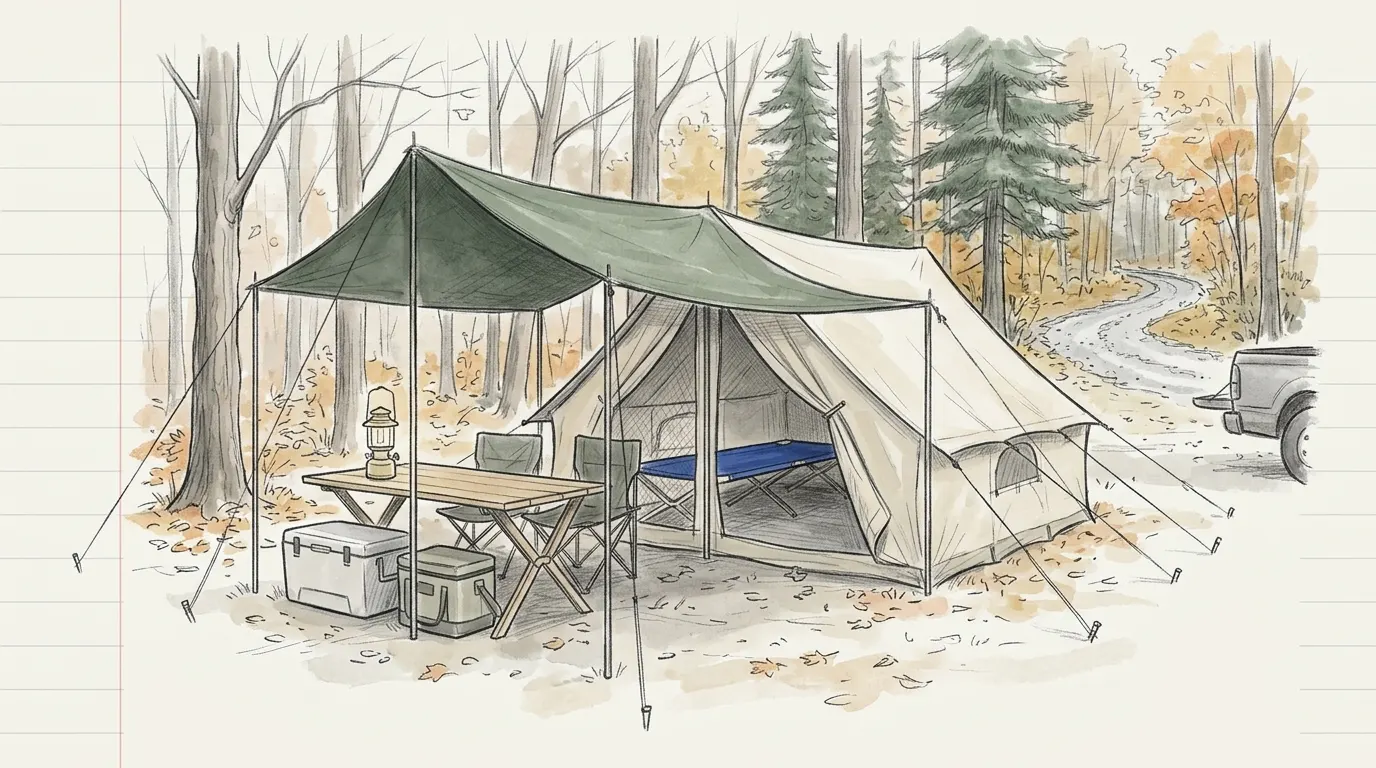
Gear in this section
Best-of lists
Best Beach Chair Picks
Beach chairs whose maker or Amazon listing states chair weight and weight capacity. Weights are the maker's own figures.
Best Coolers for Camping and Deer Camp
Hard coolers whose maker or Amazon listing states capacity, construction and weight, from small to large. Weights are the maker's own figures.
Best Camping Tents
Tents whose maker or Amazon listing states capacity, setup type and center height, spread across sizes.
Brands in this section
What's in camp gear
This is the biggest section on the site, and the one Danny and I split. I write the things you sleep in, sit on and eat off. Danny writes coolers and the beach. Between us, here's the map:
- Shelter: camping tents, canopy tents, beach tents and beach shade
- Camping furniture: camping chairs, camping cots, camping tables
- Cold storage: coolers, soft coolers and electric coolers
- Beach gear: beach chairs, backpack beach chairs and beach umbrellas
Hunting camp gear and family camping gear are mostly the same gear. The difference is the weather in November and how far the truck can get.
Camping furniture: chairs, cots and tables
Camping chairs
A chair is the piece of camp gear you use most and think about least. Check the maker's weight rating, seat height and packed weight. A low seat is comfortable until you try to get out of it. A high-back chair is better for long evenings, and a rocking or reclining chair is better for the man who has earned it.
Heavy-duty chairs carry higher ratings and weigh more. Ultralight chairs fold small and sit low. Chairs with canopies, footrests or side tables are fine as long as the extras don't add a hinge you'll break. Kids need their own size; a kid in a grown-up chair is sliding, not sitting.
Camping cots
A camping cot gets you off a cold, wet floor, and in November that matters more than padding. XL cots add width and length for big sleepers. Check the cot's height against the tent's wall slope; a tall cot in a dome tent puts your face in the fabric.
My canvas cot dates from 1996. The frame has been bolted back together twice with a 7/16 wrench, and I'm not done with it yet. That isn't a product claim. It's a warning that a cot is a long-term relationship, so measure the tent before you commit.
Camping tables
A camping table is your kitchen, your boot-drying bench and your card table. Look at height, top size, how it folds and how level it stays on bumpy ground. Aluminum tables are light; heavier tables don't walk off in the wind. A camp kitchen table adds shelves and a windscreen for the stove.
Tents, canopies and shade
Pick a tent by the worst night
My one opinion on this page: a cheap tent is fine for one fair-weather weekend, but for November in the mountains, buy for the worst night, not the average one. The reason is in how tents are rated. Cascade Designs explains that 3-season tents handle rain, wind and bugs and cope with light snow, but the lightest ones don't hold up to prolonged harsh weather; 4-season tents use tougher fabrics and stronger pole designs for snow and wind. Your tent has to survive the worst night you'll see, not the forecast you hoped for.
Size the tent with the rule of two
CORE Equipment explains that a tent's capacity counts how many standard sleeping pads fit side by side, not how many people fit comfortably with gear. Its rule of two doubles the number of campers. A queen air mattress, CORE notes, takes up the floor space of two sleepers. Groups of ten or more may do better with two smaller tents.
The tent pages in this section run from pop-up and instant tents to canvas and hot tents with a stove jack. Cabin tents have tall straight walls; dome tents shed wind better and lose headroom at the edges.
Canopies and shade
A canopy tent is a roof with legs. 10x10 canopies cover a table and a few chairs; 10x20 canopies cover the kitchen and the cooler line. Bigger 20x20 canopies are event gear and need serious anchoring. A canopy with sidewalls blocks wind and low sun, and catches more wind too.
Beach shade and beach umbrellas are Danny's beat. So are beach umbrella and chair sets, swivel beach chairs, beach chairs with a footrest or a built-in cooler, and heavy-duty beach chairs for bigger sitters. Danny's take: "Anything you carry across sand counts double." He means weight. Renee means the number of trips.
Coolers and cold storage
Two coolers, sometimes three
The FDA recommends keeping drinks in one cooler and perishable food in another, so the food cooler stays closed. Keep perishables at 40°F or below. At deer camp we add a third for venison. Penn State Extension says to chill a deer carcass to about 35 to 40°F and keep it out of direct sun.
Hard, soft and powered
- Hard coolers: the most ice retention, the most weight
- Soft coolers: light, for lunch and day trips
- Electric coolers: thermoelectric or compressor units that run off the truck
- Portable fridges: compressor coolers that hold a set temperature
A fridge slide is a drawer for the truck bed that pulls a heavy powered cooler out to you, so you don't climb in after it. Tailgating gear is mostly the same short list: a cooler, a canopy and chairs.
Car camping gear and hunting camp essentials
Car camping gear is camp gear without the weight limit. That's the trap. Here's the list of camping essentials that actually earn the truck space:
- Shelter: tent, stakes, mallet, ground cloth
- Sleep: cot or pad, bag rated for the coldest night, pillow
- Furniture: a chair each, one table
- Kitchen: stove, fuel, pots, cooler, water jug, soap, trash bags
- Light and fire: a headlamp each, a lantern, lighter, starters
- Safety: first aid, water and a shovel for the fire
- Clothes: rain gear and one more layer than you think
Hunting camp essentials add the meat cooler, game bags, a hanging spot out of the sun and the harness for the stand. Camping gadgets can wait until you've done two trips with the list above.
How to set up camp
The National Park Service's campsite advice is good shop-class common sense:
- Pick flat ground and clear sticks, rocks and pinecones
- Avoid low spots that fill with water in rain
- Don't camp under dead branches
- Sleep with your head uphill
- Fold the ground cloth under the tent so it doesn't catch rain
- Keep the tent away from the fire and the kitchen
- Set up before dark
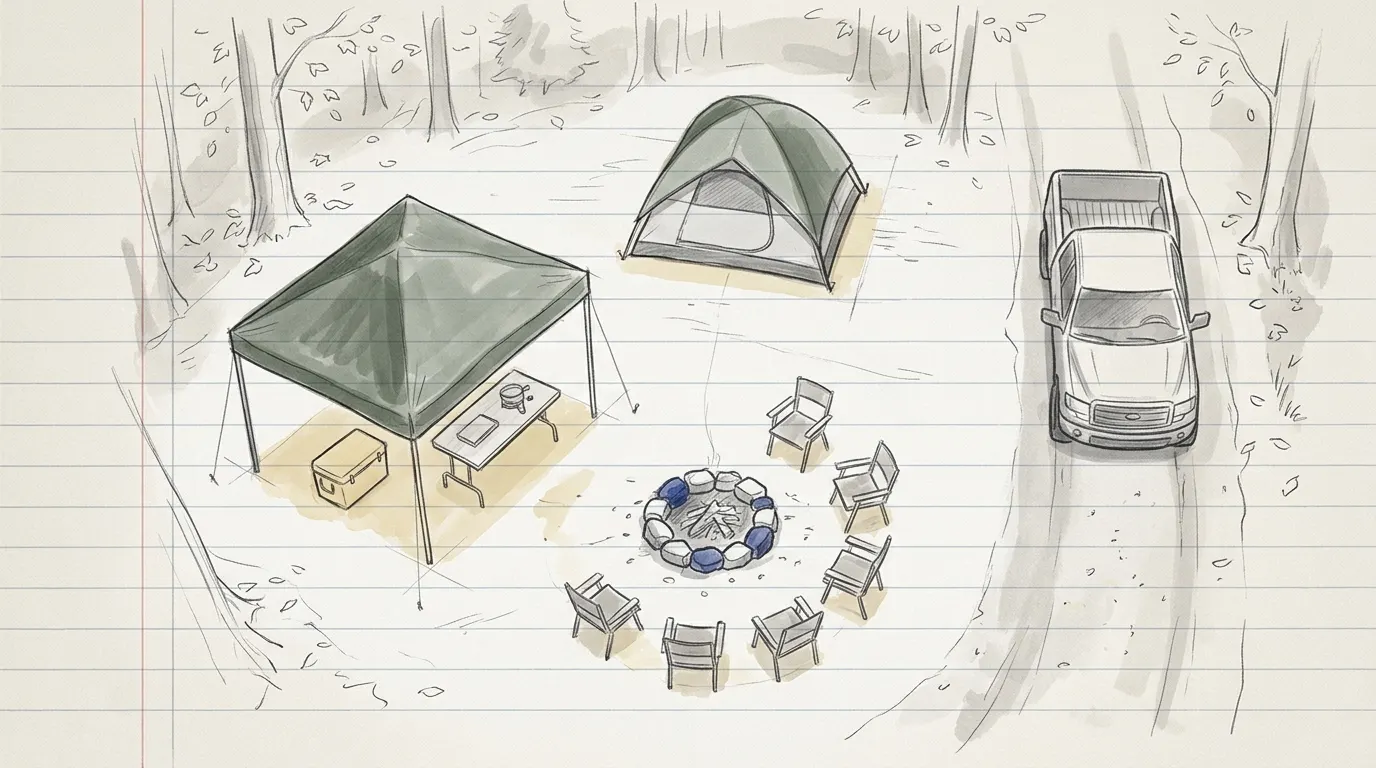
In bear country the NPS adds 200 feet between cooking and sleeping, and food stored at least 200 feet from the tent. Stake and guy out every tent and canopy. A canopy that isn't anchored belongs to the wind, not to you.
Safety at camp
Plain lines, no jokes:
- No fuel-burning heaters or lanterns while you sleep in a tent, camper or vehicle. The CPSC warns that carbon monoxide builds up, and that a camp "flu" may be CO poisoning.
- Hot tents need a stove made for tent use, set up exactly the way the tent and stove makers say.
- Keep food at 40°F or below, and don't leave perishables out more than 2 hours, 1 hour above 90°F, per the FDA.
- Keep raw meat wrapped so juices don't reach other food.
- Lightning and wind: the NPS lists both as campsite hazards. Drop canopies before a storm.
Campground rules on fires, generators and food storage vary. Check before you go.
A camp table aside
Every November somebody new asks why the camp table has a wedge of cedar shingle under one leg. It's because the cabin floor isn't level and never has been, and I'm a shop teacher, so I fixed it with the right tool. The right tool was a shingle. It's been there since '94.
Buy the camping furniture you'll want at 9 p.m. on the third night. Everything else is a nice idea.
Related
Questions people ask
What should be on a camping checklist?
Shelter (tent, stakes, ground cloth), sleep (cot or pad, sleeping bag, pillow), furniture (chairs, table), kitchen (stove, fuel, cooler, water jug, soap, trash bags), light (a headlamp each, a lantern, spare batteries), fire (lighter, starters, water and shovel), first aid, rain gear and layers, and whatever your campground's rules require. Check the list against the forecast.
What camping equipment does a beginner need first?
A tent sized for your group with room to spare, something to sleep on, a sleeping bag rated for the coldest night you expect, a chair, a headlamp and a cooler. Borrow the rest the first time out. After one trip you'll know what you missed and what you never unpacked.
How big a tent do I need for a family?
Tent capacity counts how many standard sleeping pads fit side by side, CORE Equipment explains, not how many people fit comfortably with gear. CORE's rule of two doubles the number of campers, so four people look at an 8-person tent. A queen air mattress can take up two sleepers' floor space, so check the floor dimensions.
Do I need two coolers at camp?
It helps. The FDA recommends one cooler for drinks and one for perishable food, so the food cooler isn't opened every time someone wants a drink. Keep perishables at 40°F or below. At hunting camp a third cooler for venison keeps meat apart from everything else.
Sources
- CORE Equipment: How to choose the right tent size for camping — accessed 2026-10-22
- Cascade Designs (MSR): 3-season vs 4-season tent, which is right for you? — accessed 2026-10-22
- National Park Service: Finding and setting up a campsite — accessed 2026-10-22
- U.S. Food and Drug Administration: Handling food safely while eating outdoors — accessed 2026-10-22
- Penn State Extension: Proper care and handling of venison from field to table — accessed 2026-10-22
- U.S. Consumer Product Safety Commission: Portable heaters and camping equipment — accessed 2026-10-22