What RTIC makes for hunters and campers
RTIC sells two kinds of cooler that show up on this site: hard coolers and soft coolers. Inside those two, the grid above splits into six groups:
- Ultra-Tough hard coolers: the classic ice chest, from small to very large
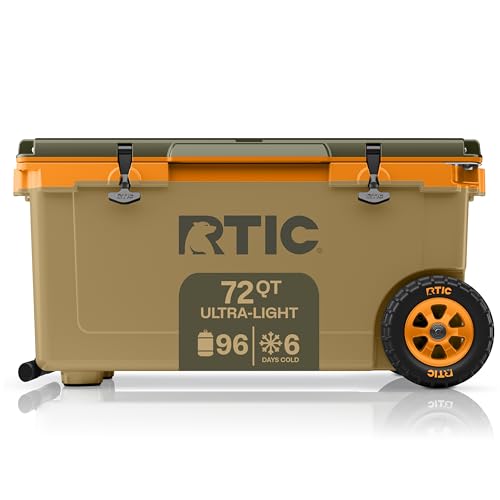
- Ultra-Light hard coolers: lighter chests, several on wheels
- Road Trip coolers: small personal hard coolers
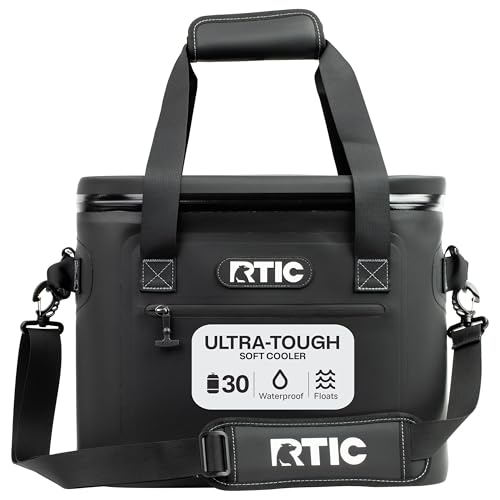
- Ultra-Tough soft coolers: tote bags with waterproof zippers per the listings
- The Ultra-Tough backpack cooler: a soft cooler with shoulder straps
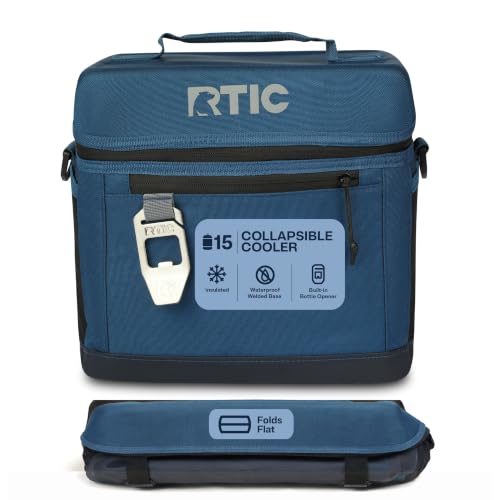
- Everyday and Chillout soft coolers: collapsible bags and insulated totes
The grid filters by type and changes as listings come and go, so I'll write about the groups and what separates them. Values marked in the grid came from Amazon listings. Where a listing doesn't say, the grid shows a dash.
RTIC also sells drinkware and bags, per Wind Point Partners' description of the company. This site doesn't list those.
The RTIC cooler lineup: hard coolers
Ultra-Tough hard coolers
These are the big, square ice chests most people picture when they hear "RTIC cooler." The listings call them hard coolers and size them in quarts, and some add a can count. The range runs from a small chest you could carry with one hand to a long one that needs a person on each end.
The big sizes are deer camp sizes. Penn State Extension's venison guide tells hunters to bring a large cooler filled with ice or snow and to cool the meat quickly, to 35–40°F. A small chest won't hold a quartered deer and the ice it needs. A large one, loaded, is a two-person lift.
Real talk: before you buy the biggest chest, measure the truck bed with the tailgate up. Then measure it again with the cooler you already own in there, because you're not leaving that one home either. Sizes across brands are on the large cooler page and the rotomolded cooler page.
Ultra-Light hard coolers
The Ultra-Light listings say these coolers are 30% lighter than rotomolded coolers. That's the maker's claim, and the listings don't give the empty weight in the data we hold, so the grid can't show you the exact number. What the grid does show is capacity and wheels.
Ultra-Light sizes run from a small cooler to a mid-size chest you'd use for a weekend. Several come as wheeled versions with a handle. Same idea, different way of moving it.
Wheeled hard coolers
The wheeled models in the grid are all Ultra-Light coolers, per their listings, from a small roller up to a large one. Wheels matter on two surfaces: a parking lot and a long gravel walk to a campsite. They matter less on leaves, roots and porch steps, where you're lifting anyway.
Renee says the wheeled cooler is "the one I let other people carry." She has a point. A wheeled cooler is the easiest one to hand off. More rollers across brands are on the cooler with wheels page.
Road Trip personal coolers
The Road Trip coolers are the small end of the hard lineup: an 8-quart personal cooler and a 16-quart, per their listings. Think lunch, a few drinks, a sandwich for the stand. A cooler this size rides on the truck seat, not in the bed. The small cooler page has more of these across brands.
The RTIC soft cooler lineup
Ultra-Tough soft coolers and the Pro version
The Ultra-Tough soft coolers are tote bags sized by cans, from a small one up to a large one. Most of their listings name a waterproof zipper, call the bag leakproof, and state 48 hours of ice retention. The listings don't say what conditions that figure comes from: how much ice, what temperature outside, how often the lid opened. Read it as the maker's number for the maker's test.
The Pro versions of the 20-can and 30-can bags carry the same listed specs in the data we hold: waterproof zipper, tote carry, 48 hours claimed. The grid shows both, so compare the listings side by side if you're choosing between them.
A soft cooler is a different tool from a hard one. It's lighter empty and squishes into a full truck. It won't double as a seat or a step, and it won't hold a quartered deer. The soft cooler page covers the type across brands.
The Ultra-Tough backpack cooler
One soft cooler in the grid carries on your back: the 48-can Ultra-Tough Backpack Cooler, with a waterproof zipper per its listing. Shoulder straps are what you want for a long walk in, both hands free for a chair and a bow case. (Renee has watched me try it with a tote. The chair lost.) Backpack coolers from other brands are on the backpack cooler page.
Everyday coolers, the insulated tote and the Chillout
The Everyday coolers are collapsible soft-sided bags, sized from a small lunch bag up to a mid-size tote. Their listings don't name a waterproof zipper or an ice-retention figure. The Everyday Insulated Tote is a larger zippered tote, and the Chillout 2-in-1 is a tote too.
These are lunch, grocery and day-trip bags. At deer camp they're the bag that brings sandwiches from the cabin to the truck, not the one that keeps the venison cold until Monday.
How to choose within the RTIC lineup
Hard or soft first
Start with what the cooler has to do. Meat and a long weekend point to a hard cooler. Lunch, drinks, or a walk in on foot point to a soft one. Hard coolers can be stood on and sat on; soft ones fold or flatten and weigh less empty. The coolers page lays out that trade across brands.
Then the size
Size the hard cooler by trip length and what goes in, not by the biggest number on the shelf. A 50-quart class cooler is a common middle ground, and the 50 qt cooler page compares that size across brands.
Soft coolers are sized in cans, which is how the maker describes them. I can't picture 30 cans as volume, but I can picture 30 cans going up the porch steps. That's the test I'd use: how much will you carry, full, and how far.
Then how you'll move it
- Carry handles: fine for small and mid-size chests over short distances
- Wheels: for parking lots, gravel and anything you'd rather pull than lift
- Tote straps: for soft coolers going from the truck to a blind or a beach
- Backpack straps: for a long walk with your hands full
My one opinion on this page: run two coolers, one for drinks and one for food. The FDA's guidance on eating outdoors says to consider packing drinks in one cooler and perishable food in another, so the food cooler isn't opened every time someone wants a soda. At camp, the drink cooler gets opened a lot.
Then the closure
A waterproof zipper on a soft cooler keeps meltwater in and rain out, per the listings that name it. A lid with latches on a hard cooler does the same job differently. If a soft cooler will ride on its side in a full truck, pick one whose listing names a waterproof or leakproof closure.
Packing and care for any RTIC cooler
Most cooler care is common sense, but a few points come straight from food-safety guidance:
- Keep cold food at 40°F or below: the FDA's line for perishable food in a cooler
- Pack frozen meat frozen: the FDA says it stays colder longer that way
- Wrap raw meat securely: so its juices don't reach ready-to-eat food
- Open the food cooler less: the FDA says to limit how often it's opened
- Drain meltwater and add ice: the FDA's advice for food kept on ice
For venison, Penn State Extension says to keep the carcass or meat out of direct sun and to bag ice or snow in plastic storage bags before packing it in the body cavity. If you rinse the meat, dry it quickly. Dry and cold is the goal.
After the trip, empty the cooler, wash it, and let it dry open before you store it. A cooler shut wet in October is a science project in April.
RTIC vs YETI
Both brands make hard coolers and soft coolers, and both turn up in the same searches. On this site the difference is mostly the mix. RTIC's grid is coolers only: hard chests, wheeled Ultra-Light models, personal coolers, soft totes and a backpack. YETI's grid has hard and soft coolers too, plus camp chairs and beach chairs.
Outside this site, Wind Point Partners describes RTIC as a direct-to-consumer brand of coolers, tumblers, bottles and travel bags. YETI's investor site describes a range from coolers and drinkware to backpacks and bags. Compare capacity, wheels and carry style size for size. The YETI brand page has its lineup.
RTIC vs Igloo
Both brands make hard and soft coolers. The difference on this site is cooling type: Igloo's grid includes electric coolers, and RTIC's grid runs on ice only. If you want a cooler that plugs into the truck, that's Igloo's side of the grid, or the electric cooler page across brands.
Igloo was founded in 1947 and is based in Katy, Texas, according to Dometic, which announced in 2021 that it was acquiring Igloo. The Igloo brand page has its lineup.
RTIC facts
Here's what I could verify from sources outside a store shelf:
- Founders: brothers Jim and John Jacobsen started RTIC in Houston, per Wind Point Partners
- Base: KPRC 2 reported in 2016 that the company was based in Cypress, Texas, and described the founders as twins
- Owner: Wind Point Partners, a Chicago private equity firm, announced it had acquired RTIC on September 2, 2020
This page doesn't cover a founding year, where the coolers are made or warranty terms. A ranked list across brands is on the best coolers page.
Pick hard or soft, pick the size you can lift full, and write on the lid which cooler is food. Walt will still open the wrong one.