Camp Gear · Gear type
Rotomolded Cooler
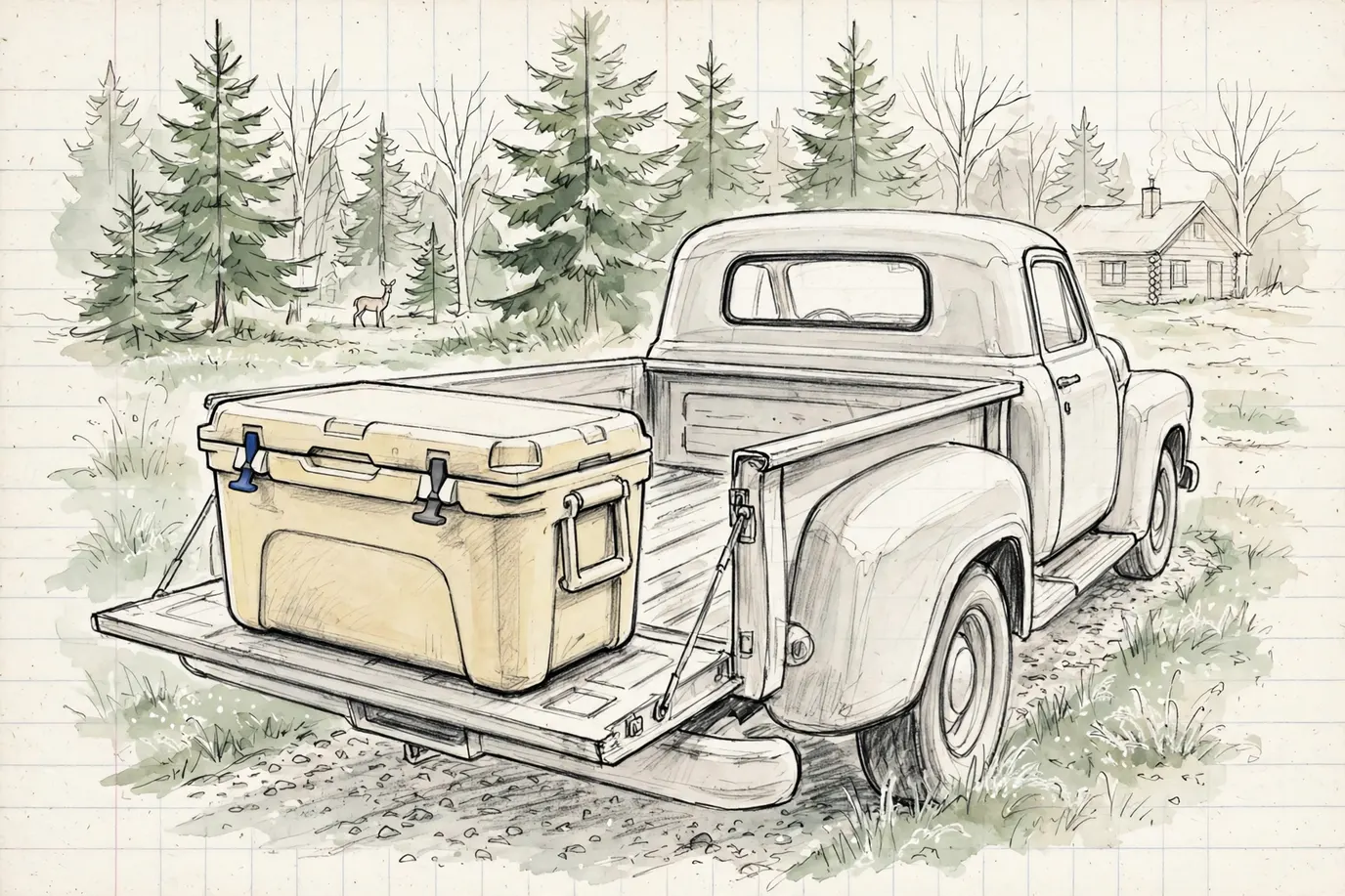
A rotomolded cooler is a hard cooler whose shell is molded as one hollow piece of plastic, then filled with foam. No seams, thick walls, extra plastic in the corners. That build is why these boxes claim the longest ice and take the most abuse, and it's also why they're the heaviest thing in the truck bed that isn't a spare tire. The choice here is whether you need what the shell buys you. (Walt calls mine "the vault." He has never once offered to lift the vault.)
We earn a commission if you buy through our links, at no cost to you. Disclosure
| Model | Weight | Capacity | Ice retention (claimed) | Wheels | Drain plug | Amazon |
|---|---|---|---|---|---|---|
Grizzly Coolers Grizzly 15Hard cooler More specs
| 12 lbmaker | 15 qtlisting | — | — | — | Check price |
Grizzly Coolers Grizzly 15Hard cooler More specs
| 12 lbmaker | 15 qtlisting | — | — | — | Check price |
Grizzly Coolers Grizzly 20Hard cooler More specs
| 16 lbmaker | 20 qtlisting | — | — | Yesmaker | Check price |
Grizzly Coolers Grizzly 20Hard cooler More specs
| 16 lbmaker | 20 qtlisting | — | — | Yesmaker | Check price |
Blue Coolers Cobalt 25Hard cooler More specs
| 14.3 lbmaker | 25 qtlisting | 3 dayslisting | — | — | Check price |
Blue Coolers Cobalt 25Hard cooler More specs
| 14.3 lbmaker | 25 qtlisting | 3 dayslisting | — | — | Check price |
Blue Coolers Cobalt 25Hard cooler More specs
| 14.3 lbmaker | 25 qtlisting | 3 dayslisting | — | — | Check price |
Blue Coolers Cobalt 25Hard cooler More specs
| 14.3 lbmaker | 25 qtlisting | 3 dayslisting | — | — | Check price |
Engel ENG35Hard cooler More specs
| 22 lbmaker | 35 qtlisting | 10 daysmaker | — | Yesmaker | Check price |
Grizzly Coolers Grizzly 45Hard cooler More specs
| 28 lbmaker | 45 qtlisting | — | — | Yesmaker | Check price |
Grizzly Coolers Grizzly 45Hard cooler More specs
| 28 lbmaker | 45 qtlisting | — | — | Yesmaker | Check price |
Engel ENG50Hard cooler More specs
| 24 lbmaker | 48 qtlisting | 10 daysmaker | — | Yesmaker | Check price |
Blue Coolers Cobalt 55Hard cooler More specs
| 26.5 lbmaker | 55 qtlisting | 10 dayslisting | — | — | Check price |
Blue Coolers Cobalt 55Hard cooler More specs
| 26.5 lbmaker | 55 qtlisting | 10 dayslisting | — | — | Check price |
Engel ENG65Hard cooler More specs
| 24 lbmaker | 58 qtlisting | 10 daysmaker | — | Yesmaker | Check price |
Dometic Patrol 55Hard cooler More specs
| 33.08 lbmaker | 58.1 qtlisting | — | — | — | Check price |
Blue Coolers Ice Vault 60 with wheelsHard cooler More specs
| 36.5 lbmaker | 60 qtlisting | 10 dayslisting | Yeslisting | — | Check price |
Grizzly Coolers Grizzly 60Hard cooler More specs
| 30 lbmaker | 60 qtlisting | — | — | Yesmaker | Check price |
Grizzly Coolers Grizzly 60Hard cooler More specs
| 30 lbmaker | 60 qtlisting | — | — | Yesmaker | Check price |
Engel ENG80Hard cooler More specs
| 32 lbmaker | 74 qtlisting | 10 daysmaker | — | Yesmaker | Check price |
Grizzly Coolers Grizzly 75Hard cooler More specs
| 34 lbmaker | 75 qtlisting | — | — | Yesmaker | Check price |
Grizzly Coolers Grizzly 100Hard cooler More specs
| 38 lbmaker | 100 qtlisting | — | — | Yesmaker | Check price |
Blue Coolers Ark 110 with wheelsHard cooler More specs
| 46 lbmaker | 110 qtlisting | 10 dayslisting | Yeslisting | — | Check price |
Grizzly Coolers Grizzly 165Hard cooler More specs
| 62 lbmaker | 165 qtlisting | — | — | Yesmaker | Check price |
Grizzly Coolers Grizzly 165Hard cooler More specs
| 62 lbmaker | 165 qtlisting | — | — | Yesmaker | Check price |
Grizzly Coolers Grizzly 165Hard cooler More specs
| 62 lbmaker | 165 qtlisting | — | — | Yesmaker | Check price |
Grizzly Coolers Grizzly 350Hard cooler More specs
| 80 lbmaker | 350 qtlisting | — | — | Yesmaker | Check price |
Grizzly Coolers Grizzly 450Hard cooler More specs
| 102 lbmaker | 450 qtlisting | — | — | Yesmaker | Check price |


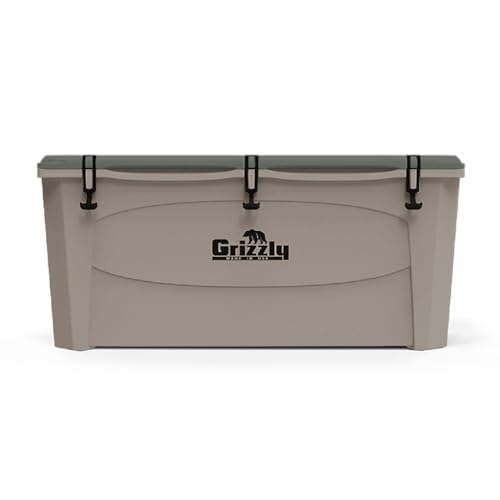


What’s in this listCoolers their maker states are rotomolded. “—” means neither the maker nor the Amazon listing states it.
What makes a rotomolded cooler different
Most coolers are built from parts. A rotomolded cooler is built as one piece, and nearly everything good and bad about it follows from that.
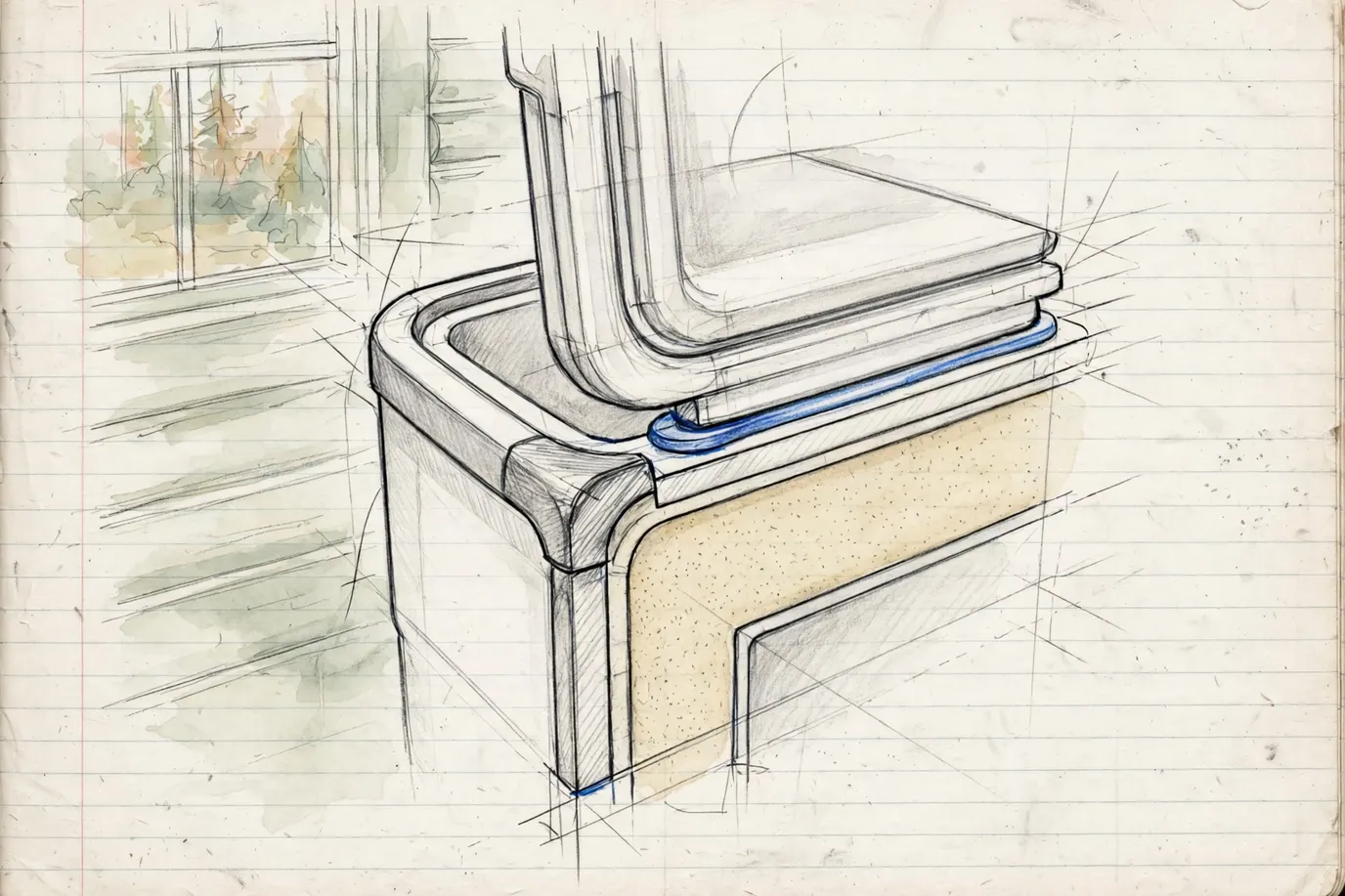
Here's the process, from one cooler maker's own explainer. Plastic powder, usually polyethylene, goes into a hollow aluminum mold. The mold heats up and turns slowly on two axes at once, so the melting resin coats every inside wall. It keeps turning while it cools, then the part comes out as a hollow shell with no seams. The walls come out an even thickness, with more material in the corners, where knocks and stress land.
Core77 adds the next step. Foam is injected into the hollow body through access ports, which end up hidden under the handles or the drain. So the foam is sealed inside a single shell rather than sandwiched between two.
Picture a chocolate Easter bunny. That's rotomolding: hollow, one piece, thick where it matters. Then somebody fills the bunny with insulation and sells it to me. (Renee says I own more coolers than the cabin has chairs. The cabin has a lot of chairs.)
The rest of a rotomolded cooler is a normal hard cooler with a lid, gasket, latches and drain. Sizing, packing order and the shared basics live on the coolers page. This page is about what the one-piece shell changes.
The table on this page lists only coolers whose maker states they're rotomolded. It shows capacity, the maker's ice retention claim, insulation, latches, drain plug, weight and dimensions as each maker or the Amazon listing lists them (listing values are marked). We don't call a cooler rotomolded because it looks thick or costs more. If the maker doesn't say it, it isn't on this list.
How to judge a rotomolded cooler, spec by spec
Every rotomolded cooler shares the same basic build, so the differences hide in the details. Here's the order I'd read the table in.
The construction line is the whole entry ticket
"Rotomolded," "roto-molded" and "rotational molded" all mean the same process. The competing build you'll see most often is injection-molded. Core77 describes how one maker does it: separate inner and outer shells are injection molded, fitted together, filled with foam, then welded ultrasonically or thermally at the joint.
The trade-offs, as Core77 reports them:
- Rotomolded: thick, tough walls; one piece; heavy
- Injection-molded: thinner walls, a weld where the shells meet, more design detail possible, about 30% lighter in that maker's case
One cooler maker's rotomolding article frames durability the same way: a one-piece shell is more resistant to cracking than a two-piece design. Neither build is wrong. They answer different questions.
Ice retention claims assume a perfect trip
The ice retention column is the maker's claim, and on rotomolded coolers it's usually the biggest number on the row. One maker lists its rotomolded hard coolers at up to 10 days, its injection-molded line at up to 7 and its soft coolers at 3 to 4. Those figures assume a pre-chilled cooler, roughly two parts ice to one part food, shade and few openings.
Another maker states its 55-quart cooler's ice retention as 4 to 7 days "depending on conditions," which is the more useful way to say it. Igloo's published method shows how lab numbers are made: a cooler filled to 90% with 10°F ice, lid shut, in an oven held at 90°F until the inside hits 40°F. Makers don't all use the same test, so compare claims with care across brands.
Real talk: a rotomolded cooler doesn't make ice. It just loses it slower. If you open it every twenty minutes for a soda, the shell can't save you from yourself.
Insulation thickness is what you're really paying for
The insulation column says what's in the walls, usually a foam. One maker credits its rotomolded line's ice life to 2 inches of insulation in the lid, sides and bottom plus a silicone gasket. Another describes its foam as "pressure-injected."
Thicker walls hold cold longer, but they come out of the inside of the box. That's why the next spec matters.
Interior and exterior dimensions tell you what the walls cost
Compare the two dimension columns before you fall for a quart number. One maker's 55-quart cooler lists its exterior at 28.5 by 15.5 by 16.75 inches and its interior top at 23 by 11.5 by 13.25. The gap is wall, foam and lid.
So a rotomolded cooler takes more truck bed for the same groceries than a thinner-walled box. Measure the spot where it'll ride. Then measure the opening: a wine bottle or a 2-liter has to stand up under the lid, and the interior height is the number that decides it.
Weight is the price of the shell
Rotomolded coolers are heavy empty. Core77 calls rotomolded parts "quite heavy," and one rotomolding maker lists "heavier and harder to transport" among the cons in its own article. The weight column shows what each maker lists, before ice and food.
Here's the thing about that weight. It's fine when the cooler lives in the truck bed or on the cabin porch. It's not fine on a long walk or up a flight of stairs. Plan on a two-person lift once it's full, and look for handles placed so two people can share it. If you'll pull it more than carry it, the cooler with wheels page covers rotomolded rollers too.
Latches have to pull the lid down, not just hold it
A thick shell only works if the lid seals. The latches column lists the style. Rubber T-latches stretch over a catch and pull the lid onto the gasket; cam or lever latches clamp it down.
Check the gasket while you're there. A soft gasket that compresses evenly all the way around is part of what the ice claim assumes. A lid you have to sit on to close is a lid that isn't sealing. (I have sat on a lid. The lid won. The ice lost.)
Can capacity: read which number the maker means
Can counts are based on the 12-ounce can, and some makers give two. One maker's 55-quart cooler lists 48 cans for maximum ice retention and 72 cans for maximum capacity. That's the ice math in one line: pack for long ice and a third of your can space goes to ice.
When you compare can counts across brands, check whether the number includes ice. Quarts are the fairer comparison.
The drain plug matters more on a heavy box
You can't easily tip a full rotomolded cooler to pour it out. The drain does that job. The table marks whether the maker or the listing lists a drain plug; one small rotomolded model lists a 2-inch drain with drain channels molded into the floor. A bigger opening empties faster, which counts when the box weighs what this one does.
Bear resistance: a certification, not a feature
Some rotomolded coolers are certified bear resistant. The Interagency Grizzly Bear Committee runs that program. A product passes a live test with captive grizzlies at a test center or a technical evaluation, and makers repeat a verification process every year.
Three things the committee is clear about:
- It has to be locked: a cooler left without its lock doesn't count as bear resistant
- Check the list: not every maker prints the certification number, so match the model on the committee's list.
- Resistant isn't proof: certification doesn't mean a bear can never get in, and it only counts when used properly.
If you camp where food storage rules apply, the land agency sets them. Ask before you go.
Are rotomolded coolers worth it for deer camp
My one opinion on this page: buy a rotomolded cooler for the trip that's longest from an ice machine, not for the one you take most often. The reason is right in the claims above. The extra days of ice and the tougher shell only pay off when you can't restock, and the extra weight is with you on every trip either way.
Where a rotomolded shell earns its keep:
- Multi-day camps with no ice run: the long claim matters most here
- Truck bed all season: one-piece walls handle bouncing better than a seam
- Bringing venison home: Penn State Extension says to cool a carcass to 35 to 40°F as fast as you can and pack coolers with bags or blocks of ice when it's above 41°F
- Bear country: only certified models, only locked
- Dry ice trips: only if the maker says the model is compatible
The other side of it: you're buying a cooler for the worst weekend of the year, and you'll carry it every other weekend too. I did that math in the truck bed, one handle at a time.
Who should skip a rotomolded cooler
Skip it if you mostly need lunch and drinks for one day. A small cooler or a soft cooler holds cold long enough for that and weighs a lot less. Skip it if the cooler has to walk any distance; one maker's rotomolding article itself suggests a cooler under 45 quarts for day trips. And skip it if you'll have truck power for a week, because an electric cooler doesn't need ice at all.
If you're between choices, an injection-molded hard cooler sits in the middle: lighter, shorter claims, still a hard shell.
Dry ice in a rotomolded cooler
Some rotomolded coolers are sold as dry ice compatible, and the thick shell is the reason. Not every cooler is, so check the maker's own page first.
Dry ice is about -109°F, and it turns into carbon dioxide gas instead of melting. Handle it with gloves, a towel or tongs; it burns skin. Never seal it airtight: open the drain plug or leave the lid cracked so the gas can escape. Keep the cooler outside your tent or camper, and drive with the windows down while it's in the vehicle.
One cooler maker says dry ice in a well-insulated hard cooler lasts about 18 to 24 hours, and up to 48 with very few openings. Wrap it in towels or newspaper and keep it away from water. The dry ice guide goes further.
Living with a rotomolded cooler
A thick shell starts warm and stays warm for a while, so pre-chill it. One maker says a warm cooler uses up good ice and suggests a sacrificial bag of ice or storing the cooler somewhere cold the night before. With this much plastic, that step does more than on a thin cooler.
After the trip:
- Wash it with soap and warm water, then sanitize with a bleach solution, per UMaine Extension.
- Leave the drain open and the lid propped until it dries.
- Store it dry, clean and out of direct sun, also UMaine's advice.
- Check the gasket and latches before next season, while the cabin's still quiet.
That's the whole deal. The shell buys you days and toughness, and you pay in pounds. If your camp is a long way from ice and close to the truck, it's a good trade. Just lift with your legs. Walt won't be helping.
Brands in this list
Related
Questions people ask
What is a rotomolded cooler?
It's a hard cooler made by rotational molding. Plastic resin goes into a heated mold that turns on two axes, so the melted plastic coats the inside evenly and forms one hollow shell with no seams with extra material in the corners. Foam is then injected into the hollow walls through ports later hidden under handles or the drain.
Are rotomolded coolers worth it?
They are if you need several days of ice, a shell that rides in a truck bed all season, or a cooler that can be certified bear resistant. They aren't for a day trip or a long carry, because they're heavy empty. One cooler maker lists its rotomolded hard coolers at up to 10 days and its injection-molded line at up to 7, both under ideal conditions.
Rotomolded vs injection-molded cooler: what's the difference?
A rotomolded body is one hollow piece with thick walls. An injection-molded cooler is two shells, inner and outer, fitted together with foam between them and welded at the joint. Core77 reports one maker's injection-molded coolers run about 30% lighter than competing rotomolded ones, with thinner walls and more design detail.
Can you put dry ice in a rotomolded cooler?
Only if the maker says the model is dry ice compatible; not every cooler is. Dry ice is about -109°F and turns into carbon dioxide gas, so open the drain plug or keep the lid cracked to let gas out, handle it with gloves, and keep the cooler out of tents and closed vehicles.
Is a rotomolded cooler bear proof?
No cooler is bear proof. Some rotomolded models are certified bear resistant by the Interagency Grizzly Bear Committee, and only when locked: the committee says a cooler that isn't locked doesn't count as bear resistant. Confirm the certification number on the committee's list, since not every maker prints it on the cooler.
Sources
- Grizzly Coolers: What is rotomolding? — accessed 2026-10-22
- Grizzly Coolers: What is a rotomolded cooler — accessed 2026-10-22
- Core77: Dometic's coolers use a different manufacturing method — accessed 2026-10-22
- Engel: Keep ice longer — accessed 2026-10-22
- Canyon Coolers: Outfitter 55 cooler (product page) — accessed 2026-10-22
- Igloo: How we test (ice retention testing) — accessed 2026-10-22
- Interagency Grizzly Bear Committee: Bear-resistant products — accessed 2026-10-22
- Grizzly Coolers: The cold hard facts about using dry ice in coolers — accessed 2026-10-22
- University of Maine Cooperative Extension: Tips for cooler food safety — accessed 2026-10-22
- Penn State Extension: Proper care and handling of venison from field to table — accessed 2026-10-22