Section
Outdoor Knife Types and What Each One Is For
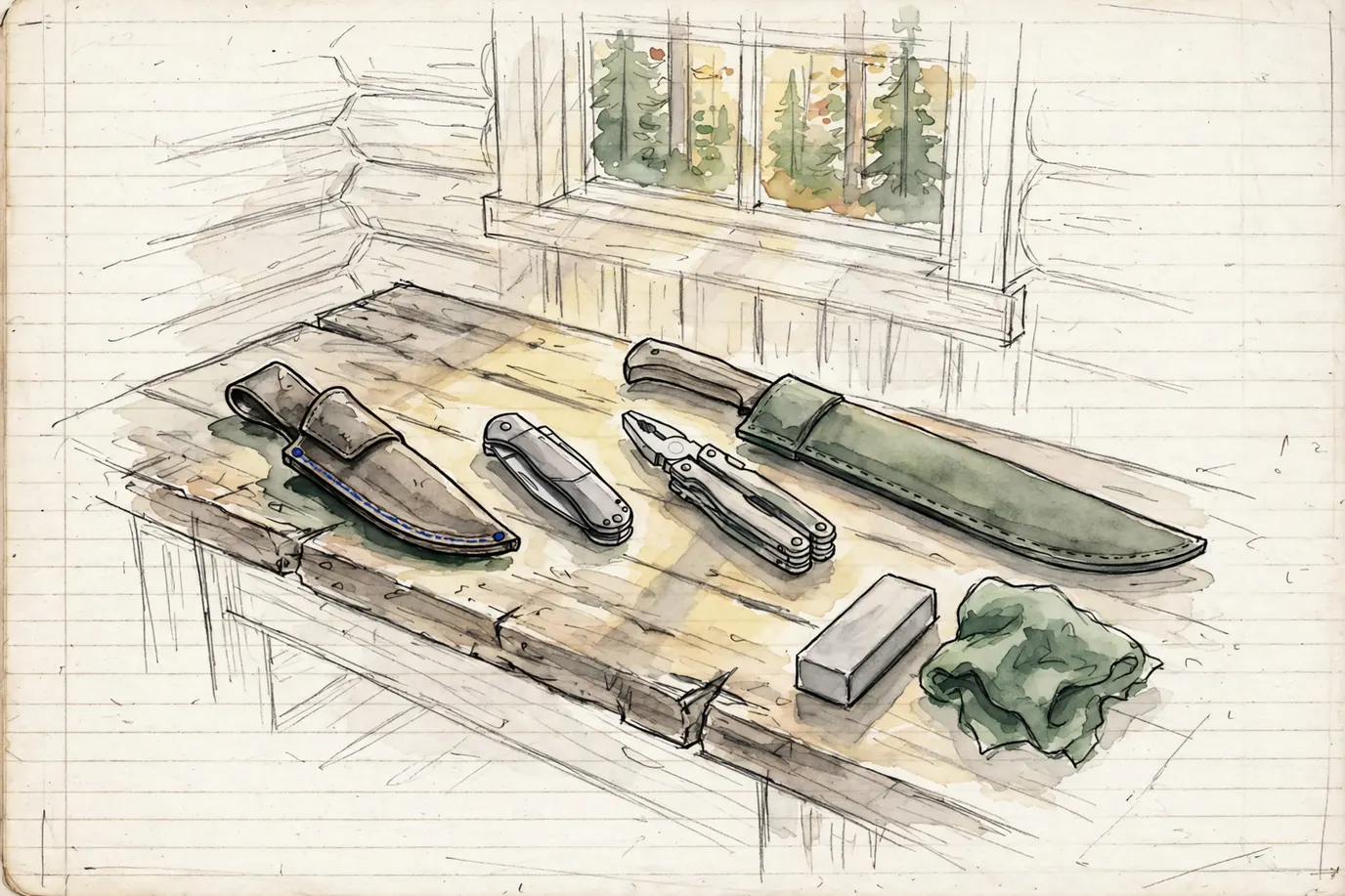
An outdoor knife is whatever blade you'll actually have on you when the job shows up: a fixed blade on the belt for field dressing, a pocket knife for the hundred small jobs around camp, a multi-tool for the things a knife shouldn't do, and a machete for brush. Most hunters need one fixed blade and one folder. Everything past that is a hobby, and I say that as a man with a coffee can full of them.
Gear in this section
Best-of lists
Best Rated Pocket Knife Picks
Folding knives whose maker or Amazon listing states the blade steel, lock type and blade length, two per brand at most.
Best EDC Knife Picks
Clip-carry folders with a blade of 3.5 inches or less and a stated weight, lightest first.
Best Pocket Knife Brands
One folding knife per brand, each with a stated blade steel and lock type.
Brands in this section
The four kinds of outdoor knife
Here's the thing: "outdoor knife" covers four tools that do four jobs. You'll be happier if you buy for the job than for the look.
- Fixed blades: hunting knives, skinning and caping knives, and general fixed blade knives
- Folders: pocket knives, lightweight pocket knives and traditional patterns
- Multi-tools: pliers-based multi-tools with a blade, drivers and more
- Big blades: machetes for brush and shooting lanes
Most hunters need one from the first group and one from the second. The other two depend on what your camp asks of you.
Fixed blades: the knife for the deer
Hunting knives and fixed-blade hunting knives
A fixed-blade hunting knife is one solid piece of steel running into the handle, with no hinge. Morakniv's guide says a full-tang blade, one that runs the whole length of the handle, adds strength for hard work; a partial tang is lighter and still plenty for cutting.
For field dressing, control beats size. Morakniv says shorter blades give more control for detail work and longer blades give reach and power. Inside a deer, you want control.
Skinning, caping and field dressing knives
These are the specialists:
- Skinning knife: a curved belly for long sweeping cuts between hide and meat
- Caping knife: a small, pointed blade for detail work around the head
- Gut-hook knife: a hook on the spine that opens the hide without cutting deeper
- Field dressing knife: a short, controllable blade, often with a gut hook
- Bird and trout knife: a small, thin blade for small game and fish
Skinning knife sets bundle two or three of these. Replaceable-blade knives use thin, scalpel-like blades you swap when they dull, which means no sharpening in the field; handle the spent blades carefully.
Survival and bushcraft knives
A full-tang survival knife is a heavier fixed blade built to split kindling, baton wood and take abuse. A bushcraft knife is similar, usually with a flat grind that carves well. Neither is the best tool for a deer, and both are better than nothing when nothing is your other option.
My one opinion: a fixed blade is easier to clean
A fixed blade is easier to clean than a folder after field dressing. There are fewer places for gunk. The reason you can check: a folder has a pivot, liners and a blade well, and every one of them catches blood and hair. Penn State Extension says to clean your knife often during field dressing, even between cuts. That's easier with one smooth piece of steel than with a hinge.
Pocket knives: the knife for everything else
How folding knives lock, or don't
Benchmade's mechanisms guide lays out the main types:
- Slip joint: a back spring holds the blade open or closed, but it doesn't lock
- Lockback: a slip joint with a lock; press the spine to release it
- Liner lock: a spring bar inside the handle snaps behind the blade
- Frame lock: the same idea, with the bar cut from the handle itself
- Assisted opening: you start it, a spring finishes it
- Automatic: a button opens it; carry and shipping rules apply
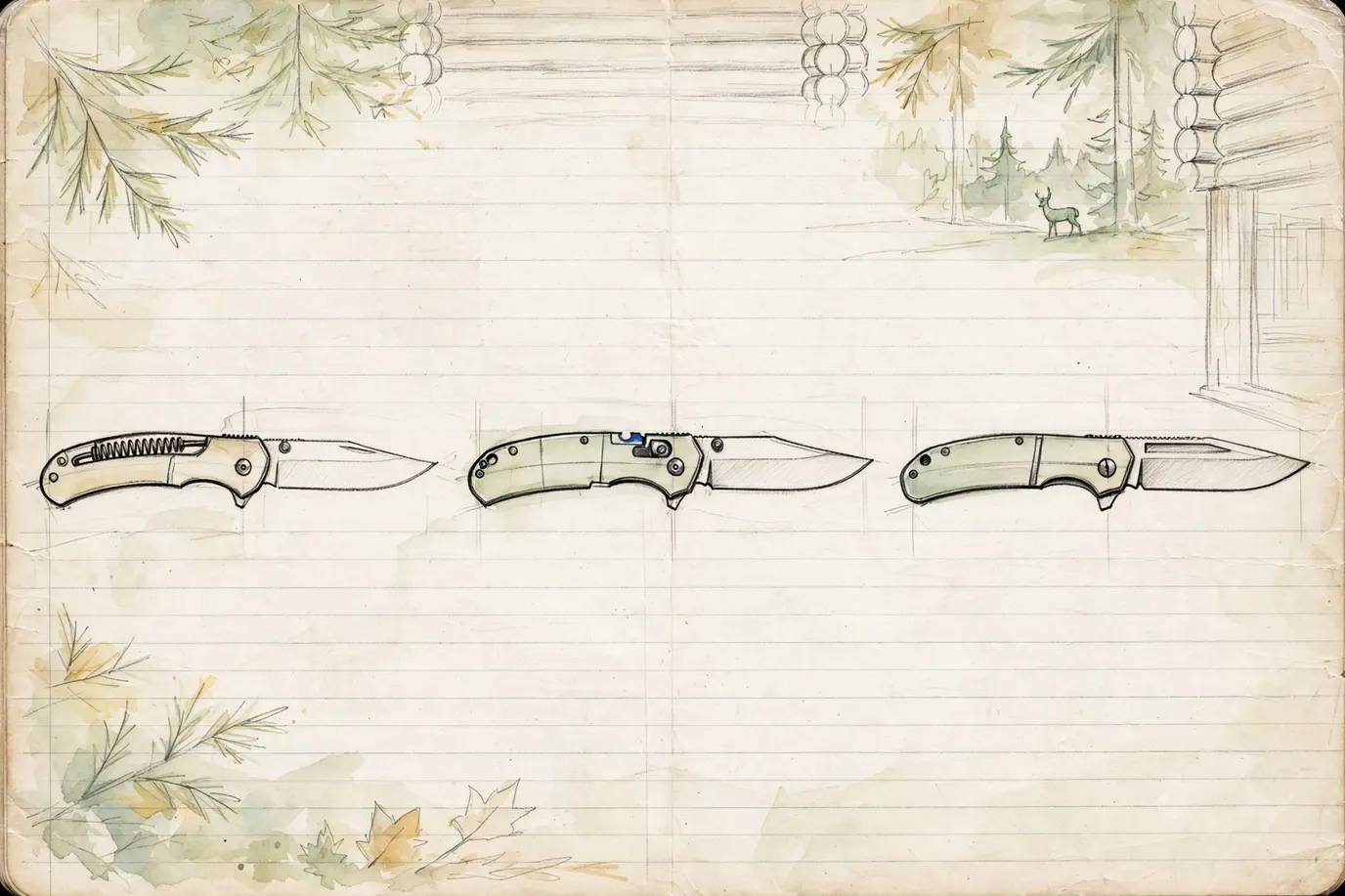
For any cutting that puts pressure on the back of the blade, a lock is the safer bet. The American Knife and Tool Institute warns that a non-locking blade can snap closed on your fingers.
Traditional patterns
Old pocket knife patterns have names that sound like a feed store: stockman (three blades of different shapes), trapper (two long blades), sodbuster (one big plain blade), Barlow (a long bolster and one or two blades). Slip joints dominate here. They're the knives most of us got from a grandfather, and the reason a lot of us still carry one.
Large pocket knives and folding hunting knives sit between a folder and a fixed blade: a long lockback or liner lock that can dress a deer in a pinch. A pocket knife with a clip rides in the pocket instead of the bottom of it. Pocket knife sets are mostly a gift aisle item, and nothing wrong with that.
Damascus and steel names
Damascus blades show a wavy pattern from layered steel. The pattern is how it looks; the steel underneath decides how it cuts. Morakniv's take on steel is plain: stainless resists rust and needs less upkeep, carbon steel sharpens easier and holds a keen edge but needs care. Pick by the weather you hunt in and how much you like oiling things.
Multi-tools: the knife that isn't
A multi-tool is pliers with a pocketful of other tools folded into the handles: a blade, screwdrivers, a file, an opener, sometimes scissors or a saw.
- Camping and backpacking multi-tools keep the weight down and the tool count useful
- Multi-tools with pliers are the shop version, for the truck and the stand
- Multi-tools with scissors handle tape, moleskin and fishing line
- Tactical multi-tools add cutters and bit drivers for gear work
- Keychain multi-tools are small enough to forget you have them
The American Knife and Tool Institute says not to use a knife as a hammer, screwdriver or pry bar, because it can slip or snap. A multi-tool is how you keep that rule. The 7/16 wrench is still not included in any of them, which is why I carry one separately.
Machetes: brush, lanes and camp chores
A machete clears shooting lanes, trails and the brush around a blind. The blade shapes are regional:
- Jungle or Latin machete: long, thin, light, for soft green growth
- Parang: heavier, curved, for woody brush
- Golok: shorter and thicker, closer to a chopper
- Bolo: weight toward the tip for chopping
- Survival machete: a mix, often with a saw back
Danny's take: "A machete is a camping knife that went to the gym." He's not wrong about the weight. Use a sheath and keep it in the sheath until you're swinging it.
Hatchets and axes, from small backpacking hatchets to forest axes, Hudson Bay patterns and splitting hatchets, are a different tool family for wood. We'll cover them separately when we get there.
How to choose an outdoor knife
Match the blade to the job
- Field dressing: a fixed blade short enough to control
- Camp chores: a locking pocket knife or a multi-tool
- Brush and lanes: a machete or saw
- Backup: a small folder or replaceable-blade knife in the pack
Check the handle with wet hands
Morakniv says to look for a handle that stays secure when wet; plastic, rubber and wood are all common. A deer cavity in November is wet, cold and slippery. Your handle should still be the one thing you're sure of.
Mind the weight and balance
Morakniv's guide says a well-balanced knife is easier to handle and less tiring. A heavy knife you leave in the truck cuts nothing.
Think about the sheath
A good sheath holds the knife in when you're climbing, sitting or bending over a deer, and lets you draw it without looking. Leather is quiet and traditional; molded plastic sheaths shed water. Either way, the sheath should cover the whole edge.
Knife safety and care
No jokes here. These are from the American Knife and Tool Institute unless noted.
- Cut away from your body and away from anyone near you.
- Keep fingers out of the blade path when you close a folder.
- Don't use a knife as a pry bar, hammer or screwdriver.
- Never carry an open knife in a pocket, and don't climb or run holding one.
- Keep it sharp. A sharp blade needs less force and slips less.
- Clean the knife often during field dressing, and wash knives and hands in warm soapy water afterward, per Penn State Extension.
- Wear disposable gloves while handling a deer, also per Penn State.
For care at home, AKTI says to oil folding mechanisms lightly, store knives in a cool, dry place, and remember that salt water is especially hard on steel. It recommends a sharpening angle of 10 to 15 degrees, with equal strokes on both sides.
Knife laws vary by state and city, and some knives may not ship to every address; Amazon shows it at checkout. Check your state's rules before you carry.
Buy once, cry once. Then oil it, so you don't have to cry twice.
Related
Questions people ask
What is the best outdoor knife for deer hunting?
A fixed-blade hunting knife with a blade you can control inside the body cavity, a handle that grips when wet, and a sheath that holds it in. Shorter blades give more control for detail work, per Morakniv. Add a small folder or replaceable-blade knife as a backup, and keep both clean between cuts, as Penn State Extension advises.
Carbon steel or stainless steel for an outdoor knife?
Morakniv sums it up: stainless resists rust and needs less upkeep, which suits wet and humid conditions; carbon steel sharpens more easily and holds a keen edge but needs more care. The American Knife and Tool Institute warns that even stainless steel can be harmed by water and some chemicals, so dry and oil any knife you put away.
Fixed blade or folding knife for hunting?
Both work. A fixed blade has no hinge to collect blood and hair, and nothing to fold shut on your fingers. A folder carries in a pocket and works for everything else at camp. If you carry a folder for game, pick one that locks, and clean the pivot afterward.
Are there legal limits on carrying a knife?
Yes, and they vary by state and city: blade length, opening mechanism and how you carry it can all matter. Benchmade notes federal law limits shipping automatic knives across state lines. Some knives may not ship to every address, and Amazon shows it at checkout. Check your state's rules before you carry.
Sources
- Morakniv: Find the right outdoor knife — accessed 2026-10-22
- Benchmade: Understanding knife mechanisms, a complete guide — accessed 2026-10-22
- American Knife and Tool Institute: Knife safety, sharpening and maintenance — accessed 2026-10-22
- Penn State Extension: Proper care and handling of venison from field to table — accessed 2026-10-22