Brand · Knives & Tools
Kershaw Knives
Kershaw makes three things a hunter or camper might carry: pocket knives, most of them assisted-opening folders with a pocket clip; fixed-blade knives, from small skinners to camp blades; and a machete, a hatchet and a diamond sharpening rod. Here's the thing: the Kershaw knives in the grid share a lot, so the choice inside the brand comes down to size, blade shape, steel and how the knife opens and locks. That's four questions. My shop students handled harder ones before lunch, and most of them still had all their fingers in June.
We earn a commission if you buy through our links, at no cost to you. Disclosure
Kershaw on Amazon US
57 models- Folding knife
Kershaw Chive
- Blade length
- 1.9 in
- Blade steel
- 420HC
- Steel type
- Stainless
- Folding knife
Kershaw Scallion
- Blade length
- 2.4 in
- Blade steel
- 420HC
- Steel type
- Stainless
- Folding knife
Kershaw Leek
- Blade length
- 3 in
- Blade steel
- Sandvik 14C28N
- Steel type
- Stainless
- Folding knife
Kershaw Blur
- Blade length
- 3.4 in
- Blade steel
- Sandvik 14C28N
- Steel type
- Stainless
- Folding knife
Kershaw Blur Partially Serrated
- Blade length
- 3.4 in
- Blade shape
- Other
- Edge
- Partially serrated
- Folding knife
Kershaw Oso Sweet
- Blade length
- 3 in
- Blade steel
- 8Cr13MoV
- Blade shape
- Drop point
- Folding knife
Kershaw Select Fire
- Blade length
- 3.4 in
- Blade steel
- 8Cr13MoV
- Blade shape
- Drop point
- Folding knife
Kershaw Brawler
- Blade length
- 3 in
- Blade steel
- 8Cr13MoV
- Steel type
- Stainless
- Folding knife
Kershaw Cryo
- Blade length
- 2.75 in
- Blade steel
- 8Cr13MoV
- Blade shape
- Drop point
- Folding knife
Kershaw Filter
- Blade length
- 3.25 in
- Blade steel
- 4Cr14
- Blade shape
- Drop point
- Folding knife
Kershaw Shuffle II
- Blade length
- 2.6 in
- Blade steel
- 8Cr13MoV
- Blade shape
- Tanto
- Folding knife
Kershaw Cathode
- Blade length
- 2.25 in
- Blade steel
- 4Cr14
- Blade shape
- Tanto
- Folding knife
Kershaw Grid
- Blade length
- 3.7 in
- Blade steel
- 8Cr13MoV
- Blade shape
- Drop point
- Folding knife
Kershaw Barricade
- Blade length
- 3.5 in
- Blade steel
- 8Cr13MoV
- Blade shape
- Drop point
- Folding knife
Kershaw Kershaw Eris Pocket Knife, Gray, 3 Inch Modified Drop Point Blade | EDC with Assisted Opening, Reversible Pocketclip, Everyday Carry for Men and Women
Check price - Folding knife
Kershaw Kershaw Shuffle DIY Folding Pocket Knife, 2.4 Inch Drop Point Blade | EDC Utility, With Flathead and Phillips Bit Driver, Manual Opening, Everyday Carry for Men and Women
Check price - Folding knife
Kershaw Outright
- Blade length
- 3 in
- Blade steel
- 8Cr13MoV
- Blade shape
- Trailing point
- Folding knife
Kershaw Fringe
- Blade length
- 3 in
- Blade steel
- 8Cr13MoV
- Steel type
- Stainless
- Folding knife
Kershaw Misdirect 1365
- Blade steel
- 4Cr14
- Blade shape
- Reverse tanto
- Edge
- Plain
- Folding knife
Kershaw Camshaft
- Blade length
- 3 in
- Blade steel
- 4Cr14
- Blade shape
- Clip point
- Folding knife
Kershaw Kapsule
- Blade length
- 1.9 in
- Blade steel
- 8Cr13MoV
- Blade shape
- Spear point
- Folding knife
Kershaw Analyst
- Blade length
- 3.25 in
- Blade steel
- 8Cr13MoV
- Steel type
- Stainless
- Folding knife
Kershaw LoneRock RBK 2
- Blade length
- 2.8 in
- Blade shape
- Drop point
- Folding knife
Kershaw Appa
- Blade length
- 2.75 in
- Steel type
- Stainless
- Blade shape
- Reverse tanto
- Folding knife
Kershaw Outlier
- Blade length
- 2.6 in
- Blade steel
- 8Cr13MoV
- Steel type
- Stainless
- Folding knife
Kershaw Iridium
- Blade length
- 3.4 in
- Blade steel
- D2
- Steel type
- Tool steel
- Folding knife
Kershaw Conduit
- Blade length
- 2.9 in
- Blade steel
- 8Cr13MoV
- Steel type
- Stainless
- Folding knife
Kershaw Kershaw Hatch Pocket Knife, Black and Gray, 3.15 Inch Cleaver | EDC with Manual Opening, Reversible Deep Carry, Everyday Carry for Men and Women
Check price - Folding knife
Kershaw Kershaw Wharf Pocket Knife, Gray, 2.8 Inch Cleaver Blade | EDC with Assisted Opening, Reversible Deep-Carry Pocketclip, Everyday Carry for Men and Women
Check price - Folding knife
Kershaw Gravel
- Blade length
- 2.5 in
- Blade steel
- 8Cr13MoV
- Steel type
- Stainless
- Folding knife
Kershaw Analyst Tanto
- Blade length
- 3.25 in
- Blade steel
- 8Cr13MoV
- Steel type
- Stainless
- Folding knife
Kershaw Dawnstar
- Blade length
- 3.5 in
- Blade steel
- 8Cr13MoV
- Steel type
- Stainless
- Folding knife
Kershaw Misdirect Rainbow
- Blade length
- 3 in
- Blade steel
- 4Cr14
- Blade shape
- Reverse tanto
- Folding knife
Kershaw Iridium
- Blade length
- 3.4 in
- Blade steel
- D2
- Blade shape
- Spear point
- Folding knife
Kershaw Appa Olive
- Blade length
- 2.75 in
- Blade shape
- Reverse tanto
- Folding knife
Kershaw Kershaw Barricade Folding Pocket Knife, Serrated Blade Rescue Multifunction Knife
Check price - Folding knife
Kershaw Kershaw Raygun Folding Pocket Knife, 2.8 inch 4Cr14 Gray Stainless Steel Blade, Stonewashed Finish, Black Handle, Liner Lock, Pocketclip
Check price - Folding knife
Kershaw Bareknuckle
- Blade length
- 3.5 in
- Blade steel
- MagnaCut
- Folding knife
Kershaw Misdirect XL
- Blade steel
- 4Cr14
- Steel type
- Stainless
- Blade shape
- Reverse tanto
- Folding knife
Kershaw Kershaw Blur USA Flag Folding Pocket Knife, Made in USA, 3.4 Inch 14C28N Steel Recurve Blade, EDC with Assisted Opening, Aluminum Handle with Trac-Tec Grip, Reversible Pocketclip, Everyday Carry Knife
Check price - Fixed blade knife
Kershaw Secret Agent
- Blade length
- 4.4 in
- Blade steel
- 8Cr13MoV
- Steel type
- Stainless
- Fixed blade knife
Kershaw Dune
- Blade length
- 3.8 in
- Blade steel
- 3Cr13
- Steel type
- Stainless
- Fixed blade knife
Kershaw Kershaw TX Multi-Function Magnetic Bit Driver, Aluminum Handle Multi-Tool | With T6, T8, T10, Phillips and Slotted Screwdriver Bits, Adjustable Pocket Clip, For Kershaw Knife Adjustment and Maintenance
Check price - Fixed blade knife
Kershaw Camp 5 Bowie
- Blade length
- 4.75 in
- Blade steel
- D2
- Steel type
- Tool steel
- Fixed blade knife
Kershaw Brace
- Blade length
- 2 in
- Blade steel
- 8Cr13MoV
- Steel type
- Stainless
- Fixed blade knife
Kershaw Arise 1398
- Blade length
- 4.2 in
- Fixed blade knife
Kershaw Deschutes Caper
- Blade length
- 3.3 in
- Blade steel
- D2
- Steel type
- Tool steel
- Fixed blade knife
Kershaw Deschutes Skinner
- Blade length
- 3.9 in
- Blade steel
- D2
- Steel type
- Tool steel
- Fixed blade knife
Kershaw Deschutes Skinner Gut Hook
- Blade length
- 3.9 in
- Blade steel
- D2
- Steel type
- Tool steel
- Fixed blade knife
Kershaw Steppe
- Blade length
- 3.55 in
- Blade steel
- D2
- Steel type
- Tool steel
- Fixed blade knife
Kershaw Pack Mule
- Blade length
- 3.9 in
- Overall length
- 8.4 in
- Blade steel
- N690
- Fixed blade knife
Kershaw Atreides
- Blade length
- 5.7 in
- Overall length
- 11.4 in
- Blade steel
- 65Mn
- Fixed blade knife
Kershaw Mini Iridium
- Blade length
- 3.1 in
- Blade steel
- D2
- Steel type
- Tool steel
- Machete
Kershaw Camp 10 Machete
- Blade length
- 10 in
- Blade steel
- 65Mn
- Steel type
- Carbon
- Machete
Kershaw Camp 10 Machete
- Blade length
- 10 in
- Blade steel
- 65Mn
- Steel type
- Carbon
- Knife sharpener
Kershaw Ultra-Tek
- Style
- Sharpening rod
- Abrasive
- Diamond
- Coarsest grit
- 600 grit
- Axe or hatchet
Kershaw Deschutes Skinner Hatchet
- Weight
- 1.56 lb
- Overall length
- 14 in
- Sheath included
- Yes


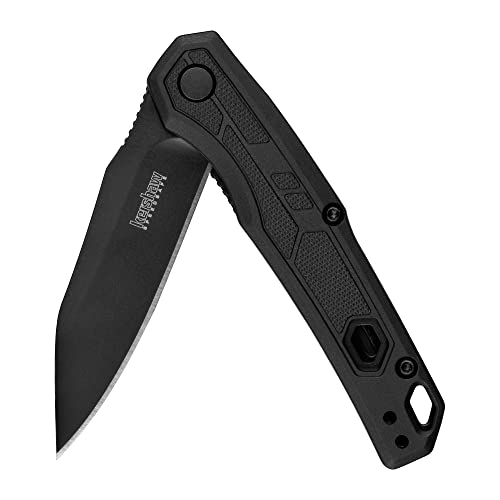


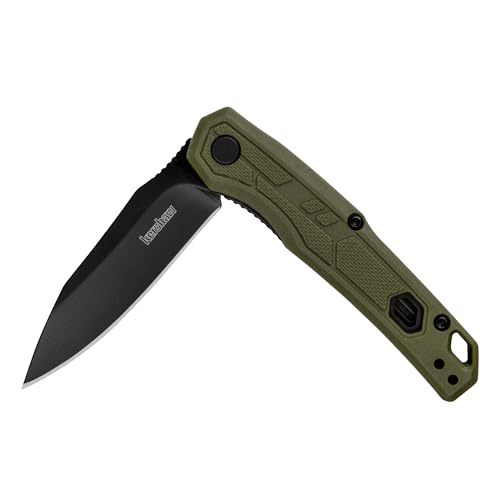
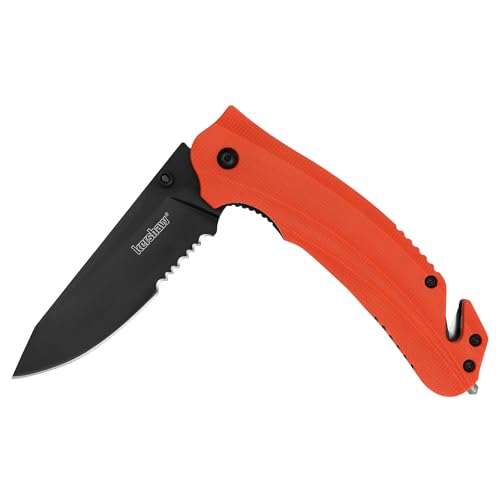


What Kershaw makes for hunters and campers
On this site, Kershaw covers five product types: folding knives, fixed-blade knives, machetes, a hatchet and a sharpener. The folders are the biggest part of the grid by a long way. Most are assisted-opening knives with pocket clips, which is the thing the brand is best known for. The fixed blades split into hunting knives with sheaths and a handful of camp and utility blades. The machete is the Camp 10, the hatchet is the Deschutes Skinner Hatchet, and the sharpener is the Ultra-Tek rod.
The grid above filters by type and changes as listings come and go. So I'll write about the groups and what separates them, not how many of each are up this week.
Almost every spec on this page comes from Amazon listings, and the grid marks those values. Where a listing leaves a field blank, the grid shows a dash. I left those blanks alone.
The Kershaw pocket knife: small assisted folders
Kershaw names its small folders like the produce aisle: Chive, Scallion, Leek. (I keep waiting for the Rutabaga. It would be a heavy knife.)
These are the little ones, with blades from just under 2 inches to about 3. Per their listings:
- Chive and Kapsule: the smallest blades in the grid, under 2 inches
- Scallion and Cathode: a step up, with polymer or plain handles
- Leek: a 3-inch drop point in Sandvik 14C28N with a steel handle
- Cryo, Appa, Gravel, Outlier, Shuffle II: 2.5 to 2.75-inch blades in drop point, tanto and reverse tanto shapes
Nearly all list assisted opening and a pocket clip. Most use 8Cr13MoV or 420HC stainless; the Leek's 14C28N is the exception. Morakniv's steel guide calls 14C28N corrosion resistant and easy to maintain, and says it takes more effort to resharpen. That's a fair trade for a pocket knife that sees more cardboard than deer.
A knife this size suits the daily jobs at camp: cutting cord, opening feed bags, trimming a fly. For a cross-brand look at small folders, see the lightweight pocket knife page and the everyday carry knife page.
Full-size assisted folders
The middle of the lineup is full-size folders with blades from about 3 to 3.7 inches. The listings describe:
- Blur: a 3.4-inch blade in 14C28N with an aluminum handle, also offered partly serrated with a liner lock
- Oso Sweet: a 3-inch drop point in 8Cr13MoV, polymer handle, liner lock
- Grid and Barricade: the longest drop points in this group, around 3.5 to 3.7 inches
- Analyst and Analyst Tanto: 3.25-inch tantos, one plain and one partly serrated
- Misdirect and Misdirect Rainbow: 4Cr14 reverse tantos with steel handles; the Misdirect lists a frame lock
- Outright, Camshaft, Filter, Conduit, Dawnstar: drop point, clip point, trailing point and spear point shapes around 3 inches
A few full-size models (the Select Fire, Brawler, Fringe and LoneRock RBK 2) leave the opening type blank in their listings, so the grid does too.
How the assisted opening works
An assisted folder isn't an automatic knife. Benchmade's mechanisms guide explains the general idea: a torsion spring helps the blade open, but you have to start the opening by hand, with a thumb stud or a flipper tab. The spring is biased toward closing, which keeps the blade shut in the pocket. Kershaw's own about page says its assisted-opening knives were first to market.
Rule of thumb: practice opening and closing at the kitchen table before the first trip. The blade moves faster than you expect the first time, and your fingers should be well out of its path.
Kershaw DuraLock folders
Two folders in the grid use a different lock: the Iridium, in D2 steel with an aluminum handle, and the Bareknuckle, in MagnaCut. Their listings describe a crossbar-type lock and thumb-stud opening instead of assisted opening. The Bareknuckle's listing calls the lock DuraLock, and Kershaw's site groups these knives under that name.
Benchmade's guide describes this kind of lock as a small spring-loaded bar that moves across the blade's tang. The guide calls it ambidextrous and good for one-handed use. That's handy in a stand when the other hand is holding the bow rope.
What separates the two is the steel: D2, which the listings class as a tool steel, on the Iridium, and MagnaCut on the Bareknuckle. The blades are close in size, 3.4 and 3.5 inches. The Iridium comes in more than one handle color.
The Kershaw hunting knife: fixed blades with sheaths
This is the group most hunters will look at first. The listings describe full-tang blades with sheaths on almost all of them:
- Deschutes Skinner: a 3.9-inch drop point in D2, also offered with a gut hook and a polypropylene handle
- Deschutes Caper: a 3.3-inch clip point in D2 with a flat grind, the detail knife of the set
- Steppe: a 3.55-inch D2 drop point with a polypropylene handle and a nylon sheath
- Pack Mule: a 3.9-inch clip point in N690 steel, G10 handle, with a kydex-type sheath
- Mini Iridium: a 3.1-inch D2 reverse tanto with a Micarta handle and a plastic sheath
- Brace: a 2-inch drop point in 8Cr13MoV with a plastic sheath
The Deschutes Skinner and Caper go together like a hammer and a nail set. The longer drop point does the opening and skinning; the shorter clip point handles the close work. A gut hook is a notch on the spine that opens the hide without cutting deeper. Decide whether you'll actually use one before you pay for it in the listing.
The listings class D2 as a tool steel, not a stainless one. Wipe it dry after a wet day like any knife, and oil it before it goes in the drawer. Shapes and sizes across brands are on the hunting knife page and the skinning knife page.
Camp and utility fixed blades
The rest of the fixed blades are bigger or built for general work:
- Camp 5 Bowie: a 4.75-inch clip point in D2, full tang, with a sheath
- Secret Agent: a 4.4-inch spear point in 8Cr13MoV with a glass-filled nylon handle and a nylon sheath
- Arise: a 4.2-inch spear point
- Dune: a 3.8-inch tanto in 3Cr13 stainless with a nylon sheath
- Atreides: the longest of the group, a 5.7-inch tanto in 65Mn steel with a rubber-overmolded handle
These are camp knives more than field-dressing knives. A tanto's angular point suits straight utility cuts more than the curved work around a deer. The camping knife page and the bowie knife page compare those shapes across brands.
The Camp 10 machete
The Camp 10 is the brand's machete on this site, listed with a 10-inch blade in 65Mn carbon steel, a rubberized handle and a sheath. It turns up twice in the grid, in two listings.
A 10-inch machete is a trail and brush tool: clearing shooting lanes, cutting saplings off a stand path, splitting kindling for the stove. Danny says he wants one for "fire logistics." He means he wants to swing something.
Carbon steel asks for more care than stainless. Morakniv's guide says carbon steel is more prone to rust in humid conditions and needs careful drying and oiling after use, and that it's easier to resharpen. The machete page covers lengths and blade shapes across brands.
The Deschutes Skinner Hatchet
Kershaw's one axe on this site carries the Deschutes name, like the fixed-blade hunting knives. Its listing puts it at hatchet length, with a 3Cr13 steel head, a nylon or polymer handle and a sheath, and names camping and splitting as its uses. The listing doesn't give a head weight, and I won't guess one.
A hatchet is a one-hand tool for kindling and small limbs, used on a chopping block with the free hand well back. It doesn't replace a splitting axe on full rounds. The camping hatchet page and the hatchet vs axe guide sort sizes across brands. Keep the sheath on whenever it rides in a pack or the truck.
The Ultra-Tek sharpening rod
The Ultra-Tek is a diamond sharpening rod, per its listing, with a single medium grit and a length that suits a kit bag better than a kitchen drawer.
That fits the care habit below: frequent light sharpening beats rescuing a dull knife. The sharpening rod page and the hunting knife sharpening guide cover the rest.
How to choose within the Kershaw lineup
Pick the job first
Pocket knife for daily chores, fixed blade for field dressing, machete for brush, hatchet for kindling. That's the split the grid's type filter makes, and it's the right first cut. The pocket knife page and the fixed blade knife page lay out the trade across brands.
Then the blade length
The folders run from under 2 inches to just under 4. The fixed blades run from 2 inches to almost 6, and the machete goes to 10. For field dressing a deer, the short and mid-length drop points and clip points are the usual tools. Long blades belong at the woodpile.
Then the blade shape
- Drop point: tip in line with the spine, the all-round hunting shape
- Clip point: a thinner tip for detail work, as on the Deschutes Caper
- Tanto and reverse tanto: an angular, strong tip, more utility than skinning
- Spear point: a centered tip, symmetrical on both sides
Then the edge
My one opinion on this page: for a hunting knife, buy the plain edge. Kershaw's warranty page says the company sharpens knives sent in for warranty service but can't sharpen serrated edges. A plain edge is also the one you can touch up on a stone at the cabin table. Partly serrated folders like the Analyst and Gravel cut rope and strapping fine, and that's where they belong.
Then the lock and opening
Assisted opening with a liner or frame lock, or a DuraLock with a thumb stud. Learn the close on the knife you buy before you need it in the dark. Benchmade's guide notes that closing a frame lock still puts your hand in the blade path, so go slow.
Care for the whole Kershaw lineup
A knife wants three things: clean, dry and a drop of oil. AKTI's maintenance guide recommends:
- A toothpick for dirt in the handle and around the pivot
- Light oil on the folding mechanism of a knife you use often
- Drying after rain, since water can harm even stainless steel
- A cool, dry drawer, not a damp basement or garage
- Frequent light sharpening instead of rescuing a very dull edge
Cut away from your body. Keep your fingers out of a folder's closing arc; AKTI warns the spring can snap the blade shut. Don't use any knife as a pry bar. Kershaw's warranty calls prying and twisting misuse.
Kershaw brand facts
Here's what I could verify from the maker's own pages:
- Founded: 1974, per Kershaw's about page
- Owner: Kai USA Ltd., a member of the Kai Group, per the same page; Kai USA describes the Kai Group as more than 100 years old and headquartered in Tokyo
- Where made: many products in a 55,000-square-foot facility in Tualatin, Oregon, per Kershaw
- Warranty: limited lifetime for the original owner, not transferable, per Kershaw's warranty page
That's the list. Put the knife back in the same drawer every time, and you won't spend November asking where it went.
Where Kershaw shows up
Often compared
Questions about Kershaw
Are Kershaw knives good?
What the data and the maker state is checkable. The listings in the grid name the steel, blade length and shape for most models, from 8Cr13MoV and 4Cr14 stainless to D2 tool steel, Sandvik 14C28N and MagnaCut. Kershaw says it was founded in 1974 and backs its knives with a limited lifetime warranty for the original owner. Whether one suits you depends on the job: pocket carry, field dressing or camp chores.
Who makes Kershaw knives?
Kershaw's about page says Kershaw Knives is a brand of Kai USA Ltd., a member of the Kai Group. Kai USA's own page describes itself as the U.S. arm of a Kai Group that is more than 100 years old and headquartered in Tokyo, and lists Kershaw alongside Zero Tolerance, Shun and Kai Housewares.
Where are Kershaw knives made?
Kershaw says many of its products are made in its 55,000-square-foot facility in Tualatin, Oregon. It doesn't say all of them are. Some listings in the grid, like the Chive's, say made in the USA in the title, and others don't. Read the listing of the exact knife if country of manufacture matters to you.
What warranty do Kershaw knives have?
Kershaw lists a limited lifetime warranty for the original owner against defects in production. It's not transferable. The maker excludes normal wear, rust, accidents and loss, calls any use other than cutting, such as prying or twisting, misuse, and voids the warranty on modified knives. It also says it sharpens knives sent in for warranty service, except serrated edges.
Does Kershaw make a camp axe?
The Kershaw axe in the grid is the Deschutes Skinner Hatchet, a hatchet-length tool. Its listing gives a 3Cr13 steel head, a nylon or polymer handle and a sheath, and names camping and splitting. For brush rather than wood, the Camp 10 machete is the other chopping tool here. The hatchet page compares sizes across brands.
Where can I buy Kershaw knives?
The product grid on this page links to Kershaw listings on Amazon US, filtered by pocket knife, fixed blade, machete, hatchet and sharpener. Some knives may not ship to every address; Amazon shows that at checkout. Knife carry rules vary by state, especially for assisted-opening knives, so check your state's rules.
Sources
- Kershaw Knives: About us — accessed 2026-10-28
- Kershaw Knives: Warranty — accessed 2026-10-28
- Kai USA: About Kai USA — accessed 2026-10-28
- Benchmade: Knife mechanisms guide — accessed 2026-10-28
- Morakniv: Steel types and coatings — accessed 2026-10-28
- American Knife & Tool Institute: Knife safety, sharpening and maintenance — accessed 2026-10-28