Knives & Tools · Gear type
Hunting Knife
A hunting knife has one main job: open a deer and get the meat cooling without cutting anything you didn't mean to. For most whitetail hunters that means a fixed blade with a short, controllable drop point, a handle that holds when it's wet, and a steel you'll actually keep sharp. Everything else on the spec sheet is a detail. Here's the thing: the deer doesn't care what the knife cost. It cares that you knew where the tip was.
We earn a commission if you buy through our links, at no cost to you. Disclosure
| Model | Blade thickness | Blade length | Overall length | Blade steel | Steel type | Amazon |
|---|---|---|---|---|---|---|
ESEE Pinch Neck KnifeFixed blade knife More specs
| — | 1.3 inlisting | 3.4 inlisting | 1095listing | Carbonlisting | Check price |
BeaverCraft C15 Detail Whittling KnifeFixed blade knife More specs
| — | 1.4 inlisting | — | — | Carbonlisting | Check price |
KA-BAR Last DitchFixed blade knife More specs
| — | 1.6 inlisting | — | 9Cr18listing | Stainlesslisting | Check price |
CRKT Scribe 2425KFixed blade knife More specs
| — | 1.74 inlisting | — | D2listing | Tool steellisting | Check price |
Camillus Heater II 4.25"Fixed blade knife More specs
| — | 1.75 inlisting | 4.25 inlisting | 420listing | Stainlesslisting | Check price |
BÖKER Cop ToolFixed blade knife More specs
| 0.2 inlisting | 1.8 inlisting | 6 inlisting | 440Clisting | Stainlesslisting | Check price |
Kershaw BraceFixed blade knife More specs
| — | 2 inlisting | — | 8Cr13MoVlisting | Stainlesslisting | Check price |
Knives Ranch Dandy 2006C-BFixed blade knife More specs
| 0.125 inlisting | 2 inlisting | 5.5 inlisting | 5160listing | Carbonlisting | Check price |
Mtech USA Neck Knife StonewashedFixed blade knife More specs
| 0.11 inlisting | 2 inlisting | 4.75 inlisting | — | — | Check price |
Ontario Knife Company NonaFixed blade knife More specs
| 0.154 inlisting | 2 inlisting | 7 inlisting | 420listing | Stainlesslisting | Check price |
Smith & Wesson 5 in False EdgeFixed blade knife More specs
| — | 2 inlisting | 5 inlisting | 8Cr13MoVlisting | Stainlesslisting | Check price |
Smith & Wesson 5 in 2 in 1 False EdgeFixed blade knife More specs
| — | 2 inlisting | 5 inlisting | 8Cr13MoVlisting | Stainlesslisting | Check price |
Kizer Whiskey JackFixed blade knife More specs
| — | 2.06 inlisting | — | — | Damascuslisting | Check price |
CRKT Minimalist Bowie 2387Fixed blade knife More specs
| — | 2.12 inlisting | — | — | — | Check price |
Hogue EX-F03 2.25-Inch HawkbillFixed blade knife More specs
| — | 2.25 inlisting | — | 154CMlisting | — | Check price |
Hogue EX-F03 2.25-Inch Hawkbill PiranhaFixed blade knife More specs
| — | 2.25 inlisting | — | 154CMlisting | — | Check price |
CIVIVI TyphoeusFixed blade knife More specs
| — | 2.27 inlisting | 6.25 inlisting | 14C28Nlisting | Stainlesslisting | Check price |
Condor OtziFixed blade knife More specs
| — | 2.3 inlisting | — | 1095listing | Carbonlisting | Check price |
KA-BAR TDI 1477CBFixed blade knife More specs
| — | 2.3 inlisting | — | AUS-8Alisting | Stainlesslisting | Check price |
Morakniv EldrisFixed blade knife More specs
| — | 2.3 inlisting | — | — | Stainlesslisting | Check price |
Morakniv Eldris Light DutyFixed blade knife More specs
| — | 2.3 inlisting | — | — | Stainlesslisting | Check price |
NedFoss Vulture Neck KnifeFixed blade knife More specs
| — | 2.3 inlisting | — | 14C28Nlisting | Stainlesslisting | Check price |
SOG SnarlFixed blade knife More specs
| — | 2.3 inlisting | 4.3 inlisting | 9Cr18MoVlisting | Stainlesslisting | Check price |
SOG Instinct NB1012-CPFixed blade knife More specs
| — | 2.3 inlisting | 5.9 inlisting | — | — | Check price |
KA-BAR TDI Law EnforcementFixed blade knife More specs
| — | 2.3125 inlisting | — | AUS-8listing | Stainlesslisting | Check price |
CRKT Razel Compact 4036Fixed blade knife More specs
| — | 2.32 inlisting | — | D2listing | Tool steellisting | Check price |
Huaao 6.3-Inch Fixed Blade KydexFixed blade knife More specs
| — | 2.36 inlisting | 6.34 inlisting | 8Cr13Movlisting | Stainlesslisting | Check price |
Huaao 6.3-Inch Fixed Blade Leather SheathFixed blade knife More specs
| — | 2.36 inlisting | 6.34 inlisting | 8Cr13Movlisting | Stainlesslisting | Check price |
United Cutlery Bushmaster MarajoFixed blade knife More specs
| — | 2.375 inlisting | 6.375 inlisting | 1095listing | Carbonlisting | Check price |
CRKT Testy 7524Fixed blade knife More specs
| — | 2.38 inlisting | — | 420J2listing | Stainlesslisting | Check price |
CIVIVI Baby Banter Fixed Blade 2.39"Fixed blade knife More specs
| — | 2.39 inlisting | — | Nitro-Vlisting | Stainlesslisting | Check price |
BÖKER M.U.K.Fixed blade knife More specs
| — | 2.4 inlisting | 6.7 inlisting | 14C28Nlisting | Stainlesslisting | Check price |
Huaao Full Tang 8Cr13Mov Kydex Fixed BladeFixed blade knife More specs
| — | 2.4 inlisting | 6.22 inlisting | 8Cr13Movlisting | Stainlesslisting | Check price |
Huaao Full Tang Leather Sheath Hunting KnifeFixed blade knife More specs
| 0.14 inlisting | 2.4 inlisting | 6.22 inlisting | 8Cr13MoVlisting | Stainlesslisting | Check price |
Knives Of Alaska SureGrip Cub Bear CapingFixed blade knife More specs
| — | 2.4 inlisting | — | D2listing | Tool steellisting | Check price |
ESEE CR2.5Fixed blade knife More specs
| 0.13 inlisting | 2.5 inlisting | — | — | — | Check price |
Gerber DIBSFixed blade knife More specs
| — | 2.5 inlisting | 5.96 inlisting | — | — | Check price |
Gerber StoweFixed blade knife More specs
| — | 2.5 inlisting | 5.96 inlisting | — | — | Check price |
Huaao Spear Point EDC Fixed BladeFixed blade knife More specs
| 0.15 inlisting | 2.5 inlisting | 6.7 inlisting | 440Clisting | Stainlesslisting | Check price |
Knives Ranch Damascus EDC Utility RosewoodFixed blade knife More specs
| 0.125 inlisting | 2.5 inlisting | 6 inlisting | — | Damascuslisting | Check price |








Outdoor Edge Pivot Drop PointFixed blade knife More specs
| — | 2.5 inlisting | — | — | — | Check price |
|---|---|---|---|---|---|---|
Outdoor Edge Razor APX 2.5 inFixed blade knife More specs
| — | 2.5 inlisting | — | — | — | Check price |
Puma SGB Caping POMFixed blade knife More specs
| — | 2.5 inlisting | 5.75 inlisting | 1.4116listing | Stainlesslisting | Check price |
Puma SGB Caping JacarandaFixed blade knife More specs
| — | 2.5 inlisting | 5.75 inlisting | 1.4116listing | Stainlesslisting | Check price |
United Cutlery Combat Commander Mini Boot KnifeFixed blade knife More specs
| — | 2.5 inlisting | — | AUS-6listing | Stainlesslisting | Check price |
Spyderco ArkFixed blade knife More specs
| — | 2.56 inlisting | 4.98 inlisting | H-2listing | — | Check price |
Kizer Drop BearFixed blade knife More specs
| — | 2.57 inlisting | — | D2listing | Tool steellisting | Check price |
SOG Gambit GB1001-CPFixed blade knife More specs
| — | 2.58 inlisting | 7.28 inlisting | — | — | Check price |
BÖKER BFF PackliteFixed blade knife More specs
| — | 2.6 inlisting | 6.1 inlisting | MagnaCutlisting | Powder steellisting | Check price |
Condor Kephart Camp KnifeFixed blade knife More specs
| — | 2.6 inlisting | — | 1075listing | Carbonlisting | Check price |
Huaao 2.6-Inch Stonewashed Fixed BladeFixed blade knife More specs
| — | 2.6 inlisting | — | 8Cr13Movlisting | Stainlesslisting | Check price |
Huaao 2.6-Inch 8Cr13Mov Fixed BladeFixed blade knife More specs
| — | 2.6 inlisting | — | 8Cr13Movlisting | Stainlesslisting | Check price |
Outdoor Edge Pivot WharncliffeFixed blade knife More specs
| — | 2.6 inlisting | — | — | — | Check price |
Schrade Delta Class Wolverine MiniFixed blade knife More specs
| — | 2.6 inlisting | 6.3 inlisting | 65Mnlisting | — | Check price |
ESEE Izula-IIFixed blade knife More specs
| — | 2.63 inlisting | 6.75 inlisting | 1095listing | Carbonlisting | Check price |
ESEE Izula-IIFixed blade knife More specs
| — | 2.63 inlisting | 6.75 inlisting | 1095listing | Carbonlisting | Check price |
ESEE Izula-IIFixed blade knife More specs
| — | 2.63 inlisting | 6.75 inlisting | 1095listing | Carbonlisting | Check price |
Huaao 6.6-Inch 440C Fixed BladeFixed blade knife More specs
| — | 2.64 inlisting | 6.6 inlisting | 440Clisting | Stainlesslisting | Check price |
Spyderco Swick 5Fixed blade knife More specs
| — | 2.7 inlisting | 5.87 inlisting | LC200Nlisting | — | Check price |
Spyderco Swick 6Fixed blade knife More specs
| — | 2.7 inlisting | 5.87 inlisting | LC200Nlisting | — | Check price |
Spyderco Swick 5 SpyderEdgeFixed blade knife More specs
| — | 2.7 inlisting | 5.87 inlisting | LC200Nlisting | — | Check price |
KA-BAR TDI InvestigatorFixed blade knife More specs
| — | 2.71 inlisting | — | AUS-8listing | Stainlesslisting | Check price |
Helle Mandra FGFixed blade knife More specs
| — | 2.72 inlisting | — | 12C27listing | Stainlesslisting | Check price |
Buck Knives 635 PakLite CapeFixed blade knife More specs
| — | 2.75 inlisting | 7.125 inlisting | 420HClisting | Stainlesslisting | Check price |
Elk Ridge ER-059Fixed blade knife More specs
| — | 2.75 inlisting | 7 inlisting | — | — | Check price |
Elk Ridge ER-059CAFixed blade knife More specs
| — | 2.75 inlisting | 7 inlisting | — | — | Check price |
Elk Ridge 7-Inch Camo Wood Handle Fixed BladeFixed blade knife More specs
| — | 2.75 inlisting | 7 inlisting | — | — | Check price |
Huaao EDC Fixed Blade Neck Knife KydexFixed blade knife More specs
| — | 2.75 inlisting | 6.42 inlisting | — | Stainlesslisting | Check price |
Huaao EDC Fixed Blade Neck Knife KydexFixed blade knife More specs
| — | 2.75 inlisting | 6.42 inlisting | — | Stainlesslisting | Check price |
Kizer Beaver Nitro-V 1078M1Fixed blade knife More specs
| — | 2.75 inlisting | — | Nitro-Vlisting | — | Check price |
Kizer Beaver D2Fixed blade knife More specs
| — | 2.75 inlisting | — | D2listing | Tool steellisting | Check price |
Kizer Beaver 2Fixed blade knife More specs
| — | 2.75 inlisting | — | D2listing | Tool steellisting | Check price |
Knives Ranch Damascus Finger Groove 3055-BFixed blade knife More specs
| 0.125 inlisting | 2.75 inlisting | 6.5 inlisting | — | Damascuslisting | Check price |
LionSteel M1 WalnutFixed blade knife More specs
| — | 2.75 inlisting | — | M390listing | Powder steellisting | Check price |
LionSteel M1 SantosFixed blade knife More specs
| — | 2.75 inlisting | — | M390listing | Powder steellisting | Check price |
Smith & Wesson FDE Boot KnifeFixed blade knife More specs
| — | 2.75 inlisting | 6.25 inlisting | 8Cr13MoVlisting | Stainlesslisting | Check price |
Spyderco Enuff SaltFixed blade knife More specs
| — | 2.75 inlisting | 6.75 inlisting | — | — | Check price |
United Cutlery Undercover KarambitFixed blade knife More specs
| — | 2.75 inlisting | 6.5 inlisting | — | Stainlesslisting | Check price |
BÖKER Pocket RocketFixed blade knife More specs
| — | 2.76 inlisting | 4.92 inlisting | D2listing | Tool steellisting | Check price |
Helle NyingFixed blade knife More specs
| — | 2.76 inlisting | — | — | — | Check price |
Benchmade Hidden Canyon Hunter 15017Fixed blade knife More specs
| — | 2.8 inlisting | — | S30Vlisting | — | Check price |
Smith & Wesson SW910TAM Neck KnifeFixed blade knife More specs
| — | 2.8 inlisting | 5.9 inlisting | — | Stainlesslisting | Check price |
Spyderco Subway BowieFixed blade knife More specs
| — | 2.8 inlisting | 5.11 inlisting | LC200Nlisting | — | Check price |
Spyderco Subway Bowie Black CeramicFixed blade knife More specs
| — | 2.8 inlisting | 5.11 inlisting | LC200Nlisting | — | Check price |
Uncle Henry PH2N Next GenFixed blade knife More specs
| — | 2.8 inlisting | 6.75 inlisting | high carbon stainless steellisting | Stainlesslisting | Check price |
CIVIVI SOKN C22027-2Fixed blade knife More specs
| — | 2.82 inlisting | — | Nitro-Vlisting | Stainlesslisting | Check price |
NedFoss Vulture EDCFixed blade knife More specs
| — | 2.87 inlisting | — | 14C28Nlisting | Stainlesslisting | Check price |
QSP NeckmukFixed blade knife More specs
| — | 2.87 inlisting | — | D2listing | Tool steellisting | Check price |
Buck Knives 662 Alpha Scout SelectFixed blade knife More specs
| — | 2.875 inlisting | — | 420HClisting | Stainlesslisting | Check price |
ESEE Izula-IIFixed blade knife More specs
| 0.16 inlisting | 2.875 inlisting | 6.75 inlisting | 1095listing | Carbonlisting | Check price |
Buck Knives 662 Alpha Scout SelectFixed blade knife More specs
| — | 2.88 inlisting | — | 420HClisting | Stainlesslisting | Check price |
CRKT Minimalist Nessmuk 2376Fixed blade knife More specs
| — | 2.9 inlisting | — | D2listing | Tool steellisting | Check price |
Schrade Delta Class AdderFixed blade knife More specs
| — | 2.9 inlisting | 6.4 inlisting | AUS-10listing | — | Check price |
Schrade Delta Class Adder 7Cr17MoVFixed blade knife More specs
| — | 2.9 inlisting | 6.4 inlisting | 7Cr17MoVlisting | Stainlesslisting | Check price |
Spyderco Stok FB50Fixed blade knife More specs
| — | 2.9 inlisting | — | 8Cr13MoVlisting | Stainlesslisting | Check price |
CIVIVI Hunting Fixed Blade C25084-3Fixed blade knife More specs
| — | 2.93 inlisting | — | 14C28Nlisting | Stainlesslisting | Check price |
Kizer SmoltFixed blade knife More specs
| — | 2.93 inlisting | — | AEB-Llisting | Stainlesslisting | Check price |
Grand Way Micarta Tactical Fixed BladeFixed blade knife More specs
| — | 2.95 inlisting | 6.61 inlisting | 440Clisting | Stainlesslisting | Check price |
Joker Topo CC57Fixed blade knife More specs
| — | 2.95 inlisting | — | 1.4116listing | Stainlesslisting | Check price |
Joker Erizo TS1Fixed blade knife More specs
| — | 2.95 inlisting | — | — | — | Check price |
NedFoss SquirrelFixed blade knife More specs
| — | 2.97 inlisting | 6.3 inlisting | — | — | Check price |
Helle SkogFixed blade knife More specs
| — | 2.99 inlisting | — | — | — | Check price |
Bone Collector BC807 Skinning KnifeFixed blade knife More specs
| 0.125 inlisting | 3 inlisting | 6.5 inlisting | 440listing | Stainlesslisting | Check price |
Bone Collector BC-794 Skinning KnifeFixed blade knife More specs
| — | 3 inlisting | 7 inlisting | — | — | Check price |
Bone Collector 7 Inch Tactical Field KnifeFixed blade knife More specs
| — | 3 inlisting | 7 inlisting | — | Stainlesslisting | Check price |
Camillus Tyrant 7.25"Fixed blade knife More specs
| — | 3 inlisting | 7.25 inlisting | D2listing | Tool steellisting | Check price |
Condor Mini Bushlore KnifeFixed blade knife More specs
| — | 3 inlisting | — | 1075listing | Carbonlisting | Check price |
Elk Ridge ER-088Fixed blade knife More specs
| — | 3 inlisting | 7.25 inlisting | 3Cr13listing | Stainlesslisting | Check price |
Elk Ridge ER-534Fixed blade knife More specs
| — | 3 inlisting | 6.75 inlisting | 3Cr13listing | Stainlesslisting | Check price |
Elk Ridge 6-Inch Wood Handle Fixed BladeFixed blade knife More specs
| — | 3 inlisting | 6 inlisting | 3Cr13listing | Stainlesslisting | Check price |
Elk Ridge 6-Inch Wood Handle Fixed BladeFixed blade knife More specs
| — | 3 inlisting | 6 inlisting | 3Cr13listing | Stainlesslisting | Check price |
Elk Ridge Raghorn ER-534BKCSFixed blade knife More specs
| — | 3 inlisting | 6.75 inlisting | 3Cr13listing | Stainlesslisting | Check price |
Flissa 3" 14C28N Ebony Wood Fixed BladeFixed blade knife More specs
| — | 3 inlisting | — | 14C28Nlisting | Stainlesslisting | Check price |
KA-BAR Wrench Fixed BladeFixed blade knife More specs
| — | 3 inlisting | — | — | — | Check price |
KA-BAR Blackout Forged Wrench KnifeFixed blade knife | — | 3 inlisting | — | 425listing | Stainlesslisting | Check price |
Kizer BuddyFixed blade knife More specs
| — | 3 inlisting | — | AEB-Llisting | Stainlesslisting | Check price |
Knives Ranch 7 in Damascus EDC 3056-BFixed blade knife More specs
| 0.125 inlisting | 3 inlisting | 7 inlisting | — | Damascuslisting | Check price |
Knives Ranch Damascus EDC 4402-IRWFixed blade knife More specs
| 0.125 inlisting | 3 inlisting | 6 inlisting | — | Damascuslisting | Check price |
Knives Ranch Damascus EDC 4402-BFixed blade knife More specs
| 0.125 inlisting | 3 inlisting | 6 inlisting | — | Damascuslisting | Check price |
Knives Ranch Damascus EDC Pancake SheathFixed blade knife More specs
| 0.125 inlisting | 3 inlisting | 7 inlisting | — | Damascuslisting | Check price |
Knives Ranch EDC Fixed Blade 4402C-BFixed blade knife More specs
| 0.125 inlisting | 3 inlisting | 6 inlisting | 5160listing | Carbonlisting | Check price |
Knives Ranch 7 in Paring EDC 3056C-BFixed blade knife More specs
| 0.125 inlisting | 3 inlisting | 7 inlisting | 5160listing | Carbonlisting | Check price |
Outdoor Edge Razor APX 3 inFixed blade knife More specs
| — | 3 inlisting | — | — | — | Check price |
Outdoor Edge Razor HTX 3 inFixed blade knife More specs
| — | 3 inlisting | — | — | — | Check price |
Perkin Damascus SkinnerFixed blade knife More specs
| — | 3 inlisting | 6.5 inlisting | — | Damascuslisting | Check price |
Smith & Wesson M&P ShieldFixed blade knife More specs
| — | 3 inlisting | 7.5 inlisting | 8Cr13MoVlisting | Stainlesslisting | Check price |
Tops Little BroFixed blade knife More specs
| 0.19 inlisting | 3 inlisting | — | 1095listing | Carbonlisting | Check price |
Tops Delta Unit 3Fixed blade knife More specs
| — | 3 inlisting | 7.13 inlisting | — | — | Check price |
CRKT S.P.E.W. 2388Fixed blade knife More specs
| — | 3.02 inlisting | — | — | — | Check price |
CRKT Biwa 2382Fixed blade knife More specs
| — | 3.02 inlisting | — | high carbon stainlesslisting | Stainlesslisting | Check price |
Fox Knives Tribal K FX-803Fixed blade knife More specs
| — | 3.07 inlisting | — | N690Colisting | Stainlesslisting | Check price |
Eafengrow EF167Fixed blade knife More specs
| 0.16 inlisting | 3.1 inlisting | 7 inlisting | VG-10listing | Stainlesslisting | Check price |
Eafengrow EF169Fixed blade knife More specs
| 0.16 inlisting | 3.1 inlisting | 7.4 inlisting | AUS-10listing | Stainlesslisting | Check price |
Eafengrow EF169Fixed blade knife More specs
| 0.16 inlisting | 3.1 inlisting | 7.4 inlisting | AUS-10listing | Stainlesslisting | Check price |
Kershaw Mini IridiumFixed blade knife More specs
| — | 3.1 inlisting | — | D2listing | Tool steellisting | Check price |
LionSteel AgoFixed blade knife More specs
| — | 3.11 inlisting | — | M390listing | Powder steellisting | Check price |
Fallkniven TK6Fixed blade knife More specs
| — | 3.12 inlisting | 7 inlisting | — | — | Check price |
Case M 3 FinnFixed blade knife | — | 3.125 inlisting | 6.5 inlisting | — | — | Check price |
Case Buffalo Horn Hunter BhmfinnFixed blade knife | — | 3.125 inlisting | 6.25 inlisting | — | — | Check price |
SZCO 6 in Double-Edged Boot KnifeFixed blade knife More specs
| — | 3.125 inlisting | 6 inlisting | — | Stainlesslisting | Check price |
Buck Knives 113 Ranger SkinnerFixed blade knife More specs
| — | 3.13 inlisting | — | 420HClisting | Stainlesslisting | Check price |
Case Leather Mini Finn HunterFixed blade knife More specs
| — | 3.13 inlisting | 6.5 inlisting | — | — | Check price |
Tops 3 PointerFixed blade knife More specs
| 0.13 inlisting | 3.13 inlisting | 6.63 inlisting | 1095listing | Carbonlisting | Check price |
BeaverCraft C4 Sloyd Whittling KnifeFixed blade knife More specs
| — | 3.14 inlisting | — | — | Carbonlisting | Check price |
BÖKER Little Dvalin TantoFixed blade knife More specs
| — | 3.14 inlisting | 6.53 inlisting | D2listing | Tool steellisting | Check price |
Kizer HareFixed blade knife More specs
| — | 3.14 inlisting | — | D2listing | Tool steellisting | Check price |
Bpsknives Finn LiteFixed blade knife More specs
| — | 3.15 inlisting | 7.01 inlisting | — | — | Check price |
Bpsknives AuroraFixed blade knife More specs
| — | 3.15 inlisting | 7.01 inlisting | VG-10listing | Stainlesslisting | Check price |
Grand Way 6.7-Inch Tiger Claw Tactical KnifeFixed blade knife More specs
| — | 3.15 inlisting | 6.7 inlisting | 440Clisting | Stainlesslisting | Check price |
Helle PolarisFixed blade knife More specs
| — | 3.15 inlisting | — | 14C28Nlisting | Stainlesslisting | Check price |
Joker BS9 Avispa CN117Fixed blade knife More specs
| — | 3.15 inlisting | — | 14C28Nlisting | Stainlesslisting | Check price |
Joker BS9 Avispa CM117Fixed blade knife More specs
| — | 3.15 inlisting | — | 14C28Nlisting | Stainlesslisting | Check price |
Joker Artica NV156Fixed blade knife More specs
| — | 3.15 inlisting | — | 14C28Nlisting | Stainlesslisting | Check price |
KA-BAR TDI Pocket StrikeFixed blade knife More specs
| — | 3.188 inlisting | — | AUS-8listing | Stainlesslisting | Check price |
CIVIVI TimberbarkFixed blade knife More specs
| — | 3.2 inlisting | — | 14C28Nlisting | Stainlesslisting | Check price |
NedFoss Bulwark TantoFixed blade knife More specs
| — | 3.2 inlisting | — | D2listing | Tool steellisting | Check price |
Buck Knives 684 Small BuckLite Max IIFixed blade knife More specs
| — | 3.25 inlisting | 7.5 inlisting | 420HClisting | Stainlesslisting | Check price |
Camillus Western Coil 8"Fixed blade knife More specs
| — | 3.25 inlisting | — | 420listing | Stainlesslisting | Check price |
Cold Steel Kyoto 3.25"Fixed blade knife More specs
| — | 3.25 inlisting | — | 8Cr13MoVlisting | Stainlesslisting | Check price |
Mtech USA Clip Point Molded Sheath Ball ChainFixed blade knife More specs
| — | 3.25 inlisting | 5.75 inlisting | 3Cr13listing | Stainlesslisting | Check price |
Mtech USA Clip Point Molded Sheath Ball Chain TanFixed blade knife More specs
| — | 3.25 inlisting | 5.75 inlisting | 3Cr13listing | Stainlesslisting | Check price |
Old Timer Sharpfinger 1227060Fixed blade knife More specs
| — | 3.25 inlisting | 7 inlisting | — | Stainlesslisting | Check price |
Rough Rider Slim Design Fixed BladeFixed blade knife More specs
| — | 3.25 inlisting | — | — | Stainlesslisting | Check price |
Rough Rider RR2394Fixed blade knife | — | 3.25 inlisting | — | — | — | Check price |
Smith & Wesson Extreme Ops KarambitFixed blade knife More specs
| — | 3.25 inlisting | 7 inlisting | 8Crlisting | — | Check price |
Uncle Henry 301UH Next GenFixed blade knife More specs
| — | 3.25 inlisting | 6.5 inlisting | high carbon stainless steellisting | Stainlesslisting | Check price |
Condor Pangui Neck KnifeFixed blade knife More specs
| — | 3.3 inlisting | — | 1095listing | Carbonlisting | Check price |
Eafengrow EF180Fixed blade knife More specs
| 0.16 inlisting | 3.3 inlisting | 7.4 inlisting | 14C28Nlisting | Stainlesslisting | Check price |
Hogue Extrak 3.3-Inch OrangeFixed blade knife More specs
| — | 3.3 inlisting | — | — | — | Check price |
Kershaw Deschutes CaperFixed blade knife More specs
| — | 3.3 inlisting | — | D2listing | Tool steellisting | Check price |
Knives Of Alaska SureGrip Magnum UluFixed blade knife More specs
| — | 3.3 inlisting | — | D-2listing | Tool steellisting | Check price |
Old Timer Old Timer SharpfingerFixed blade knife More specs
| — | 3.3 inlisting | 7.1 inlisting | high carbon stainless steellisting | Stainlesslisting | Check price |
Old Timer 152OTBC Pro Hunter SharpfingerFixed blade knife More specs
| — | 3.3 inlisting | 7.1 inlisting | high carbon stainless steellisting | Stainlesslisting | Check price |
Schrade 152OTBC Pro Hunter SharpfingerFixed blade knife More specs
| — | 3.3 inlisting | 7.1 inlisting | high carbon stainless steellisting | Stainlesslisting | Check price |
Huaao 8Cr13Mov G10 EDC Fixed BladeFixed blade knife More specs
| 0.16 inlisting | 3.31 inlisting | 7.56 inlisting | 8Cr13MoVlisting | Stainlesslisting | Check price |
CRKT Siwi 2082Fixed blade knife More specs
| — | 3.34 inlisting | — | SK-5listing | Carbonlisting | Check price |
Joker Rabbit CC76Fixed blade knife More specs
| — | 3.34 inlisting | 6.89 inlisting | — | Stainlesslisting | Check price |
Kizer Cabox 1048A1Fixed blade knife More specs
| — | 3.35 inlisting | — | D2listing | Tool steellisting | Check price |
Kizer Cabox 1048A3Fixed blade knife More specs
| — | 3.36 inlisting | — | D2listing | Tool steellisting | Check price |
Cold Steel Kyoto II 3-3/8"Fixed blade knife More specs
| — | 3.375 inlisting | — | 8Cr13MoVlisting | Stainlesslisting | Check price |
Eafengrow EF168Fixed blade knife More specs
| 0.14 inlisting | 3.4 inlisting | 7.2 inlisting | AUS-10listing | Stainlesslisting | Check price |
Eafengrow EF168Fixed blade knife More specs
| 0.14 inlisting | 3.4 inlisting | 7.2 inlisting | AUS-10listing | Stainlesslisting | Check price |
Eafengrow EF173Fixed blade knife More specs
| 0.14 inlisting | 3.4 inlisting | 7.4 inlisting | VG-10listing | Stainlesslisting | Check price |
Eafengrow EF176Fixed blade knife More specs
| — | 3.4 inlisting | 7.4 inlisting | 14C28Nlisting | Stainlesslisting | Check price |
Flissa 14C28N Fixed Blade 3.4"Fixed blade knife More specs
| — | 3.4 inlisting | — | 14C28Nlisting | Stainlesslisting | Check price |
NedFoss RavenFixed blade knife More specs
| — | 3.4 inlisting | 7.95 inlisting | 14C28Nlisting | Stainlesslisting | Check price |
NedFoss PioneerFixed blade knife More specs
| — | 3.4 inlisting | — | 14C28Nlisting | Stainlesslisting | Check price |
Eafengrow EF121Fixed blade knife More specs
| 0.11 inlisting | 3.42 inlisting | 6.93 inlisting | D2listing | Tool steellisting | Check price |
Fiskars Utility Knife 1023618Fixed blade knife More specs
| — | 3.43 inlisting | — | — | — | Check price |
Helle ArvFixed blade knife More specs
| — | 3.43 inlisting | — | — | — | Check price |
Condor Trivittata Puukko 3.47"Fixed blade knife More specs
| 0.12 inlisting | 3.47 inlisting | — | 1095listing | Carbonlisting | Check price |
Accusharp Gut Hook Skinning KnifeFixed blade knife More specs
| — | 3.5 inlisting | — | 420listing | Stainlesslisting | Check price |
Accusharp Caping KnifeFixed blade knife More specs
| — | 3.5 inlisting | — | 420listing | Stainlesslisting | Check price |
BÖKER Bronco MiniFixed blade knife More specs
| — | 3.5 inlisting | — | CPM-3Vlisting | Powder steellisting | Check price |
Bone Collector 7.5-Inch Gut Hook Skinning KnifeFixed blade knife More specs
| — | 3.5 inlisting | — | — | — | Check price |
Eafengrow EF171Fixed blade knife More specs
| 0.14 inlisting | 3.5 inlisting | 7.7 inlisting | VG10listing | Stainlesslisting | Check price |
Eafengrow EF171Fixed blade knife More specs
| 0.14 inlisting | 3.5 inlisting | 7.7 inlisting | VG10listing | Stainlesslisting | Check price |
Eafengrow EF172Fixed blade knife More specs
| 0.14 inlisting | 3.5 inlisting | 7.7 inlisting | 14C28Nlisting | Stainlesslisting | Check price |
Eafengrow EF182Fixed blade knife More specs
| 0.16 inlisting | 3.5 inlisting | 7.6 inlisting | 14C28Nlisting | Stainlesslisting | Check price |
Elk Ridge 8.75-Inch Red Camo Handle Fixed BladeFixed blade knife More specs
| — | 3.5 inlisting | 8.75 inlisting | 3Cr13listing | Stainlesslisting | Check price |
Elk Ridge 8.75-Inch Camo Rubber Handle Fixed BladeFixed blade knife More specs
| — | 3.5 inlisting | 8.75 inlisting | 3Cr13listing | Stainlesslisting | Check price |
ESEE RB3Fixed blade knife More specs
| 0.13 inlisting | 3.5 inlisting | 8.125 inlisting | 1095listing | Carbonlisting | Check price |
ESEE Ashley Game Skinning KnifeFixed blade knife More specs
| — | 3.5 inlisting | 8.25 inlisting | 1095listing | Carbonlisting | Check price |
Knives Of Alaska SureGrip Light HunterFixed blade knife More specs
| — | 3.5 inlisting | 7.5 inlisting | D2listing | Tool steellisting | Check price |
Mtech USA Fixed Blade KarambitFixed blade knife More specs
| — | 3.5 inlisting | 7.5 inlisting | — | Stainlesslisting | Check price |
NedFoss Hyenas BushcraftFixed blade knife More specs
| — | 3.5 inlisting | — | 440Clisting | Stainlesslisting | Check price |
Old Timer 158OT Guthook SkinnerFixed blade knife More specs
| — | 3.5 inlisting | 7.3 inlisting | high carbon stainless steellisting | Stainlesslisting | Check price |
Old Timer 158OT Guthook SkinnerFixed blade knife More specs
| — | 3.5 inlisting | 7.3 inlisting | high carbon stainless steellisting | Stainlesslisting | Check price |
Old Timer 152OTG Sharpfinger GenerationalFixed blade knife More specs
| — | 3.5 inlisting | 7.25 inlisting | 1095 HC stainlesslisting | Stainlesslisting | Check price |
Old Timer 158OT Guthook Skinner ImperialFixed blade knife More specs
| — | 3.5 inlisting | 7.3 inlisting | 7Cr17MoV high carbon stainlesslisting | Stainlesslisting | Check price |
Outdoor Edge RazorPro GFixed blade knife More specs
| — | 3.5 inlisting | — | — | — | Check price |
Outdoor Edge RazorMax BlackFixed blade knife More specs
| — | 3.5 inlisting | — | — | — | Check price |
Outdoor Edge RazorMax OrangeFixed blade knife More specs
| — | 3.5 inlisting | — | — | — | Check price |
Outdoor Edge Razor HTX 3.5 inFixed blade knife More specs
| — | 3.5 inlisting | — | — | — | Check price |
Smith & Wesson SWHRT3BFFixed blade knife More specs
| — | 3.5 inlisting | 7.5 inlisting | 7Cr17MoV high carbon stainlesslisting | Stainlesslisting | Check price |
Smith & Wesson SWHRT3Fixed blade knife More specs
| — | 3.5 inlisting | 7.5 inlisting | 7Cr17MoV high carbon stainlesslisting | Stainlesslisting | Check price |
Snake Eye Tactical Karambit Fixed BladeFixed blade knife More specs
| — | 3.5 inlisting | 7.5 inlisting | — | Stainlesslisting | Check price |
Snake Eye Tactical Hawksbill CSGO Fixed BladeFixed blade knife More specs
| — | 3.5 inlisting | 7.5 inlisting | — | Stainlesslisting | Check price |
Snake Eye Tactical Karambit CS-GOFixed blade knife More specs
| — | 3.5 inlisting | 7.5 inlisting | — | Stainlesslisting | Check price |
Snake Eye Tactical Karambit CS-GOFixed blade knife More specs
| — | 3.5 inlisting | 7.5 inlisting | — | Stainlesslisting | Check price |
Spyderco Street BeatFixed blade knife More specs
| — | 3.5 inlisting | 7.18 inlisting | VG-10listing | Stainlesslisting | Check price |
Tops Tom Brown Tracker #4Fixed blade knife More specs
| 0.13 inlisting | 3.5 inlisting | — | 1095listing | Carbonlisting | Check price |
Kizer Dingo 1121A2Fixed blade knife More specs
| — | 3.51 inlisting | — | AEB-Llisting | Stainlesslisting | Check price |
CRKT Altai 2062Fixed blade knife More specs
| — | 3.52 inlisting | — | 14C28Nlisting | Stainlesslisting | Check price |
Bpsknives GoturFixed blade knife More specs
| — | 3.54 inlisting | — | D2listing | Tool steellisting | Check price |
Grand Way Micarta Fixed Blade with Safety LockFixed blade knife More specs
| — | 3.54 inlisting | 6.61 inlisting | 440Clisting | Stainlesslisting | Check price |
Grand Way Micarta Survival Knife SerratedFixed blade knife More specs
| — | 3.54 inlisting | 6.61 inlisting | 440Clisting | Stainlesslisting | Check price |
Helle SpeiderFixed blade knife More specs
| — | 3.54 inlisting | — | 12C27listing | Stainlesslisting | Check price |
Helle FossekallenFixed blade knife More specs
| — | 3.54 inlisting | — | 12C27listing | Stainlesslisting | Check price |
Helle AllmennFixed blade knife More specs
| — | 3.54 inlisting | — | 12C27listing | Stainlesslisting | Check price |
LionSteel M2MFixed blade knife More specs
| — | 3.54 inlisting | — | M390listing | — | Check price |
LionSteel M2MFixed blade knife More specs
| — | 3.54 inlisting | — | M390listing | — | Check price |
LionSteel M2MFixed blade knife More specs
| — | 3.54 inlisting | — | M390listing | — | Check price |
CRKT Obake 2367Fixed blade knife More specs
| — | 3.55 inlisting | — | — | — | Check price |
Kershaw SteppeFixed blade knife More specs
| — | 3.55 inlisting | — | D2listing | Tool steellisting | Check price |
KA-BAR TDI Hinderer Hell FireFixed blade knife More specs
| — | 3.563 inlisting | — | 1095 Cro-Vanlisting | Carbonlisting | Check price |
BÖKER Magnum Vernery DamascusFixed blade knife More specs
| — | 3.58 inlisting | 7.95 inlisting | — | — | Check price |
Morakniv Risberg C CloudberriesFixed blade knife More specs
| 0.126 inlisting | 3.58 inlisting | — | C100Slisting | Carbonlisting | Check price |
CIVIVI Carveth C25040-1Fixed blade knife More specs
| — | 3.59 inlisting | — | AEB-Llisting | Stainlesslisting | Check price |
Morakniv Basic 511 CraftlineFixed blade knife More specs
| 0.08 inlisting | 3.6 inlisting | 8.25 inlisting | high carbon steellisting | Carbonlisting | Check price |
Morakniv Craftline Pro S AllroundFixed blade knife More specs
| 0.08 inlisting | 3.6 inlisting | 8.25 inlisting | — | Stainlesslisting | Check price |
Morakniv Craftline Basic 546Fixed blade knife More specs
| 0.08 inlisting | 3.6 inlisting | 8.25 inlisting | Sandvik stainlesslisting | Stainlesslisting | Check price |
Morakniv Craftline Basic 511Fixed blade knife More specs
| — | 3.6 inlisting | — | carbon steellisting | Carbonlisting | Check price |
Old Timer PHW Pro HunterFixed blade knife More specs
| — | 3.6 inlisting | 8 inlisting | high carbon stainless steellisting | Stainlesslisting | Check price |
Outdoor Edge Swingblaze SZ-20NFixed blade knife More specs
| — | 3.6 inlisting | 8.3 inlisting | AUS-8listing | Stainlesslisting | Check price |
Schrade Delta Class NeedleFixed blade knife More specs
| — | 3.6 inlisting | 7 inlisting | 7Cr17listing | Stainlesslisting | Check price |
Elk Ridge Outskirt ER-200-31LBRFixed blade knife More specs
| — | 3.62 inlisting | 7 inlisting | 8Cr13listing | Stainlesslisting | Check price |
Cold Steel Mini Tac Bowie 3-5/8"Fixed blade knife More specs
| — | 3.625 inlisting | — | 8Cr13MoVlisting | Stainlesslisting | Check price |
CIVIVI Gander C24058B-3Fixed blade knife More specs
| — | 3.63 inlisting | — | 14C28Nlisting | Stainlesslisting | Check price |
ESEE 3HMFixed blade knife More specs
| — | 3.63 inlisting | 8.13 inlisting | 1095listing | Carbonlisting | Check price |
Flissa 8.5" Full Tang Fixed BladeFixed blade knife More specs
| — | 3.63 inlisting | 8.5 inlisting | D2listing | Tool steellisting | Check price |
Tops Tanimboca Puukko TPUK-01Fixed blade knife More specs
| — | 3.63 inlisting | 7.75 inlisting | 1095listing | Carbonlisting | Check price |
CRKT Burrower 3610Fixed blade knife More specs
| — | 3.65 inlisting | — | D2listing | Tool steellisting | Check price |
Huaao 8Cr13Mov Nylon Fibre EDC Fixed BladeFixed blade knife More specs
| 0.12 inlisting | 3.66 inlisting | 7.87 inlisting | 8Cr13MoVlisting | Stainlesslisting | Check price |
Bpsknives BS1FT SSHFixed blade knife More specs
| — | 3.7 inlisting | 7.87 inlisting | — | — | Check price |
Eafengrow EF174Fixed blade knife More specs
| 0.16 inlisting | 3.7 inlisting | 7.6 inlisting | DC53listing | — | Check price |
Flissa 3.7" 14C28N Fixed BladeFixed blade knife More specs
| — | 3.7 inlisting | — | 14C28Nlisting | Stainlesslisting | Check price |
NedFoss EDC Tanto 3.7 inFixed blade knife More specs
| — | 3.7 inlisting | — | AUS-8listing | Stainlesslisting | Check price |
NedFoss CatfishFixed blade knife More specs
| — | 3.7 inlisting | — | 14C28Nlisting | Stainlesslisting | Check price |
Old Timer 2143OT Gut Hook CopperheadFixed blade knife More specs
| — | 3.7 inlisting | 8.1 inlisting | 7Cr17MoV high carbon stainlesslisting | Stainlesslisting | Check price |
Old Timer Trail BossFixed blade knife More specs
| — | 3.7 inlisting | 9 inlisting | high carbon stainless steellisting | Stainlesslisting | Check price |
Old Timer Trail Boss Gut HookFixed blade knife More specs
| — | 3.7 inlisting | 9 inlisting | high carbon stainless steellisting | Stainlesslisting | Check price |
Perkin Hunting Knife 3Cr13Fixed blade knife More specs
| — | 3.7 inlisting | — | 3Cr13listing | Stainlesslisting | Check price |
Purple Dragon 440C Survival Knife BlackFixed blade knife More specs
| — | 3.7 inlisting | — | 440Clisting | Stainlesslisting | Check price |
Helle FjellknivenFixed blade knife More specs
| — | 3.74 inlisting | — | 12C27listing | Stainlesslisting | Check price |
Joker Pantera CM17Fixed blade knife More specs
| — | 3.74 inlisting | — | 1.4116listing | Stainlesslisting | Check price |
Old Timer Trail Boss CapingFixed blade knife More specs
| — | 3.74 inlisting | 9 inlisting | high carbon stainless steellisting | Stainlesslisting | Check price |
BÖKER Arbolito Nicker 02BA736HFixed blade knife More specs
| — | 3.75 inlisting | 7.875 inlisting | T6MoVlisting | — | Check price |
Bone Collector 8.25-Inch Fixed BladeFixed blade knife More specs
| — | 3.75 inlisting | 8.25 inlisting | — | Stainlesslisting | Check price |
Bone Collector 8.25-Inch Fixed BladeFixed blade knife More specs
| — | 3.75 inlisting | 8.25 inlisting | — | Stainlesslisting | Check price |
Camillus 7.75" AUS-8 Micarta Fixed BladeFixed blade knife More specs
| — | 3.75 inlisting | — | AUS-8listing | Stainlesslisting | Check price |
Camillus Western Black RiverFixed blade knife More specs
| — | 3.75 inlisting | 9 inlisting | 420listing | Stainlesslisting | Check price |
Case Hunter CT1 76935Fixed blade knife More specs
| — | 3.75 inlisting | 8 inlisting | Nitro Vlisting | — | Check price |
Knives Of Alaska Alpha Wolf 00326FGFixed blade knife More specs
| 0.1 inlisting | 3.75 inlisting | — | D-2listing | Tool steellisting | Check price |
Mtech USA Xtreme MX-8Fixed blade knife More specs
| 0.2 inlisting | 3.75 inlisting | 7 inlisting | 440listing | Stainlesslisting | Check price |
Rite Edge Hunting Knife 8 in WoodFixed blade knife More specs
| — | 3.75 inlisting | 8 inlisting | — | Stainlesslisting | Check price |
Rough Rider RR2601 MicartaFixed blade knife More specs
| — | 3.75 inlisting | 7.75 inlisting | 440listing | Stainlesslisting | Check price |
Smith & Wesson SW995 KarambitFixed blade knife More specs
| — | 3.75 inlisting | 8.5 inlisting | 8Cr13MoVlisting | Stainlesslisting | Check price |
SZCO Full Tang Hunting Knife 7 in BoneFixed blade knife More specs
| — | 3.75 inlisting | 7 inlisting | — | Stainlesslisting | Check price |
CIVIVI OrthrusFixed blade knife More specs
| — | 3.76 inlisting | — | Nitro-Vlisting | — | Check price |
CRKT Bugsy 3605KVFixed blade knife More specs
| — | 3.78 inlisting | — | 1095listing | Carbonlisting | Check price |
Huaao 8.7-Inch Full Tang Drop PointFixed blade knife More specs
| 0.15 inlisting | 3.78 inlisting | 8.66 inlisting | 440Clisting | Stainlesslisting | Check price |
Kizer Begleiter FixFixed blade knife More specs
| — | 3.78 inlisting | — | CPM-3Vlisting | Powder steellisting | Check price |
Eafengrow EF165Fixed blade knife More specs
| 0.16 inlisting | 3.8 inlisting | 8.2 inlisting | DC53listing | — | Check price |
Eafengrow EF165Fixed blade knife More specs
| 0.16 inlisting | 3.8 inlisting | 8.2 inlisting | DC53listing | — | Check price |
Kershaw DuneFixed blade knife More specs
| — | 3.8 inlisting | — | 3Cr13listing | Stainlesslisting | Check price |
Kizer Drop Bear Fix 3Fixed blade knife More specs
| — | 3.8 inlisting | — | D2listing | Tool steellisting | Check price |
Old Timer 162OT Boot KnifeFixed blade knife More specs
| — | 3.8 inlisting | 7.8 inlisting | high carbon stainless steellisting | Stainlesslisting | Check price |
Old Timer 162OT Boot KnifeFixed blade knife More specs
| — | 3.8 inlisting | 7.8 inlisting | high carbon stainless steellisting | Stainlesslisting | Check price |
Perkin PSL2024Fixed blade knife More specs
| — | 3.8 inlisting | 8.7 inlisting | 5Cr13listing | Stainlesslisting | Check price |
Schrade Delta Class WolverineFixed blade knife More specs
| — | 3.8 inlisting | 8.4 inlisting | AUS-10listing | — | Check price |
SOG Ace ACE1001-CPFixed blade knife More specs
| — | 3.8 inlisting | 8.75 inlisting | 7Cr17MoVlisting | Stainlesslisting | Check price |
Fallkniven F1Fixed blade knife More specs
| — | 3.82 inlisting | 8.27 inlisting | VG-10listing | Stainlesslisting | Check price |
Schrade Delta Class RigimeFixed blade knife More specs
| — | 3.83 inlisting | 8.5 inlisting | AUS-8listing | — | Check price |
Kizer Harpoon 1040M1Fixed blade knife More specs
| — | 3.84 inlisting | — | D2listing | Tool steellisting | Check price |
ESEE 3PFixed blade knife More specs
| — | 3.88 inlisting | 8.31 inlisting | 1095listing | Carbonlisting | Check price |
ESEE ESEE-3 S35VFixed blade knife More specs
| 0.125 inlisting | 3.88 inlisting | 8.19 inlisting | S35VNlisting | — | Check price |
ESEE ESEE-3 1095Fixed blade knife More specs
| — | 3.88 inlisting | 8.19 inlisting | 1095listing | Carbonlisting | Check price |
Gerber Convoy Micarta 1066481Fixed blade knife More specs
| — | 3.9 inlisting | 8.52 inlisting | — | — | Check price |
Hogue Extrak XL 3.9-Inch BlackFixed blade knife More specs
| — | 3.9 inlisting | — | — | — | Check price |
Hogue Extrak XL 3.9-Inch OrangeFixed blade knife More specs
| — | 3.9 inlisting | — | — | — | Check price |
Kershaw Deschutes SkinnerFixed blade knife More specs
| — | 3.9 inlisting | — | D2listing | Tool steellisting | Check price |
Kershaw Deschutes Skinner Gut HookFixed blade knife More specs
| — | 3.9 inlisting | — | D2listing | Tool steellisting | Check price |
Kershaw Pack MuleFixed blade knife More specs
| — | 3.9 inlisting | 8.4 inlisting | N690listing | — | Check price |
Morakniv Companion SparkFixed blade knife More specs
| 0.09 inlisting | 3.9 inlisting | — | 12C27listing | Stainlesslisting | Check price |
NedFoss Tactical Knife 3.9 inFixed blade knife More specs
| — | 3.9 inlisting | — | 5Cr13MoVlisting | Stainlesslisting | Check price |
Ontario Knife Company 8665 RAT-3Fixed blade knife More specs
| — | 3.9 inlisting | 7.9 inlisting | — | — | Check price |
Tops 9.3 in Outdoor Fixed BladeFixed blade knife More specs
| — | 3.9 inlisting | 9.3 inlisting | 5Cr13MoVlisting | Stainlesslisting | Check price |
Spyderco Moran UpsweptFixed blade knife More specs
| — | 3.92 inlisting | 8.06 inlisting | VG-10listing | Stainlesslisting | Check price |
Spyderco Moran Drop PointFixed blade knife More specs
| — | 3.92 inlisting | 8.06 inlisting | VG-10listing | Stainlesslisting | Check price |
Fallkniven TK2Fixed blade knife More specs
| — | 3.94 inlisting | 8.46 inlisting | — | — | Check price |
Fallkniven NL5Fixed blade knife More specs
| — | 3.94 inlisting | 8.46 inlisting | laminated VG10listing | — | Check price |
Helle HardingFixed blade knife More specs
| — | 3.94 inlisting | — | — | — | Check price |
Huaao 9.1-Inch Fixed Blade 7Cr17MovFixed blade knife More specs
| — | 3.94 inlisting | 9.1 inlisting | 7Cr17Movlisting | Stainlesslisting | Check price |
Joker Puukko CL127Fixed blade knife More specs
| — | 3.94 inlisting | — | 14C28Nlisting | Stainlesslisting | Check price |
Spyderco Enuff 2Fixed blade knife More specs
| — | 3.95 inlisting | 7.98 inlisting | VG-10listing | Stainlesslisting | Check price |
Spyderco Enuff 2 SpyderEdgeFixed blade knife More specs
| — | 3.95 inlisting | 7.98 inlisting | VG-10listing | Stainlesslisting | Check price |
CIVIVI Fixed Blade Elementum Contoured G10Fixed blade knife More specs
| — | 3.98 inlisting | — | 10Cr15CoMoVlisting | — | Check price |
CIVIVI Fixed Blade Elementum Flat G10Fixed blade knife More specs
| — | 3.98 inlisting | 8.48 inlisting | D2listing | Tool steellisting | Check price |
Helle EggenFixed blade knife More specs
| — | 3.98 inlisting | — | — | — | Check price |
Bone Collector BC-803 Gut-Hook SkinnerFixed blade knife More specs
| — | 4 inlisting | 7.25 inlisting | — | — | Check price |
Bone Collector 8 Inch Fixed Blade Bone Handle BlueFixed blade knife More specs
| — | 4 inlisting | 8 inlisting | — | Stainlesslisting | Check price |
Bone Collector 8 Inch Fixed Blade Bone Handle BlackFixed blade knife More specs
| — | 4 inlisting | 8 inlisting | — | Stainlesslisting | Check price |
Bone Collector 8 Inch Fixed Blade Bone HandleFixed blade knife More specs
| — | 4 inlisting | 8 inlisting | — | Stainlesslisting | Check price |
Bone Collector 8 Inch Fixed Blade Bone Handle YellowFixed blade knife More specs
| — | 4 inlisting | 8 inlisting | — | Stainlesslisting | Check price |
Bone Collector 8-Inch Utility Fixed BladeFixed blade knife More specs
| — | 4 inlisting | 8 inlisting | — | Stainlesslisting | Check price |
Bone Collector 8-Inch Utility Fixed BladeFixed blade knife More specs
| — | 4 inlisting | 8 inlisting | — | Stainlesslisting | Check price |
Bone Collector 8-Inch Utility Fixed BladeFixed blade knife More specs
| — | 4 inlisting | 8 inlisting | — | Stainlesslisting | Check price |
Bpsknives CitizenFixed blade knife More specs
| — | 4 inlisting | 8 inlisting | — | — | Check price |
Buck Knives 103 SkinnerFixed blade knife More specs
| — | 4 inlisting | — | 420HClisting | Stainlesslisting | Check price |
Buck Knives 685 Large BuckLite Max IIFixed blade knife More specs
| — | 4 inlisting | — | 420HClisting | Stainlesslisting | Check price |
Buck Knives 685 Large BuckLite Max IIFixed blade knife More specs
| — | 4 inlisting | 8.875 inlisting | 420HClisting | Stainlesslisting | Check price |
Buck Knives 102 WoodsmanFixed blade knife More specs
| — | 4 inlisting | — | 420HClisting | Stainlesslisting | Check price |
Camillus Roto 9"Fixed blade knife More specs
| — | 4 inlisting | — | 420listing | Stainlesslisting | Check price |
Camillus Hawker 9"Fixed blade knife More specs
| — | 4 inlisting | — | 420listing | Stainlesslisting | Check price |
Condor Woodlaw KnifeFixed blade knife More specs
| 0.12 inlisting | 4 inlisting | 8.5 inlisting | 1075listing | Carbonlisting | Check price |
Fallkniven NL5cxLFixed blade knife More specs
| — | 4 inlisting | 8.63 inlisting | — | — | Check price |
Flissa 8-1/2" Damascus Hunting KnifeFixed blade knife More specs
| — | 4 inlisting | 8.5 inlisting | — | — | Check price |
Gerber Freeman GuideFixed blade knife More specs
| — | 4 inlisting | 8.38 inlisting | 5Cr15MoVlisting | Stainlesslisting | Check price |
Gerber Terracraft GreenFixed blade knife More specs
| — | 4 inlisting | 9.1 inlisting | S30Vlisting | Stainlesslisting | Check price |
Jero Angelo Skinner 4 InchFixed blade knife More specs
| — | 4 inlisting | — | — | Stainlesslisting | Check price |
NedFoss Black Phoenix 4 inFixed blade knife More specs
| — | 4 inlisting | — | D2listing | Tool steellisting | Check price |
Old Timer 152OTLCP Large SharpfingerFixed blade knife More specs
| — | 4 inlisting | 8.6 inlisting | high carbon stainless steellisting | Stainlesslisting | Check price |
Outdoor Edge Zip BladeFixed blade knife More specs
| — | 4 inlisting | 8.8 inlisting | 420J2listing | Stainlesslisting | Check price |
Outdoor Edge WildPairFixed blade knife More specs
| — | 4 inlisting | — | — | Stainlesslisting | Check price |
Outdoor Edge WildSkinFixed blade knife More specs
| — | 4 inlisting | 8.5 inlisting | — | — | Check price |
Perkin PK800Fixed blade knife More specs
| — | 4 inlisting | 7.75 inlisting | 1095listing | Carbonlisting | Check price |
Perkin PK666Fixed blade knife More specs
| — | 4 inlisting | 7.5 inlisting | 1095listing | Carbonlisting | Check price |
Perkin Perkin Bushcraft Camel BoneFixed blade knife More specs
| — | 4 inlisting | 8 inlisting | 420Clisting | — | Check price |
Perkin PS150Fixed blade knife More specs
| — | 4 inlisting | 7.5 inlisting | 420Clisting | — | Check price |
Perkin CMH355Fixed blade knife More specs
| — | 4 inlisting | 8 inlisting | 1080listing | Carbonlisting | Check price |
Rite Edge 8 in Hunting Knife ABS SheathFixed blade knife More specs
| — | 4 inlisting | 8 inlisting | — | Stainlesslisting | Check price |
Rite Edge Hunting Knife 8.5 in Grooved WoodFixed blade knife More specs
| — | 4 inlisting | 8.5 inlisting | — | Stainlesslisting | Check price |
Rite Edge Skinner Knife 7 in ResinFixed blade knife More specs
| — | 4 inlisting | 7 inlisting | — | Stainlesslisting | Check price |
Schrade Delta Class IsolateFixed blade knife More specs
| — | 4 inlisting | 8.5 inlisting | AUS-10listing | — | Check price |
Smith & Wesson M&P M2.0 ThinFixed blade knife More specs
| — | 4 inlisting | 9 inlisting | 8Cr13MoVlisting | Stainlesslisting | Check price |
Smith & Wesson M&P OfficerFixed blade knife More specs
| — | 4 inlisting | 8.5 inlisting | 8Cr13MoVlisting | Stainlesslisting | Check price |
Smith & Wesson M&P Extreme Ops KarambitFixed blade knife More specs
| — | 4 inlisting | 8.5 inlisting | 9Cr18MoVlisting | Stainlesslisting | Check price |
Smith & Wesson 24/7Fixed blade knife More specs
| — | 4 inlisting | 8.5 inlisting | 8Cr13MoVlisting | Stainlesslisting | Check price |
Smith & Wesson 8.5 in False Edge FDEFixed blade knife More specs
| — | 4 inlisting | 8.5 inlisting | 8Cr13MoVlisting | Stainlesslisting | Check price |
Smith's Hawkbill Fixed BladeFixed blade knife More specs
| — | 4 inlisting | — | — | Stainlesslisting | Check price |
SOG Field Knife FK1001-CPFixed blade knife More specs
| — | 4 inlisting | 8.5 inlisting | — | Stainlesslisting | Check price |
United Cutlery Honshu KarambitFixed blade knife More specs
| — | 4 inlisting | 8.75 inlisting | 7Cr13listing | Stainlesslisting | Check price |
United Cutlery Honshu KarambitFixed blade knife More specs
| — | 4 inlisting | — | 7Cr13listing | Stainlesslisting | Check price |
United Cutlery Honshu Karambit SilverFixed blade knife More specs
| — | 4 inlisting | 8.75 inlisting | 7Cr13listing | Stainlesslisting | Check price |
Helle TolleknivFixed blade knife More specs
| — | 4.02 inlisting | — | 12C27listing | Stainlesslisting | Check price |
Huaao 8Cr13MoV G10 Kydex Fixed BladeFixed blade knife More specs
| — | 4.05 inlisting | — | 8Cr13MoVlisting | Stainlesslisting | Check price |
CIVIVI Tamashii 4.07"Fixed blade knife More specs
| — | 4.07 inlisting | — | D2listing | Tool steellisting | Check price |
Spyderco Ronin 2Fixed blade knife More specs
| — | 4.08 inlisting | 7.84 inlisting | CTS BD1Nlisting | Stainlesslisting | Check price |
Sitivien ST14Fixed blade knife More specs
| 0.197 inlisting | 4.09 inlisting | 7.64 inlisting | AUS-10listing | — | Check price |
BÖKER Arbolito Bushcraft 02BA331Fixed blade knife More specs
| — | 4.1 inlisting | 9 inlisting | N690listing | — | Check price |
Gerber StrongArm Sage GreenFixed blade knife More specs
| — | 4.1 inlisting | 8.98 inlisting | 420HClisting | — | Check price |
Gerber StrongArm Camp MagnaCutFixed blade knife More specs
| — | 4.1 inlisting | 8.98 inlisting | MagnaCutlisting | — | Check price |
Morakniv Companion CarbonFixed blade knife More specs
| 0.08 inlisting | 4.1 inlisting | — | 1095listing | Carbonlisting | Check price |
Morakniv Companion StainlessFixed blade knife | 0.08 inlisting | 4.1 inlisting | — | 12C27listing | Stainlesslisting | Check price |
Morakniv Companion Stainless M-11824Fixed blade knife | 0.08 inlisting | 4.1 inlisting | — | 12C27listing | Stainlesslisting | Check price |
Morakniv Companion Heavy-Duty CarbonFixed blade knife More specs
| 0.125 inlisting | 4.1 inlisting | 8.8 inlisting | high carbon steellisting | Carbonlisting | Check price |
Morakniv Companion Stainless BlackFixed blade knife | 0.08 inlisting | 4.1 inlisting | — | 12C27listing | Stainlesslisting | Check price |
Morakniv Companion Stainless M-13216Fixed blade knife | 0.08 inlisting | 4.1 inlisting | — | 12C27listing | Stainlesslisting | Check price |
Morakniv Companion MagentaFixed blade knife | 0.08 inlisting | 4.1 inlisting | — | 12C27listing | Stainlesslisting | Check price |
NedFoss BOARFixed blade knife More specs
| 0.18 inlisting | 4.1 inlisting | — | D2listing | Tool steellisting | Check price |
Smith & Wesson M&P SWMPF2BSFixed blade knife More specs
| — | 4.1 inlisting | 8.7 inlisting | 400 series high carbon stainlesslisting | Stainlesslisting | Check price |
Smith & Wesson M&P SWMPF2CSFixed blade knife More specs
| — | 4.1 inlisting | 8.7 inlisting | 8Cr13MoVlisting | Stainlesslisting | Check price |
Victorinox VentureFixed blade knife More specs
| — | 4.1 inlisting | — | — | Stainlesslisting | Check price |
Victorinox Venture RedFixed blade knife More specs
| — | 4.1 inlisting | — | — | Stainlesslisting | Check price |
Victorinox Venture ProFixed blade knife More specs
| — | 4.1 inlisting | — | — | Stainlesslisting | Check price |
Victorinox Venture OliveFixed blade knife More specs
| — | 4.1 inlisting | — | — | Stainlesslisting | Check price |
CIVIVI MDRN HunterFixed blade knife More specs
| — | 4.12 inlisting | — | Nitro-Vlisting | Stainlesslisting | Check price |
Case Ridgeback Hunter 18336Fixed blade knife | — | 4.13 inlisting | 8.5 inlisting | — | — | Check price |
Helle FuturaFixed blade knife More specs
| — | 4.13 inlisting | — | — | — | Check price |
Huaao 8.6-Inch Full Tang D2 Hunting KnifeFixed blade knife More specs
| — | 4.13 inlisting | 8.66 inlisting | — | — | Check price |
Huaao 8.46-Inch G10 EDC Fixed BladeFixed blade knife More specs
| — | 4.13 inlisting | 8.46 inlisting | 8Cr13Movlisting | Stainlesslisting | Check price |
Joker BS9 Campero CN112-PFixed blade knife More specs
| — | 4.13 inlisting | — | 14C28Nlisting | Stainlesslisting | Check price |
Joker Lynx CM111-KFixed blade knife More specs
| — | 4.13 inlisting | — | N695listing | — | Check price |
Joker BS9 Campero CO112Fixed blade knife More specs
| 0.15 inlisting | 4.13 inlisting | — | 14C28Nlisting | Stainlesslisting | Check price |
Ruike F186-MBFixed blade knife More specs
| — | 4.17 inlisting | 9.09 inlisting | D2listing | Tool steellisting | Check price |
Benchmade Saddle Mountain Skinner 15002-1Fixed blade knife More specs
| — | 4.2 inlisting | — | S90Vlisting | Stainlesslisting | Check price |
Eafengrow EF152Fixed blade knife More specs
| 0.16 inlisting | 4.2 inlisting | 8.8 inlisting | K110listing | Stainlesslisting | Check price |
Kershaw Arise 1398Fixed blade knife More specs
| — | 4.2 inlisting | — | — | — | Check price |
Puma SGB Elk HunterFixed blade knife More specs
| — | 4.2 inlisting | 8.5 inlisting | 1.4116listing | Stainlesslisting | Check price |
Puma SGB Elk Hunter POMFixed blade knife More specs
| — | 4.2 inlisting | 8.5 inlisting | 1.4116listing | Stainlesslisting | Check price |
SOG Tellus FXFixed blade knife More specs
| — | 4.2 inlisting | — | Cryo 440Clisting | Stainlesslisting | Check price |
Helle GaupeFixed blade knife More specs
| — | 4.21 inlisting | — | — | — | Check price |
Helle SigmundFixed blade knife More specs
| — | 4.21 inlisting | — | — | — | Check price |
Huaao D2 G10 Kydex Fixed BladeFixed blade knife More specs
| — | 4.21 inlisting | — | D2listing | Tool steellisting | Check price |
Bpsknives Savage Bushcraft KnifeFixed blade knife More specs
| — | 4.25 inlisting | 9 inlisting | — | — | Check price |
Bpsknives BS2FT CSH Left HandFixed blade knife More specs
| — | 4.25 inlisting | 9 inlisting | — | — | Check price |
Buck Knives 191 Buck ZipperFixed blade knife More specs
| — | 4.25 inlisting | — | 420HClisting | Stainlesslisting | Check price |
Buck Knives 692 VanguardFixed blade knife More specs
| — | 4.25 inlisting | — | 420HClisting | Stainlesslisting | Check price |
Camillus Western CrosstrailFixed blade knife More specs
| — | 4.25 inlisting | — | 420listing | Stainlesslisting | Check price |
Elk Ridge 9.25-Inch Fixed Blade Hunting KnifeFixed blade knife More specs
| — | 4.25 inlisting | 9.25 inlisting | 440listing | Stainlesslisting | Check price |
Holtzman's Gorilla Survival WarthogFixed blade knife More specs
| — | 4.25 inlisting | — | D2listing | Tool steellisting | Check price |
LionSteel M3 LSTM3CVGFixed blade knife More specs
| — | 4.25 inlisting | 9.25 inlisting | Nioloxlisting | — | Check price |
QSP Canary Fixed BladeFixed blade knife More specs
| — | 4.25 inlisting | — | DC53listing | Tool steellisting | Check price |
Rite Edge Trailing Bowie 7.75 inFixed blade knife More specs
| — | 4.25 inlisting | 7.75 inlisting | — | Stainlesslisting | Check price |
Schrade Delta Class Outback CleaverFixed blade knife More specs
| — | 4.25 inlisting | — | 3Cr13listing | Stainlesslisting | Check price |
SZCO 9 in Hand Forged Medieval StyleFixed blade knife More specs
| 0.157 inlisting | 4.25 inlisting | 9.25 inlisting | — | Carbonlisting | Check price |
Tops Cut 4.0Fixed blade knife More specs
| — | 4.25 inlisting | 8.5 inlisting | — | — | Check price |
Uncle Henry Elk HornFixed blade knife More specs
| — | 4.25 inlisting | 8.5 inlisting | 7Cr17MoVlisting | Stainlesslisting | Check price |
CRKT Razel Nax 2014Fixed blade knife More specs
| — | 4.29 inlisting | — | 1075listing | Carbonlisting | Check price |
Bpsknives B1 SSH Survival KnifeFixed blade knife More specs
| — | 4.3 inlisting | 9.25 inlisting | — | — | Check price |
Camillus Swedge 8.75"Fixed blade knife More specs
| — | 4.3 inlisting | — | 420listing | Stainlesslisting | Check price |
Condor Bushlore Bushcraft KnifeFixed blade knife More specs
| — | 4.3 inlisting | — | 1075listing | Carbonlisting | Check price |
Joker Nessmuk S CN132Fixed blade knife More specs
| — | 4.3 inlisting | — | 14C28Nlisting | Stainlesslisting | Check price |
Morakniv Bushcraft Black CarbonFixed blade knife More specs
| 0.125 inlisting | 4.3 inlisting | 9.1 inlisting | carbon steellisting | Carbonlisting | Check price |
Morakniv GarbergFixed blade knife More specs
| 0.13 inlisting | 4.3 inlisting | — | — | Stainlesslisting | Check price |
Morakniv KansbolFixed blade knife More specs
| 0.1 inlisting | 4.3 inlisting | — | — | Stainlesslisting | Check price |
Morakniv Garberg Carbon MOLLEFixed blade knife More specs
| 0.13 inlisting | 4.3 inlisting | — | carbon steellisting | Carbonlisting | Check price |
Morakniv Garberg Survival KitFixed blade knife More specs
| 0.13 inlisting | 4.3 inlisting | — | — | — | Check price |
Morakniv Kansbol with Fire StarterFixed blade knife More specs
| 0.1 inlisting | 4.3 inlisting | — | — | Stainlesslisting | Check price |
NedFoss Dragon TacticalFixed blade knife More specs
| — | 4.3 inlisting | — | 440Clisting | Stainlesslisting | Check price |
Condor Bushlore Camp KnifeFixed blade knife More specs
| — | 4.31 inlisting | — | 1075listing | Carbonlisting | Check price |
Condor CaveloreFixed blade knife More specs
| — | 4.31 inlisting | 9.32 inlisting | — | — | Check price |
Flissa 4" Bushcraft KnifeFixed blade knife More specs
| — | 4.31 inlisting | 8.88 inlisting | — | — | Check price |
KA-BAR BK19 Becker NessmukFixed blade knife More specs
| — | 4.312 inlisting | — | 1095 Cro-Vanlisting | Carbonlisting | Check price |
Helle VikingFixed blade knife More specs
| — | 4.33 inlisting | — | — | — | Check price |
Helle TemagamiFixed blade knife More specs
| — | 4.33 inlisting | — | 14C28Nlisting | Stainlesslisting | Check price |
Huaao 9.1-Inch Harpoon Fixed BladeFixed blade knife More specs
| — | 4.33 inlisting | 9.1 inlisting | D2listing | Tool steellisting | Check price |
Joker Montés II CR58Fixed blade knife More specs
| — | 4.33 inlisting | — | — | — | Check price |
Joker OSO TS1Fixed blade knife More specs
| — | 4.33 inlisting | — | N695listing | — | Check price |
Spyderco Bow RiverFixed blade knife More specs
| — | 4.36 inlisting | 8.14 inlisting | 8Cr13MoVlisting | Stainlesslisting | Check price |
Huaao D2 Micarta Fixed BladeFixed blade knife More specs
| — | 4.37 inlisting | 8.94 inlisting | D2listing | Tool steellisting | Check price |
Buck Knives 663 Alpha Guide SelectFixed blade knife More specs
| — | 4.375 inlisting | — | 420HClisting | Stainlesslisting | Check price |
Benchmade Bushcrafter 163-1Fixed blade knife More specs
| — | 4.38 inlisting | — | S30Vlisting | Stainlesslisting | Check price |
ESEE Model 4HMFixed blade knife More specs
| 0.188 inlisting | 4.38 inlisting | 8.88 inlisting | 1095listing | Carbonlisting | Check price |
Elk Ridge ER-FIX121GNFixed blade knife More specs
| — | 4.4 inlisting | 8.9 inlisting | 3Cr13MoVlisting | Stainlesslisting | Check price |
Kershaw Secret AgentFixed blade knife More specs
| — | 4.4 inlisting | — | 8Cr13MoVlisting | Stainlesslisting | Check price |
Smith & Wesson SWF606Fixed blade knife More specs
| — | 4.4 inlisting | 8.6 inlisting | 8Cr13MoV high carbon stainlesslisting | Stainlesslisting | Check price |
Grand Way Bushcraft Hunting Knife with SheathFixed blade knife More specs
| — | 4.45 inlisting | 8.86 inlisting | 440Clisting | Stainlesslisting | Check price |
Spyderco Jumpmaster 2Fixed blade knife More specs
| — | 4.47 inlisting | 9.31 inlisting | H-2listing | — | Check price |
CIVIVI Perfrico C23026-1Fixed blade knife More specs
| — | 4.49 inlisting | — | 14C28Nlisting | Stainlesslisting | Check price |
Buck Knives 104 CompadreFixed blade knife More specs
| — | 4.5 inlisting | — | 5160listing | Carbonlisting | Check price |
Buck Knives 656 Pursuit LargeFixed blade knife More specs
| — | 4.5 inlisting | — | 420HClisting | Stainlesslisting | Check price |
Buck Knives 657 Large Pursuit GuthookFixed blade knife More specs
| — | 4.5 inlisting | 9.5 inlisting | 420HClisting | Stainlesslisting | Check price |
Buck Knives 117 BrahmaFixed blade knife More specs
| — | 4.5 inlisting | — | 420HClisting | Stainlesslisting | Check price |
Cold Steel Master Hunter 4.5"Fixed blade knife More specs
| — | 4.5 inlisting | 9.25 inlisting | VG-10listing | Stainlesslisting | Check price |
Cold Steel Roach Belly 4.5"Fixed blade knife More specs
| — | 4.5 inlisting | — | German 4116listing | Stainlesslisting | Check price |
Condor Swamp RomperFixed blade knife More specs
| — | 4.5 inlisting | — | 1075listing | Carbonlisting | Check price |
ESEE 4P-DTFixed blade knife More specs
| — | 4.5 inlisting | 9 inlisting | 1095listing | Carbonlisting | Check price |
ESEE JG5 NessmukFixed blade knife More specs
| 0.125 inlisting | 4.5 inlisting | 9.6 inlisting | — | — | Check price |
ESEE ESEE-4 1095Fixed blade knife More specs
| — | 4.5 inlisting | 9 inlisting | 1095listing | Carbonlisting | Check price |
ESEE ESEE-4 S35VFixed blade knife More specs
| — | 4.5 inlisting | 9 inlisting | S35VNlisting | Stainlesslisting | Check price |
Hogue EX-F02 4.5-Inch Clip PointFixed blade knife More specs
| — | 4.5 inlisting | — | 154CMlisting | — | Check price |
Joker Bushlord CN138-PFixed blade knife More specs
| — | 4.5 inlisting | — | Sleipnerlisting | Stainlesslisting | Check price |
KA-BAR BK18 Becker HarpoonFixed blade knife More specs
| — | 4.5 inlisting | — | 1095 Cro-Vanlisting | Carbonlisting | Check price |
LionSteel M5 G10Fixed blade knife More specs
| — | 4.5 inlisting | 9.5 inlisting | Sleipnerlisting | — | Check price |
LionSteel M5 SantosFixed blade knife More specs
| — | 4.5 inlisting | 9.5 inlisting | Sleipnerlisting | — | Check price |
LionSteel M5Fixed blade knife More specs
| — | 4.5 inlisting | 9.5 inlisting | Sleipnerlisting | — | Check price |
Muela Bisonte-11OLFixed blade knife More specs
| — | 4.5 inlisting | — | X50CrMoV15listing | — | Check price |
Ontario Knife Company TAK-1Fixed blade knife More specs
| — | 4.5 inlisting | 10 inlisting | — | — | Check price |
Perkin PK1175Fixed blade knife More specs
| — | 4.5 inlisting | 8 inlisting | 1095listing | Carbonlisting | Check price |
QSP BisonFixed blade knife More specs
| — | 4.5 inlisting | — | D2listing | Tool steellisting | Check price |
Rite Edge Admiral Damascus 8.75 inFixed blade knife More specs
| — | 4.5 inlisting | 8.75 inlisting | — | Damascuslisting | Check price |
Schrade Delta Class Extreme Survival SlimFixed blade knife More specs
| — | 4.5 inlisting | 9 inlisting | SAE-1070listing | Carbonlisting | Check price |
Snake Eye Tactical 8.5 in Saw-back Fixed BladeFixed blade knife More specs
| — | 4.5 inlisting | 8.5 inlisting | — | Stainlesslisting | Check price |
SZCO 9.5 in SeaxFixed blade knife More specs
| 0.197 inlisting | 4.5 inlisting | 9.5 inlisting | — | Stainlesslisting | Check price |
Tops Shadow HunterFixed blade knife More specs
| — | 4.5 inlisting | 9.25 inlisting | — | — | Check price |
Huaao Mini Katana TantoFixed blade knife More specs
| 0.08 inlisting | 4.52 inlisting | 8.18 inlisting | — | Damascuslisting | Check price |
KA-BAR BK18 Becker HarpoonFixed blade knife More specs
| — | 4.562 inlisting | — | 1095 Cro-Vanlisting | Carbonlisting | Check price |
CIVIVI Cloud Peak C23044-1Fixed blade knife More specs
| — | 4.6 inlisting | — | Nitro-Vlisting | Stainlesslisting | Check price |
CRKT Clever Girl 2709Fixed blade knife More specs
| — | 4.6 inlisting | — | SK-5listing | Carbonlisting | Check price |
Smith & Wesson SWMPF3BRFixed blade knife More specs
| — | 4.6 inlisting | 9 inlisting | 8Cr13MoVlisting | Stainlesslisting | Check price |
Spyderco TemperanceFixed blade knife More specs
| — | 4.6 inlisting | 9.42 inlisting | CPM Cru-Wearlisting | Tool steellisting | Check price |
Uncle Henry 191UH Next GenFixed blade knife More specs
| — | 4.6 inlisting | 9.1 inlisting | 7Crlisting | — | Check price |
Sitivien ST24Fixed blade knife More specs
| 0.157 inlisting | 4.61 inlisting | 9.29 inlisting | AUS-8listing | — | Check price |
Condor BisonteFixed blade knife More specs
| — | 4.7 inlisting | — | 1095listing | Carbonlisting | Check price |
Flissa 14C28N Kukri KnifeFixed blade knife More specs
| — | 4.7 inlisting | — | 14C28Nlisting | Stainlesslisting | Check price |
Smith & Wesson H.R.T Boot KnifeFixed blade knife More specs
| — | 4.7 inlisting | 9 inlisting | 7Cr17MoV high carbon stainlesslisting | Stainlesslisting | Check price |
Smith & Wesson SWHRT9BFixed blade knife More specs
| — | 4.7 inlisting | 9 inlisting | 7Cr17MoV high carbon stainlesslisting | Stainlesslisting | Check price |
BÖKER Applegate-Fairbairn BootFixed blade knife More specs
| — | 4.75 inlisting | 9 inlisting | 440Clisting | Stainlesslisting | Check price |
Kershaw Camp 5 BowieFixed blade knife More specs
| — | 4.75 inlisting | — | D2listing | Tool steellisting | Check price |
Snake Eye Tactical 9 in Full Tang RainbowFixed blade knife More specs
| — | 4.75 inlisting | 9 inlisting | — | Stainlesslisting | Check price |
SOG SEAL Pup M37N-CPFixed blade knife More specs
| — | 4.75 inlisting | 9 inlisting | AUS-8listing | Stainlesslisting | Check price |
SOG SEAL Pup Tactical M37KFixed blade knife More specs
| — | 4.75 inlisting | 9 inlisting | AUS-8listing | Stainlesslisting | Check price |
SOG Seal Pup Partially SerratedFixed blade knife More specs
| — | 4.75 inlisting | — | — | — | Check price |
SOG Nightshade Boot KnifeFixed blade knife | — | 4.75 inlisting | 9 inlisting | 3Cr13listing | Stainlesslisting | Check price |
CRKT Shrill 2075Fixed blade knife More specs
| — | 4.77 inlisting | — | — | — | Check price |
Gerber Ultimate Fixed BladeFixed blade knife More specs
| — | 4.8 inlisting | 10 inlisting | — | — | Check price |
Helle NordlysFixed blade knife More specs
| — | 4.8 inlisting | — | 14C28Nlisting | Stainlesslisting | Check price |
Huaao 2-Piece Fixed Blade SetFixed blade knife More specs
| 0.12 inlisting | 4.8 inlisting | 9.8 inlisting | D2listing | Tool steellisting | Check price |
Helle GTFixed blade knife More specs
| — | 4.84 inlisting | — | 14C28Nlisting | Stainlesslisting | Check price |
SOG SEAL Pup Elite E37SN-CPFixed blade knife More specs
| — | 4.85 inlisting | 9 inlisting | AUS-8listing | Stainlesslisting | Check price |
Camillus DAGR 10.5"Fixed blade knife More specs
| — | 4.87 inlisting | — | 1095listing | Carbonlisting | Check price |
Camillus SKOL 10.5"Fixed blade knife More specs
| — | 4.87 inlisting | — | 1095listing | Carbonlisting | Check price |
Flissa 4-7/8" Survival KnifeFixed blade knife More specs
| — | 4.88 inlisting | 9.44 inlisting | — | — | Check price |
Condor Mini Hudson Bay KnifeFixed blade knife More specs
| — | 4.9 inlisting | — | 1075listing | Carbonlisting | Check price |
SOG SEAL Strike SS1003-CPFixed blade knife More specs
| — | 4.9 inlisting | 9.6 inlisting | AUS-8listing | Stainlesslisting | Check price |
Ganzo Firebird G808-BKFixed blade knife More specs
| — | 4.92 inlisting | — | 8CR14listing | Stainlesslisting | Check price |
Ganzo Firebird G808BFixed blade knife More specs
| — | 4.92 inlisting | 9.45 inlisting | 8CR14listing | Stainlesslisting | Check price |
Knives Of Alaska SureGrip Triple Knife ComboFixed blade knife More specs
| — | 4.93 inlisting | — | D2listing | Tool steellisting | Check price |
BeaverCraft Bushcraft Knife Full Tang 9.8-InchFixed blade knife More specs
| — | 5 inlisting | — | — | — | Check price |
Bpsknives HK6Fixed blade knife More specs
| — | 5 inlisting | 9 inlisting | — | — | Check price |
Buck Knives 105 PathfinderFixed blade knife More specs
| — | 5 inlisting | — | 420HClisting | Stainlesslisting | Check price |
Case Lightweight Hunter Lt216Fixed blade knife More specs
| — | 5 inlisting | — | — | — | Check price |
Case Fixed Blade 316 5 SSFixed blade knife | — | 5 inlisting | 9.5 inlisting | — | — | Check price |
Cold Steel Drop Forged Boot 5"Fixed blade knife More specs
| — | 5 inlisting | — | 52100listing | Carbonlisting | Check price |
Cold Steel Razor Tek 5"Fixed blade knife More specs
| — | 5 inlisting | — | 4116listing | Stainlesslisting | Check price |
Eafengrow EF139Fixed blade knife More specs
| 0.24 inlisting | 5 inlisting | 10.2 inlisting | 154CMlisting | Stainlesslisting | Check price |
Elk Ridge ER-052Fixed blade knife More specs
| — | 5 inlisting | 9.5 inlisting | 3Cr13listing | Stainlesslisting | Check price |
Elk Ridge ER-027Fixed blade knife More specs
| — | 5 inlisting | 9 inlisting | 3Cr13listing | Stainlesslisting | Check price |
KA-BAR EK CommandoFixed blade knife More specs
| — | 5 inlisting | — | 1095 Cro-Vanlisting | Carbonlisting | Check price |
Mtech USA Grey TiNite Fixed BladeFixed blade knife More specs
| 0.157 inlisting | 5 inlisting | 10 inlisting | — | Stainlesslisting | Check price |
Old Timer 165OT WoodsmanFixed blade knife More specs
| — | 5 inlisting | 9.3 inlisting | high carbon stainless steellisting | Stainlesslisting | Check price |
Old Timer Heritage Series 169OTFixed blade knife More specs
| — | 5 inlisting | 10.25 inlisting | D2listing | — | Check price |
Old Timer 160OT Mountain LionFixed blade knife More specs
| — | 5 inlisting | 9.3 inlisting | high carbon stainless steellisting | Stainlesslisting | Check price |
Old Timer Frontier SeriesFixed blade knife More specs
| — | 5 inlisting | 9.8 inlisting | 7Cr17listing | — | Check price |
Ontario Knife Company 499 Air Force SurvivalFixed blade knife More specs
| 0.1875 inlisting | 5 inlisting | 9.5 inlisting | 1095 carbonlisting | Carbonlisting | Check price |
Ontario Knife Company 8667 RAT-5Fixed blade knife More specs
| — | 5 inlisting | — | — | — | Check price |
Ottoza Damascus Hunting Knife 115Fixed blade knife More specs
| — | 5 inlisting | 10 inlisting | — | Damascuslisting | Check price |
Outdoor Edge Wild Game Boning KnifeFixed blade knife More specs
| — | 5 inlisting | — | 420J2listing | Stainlesslisting | Check price |
Perkin HK545Fixed blade knife More specs
| — | 5 inlisting | 9 inlisting | 420listing | Stainlesslisting | Check price |
Schrade SCHF36CP FrontierFixed blade knife More specs
| — | 5 inlisting | 10.4 inlisting | 1095listing | Carbonlisting | Check price |
Smith & Wesson M&P Special Ops 10 inFixed blade knife More specs
| — | 5 inlisting | 10 inlisting | 8Cr13MoVlisting | Stainlesslisting | Check price |
SOG Pillar UF1001-BXFixed blade knife More specs
| — | 5 inlisting | 9.9 inlisting | CPM S35VNlisting | Stainlesslisting | Check price |
Tops Ranger BootleggerFixed blade knife More specs
| 0.25 inlisting | 5 inlisting | — | 1095listing | Carbonlisting | Check price |
Uncle Henry 153UH Golden SpikeFixed blade knife More specs
| — | 5 inlisting | 9.4 inlisting | high carbon stainless steellisting | Stainlesslisting | Check price |
Uncle Henry 153UHCP Golden SpikeFixed blade knife More specs
| — | 5 inlisting | 9.4 inlisting | high carbon stainless steellisting | Stainlesslisting | Check price |
Schrade SCHF36M FrontierFixed blade knife More specs
| — | 5.05 inlisting | — | 8Cr13MoVlisting | Stainlesslisting | Check price |
Spyderco Street BowieFixed blade knife More specs
| — | 5.05 inlisting | 9.38 inlisting | VG-10listing | Stainlesslisting | Check price |
CRKT Du Hoc 2630Fixed blade knife More specs
| — | 5.09 inlisting | — | SK-5listing | Carbonlisting | Check price |
Joker Nomad 5.1 inFixed blade knife More specs
| — | 5.1 inlisting | — | N695listing | — | Check price |
Fallkniven NL4Fixed blade knife More specs
| — | 5.12 inlisting | 9.61 inlisting | laminated VG10listing | — | Check price |
Fallkniven S1Fixed blade knife More specs
| — | 5.12 inlisting | 9.72 inlisting | VG-10listing | Stainlesslisting | Check price |
KA-BAR Mark IFixed blade knife More specs
| — | 5.125 inlisting | — | 1095 Cro-Vanlisting | Carbonlisting | Check price |
Mossy Oak 2-Piece Hunting Knife SetFixed blade knife More specs
| — | 5.125 inlisting | 10.375 inlisting | — | Stainlesslisting | Check price |
Helle Didi GalgaluFixed blade knife More specs
| — | 5.17 inlisting | — | 14C28Nlisting | Stainlesslisting | Check price |
Schrade Boneyard KarambitFixed blade knife More specs
| — | 5.2 inlisting | — | AUS-8listing | Stainlesslisting | Check price |
Smith & Wesson 10.6 in TantoFixed blade knife More specs
| — | 5.2 inlisting | 10.6 inlisting | 9Cr17MoV high carbon stainlesslisting | Stainlesslisting | Check price |
ESEE Model 5 (5P-E)Fixed blade knife More specs
| — | 5.25 inlisting | 11 inlisting | 1095listing | Carbonlisting | Check price |
ESEE ESEE-5 1095Fixed blade knife More specs
| — | 5.25 inlisting | 11 inlisting | 1095listing | Carbonlisting | Check price |
KA-BAR KB1256 ShortFixed blade knife More specs
| — | 5.25 inlisting | 9.25 inlisting | — | — | Check price |
KA-BAR BK2 Becker CompanionFixed blade knife More specs
| — | 5.25 inlisting | — | 1095 Cro-Vanlisting | Carbonlisting | Check price |
KA-BAR BK82 Becker CompanionFixed blade knife More specs
| 0.25 inlisting | 5.25 inlisting | 10.5 inlisting | CPM MagnaCutlisting | Powder steellisting | Check price |
Mtech USA MT-113 Rescue TeamFixed blade knife More specs
| — | 5.25 inlisting | 10.5 inlisting | 440listing | Stainlesslisting | Check price |
Uncle Henry 190UH Next GenFixed blade knife More specs
| — | 5.25 inlisting | — | 7Crlisting | Stainlesslisting | Check price |
United Cutlery UC2657 Combat Commander Boot KnifeFixed blade knife More specs
| — | 5.25 inlisting | 9.5 inlisting | AUS8listing | Stainlesslisting | Check price |
Kizer Sheepdog SurvivalFixed blade knife More specs
| 0.22 inlisting | 5.28 inlisting | — | 1095listing | Carbonlisting | Check price |
Sitivien ST17Fixed blade knife More specs
| 0.197 inlisting | 5.28 inlisting | 9.88 inlisting | Sleipnerlisting | — | Check price |
Condor SBKFixed blade knife More specs
| 0.12 inlisting | 5.3 inlisting | — | 1075listing | Carbonlisting | Check price |
Condor WayfinderFixed blade knife More specs
| — | 5.3 inlisting | — | 1095listing | Carbonlisting | Check price |
Sitivien ST41Fixed blade knife More specs
| 0.236 inlisting | 5.31 inlisting | 10.43 inlisting | VG10listing | — | Check price |
Helle JegermesterFixed blade knife More specs
| — | 5.32 inlisting | — | 12C27listing | Stainlesslisting | Check price |
Bpsknives AdventurerFixed blade knife More specs
| — | 5.33 inlisting | 10 inlisting | — | — | Check price |
Bone Collector BC 888 Fixed BladeFixed blade knife More specs
| — | 5.5 inlisting | — | — | Stainlesslisting | Check price |
Bone Collector BC 888 Fixed BladeFixed blade knife More specs
| — | 5.5 inlisting | — | — | Stainlesslisting | Check price |
Bone Collector BC 888 Fixed BladeFixed blade knife More specs
| — | 5.5 inlisting | — | — | Stainlesslisting | Check price |
Bone Collector BC 888 Fixed BladeFixed blade knife More specs
| — | 5.5 inlisting | — | — | Stainlesslisting | Check price |
Cold Steel Kobun 5.5"Fixed blade knife More specs
| — | 5.5 inlisting | — | AUS8Alisting | Stainlesslisting | Check price |
Cold Steel Warcraft Tanto 5.5"Fixed blade knife More specs
| — | 5.5 inlisting | 10.13 inlisting | 4034SSlisting | Stainlesslisting | Check price |
Elk Ridge ER-555Fixed blade knife More specs
| — | 5.5 inlisting | 10.5 inlisting | 3Cr13listing | — | Check price |
Gil Hibben Double ShadowFixed blade knife More specs
| — | 5.5 inlisting | 11.25 inlisting | 420listing | Stainlesslisting | Check price |
Hogue EX-F01 5.5-Inch A2Fixed blade knife More specs
| — | 5.5 inlisting | — | — | — | Check price |
Hogue EX-F01 5.5-Inch Cocobolo 35176Fixed blade knife More specs
| — | 5.5 inlisting | — | A2listing | Tool steellisting | Check price |
Hogue EX-F01 5.5-Inch A2 35171Fixed blade knife More specs
| — | 5.5 inlisting | — | — | — | Check price |
Hogue EX-F01 5.5-Inch Tanto GreyFixed blade knife More specs
| — | 5.5 inlisting | — | A2listing | — | Check price |
Hogue EX-F01 5.5-Inch A2 TantoFixed blade knife More specs
| — | 5.5 inlisting | — | A2listing | — | Check price |
Mtech USA MT-20-12 BowieFixed blade knife More specs
| 0.118 inlisting | 5.5 inlisting | 10 inlisting | 440listing | Stainlesslisting | Check price |
Mtech USA Xtreme MX-8054GDFixed blade knife More specs
| 0.217 inlisting | 5.5 inlisting | 11 inlisting | 440listing | Stainlesslisting | Check price |
NedFoss Black PhoenixFixed blade knife More specs
| — | 5.5 inlisting | — | 8Cr14MoVlisting | Stainlesslisting | Check price |
Puma SGB Big Bear BowieFixed blade knife More specs
| — | 5.5 inlisting | 10 inlisting | 1.4116listing | Stainlesslisting | Check price |
Snake Eye Tactical 11 in Heavy Duty Fixed BladeFixed blade knife More specs
| — | 5.5 inlisting | 11 inlisting | 3Cr13listing | Stainlesslisting | Check price |
SZCO Swept SkinnerFixed blade knife | — | 5.5 inlisting | 9 inlisting | — | Stainlesslisting | Check price |
Uncle Henry 171UH Next Gen Pro HunterFixed blade knife More specs
| — | 5.5 inlisting | 9.8 inlisting | high carbon stainless steellisting | Stainlesslisting | Check price |
CRKT Catchall 2866Fixed blade knife More specs
| — | 5.51 inlisting | — | — | — | Check price |
Sitivien ST37Fixed blade knife More specs
| 0.236 inlisting | 5.51 inlisting | 10.63 inlisting | DC53listing | Tool steellisting | Check price |
Kizer Camp 180Fixed blade knife More specs
| 0.177 inlisting | 5.55 inlisting | 10.3 inlisting | AEB-Llisting | — | Check price |
Old Timer 15OT DeerslayerFixed blade knife More specs
| — | 5.6 inlisting | 10.5 inlisting | high carbon stainless steellisting | Stainlesslisting | Check price |
Eafengrow EF129Fixed blade knife More specs
| 0.23 inlisting | 5.7 inlisting | 10.7 inlisting | DC53listing | — | Check price |
Eafengrow EF131Fixed blade knife More specs
| 0.24 inlisting | 5.7 inlisting | 10.4 inlisting | DC53listing | — | Check price |
Kershaw AtreidesFixed blade knife More specs
| — | 5.7 inlisting | 11.4 inlisting | 65Mnlisting | — | Check price |
Puma SGB Buffalo HunterFixed blade knife More specs
| — | 5.7 inlisting | — | 1.4116listing | Stainlesslisting | Check price |
Spyderco Shelter CoveFixed blade knife More specs
| — | 5.7 inlisting | 10.62 inlisting | 8Cr17MoVlisting | Stainlesslisting | Check price |
United Cutlery M48 Cyclone Boot KnifeFixed blade knife More specs
| — | 5.75 inlisting | 10.5 inlisting | — | Stainlesslisting | Check price |
Helle NordFixed blade knife More specs
| — | 5.79 inlisting | — | 14C28Nlisting | Stainlesslisting | Check price |
Huaao 10.3-Inch Katana Fixed BladeFixed blade knife More specs
| 0.16 inlisting | 5.8 inlisting | 10.3 inlisting | VG10 Damascuslisting | Damascuslisting | Check price |
F.Dick ErgoGrip Skinning KnifeFixed blade knife | — | 5.9 inlisting | — | — | — | Check price |
F.Dick MagicGrip Breaking and Hunting KnifeFixed blade knife | — | 5.9 inlisting | — | — | — | Check price |
Sitivien ST19Fixed blade knife More specs
| 0.236 inlisting | 5.9 inlisting | 11.4 inlisting | 154CMlisting | Stainlesslisting | Check price |
Barebones No. 6 Field FixedFixed blade knife More specs
| — | 6 inlisting | — | — | — | Check price |
Bubba Utility FixedFixed blade knife More specs
| — | 6 inlisting | — | — | Stainlesslisting | Check price |
Buck Knives 119 SpecialFixed blade knife More specs
| — | 6 inlisting | 10.5 inlisting | 420HClisting | Stainlesslisting | Check price |
Cold Steel SRK 6"Fixed blade knife More specs
| — | 6 inlisting | — | SK-5listing | — | Check price |
Cold Steel SRK 6" VG-10 San MaiFixed blade knife More specs
| — | 6 inlisting | 10.75 inlisting | VG-10listing | Stainlesslisting | Check price |
Cold Steel SRK 6" SK-5Fixed blade knife More specs
| — | 6 inlisting | — | SK-5listing | — | Check price |
Cold Steel Master Tanto 6" VG-10 San MaiFixed blade knife More specs
| — | 6 inlisting | 11.5 inlisting | VG-10listing | Stainlesslisting | Check price |
Dexter Flexible Curved Boning Knife 6-InchFixed blade knife | — | 6 inlisting | — | — | — | Check price |
ESEE ESEE-6HMFixed blade knife More specs
| 0.188 inlisting | 6 inlisting | 11 inlisting | 1095listing | Carbonlisting | Check price |
Jero P3 Series 6 Inch Beef Skinning KnifeFixed blade knife More specs
| — | 6 inlisting | — | — | Stainlesslisting | Check price |
Mossy Oak 2-Piece Bowie SetFixed blade knife More specs
| 0.156 inlisting | 6 inlisting | 10.5 inlisting | — | Stainlesslisting | Check price |
Mossy Oak 2-Piece Bowie SetFixed blade knife More specs
| — | 6 inlisting | 10.5 inlisting | — | Stainlesslisting | Check price |
Mossy Oak 2PC Hunting Knife SetFixed blade knife More specs
| — | 6 inlisting | 10.5 inlisting | 3Cr13listing | Stainlesslisting | Check price |
Muela Typhoon-DESFixed blade knife More specs
| — | 6 inlisting | — | X50CrMoV15listing | — | Check price |
NedFoss Kukri Knife 6 inFixed blade knife More specs
| 0.23 inlisting | 6 inlisting | — | AUS-8listing | Stainlesslisting | Check price |
Perkin Damascus VG10 Hunting KnifeFixed blade knife More specs
| — | 6 inlisting | 10.5 inlisting | VG10 Damascuslisting | Damascuslisting | Check price |
Schrade Delta Class Extreme SurvivalFixed blade knife More specs
| — | 6 inlisting | 10.75 inlisting | AUS-10listing | — | Check price |
Smith & Wesson CKSUR1Fixed blade knife More specs
| — | 6 inlisting | 10.5 inlisting | 7Cr17MoV high carbon stainlesslisting | Stainlesslisting | Check price |
Smith & Wesson Search and RescueFixed blade knife More specs
| — | 6 inlisting | 11 inlisting | 8Cr13MoVlisting | Stainlesslisting | Check price |
Snake Eye Tactical 10 in Sawback TrackerFixed blade knife More specs
| — | 6 inlisting | 10 inlisting | — | Stainlesslisting | Check price |
Weyland Bushcraft Tracker KnifeFixed blade knife More specs
| 0.197 inlisting | 6 inlisting | — | 65Mnlisting | — | Check price |
Benchmade Meatcrafter 15500-3Fixed blade knife More specs
| — | 6.1 inlisting | — | S45VNlisting | — | Check price |
Condor PictusFixed blade knife More specs
| — | 6.1 inlisting | — | 1095listing | Carbonlisting | Check price |
Joker Lince CC43Fixed blade knife More specs
| — | 6.1 inlisting | — | 1.4116listing | Stainlesslisting | Check price |
Ontario Knife Company Spec Plus AlphaFixed blade knife More specs
| — | 6.1 inlisting | — | — | — | Check price |
Puma White HunterFixed blade knife More specs
| — | 6.1 inlisting | — | — | — | Check price |
Sitivien ST26Fixed blade knife More specs
| 0.276 inlisting | 6.1 inlisting | 11.5 inlisting | N690listing | Stainlesslisting | Check price |
Spartan Blades Spartan-Harsey Fighter SBSL006BKFixed blade knife More specs
| — | 6.125 inlisting | 7.875 inlisting | 1095 Cro-Vanlisting | Carbonlisting | Check price |
Spartan Blades Harsey Fighter SBSL006BKFixed blade knife More specs
| — | 6.125 inlisting | — | 1095 Cro-Vanlisting | Carbonlisting | Check price |
Buck Knives 124 FrontiersmanFixed blade knife More specs
| — | 6.25 inlisting | 11.75 inlisting | 420HClisting | Stainlesslisting | Check price |
Elk Ridge 12-Inch Leather Handle Fixed BladeFixed blade knife More specs
| — | 6.25 inlisting | 12 inlisting | 3Cr13listing | Stainlesslisting | Check price |
Fallkniven A1Fixed blade knife More specs
| — | 6.3 inlisting | 11.02 inlisting | — | — | Check price |
Fallkniven A1LFixed blade knife More specs
| — | 6.3 inlisting | 11.02 inlisting | laminated VG10listing | — | Check price |
Joker Luchadera CC73Fixed blade knife More specs
| — | 6.3 inlisting | — | — | — | Check price |
Joker Bowie CC96Fixed blade knife More specs
| — | 6.3 inlisting | — | 1.4116listing | Stainlesslisting | Check price |
Sitivien ST30Fixed blade knife More specs
| 0.276 inlisting | 6.3 inlisting | 11.65 inlisting | Sleipnerlisting | — | Check price |
Sitivien ST38Fixed blade knife More specs
| 0.236 inlisting | 6.3 inlisting | 11.42 inlisting | AEB-Llisting | Stainlesslisting | Check price |
Sitivien ST42Fixed blade knife More specs
| 0.315 inlisting | 6.3 inlisting | 11.42 inlisting | DC53listing | Tool steellisting | Check price |
Eafengrow EF135Fixed blade knife More specs
| 0.24 inlisting | 6.4 inlisting | 10.8 inlisting | DC53listing | — | Check price |
Schrade Delta Class Reckon TiniFixed blade knife More specs
| — | 6.4 inlisting | 12.1 inlisting | 1095listing | Carbonlisting | Check price |
Schrade SCHF9Fixed blade knife More specs
| — | 6.4 inlisting | 12.1 inlisting | 1095listing | Carbonlisting | Check price |
SOG Tech Bowie StonewashFixed blade knife More specs
| 0.24 inlisting | 6.4 inlisting | — | AUS-8listing | Stainlesslisting | Check price |
Accusharp Fillet and Bait Knife with SharpenerFixed blade knife More specs
| — | 6.5 inlisting | — | 420listing | Stainlesslisting | Check price |
Cold Steel Razor Tek 6.5"Fixed blade knife More specs
| — | 6.5 inlisting | — | 4116listing | Stainlesslisting | Check price |
CRKT HZ6 2927Fixed blade knife More specs
| — | 6.5 inlisting | — | SK-5listing | Carbonlisting | Check price |
Eafengrow EF154Fixed blade knife More specs
| 0.24 inlisting | 6.5 inlisting | 12.4 inlisting | Nitro-Vlisting | Stainlesslisting | Check price |
ESEE 6PFixed blade knife More specs
| — | 6.5 inlisting | — | 1095listing | Carbonlisting | Check price |
ESEE ESEE-6 1095Fixed blade knife More specs
| — | 6.5 inlisting | 11.75 inlisting | 1095listing | Carbonlisting | Check price |
Joker Nomad 6.5 CM137Fixed blade knife More specs
| — | 6.5 inlisting | — | N695listing | Stainlesslisting | Check price |
Joker Nomad 6.5 inFixed blade knife More specs
| — | 6.5 inlisting | — | N695listing | — | Check price |
Perkin SHK Fighting KnifeFixed blade knife More specs
| — | 6.5 inlisting | 12 inlisting | 5Cr15listing | Stainlesslisting | Check price |
Tops Armado 6.5Fixed blade knife More specs
| — | 6.5 inlisting | — | 1095listing | Carbonlisting | Check price |
Kizer Drop Bear Fix 7Fixed blade knife More specs
| 0.185 inlisting | 6.51 inlisting | — | AEB-Llisting | Stainlesslisting | Check price |
Eafengrow EF164Fixed blade knife More specs
| 0.24 inlisting | 6.6 inlisting | 12.2 inlisting | DC53listing | — | Check price |
Sitivien ST20Fixed blade knife More specs
| 0.315 inlisting | 6.6 inlisting | 12.4 inlisting | N690listing | Stainlesslisting | Check price |
KA-BAR EK44 Model 4 CommandoFixed blade knife More specs
| — | 6.625 inlisting | 12.625 inlisting | 1095 Cro-Vanlisting | Carbonlisting | Check price |
Spartan Blades Machai SBSL002BKBKFixed blade knife More specs
| — | 6.625 inlisting | — | 1095 Cro-Vanlisting | Carbonlisting | Check price |
Puma SGB BowieFixed blade knife More specs
| 0.15 inlisting | 6.7 inlisting | 11 inlisting | 1.4116listing | Stainlesslisting | Check price |
KA-BAR Heavy Duty WarthogFixed blade knife More specs
| — | 6.75 inlisting | — | SK-5listing | Carbonlisting | Check price |
Muela Criollo-17Fixed blade knife More specs
| — | 6.75 inlisting | 11.5 inlisting | X50CrMoV15listing | Stainlesslisting | Check price |
United Cutlery USMC Tribute Combat KnifeFixed blade knife More specs
| — | 6.75 inlisting | — | — | Stainlesslisting | Check price |
United Cutlery USMC Tribute 12.25 inFixed blade knife More specs
| — | 6.75 inlisting | 12.25 inlisting | — | Stainlesslisting | Check price |
Muela Hunter-17RFixed blade knife More specs
| — | 6.81 inlisting | — | X50CrMoV15listing | — | Check price |
Sitivien ST11Fixed blade knife More specs
| 0.197 inlisting | 6.85 inlisting | 12.3 inlisting | DC53listing | Tool steellisting | Check price |
KA-BAR SlabbyFixed blade knife More specs
| — | 6.86 inlisting | — | 1095 Cro-Vanlisting | Carbonlisting | Check price |
Sitivien ST35Fixed blade knife More specs
| 0.236 inlisting | 6.89 inlisting | 11.81 inlisting | AUS-10listing | Stainlesslisting | Check price |
Sitivien ST43Fixed blade knife More specs
| 0.236 inlisting | 6.89 inlisting | 12.2 inlisting | VG10listing | — | Check price |
Sitivien ST33Fixed blade knife More specs
| 0.236 inlisting | 6.97 inlisting | 12.68 inlisting | VG10listing | — | Check price |
Bone Collector Two Piece Hunting Knife SetFixed blade knife More specs
| — | 7 inlisting | — | — | Stainlesslisting | Check price |
Bone Collector BC 882 12 InchFixed blade knife More specs
| — | 7 inlisting | 12 inlisting | — | Stainlesslisting | Check price |
Bone Collector BC 882 12 InchFixed blade knife More specs
| — | 7 inlisting | 12 inlisting | — | Stainlesslisting | Check price |
Bone Collector BC 882 12 InchFixed blade knife More specs
| — | 7 inlisting | 12 inlisting | — | Stainlesslisting | Check price |
Bubba 7 Inch Tapered Flex FilletFixed blade knife More specs
| — | 7 inlisting | 13 inlisting | — | Stainlesslisting | Check price |
Bubba Flex Fixed Fillet 7-InchFixed blade knife More specs
| — | 7 inlisting | — | — | Stainlesslisting | Check price |
Case USMC Fixed Blade 00334Fixed blade knife More specs
| — | 7 inlisting | 12.13 inlisting | 1095listing | Carbonlisting | Check price |
Cold Steel G.I. Tanto 7"Fixed blade knife More specs
| — | 7 inlisting | — | 1055listing | Carbonlisting | Check price |
Cold Steel Bowie Bushman 7"Fixed blade knife More specs
| — | 7 inlisting | — | SK-5listing | Carbonlisting | Check price |
Cold Steel Recon Tanto 7" VG-10 San MaiFixed blade knife More specs
| — | 7 inlisting | 11.75 inlisting | VG-10listing | Stainlesslisting | Check price |
Cold Steel Recon Tanto 7" SK-5Fixed blade knife More specs
| — | 7 inlisting | 11.75 inlisting | SK-5listing | Carbonlisting | Check price |
Dexter Dextreme Dual Edge 7" Flexible Fillet KnifeFixed blade knife More specs
| — | 7 inlisting | — | — | Stainlesslisting | Check price |
Eafengrow EF149Fixed blade knife More specs
| 0.236 inlisting | 7 inlisting | 12.4 inlisting | N690listing | Stainlesslisting | Check price |
Elk Ridge ER-012Fixed blade knife More specs
| — | 7 inlisting | 12.25 inlisting | 3Cr13listing | Stainlesslisting | Check price |
Hogue EX-F01 7.0-Inch A2Fixed blade knife More specs
| — | 7 inlisting | — | — | — | Check price |
Hogue EX-F01 7.0-Inch A2Fixed blade knife More specs
| — | 7 inlisting | — | — | — | Check price |
Hogue EX-F01 7.0-Inch Drop PointFixed blade knife More specs
| — | 7 inlisting | — | — | — | Check price |
Hogue EX-F01 7.0-Inch A2 TantoFixed blade knife More specs
| — | 7 inlisting | — | A2listing | — | Check price |
Hogue EX-F01 7.0-Inch A2 TantoFixed blade knife More specs
| — | 7 inlisting | — | A2listing | — | Check price |
KA-BAR USMC Fighting KnifeFixed blade knife More specs
| — | 7 inlisting | — | 1095 Cro-Vanlisting | Carbonlisting | Check price |
KA-BAR 1220 US ArmyFixed blade knife More specs
| — | 7 inlisting | — | — | — | Check price |
KA-BAR D2 ExtremeFixed blade knife More specs
| — | 7 inlisting | — | D2listing | Tool steellisting | Check price |
KA-BAR Becker Combat UtilityFixed blade knife More specs
| — | 7 inlisting | 11.875 inlisting | 1095 Cro-Vanlisting | Carbonlisting | Check price |
KA-BAR BK3 Becker Tac ToolFixed blade knife More specs
| — | 7 inlisting | 12.5 inlisting | 1095 Cro-Vanlisting | Carbonlisting | Check price |
LionSteel M7 MSFixed blade knife More specs
| — | 7 inlisting | — | Sleipnerlisting | — | Check price |
LionSteel M7 LSTM7CVGFixed blade knife More specs
| — | 7 inlisting | 12.5 inlisting | Sleipnerlisting | — | Check price |
Mtech USA Xtreme Tanto SawbackFixed blade knife More specs
| — | 7 inlisting | 12 inlisting | 440listing | Stainlesslisting | Check price |
Mtech USA MT-20-57BKFixed blade knife More specs
| 0.138 inlisting | 7 inlisting | 12.5 inlisting | — | Stainlesslisting | Check price |
NedFoss 13 in Bowie Survival KnifeFixed blade knife More specs
| — | 7 inlisting | 13 inlisting | — | — | Check price |
NedFoss 13.5 in BowieFixed blade knife More specs
| 0.22 inlisting | 7 inlisting | 13.5 inlisting | 8Cr14MoVlisting | Stainlesslisting | Check price |
Ontario Knife Company 8180 498 Marine CombatFixed blade knife More specs
| 0.17 inlisting | 7 inlisting | 12 inlisting | — | — | Check price |
Ontario Knife Company Hunting KnifeFixed blade knife More specs
| — | 7 inlisting | 11.75 inlisting | 1095 carbonlisting | Carbonlisting | Check price |
Ontario Knife Company M9 BayonetFixed blade knife More specs
| — | 7 inlisting | 12.25 inlisting | 420listing | Stainlesslisting | Check price |
Ontario Knife Company 8668 RAT-7Fixed blade knife More specs
| — | 7 inlisting | — | 1095listing | Carbonlisting | Check price |
Rite Edge Hunting Knife 12 in Leather HandleFixed blade knife More specs
| — | 7 inlisting | 12 inlisting | — | Stainlesslisting | Check price |
Rite Edge Tanto Hunting Knife 12 inFixed blade knife More specs
| — | 7 inlisting | 12 inlisting | 3Cr13listing | Stainlesslisting | Check price |
Smith & Wesson M&P Special Ops 12 inFixed blade knife More specs
| — | 7 inlisting | 12 inlisting | 8Cr13MoVlisting | Stainlesslisting | Check price |
Snake Eye Tactical Heavy Duty 12 in TantoFixed blade knife More specs
| — | 7 inlisting | 12 inlisting | 440listing | Stainlesslisting | Check price |
Snake Eye Tactical Heavy Duty 12 in YWSBFixed blade knife More specs
| — | 7 inlisting | 12 inlisting | 440listing | Stainlesslisting | Check price |
SOG BAR15T Tanto BayonetFixed blade knife More specs
| — | 7 inlisting | 12.2 inlisting | AUS-8listing | Stainlesslisting | Check price |
United Cutlery USMC Combat FighterFixed blade knife More specs
| — | 7 inlisting | — | 420listing | Stainlesslisting | Check price |
United Cutlery USMC M9Fixed blade knife More specs
| — | 7 inlisting | — | — | Stainlesslisting | Check price |
Hogue Bone Flex Boning KnifeFixed blade knife | — | 7.125 inlisting | — | MagnaCutlisting | — | Check price |
Muela 85-181 TacticalFixed blade knife More specs
| — | 7.125 inlisting | — | 420Hlisting | — | Check price |
Bone Collector 12.25 Inch Fixed BladeFixed blade knife More specs
| — | 7.25 inlisting | 12.25 inlisting | — | Stainlesslisting | Check price |
Snake Eye Tactical 12.5 in Heavy Duty Fixed BladeFixed blade knife More specs
| — | 7.25 inlisting | 12.5 inlisting | 3Cr13listing | Stainlesslisting | Check price |
Tops Prather War BowieFixed blade knife More specs
| — | 7.25 inlisting | 12.63 inlisting | — | — | Check price |
Fallkniven KKLzFixed blade knife More specs
| — | 7.28 inlisting | — | — | — | Check price |
Sitivien ST28Fixed blade knife More specs
| 0.276 inlisting | 7.32 inlisting | 12.52 inlisting | N690listing | Stainlesslisting | Check price |
Buck Knives 120 GeneralFixed blade knife More specs
| — | 7.38 inlisting | — | 420HClisting | Stainlesslisting | Check price |
Bone Collector BC 885 Bowie 12.5 InchFixed blade knife More specs
| — | 7.5 inlisting | 12.5 inlisting | — | Stainlesslisting | Check price |
Cold Steel Tai Pan 7.5" VG-10 San MaiFixed blade knife More specs
| — | 7.5 inlisting | 13 inlisting | VG-10listing | Stainlesslisting | Check price |
Cold Steel Recon Scout 7.5" CPM 3VFixed blade knife More specs
| — | 7.5 inlisting | 12.5 inlisting | CPM 3Vlisting | Tool steellisting | Check price |
Eafengrow EF148Fixed blade knife More specs
| 0.24 inlisting | 7.5 inlisting | 12.9 inlisting | AUS-10listing | Stainlesslisting | Check price |
Schrade Delta Class Needle MagnumFixed blade knife More specs
| — | 7.5 inlisting | 12.5 inlisting | 7Cr17MoVlisting | Stainlesslisting | Check price |
Sitivien ST21Fixed blade knife More specs
| 0.315 inlisting | 7.5 inlisting | 12.9 inlisting | AUS-10listing | Stainlesslisting | Check price |
Snake Eye Tactical Ultimate Outdoors Survival KnifeFixed blade knife More specs
| — | 7.5 inlisting | 12.5 inlisting | 440listing | Stainlesslisting | Check price |
SOG Super SOG BowieFixed blade knife | — | 7.5 inlisting | — | — | — | Check price |
SOG Pinnacle BowieFixed blade knife | — | 7.5 inlisting | 13 inlisting | 420listing | Stainlesslisting | Check price |
Tops Wild Pig HunterFixed blade knife More specs
| — | 7.5 inlisting | 13 inlisting | — | — | Check price |
ESEE JG3Fixed blade knife More specs
| — | 7.63 inlisting | — | — | — | Check price |
Tops Steel Eagle 107C DeltaFixed blade knife More specs
| — | 7.63 inlisting | 13 inlisting | 1095HClisting | Carbonlisting | Check price |
Sitivien ST36Fixed blade knife More specs
| 0.276 inlisting | 7.68 inlisting | 12.99 inlisting | Sleipnerlisting | — | Check price |
Smith & Wesson SW3B BowieFixed blade knife More specs
| — | 7.8 inlisting | 12.8 inlisting | 420J2listing | Stainlesslisting | Check price |
Fallkniven K1 Chef KnifeFixed blade knife | — | 7.87 inlisting | 12.99 inlisting | laminated VG10listing | — | Check price |
Joker Bowie CC147Fixed blade knife More specs
| — | 7.87 inlisting | — | N695listing | — | Check price |
Eafengrow EF166Fixed blade knife More specs
| 0.3 inlisting | 7.9 inlisting | 12.9 inlisting | Sleipnerlisting | — | Check price |
Joker Bush Camp CM146Fixed blade knife More specs
| — | 7.9 inlisting | — | N695listing | — | Check price |
Bubba 8 Inch Ultra Flex TaperedFixed blade knife More specs
| — | 8 inlisting | 14.5 inlisting | 8Cr13MoVlisting | Stainlesslisting | Check price |
Bubba Tapered Flex Fixed FilletFixed blade knife More specs
| — | 8 inlisting | — | — | Stainlesslisting | Check price |
Bubba Flex Fixed Fillet 8-InchFixed blade knife More specs
| — | 8 inlisting | — | — | Stainlesslisting | Check price |
Cold Steel Drop Forged Survivalist 8"Fixed blade knife More specs
| — | 8 inlisting | — | 52100listing | Carbonlisting | Check price |
Dexter SOFGRIP 8" Flexible Fillet KnifeFixed blade knife | — | 8 inlisting | — | — | Stainlesslisting | Check price |
Dexter Dextreme Dual Edge 8" Stiff Fillet KnifeFixed blade knife More specs
| — | 8 inlisting | — | — | — | Check price |
KA-BAR FighterFixed blade knife More specs
| — | 8 inlisting | — | 1095 Cro-Vanlisting | Carbonlisting | Check price |
Mtech USA 14 in Carved G10 Fixed BladeFixed blade knife More specs
| 0.197 inlisting | 8 inlisting | 14 inlisting | — | Stainlesslisting | Check price |
Snake Eye Tactical HK-56142 Survival KnifeFixed blade knife More specs
| — | 8 inlisting | 12 inlisting | — | Stainlesslisting | Check price |
Snake Eye Tactical 13 in Survival KnifeFixed blade knife More specs
| 0.236 inlisting | 8 inlisting | 13 inlisting | — | Stainlesslisting | Check price |
United Cutlery M48 Tri-Edged DaggerFixed blade knife More specs
| — | 8 inlisting | — | — | Stainlesslisting | Check price |
United Cutlery M48 Cyclone Desert ODFixed blade knife More specs
| — | 8 inlisting | — | — | — | Check price |
Sitivien ST12 PlusFixed blade knife More specs
| 0.236 inlisting | 8.19 inlisting | 13.43 inlisting | Sleipnerlisting | — | Check price |
Bone Collector BC 886 Bowie 13.25 InchFixed blade knife More specs
| — | 8.25 inlisting | 13.25 inlisting | — | Stainlesslisting | Check price |
Cold Steel OSS 8.25"Fixed blade knife More specs
| — | 8.25 inlisting | 13.38 inlisting | AUS8Alisting | Stainlesslisting | Check price |
Sitivien ST40Fixed blade knife More specs
| 0.276 inlisting | 8.27 inlisting | 13.78 inlisting | VG10listing | — | Check price |
Eafengrow EF170Fixed blade knife More specs
| 0.24 inlisting | 8.3 inlisting | 13.3 inlisting | DC53listing | — | Check price |
Condor Hudson Bay Camp KnifeFixed blade knife More specs
| — | 8.4 inlisting | — | 1075listing | Carbonlisting | Check price |
Helle LapplandFixed blade knife More specs
| — | 8.43 inlisting | — | 12C27listing | Stainlesslisting | Check price |
Mossy Oak 14 in BowieFixed blade knife More specs
| 0.146 inlisting | 8.5 inlisting | 14 inlisting | 3Cr13listing | Stainlesslisting | Check price |
Mtech USA 15 in Fixed Blade PakkawoodFixed blade knife More specs
| — | 8.5 inlisting | 15 inlisting | — | Stainlesslisting | Check price |
United Cutlery USMC Commando BowieFixed blade knife More specs
| — | 8.5 inlisting | — | 3Cr13listing | Stainlesslisting | Check price |
Muela 95-221Fixed blade knife More specs
| — | 8.625 inlisting | 13.5 inlisting | 420Hlisting | Stainlesslisting | Check price |
Eafengrow EF163Fixed blade knife More specs
| 0.24 inlisting | 8.7 inlisting | 14.4 inlisting | DC53listing | — | Check price |
Bubba 9 Inch Flex FilletFixed blade knife More specs
| — | 9 inlisting | 15 inlisting | — | Stainlesslisting | Check price |
Bubba 9 Inch Tapered Flex FilletFixed blade knife More specs
| — | 9 inlisting | 15 inlisting | — | Stainlesslisting | Check price |
Bubba 9 Inch Serrated FlexFixed blade knife More specs
| — | 9 inlisting | 15 inlisting | — | Stainlesslisting | Check price |
Bubba Tapered Flex FilletFixed blade knife More specs
| — | 9 inlisting | 15 inlisting | — | Stainlesslisting | Check price |
Muela Mirage-23Fixed blade knife More specs
| — | 9 inlisting | 13.875 inlisting | 420HClisting | Stainlesslisting | Check price |
Snake Eye Tactical 13 in Full Tang Cord WrappedFixed blade knife More specs
| — | 9 inlisting | 13 inlisting | 440listing | Stainlesslisting | Check price |
Muela Magnum-23Fixed blade knife More specs
| — | 9.0625 inlisting | 14.0625 inlisting | X50CrMoV15listing | Stainlesslisting | Check price |
KA-BAR BK9 Becker Combat BowieFixed blade knife More specs
| — | 9.25 inlisting | — | 1095 Cro-Vanlisting | Carbonlisting | Check price |
KA-BAR BK9T Becker BowieFixed blade knife More specs
| — | 9.25 inlisting | — | 1095 Cro-Vanlisting | Carbonlisting | Check price |
Joker Bowie CC139Fixed blade knife More specs
| — | 9.45 inlisting | — | N695listing | Stainlesslisting | Check price |
Cold Steel Trail Master 9.5" CPM 3VFixed blade knife More specs
| — | 9.5 inlisting | 14.63 inlisting | CPM 3Vlisting | Tool steellisting | Check price |
Schrade Delta Class LeroyFixed blade knife More specs
| — | 9.5 inlisting | 15.63 inlisting | AUS-8listing | — | Check price |
SZCO 15 in Gator Back BowieFixed blade knife More specs
| — | 9.5 inlisting | 15 inlisting | — | Stainlesslisting | Check price |
United Cutlery Sinful Spiked BowieFixed blade knife More specs
| — | 9.5 inlisting | 15 inlisting | — | — | Check price |
Fallkniven NL1Fixed blade knife More specs
| — | 9.84 inlisting | 15.16 inlisting | VG-10listing | Stainlesslisting | Check price |
Flissa 15" Tactical Bowie KnifeFixed blade knife More specs
| — | 10 inlisting | 15 inlisting | — | — | Check price |
Mossy Oak 15 in Survival KnifeFixed blade knife More specs
| 0.156 inlisting | 10 inlisting | 15 inlisting | — | Stainlesslisting | Check price |
SZCO 15 in BowieFixed blade knife More specs
| — | 10 inlisting | 15 inlisting | 420HClisting | Carbonlisting | Check price |
Mtech USA USMC Marine Force ReconFixed blade knife More specs
| — | 10.4 inlisting | 15.9 inlisting | 3Cr13MoVlisting | — | Check price |
Purple Dragon 11 in Tactical Hunting KnifeFixed blade knife More specs
| — | 10.63 inlisting | — | — | — | Check price |
Purple Dragon 10.63 in BowieFixed blade knife More specs
| — | 10.63 inlisting | — | D2listing | Tool steellisting | Check price |
Perkin 16 in Handmade Hunting KnifeFixed blade knife More specs
| — | 11 inlisting | 16 inlisting | — | — | Check price |
SZCO 12 in Swing Blade Saber ClawFixed blade knife More specs
| — | 11 inlisting | 12 inlisting | — | Stainlesslisting | Check price |
Snake Eye Tactical 17 in Rambo Style SurvivalFixed blade knife More specs
| — | 11.5 inlisting | 17 inlisting | — | Stainlesslisting | Check price |
United Cutlery USMC Giant BowieFixed blade knife More specs
| — | 11.5 inlisting | — | — | Stainlesslisting | Check price |
Gil Hibben Kukri FighterFixed blade knife More specs
| — | 11.88 inlisting | 17.38 inlisting | 5Cr15MoVlisting | Stainlesslisting | Check price |
Bubba 12 Inch Flex Curved FilletFixed blade knife More specs
| — | 12 inlisting | 18 inlisting | — | Stainlesslisting | Check price |
Cold Steel Magnum Tanto 12" VG-10 San MaiFixed blade knife More specs
| — | 12 inlisting | 17.63 inlisting | VG-10listing | Stainlesslisting | Check price |
NedFoss SA78 BowieFixed blade knife More specs
| — | 12 inlisting | — | 440Clisting | Stainlesslisting | Check price |
Snake Eye Tactical Rambo Style Survival KnifeFixed blade knife More specs
| — | 12 inlisting | 17.35 inlisting | 440listing | Stainlesslisting | Check price |
Rite Edge Falcata Bowie 18 inFixed blade knife More specs
| — | 12.5 inlisting | 18 inlisting | — | Stainlesslisting | Check price |
Accusharp Gut Hook and Caping Knife BundleFixed blade knife More specs
| — | — | — | 420listing | Stainlesslisting | Check price |
| — | — | — | — | — | Check price | |
| — | — | — | — | — | Check price | |
BeaverCraft C2 Whittling KnifeFixed blade knife More specs
| — | — | — | — | Carbonlisting | Check price |
BeaverCraft SK1 Spoon Carving Hook KnifeFixed blade knife More specs
| — | — | — | — | Carbonlisting | Check price |
BeaverCraft C4s Sloyd Whittling KnifeFixed blade knife More specs
| — | — | — | — | — | Check price |
| — | — | — | — | — | Check price | |
| — | — | — | — | — | Check price | |
BeaverCraft SK5 Spoon Carving Hook KnifeFixed blade knife | — | — | — | — | Carbonlisting | Check price |
| — | — | — | — | — | Check price | |
| — | — | — | — | — | Check price | |
BeaverCraft Bushcraft Knife Full TangFixed blade knife More specs
| — | — | — | — | — | Check price |
BeaverCraft BSH4 Dusk BushcraftFixed blade knife More specs
| — | — | — | — | — | Check price |
BeaverCraft BSH4 Dusk with Strop KitFixed blade knife More specs
| 0.14 inlisting | — | — | 1066listing | Carbonlisting | Check price |
BeaverCraft BSH4 Dusk and BSH3 Nightfall SetFixed blade knife More specs
| — | — | — | — | — | Check price |
BeaverCraft Bushcraft Knife Full TangFixed blade knife More specs
| — | — | — | — | — | Check price |
BeaverCraft BSH5 Shadow and BSH3 Nightfall SetFixed blade knife More specs
| — | — | — | — | — | Check price |
BeaverCraft BSH5 Shadow SmallFixed blade knife More specs
| — | — | — | — | — | Check price |
BeaverCraft BSH5 Shadow with LS9P02 StropFixed blade knife More specs
| — | — | — | — | — | Check price |
BeaverCraft LS9P02 Strop Kit with BSH4 DuskFixed blade knife More specs
| — | — | — | — | — | Check price |
BeaverCraft Kids Boy Scout KnifeFixed blade knife More specs
| — | — | — | — | — | Check price |
BeaverCraft Bushcraft Knife Full Tang Fixed BladeFixed blade knife More specs
| — | — | — | — | — | Check price |
BeaverCraft BSH4F Bushcraft Knife with LS2P1 StropFixed blade knife More specs
| 0.14 inlisting | — | — | 1066 carbon steellisting | Carbonlisting | Check price |
BeaverCraft BSH1 DuneFixed blade knife More specs
| — | — | — | — | — | Check price |
BeaverCraft BSH1 Dune and BSH4 Dusk SetFixed blade knife More specs
| 0.14 inlisting | — | — | 1066listing | Carbonlisting | Check price |
BeaverCraft BSH2 Glacier and BSH3 Nightfall SetFixed blade knife More specs
| — | — | — | — | — | Check price |
BeaverCraft BSH2 Glacier with Leather StropFixed blade knife More specs
| — | — | — | — | — | Check price |
BeaverCraft BSH2 Glacier and BSH4 Dusk SetFixed blade knife More specs
| — | — | — | — | Carbonlisting | Check price |
| — | — | — | — | — | Check price | |
BeaverCraft BSH5 Shadow SmallFixed blade knife More specs
| — | — | — | — | — | Check price |
BeaverCraft BSH4F and BSH1 Dune SetFixed blade knife More specs
| — | — | — | — | — | Check price |
Benchmade SOCP Dagger 176BKFixed blade knife More specs
| — | — | — | 440Clisting | Stainlesslisting | Check price |
Benchmade SOCP Combo 176BK-COMBOFixed blade knife More specs
| — | — | — | 440Clisting | Stainlesslisting | Check price |
Benchmade Crooked RiverFixed blade knife More specs
| — | — | — | CPM-S30Vlisting | — | Check price |
Benchmade Raghorn 15600-01Fixed blade knife More specs
| — | — | — | S30Vlisting | — | Check price |
Benchmade SOCP Fixed Blade 185BKFixed blade knife More specs
| — | — | — | 3Vlisting | — | Check price |
Benchmade Meatcrafter 15505Fixed blade knife More specs
| — | — | — | CPM-154listing | Stainlesslisting | Check price |
Benchmade North Fork 15032Fixed blade knife More specs
| — | — | — | S30Vlisting | Stainlesslisting | Check price |
Benchmade Steep Country 15006-01Fixed blade knife More specs
| — | — | — | S30Vlisting | Stainlesslisting | Check price |
Benchmade Dacian 203-04Fixed blade knife More specs
| — | — | — | MagnaCutlisting | — | Check price |
Benchmade Dacian 203BK-02Fixed blade knife More specs
| — | — | — | MagnaCutlisting | — | Check price |
Benchmade Dacian 203BT-03Fixed blade knife More specs
| — | — | — | MagnaCutlisting | — | Check price |
Benchmade Mini SOCP DaggerFixed blade knife More specs
| — | — | — | 440Clisting | Stainlesslisting | Check price |
Benchmade SlipRidge Fixed 15650-01Fixed blade knife More specs
| — | — | — | MagnaCutlisting | Stainlesslisting | Check price |
Benchmade SlipRidge Fixed 15650Fixed blade knife More specs
| — | — | — | MagnaCutlisting | Stainlesslisting | Check price |
BÖKER Applegate-Fairbairn Combat IIFixed blade knife More specs
| — | — | — | 440Clisting | Stainlesslisting | Check price |
BÖKER Little Dvalin Fixed BladeFixed blade knife More specs
| — | — | — | D2listing | — | Check price |
BÖKER Mini Tracker 2.0Fixed blade knife More specs
| — | — | — | 1095listing | Carbonlisting | Check price |
BÖKER Bronco Green ScandiFixed blade knife More specs
| — | — | — | CPM-3Vlisting | — | Check price |
BÖKER BFF Packlite All BlackFixed blade knife More specs
| — | — | — | MagnaCutlisting | — | Check price |
BÖKER AK4Fixed blade knife More specs
| — | — | — | CPM-3Vlisting | Powder steellisting | Check price |
BÖKER Enki Neck KnifeFixed blade knife More specs
| — | — | — | 440Clisting | Stainlesslisting | Check price |
BÖKER W1Fixed blade knife More specs
| — | — | — | VG-10listing | — | Check price |
BÖKER TavrosFixed blade knife More specs
| — | — | — | D2listing | Tool steellisting | Check price |
BÖKER Plus 302 02BP0006Fixed blade knife | — | — | — | — | — | Check price |
Bone Collector BC808 Skinning KnifeFixed blade knife More specs
| — | — | — | — | — | Check price |
Bone Collector BC-851 Gut-HookFixed blade knife More specs
| — | — | — | — | — | Check price |
Bone Collector Two Piece Hunting Knife SetFixed blade knife More specs
| — | — | 7 inlisting | — | Stainlesslisting | Check price |
Bone Collector 10-Inch Fixed BladeFixed blade knife More specs
| — | — | 10 inlisting | — | — | Check price |
Bone Collector 10-Inch Fixed BladeFixed blade knife More specs
| — | — | 10 inlisting | — | — | Check price |
Bpsknives BK06 Camp KnifeFixed blade knife More specs
| — | — | — | — | — | Check price |
Bpsknives B1 CSHFixed blade knife More specs
| — | — | 9.45 inlisting | 1066listing | Carbonlisting | Check price |
Bpsknives KiridashiFixed blade knife More specs
| — | — | — | — | — | Check price |
Bpsknives HK2 CSHFixed blade knife More specs
| — | — | 10.2 inlisting | — | — | Check price |
Bpsknives HK4 CSHFixed blade knife More specs
| — | — | 8.86 inlisting | — | — | Check price |
Bpsknives Bushmate 2.0Fixed blade knife More specs
| — | — | 8.7 inlisting | — | — | Check price |
Bpsknives HK5 CSH Left-HandedFixed blade knife More specs
| — | — | — | — | — | Check price |
Bpsknives Finn WorkerFixed blade knife More specs
| — | — | — | — | — | Check price |
Bradford Knives Guardian4 BRADG4BKFixed blade knife | — | — | — | N690listing | Stainlesslisting | Check price |
Bradford Knives Guardian 4 BRAD4FE101Fixed blade knife More specs
| — | — | — | — | — | Check price |
Bradford Knives Guardian 4 BRAD4FE102Fixed blade knife More specs
| — | — | — | — | — | Check price |
Bradford Knives Guardian3 Sheepsfoot BRAD3SF113Fixed blade knife More specs
| — | — | — | — | — | Check price |
Bradford Knives Guardian3 3FE-009-N690Fixed blade knife | — | — | — | N690listing | — | Check price |
Bradford Knives Guardian 3 BRAD3SF102Fixed blade knife | — | — | — | — | — | Check price |
Bubba ULU KnifeFixed blade knife More specs
| — | — | — | — | — | Check price |
| — | — | — | — | — | Check price | |
Camillus ST6 9" Fixed BladeFixed blade knife More specs
| — | — | — | AUS-8listing | — | Check price |
Camillus Western Kota 8.25"Fixed blade knife More specs
| — | — | — | 420listing | Stainlesslisting | Check price |
Camillus Western Kota 7"Fixed blade knife More specs
| — | — | — | 420listing | Stainlesslisting | Check price |
Camillus Tan Titanium Gut HookFixed blade knife More specs
| — | — | — | — | — | Check price |
Camillus 7.75" AUS-8 Fixed BladeFixed blade knife More specs
| — | — | — | AUS-8listing | Stainlesslisting | Check price |
Camillus Mask 9"Fixed blade knife More specs
| — | — | — | 420listing | Stainlesslisting | Check price |
| — | — | — | — | — | Check price | |
| — | — | — | — | — | Check price | |
Camillus Comb 7.25"Fixed blade knife More specs
| — | — | — | 420listing | Stainlesslisting | Check price |
Camillus Carnivore XZ 8" Fixed Blade Knife SetFixed blade knife | — | — | — | — | Stainlesslisting | Check price |
Case Ridgeback Hunter 362Fixed blade knife More specs
| — | — | — | — | — | Check price |
Case Twin Finn SetFixed blade knife More specs
| — | — | — | — | — | Check price |
Case M 3 Finn Fixed BladeFixed blade knife More specs
| — | — | — | — | — | Check price |
Case Harley-Davidson Fixed BladeFixed blade knife | — | — | — | — | — | Check price |
Case Hunter CT3 76937Fixed blade knife More specs
| — | — | 8 inlisting | 1095listing | Carbonlisting | Check price |
Case Ridgeback Hunter 30594Fixed blade knife More specs
| — | — | 8.5 inlisting | — | — | Check price |
Case Ridgeback Hunter 30592Fixed blade knife More specs
| — | — | 8.5 inlisting | — | — | Check price |
CIVIVI CirculusFixed blade knife More specs
| — | — | — | 10Cr15CoMoVlisting | — | Check price |
Cold Steel 1917 Frontier BowieFixed blade knife More specs
| — | — | — | 1085listing | Carbonlisting | Check price |
Cold Steel Leatherneck SF 6-3/4"Fixed blade knife More specs
| — | — | — | D2listing | Tool steellisting | Check price |
Condor Primitive SequoiaFixed blade knife More specs
| — | — | — | 1075listing | Carbonlisting | Check price |
Condor Primitive MountainFixed blade knife More specs
| — | — | — | 1075listing | Carbonlisting | Check price |
Condor AtroxFixed blade knife More specs
| — | — | — | 1075listing | Carbonlisting | Check price |
Condor Low Drag KnifeFixed blade knife | — | — | — | — | — | Check price |
Condor SelknamFixed blade knife More specs
| — | — | — | 1075listing | Carbonlisting | Check price |
Condor Terrasaur DesertFixed blade knife More specs
| — | — | — | 1095listing | Carbonlisting | Check price |
Condor Blue RiverFixed blade knife More specs
| — | — | — | 1095listing | Carbonlisting | Check price |
Condor Plan AFixed blade knife More specs
| — | — | — | 1075listing | Carbonlisting | Check price |
Condor Terrasaur BlackFixed blade knife More specs
| — | — | — | 1095listing | Carbonlisting | Check price |
Condor Bushcraft BlissFixed blade knife More specs
| — | — | — | 1075listing | Carbonlisting | Check price |
Condor Lost RomanFixed blade knife More specs
| — | — | — | 1075listing | Carbonlisting | Check price |
Condor Sigrun SeaxFixed blade knife More specs
| — | — | — | 1075listing | Carbonlisting | Check price |
Elk Ridge ER-028Fixed blade knife More specs
| — | — | 12.25 inlisting | 440listing | Stainlesslisting | Check price |
Elk Ridge ER-300 2-Piece SetFixed blade knife More specs
| — | — | — | 3Cr13MoVlisting | Stainlesslisting | Check price |
Elk Ridge 2-Piece Skinner and Gut Hook SetFixed blade knife More specs
| — | — | — | 3Cr13listing | Stainlesslisting | Check price |
ESEE IzulaFixed blade knife More specs
| — | — | — | — | — | Check price |
ESEE CandiruFixed blade knife More specs
| — | — | — | — | — | Check price |
ESEE 4PFixed blade knife More specs
| — | — | 9 inlisting | 1095listing | Carbonlisting | Check price |
ESEE 4SFixed blade knife More specs
| — | — | — | 1095listing | Carbonlisting | Check price |
ESEE PR4Fixed blade knife More specs
| 0.125 inlisting | — | — | 1095listing | Carbonlisting | Check price |
ESEE Xancudo S35VFixed blade knife More specs
| — | — | 7.12 inlisting | S35Vlisting | Powder steellisting | Check price |
Extrema Ratio ContactFixed blade knife | — | — | — | — | — | Check price |
Extrema Ratio RequiemFixed blade knife More specs
| 0.16 inlisting | — | — | N690listing | Stainlesslisting | Check price |
Extrema Ratio MisericordiaFixed blade knife | 0.16 inlisting | — | — | N690listing | Stainlesslisting | Check price |
Extrema Ratio Col MoschinFixed blade knife | — | — | — | N690listing | Stainlesslisting | Check price |
Extrema Ratio SelvansFixed blade knife More specs
| — | — | — | N690listing | Stainlesslisting | Check price |
Extrema Ratio Contact CFixed blade knife More specs
| — | — | — | N690listing | Stainlesslisting | Check price |
F.Dick ErgoGrip Knife SetFixed blade knife More specs
| — | — | — | — | — | Check price |
Fallkniven Northern Light TorFixed blade knife | — | — | — | — | — | Check price |
Fallkniven FNNL2Fixed blade knife | — | — | — | — | — | Check price |
Fallkniven FN55Fixed blade knife More specs
| — | — | — | — | — | Check price |
Fallkniven F2ZFixed blade knife More specs
| — | — | — | laminated VG10listing | — | Check price |
Fallkniven A2 KratonFixed blade knife More specs
| — | — | — | A2listing | Tool steellisting | Check price |
Fallkniven F3ZFixed blade knife More specs
| — | — | — | laminated VG10listing | — | Check price |
Fallkniven WM1ZFixed blade knife More specs
| — | — | — | — | — | Check price |
Fallkniven FNC10Fixed blade knife | — | — | — | — | — | Check price |
Flissa 7" Full Tang Fixed BladeFixed blade knife More specs
| — | — | — | D2listing | Tool steellisting | Check price |
Flissa 7" Full Tang Fixed BladeFixed blade knife More specs
| — | — | — | D2listing | Tool steellisting | Check price |
Flissa Mossy Oak 8" Fixed BladeFixed blade knife More specs
| — | — | — | D2listing | Tool steellisting | Check price |
Flissa Bowie Knife 14C28N 12.2"Fixed blade knife More specs
| — | — | 12.2 inlisting | 14C28Nlisting | Stainlesslisting | Check price |
Flissa GRAVFixed blade knife More specs
| — | — | 13.5 inlisting | 14C28Nlisting | Stainlesslisting | Check price |
Flissa 7" Full Tang Fixed Blade 2-PackFixed blade knife More specs
| — | — | 7.1 inlisting | D2listing | Tool steellisting | Check price |
Flissa EDC Fixed Blade with Front FlipperFixed blade knife More specs
| — | — | — | 14C28Nlisting | Stainlesslisting | Check price |
Fox Knives Compso FX-303Fixed blade knife More specs
| — | — | 5.75 inlisting | N690Colisting | Stainlesslisting | Check price |
Fox Knives FOX697 Military ExplorerFixed blade knife More specs
| — | — | 12.875 inlisting | 440listing | Stainlesslisting | Check price |
Fox Knives FOX479EFixed blade knife | — | — | — | — | — | Check price |
Fox Knives Octopus Vulgaris FX-510Fixed blade knife More specs
| — | — | 9.5 inlisting | N690Colisting | Stainlesslisting | Check price |
Fox Knives Core Scandi FX-606Fixed blade knife More specs
| — | — | 8.875 inlisting | Becutlisting | Stainlesslisting | Check price |
Fox Knives Core FX-605Fixed blade knife More specs
| — | — | 9.25 inlisting | Becutlisting | Stainlesslisting | Check price |
Fox Knives Alaskan Hunter FX-620Fixed blade knife More specs
| — | — | 8.875 inlisting | Becutlisting | Stainlesslisting | Check price |
Fox Knives Native Nera SabbiataFixed blade knife More specs
| — | — | 11.875 inlisting | D2listing | — | Check price |
Fox Knives Tokala BisonFixed blade knife More specs
| — | — | 9.375 inlisting | Nioloxlisting | Stainlesslisting | Check price |
Fox Knives Tiger FX-106MIODFixed blade knife More specs
| — | — | 9.5 inlisting | Nioloxlisting | Stainlesslisting | Check price |
Ganzo G806-ORFixed blade knife More specs
| — | — | — | 8CR14listing | Stainlesslisting | Check price |
Ganzo G806-BLFixed blade knife | — | — | — | 8Cr14listing | Stainlesslisting | Check price |
Ganzo G806-ORFixed blade knife More specs
| — | — | — | 8CR14listing | Stainlesslisting | Check price |
Ganzo Firebird G807-GYFixed blade knife More specs
| — | — | — | 9CR14listing | Stainlesslisting | Check price |
Gerber LMF II InfantryFixed blade knife More specs
| — | — | — | — | — | Check price |
Gerber LMF II InfantryFixed blade knife More specs
| — | — | — | — | — | Check price |
Gerber LMF II InfantryFixed blade knife More specs
| — | — | — | — | — | Check price |
| — | — | — | — | — | Check price | |
Gerber StrongArm SerratedFixed blade knife More specs
| — | — | — | 420HClisting | — | Check price |
Gerber Gerber Controller 6 in. Freshwater Fish Fillet KnifeFixed blade knife | — | — | — | — | — | Check price |
| — | — | — | — | — | Check price | |
| — | — | — | — | — | Check price | |
| — | — | — | — | — | Check price | |
Gerber Spine 31-003424Fixed blade knife More specs
| — | — | — | — | — | Check price |
| — | — | — | — | — | Check price | |
Gerber Principle Coyote BrownFixed blade knife More specs
| — | — | — | — | — | Check price |
Gerber Principle Plain EdgeFixed blade knife More specs
| — | — | 7.5 inlisting | — | — | Check price |
Gerber Randy Newberg DTSFixed blade knife | — | — | — | 440Clisting | — | Check price |
Gerber EXO-MOD Drop Point OrangeFixed blade knife More specs
| — | — | 8.56 inlisting | — | — | Check price |
Gerber EXO-MOD Caper BlackFixed blade knife More specs
| — | — | 7.33 inlisting | — | — | Check price |
Gerber EXO-MOD Drop Point BlackFixed blade knife More specs
| — | — | 8.56 inlisting | — | — | Check price |
Gerber EXO-MOD Caper OrangeFixed blade knife More specs
| — | — | 7.33 inlisting | — | — | Check price |
Gerber StrongArm CampFixed blade knife More specs
| — | — | — | 420HClisting | — | Check price |
Gil Hibben Alaskan Survival KnifeFixed blade knife More specs
| — | — | 12.25 inlisting | — | — | Check price |
Gil Hibben Large Triple Throwing Knife SetFixed blade knife More specs
| 0.125 inlisting | — | 8.625 inlisting | — | Stainlesslisting | Check price |
Gil Hibben Gen III Champion Throwing Knife SetFixed blade knife More specs
| — | — | 11 inlisting | — | Stainlesslisting | Check price |
Grand Way 6.5-Inch Tactical Survival KnifeFixed blade knife More specs
| — | — | 11.65 inlisting | 440Clisting | Stainlesslisting | Check price |
Grand Way Micarta Tactical Fixed BladeFixed blade knife More specs
| — | — | — | 440Clisting | Stainlesslisting | Check price |
Grand Way Micarta Tactical Fixed BladeFixed blade knife More specs
| — | — | — | 440Clisting | Stainlesslisting | Check price |
Grand Way Micarta Tactical Fixed BladeFixed blade knife More specs
| — | — | — | 440Clisting | Stainlesslisting | Check price |
Grand Way Micarta Tactical Fixed BladeFixed blade knife More specs
| — | — | — | 440Clisting | Stainlesslisting | Check price |
Grand Way Custom Engraved KnifeFixed blade knife | — | — | — | — | — | Check price |
Grand Way Custom Engraved KnifeFixed blade knife | — | — | — | — | — | Check price |
Grand Way Micarta Tactical Fixed Blade 440CFixed blade knife More specs
| — | — | — | 440Clisting | Stainlesslisting | Check price |
Grand Way Micarta Tactical Fixed Blade 440CFixed blade knife More specs
| — | — | — | 440Clisting | Stainlesslisting | Check price |
Grand Way Micarta Tactical Fixed BladeFixed blade knife More specs
| — | — | — | 440Clisting | Stainlesslisting | Check price |
Grand Way Micarta Tactical Fixed BladeFixed blade knife More specs
| — | — | — | 440Clisting | Stainlesslisting | Check price |
Grand Way Micarta Tactical Fixed BladeFixed blade knife More specs
| — | — | — | 440Clisting | Stainlesslisting | Check price |
Grand Way Micarta Tactical Fixed BladeFixed blade knife More specs
| — | — | — | 440Clisting | Stainlesslisting | Check price |
Grand Way Micarta Tactical Fixed BladeFixed blade knife More specs
| — | — | — | 440Clisting | Stainlesslisting | Check price |
Grand Way Micarta Tactical Fixed BladeFixed blade knife More specs
| — | — | — | 440Clisting | Stainlesslisting | Check price |
Grand Way Custom Engraved KnifeFixed blade knife | — | — | — | — | — | Check price |
Grand Way Custom Engraved KnifeFixed blade knife | — | — | — | — | — | Check price |
Havalon Titan Jim Shockey SignatureFixed blade knife More specs
| — | — | — | AUS-8listing | — | Check price |
Havalon Titan Jim Shockey SignatureFixed blade knife More specs
| — | — | 8 inlisting | AUS-8listing | — | Check price |
Holtzman's Gorilla Survival Bloodline Survival KnifeFixed blade knife More specs
| — | — | — | 1095listing | Carbonlisting | Check price |
Holtzman's Gorilla Survival D2 Full Tang Survival KnifeFixed blade knife More specs
| — | — | — | D2listing | Tool steellisting | Check price |
Holtzman's Gorilla Survival Spear Point D2 Neck KnifeFixed blade knife More specs
| — | — | — | D2listing | Tool steellisting | Check price |
Holtzman's Gorilla Survival Redline Hunting KnifeFixed blade knife More specs
| — | — | — | D2listing | Tool steellisting | Check price |
Holtzman's Gorilla Survival Baby SilverbackFixed blade knife More specs
| — | — | — | D2listing | Tool steellisting | Check price |
Holtzman's Gorilla Survival Tanto Neck KnifeFixed blade knife More specs
| — | — | — | D2listing | Tool steellisting | Check price |
Holtzman's Gorilla Survival Wakizashi Neck KnifeFixed blade knife More specs
| — | — | — | D2listing | Tool steellisting | Check price |
Holtzman's Gorilla Survival BushwhackerFixed blade knife More specs
| — | — | — | D2listing | — | Check price |
Holtzman's Gorilla Survival ScalpelFixed blade knife More specs
| — | — | — | D2listing | Tool steellisting | Check price |
Holtzman's Gorilla Survival Baby TrackerFixed blade knife More specs
| — | — | — | D2listing | — | Check price |
Holtzman's Gorilla Survival Baby TrackerFixed blade knife More specs
| — | — | — | D2listing | — | Check price |
Holtzman's Gorilla Survival Razorback Neck KnifeFixed blade knife More specs
| — | — | — | D2listing | — | Check price |
Holtzman's Gorilla Survival SnakebiteFixed blade knife More specs
| — | — | — | D2listing | Tool steellisting | Check price |
Huaao 9.4-Inch Fixed Blade KnifeFixed blade knife More specs
| — | — | — | 440Clisting | Stainlesslisting | Check price |
Huaao Tactical Fixed Blade with Finger LoopFixed blade knife More specs
| — | — | — | — | — | Check price |
Huaao D2 G10 Full Tang Survival KnifeFixed blade knife More specs
| — | — | — | D2listing | — | Check price |
Hultafors 380020 GK Heavy DutyFixed blade knife More specs
| — | — | — | — | — | Check price |
Hultafors 380060 RFR Craftsman's KnifeFixed blade knife More specs
| — | — | — | — | — | Check price |
Hultafors 380070 STK Chisel KnifeFixed blade knife More specs
| — | — | — | — | — | Check price |
Hultafors 380260 RFR GH Craftsman's KnifeFixed blade knife More specs
| — | — | 8.2 inlisting | — | — | Check price |
Hultafors OK1 Outdoor KnifeFixed blade knife | — | — | 8.9 inlisting | — | — | Check price |
Hultafors 380240 OKR GH Rescue KnifeFixed blade knife | — | — | — | — | — | Check price |
Hultafors 380070U STK Chisel KnifeFixed blade knife More specs
| — | — | — | — | — | Check price |
Jero Pro Butcher Meat Processing SetFixed blade knife More specs
| — | — | — | — | Stainlesslisting | Check price |
Joker Arrui 4.7Fixed blade knife More specs
| — | — | — | 420listing | Stainlesslisting | Check price |
Joker Arrui 3.9Fixed blade knife More specs
| — | — | — | 420listing | Stainlesslisting | Check price |
Joker Arrui 3.5Fixed blade knife More specs
| — | — | — | 420listing | Stainlesslisting | Check price |
Joker Bowie CN101Fixed blade knife More specs
| — | — | — | 1.4116listing | Stainlesslisting | Check price |
KA-BAR Tanto Half-SerratedFixed blade knife More specs
| — | — | — | 1095 Cro-Vanlisting | Carbonlisting | Check price |
KA-BAR 1213 Black Straight EdgeFixed blade knife More specs
| — | — | — | — | — | Check price |
KA-BAR 1258 Short Clip PointFixed blade knife More specs
| — | — | — | — | — | Check price |
KA-BAR Full Size USMC Straight EdgeFixed blade knife More specs
| — | — | 11.875 inlisting | — | — | Check price |
KA-BAR TDI Law EnforcementFixed blade knife | — | — | — | AUS-8Alisting | Stainlesslisting | Check price |
KA-BAR 2-2217-7 Big BrotherFixed blade knife More specs
| — | — | — | — | — | Check price |
Kalkal 8-Piece Hunting Knife SetFixed blade knife More specs
| — | — | — | — | — | Check price |
| — | — | — | — | — | Check price | |
Kizer MuskratFixed blade knife More specs
| — | — | — | D2listing | Tool steellisting | Check price |
Kizer Mini Harpoon 1040SM1Fixed blade knife More specs
| — | — | — | 3Vlisting | — | Check price |
Kizer Militaw Fixed 1067M4Fixed blade knife More specs
| — | — | — | D2listing | Tool steellisting | Check price |
Knives Of Alaska Bush CampFixed blade knife More specs
| — | — | — | — | — | Check price |
Knives Of Alaska SureGrip Bush CampFixed blade knife More specs
| — | — | — | 440Clisting | Stainlesslisting | Check price |
Knives Of Alaska Alpha WolfFixed blade knife More specs
| — | — | 7.875 inlisting | D2listing | Tool steellisting | Check price |
Knives Ranch 5.5 in Damascus EDCFixed blade knife More specs
| — | — | 5.5 inlisting | — | Damascuslisting | Check price |
LionSteel LSTM7MBFixed blade knife | — | — | — | Sleipnerlisting | Tool steellisting | Check price |
LionSteel M4Fixed blade knife More specs
| — | — | — | M390listing | Powder steellisting | Check price |
LionSteel T5Fixed blade knife | — | — | — | — | — | Check price |
LionSteel M4 Green CanvasFixed blade knife | — | — | — | M390listing | Powder steellisting | Check price |
LionSteel M4 Natural CanvasFixed blade knife | — | — | — | M390listing | Powder steellisting | Check price |
LionSteel T5 LSTT5CVGFixed blade knife | — | — | — | — | — | Check price |
LionSteel H1 Karambit StyleFixed blade knife More specs
| — | — | — | M390listing | Powder steellisting | Check price |
LionSteel H2 Karambit StyleFixed blade knife More specs
| — | — | — | M390listing | Powder steellisting | Check price |
LionSteel M7 MBFixed blade knife More specs
| — | — | 12.375 inlisting | Sleipnerlisting | — | Check price |
LionSteel T6B CVGFixed blade knife More specs
| — | — | 11.625 inlisting | K490listing | — | Check price |
LionSteel M4 FatCarbon Dark MatterFixed blade knife More specs
| — | — | — | M390listing | Powder steellisting | Check price |
LionSteel WillyFixed blade knife More specs
| — | — | — | M390listing | Powder steellisting | Check price |
LionSteel T5 BMIFixed blade knife More specs
| — | — | — | Nioloxlisting | Stainlesslisting | Check price |
Maxam 5-Piece Dressing SetFixed blade knife More specs
| — | — | — | — | Stainlesslisting | Check price |
| — | — | — | — | — | Check price | |
| — | — | — | — | — | Check price | |
| — | — | — | — | — | Check price | |
| — | — | — | — | — | Check price | |
| — | — | — | — | — | Check price | |
| — | — | — | — | — | Check price | |
| — | — | — | — | — | Check price | |
| — | — | — | — | — | Check price | |
Mossy Oak Field Dressing Kit 8-PieceFixed blade knife More specs
| — | — | — | — | Stainlesslisting | Check price |
Mossy Oak 8.5 in G10 Hunting KnifeFixed blade knife More specs
| — | — | 8.5 inlisting | 7Cr17MoVlisting | Stainlesslisting | Check price |
Mossy Oak 8.5 in G10 GreenFixed blade knife More specs
| — | — | 8.5 inlisting | 7Cr17MoVlisting | Stainlesslisting | Check price |
Mossy Oak Field Dressing Kit 4PCFixed blade knife More specs
| — | — | — | — | — | Check price |
Mossy Oak 10 in Tanto 14C28NFixed blade knife More specs
| — | — | 10 inlisting | 14C28Nlisting | Stainlesslisting | Check price |
Mossy Oak 9.5 in 14C28N G10Fixed blade knife More specs
| — | — | 9.5 inlisting | 14C28Nlisting | Stainlesslisting | Check price |
Mossy Oak 9 in 14C28N G10Fixed blade knife More specs
| — | — | 9 inlisting | 14C28Nlisting | Stainlesslisting | Check price |
Mossy Oak 7.5 in EDC 14C28NFixed blade knife More specs
| — | — | 7.5 inlisting | 14C28Nlisting | Stainlesslisting | Check price |
Mossy Oak 8 in D2 KydexFixed blade knife More specs
| — | — | 8 inlisting | D2listing | Tool steellisting | Check price |
Mossy Oak 8 in D2 KydexFixed blade knife More specs
| — | — | 8 inlisting | D2listing | Tool steellisting | Check price |
Mossy Oak 8.75 in Fixed BladeFixed blade knife More specs
| — | — | 8.75 inlisting | 14C28Nlisting | Stainlesslisting | Check price |
Mossy Oak Field Dressing Kit 3PCFixed blade knife More specs
| — | — | — | — | Stainlesslisting | Check price |
Mossy Oak 2 PCS Tanto and Drop Point SetFixed blade knife More specs
| — | — | — | — | — | Check price |
Mossy Oak 2 Piece Folding and Fixed Blade SetFixed blade knife More specs
| — | — | 7.5 inlisting | 3Cr13listing | Stainlesslisting | Check price |
Mossy Oak 7.5 in Tactical Drop PointFixed blade knife More specs
| 0.12 inlisting | — | 7.5 inlisting | 3Cr13listing | Stainlesslisting | Check price |
Mossy Oak 7.5 in Tactical TantoFixed blade knife More specs
| 0.12 inlisting | — | 7.5 inlisting | 3Cr13listing | Stainlesslisting | Check price |
Mtech USA MT-225Fixed blade knife More specs
| — | — | 11.5 inlisting | 3Cr13listing | Stainlesslisting | Check price |
| — | — | — | — | — | Check price | |
Mtech USA MT-096Fixed blade knife | — | — | 14 inlisting | 3Cr13listing | Stainlesslisting | Check price |
Mtech USA MT-097Fixed blade knife | — | — | 9 inlisting | 3Cr13listing | Stainlesslisting | Check price |
Mtech USA MT-537Fixed blade knife | — | — | 17 inlisting | 3Cr13listing | Stainlesslisting | Check price |
Mtech USA Xtreme Boot KnifeFixed blade knife More specs
| — | — | 9 inlisting | 440listing | Stainlesslisting | Check price |
Mtech USA Green Cord Wrapped Fixed BladeFixed blade knife More specs
| — | — | — | 3Cr13listing | Stainlesslisting | Check price |
Mtech USA MT-575Fixed blade knife | — | — | 10.5 inlisting | 3Cr13listing | Stainlesslisting | Check price |
Mtech USA Brown Wood Handle Fixed BladeFixed blade knife More specs
| — | — | — | 3Cr13listing | Stainlesslisting | Check price |
Mtech USA Neck KnifeFixed blade knife More specs
| — | — | — | — | Stainlesslisting | Check price |
Mtech USA Neck Knife Ball ChainFixed blade knife More specs
| — | — | 6.5 inlisting | — | Stainlesslisting | Check price |
Mtech USA Marines Combat Style 12 inFixed blade knife More specs
| — | — | 12 inlisting | — | — | Check price |
| — | — | — | — | — | Check price | |
Mtech USA First Recon TantoFixed blade knife More specs
| — | — | 12 inlisting | — | Stainlesslisting | Check price |
Mtech USA Black Nylon Fiber Fixed BladeFixed blade knife More specs
| — | — | — | 3Cr13listing | Stainlesslisting | Check price |
Mtech USA Xtreme Blood GrooveFixed blade knife More specs
| — | — | — | 3Cr13listing | Stainlesslisting | Check price |
Mtech USA Green Rubber Coated Fixed BladeFixed blade knife More specs
| — | — | — | 3Cr13listing | Stainlesslisting | Check price |
Mtech USA TiNite Fixed Blade GreyFixed blade knife More specs
| — | — | — | 3Cr13listing | Stainlesslisting | Check price |
Mtech USA MT-2 Gold TiNiteFixed blade knife More specs
| — | — | — | 3Cr13listing | Stainlesslisting | Check price |
Mtech USA Black Wood Handle Fixed BladeFixed blade knife More specs
| — | — | — | 3Cr13listing | Stainlesslisting | Check price |
| — | — | — | — | — | Check price | |
Mtech USA MT-20-93 Neck KnifeFixed blade knife More specs
| — | — | — | 3Cr13listing | Stainlesslisting | Check price |
Muela Bufalo-17RFixed blade knife More specs
| — | — | — | X50CrMoV15listing | — | Check price |
NedFoss 10.5 in Hunting KnifeFixed blade knife More specs
| — | — | 10.5 inlisting | — | Stainlesslisting | Check price |
NedFoss BraveFixed blade knife More specs
| — | — | — | D2listing | Tool steellisting | Check price |
| — | — | — | — | — | Check price | |
Old Timer Bowie and Small Fixed Blade ComboFixed blade knife More specs
| — | — | — | — | Stainlesslisting | Check price |
Ontario Knife Company Moteng Heavy Duty KnifeFixed blade knife More specs
| — | — | — | — | — | Check price |
Ontario Knife Company Moteng CamperFixed blade knife More specs
| — | — | — | — | — | Check price |
Ontario Knife Company Moteng CamperFixed blade knife More specs
| — | — | — | — | — | Check price |
Ontario Knife Company Ontario Knives Household Boning KnifeFixed blade knife | — | — | — | — | — | Check price |
Ontario Knife Company Model 2 TacticalFixed blade knife More specs
| — | — | 6.6 inlisting | — | — | Check price |
| — | — | — | — | — | Check price | |
| — | — | — | — | — | Check price | |
Ontario Knife Company TAK 2Fixed blade knife | — | — | — | — | — | Check price |
Ontario Knife Company ADK High PeaksFixed blade knife | — | — | — | — | — | Check price |
Ontario Knife Company Old Hickory Hunting KnifeFixed blade knife | — | — | — | — | — | Check price |
Ontario Knife Company RAT 3 Utility 8662Fixed blade knife | — | — | — | — | — | Check price |
Ontario Knife Company RAT 3 CaperFixed blade knife | — | — | — | — | — | Check price |
Ontario Knife Company RAT 3 SkinnerFixed blade knife | — | — | — | — | — | Check price |
Ontario Knife Company S35VN Black BirdFixed blade knife | — | — | — | S35VNlisting | — | Check price |
Ontario Knife Company Besra ON9002Fixed blade knife More specs
| — | — | — | 1095listing | Carbonlisting | Check price |
Ottoza Tracker 262Fixed blade knife More specs
| — | — | — | — | Damascuslisting | Check price |
Ottoza Ram Horn Hunting Knife 308Fixed blade knife More specs
| — | — | — | — | Damascuslisting | Check price |
Ottoza Tracker 376Fixed blade knife More specs
| — | — | — | D2listing | Tool steellisting | Check price |
Ottoza Tanto Tactical 377Fixed blade knife More specs
| — | — | — | 1095listing | Carbonlisting | Check price |
Ottoza Small Seax 387Fixed blade knife More specs
| — | — | — | 1095listing | Carbonlisting | Check price |
Ottoza Tracker 412Fixed blade knife More specs
| — | — | — | 1095listing | Carbonlisting | Check price |
Outdoor Edge WildLite 6-Piece Game Processing SetFixed blade knife More specs
| — | — | — | — | — | Check price |
Outdoor Edge JaegerPairFixed blade knife More specs
| — | — | — | 420J2listing | Stainlesslisting | Check price |
Outdoor Edge RazorGuide PakFixed blade knife More specs
| — | — | — | 420J2listing | Stainlesslisting | Check price |
Outdoor Edge ErgoMax 6-Piece SetFixed blade knife More specs
| — | — | — | — | — | Check price |
Outdoor Edge Wild Roll PackFixed blade knife More specs
| — | — | — | — | — | Check price |
Outdoor Edge VANTEX 4-Piece Roll PackFixed blade knife More specs
| — | — | — | — | — | Check price |
Perkin Hand Forged O1 Hunting KnifeFixed blade knife | — | — | — | O1listing | Tool steellisting | Check price |
Perkin Damascus Hunting KnifeFixed blade knife More specs
| — | — | 14 inlisting | — | Damascuslisting | Check price |
Perkin Handmade Damascus Hunting KnifeFixed blade knife More specs
| — | — | — | — | Damascuslisting | Check price |
Perkin 8 in Hunting Knife WalnutFixed blade knife More specs
| — | — | — | — | — | Check price |
Perkin Handmade 12 in Hunting KnifeFixed blade knife More specs
| — | — | 12 inlisting | ball bearing steellisting | — | Check price |
Perkin 12.5 in Bowie KnifeFixed blade knife More specs
| — | — | 12.5 inlisting | — | — | Check price |
Perkin Custom Damascus Hunting KnifeFixed blade knife More specs
| — | — | 10 inlisting | — | Damascuslisting | Check price |
Perkin 13 in Double EdgeFixed blade knife More specs
| — | — | 13 inlisting | 440Clisting | Stainlesslisting | Check price |
Perkin Damascus TantoFixed blade knife More specs
| — | — | 12.6 inlisting | — | Damascuslisting | Check price |
Perkin Handmade Bushcraft Fixed BladeFixed blade knife More specs
| — | — | — | — | Stainlesslisting | Check price |
Perkin Damascus Hunting Knife Bone and TurquoiseFixed blade knife More specs
| — | — | 9 inlisting | — | Damascuslisting | Check price |
Perkin Bowie Knife with SheathFixed blade knife | — | — | — | — | — | Check price |
Perkin Damascus Hunting Knife WalnutFixed blade knife More specs
| — | — | — | — | Damascuslisting | Check price |
Perkin HK799Fixed blade knife More specs
| — | — | — | — | — | Check price |
Perkin PK999 TantoFixed blade knife More specs
| — | — | — | — | — | Check price |
Perkin Handmade Hunting Knife 420CFixed blade knife More specs
| — | — | — | 420Clisting | — | Check price |
Purple Dragon Deer Skinning Knife SetFixed blade knife More specs
| — | — | — | — | Stainlesslisting | Check price |
| — | — | — | — | — | Check price | |
| — | — | — | — | — | Check price | |
Purple Dragon Double Tanto 2-in-1Fixed blade knife More specs
| — | — | — | D2listing | Tool steellisting | Check price |
Purple Dragon D2 Fixed Blade Kydex PlainFixed blade knife More specs
| — | — | — | D2listing | Tool steellisting | Check price |
Purple Dragon D2 Camping Knife KydexFixed blade knife More specs
| — | — | — | D2listing | Tool steellisting | Check price |
Purple Dragon Purple Dragon Knife, Camping HatchetFixed blade knife | — | — | — | — | — | Check price |
Purple Dragon 6 in Camping Knife RedwoodFixed blade knife More specs
| — | — | — | 440Clisting | Stainlesslisting | Check price |
Purple Dragon 440C G10 BushcraftFixed blade knife More specs
| — | — | — | 440Clisting | Stainlesslisting | Check price |
Purple Dragon Tanto Serrated D2Fixed blade knife More specs
| — | — | — | D2listing | Tool steellisting | Check price |
Purple Dragon Japanese TantoFixed blade knife More specs
| — | — | — | — | Carbonlisting | Check price |
Purple Dragon Japanese Tanto Engraved SheathFixed blade knife More specs
| — | — | — | D2listing | Tool steellisting | Check price |
Purple Dragon VG10 Survival KnifeFixed blade knife More specs
| — | — | — | VG10listing | — | Check price |
Purple Dragon 6 in Camping Knife Redwood BlackFixed blade knife More specs
| — | — | — | 440Clisting | Stainlesslisting | Check price |
Purple Dragon Damascus-Style Camping KnifeFixed blade knife More specs
| — | — | — | — | Stainlesslisting | Check price |
Purple Dragon D2 Full Tang GreenFixed blade knife More specs
| — | — | — | D2listing | Tool steellisting | Check price |
Purple Dragon 440C Utility Knife GreenFixed blade knife More specs
| — | — | — | 440Clisting | Stainlesslisting | Check price |
Purple Dragon 440C Utility Knife BlackFixed blade knife More specs
| — | — | — | 440Clisting | Stainlesslisting | Check price |
Purple Dragon D2 Hunting Knife GrayFixed blade knife More specs
| — | — | — | D2listing | Tool steellisting | Check price |
Purple Dragon Japanese Fixed Blade Wooden SheathFixed blade knife More specs
| — | — | — | D2listing | Tool steellisting | Check price |
Purple Dragon Japanese Tanto SurvivalFixed blade knife More specs
| — | — | — | D2listing | Tool steellisting | Check price |
Purple Dragon Japanese Tanto Full TangFixed blade knife More specs
| — | — | — | D2listing | Tool steellisting | Check price |
Purple Dragon Drop Point Skinning KnifeFixed blade knife More specs
| — | — | — | D2listing | Tool steellisting | Check price |
Purple Dragon D2 Survival Knife GrayFixed blade knife More specs
| — | — | — | D2listing | Tool steellisting | Check price |
Purple Dragon Full Tang Tactical Knife BlackFixed blade knife More specs
| — | — | — | — | Carbonlisting | Check price |
Purple Dragon Full Tang Tactical Knife KhakiFixed blade knife More specs
| — | — | — | — | — | Check price |
Purple Dragon D2 Hunting Knife Straight BackFixed blade knife More specs
| — | — | — | D2listing | Tool steellisting | Check price |
Purple Dragon D2 Hunting Knife Jade GreenFixed blade knife More specs
| — | — | — | D2listing | Tool steellisting | Check price |
Purple Dragon D2 Survival Knife Straight BackFixed blade knife More specs
| — | — | — | D2listing | Tool steellisting | Check price |
Purple Dragon Hand Forged Feather KnifeFixed blade knife More specs
| — | — | — | — | Carbonlisting | Check price |
Purple Dragon Damascus Hand-Forged KnifeFixed blade knife More specs
| — | — | — | — | Damascuslisting | Check price |
Purple Dragon Japanese Tanto High CarbonFixed blade knife More specs
| — | — | — | — | Carbonlisting | Check price |
Purple Dragon 440C Drop Point Hunting KnifeFixed blade knife More specs
| — | — | — | 440Clisting | Stainlesslisting | Check price |
Purple Dragon D2 EDC SheepsfootFixed blade knife More specs
| — | — | — | D2listing | Tool steellisting | Check price |
Purple Dragon EDC Fixed Blade Wooden SheathFixed blade knife More specs
| — | — | — | — | Carbonlisting | Check price |
Purple Dragon D2 Small EDC Leather SheathFixed blade knife More specs
| — | — | — | D2listing | Tool steellisting | Check price |
Purple Dragon D2 Tactical Fixed Blade BlackFixed blade knife More specs
| — | — | — | D2listing | Tool steellisting | Check price |
Purple Dragon D2 Tactical Fixed Blade KydexFixed blade knife More specs
| — | — | — | D2listing | Tool steellisting | Check price |
Purple Dragon 440C Tactical KnifeFixed blade knife More specs
| — | — | — | 440Clisting | Stainlesslisting | Check price |
Purple Dragon 440C Survival KnifeFixed blade knife More specs
| — | — | — | 440Clisting | Stainlesslisting | Check price |
Purple Dragon Small Tactical BlackFixed blade knife More specs
| — | — | — | 440Clisting | Stainlesslisting | Check price |
Purple Dragon Small TacticalFixed blade knife More specs
| — | — | — | 440Clisting | Stainlesslisting | Check price |
Purple Dragon D2 KiridashiFixed blade knife More specs
| — | — | — | D2listing | Tool steellisting | Check price |
Rite Edge Hunting Knife Set 211167Fixed blade knife More specs
| — | — | — | — | — | Check price |
Rite Edge Full Tang Skinner 7 inFixed blade knife More specs
| — | — | 7 inlisting | — | Stainlesslisting | Check price |
Rite Edge Full Tang Skinner 7 in WoodFixed blade knife More specs
| — | — | 7 inlisting | — | Stainlesslisting | Check price |
Rite Edge Full Tang Skinning Knife 8 inFixed blade knife More specs
| — | — | 8 inlisting | — | Stainlesslisting | Check price |
Rite Edge Damascus Bosom 6.5Fixed blade knife More specs
| — | — | 6.5 inlisting | — | Damascuslisting | Check price |
Rite Edge Full Tang Skinning Knife 8 inFixed blade knife More specs
| — | — | 8 inlisting | — | Stainlesslisting | Check price |
Rite Edge SANZ Damascus 12 inFixed blade knife More specs
| — | — | 12 inlisting | — | Damascuslisting | Check price |
Rite Edge Bobcat Skinner 6 inFixed blade knife More specs
| — | — | — | — | Stainlesslisting | Check price |
Rite Edge Sedona Bone 8.75 inFixed blade knife More specs
| — | — | 8.75 inlisting | — | Stainlesslisting | Check price |
Rite Edge Hunting Knife 9.5 in ColorwoodFixed blade knife More specs
| — | — | 9.5 inlisting | — | Stainlesslisting | Check price |
Rite Edge Dual Seax 13 in and 9 inFixed blade knife More specs
| — | — | — | — | Stainlesslisting | Check price |
Rite Edge Hunting Knife 3-Piece SetFixed blade knife More specs
| — | — | — | — | Stainlesslisting | Check price |
Rite Edge Saddlewood Skinner 7 inFixed blade knife More specs
| — | — | 7 inlisting | — | — | Check price |
Rite Edge Guthook Hunting Knife 7 inFixed blade knife More specs
| — | — | 7 inlisting | 3Cr13listing | Stainlesslisting | Check price |
Rough Rider RR533 Camp KnifeFixed blade knife More specs
| — | — | — | — | — | Check price |
Rough Rider Fixed Blade BS013575Fixed blade knife | — | — | 9.5 inlisting | — | — | Check price |
Rough Rider RR1631 Native AmericanFixed blade knife | — | — | — | — | — | Check price |
Rough Rider RR1821Fixed blade knife More specs
| — | — | — | — | — | Check price |
Rough Rider Cowboy Knife Brass RR1457Fixed blade knife | — | — | — | — | — | Check price |
Rough Rider Cowboy Fixed Blade RR1630Fixed blade knife | — | — | — | — | — | Check price |
Rough Rider Tanto RR1720Fixed blade knife More specs
| — | — | — | — | — | Check price |
Rough Rider G10 Pack Knife RR1814Fixed blade knife More specs
| — | — | — | — | — | Check price |
Rough Rider RR1865Fixed blade knife | — | — | — | — | — | Check price |
Rough Rider D Guard Bowie RR1943Fixed blade knife | — | — | — | — | — | Check price |
Rough Rider Highland Bowie RR1730Fixed blade knife | — | — | — | — | — | Check price |
Rough Rider Spike RR1962Fixed blade knife | — | — | — | — | — | Check price |
Rough Rider Hunter RR2109Fixed blade knife More specs
| — | — | — | — | — | Check price |
Rough Rider Red and Black G10 RR2163Fixed blade knife More specs
| — | — | — | — | — | Check price |
Rough Rider RR2177Fixed blade knife | — | — | — | — | — | Check price |
Rough Rider RR1942 Gold Star BowieFixed blade knife | — | — | — | — | — | Check price |
Rough Rider Drop Point RR2397Fixed blade knife More specs
| — | — | — | — | — | Check price |
Rough Rider Combat Bowie RR2586Fixed blade knife More specs
| — | — | — | — | — | Check price |
Rough Rider Crown Stag Bowie RR2590Fixed blade knife | — | — | — | — | — | Check price |
Schrade Delta Class Bedrock SheepsfootFixed blade knife More specs
| — | — | — | — | — | Check price |
| — | — | — | — | — | Check price | |
Schrade Delta Class WolverineFixed blade knife | — | — | — | 65Mnlisting | Stainlesslisting | Check price |
Schrade LeroyFixed blade knife More specs
| — | — | — | AUS-8listing | — | Check price |
Schrade Little RickyFixed blade knife | — | — | — | — | — | Check price |
Snake Eye Tactical 10 in Rambo SurvivalFixed blade knife More specs
| — | — | 10 inlisting | — | — | Check price |
Snake Eye Tactical MT-20-03 Double EdgeFixed blade knife More specs
| — | — | 9 inlisting | — | — | Check price |
Snake Eye Tactical Triple Set Karambit Tactical HuntsmanFixed blade knife More specs
| — | — | — | 440listing | Stainlesslisting | Check price |
SOG Tech BowieFixed blade knife More specs
| — | — | — | AUS-8listing | Stainlesslisting | Check price |
SOG SEAL FXFixed blade knife More specs
| — | — | — | S35VNlisting | — | Check price |
SOG Pentagon FX CovertFixed blade knife More specs
| — | — | — | CPM S35VNlisting | — | Check price |
SOG Pentagon FXFixed blade knife More specs
| — | — | — | CPM S35VNlisting | — | Check price |
SOG Pentagon FX BlackoutFixed blade knife More specs
| — | — | — | CPM S35VNlisting | — | Check price |
| — | — | — | — | — | Check price | |
Spartan Blades Breed Fighter DaggerFixed blade knife More specs
| — | — | — | AUS-8Alisting | Stainlesslisting | Check price |
Spartan Blades Alala SBSL004BKBKFixed blade knife | — | — | — | — | — | Check price |
Spartan Blades Alala SBSL004BKGRFixed blade knife | — | — | — | — | — | Check price |
Spartan Blades Damysus SBSL003BKBKFixed blade knife More specs
| — | — | 10.75 inlisting | 1095 Cro-Vanlisting | Carbonlisting | Check price |
Spyderco Enuff SheepfootFixed blade knife More specs
| — | — | — | — | — | Check price |
Spyderco Stok Bowie Reveal 12Fixed blade knife More specs
| — | — | — | — | — | Check price |
Svord Peasant KnifeFixed blade knife | — | — | — | — | — | Check price |
Svord Peasant KnifeFixed blade knife | — | — | — | — | — | Check price |
Svord Peasant KnifeFixed blade knife | — | — | — | — | — | Check price |
Svord Peasant KnifeFixed blade knife | — | — | — | — | — | Check price |
Svord Farmers KnifeFixed blade knife | — | — | — | — | — | Check price |
Svord Kiwi General Outdoors KnifeFixed blade knife | — | — | — | — | — | Check price |
Svord Von Tempsky Forest BowieFixed blade knife | — | — | — | — | — | Check price |
Svord Peasant KnifeFixed blade knife | — | — | — | — | — | Check price |
Svord BowieFixed blade knife | — | — | — | — | — | Check price |
Svord Giant Peasant KnifeFixed blade knife | — | — | — | — | — | Check price |
Svord BNT2 Bird and TroutFixed blade knife More specs
| — | — | — | — | — | Check price |
Svord AM Kiwi BlackFixed blade knife | — | — | — | — | — | Check price |
Svord AM Kiwi OrangeFixed blade knife | — | — | — | — | — | Check price |
Swiss+Tech 3-Piece Hunting Knife SetFixed blade knife More specs
| — | — | — | — | — | Check price |
SZCO Skinner Knife SetFixed blade knife More specs
| — | — | 7 inlisting | — | Stainlesslisting | Check price |
SZCO Tiger SkinnerFixed blade knife More specs
| — | — | 9.5 inlisting | — | Stainlesslisting | Check price |
SZCO 13 in Outdoor Fixed BladeFixed blade knife More specs
| — | — | 13 inlisting | — | Stainlesslisting | Check price |
SZCO Marine Hunting Knife 12 inFixed blade knife More specs
| — | — | 12 inlisting | — | Stainlesslisting | Check price |
SZCO Classic Patch 8 inFixed blade knife More specs
| — | — | 8 inlisting | — | Stainlesslisting | Check price |
SZCO Slim Hunting Knife 4.75 inFixed blade knife More specs
| — | — | — | — | Stainlesslisting | Check price |
SZCO Upsweep SkinnerFixed blade knife More specs
| — | — | 7.25 inlisting | — | Stainlesslisting | Check price |
SZCO Full Tang Hunting Knife 12 inFixed blade knife More specs
| — | — | 12 inlisting | — | Stainlesslisting | Check price |
SZCO Full Tang Bowie 7.5 inFixed blade knife More specs
| — | — | 7.5 inlisting | — | Stainlesslisting | Check price |
SZCO Bowie Knife 11.25 inFixed blade knife More specs
| — | — | 11.25 inlisting | — | Stainlesslisting | Check price |
SZCO Full Tang Bowie 15 inFixed blade knife More specs
| — | — | 15 inlisting | — | Stainlesslisting | Check price |
SZCO Full Tang Hunting Knife 6.25 inFixed blade knife More specs
| — | — | 6.25 inlisting | — | Carbonlisting | Check price |
SZCO Upsweep Hunting Knife 9.5 inFixed blade knife More specs
| — | — | 9.5 inlisting | — | Stainlesslisting | Check price |
SZCO Upsweep Hunting Knife 7.25 inFixed blade knife More specs
| — | — | 7.25 inlisting | — | Stainlesslisting | Check price |
SZCO Hunting Knife 8 in SeasideFixed blade knife More specs
| — | — | 8 inlisting | — | Stainlesslisting | Check price |
SZCO Patch Hunting Knife 7.25 inFixed blade knife More specs
| — | — | 7.25 inlisting | — | Stainlesslisting | Check price |
SZCO Skinner Hunter 9.5 inFixed blade knife More specs
| — | — | 9.5 inlisting | — | Stainlesslisting | Check price |
| — | — | — | — | — | Check price | |
Tops SAWFixed blade knife More specs
| — | — | — | 1095listing | Carbonlisting | Check price |
Tops Tops Knives M4X Punisher Fixed Blade KnifeFixed blade knife | — | — | — | — | — | Check price |
Tops Tex Creek XLFixed blade knife More specs
| — | — | — | 1095listing | Carbonlisting | Check price |
Tops Eagle's ShadowFixed blade knife More specs
| — | — | — | 1095listing | Carbonlisting | Check price |
| — | — | — | — | — | Check price | |
| — | — | — | — | — | Check price | |
Tops B.O.B. The RaftFixed blade knife | — | — | — | 154CMlisting | Stainlesslisting | Check price |
| — | — | — | — | — | Check price | |
Tops Backpackers BowieFixed blade knife More specs
| — | — | — | — | — | Check price |
Tops Tom Brown Tracker #3Fixed blade knife More specs
| — | — | — | — | — | Check price |
Tops Street ScalpelFixed blade knife More specs
| — | — | — | — | — | Check price |
Tops Rapid StrikeFixed blade knife More specs
| — | — | — | 154CMlisting | Stainlesslisting | Check price |
Tops Bull TroutFixed blade knife More specs
| — | — | — | 154CMlisting | Stainlesslisting | Check price |
Tops Devil's Claw 2Fixed blade knife More specs
| — | — | — | 1095listing | Carbonlisting | Check price |
| — | — | — | — | — | Check price | |
United Cutlery UC3024 M48 Ops Combat BowieFixed blade knife More specs
| — | — | 16 inlisting | 420Alisting | Stainlesslisting | Check price |
United Cutlery Timber Rattler 2-Piece Bowie SetFixed blade knife More specs
| — | — | — | — | Stainlesslisting | Check price |
United Cutlery Hibben Legacy III FighterFixed blade knife More specs
| — | — | 12.5 inlisting | 5Cr15listing | Stainlesslisting | Check price |
United Cutlery Black Legion Triple Knife SetFixed blade knife More specs
| — | — | — | — | Stainlesslisting | Check price |
United Cutlery Bushmaster Survivor Squad SetFixed blade knife More specs
| — | — | — | — | Stainlesslisting | Check price |
United Cutlery USMC Blackout Combat FighterFixed blade knife More specs
| — | — | — | 420listing | Stainlesslisting | Check price |
United Cutlery Sub Commander Boot KnifeFixed blade knife More specs
| — | — | — | 3Cr13listing | Stainlesslisting | Check price |
United Cutlery Gil Hibben Tundra HunterFixed blade knife More specs
| — | — | — | 420HClisting | Stainlesslisting | Check price |
United Cutlery M48 Liberator Sabotage IIFixed blade knife More specs
| — | — | — | 2Cr13listing | Stainlesslisting | Check price |
United Cutlery Gil Hibben Double Edge Boot KnifeFixed blade knife More specs
| — | — | — | 5Cr15listing | Stainlesslisting | Check price |
| — | — | — | — | — | Check price | |
| — | — | — | — | — | Check price | |
Weyland Survival Knife MOLLEFixed blade knife More specs
| — | — | — | 3Cr13listing | Stainlesslisting | Check price |
Weyland EDC Neck KnifeFixed blade knife More specs
| — | — | — | — | — | Check price |


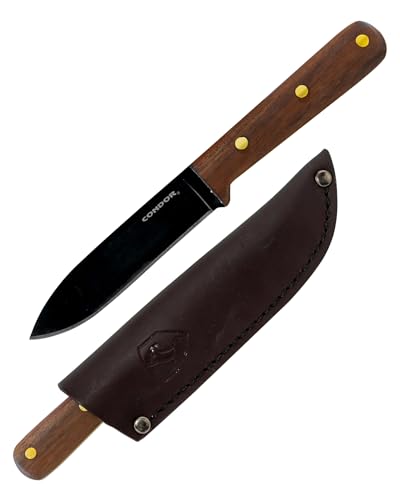


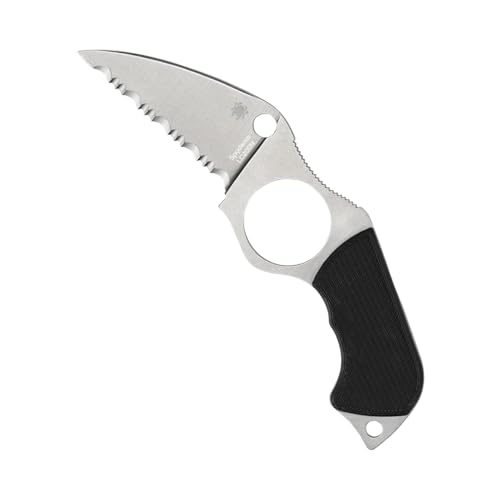





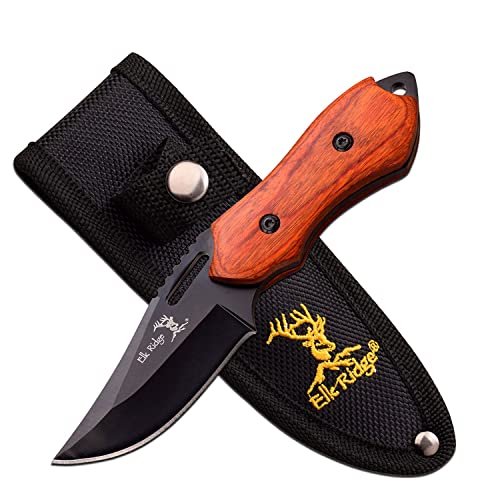


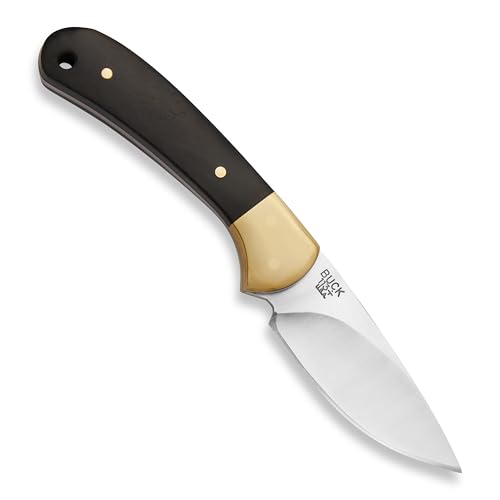


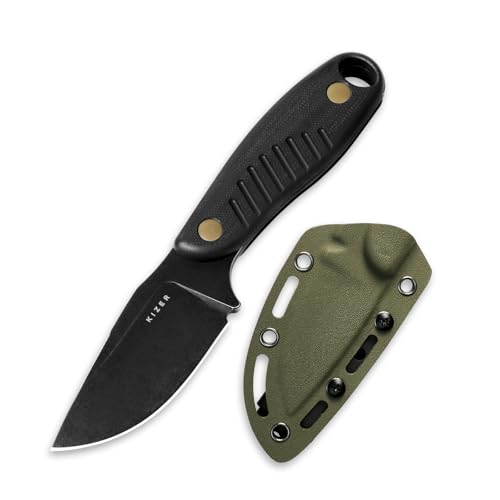


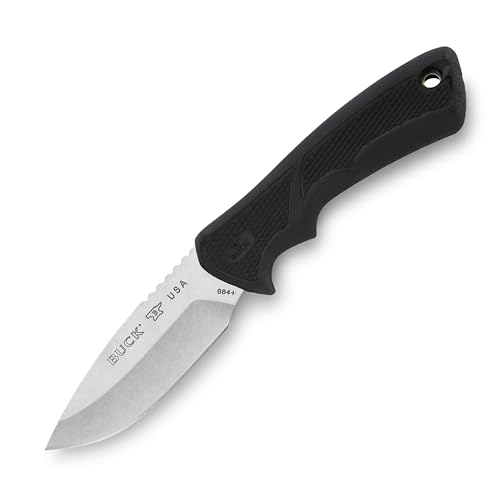


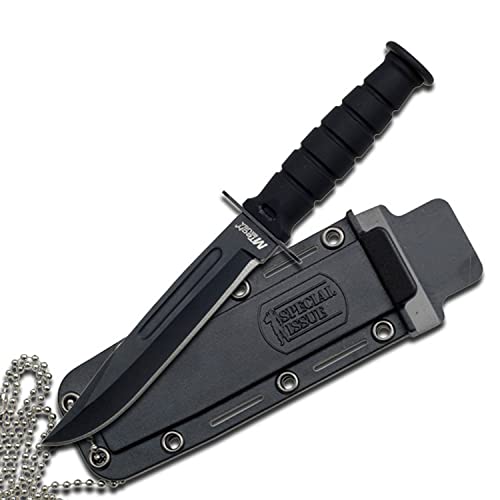
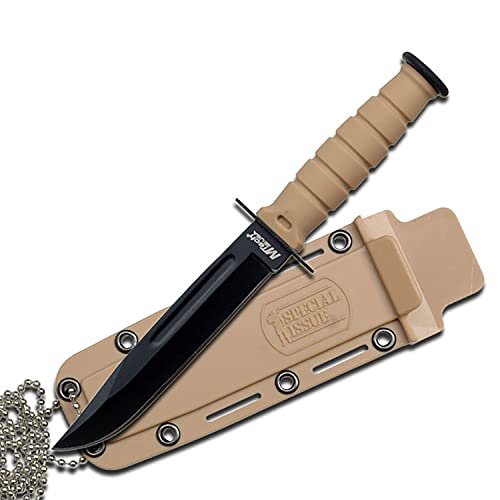


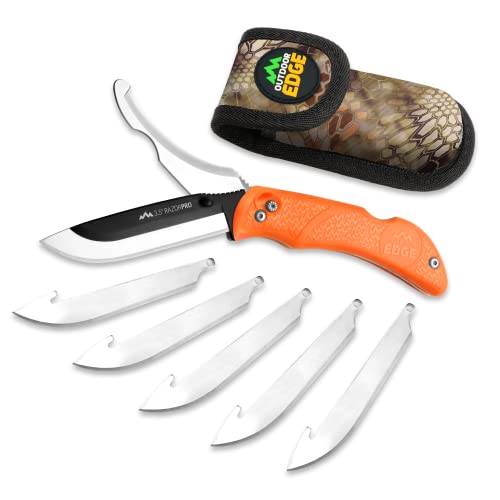


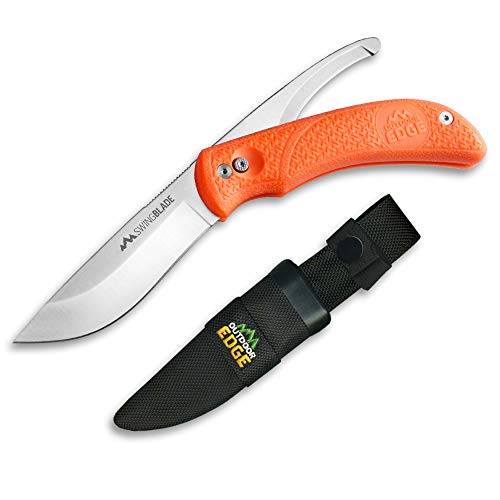






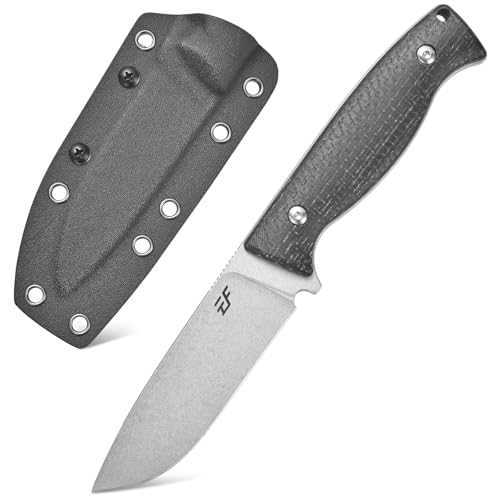


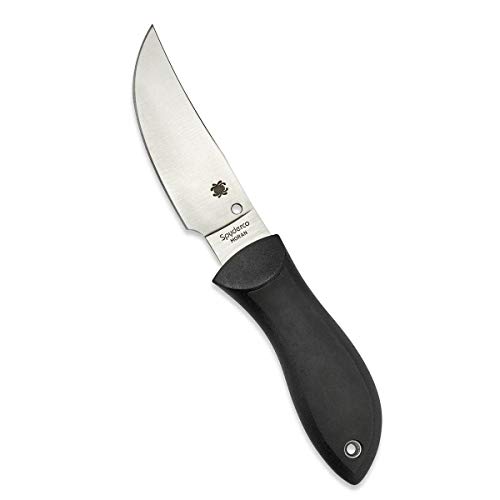


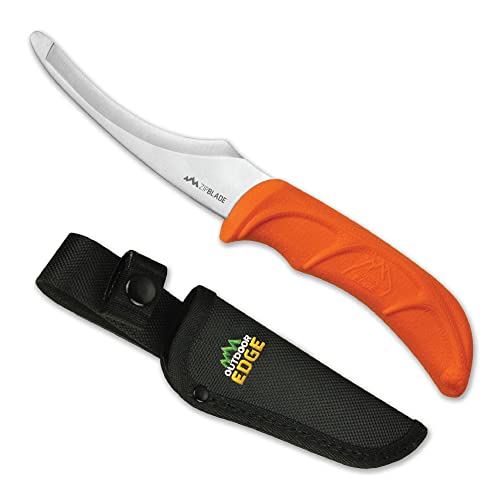


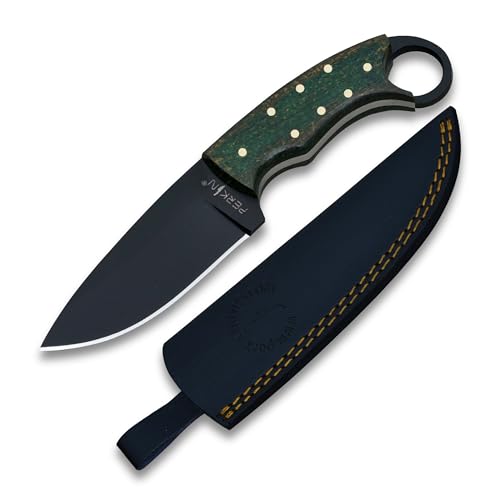


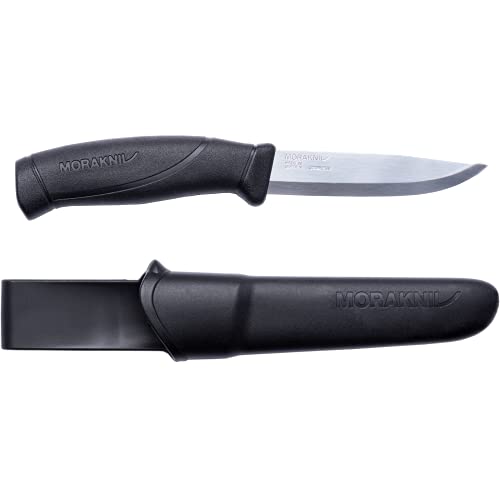

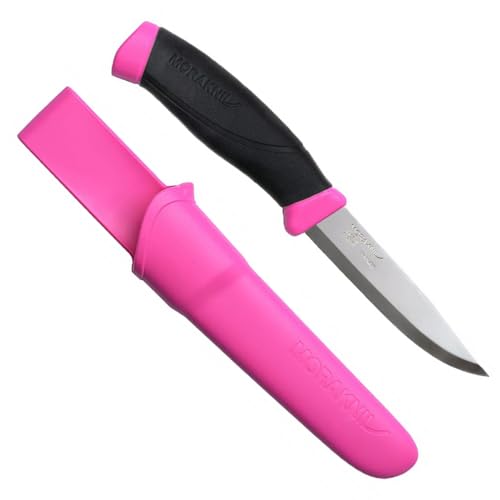


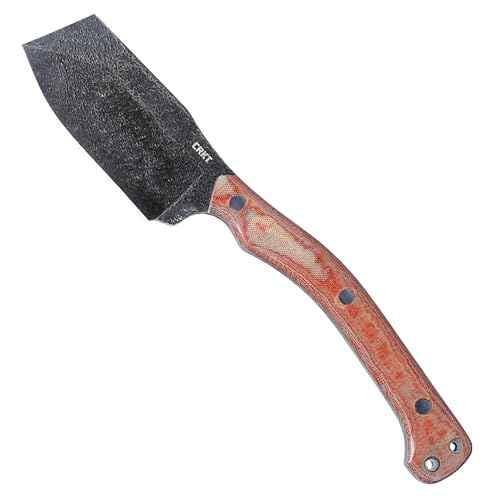


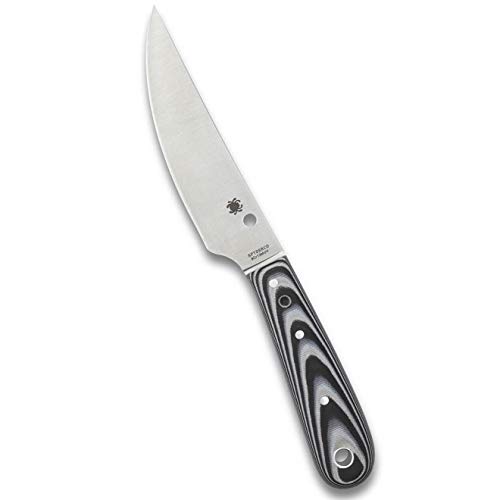


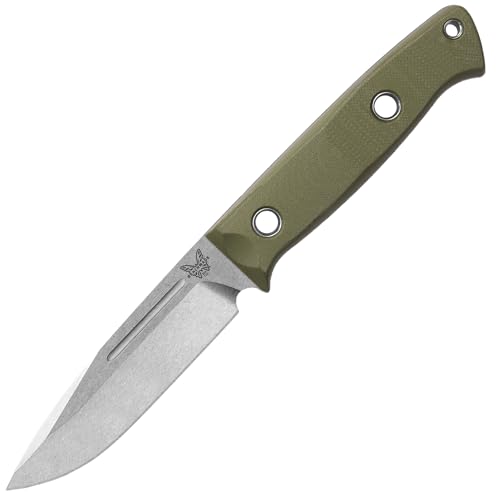


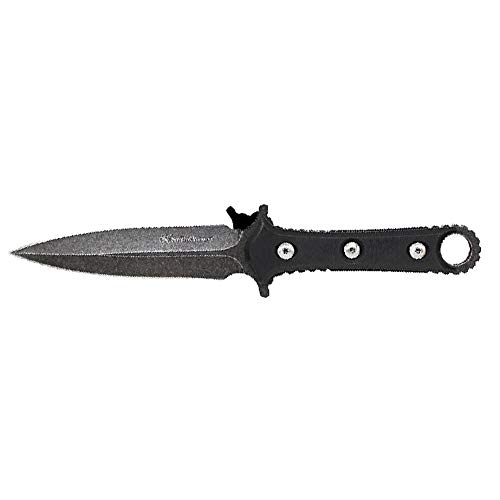

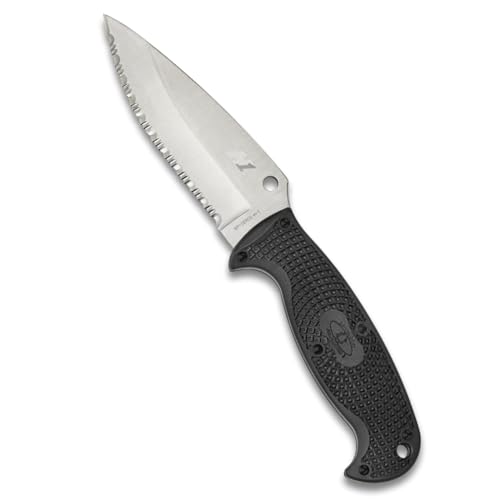


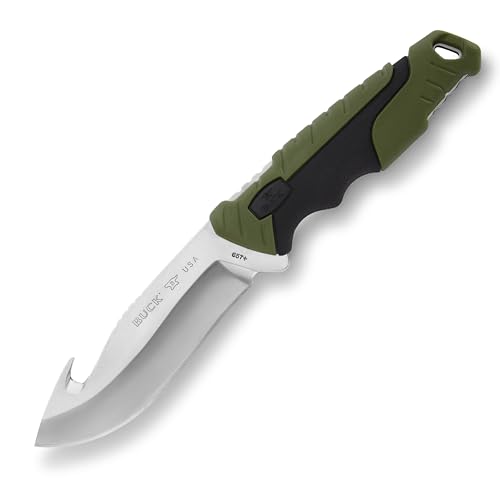
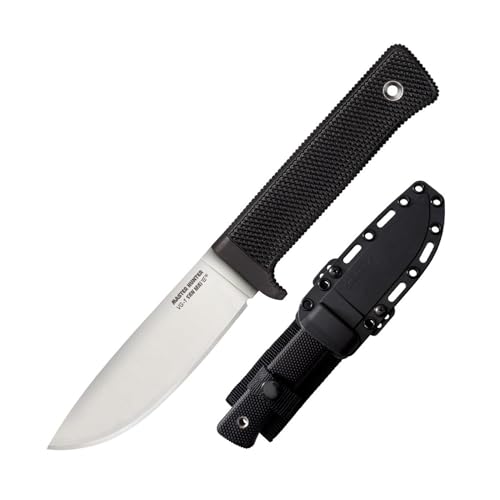


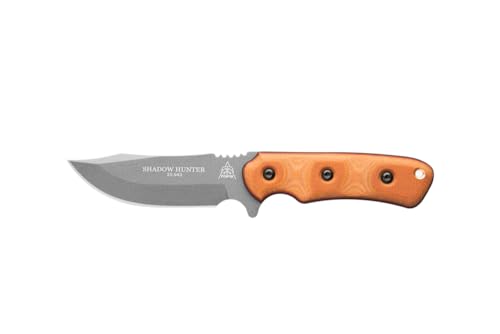


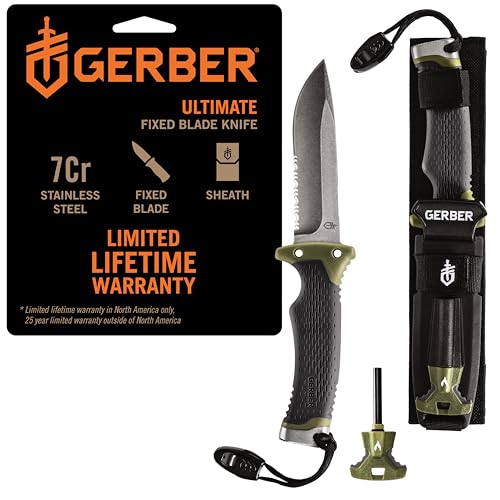
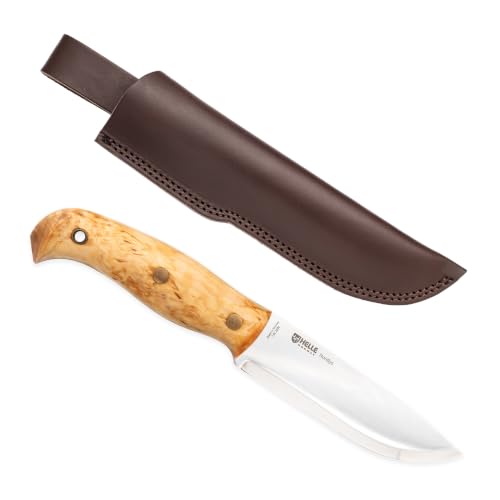

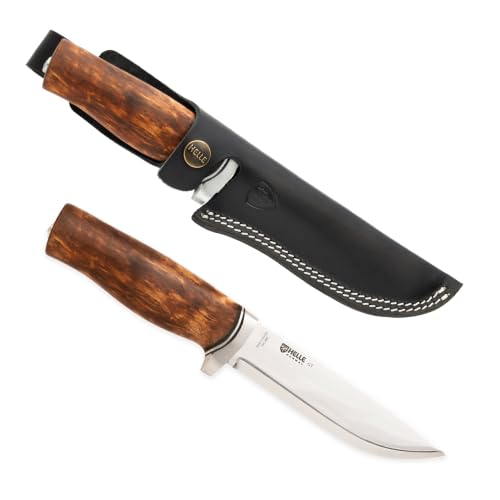


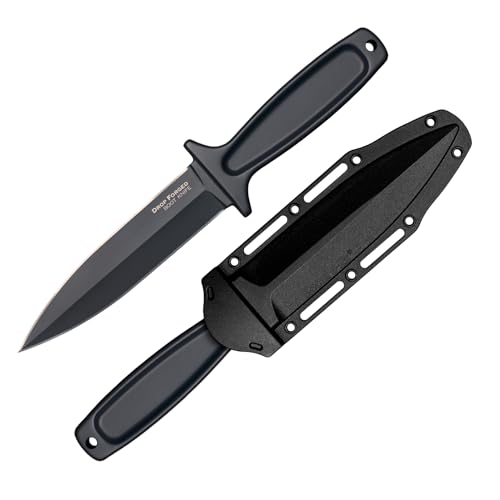




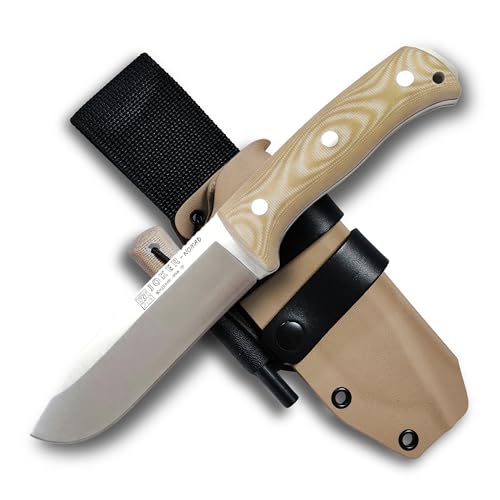


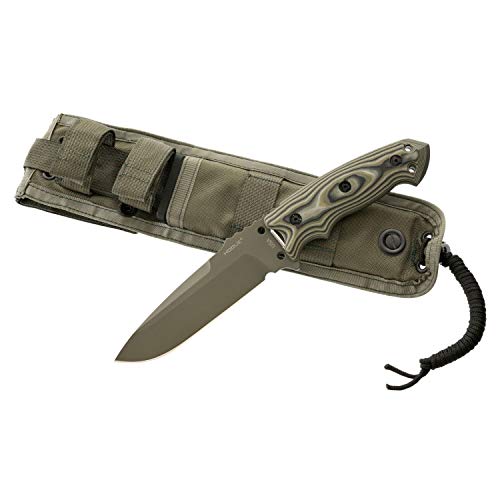


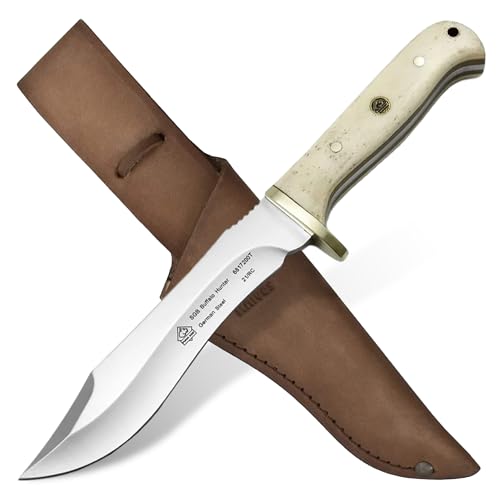


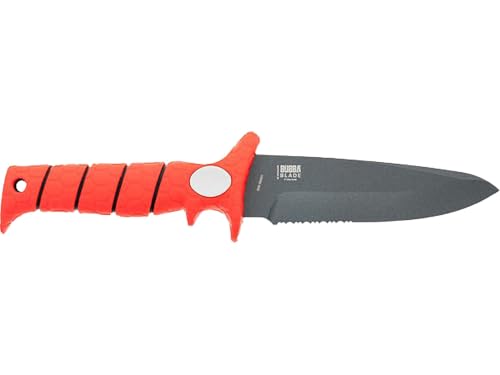


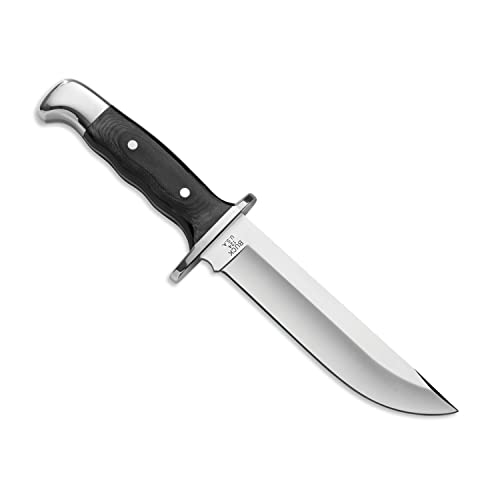


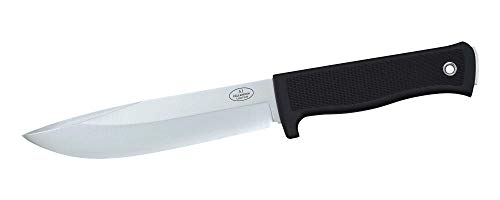


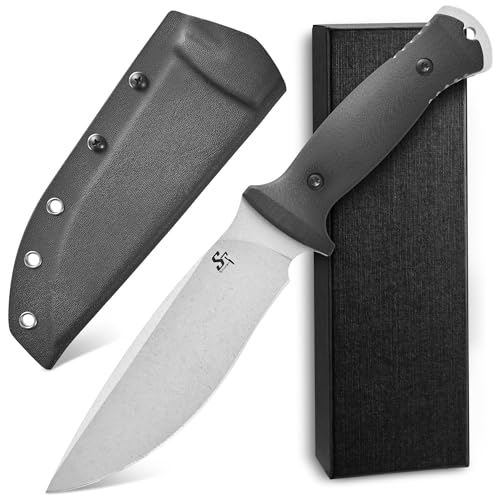


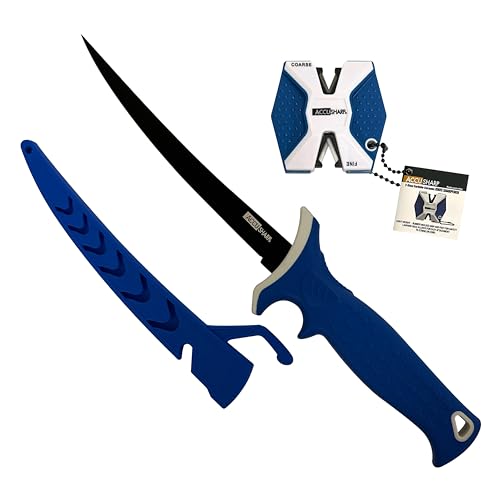


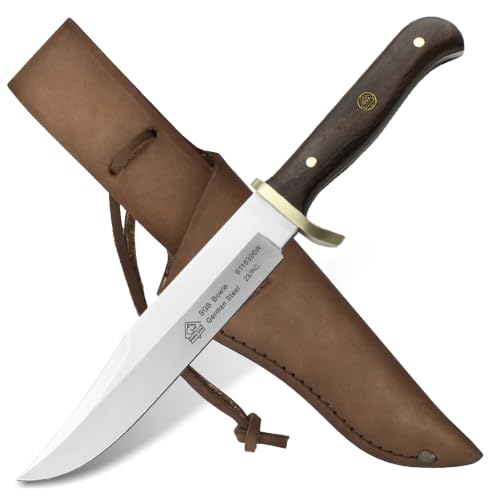


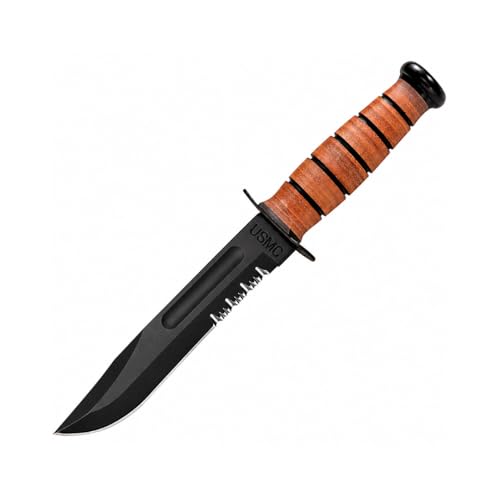


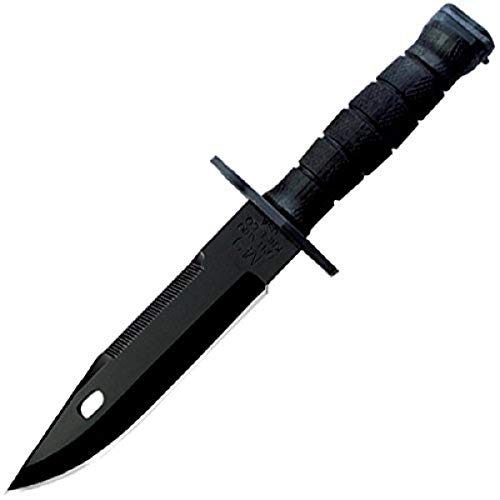





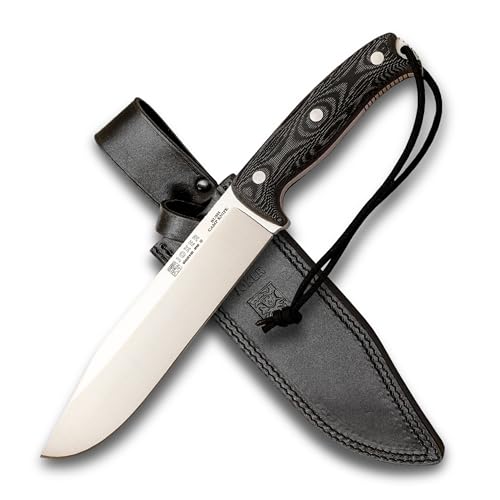


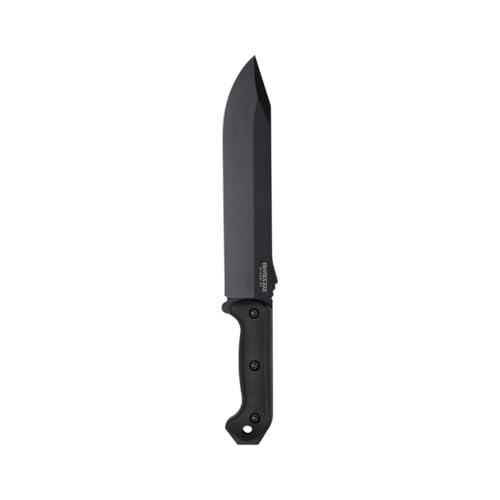
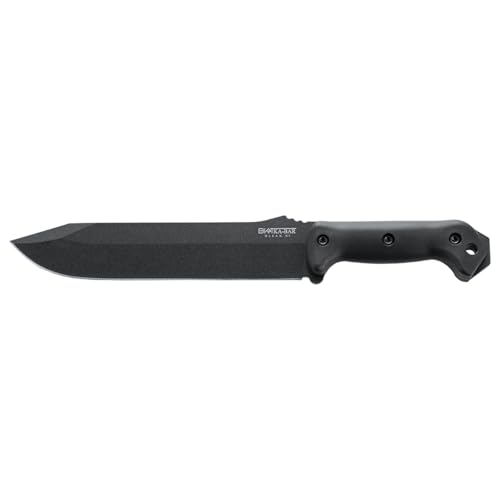


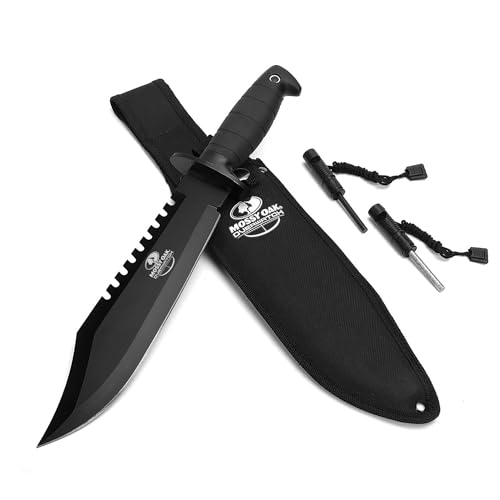
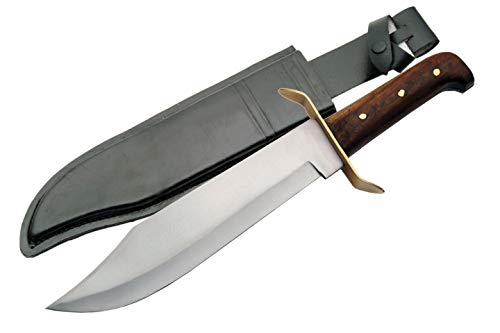


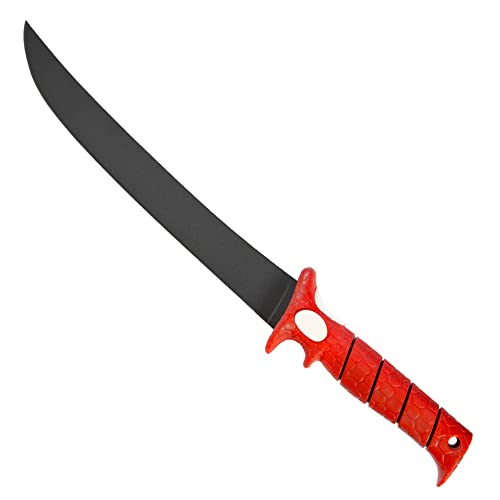


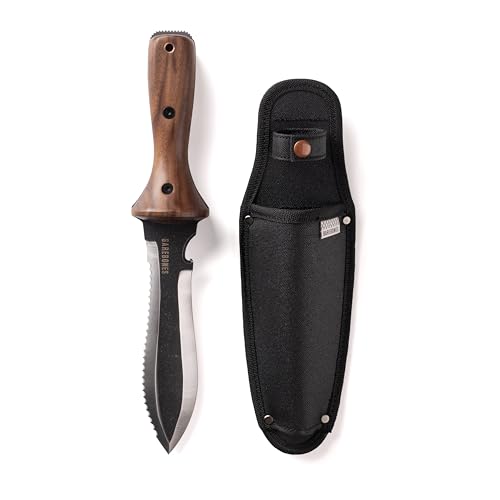


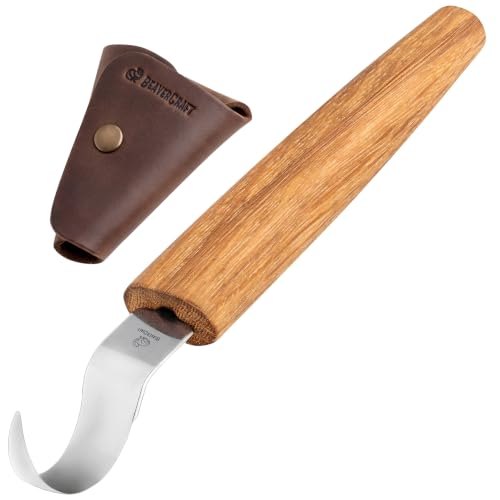


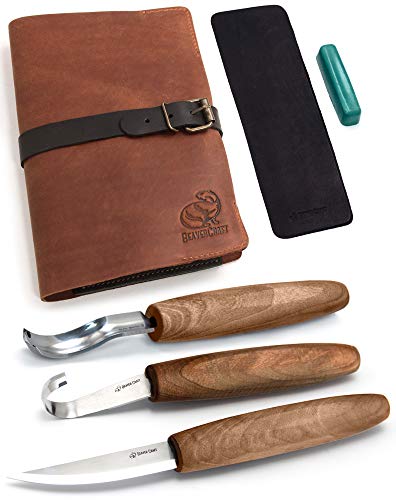

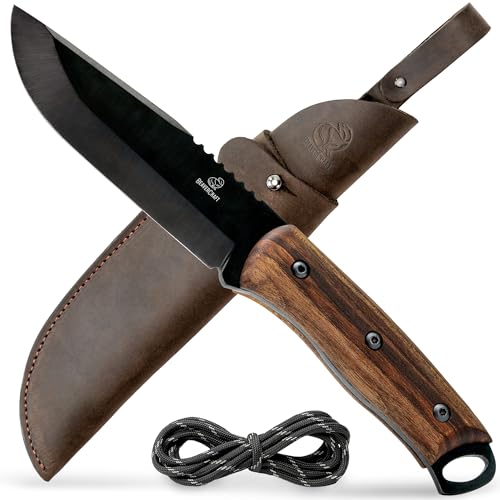


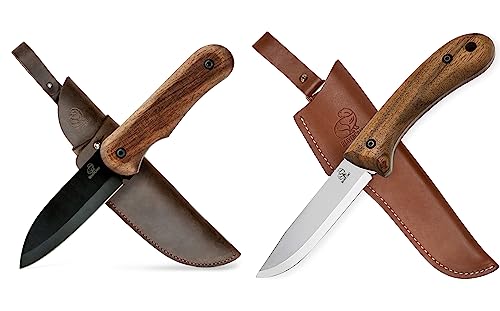


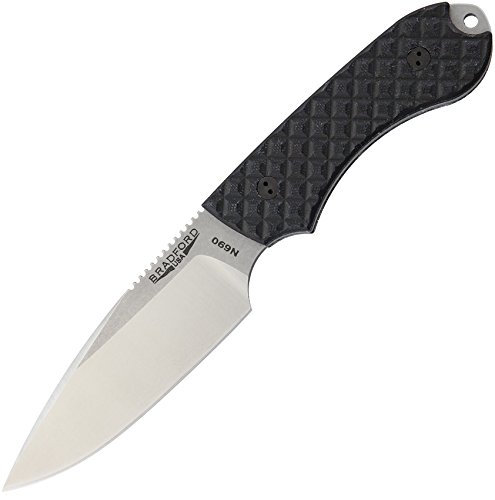


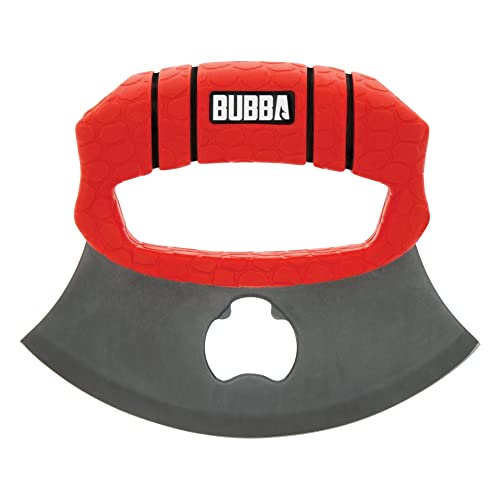


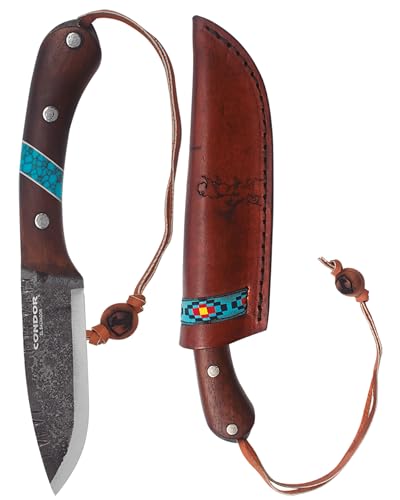

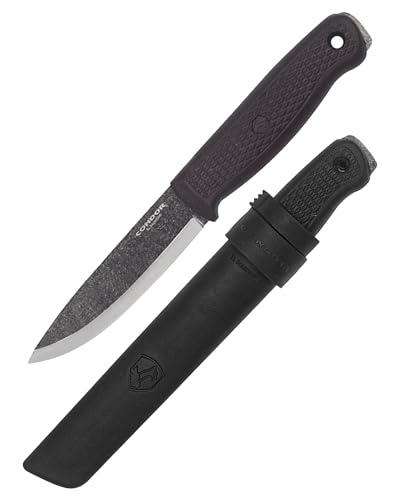


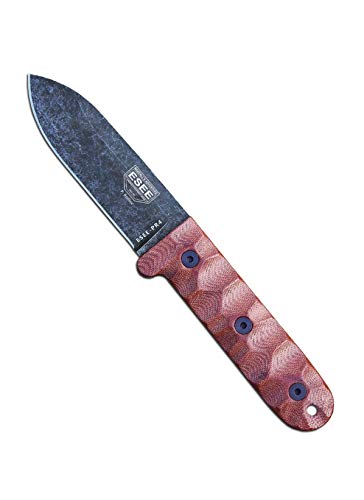




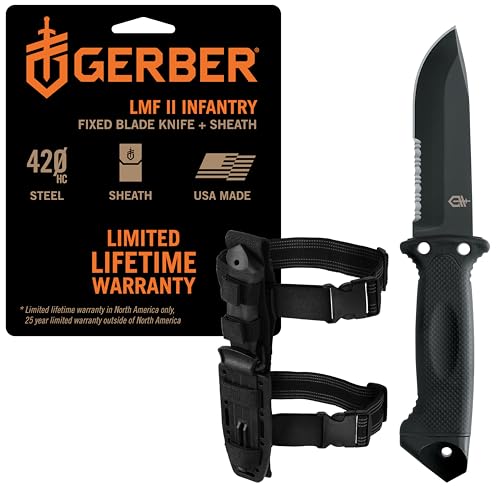


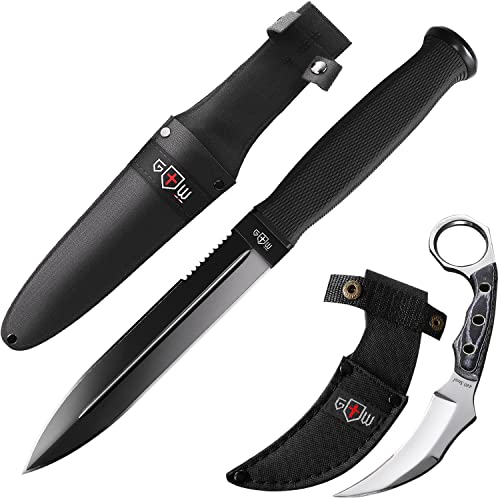


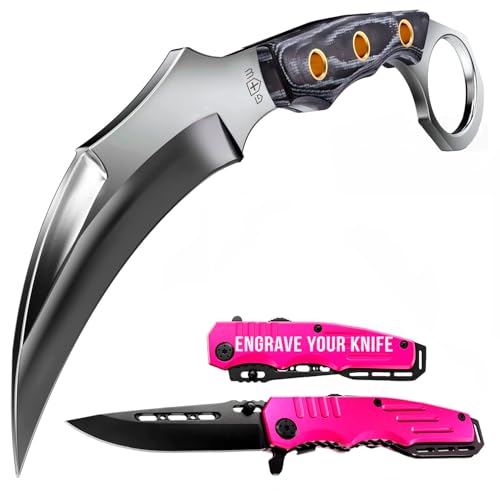


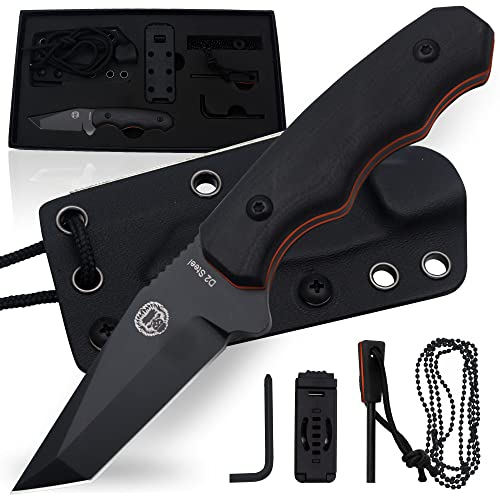


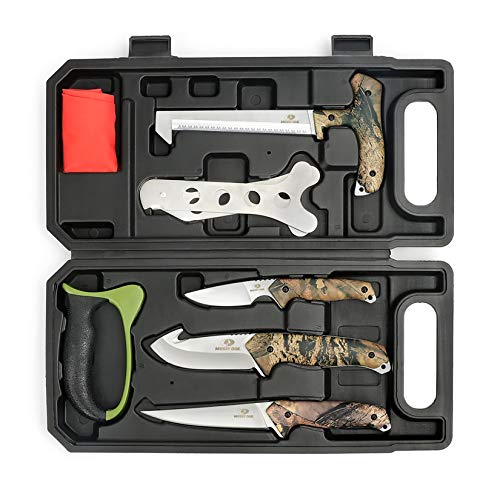


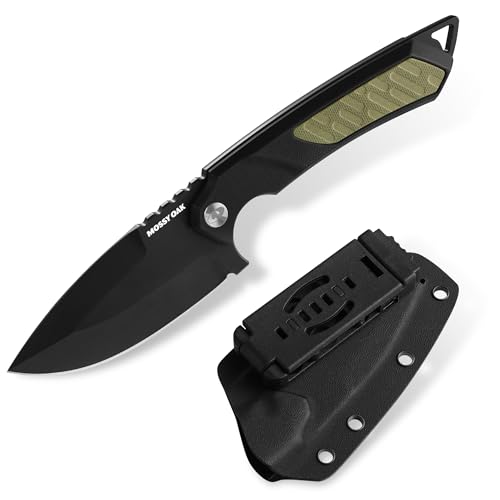


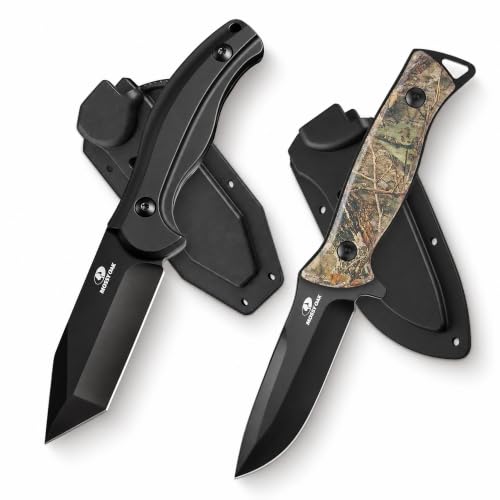


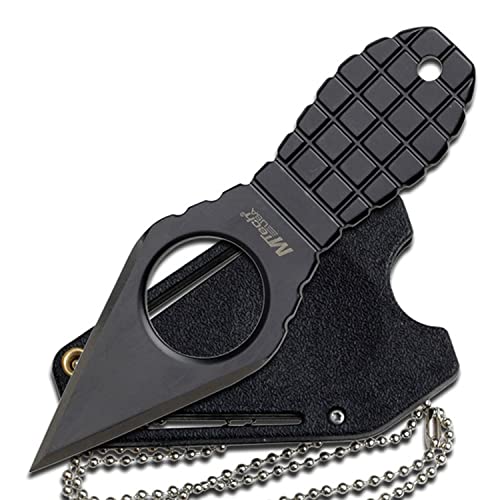


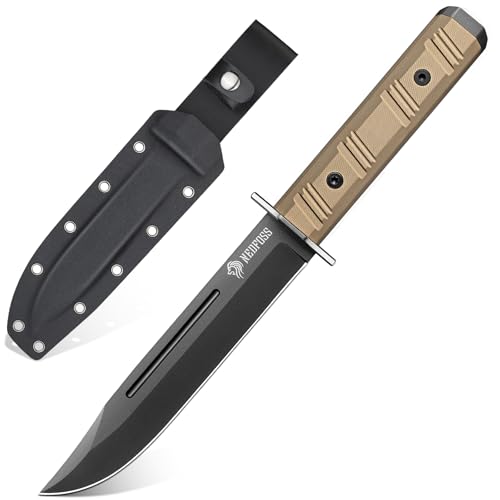






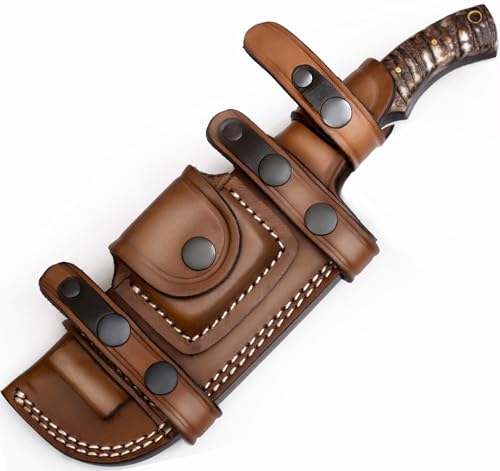


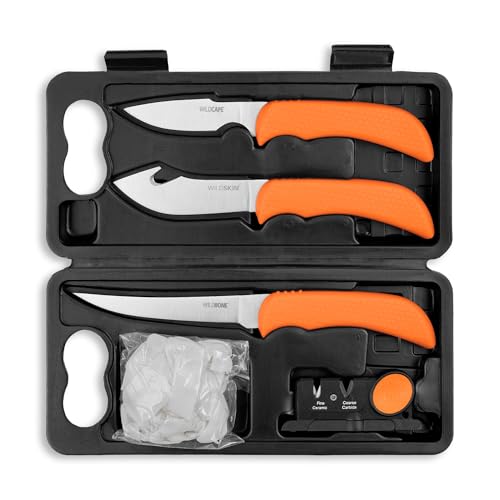






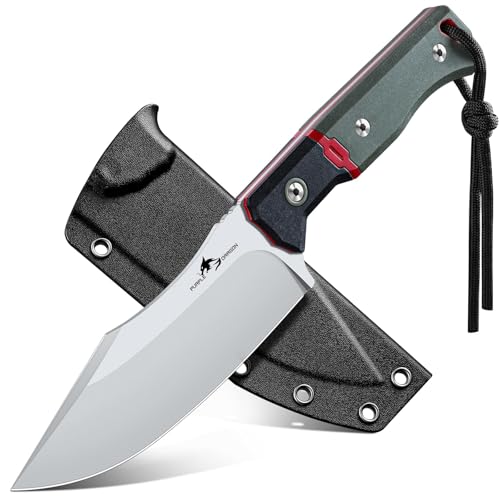


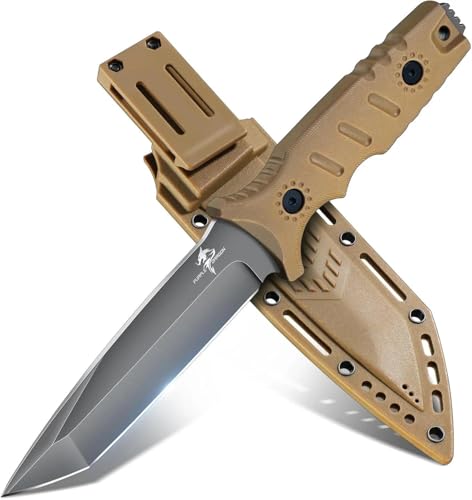


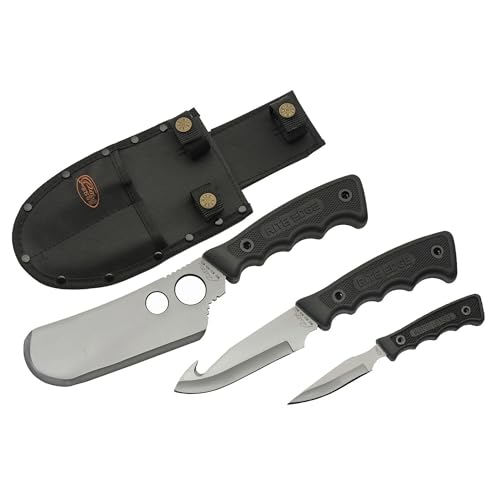


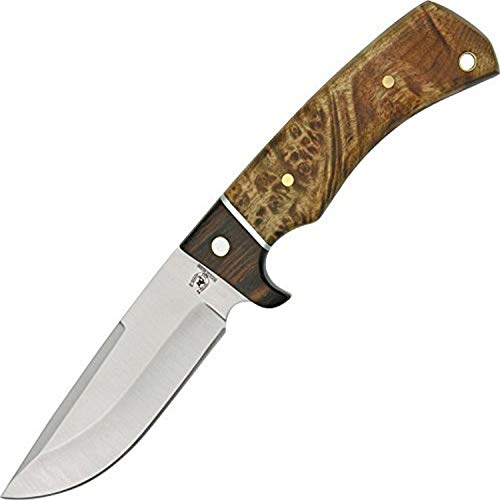

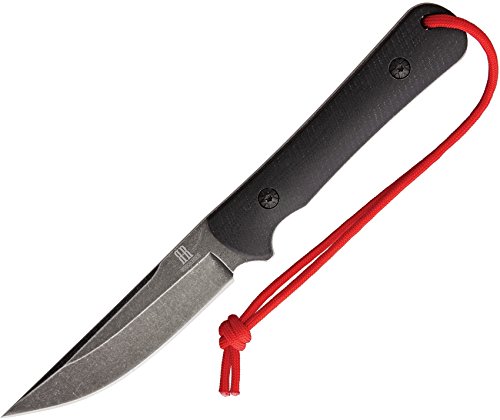


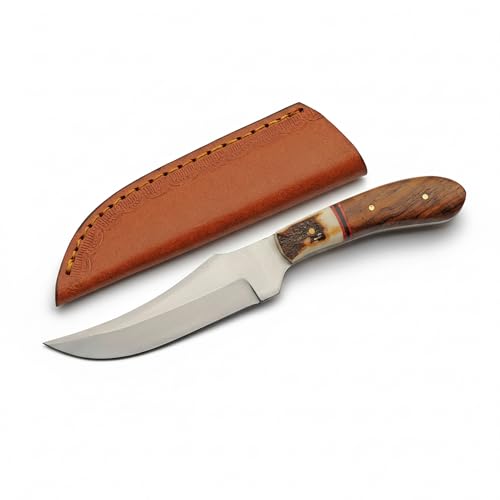


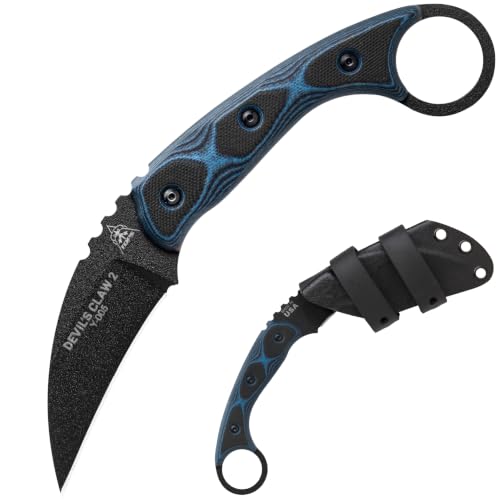


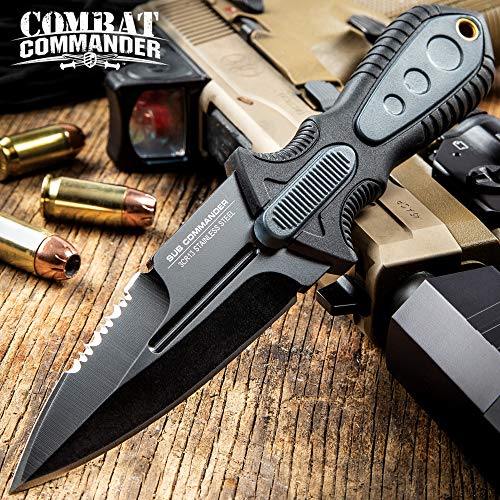


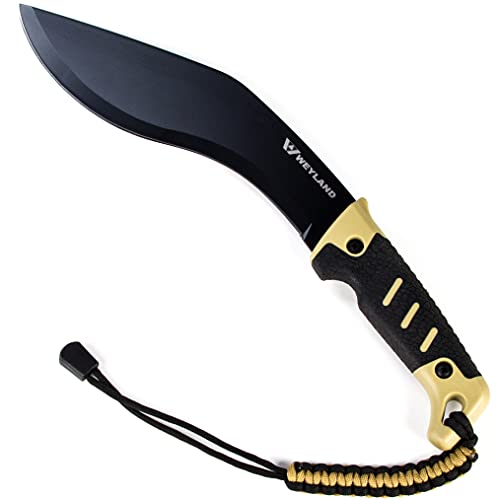


What’s in this listEvery fixed-blade hunting knife we track on Amazon US, by blade length. Folding knives are on the pocket knife page. “—” means neither the maker nor the Amazon listing states it.
What makes a hunting knife different
A hunting knife is a fixed blade built for game care: opening the deer, freeing the organs, skinning and quartering. That's a narrower job than "outdoor knife," and it pulls the design in a specific direction. Short over long. Control over chopping. A tip you can steer.
The rest of the fixed-blade family shares the basics: one piece of steel, no hinge, a sheath instead of a pocket clip. That's covered on the fixed blade knife page. This page is about what you need when the knife's going inside a deer.
The table on this page lists the fixed-blade hunting knives we track on Amazon US, sorted by blade length. It shows what the maker states, or the Amazon listing where the maker is silent (the table marks listing values): blade length, overall length, steel, blade shape, edge, grind, full tang, handle material, sheath, and whether there's a gut hook. When neither states a value, the table shows a dash. We don't fill blanks with guesses. Folding knives live on the pocket knife page.
How to choose a hunting knife, spec by spec
The knife is the one piece of camp gear that has to work every single time a deer is down. The stand, the calls and the lucky hat only have to show up. Here's what I'd look at, in order.
Pick a drop point unless you have a reason not to
Blade shape matters more than anything else on this page.
- Drop point: the spine slopes down to the tip. One knife maker's blade-shape guide lists it for hunting and field dressing. Outdoor Life notes it's usually thicker at the tip, which makes it less likely to punch through a hide or a gut sack by accident.
- Clip point: the spine is scooped out near the front, leaving a thinner, sharper tip. The same guide calls it a preferred shape for hunting knives because it pierces and does detail work well. The general reference on clip points adds the catch: compared with a drop point, the tip is narrower and weaker.
- Trailing point: the spine curves up and the belly runs long. That guide lists it for skinning and butchering game, where you want long draw cuts.
My one opinion on this page: your first hunting knife should be a short drop point, and the second knife can wait. The reasons are checkable. The drop point's thicker tip is less likely to puncture what you don't mean to cut, and the 3 to 4 inch length below is where field-dressing guidance lands. The clip point has its own page at clip point knife.
Keep the blade short enough to steer
One knife maker's field-dressing guide puts it at 3 to 4 inches for most tasks. Shorter is fine for precision but makes the main cuts feel cramped. Over 5 inches adds reach for skinning and quartering, but needs more care in tight spaces, and inside the body cavity is nothing but tight spaces.
The table sorts by blade length, so the short knives sit together at one end. Overall length is a separate column. It tells you how much handle you get, which matters when your hands are cold and gloved.
Long blades aren't wrong. They're just for other jobs. A big knife inside a deer is like painting window trim with a roller.
Steel matters more than looks
The table gives two steel columns: the exact grade the maker or the listing names, and a broad type (stainless, carbon, tool steel, powder steel, damascus). If they only say "stainless," that's all you'll see.
One knife maker's steel guides boil it down to four traits: edge retention, toughness, corrosion resistance and ease of sharpening. They also say the first and last pull against each other. A steel that holds an edge a long time takes longer to sharpen. Stainless gets its rust resistance from chromium; the same maker notes American cutlery standards call it stainless at 13 percent. Tool steels trade some of that rust resistance for toughness and edge holding, and owners have to maintain them diligently.
Here's the thing about deer camp. Blood, rain and cold hands are hard on steel. The American Knife & Tool Institute (AKTI) warns that "stainless" isn't a promise: water and some chemicals still damage it. So pick the steel you'll actually wipe down at the truck, not the one that sounds best.
Plain edge for meat, serrations for rope
The edge column says plain, serrated or partially serrated. Blade Magazine's guide says most cutting suits a plain edge, and it's easy to sharpen. Full serrations are for rope, straps and cardboard, and they need a sharpener made for serrations. Partial serrations are a short section for cord.
For field dressing, plain is the norm. You want clean, controlled slices, and you want to touch up the edge at camp with a simple stone.
Grind decides how the edge behaves
Grind is how the blade thins from spine to edge. Where the maker or the listing states it, the table shows it.
- Hollow: concave sides, a very sharp but weaker edge
- Flat: tapers from spine to edge, sharp, a little less durable
- Saber: bevel starts partway up, built for strength
- Scandi: a saber grind with no secondary bevel, easy to sharpen on a flat stone
- Convex: curves outward, stronger edge, harder to reproduce by hand
Those descriptions follow the standard grind definitions. For deer work, any of them will do the job if it's sharp. The grind matters most when you sit down to sharpen.
A handle that holds when it's wet
The handle column gives the stated material, from wood and bone to rubber, G10, Micarta and plastics. Look at shape too. AKTI points out that on a straight knife, a handle without a guard or other stop lets your hand slide up onto the blade when you push forward.
So look for a finger guard, a choil (a notch for your finger), or at least a handle that swells at the front. Then hold it with wet hands in your mind's eye. Bare wood polished smooth looks nice on the mantel. It's slippery at 5 p.m. in November.
Full tang is a strength note, not a hunting requirement
Full tang means the steel runs through the whole handle. The table marks it only when the maker or the listing says so. Blank means "not stated," not "no." A deer knife isn't asked to pry or chop, so a full tang is nice to have here, not the deciding spec. It matters more on the survival knife page.
Sheath material and how you'll carry it
The sheath column reads leather, nylon, Kydex or polymer, plastic, or other. Leather is traditional. Whatever the material, Ontario Knife Company's care page says to store a knife in a dry place, out of the sheath. The sheath is for carrying, not for the off-season.
Wear it where you can reach it with either hand and where it won't dig in when you sit on a bucket for three hours. That's not a spec. That's November.
The gut hook column
A gut hook is a sharpened hook on the spine. You hook the hide and pull, and RECOIL OFFGRID describes it unzipping the hide without piercing muscle or intestines. The same piece warns that the hook's C-shaped geometry matters: a badly shaped hook cuts where you don't expect and is hard to sharpen. The table marks knives that have one. If you want one, the gut hook knife page goes deeper.
Kinds of hunting knives and when to pick which
The drop-point hunter
One short drop-point blade, a guard, a sheath. It does the opening cut, the field dressing and most of the skinning. If you buy one knife for deer, this is the knife.
Skinners and trailing points
A skinning knife has a long, curved belly for peeling hide off in long strokes. It's a second knife, used at the meat pole, not at the kill. See the skinning knife page.
Gut hook knives
A drop point or skinner with the hook added. Good for hunters who want the belly cut done one way every time. Skip it if you hate sharpening.
Hunting knife sets
A set pairs two or three blades, often with a saw. Penn State Extension's field dressing guide says to cut through the breastbone with a knife or a small saw on older or large animals, and to split the pelvic bone with a saw. That's where a set's saw earns its spot. Sets are on the hunting knife set page.
Folders
A lock-back folder can dress a deer, and plenty of hunters carry one. Folders are on the pocket knife page, not this one. If you go that way, check the lock before the season and clean the pivot after every deer.
Field dressing with a hunting knife
Cut away from your body and keep your free hand behind the edge. Sheathe the knife before you move the deer or stand up.
Penn State Extension's pocket guide walks through the job. The knife details that matter:
- Wear disposable gloves, and wash hands and arms with soap and water before and after.
- Make the first shallow cut at the bottom of the breastbone, lifting skin and muscle together.
- Hold the knife with the blade facing upward inside the cut, with two fingers alongside to push the entrails away.
- Don't pierce the stomach or intestines.
- Clean your knife often between cuts with clean water or wipes.
Cornell's Wildlife Health Lab adds two rules worth writing on the sheath. Keep a dedicated set of tools for field dressing that you don't use for butchering. And don't cut meat with the same blade you used to cut bone.
Field dressing, tagging and carcass rules vary by state. Check your state wildlife agency before the season.
Keep it clean, dry and sharp
Cleaning after the deer
Cornell says to wash knives and tools with soap and hot water between animals. Where chronic wasting disease is a concern, it adds a soak in a 50% fresh, unscented bleach solution (1 quart bleach to 1 quart water) to eliminate prions. The sheath rule from that same care article: don't holster a dirty, wet or bloody knife.
Oil it and store it dry
AKTI says to put a light coat of oil on the blade to keep water off, and to store knives somewhere cool and dry. Damp basements and garages turn good steel into pitted steel. Take the knife out of its sheath for the off-season. Ontario Knife Company says to wipe the blade with clean oil two to three times a year to keep rust from starting, and more often if you're near water.
Touch up the edge before it's dull
AKTI's sharpening secret is simple: do it more often. Once a blade gets really dull, it takes a lot of steel off to bring it back. Its recommended angle is 10 to 15 degrees, depending on the grind. Push the blade away from you. Five strokes on one side means five strokes on the other, same pressure, same angle.
AKTI also says sharp blades are safer. A dull blade sticks, you push harder, and that's when it slips.
Who should skip this page
If you hunt with a crew and someone else always does the dressing, you may not need a dedicated knife yet. If you already carry a lock-back folder and like it, look at the pocket knife page instead. And if what you really want is a big blade for splitting kindling, that's a different tool. See the bowie knife page or the survival knife page.
Last thing. Put the knife back in the same pocket of your pack every time. The deer will wait. Your patience at dark, hunting for a knife you set on a stump, won't.
Brands in this list
Related
Questions people ask
Drop point vs clip point: which is better for a hunting knife?
For field dressing, most hunters reach for a drop point. Outdoor Life notes it's usually thicker at the tip and less likely to puncture a hide or gut sack by accident. A clip point has a thinner, sharper tip that's good for piercing and tight spots, but compared with a drop point its tip is narrower and weaker. Either can dress a deer; the drop point forgives more.
What blade length is best for a deer hunting knife?
One knife maker's field-dressing guide says a blade between 3 and 4 inches handles most tasks comfortably. Shorter works for precision but makes the main cuts feel cramped, and blades over 5 inches need more care in tight spaces. Long blades earn their keep on other camp work, not inside the deer.
Do I need a gut hook on my hunting knife?
No. A gut hook is a sharpened hook on the spine for unzipping the belly without going deep. RECOIL OFFGRID notes the hook's C-shaped geometry matters, and a poorly shaped one cuts where you don't expect and is hard to sharpen. Plenty of hunters skip it and open the belly with the blade edge facing up.
How should I clean a hunting knife after field dressing?
Wash it with soap and hot water between animals, then dry it before it goes back in the sheath. Cornell's Wildlife Health Lab adds a soak in a 50% unscented bleach solution to eliminate prions where chronic wasting disease is a concern. Never holster a wet or bloody knife, and dry and oil the blade before storage.
What angle should I sharpen a hunting knife at?
The American Knife & Tool Institute puts the recommended sharpening angle at 10 to 15 degrees, adjusted for your blade's grind. Push the blade away from you, and give both sides the same number of strokes at the same pressure and angle. Sharpen often; a slightly dull edge is a five-minute fix, a very dull one is major surgery.
Sources
- Outdoor Life: The difference between a drop point knife and a clip point knife — accessed 2026-10-22
- Wikipedia: Clip point — accessed 2026-10-22
- RECOIL OFFGRID: Pocket preps, gut hook knives — accessed 2026-10-22
- Benchmade: Knife blade types 101 — accessed 2026-10-22
- Benchmade: What's your next Benchmade? — accessed 2026-10-22
- Montana Knife Company: How to field dress a deer — accessed 2026-10-22
- Penn State Extension: Field dressing deer pocket guide — accessed 2026-10-22
- Cornell Wildlife Health Lab: Tips for safe handling and processing of venison — accessed 2026-10-22
- American Knife & Tool Institute: Knife safety, sharpening and maintenance — accessed 2026-10-22
- Spyderco: Understanding tool steels — accessed 2026-10-22
- Spyderco: Steel chart and knife steel composition — accessed 2026-10-22
- Blade Magazine: Plain vs serrated knives — accessed 2026-10-22
- Wikipedia: Grind (blade grinds) — accessed 2026-10-22
- Ontario Knife Company: Knife maintenance and care — accessed 2026-10-22