Brand · Knives & Tools
CRKT Knives
CRKT knives cover five kinds of tool for hunters and campers: folding pocket knives, small fixed blades with sheaths, outdoor axes and tomahawks, machetes and a handful of multi-tools. The folders are the bulk of it, led by the M16 family. Here's the thing: inside one brand the choice works the same as anywhere else. Folder or fixed blade first, then the lock and how it opens, then blade shape and steel. (CRKT stands for Columbia River Knife & Tool. I checked, because the logbook doesn't take abbreviations.)
We earn a commission if you buy through our links, at no cost to you. Disclosure
CRKT on Amazon US
71 models- Folding knife
CRKT M21-14SF
- Blade steel
- AUS 8
- Steel type
- Stainless
- Folding knife
CRKT M16-14ZSF
- Blade length
- 3.99 in
- Blade steel
- AUS 8
- Steel type
- Stainless
- Folding knife
CRKT M16-10KZ
- Blade length
- 3 in
- Blade steel
- 1.4116
- Steel type
- Stainless
- Folding knife
CRKT Pazoda 6480
- Blade length
- 2.74 in
- Steel type
- Stainless
- Blade shape
- Drop point
- Folding knife
CRKT Drifter 6450S
- Weight
- 3.2 oz
- Blade length
- 2.88 in
- Blade steel
- 8Cr14MoV
- Folding knife
CRKT M16-01KZ
- Blade length
- 3.12 in
- Steel type
- Stainless
- Blade shape
- Spear point
- Folding knife
CRKT Drifter 6450K
- Blade length
- 2.88 in
- Blade steel
- 8Cr14MoV
- Steel type
- Stainless
- Folding knife
CRKT M16-14DSFG
- Blade length
- 3.95 in
- Blade steel
- 1.4116
- Steel type
- Stainless
- Folding knife
CRKT M16-12ZLEK
- Steel type
- Stainless
- Blade shape
- Tanto
- Edge
- Serrated
- Folding knife
CRKT M16-10KS
- Blade length
- 3.06 in
- Blade steel
- 8Cr14MoV
- Steel type
- Stainless
- Folding knife
CRKT M16-10KSF
- Weight
- 2.7 oz
- Blade length
- 2.94 in
- Blade steel
- 8Cr14MoV
- Folding knife
CRKT Endorser 1105K
- Blade length
- 3.18 in
- Blade steel
- 8Cr14MoV
- Steel type
- Stainless
- Folding knife
CRKT Halfachance K920KKP
- Blade steel
- 65Mn
- Steel type
- Carbon
- Blade shape
- Drop point
- Folding knife
CRKT Fossil Compact 5460
- Blade length
- 3.41 in
- Steel type
- Stainless
- Blade shape
- Drop point
- Folding knife
CRKT Squid 2490KS
- Blade length
- 2.16 in
- Steel type
- Stainless
- Blade shape
- Drop point
- Folding knife
CRKT Fulcrum 2
Check price - Folding knife
CRKT Snap Lock 5102N
- Blade length
- 2.55 in
- Blade steel
- 420J2
- Steel type
- Stainless
- Folding knife
CRKT CRKT Goken Pocket Knife: EDC Folding Knife with Liner Lock, Field Strip Technology, Black EDP Osoraku Zukuri Modified Tanto Blade and G10 Handle 2920
Check price - Folding knife
CRKT M16-03KS
- Blade length
- 3.55 in
- Blade steel
- 12C27
- Steel type
- Stainless
- Folding knife
CRKT Provoke 4040
- Blade length
- 2.41 in
- Blade steel
- D2
- Steel type
- Tool steel
- Folding knife
CRKT CRKT P.S.D. Outdoor Assisted Folding Knife with Liner Lock, Black, 7920 | 3.63" Clip Point Blade, Lightweight Carbon Fiber/G10 Handle, 1.4116 Steel Blade, Smooth IKBS Pivot, Outdoor and EDC Use
Check price - Folding knife
CRKT LCK+ 3802K
- Blade length
- 3.24 in
- Steel type
- Stainless
- Blade shape
- Tanto
- Folding knife
CRKT Ritual 7471
- Blade length
- 4.37 in
- Blade shape
- Other
- Folding knife
CRKT Dually 7086
- Blade length
- 1.72 in
- Steel type
- Stainless
- Blade shape
- Drop point
- Folding knife
CRKT Foresight K221KKP
- Blade length
- 3.53 in
- Blade steel
- 1.4116
- Steel type
- Stainless
- Folding knife
CRKT LCK+ 3810
- Blade length
- 3.62 in
- Steel type
- Stainless
- Blade shape
- Drop point
- Folding knife
CRKT Razel GT 4031
- Blade length
- 3.02 in
- Steel type
- Stainless
- Blade shape
- Other
- Folding knife
CRKT CEO 7097
- Blade length
- 3.35 in
- Blade steel
- AUS 8
- Steel type
- Stainless
- Folding knife
CRKT Squid 2493
- Blade length
- 2.37 in
- Blade steel
- 8Cr14MoV
- Steel type
- Stainless
- Folding knife
CRKT Ripsnort II 7271
- Blade length
- 3.48 in
- Steel type
- Stainless
- Blade shape
- Other
- Folding knife
CRKT Compano 9083
- Blade length
- 1.44 in
- Steel type
- Stainless
- Blade shape
- Sheepsfoot
- Folding knife
CRKT M16-01DZ
- Blade length
- 3.12 in
- Blade steel
- D2
- Steel type
- Tool steel
- Folding knife
CRKT MinimalX 5915
- Weight
- 2.6 oz
- Blade length
- 2.19 in
- Blade steel
- 12C27
- Folding knife
CRKT Box Key 7118
- Blade length
- 1.24 in
- Blade steel
- 12C27
- Steel type
- Stainless
- Fixed blade knife
CRKT Minimalist Bowie 2387
- Blade length
- 2.12 in
- Fixed blade knife
CRKT S.P.E.W. 2388
- Blade length
- 3.02 in
- Fixed blade knife
CRKT Obake 2367
- Blade length
- 3.55 in
- Fixed blade knife
CRKT Clever Girl 2709
- Blade length
- 4.6 in
- Blade steel
- SK-5
- Steel type
- Carbon
- Fixed blade knife
CRKT Shrill 2075
- Blade length
- 4.77 in
- Fixed blade knife
CRKT Siwi 2082
- Blade length
- 3.34 in
- Blade steel
- SK-5
- Steel type
- Carbon
- Fixed blade knife
CRKT Du Hoc 2630
- Blade length
- 5.09 in
- Blade steel
- SK-5
- Steel type
- Carbon
- Fixed blade knife
CRKT Biwa 2382
- Blade length
- 3.02 in
- Blade steel
- high carbon stainless
- Steel type
- Stainless
- Fixed blade knife
CRKT Catchall 2866
- Blade length
- 5.51 in
- Fixed blade knife
CRKT HZ6 2927
- Blade length
- 6.5 in
- Blade steel
- SK-5
- Steel type
- Carbon
- Fixed blade knife
CRKT Testy 7524
- Blade length
- 2.38 in
- Blade steel
- 420J2
- Steel type
- Stainless
- Fixed blade knife
CRKT Razel Compact 4036
- Blade length
- 2.32 in
- Blade steel
- D2
- Steel type
- Tool steel
- Fixed blade knife
CRKT Razel Nax 2014
- Blade length
- 4.29 in
- Blade steel
- 1075
- Steel type
- Carbon
- Fixed blade knife
CRKT Bugsy 3605KV
- Blade length
- 3.78 in
- Blade steel
- 1095
- Steel type
- Carbon
- Fixed blade knife
CRKT Minimalist Nessmuk 2376
- Blade length
- 2.9 in
- Blade steel
- D2
- Steel type
- Tool steel
- Fixed blade knife
CRKT Burrower 3610
- Blade length
- 3.65 in
- Blade steel
- D2
- Steel type
- Tool steel
- Fixed blade knife
CRKT Scribe 2425K
- Blade length
- 1.74 in
- Blade steel
- D2
- Steel type
- Tool steel
- Fixed blade knife
CRKT Altai 2062
- Blade length
- 3.52 in
- Blade steel
- 14C28N
- Steel type
- Stainless
- Axe or hatchet
CRKT Woods Chogan T-Hawk 2730
- Weight
- 1.99 lb
- Overall length
- 19 in
- Style
- Tomahawk
- Axe or hatchet
CRKT Freyr 2746
- Weight
- 1.79 lb
- Overall length
- 16.1 in
- Sold for
- Camping
- Axe or hatchet
CRKT Jenny Wren 2726
- Weight
- 1.12 lb
- Overall length
- 10.1 in
- Sheath included
- Yes
- Axe or hatchet
CRKT Berserker 2736
- Weight
- 2.07 lb
- Sold for
- Camping
- Axe or hatchet
CRKT Freya 2749
- Weight
- 1.93 lb
- Sold for
- Camping, Splitting
- Axe or hatchet
CRKT Chogan Hammer 2724
- Weight
- 1.78 lb
- Overall length
- 17.9 in
- Sold for
- Camping, Splitting
- Axe or hatchet
CRKT Skeggox 2917
- Weight
- 1.63 lb
- Overall length
- 12.9 in
- Sheath included
- Yes
- Axe or hatchet
CRKT Chogan Mattock 2738
- Weight
- 2.31 lb
- Overall length
- 19 in
- Sold for
- Camping
- Axe or hatchet
CRKT Odr 2753
- Weight
- 1.57 lb
- Overall length
- 21 in
- Sold for
- Camping, Splitting
- Axe or hatchet
CRKT Black Woods Chogan T-Hawk 2730KS
- Weight
- 1.99 lb
- Overall length
- 19 in
- Sheath included
- Yes
- Multi-tool
CRKT Viva Work Multi-Tool 9130
Check price - Multi-tool
CRKT Eat'N Tool
Check price - Multi-tool
CRKT Ruger 1911 Multitool
- Pliers
- Yes
- Knife blade
- Yes
- Multi-tool
CRKT Twist & Fix Socket Multitool
- Tools
- 6
- Sheath
CRKT CRKT Freyr Sheath, Brown, D2746 | Leather Sheath, Camping and Outdoor Use
Check price - Sheath
CRKT CRKT Freya Sheath, Brown, D2749 | Leather Sheath, Camping and Outdoor Use
Check price - Sheath
CRKT CRKT Berserker Sheath, Brown, D2736 | Leather Sheath, Camping and Outdoor Use
Check price - Machete
CRKT Mah-Chete 3100
- Blade length
- 12 in
- Blade steel
- 1075
- Steel type
- Carbon
- Machete
CRKT Kuk 2742
- Blade length
- 10.56 in
- Blade steel
- 65Mn
- Steel type
- Carbon










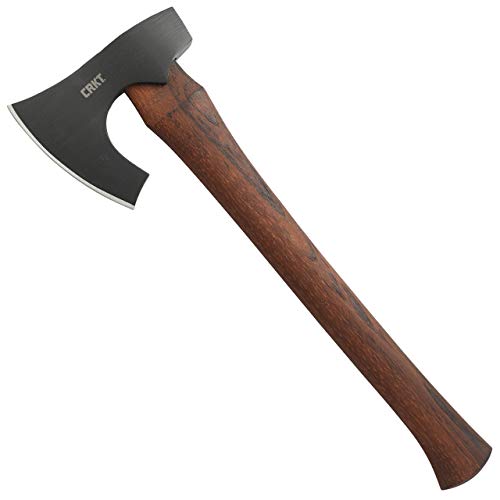


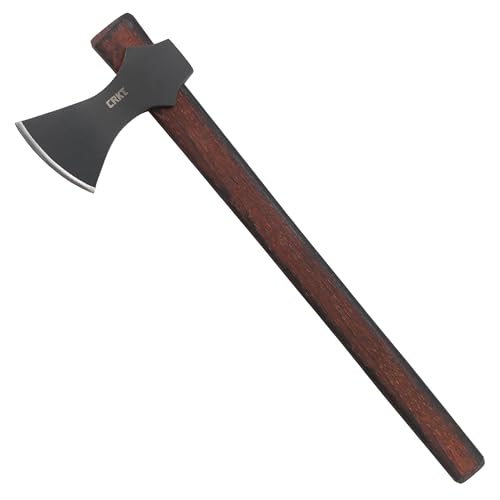


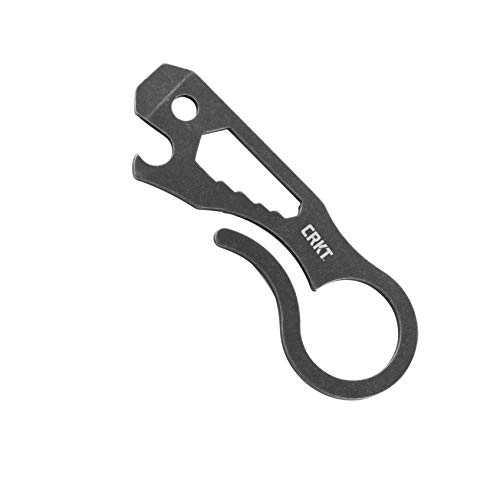


What CRKT makes for hunters and campers
On this site, CRKT covers five product types: folding knives, fixed-blade knives, axes, machetes and multi-tools. The folders are most of the lineup. The fixed blades are mostly small and carried in a sheath. The axes are short camp axes and tomahawks, most on hickory handles. The machetes are long carbon-steel blades for brush and camp chores, and the multi-tools are a mixed bag, from pliers-type tools to a camp utensil.
The grid above shows what's on Amazon right now, filtered by type. It changes week to week, so I'll write about the families and what separates them, not about how many of each are listed.
CRKT's own about page says the company works with outside designers, makers and inventors. That shows in the names: many CRKT knives carry a designer's name or a nickname instead of a plain model number. BLADE Magazine credits the M16 to Kit Carson and the Eat'N Tool to Liong Mah. (A shop teacher prefers part numbers. CRKT prints those too, which is how I keep them straight.)
Lineup notes: CRKT folding knives
The M16 family
The M16 is the family you'll see most in the grid. The model numbers after "M16" mark size and version, and the listings show a spread of choices inside one family:
- Blade shapes: mostly tanto (an angled, chisel-like tip), with spear point versions
- Locks: liner locks on the nylon and G10-handled models, frame locks on the steel-handled ones
- Steels: 8Cr14MoV, AUS 8, 1.4116 and 12C27 stainless, depending on the model
- Edges: plain on most, serrated or partly serrated on a few
- Blade length: from about 3 inches to just under 4 inches
CRKT's page for the M16-10KSF lists Kit Carson as designer, a frame lock, a flipper opening the maker calls the Carson Flipper, 8Cr14MoV steel, partial serrations it calls Triple Point Serrations, and 2.7 oz. The maker describes it as an everyday carry version of the M16. The flipper is a small tab on the back of the blade: you push it with a finger and the blade swings out.
Here's the thing about a family this wide: the "M16" on the box tells you less than the letters after it. Read the lock and steel on the listing of the exact knife.
Drifter and the small frame locks
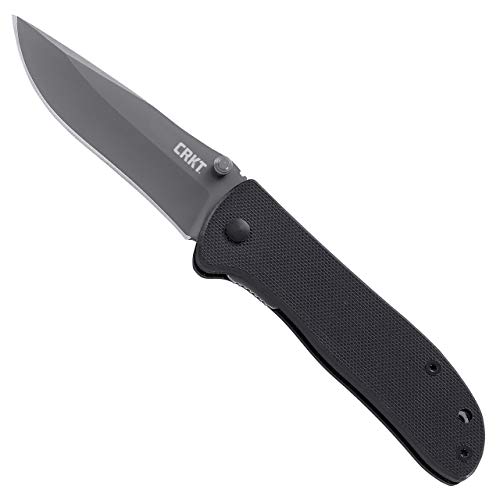
The Drifter is the plain one. CRKT's own page lists a 2.88-inch blade of 8Cr14MoV, a frame lock, a stainless steel handle, a thumb stud for one-hand opening, and 3.2 oz. The listings show a version with a G10 handle and a liner lock too.
Alongside it sit other small folders with steel handles and frame locks: the Squid, the Pazoda (which opens with a thumb hole instead of a stud) and the Fossil Compact with a G10 handle and a flipper. These are the knives for a front jeans pocket. A small knife that's actually in your pocket beats a big one that's on the dresser, and that's as close to philosophy as I get before coffee.
Assisted openers: LCK+, Endorser, Foresight and others
Several CRKT folders list assisted opening: the LCK+ models, the Endorser, the Foresight, the Razel GT and the Ritual. Benchmade's mechanisms guide explains assisted opening plainly: you start the blade partway with a thumb stud or flipper, and a spring finishes the job. It isn't an automatic knife, because the spring isn't holding the blade closed waiting to fire.
Most of these list liner locks. Blade shapes run from drop point (the LCK+ 3810, Foresight, Endorser) to tanto (the LCK+ 3802K) to the unusual profiles the listings mark as "other."
The odd ones out
A few folders don't fit the families above:
- CEO: a slim clip-point flipper in AUS 8, for a dress pocket more than a deer camp
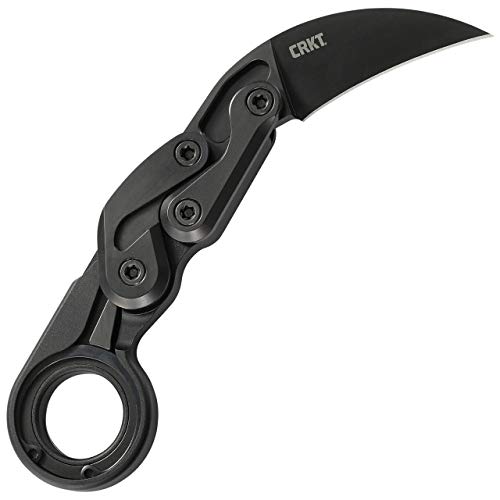
- Provoke: D2 tool steel, an unusual curved blade, aluminum handle
- Halfachance: 65Mn carbon steel with a thumb stud, the one carbon folder in the grid
- Snap Lock: 420J2 stainless with a lock the listing marks as "other"
- Dually: a very short blade, under 2 inches
- Fulcrum 2: listed with a nylon handle and a clip, few other specs
General pocket knife picks across brands are on the pocket knife page, and carry-every-day picks are on the everyday carry knife page.
CRKT fixed-blade knives
CRKT's fixed blades on this site are mostly small. The blade lengths in the listings run from about 2 inches on the Minimalist Bowie to about 5 inches on the Du Hoc. Every one lists a sheath.
- Minimalist Bowie and S.P.E.W.: tiny neck-knife size, a clip point and a wharncliffe (a straight edge with the spine curving down to the tip)
- Obake: a clip point in the 3- to 4-inch range
- Siwi: SK-5 carbon steel, drop point
- Clever Girl: SK-5 carbon steel, trailing point, about 4.6 inches
- Shrill: spear point, leather sheath per the listing
- Du Hoc: SK-5 carbon steel, the longest of the group
CRKT's page for the Clever Girl lists Austin McGlaun as designer, a 4.60-inch SK-5 blade, 6.3 oz, and a thermoplastic sheath with mounting options. It's part of what the maker calls Forged by War, a program it says began in 2016 to design knives with veterans, with a share of profits going to a veterans' charity the designer picks.
Danny asked whether a knife named Clever Girl comes with a dinosaur. It doesn't. He was disappointed for most of an evening.
Fixed blades across brands are on the fixed blade knife page, and field-dressing shapes are on the hunting knife page.
CRKT axes and tomahawks
CRKT's axe side is short-handled camp axes and tomahawks (light axes with a slim head). The listings sort them by handle and head steel:
- The Chogan family: the Woods Chogan T-Hawk and its Black Woods version are tomahawks, and the Chogan Hammer and Chogan Mattock are named for what sits on the back of the head. All list hickory handles and 1055 carbon steel heads.
- Freyr, Freya, Odr and Berserker: camp axes on hickory handles with 1055 carbon steel heads. The listings name camping, and on some, splitting.
- Jenny Wren: a compact tomahawk with a nylon/polymer handle, an SK-5 carbon steel head and a sheath.
- Skeggox: a nylon/polymer handle and an SK-5 head, with a sheath per the listing.
Read the sheath line before you buy. Only some listings include one, and CRKT sells leather sheaths for the Freyr and Freya on their own. Rutgers Extension says to sheath an axe whenever it isn't in use. (A bare axe in a truck bed also redesigns the truck bed.)
Every head here is carbon steel, so the machete rule below applies: dry it and oil it the same day, and store the axe somewhere dry. Tomahawks across brands are on the tomahawk axe page, short axes on the hatchet page, and camp axes on the camping axe page.
CRKT machetes
The machete side is short and carbon steel:
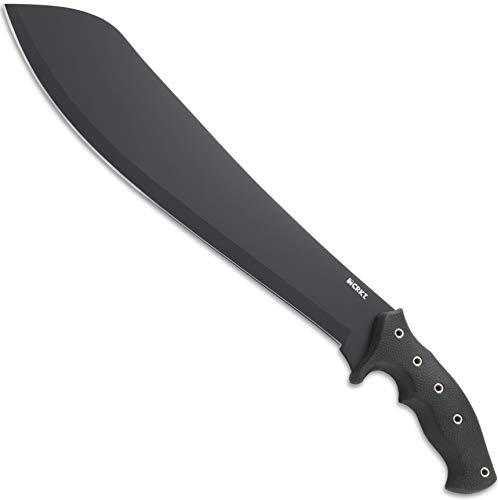
- Mah-Chete: a 12-inch 1075 carbon steel blade with a sheath, per the listing
- KUK: a kukri shape (the forward-curved blade that's heavier toward the tip) in 65Mn carbon steel, a little over 10 inches, with a sheath
Both are carbon steel, and carbon steel rusts if you put it away wet. Rule of thumb: a machete gets wiped and oiled the same afternoon you use it, not the next weekend. The machete page compares blade lengths and styles across brands.
CRKT multi-tools
The multi-tools are the most mixed group in the lineup:
- Viva Work Multi-Tool: stainless steel frame
- Ruger 1911 Multitool: lists pliers and a knife
- Twist & Fix: a socket-style tool, few specs listed
- Eat'N Tool: titanium per the listing, a camp utensil with tool edges rather than a pliers tool; BLADE credits the design to Liong Mah
If you want full-size pliers with a dozen tools, check the multi-tool page across brands. (I still call every multi-tool "the Swiss thing." Nobody at camp corrects me anymore.)
How to choose within the CRKT lineup
Folder or fixed blade first
A fixed blade has no pivot and no lock to clean. A folder fits a pocket. My one opinion on this page: decide the knife's main job before you look at a single model. If the main job is the deer, start with the fixed blades. If it rides in your pocket every day and opens feed bags, start with the folders.
Then the lock
CRKT's folders mostly use two locks, and they close differently. Benchmade's guide describes a liner lock as a bar cut into the liner that you push toward the handle side before folding the blade. A frame lock works the same way, but the bar is cut from the handle frame itself. Both put your thumb near the blade path while closing, so keep your fingers out of the way. Practice closing it ten times in daylight before the first trip. Slow is fine. Nobody's timing you.
Then how it opens
- Thumb stud: a small post on the blade, the plainest one-hand opening
- Flipper: a tab on the back of the blade you push with a finger
- Assisted: you start it, a spring finishes it
- Thumb hole: a hole in the blade for your thumb
Opening style is a matter of habit. Pick the one you can do with cold hands and a glove half on.
Then blade shape
The grid's shape field does a lot of the sorting. Tanto is the angled tip most of the M16s use. Drop point is the all-round hunting shape, tip in line with the spine. Clip point gives a thinner tip. Wharncliffe keeps the edge straight to the point, which suits whittling and cutting cord on a board. If the knife is for the deer, the drop points are where I'd start reading. Blade shape across brands is on the hunting knife page.
Then steel
The folders mostly list stainless steels: 8Cr14MoV, AUS 8, 1.4116, 12C27, 420J2. The fixed blades, axes and machetes mostly list carbon steels: SK-5, 1055, 1075, 65Mn. The practical split is care. Stainless resists rust with less attention. Carbon wants drying and a light coat of oil after every use.
Care that applies to the whole CRKT lineup
CRKT's warranty excludes damage from poor maintenance, so the care routine isn't optional. AKTI's maintenance guide recommends:
- A toothpick for dirt in the handle and around the pivot
- A light oil on the folding mechanism of a folder you use a lot
- A soft cotton cloth to coat the blade against water
- A cool, dry place for storage, not a damp basement or garage
AKTI also notes that water can harm even stainless steel, and salt water is especially hard on it. That counts double for the carbon-steel fixed blades, axe heads and machetes.
Cut away from your body. Keep your fingers out of a folder's closing arc: AKTI warns that once the lock is released, the spring can snap the blade shut. Don't use a knife as a pry bar.
Warranty basics
CRKT's warranty page lists a limited lifetime warranty on knives and tools, for as long as the original owner owns the product, when it was bought from CRKT or an authorized retailer. It covers defects in materials or workmanship; CRKT decides whether to repair, replace or swap for a product of equal value. Accessories such as sheaths and sharpeners get one year.
Not covered: normal wear, damage from abuse, misuse or poor maintenance, cosmetic damage, and knives that have been modified. Lost a screw or a clip? CRKT runs a separate free replacement parts program for that. A claim goes in with CRKT's form, and proof of purchase may be required.
CRKT facts
Here's what I could verify:
- Name: CRKT stands for Columbia River Knife & Tool
- Founded: 1994, per BLADE Magazine
- Location: Tualatin, Oregon, per BLADE Magazine; CRKT's warranty claims address is in Tualatin too
- People: co-founder Rod Bremer is company president, per BLADE
- Designers: CRKT says it collaborates with outside designers; BLADE credits Kit Carson (M16), Ed Halligan (K.I.S.S.) and Liong Mah (Eat'N Tool)
I couldn't verify where each CRKT knife is manufactured, so I've left that out. Read the listing or the box of the exact knife.
Pick the lock you can close in the dark, the steel you'll actually take care of, and write the model number in the logbook. CRKT prints it on the box for a reason.
Where CRKT shows up
Questions about CRKT
Are CRKT knives good?
What can be checked is in the specs. The CRKT folders in the grid list liner locks or frame locks, flipper, thumb stud or assisted opening, and stainless steels such as 8Cr14MoV, AUS 8 and 12C27. The fixed blades, axes and machetes lean on carbon steels like SK-5, 1055, 1075 and 65Mn. Whether one suits you depends on the job, so pick the type, lock and steel first.
Who makes CRKT knives?
CRKT is Columbia River Knife & Tool. BLADE Magazine describes it as a Tualatin, Oregon-based maker of knives, tools and accessories founded in 1994, with co-founder Rod Bremer as president. CRKT says it works with outside designers, makers and inventors; BLADE credits the M16 to Kit Carson and the Eat'N Tool to Liong Mah.
What warranty do CRKT knives have?
CRKT lists a limited lifetime warranty on knives and tools for the original owner, against defects in materials or workmanship, when bought from CRKT or an authorized retailer. Accessories get one year. Normal wear, abuse, poor maintenance and modified knives aren't covered. Missing screws or clips go through a separate free replacement parts program.
Does CRKT make hunting knives?
On this site, CRKT's fixed blades are mostly small, from neck-knife size to around five inches of blade per the listings, with drop point, clip point, spear point and wharncliffe shapes. For a dedicated field-dressing knife, compare them against the hunting knife page, which lists blade shape and length across brands.
Where can I buy CRKT knives?
The product grid on this page links to CRKT listings on Amazon US, filtered by folding knife, fixed blade, axe, machete and multi-tool. CRKT also runs its own online store. Some knives may not ship to every address; Amazon shows that at checkout. Knife carry rules vary by state, so check your state's rules.
Sources
- CRKT: About us — accessed 2026-10-23
- BLADE Magazine: Columbia River Knife & Tool — accessed 2026-10-23
- CRKT: Warranty information — accessed 2026-10-23
- CRKT: Drifter folding knife with frame lock — accessed 2026-10-23
- CRKT: M16-10KSF folding knife with frame lock — accessed 2026-10-23
- CRKT: Clever Girl fixed blade knife with sheath — accessed 2026-10-23
- Benchmade: Knife mechanisms guide — accessed 2026-10-23
- American Knife & Tool Institute: Knife safety, sharpening and maintenance — accessed 2026-10-23
- Rutgers Cooperative Extension: Cut costs, not fingers, when prepping firewood — accessed 2026-10-28