Brand · Knives & Tools
Fallkniven Knives
Fallkniven makes fixed-blade and folding knives in Sweden's far north: survival knives like the F1, the Norse-named NL series, compact TK hunters, and small lockback, liner-lock and slip-joint folders, plus the DC4 pocket whetstone. Here's the thing: most Fallkniven blades are laminated, a hard core steel between softer outer layers, so the steel line on the listing tells you more than it does on most knives. Pick fixed or folding, then size, then steel.
We earn a commission if you buy through our links, at no cost to you. Disclosure
Fallkniven on Amazon US
32 models- Fixed blade knife
Fallkniven Northern Light Tor
Check price - Fixed blade knife
Fallkniven TK2
- Blade length
- 3.94 in
- Overall length
- 8.46 in
- Fixed blade knife
Fallkniven A1
- Blade length
- 6.3 in
- Overall length
- 11.02 in
- Fixed blade knife
Fallkniven TK6
- Blade length
- 3.12 in
- Overall length
- 7 in
- Fixed blade knife
Fallkniven FNNL2
Check price - Fixed blade knife
Fallkniven FN55
Check price - Fixed blade knife
Fallkniven F1
- Blade length
- 3.82 in
- Overall length
- 8.27 in
- Blade steel
- VG-10
- Fixed blade knife
Fallkniven KKLz
- Blade length
- 7.28 in
- Fixed blade knife
Fallkniven NL1
- Blade length
- 9.84 in
- Overall length
- 15.16 in
- Blade steel
- VG-10
- Fixed blade knife
Fallkniven NL4
- Blade length
- 5.12 in
- Overall length
- 9.61 in
- Blade steel
- laminated VG10
- Fixed blade knife
Fallkniven F2Z
- Blade steel
- laminated VG10
- Fixed blade knife
Fallkniven A2 Kraton
- Blade steel
- A2
- Steel type
- Tool steel
- Fixed blade knife
Fallkniven K1 Chef Knife
- Blade length
- 7.87 in
- Overall length
- 12.99 in
- Blade steel
- laminated VG10
- Fixed blade knife
Fallkniven F3Z
- Blade steel
- laminated VG10
- Fixed blade knife
Fallkniven NL5
- Blade length
- 3.94 in
- Overall length
- 8.46 in
- Blade steel
- laminated VG10
- Fixed blade knife
Fallkniven S1
- Blade length
- 5.12 in
- Overall length
- 9.72 in
- Blade steel
- VG-10
- Fixed blade knife
Fallkniven NL5cxL
- Blade length
- 4 in
- Overall length
- 8.63 in
- Fixed blade knife
Fallkniven WM1Z
Check price - Fixed blade knife
Fallkniven FNC10
Check price - Fixed blade knife
Fallkniven A1L
- Blade length
- 6.3 in
- Overall length
- 11.02 in
- Blade steel
- laminated VG10
- Folding knife
Fallkniven FNTK4-BRK Tre Kronor
Check price - Folding knife
Fallkniven U4
- Blade length
- 2.09 in
- Edge
- Plain
- Folding knife
Fallkniven TK4
- Blade length
- 2.76 in
- Edge
- Plain
- Folding knife
Fallkniven LTC
- Blade length
- 2.32 in
- Edge
- Plain
- Folding knife
Fallkniven LTCpu
- Blade length
- 2.32 in
- Edge
- Plain
- Folding knife
Fallkniven LTCrd
- Blade length
- 2.32 in
- Edge
- Plain
- Folding knife
Fallkniven LTCsb
- Blade length
- 2.32 in
- Edge
- Plain
- Folding knife
Fallkniven PCx
- Blade length
- 2.87 in
- Edge
- Plain
- Folding knife
Fallkniven Gpdi Folder
- Blade length
- 3.07 in
- Blade steel
- Lam CoS
- Folding knife
Fallkniven TK3OAKC
- Blade length
- 2.76 in
- Blade steel
- 3G
- Folding knife
Fallkniven PXL Folder (PXLbm)
- Blade length
- 3.46 in
- Blade steel
- 3G
- Knife sharpener
Fallkniven DC4
- Style
- Compact field sharpener
- Abrasive
- Diamond, Ceramic
- Stages
- 2






What Fallkniven makes for hunters and campers
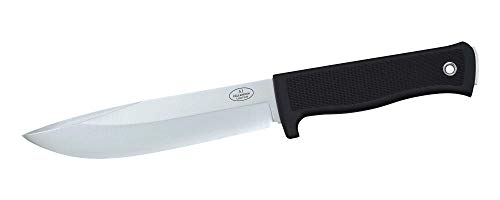
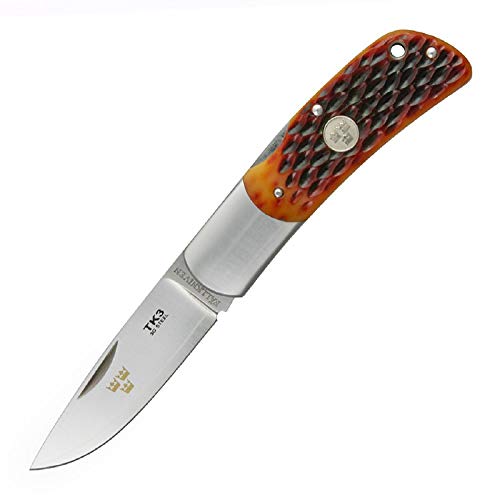
On this site, Fallkniven covers three product types: fixed-blade knives, folding knives and one knife sharpener. The maker sorts its fixed blades by use (hunting, survival, military, butcher's and exclusive) and its folders by lock (liner lock, lockback and slip joint). The grid above follows the site's own types, and inside them the lineup falls into a handful of families:
- Survival and outdoor knives: the F1, S1, A1 and A2, plus the F2, F3 and WM1
- The NL series: Norse-named knives with leather handles on several models
- TK fixed blades: compact hunting knives
- Lockback folders: the U4, TK4 and Tre Kronor
- Other folders: the PCx liner lock, the PXL, the GP folder, the TK3 and the LTC slip joints
- Sharpener: the DC4 diamond and ceramic whetstone
The grid also holds a kitchen knife, the K1 chef's knife, which sits with the fixed blades. Fallkniven also sells spare sheaths; this site doesn't list them.
The grid changes as listings come and go, so I'll write about the families and what separates them, not about how many of each are listed this week. Most specs in the grid came from Amazon listings, and the grid marks those. Where a value is missing, the grid shows a dash. I didn't fill it in from memory.
The steel comes first with Fallkniven
Fallkniven publishes a whole page about steel, and the short version is lamination. The maker explains that it puts a hard edge steel between two softer, tougher outer layers. The outer layers are usually 420J2, which the maker calls almost corrosion-free. Fallkniven says a laminated steel is at least 20 percent stronger than a solid stainless one.
The steels you'll see in the grid, per the maker's steel page:
- Laminated VG10: 59 HRC, the older steel on many listings
- Laminated VG7 (also called VGWolf): 59 HRC, with more tungsten; the maker lists it for the A1, A2, F1 and F2
- Laminated CoS: 60 HRC, a cobalt-special steel
- 3G: 62 HRC, a powder-steel core with VG2 outer layers; the maker names the TK2 among its 3G knives
- Elmax: 61–62 HRC, a solid powder steel, on the current U4 and other folders
- Cowry X: 64 HRC, a damascus-clad knife at the top of the range, on the NL5cx
HRC is the Rockwell hardness scale. Higher means harder. Outdoor Life's knife steel guide shows the usual trade: very hard, wear-resistant steels hold an edge well, take more effort to sharpen and can be more prone to chipping. It also notes that the maker's heat treatment changes how a steel performs.
One more thing: Fallkniven has changed steels on some models over the years. The F1 listing in the grid names VG-10. The maker's current F1 page says laminated VG7. Read the steel line on the exact listing before you order, and don't assume two F1s are the same knife.
Lineup notes: the Fallkniven fixed blade
The F1, S1 and A1: survival knives in three sizes
These three are the knives most people mean when they say Fallkniven. They share a look: a stout blade, a convex edge and a rubbery handle. The difference is length. The F1 has the shortest blade, the S1 sits in the middle, and the A1 is the big one, per the listings.
Fallkniven's F1 page lists a 98 mm blade (just under 4 inches), 4.5 mm thick, and 149 g for the knife alone. It says the F1 has been the survival knife of Swedish Air Force pilots since 1995. The handle is Thermorun, and the sheath is Zytel or leather.
The A1 is a different animal. The maker lists a 160 mm blade, 6 mm thick, at 319 g. Its page calls it a larger all-purpose knife for heavy work and says it handles chopping well. The tang (the steel that runs into the handle) protrudes at the butt, so you can strike the end without damaging the grip, per the maker. The A1L in the grid lists laminated VG10 and a leather sheath. The A2 Kraton listing names a leather sheath, and the maker's steel page puts the A2 in laminated VG7.
Rule of thumb: pick the size for the job you'll actually do. A 4-inch blade dresses a deer and makes camp feather sticks. A 6-inch blade chops, and it rides on your belt all day whether you chop or not. The survival knife page covers these jobs across brands.
F2, F3 and WM1: smaller and lighter
The F2Z and F3Z listings name laminated VG10 and a convex grind, with a sheath included. The WM1Z listing includes a sheath too. These are the lighter end of the outdoor family, for a pack or a pocket of a hunting coat. More on light fixed blades for camp work is on the bushcraft knife page.
The NL series: Norse names and leather
Fallkniven names the NL knives after Norse gods: Thor, Odin, Njord, Frey and Idun, per its survival knives page. The listings in the grid run from the NL5 with a blade under 4 inches up to the NL1 at nearly 10 inches. The NL4 and NL5 list leather handles and leather sheaths. The NL5cxL is the Cowry X damascus version of the Idun.
The NL1 is a big knife. A blade that long is a chopping tool, and it's more knife than most hunters carry for dressing a deer. I've seen fellows carry a sword to deer camp. They mostly used it to open bags of charcoal.
TK fixed blades: compact hunters
The TK2 and TK6 are the small fixed blades in the grid. The TK2 listing gives a blade just under 4 inches and a leather sheath; the TK6 is shorter. Fallkniven names the TK2 among its 3G steel knives. These are field-dressing sizes. The hunting knife page and the skinning knife page cover blade shapes for that work.
For field dressing, the TK and F1 sizes are the ones I'd look at first. My one opinion on this page: with Fallkniven, read the steel on the listing before the model name. Per the maker's steel page, laminated VG10 is the older steel on many listings and VG7 is the one it lists for the A1, A2, F1 and F2, so two listings with the same model name can carry different steel.
Lineup notes: the Fallkniven pocket knife
Lockbacks: U4, TK4 and Tre Kronor
Fallkniven's lockback category lists the U4 and TK4. The U4 page gives a 53 mm blade (about 2 inches) in Elmax steel with a Grilon handle, and calls it a knife for the pocket: peeling fruit, opening mail, cutting string. The TK4 listing gives a blade of a bit under 3 inches with a polymer handle, and the Tre Kronor listing names a lockback too.
A lockback locks with a bar along the spine; press it at the back of the handle to close. Practice at home.
Liner lock and the larger folders: PCx, PXL, GP
The PCx listing names a liner lock (a spring strip inside the handle that slides behind the open blade) with a polymer handle. The PXL folder lists 3G steel, a Micarta handle and a pocket clip. The GP folder lists laminated CoS steel and a wood handle. The TK3 with an oak handle lists 3G steel. The everyday carry knife page covers clip carry and locks across brands.
LTC slip joints: small and non-locking
The LTC comes in several handle colors, all with aluminum handles and a short blade of a bit over 2 inches, per the listings. The LTC listing names it a slip joint, and Fallkniven files the LTCs under slip joints too, in 3G steel. A slip joint doesn't lock; a spring holds the blade open and closed. Good for string and packages. Not for prying, and nothing in your pocket should be. Small carry knives are on the lightweight pocket knife page.
Jess asked why anybody needs a knife smaller than a house key. Then she borrowed my old two-inch pen knife to open a box of arrow vanes. Then she kept it until Tuesday.
The Fallkniven DC4 whetstone
Fallkniven's one sharpener in the grid is the DC4, and it fits the way the maker says to sharpen its own knives. The listing calls it a compact field sharpener with a diamond side and a ceramic side. The maker's DC4 page gives the detail:
- Diamond side: a fine 25-micron diamond stone
- Ceramic side: a 5-micron ceramic stone the maker says is made of synthetic sapphires
- Size: 100 mm long (about 4 inches) and 65 g, with a leather pouch
The maker says it handles any steel, even the very hard powder steels. That matters with blades in 3G and Elmax. Fallkniven's sharpening page lays out the routine: color the edge with a felt-tip pen to see where the stone touches, work the convex edge on the diamond side, then finish on the ceramic. Cut away from your body while you work.
It's a pocket stone, not a bench system. Diamond stones across brands are on the diamond sharpening stone page, and field sharpeners on the portable knife sharpener page.
How to choose within the Fallkniven lineup
Fixed or folding first
If the knife's main job is field dressing or camp work, start with the F1, S1 or TK sizes. If it rides in your pocket every day, start with the folders. The fixed blade knife page and the pocket knife page lay out the trade across brands.
Then the size
The fixed blades in the grid run from compact TK hunters under 4 inches to the NL1 near 10 inches. Think about the belt first: a long blade on it catches on stand straps, saddle bridges and truck seats. Try the sheath over the coat you'll wear in November.
Then the steel and the edge
The steels in the grid run from laminated VG10 and VG7 at 59 HRC up to 3G and Elmax at 61–62 HRC, per the maker. If you sharpen at the kitchen table with one stone, the lower end asks less of you; if you'd rather sharpen less often, look higher. The F1 and A1 have convex edges per the maker, and the F2 and F3 listings name a convex grind.
Then the sheath
The grid shows leather sheaths on the F1, S1, NL and TK2 listings, and the maker also offers Zytel sheaths for the F1 and A1. Pick by where the knife will live.
Care that applies to the whole lineup
Fallkniven's warranty page doubles as a care sheet. It says to handle the knife as a precision cutting tool. Light taps on the spine with a branch are fine for splitting dry kindling, but for firewood, use an axe. Never strike the spine with a hammer or similar tool, as that can break the knife. The page also notes that cold makes steel brittle, which matters to anyone who hunts in December.
AKTI's maintenance guide adds the basics for any knife:
- A toothpick for dirt in the handle
- Light oil on the folding mechanism of a folder you use often
- A light coat of oil on the blade to keep water off
- A cool, dry place for storage, not a damp basement or garage
AKTI also says even stainless steel can be harmed by water, and salt water most of all. The outer layers on a laminated blade are almost corrosion-free, per Fallkniven, but the edge is the core steel. Wipe it dry.
Cut away from your body, and keep your fingers out of a folder's closing path. AKTI warns that a released blade can snap shut.
Fallkniven facts
Here's what I could verify on the maker's own site:
- Founded: 1984, by Peter Hjortberger
- Home: Boden, in Norrbotten, Sweden; a family business
- The F1: the survival knife of Swedish Air Force pilots since 1995, per the maker
- Warranty: ten years from an authorized dealer or distributor, three years from other sources, none for internet discount sites or grey-market imports
The maker's site doesn't say where the knives are manufactured, so I've left that out.
Dry the blade, oil it, and write the steel in the logbook next to the model number. Two F1s can be two different knives.
Where Fallkniven shows up
Questions about Fallkniven
Are Fallkniven knives good?
What the maker states is checkable. Fallkniven publishes the steel and hardness of each blade, from 59 HRC for laminated VG10 and VG7 up to 62 HRC for 3G and SGPS, and says its laminated steel is at least 20 percent stronger than solid stainless. Its F1 page says the F1 has been the Swedish Air Force pilots' survival knife since 1995. Whether one suits you depends on the job and the size.
Where is Fallkniven from?
Fallkniven AB is a family business in Boden, in Norrbotten in northern Sweden. Its site says Peter Hjortberger founded the company in 1984. The maker's site doesn't say where the knives themselves are manufactured, so read the listing of the exact knife if that matters to you.
What warranty does Fallkniven have?
Fallkniven's warranty page gives ten years for knives bought from an authorized dealer or distributor and three years for knives bought elsewhere. It excludes knives bought through internet discount sites and grey-market imports. Misuse, lack of maintenance, rust and normal wear aren't covered, and the maker decides warranty matters, not the dealer. Keep the receipt.
What is the Fallkniven F1?
The F1 is a fixed-blade survival knife with a convex edge and a Thermorun handle. Fallkniven's page lists a 98 mm blade, 4.5 mm thick, and a weight of 149 g for the knife alone, with a Zytel or leather sheath. The F1 listing in the grid names VG-10 steel; the maker's current F1 is laminated VG7.
How do you sharpen a Fallkniven convex edge?
Fallkniven says a convex edge is fairly easy to sharpen with a handheld diamond whetstone. Color the edge with a felt-tip pen first, so you can see where the stone is working. The maker suggests finishing on a ceramic stone and testing by drawing the edge lightly across a fingernail. Cut away from your body while you work.
Where can I buy Fallkniven knives?
The product grid on this page links to Fallkniven listings on Amazon US, filtered by fixed blade, folding knife and knife sharpener. Fallkniven's site lists its authorized dealers. Since the warranty term depends on where the knife was bought, check that before you order. Some knives may not ship to every address; Amazon shows that at checkout.
Sources
- Fallkniven: About us — accessed 2026-10-23
- Fallkniven: Home page — accessed 2026-10-23
- Fallkniven: Steel information — accessed 2026-10-23
- Fallkniven: Warranty — accessed 2026-10-23
- Fallkniven: Knife sharpening — accessed 2026-10-23
- Fallkniven: F1 (Lam. VG7 steel) — accessed 2026-10-23
- Fallkniven: A1 (Lam. VG7 steel) — accessed 2026-10-23
- Fallkniven: Survival knives — accessed 2026-10-23
- Fallkniven: Lockback knives — accessed 2026-10-23
- Fallkniven: Slipjoint knives — accessed 2026-10-23
- Fallkniven: U4 (Elmax steel) — accessed 2026-10-23
- Fallkniven: DC4 whetstone — accessed 2026-10-28
- Outdoor Life: Knife steel guide — accessed 2026-10-23
- American Knife & Tool Institute: Knife safety, sharpening and maintenance — accessed 2026-10-23