Brand · Knives & Tools
Smith & Wesson Knives
Smith & Wesson knives come in two kinds for hunters and campers: fixed blades that ride in a sheath and folding knives with a pocket clip. Most of the lineup carries a series name (M&P, Extreme Ops, Border Guard, HRT), and the names tell you less than the specs do. Here's the thing: pick by blade length, lock and edge first. The series name is the last thing to read, like the color of a pickup.
We earn a commission if you buy through our links, at no cost to you. Disclosure
Smith & Wesson on Amazon US
49 models- Fixed blade knife
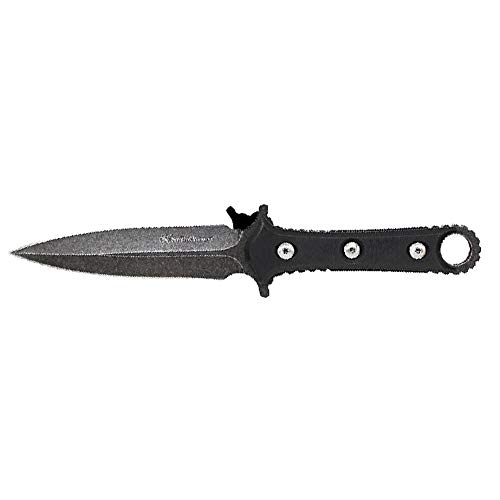
Smith & Wesson H.R.T Boot Knife
- Blade length
- 4.7 in
- Overall length
- 9 in
- Blade steel
- 7Cr17MoV high carbon stainless
- Fixed blade knife
Smith & Wesson SWHRT9B
- Blade length
- 4.7 in
- Overall length
- 9 in
- Blade steel
- 7Cr17MoV high carbon stainless
- Fixed blade knife
Smith & Wesson CKSUR1
- Blade length
- 6 in
- Overall length
- 10.5 in
- Blade steel
- 7Cr17MoV high carbon stainless
- Fixed blade knife
Smith & Wesson SWHRT3BF
- Blade length
- 3.5 in
- Overall length
- 7.5 in
- Blade steel
- 7Cr17MoV high carbon stainless
- Fixed blade knife
Smith & Wesson SWHRT3
- Blade length
- 3.5 in
- Overall length
- 7.5 in
- Blade steel
- 7Cr17MoV high carbon stainless
- Fixed blade knife
Smith & Wesson SW3B Bowie
- Blade length
- 7.8 in
- Overall length
- 12.8 in
- Blade steel
- 420J2
- Fixed blade knife
Smith & Wesson 10.6 in Tanto
- Blade length
- 5.2 in
- Overall length
- 10.6 in
- Blade steel
- 9Cr17MoV high carbon stainless
- Fixed blade knife
Smith & Wesson SW910TAM Neck Knife
- Blade length
- 2.8 in
- Overall length
- 5.9 in
- Steel type
- Stainless
- Fixed blade knife
Smith & Wesson SWF606
- Blade length
- 4.4 in
- Overall length
- 8.6 in
- Blade steel
- 8Cr13MoV high carbon stainless
- Fixed blade knife
Smith & Wesson SWMPF3BR
- Blade length
- 4.6 in
- Overall length
- 9 in
- Blade steel
- 8Cr13MoV
- Fixed blade knife
Smith & Wesson M&P SWMPF2BS
- Blade length
- 4.1 in
- Overall length
- 8.7 in
- Blade steel
- 400 series high carbon stainless
- Fixed blade knife
Smith & Wesson M&P M2.0 Thin
- Blade length
- 4 in
- Overall length
- 9 in
- Blade steel
- 8Cr13MoV
- Fixed blade knife
Smith & Wesson SW995 Karambit
- Blade length
- 3.75 in
- Overall length
- 8.5 in
- Blade steel
- 8Cr13MoV
- Fixed blade knife
Smith & Wesson M&P SWMPF2CS
- Blade length
- 4.1 in
- Overall length
- 8.7 in
- Blade steel
- 8Cr13MoV
- Fixed blade knife
Smith & Wesson M&P Shield
- Blade length
- 3 in
- Overall length
- 7.5 in
- Blade steel
- 8Cr13MoV
- Fixed blade knife
Smith & Wesson FDE Boot Knife
- Blade length
- 2.75 in
- Overall length
- 6.25 in
- Blade steel
- 8Cr13MoV
- Fixed blade knife
Smith & Wesson Search and Rescue
- Blade length
- 6 in
- Overall length
- 11 in
- Blade steel
- 8Cr13MoV
- Fixed blade knife
Smith & Wesson M&P Special Ops 10 in
- Blade length
- 5 in
- Overall length
- 10 in
- Blade steel
- 8Cr13MoV
- Fixed blade knife
Smith & Wesson M&P Officer
- Blade length
- 4 in
- Overall length
- 8.5 in
- Blade steel
- 8Cr13MoV
- Fixed blade knife
Smith & Wesson M&P Extreme Ops Karambit
- Blade length
- 4 in
- Overall length
- 8.5 in
- Blade steel
- 9Cr18MoV
- Fixed blade knife
Smith & Wesson M&P Special Ops 12 in
- Blade length
- 7 in
- Overall length
- 12 in
- Blade steel
- 8Cr13MoV
- Fixed blade knife
Smith & Wesson 24/7
- Blade length
- 4 in
- Overall length
- 8.5 in
- Blade steel
- 8Cr13MoV
- Fixed blade knife
Smith & Wesson 8.5 in False Edge FDE
- Blade length
- 4 in
- Overall length
- 8.5 in
- Blade steel
- 8Cr13MoV
- Fixed blade knife
Smith & Wesson 5 in False Edge
- Blade length
- 2 in
- Overall length
- 5 in
- Blade steel
- 8Cr13MoV
- Fixed blade knife
Smith & Wesson 5 in 2 in 1 False Edge
- Blade length
- 2 in
- Overall length
- 5 in
- Blade steel
- 8Cr13MoV
- Fixed blade knife
Smith & Wesson Extreme Ops Karambit
- Blade length
- 3.25 in
- Overall length
- 7 in
- Blade steel
- 8Cr
- Folding knife
Smith & Wesson CKLPB
- Blade steel
- 7Cr17MoV
- Steel type
- Stainless
- Blade shape
- Drop point
- Folding knife
Smith & Wesson CKLPR Rainbow
- Blade length
- 2.3 in
- Blade steel
- 7Cr17MoV
- Steel type
- Stainless
- Folding knife
Smith & Wesson CK5TBS
- Blade length
- 3.2 in
- Blade steel
- 7Cr17MoV
- Steel type
- Stainless
- Folding knife
Smith & Wesson SWFRS
- Blade length
- 3.3 in
- Blade steel
- 7Cr17MoV
- Steel type
- Stainless
- Folding knife
Smith & Wesson Executive CK110GL
- Blade length
- 2.8 in
- Blade steel
- 7Cr17MoV
- Steel type
- Stainless
- Folding knife
Smith & Wesson SWFR2S
- Blade length
- 3.3 in
- Blade steel
- 7Cr17MoV
- Steel type
- Stainless
- Folding knife
Smith & Wesson SWMP4LS
- Blade length
- 3.6 in
- Blade steel
- 4034 black oxide high carbon stainless steel
- Steel type
- Stainless
- Folding knife
Smith & Wesson Border Guard SWBG6TS
- Blade length
- 4.2 in
- Blade steel
- 7Cr17MoV
- Steel type
- Stainless
- Folding knife
Smith & Wesson SWFRS
- Blade length
- 3.3 in
- Blade steel
- 7Cr17MoV
- Steel type
- Stainless
- Folding knife
Smith & Wesson Black Ops SWBLOP3S
- Blade length
- 3.4 in
- Blade steel
- 4034 high carbon stainless
- Steel type
- Stainless
- Folding knife
Smith & Wesson Extreme Ops SWA24S
- Blade length
- 3.1 in
- Blade steel
- 7Cr17MoV
- Steel type
- Stainless
- Folding knife
Smith & Wesson Extreme Ops SWA25
- Blade length
- 3.3 in
- Blade steel
- 7Cr17MoV
- Steel type
- Stainless
- Folding knife
Smith & Wesson Skeletonized Drop Point
- Blade length
- 2.2 in
- Blade steel
- 7Cr17MoV
- Steel type
- Stainless
- Folding knife
Smith & Wesson Border Guard SWBG10S
- Blade steel
- 7Cr17MoV
- Steel type
- Stainless
- Blade shape
- Tanto
- Folding knife
Smith & Wesson M&P SWMP11B
- Blade length
- 3.8 in
- Blade steel
- 7Cr17MoV
- Steel type
- Stainless
- Folding knife
Smith & Wesson SW608BLS
- Blade length
- 3.4 in
- Blade steel
- 8Cr13MoV
- Steel type
- Stainless
- Folding knife
Smith & Wesson SW609
- Blade length
- 3.6 in
- Blade steel
- 8Cr13MoV
- Steel type
- Stainless
- Folding knife
Smith & Wesson M&P SWMP13BS
- Blade length
- 3.5 in
- Blade steel
- 8Cr13MoV
- Steel type
- Stainless
- Folding knife
Smith & Wesson M&P Bodyguard
- Blade length
- 2.75 in
- Blade steel
- 8Cr13MoV
- Steel type
- Stainless
- Folding knife
Smith & Wesson Border Guard 10in
- Blade length
- 4.4 in
- Blade steel
- 7Cr17MoV
- Steel type
- Stainless
- Folding knife
Smith & Wesson M&P Spring Assisted
- Blade length
- 3.5 in
- Blade steel
- 8Cr13MoV
- Steel type
- Stainless
- Folding knife
Smith & Wesson M&P Special Ops Assisted
- Blade length
- 4 in
- Blade steel
- 9Cr18MoV
- Steel type
- Stainless
- Folding knife
Smith & Wesson Unwavered Folder
- Blade length
- 3.25 in
- Blade steel
- 8Cr13MoV
- Steel type
- Stainless










What Smith & Wesson makes for hunters and campers
On this site, Smith & Wesson covers two product types: fixed-blade knives and folding knives. The Smith & Wesson name is best known from firearms, which this site doesn't list; this page is about the knives only.
Inside the two types, the grid splits into groups you'll recognize by name:
- HRT and boot knives: small fixed blades with a sheath
- Larger fixed blades: survival, bowie and search-and-rescue styles
- M&P fixed blades: a wide mix, from a 3-inch blade to a 7-inch one
- Small frame-lock folders: the CK models and a skeletonized drop point
- Extreme Ops and other liner-lock folders
- Border Guard and M&P folders: bigger blades, several with assisted opening
The grid filters by type and changes as listings come and go. So I'll write about the groups and what separates them, not about how many are listed this week. Nearly every spec here comes from an Amazon listing, and the grid marks those values. Where a listing leaves a field blank, the grid shows a dash, and I've left it at that.
Lineup notes: Smith & Wesson fixed blades
HRT and the small boot knives
The HRT models are the compact fixed blades. Per the listings:
- HRT boot knife and SWHRT9B: 4.7-inch blades, 9 inches overall, rubber or TPE handles
- SWHRT3 and SWHRT3BF: 3.5-inch blades, 7.5 inches overall, full tang, TPR handles
- FDE boot knife: a 2.75-inch blade with a hard polymer sheath
TPE and TPR are rubbery plastics, grippy when wet. All of these come with a sheath, per the listings, and the steels named are 7Cr17MoV on the HRTs and 8Cr13MoV on the FDE.
A 3.5 to 4.7-inch blade is a handy size around camp: rope, kindling, opening feed sacks, cutting a tarp loose. The boot knife page covers the style across brands.
Neck knives and the small false-edge blades
At the small end are knives meant to hang on a cord or ride in a pocket sheath:
- SW910TAM neck knife: a 2.8-inch tanto blade with a paracord-wrapped handle
- 5-inch false-edge knives: 2-inch blades, rubberized handles, hard polymer sheaths
A tanto point is an angular, chisel-like tip. A false edge is a ground bevel along the top of the blade near the tip. Neither does much for a hunter that a plain drop point doesn't, but a 2-inch blade on a cord is a backup that's hard to leave at home.
Larger fixed blades
The bigger fixed blades in the grid, per their listings:
- CKSUR1: a 6-inch blade, 10.5 inches overall, rubberized aluminum handle
- Search and Rescue: a 6-inch drop point with a serrated edge
- 10.6-inch tanto: a 5.2-inch blade in 9Cr17MoV with a hard polymer sheath
- SW3B bowie: a 7.8-inch blade, 12.8 inches overall, 420J2 steel
- 8.5-inch false-edge knife: a 4-inch blade with a hard polymer sheath
The bowie is the long one. A long blade chops and clears brush better than it does careful work. If you want a knife for camp chores and kindling more than for the deer, this is the corner of the grid to look at. The bowie knife page and the survival knife page compare them across brands.
M&P fixed blades
The M&P name covers the widest spread in the lineup. The listings describe:
- M&P Shield: 3-inch clip point, glass-filled nylon handle, nylon sheath
- M&P M2.0 Thin: 4-inch drop point, rubber overmold handle, nylon sheath
- M&P Officer: 4-inch drop point, G-10 handle
- SWMPF2BS and SWMPF2CS: 4.1-inch clip points with serrations, aluminum handles, hard sheaths
- SWMPF3BR: 4.6-inch blade, leather sheath
- M&P Special Ops: 5 and 7-inch clip points; the larger listing names a sawback and a pommel
All of them list full tangs, which means the steel runs the length of the handle. The SWF606, a 4.4-inch full-tang blade with a TPE handle and a leather sheath, sits in the same size range without the M&P name.
For hunting, the plain drop points in the 4-inch range are the ones that line up with the job. The hunting knife page explains blade shapes for field dressing across brands.
Karambits and the 24/7
A handful of knives in the grid are built around a curved karambit shape or a hard tanto point, per their listings: the SW995 karambit, two Extreme Ops karambits with G10 handles and finger loops, and the 24/7, a 4-inch tanto with a G10 handle and a rigid sheath. They're full tang and come with sheaths.
These are shapes for other jobs. A curved blade with a finger ring is not what I'd hand somebody for a first deer. The tactical knife page covers them across brands.
Lineup notes: the Smith & Wesson pocket knife
Small frame-lock folders
The smallest folders are short, light and plain. Per the listings:
- CKLPB and CKLPR Rainbow: 5.3 inches overall, the Rainbow with a 2.3-inch blade
- Executive CK110GL: a 2.8-inch drop point with a pocket clip
- Skeletonized drop point: a 2.2-inch blade in a cut-out steel frame
All of them name frame locks and thumb studs. A thumb stud is a small post on the blade you push with your thumb to open it. These are the folders for a key ring or a shirt pocket. The lightweight pocket knife page covers that end across brands.
Extreme Ops and the liner-lock folders
The middle of the folding lineup is liner locks with aluminum or steel handles and pocket clips. The listings describe:
- Extreme Ops SWA24S and SWA25: 3.1 and 3.3-inch clip points
- CK5TBS: a 3.2-inch tanto with a serrated edge
- SWFRS and SWFR2S: 3.3-inch blades, drop point or tanto, serrated
- SW608BLS and SW609: 3.4 and 3.6-inch drop points in 8Cr13MoV
- Unwavered folder: a 3.25-inch drop point with an engraved rosewood handle and a flipper
That last one is the odd one out, the only wood handle in the folders. (Danny asked if the rosewood was for formal occasions. Deer camp has one formal occasion. It's the Thanksgiving pie.)
Border Guard and the M&P folders
The bigger folders, per the listings:
- Border Guard SWBG6TS and the 10-inch Border Guard: 4.2 and 4.4-inch tanto blades
- Border Guard SWBG10S: tanto, serrated, aluminum handle
- M&P SWMP11B: a 3.8-inch tanto
- M&P SWMP13BS and SWMP4LS: 3.5 and 3.6-inch clip points, the 4LS assisted
- M&P Spring Assisted: a 3.5-inch drop point with an FRN handle
- M&P Special Ops assisted: a 4-inch tanto, 9.3 inches overall
- M&P Bodyguard: a 2.75-inch clip point that opens with a flipper
- Black Ops SWBLOP3S: a 3.4-inch drop point, assisted
Benchmade's mechanisms guide explains assisted opening: you start the blade open by hand, with a thumb stud or a flipper tab, and a spring finishes the job. A flipper is a small tab on the back of the blade that you push with a finger.
How to choose within the Smith & Wesson lineup
My one opinion on this page: ignore the series name until the end. The M&P label alone runs from the 2.75-inch Bodyguard folder to the 7-inch Special Ops fixed blade, per the listings. That's two different tools wearing the same hat. Blade length, shape and lock tell you what a knife is for. The name doesn't.
Fixed or folding first
A fixed blade with a sheath is ready the moment you pull it. A folder fits in a pocket. For field dressing and camp work, start with the fixed blades; for daily carry, start with the folders. The fixed blade knife page and the pocket knife page lay out the trade.
Then the blade shape
- Drop point: the all-round hunting shape, tip in line with the spine
- Clip point: a thinner tip for detail work
- Tanto: a strong, angular tip, less belly for slicing
- Karambit: a curved blade with a finger ring, for other jobs entirely
Then the edge
Many listings name a serrated edge. A serrated section is there for rope and webbing. If the knife's main job is the deer, look for a plain edge in the listing.
Then the lock
The folders use two locks, per the listings. Benchmade's guide describes a liner lock as a spring bar cut into the inside liner that moves behind the blade when it opens; you push it aside to close. A frame lock works the same way with the spring cut from the handle frame itself. Practice the close at the kitchen table, not on a tailgate at 5 a.m.
Then the steel
The listings name stainless steels across the line: 7Cr17MoV and 8Cr13MoV on most, 9Cr17MoV or 9Cr18MoV on a few, 4034 on two assisted folders and 420J2 on the bowie. There's no carbon-steel knife in this grid.
Care that applies to the whole lineup
AKTI, the American Knife & Tool Institute, keeps its maintenance advice simple. Every few months, pick the dirt out of the handle with something that isn't metal; a toothpick works. Put a light coat of oil on the blade after you've handled it and before it goes away, and on the pivot of any folder that sees steady use. Then store it somewhere cool and dry. AKTI names the basement and the garage as the places not to keep a knife, which describes most deer camps I know.
AKTI adds that salt water and some chemicals can damage even stainless steel. Stainless isn't a promise. It's a head start.
Cut away from your body, and keep your fingers out of a folder's closing path. AKTI also warns against using a knife as a pry bar or a screwdriver; the blade can slip or snap.
Smith & Wesson knife facts
Here's what I could verify from sources outside a store shelf:
- Seller: American Outdoor Brands, Inc., headquartered in Columbia, Missouri, sells knives and tools under the Smith & Wesson, M&P and Performance Center names, per its fiscal 2026 annual report
- License: the same report says those marks are licensed to American Outdoor Brands by Smith & Wesson Brands, Inc. for certain accessory product categories
- Brand page: AOB's own brands page lists Smith & Wesson, M&P Smith & Wesson and Performance Center, and notes the trademarks are used under license
This page doesn't cover where the knives are made or the maker's warranty terms. One listing in the grid names a limited lifetime warranty; read the maker's terms before you count on it.
Read the blade before the box. The box has a series name on it; the blade has the job.
Where Smith & Wesson shows up
Questions about Smith & Wesson
Are Smith & Wesson knives good?
What the listings show is checkable: most of the knives in the grid name stainless steels such as 7Cr17MoV and 8Cr13MoV, the folders list liner or frame locks and pocket clips, and many fixed blades list full tangs and a sheath. Whether one suits you depends on the job: field chores, camp work or pocket carry. Pick the blade length and lock first, then compare the specs.
Who makes Smith & Wesson knives?
American Outdoor Brands, of Columbia, Missouri, sells knives and tools under the Smith & Wesson, M&P and Performance Center names. Its fiscal 2026 annual report says those marks are licensed to it by Smith & Wesson Brands, Inc. for certain accessory product categories, and AOB's brand page says the trademarks are used under license.
What steel do Smith & Wesson knives use?
The listings name several stainless steels. 7Cr17MoV and 8Cr13MoV cover most of the lineup; a few models list 9Cr17MoV or 9Cr18MoV, two assisted folders list 4034, and the SW3B bowie lists 420J2. All are stainless per the listings, which means less rust care than carbon steel but not none. Wipe and oil any blade after a wet day.
Are Smith & Wesson knives good for hunting?
Some fit hunting jobs by their specs: the 3.5 to 4.7-inch HRT fixed blades and the 4-inch drop-point M&P Officer and M2.0 Thin all come with a sheath and suit general field and camp work. Many models in the lineup are shaped for other jobs, with tanto points or karambit blades. Read the blade shape and length first.
Where can I buy Smith & Wesson knives?
The product grid on this page links to Smith & Wesson knife listings on Amazon US, filtered by fixed blade and folding knife. Some knives may not ship to every address; Amazon shows that at checkout. Knife carry rules vary by state, especially for assisted-opening folders, so check your state's rules before you carry one.
Sources
- American Outdoor Brands, Inc.: Form 10-K, fiscal 2026 (SEC) — accessed 2026-10-28
- American Outdoor Brands: Brands — accessed 2026-10-28
- Benchmade: Knife mechanisms guide — accessed 2026-10-28
- American Knife & Tool Institute: Knife safety, sharpening and maintenance — accessed 2026-10-28