Knives & Tools · Gear type
Bowie Knife
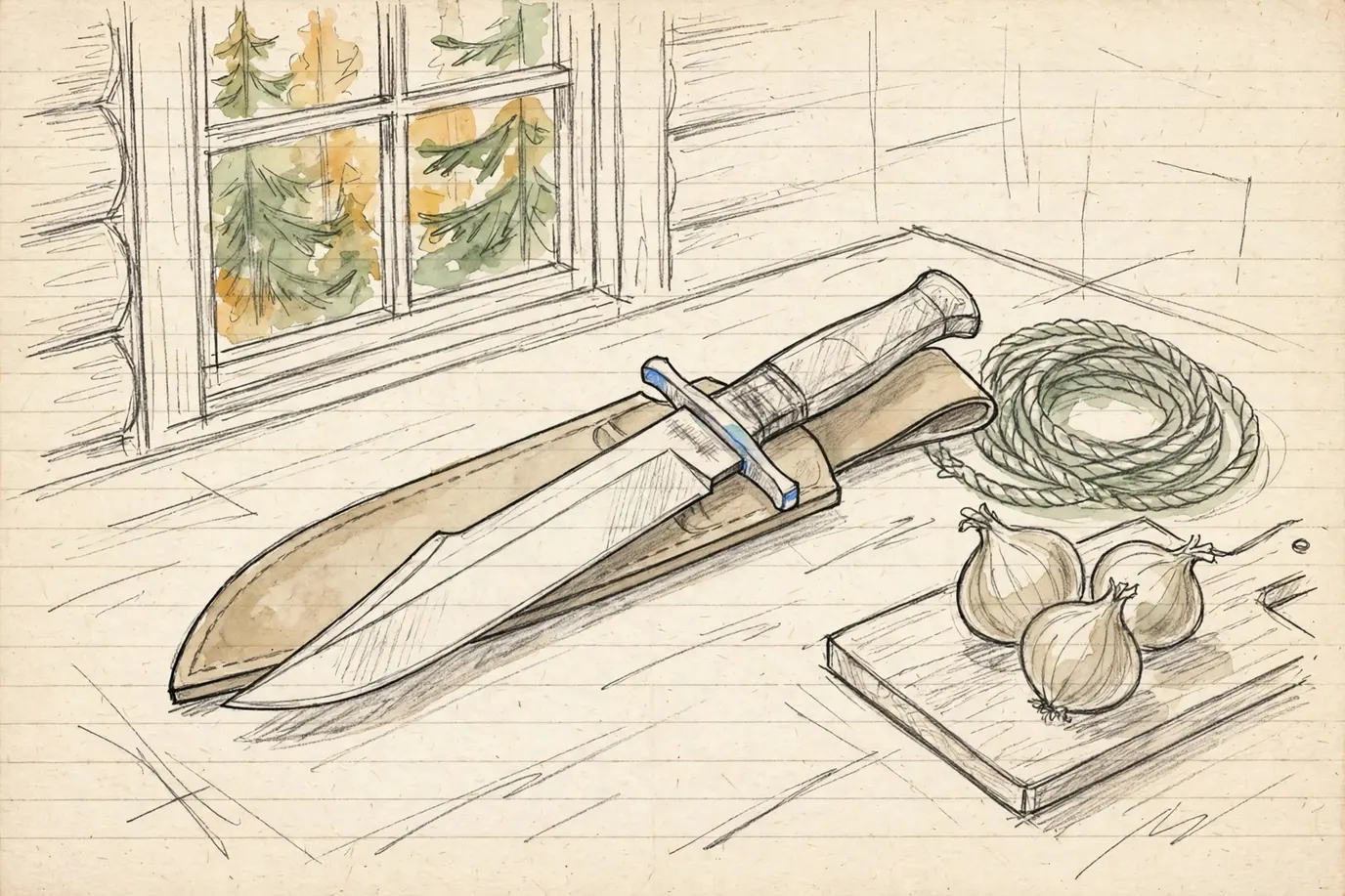
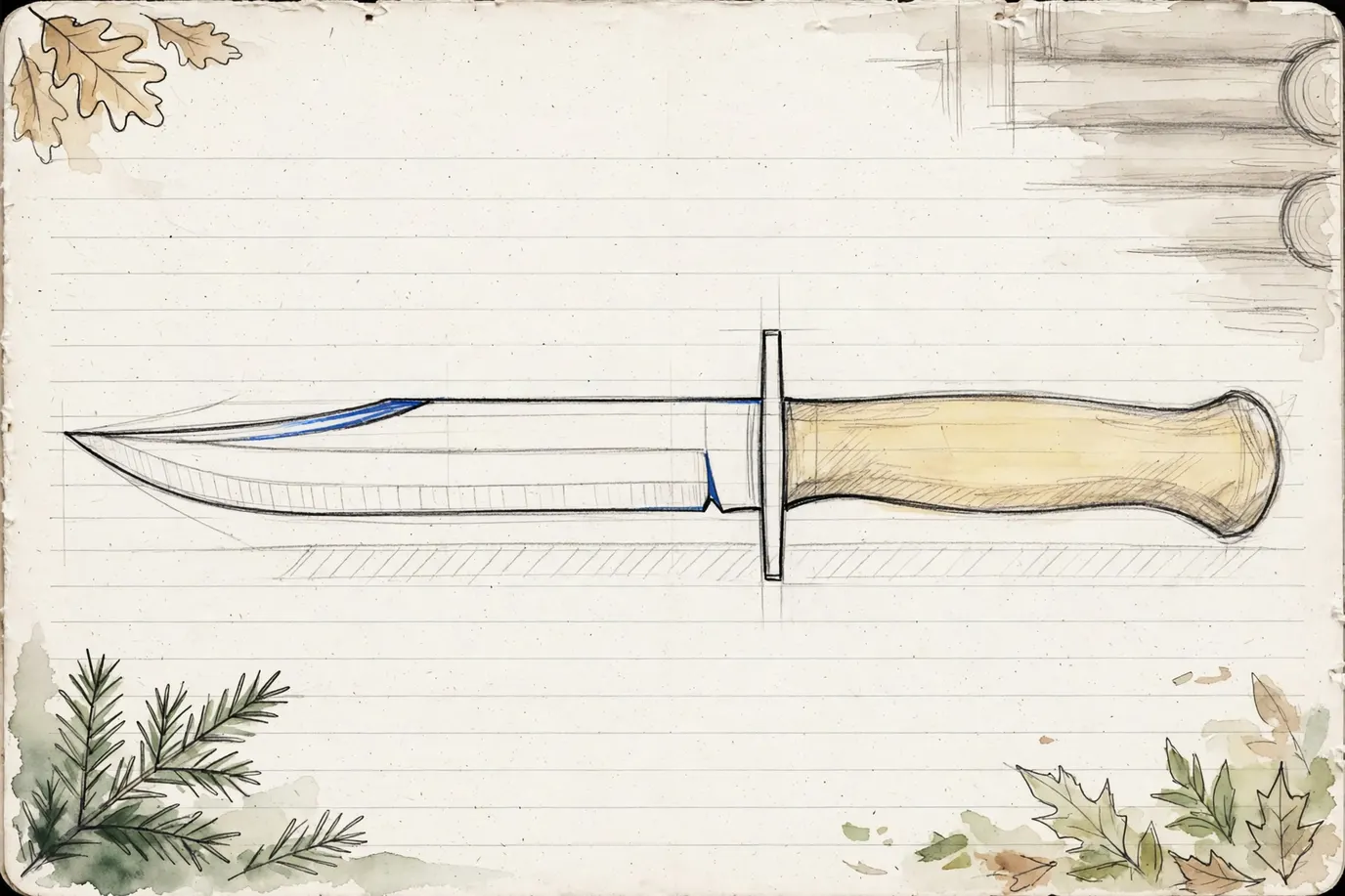
A Bowie knife is a big fixed blade with a clipped point and a crossguard. This page counts clip-point fixed blades of 6 inches or longer, as the maker or the Amazon listing states them, which is the classic Bowie profile. It's a camp knife with a long reach and a longer history, good at heavy cutting and the wrong size for delicate work. I have one hanging in the cabin. It has cut more rope and onions than anything else, which is about right.
We earn a commission if you buy through our links, at no cost to you. Disclosure
| Model | Blade thickness | Blade length | Overall length | Blade steel | Steel type | Amazon |
|---|---|---|---|---|---|---|
Rite Edge Falcata Bowie 18 inFixed blade knife More specs
| — | 12.5 inlisting | 18 inlisting | — | Stainlesslisting | Check price |
Mtech USA USMC Marine Force ReconFixed blade knife More specs
| — | 10.4 inlisting | 15.9 inlisting | 3Cr13MoVlisting | — | Check price |
Flissa 15" Tactical Bowie KnifeFixed blade knife More specs
| — | 10 inlisting | 15 inlisting | — | — | Check price |
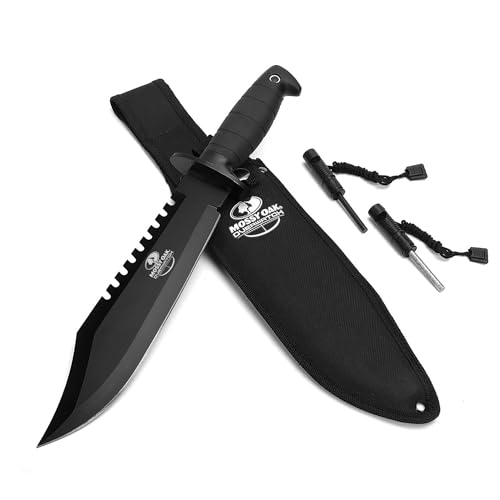
Mossy Oak 15 in Survival KnifeFixed blade knife More specs
| 0.156 inlisting | 10 inlisting | 15 inlisting | — | Stainlesslisting | Check price |
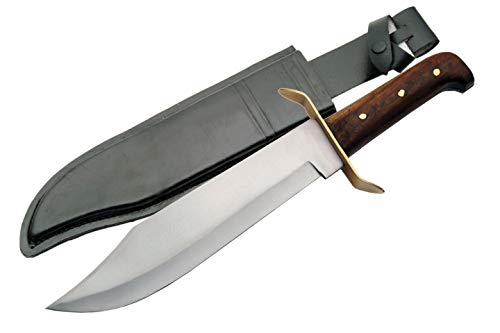
SZCO 15 in BowieFixed blade knife More specs
| — | 10 inlisting | 15 inlisting | 420HClisting | Carbonlisting | Check price |
Cold Steel Trail Master 9.5" CPM 3VFixed blade knife More specs
| — | 9.5 inlisting | 14.63 inlisting | CPM 3Vlisting | Tool steellisting | Check price |
Schrade Delta Class LeroyFixed blade knife More specs
| — | 9.5 inlisting | 15.63 inlisting | AUS-8listing | — | Check price |
SZCO 15 in Gator Back BowieFixed blade knife More specs
| — | 9.5 inlisting | 15 inlisting | — | Stainlesslisting | Check price |
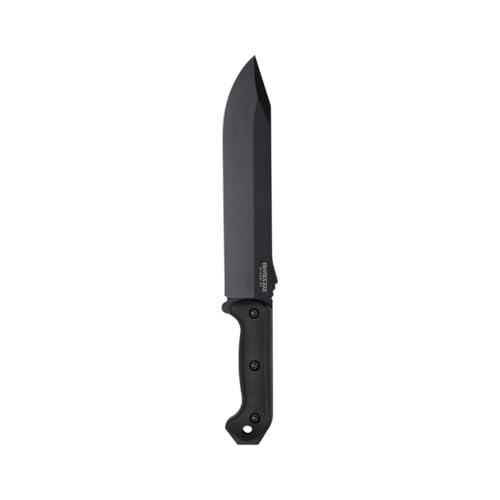
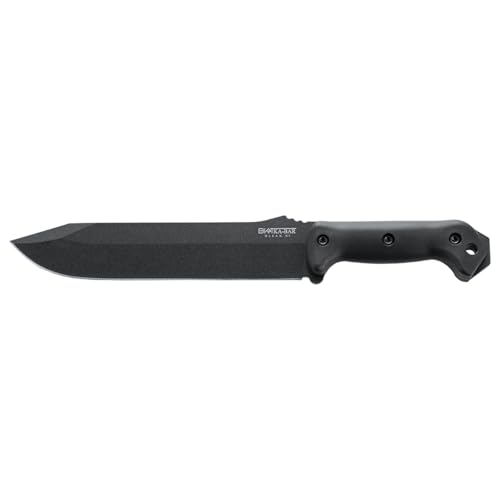
KA-BAR BK9 Becker Combat BowieFixed blade knife More specs
| — | 9.25 inlisting | — | 1095 Cro-Vanlisting | Carbonlisting | Check price |
KA-BAR BK9T Becker BowieFixed blade knife More specs
| — | 9.25 inlisting | — | 1095 Cro-Vanlisting | Carbonlisting | Check price |
Mossy Oak 14 in BowieFixed blade knife More specs
| 0.146 inlisting | 8.5 inlisting | 14 inlisting | 3Cr13listing | Stainlesslisting | Check price |
Bone Collector BC 886 Bowie 13.25 InchFixed blade knife More specs
| — | 8.25 inlisting | 13.25 inlisting | — | Stainlesslisting | Check price |
Cold Steel OSS 8.25"Fixed blade knife More specs
| — | 8.25 inlisting | 13.38 inlisting | AUS8Alisting | Stainlesslisting | Check price |
Cold Steel Drop Forged Survivalist 8"Fixed blade knife More specs
| — | 8 inlisting | — | 52100listing | Carbonlisting | Check price |
Mtech USA 14 in Carved G10 Fixed BladeFixed blade knife More specs
| 0.197 inlisting | 8 inlisting | 14 inlisting | — | Stainlesslisting | Check price |
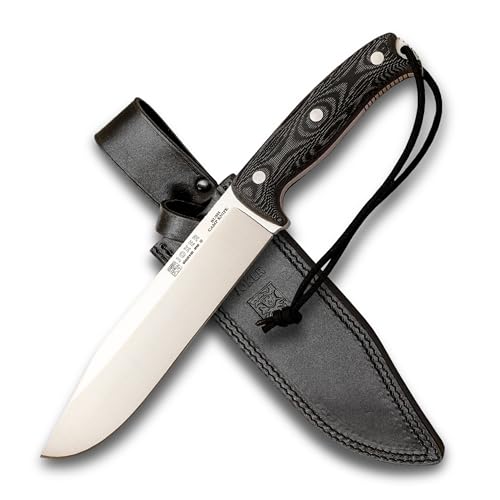
Joker Bush Camp CM146Fixed blade knife More specs
| — | 7.9 inlisting | — | N695listing | — | Check price |
Bone Collector BC 885 Bowie 12.5 InchFixed blade knife More specs
| — | 7.5 inlisting | 12.5 inlisting | — | Stainlesslisting | Check price |
Cold Steel Recon Scout 7.5" CPM 3VFixed blade knife More specs
| — | 7.5 inlisting | 12.5 inlisting | CPM 3Vlisting | Tool steellisting | Check price |
Buck Knives 120 GeneralFixed blade knife More specs
| — | 7.38 inlisting | — | 420HClisting | Stainlesslisting | Check price |
Bone Collector 12.25 Inch Fixed BladeFixed blade knife More specs
| — | 7.25 inlisting | 12.25 inlisting | — | Stainlesslisting | Check price |
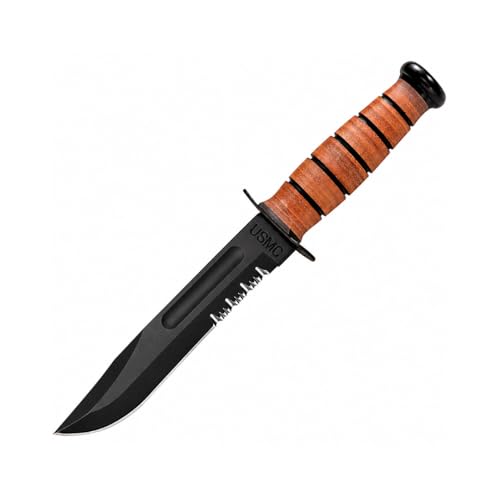
KA-BAR USMC Fighting KnifeFixed blade knife More specs
| — | 7 inlisting | — | 1095 Cro-Vanlisting | Carbonlisting | Check price |
KA-BAR D2 ExtremeFixed blade knife More specs
| — | 7 inlisting | — | D2listing | Tool steellisting | Check price |
KA-BAR Becker Combat UtilityFixed blade knife More specs
| — | 7 inlisting | 11.875 inlisting | 1095 Cro-Vanlisting | Carbonlisting | Check price |
Rite Edge Hunting Knife 12 in Leather HandleFixed blade knife More specs
| — | 7 inlisting | 12 inlisting | — | Stainlesslisting | Check price |
Smith & Wesson M&P Special Ops 12 inFixed blade knife More specs
| — | 7 inlisting | 12 inlisting | 8Cr13MoVlisting | Stainlesslisting | Check price |
United Cutlery USMC Combat FighterFixed blade knife More specs
| — | 7 inlisting | — | 420listing | Stainlesslisting | Check price |
KA-BAR SlabbyFixed blade knife More specs
| — | 6.86 inlisting | — | 1095 Cro-Vanlisting | Carbonlisting | Check price |
United Cutlery USMC Tribute Combat KnifeFixed blade knife More specs
| — | 6.75 inlisting | — | — | Stainlesslisting | Check price |
United Cutlery USMC Tribute 12.25 inFixed blade knife More specs
| — | 6.75 inlisting | 12.25 inlisting | — | Stainlesslisting | Check price |
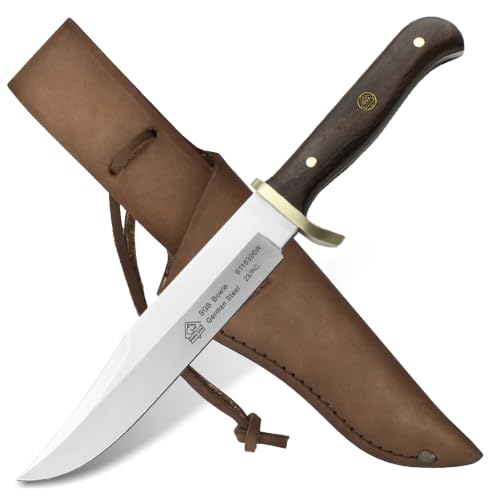
Puma SGB BowieFixed blade knife More specs
| 0.15 inlisting | 6.7 inlisting | 11 inlisting | 1.4116listing | Stainlesslisting | Check price |
Buck Knives 119 SpecialFixed blade knife More specs
| — | 6 inlisting | 10.5 inlisting | 420HClisting | Stainlesslisting | Check price |
Cold Steel SRK 6"Fixed blade knife More specs
| — | 6 inlisting | — | SK-5listing | — | Check price |
Cold Steel SRK 6" VG-10 San MaiFixed blade knife More specs
| — | 6 inlisting | 10.75 inlisting | VG-10listing | Stainlesslisting | Check price |
Cold Steel SRK 6" SK-5Fixed blade knife More specs
| — | 6 inlisting | — | SK-5listing | — | Check price |
Mossy Oak 2-Piece Bowie SetFixed blade knife More specs
| — | 6 inlisting | 10.5 inlisting | — | Stainlesslisting | Check price |















What’s in this listClip-point fixed blades 6 inches or longer, as stated by the maker or the Amazon listing — the classic Bowie profile. “—” means neither the maker nor the Amazon listing states it.
What makes a knife a Bowie
The Encyclopedia of Arkansas sums up the modern meaning: a large knife with a crossguard and a blade with a clipped point. That's it. There's no patent and no single pattern, which is why you'll see Bowies with every handle, finish and steel under the sun.
What sets it apart from the rest of the fixed-blade family is size and shape. The clip point gives it a sharp, low tip. The guard keeps your hand off the edge. The length gives it reach and enough weight up front to do heavy cutting. A general overview of fixed blades is on the fixed blade knife page. Shorter clip points are on the clip point knife page.
The table on this page follows a simple rule. It lists clip-point fixed blades with a blade of 6 inches or longer, as the maker or the Amazon listing states them. The columns show the maker's numbers first and the listing's where the maker is silent, marked as listing values: blade length, overall length, blade thickness where given, steel and steel type, edge, grind, full tang, handle material and sheath. A dash means neither states it. We don't guess.
Where the Bowie knife came from
Here's the short version, from the Texas State Historical Association's Handbook of Texas.
- The claim: in 1838, Rezin P. Bowie said he made the first Bowie knife, designed as a hunting knife, and gave it to his brother James.
- The smith: a notarized certification says blacksmith Jesse Clifft forged it to Rezin's design.
- The fame: James Bowie carried it in the Sandbar Fight near Natchez on September 19, 1827. After that, everybody wanted one.
- The early shape: a thick, heavy, butcher-knife-like blade with a straight back, no clip point and no guard. Blades ran from 8½ to 12½ inches.
- The changes: smiths added crossguards later, and the clip point became popular.
Arkansas has its own chapter. The Encyclopedia of Arkansas says blacksmith James Black of Washington, Arkansas, claimed to have made a knife for Jim Bowie. The Washington Telegraph first credited him with the invention on December 8, 1841. His knives, with a coffin-shaped handle, became the most copied Bowie design. Before 1861, "Arkansas toothpick" was used as another name for the Bowie. Today it usually means a double-edged knife.
So who invented it? Depends which state you're standing in. (I taught shop for a long time. Two guys claiming the same project is not new.)
How to choose a Bowie knife
Look at the clip and the false edge
The clip is where the spine dips toward the point. It leaves the point thinner, sharper and lower. One knife maker's blade-shape guide calls the clip point good for piercing and detail work, and notes the clip itself was often sharpened in the past, which is rare today. The trade-off, per the general reference on clip points, is a point that's narrower and weaker than a drop point's.
A bevel along the clip is called a false edge. It thins the tip whether it's sharp or not. If the maker sharpens it, treat the spine near the tip like an edge. The table's edge column describes the main edge.
Decide how much blade you'll actually swing
Six inches is the floor on this page. Many Bowies go well past it, and the historic ones did too. Length buys reach and weight up front. Batoning guides note that more blade means you can split bigger rounds.
Length also costs you control. A knife maker's field-dressing guide flags anything past 5 inches as harder to manage in tight quarters. So check the overall length column too. A long blade on a short handle feels like holding a frying pan by the very end.
Treat the crossguard as a safety part
The Handbook of Texas says the early crossguards were there to keep the hand from sliding onto the blade. AKTI, the American Knife & Tool Institute, makes the same point about any straight knife: if the handle has no guard or stop, a forward push can run your hand up the blade.
Some early owners found long guards clumsy and cut them off. Don't do that. Pick a guard size you can live with instead. A short, straight guard snags less in a sheath and still stops your hand.
Blade thickness and full tang
Few makers or listings state blade thickness, so expect dashes. Where it's listed, thicker stock means a stiffer, stronger blade that slices worse. The full tang column is marked only when the maker or the listing says so. On a long blade that will chop, a full tang is worth looking for.
Steel for a big blade
The table shows the exact steel grade where the maker or the listing names it, plus a broad type. One knife maker's steel guide defines toughness as resistance to chipping and breaking under impact, which a chopping knife needs. Tool steels, it explains, buy that toughness partly with rust resistance, so the owner has to keep up with them. A big carbon blade has a lot of surface to rust, so plan on wiping it down every time.
Edge and grind
Edges in this table are plain, fully serrated or partly serrated. Blade Magazine's guide says a plain edge covers most cutting and sharpens easily. Most Bowies are plain, and that's the right call for a knife that does rope, wood and food.
The grind column, where stated, shows how the blade thins. By the standard definitions, a saber grind is built for strength, a flat grind thins evenly from spine to edge for sharpness, and a convex grind bulges slightly to back the edge with extra steel. A hollow grind is very sharp but weaker. For chopping, the stronger grinds make sense.
Handle and sheath
Handle materials in the table run from wood and leather to rubber, G10 and Micarta. On a big knife, a handle that fills your hand and swells at the butt keeps it from twisting.
The sheath column reads leather, nylon, Kydex or polymer, plastic or other. A long blade needs a sheath that holds it firmly and rides where you won't sit on it. Ontario Knife Company's care page says to store a knife in a dry place, out of the sheath. Carry in leather if you like. Store out of it.
The Bowie as a hunting knife
People search for a "Bowie hunting knife," and the history backs them up. Rezin Bowie described the original as a hunting knife. Back then, one big knife did everything.
Today, a deer gets better service from a short blade. That field-dressing guide puts 3 to 4 inches at the comfortable middle for deer. My one opinion on this page: a Bowie is a camp knife, and the field-dressing knife should be a separate, shorter blade. Two reasons you can check: the blade-length advice above, and one food-safety rule. Cornell's Wildlife Health Lab says to keep dedicated tools for field dressing apart from butchering tools, and not to cut meat with the blade you used on bone. A camp kit with a short knife for the deer and a big one for the rest follows that rule without trying.
Jess calls the Bowie "the long one" and won't take it near a deer. On this, she and I agree. Write that down.
The deer knife is on the hunting knife page.
Kinds of Bowie knives
The classic pattern
Clip point, crossguard, often a coffin-shaped or oval handle, and a long blade. It's the look most people picture. Good for camp, for display, and for heavy cutting.
The camp Bowie
A plainer working version with a grippy synthetic handle and a tough sheath. It's the one that does rope, kindling and onions. If you'll use it more than look at it, this is your pick.
Bowie or survival knife
They overlap. A survival knife usually runs shorter, has a full tang its maker states, and keeps the spine square for sparks. The survival knife page covers that build. A Bowie keeps the clip point and guard, and often more length.
Bowie or a shorter clip point
Like the clip but not the size? Under 6 inches, a clip-point fixed blade drops off this page and onto the clip point knife page. That's where the deer hunter who wants a sharp, low tip ends up, since the 3 to 4 inch field-dressing range sits well under the Bowie floor. Same shape, half the blade, a lot less to carry.
Bowie or machete
If the job is clearing brush, a machete reaches farther and weighs less for its length. A Bowie is the better carving and food knife of the two.
Handling a big blade
Keep the edge pointed away from you and your free hand out of its path. Sheathe the knife before you walk anywhere, even ten feet to the woodpile. AKTI adds that prying or twisting with a blade can make it slip or snap, so leave the prying to a bar.
If you split kindling with it, use a wooden baton on the spine, strike squarely, and keep your legs out of the line of the blade. Never baton with a rock or metal.
Care and sharpening
AKTI says to oil the blade lightly, store it cool and dry, and sharpen more often rather than less. AKTI's recommended range is 10 to 15 degrees, with the exact angle set by the blade's grind. Stroke away from yourself and match the count side for side. On a long blade, work it in sections so the whole edge gets equal time, tip and clip included.
Who should skip a Bowie knife
If your knife's only job is the deer, skip it and buy a short hunting knife. If you hike light, a big Bowie and its sheath are a lot to carry for cutting cord. And if you mostly whittle, it's the wrong end of the toolbox.
Knife carry laws aimed at Bowies go back to Tennessee's 1838 act, and today's rules are still a patchwork. Check your state's rules before it goes on your belt.
The Bowie on our cabin wall still comes down every November. Mostly for onions. Nobody has told the onions it's a famous knife.
Brands in this list
Related
Questions people ask
What is a Bowie knife?
Today the name usually means a large knife with a crossguard and a blade with a clipped point, per the Encyclopedia of Arkansas. The earliest ones, according to the Texas State Historical Association, had a thick, heavy, butcher-knife-like blade with a straight back and no clip point or guard. Both features came later and stuck.
Is a Bowie knife good for hunting?
For camp chores around the hunt, yes: rope, kindling, quartering help. For field dressing a deer, a long blade is a poor fit. One knife maker's field-dressing guide calls 3 to 4 inches comfortable for most of the work and warns that anything past 5 inches takes extra care where space is tight. Carry a short hunting knife for that work.
Why does a Bowie knife have a crossguard?
Blacksmiths added rudimentary crossguards to keep the hand from sliding onto the blade, per the Texas State Historical Association. The American Knife & Tool Institute makes the same point about any straight knife: without a guard or stop, a forward push can run your hand up the edge. Some early owners found long guards clumsy and cut them off.
What is the false edge on a Bowie knife?
It's the bevel ground along the clip, the scooped section of spine just behind the point. It thins the tip so it pierces better. One knife maker's blade-shape guide notes the clip was often sharpened in the past and that a sharpened clip is rare today. The table's edge column describes the main cutting edge only.
Are Bowie knives legal to carry?
It depends where you are. Laws aimed at Bowie knives go back a long way; Tennessee passed an act against their sale and use in January 1838. What's allowed today still differs from one state and city to the next, so look up your state's rules before you wear one.
What's the difference between a Bowie knife and a survival knife?
Plenty of knives could wear either label, but the emphasis differs. A Bowie keeps the clip point and crossguard and usually runs long, 6 inches of blade or more on this page. A survival knife is usually a bit shorter, with a full tang its maker states, a single plain edge and a flat, sharp-cornered spine meant for a ferro rod.
Sources
- Texas State Historical Association, Handbook of Texas: Bowie knife — accessed 2026-10-22
- CALS Encyclopedia of Arkansas: Bowie knife — accessed 2026-10-22
- Benchmade: Knife blade types 101 — accessed 2026-10-22
- Wikipedia: Clip point — accessed 2026-10-22
- Montana Knife Company: How to field dress a deer — accessed 2026-10-22
- Montana Knife Company: What is batoning with a knife? — accessed 2026-10-22
- American Knife & Tool Institute: Knife safety, sharpening and maintenance — accessed 2026-10-22
- Spyderco: Understanding tool steels — accessed 2026-10-22
- Blade Magazine: Plain vs serrated knives — accessed 2026-10-22
- Wikipedia: Grind (blade grinds) — accessed 2026-10-22
- Ontario Knife Company: Knife maintenance and care — accessed 2026-10-22
- Cornell Wildlife Health Lab: Tips for safe handling and processing of venison — accessed 2026-10-22