Brand · Knives & Tools
KA-BAR Knives
KA-BAR, which most people type as kabar, makes fixed-blade knives and machetes, and that's what it covers on this site: the USMC fighting knife and its relatives, the Becker line of heavy outdoor knives, Ek Commando fighters, small TDI knives and a set of kukri and cutlass machetes. Here's the thing: the name on the blade tells you the family, and the family tells you the job. Pick the job first. Most of the lineup lists 1095 Cro-Van, a carbon steel, so plan on wiping it dry.
We earn a commission if you buy through our links, at no cost to you. Disclosure
KA-BAR on Amazon US
38 models- Fixed blade knife
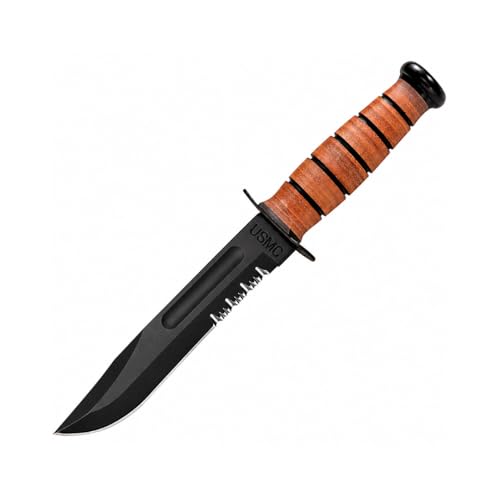
KA-BAR USMC Fighting Knife
- Blade length
- 7 in
- Blade steel
- 1095 Cro-Van
- Steel type
- Carbon
- Fixed blade knife
KA-BAR 1220 US Army
- Blade length
- 7 in
- Fixed blade knife
KA-BAR D2 Extreme
- Blade length
- 7 in
- Blade steel
- D2
- Steel type
- Tool steel
- Fixed blade knife
KA-BAR Becker Combat Utility
- Blade length
- 7 in
- Overall length
- 11.875 in
- Blade steel
- 1095 Cro-Van
- Fixed blade knife
KA-BAR Tanto Half-Serrated
- Blade steel
- 1095 Cro-Van
- Steel type
- Carbon
- Fixed blade knife
KA-BAR TDI Law Enforcement
- Blade length
- 2.3125 in
- Blade steel
- AUS-8
- Steel type
- Stainless
- Fixed blade knife
KA-BAR Last Ditch
- Blade length
- 1.6 in
- Blade steel
- 9Cr18
- Steel type
- Stainless
- Fixed blade knife
KA-BAR KB1256 Short
- Blade length
- 5.25 in
- Overall length
- 9.25 in
- Fixed blade knife
KA-BAR TDI 1477CB
- Blade length
- 2.3 in
- Blade steel
- AUS-8A
- Steel type
- Stainless
- Fixed blade knife
KA-BAR 1213 Black Straight Edge
Check price - Fixed blade knife
KA-BAR 1258 Short Clip Point
Check price - Fixed blade knife
KA-BAR Full Size USMC Straight Edge
- Overall length
- 11.875 in
- Fixed blade knife
KA-BAR BK3 Becker Tac Tool
- Blade length
- 7 in
- Overall length
- 12.5 in
- Blade steel
- 1095 Cro-Van
- Fixed blade knife
KA-BAR BK9 Becker Combat Bowie
- Blade length
- 9.25 in
- Blade steel
- 1095 Cro-Van
- Steel type
- Carbon
- Fixed blade knife
KA-BAR BK2 Becker Companion
- Blade length
- 5.25 in
- Blade steel
- 1095 Cro-Van
- Steel type
- Carbon
- Fixed blade knife
KA-BAR TDI Law Enforcement
- Blade steel
- AUS-8A
- Steel type
- Stainless
- Fixed blade knife
KA-BAR Mark I
- Blade length
- 5.125 in
- Blade steel
- 1095 Cro-Van
- Steel type
- Carbon
- Fixed blade knife
KA-BAR Heavy Duty Warthog
- Blade length
- 6.75 in
- Blade steel
- SK-5
- Steel type
- Carbon
- Fixed blade knife
KA-BAR 2-2217-7 Big Brother
Check price - Fixed blade knife
KA-BAR TDI Hinderer Hell Fire
- Blade length
- 3.563 in
- Blade steel
- 1095 Cro-Van
- Steel type
- Carbon
- Fixed blade knife
KA-BAR EK44 Model 4 Commando
- Blade length
- 6.625 in
- Overall length
- 12.625 in
- Blade steel
- 1095 Cro-Van
- Fixed blade knife
KA-BAR BK18 Becker Harpoon
- Blade length
- 4.562 in
- Blade steel
- 1095 Cro-Van
- Steel type
- Carbon
- Fixed blade knife
KA-BAR Wrench Fixed Blade
- Blade length
- 3 in
- Fixed blade knife
KA-BAR TDI Investigator
- Blade length
- 2.71 in
- Blade steel
- AUS-8
- Steel type
- Stainless
- Fixed blade knife
KA-BAR TDI Pocket Strike
- Blade length
- 3.188 in
- Blade steel
- AUS-8
- Steel type
- Stainless
- Fixed blade knife
KA-BAR Fighter
- Blade length
- 8 in
- Blade steel
- 1095 Cro-Van
- Steel type
- Carbon
- Fixed blade knife
KA-BAR EK Commando
- Blade length
- 5 in
- Blade steel
- 1095 Cro-Van
- Steel type
- Carbon
- Fixed blade knife
KA-BAR BK18 Becker Harpoon
- Blade length
- 4.5 in
- Blade steel
- 1095 Cro-Van
- Steel type
- Carbon
- Fixed blade knife
KA-BAR BK19 Becker Nessmuk
- Blade length
- 4.312 in
- Blade steel
- 1095 Cro-Van
- Steel type
- Carbon
- Fixed blade knife
KA-BAR BK82 Becker Companion
- Blade thickness
- 0.25 in
- Blade length
- 5.25 in
- Overall length
- 10.5 in
- Fixed blade knife
KA-BAR Blackout Forged Wrench Knife
- Blade length
- 3 in
- Blade steel
- 425
- Steel type
- Stainless
- Fixed blade knife
KA-BAR BK9T Becker Bowie
- Blade length
- 9.25 in
- Blade steel
- 1095 Cro-Van
- Steel type
- Carbon
- Fixed blade knife
KA-BAR Slabby
- Blade length
- 6.86 in
- Blade steel
- 1095 Cro-Van
- Steel type
- Carbon
- Machete
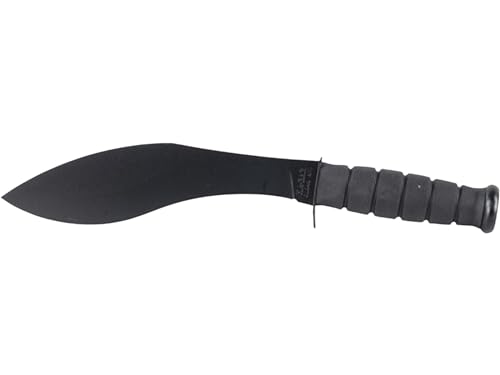
KA-BAR BAR Kukri Machete 11.5" 1085 Black Blade Kraton Handle Black
- Blade length
- 11.5 in
- Blade steel
- 1085
- Steel type
- Carbon
- Machete
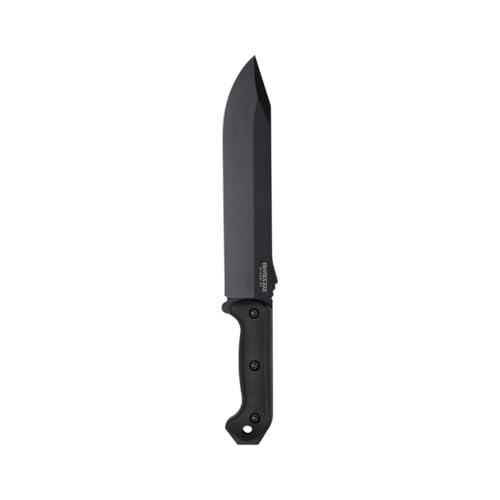
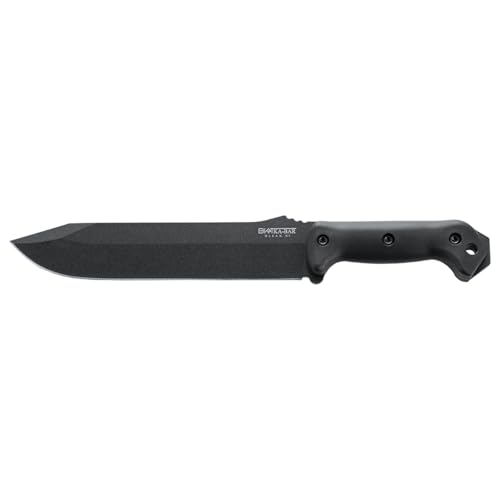
KA-BAR BAR Cutlass Machete 11" 1085 Black Blade Kraton Handle Black
- Blade length
- 11 in
- Blade steel
- 1085
- Steel type
- Carbon
- Machete
KA-BAR BAR 2-1249-9 Kukri Fixed Blade Knife Black Blade with Black
- Handle
- rubber (Kraton/TPR)
- Sheath included
- Yes
- Machete
KA-BAR Kukri Machete Knife 11.5" Black Curved Blade with Handle
- Blade length
- 11.5 in
- Sheath included
- Yes
- Machete
KA-BAR BAR Combat Fixed Blade Knife 8.5" Kukri 1095 Cro-Van Black
- Blade length
- 8.5 in
- Blade steel
- 1095 Cro-Van
- Steel type
- Carbon






What KA-BAR makes for hunters and campers
On this site, KA-BAR covers two product types: fixed-blade knives and machetes. No KA-BAR folding knife is among the listings here, so this page is all sheaths, no pocket clips.
Inside those two types, the grid sorts into six families:
- USMC-pattern knives: the fighting knife, its straight-edge and short versions, and close cousins
- Becker knives: heavy outdoor fixed blades with BK model numbers
- Ek Commando knives: spear-point and clip-point fighters
- TDI knives: small fixed blades with angled handles
- Utility oddballs: the wrench knives, the Slabby, the Warthog
- Kukri and cutlass machetes: brush tools with long, heavy blades
The grid filters by type and changes as listings come and go. So I'll write about the families and what separates them, not about how many of each are listed this week. Nearly every value in the grid comes from an Amazon listing, and the grid marks those. Where a listing doesn't say, the grid shows a dash. A dash is honest. I'd rather have a dash than a guess.
Lineup notes: the classic Ka-Bar knife
The USMC fighting knife and its relatives
This is the knife most people picture when they say "Ka-Bar," brand or not. RECOIL's history of the company says the Marine Corps adopted a reworked KA-BAR as its standard fighting and utility knife in 1942.
What the listings in the grid describe:
- USMC Fighting Knife: 7-inch clip point in 1095 Cro-Van, partially serrated, stacked leather handle, leather sheath
- Full Size USMC Straight Edge: the plain-edge version, about 11.875 inches overall, leather sheath
- 1220 US Army: 7-inch plain edge, full tang, stacked leather, leather sheath
- 1213 Black Straight Edge: plain edge, full tang, sheath included
- KB1256 Short and 1258 Short Clip Point: the same idea cut down, around 5.25 inches of blade on the KB1256
- Big Brother: stacked leather handle, sheath included
- D2 Extreme: the USMC shape in D2 tool steel with a Kraton handle and a plastic sheath
- Fighter, Mark I and Tanto: 1095 Cro-Van blades with Kraton handles, the Fighter at 8 inches and the Mark I at about 5
The big difference inside this family is the handle. Stacked leather is the traditional build. Kraton is a rubber-like synthetic. Leather looks the part and wants to stay dry; Kraton doesn't mind a wet morning.
The full-size knives in this family run 7 inches of blade. That's long for field dressing a deer, which is careful work in tight quarters. A 7-inch blade is a camp tool first. Shorter blades are on the hunting knife page.
Becker knives: the BK numbers
The Becker line is KA-BAR's family of heavy outdoor knives, and the BK number in the name is how you tell them apart. Per the listings:
- BK2 Companion: 5.25-inch drop point in 1095 Cro-Van, Ultramid handle
- BK82 Companion: the same blade length in CPM MagnaCut, a powder steel, with a quarter-inch-thick blade and 10.5 inches overall
- BK3 Tac Tool: 7-inch blade, flat grind, Grivory handle, nylon sheath
- BK9 Combat Bowie and BK9T Bowie: 9.25-inch clip points with a saber grind, nylon sheaths
- BK18 Harpoon: about 4.5-inch drop point
- BK19 Nessmuk: about 4.3-inch drop point with a Kydex-type sheath
- Becker Combat Utility: 7-inch clip point in 1095 Cro-Van, Kraton G handle
A quarter inch of steel on the BK82 is thick. In shop class I'd have called that bar stock. A blade that thick is built for splitting kindling and hard camp work, not for slicing. Shop teacher's rule: the thicker the stock, the more it wants to chop and the less it wants to slice. The bushcraft knife page and the bowie knife page cover those jobs across brands.
The grinds matter here. A flat grind tapers from the spine all the way to the edge, which slices better. A saber grind keeps the blade full thickness partway down, which leaves more steel behind the edge for chopping.
Ek Commando knives
RECOIL's history says KA-BAR acquired the Ek Commando Knife Company in 2014 and 2015 and began making KA-BAR/Ek branded knives. In the grid:
- EK44 Model 4 Commando: 6.625-inch spear point in 1095 Cro-Van, full tang, 12.625 inches overall
- EK Commando: 5-inch clip point, flat grind, Ultramid handle
A spear point is symmetrical, with the tip on the centerline. It's a fighting shape more than a skinning one.
TDI knives
The TDI knives are the small ones. The listings describe:
- TDI Law Enforcement and 1477CB: about 2.3-inch drop points in AUS-8, a stainless steel, with Zytel handles
- TDI Investigator and Pocket Strike: about 2.7 and 3.2-inch AUS-8 blades
- TDI Hinderer Hell Fire: about 3.6-inch tanto in 1095 Cro-Van
- Last Ditch: a 1.6-inch blade in 9Cr18 stainless
The TDI names point at law enforcement carry. For a hunter, they're small backup knives at most. A deer wants a longer belly.
Wrench knives, the Slabby and the Warthog
The leftovers drawer. The Wrench Fixed Blade and the Blackout Forged Wrench Knife are 3-inch knives, the Blackout in 425 stainless. The listings don't name a 7/16 opening, so this page doesn't either. The Slabby lists a 6.86-inch clip point in 1095 Cro-Van with a GRN handle and a full tang. The Heavy Duty Warthog lists a 6.75-inch drop point in SK-5 carbon steel.
Lineup notes: the KA-BAR machete
The KA-BAR machetes in the grid are short, heavy patterns:
- BAR Kukri Machete: 11.5-inch kukri in 1085 carbon steel, Kraton handle, sheath included
- Kukri Machete Knife and 2-1249-9 Kukri: kukri blades, sheaths included
- BAR Cutlass Machete: 11-inch cutlass in 1085 carbon steel, Kraton handle
- BAR Combat Kukri: 8.5 inches in 1095 Cro-Van, sheath included
A kukri bends forward, so the weight sits out near the tip and the blade bites like a small axe. A cutlass is straighter, with a wider tip for sweeping cuts through green brush. Both are short for machetes, which suits a woodlot more than a sugarcane field. Patterns and lengths across brands are on the machete page.
How to choose within the KA-BAR lineup
Pick the job first
My one opinion on this page: a big fighter or a kukri is not your field-dressing knife. AKTI's safety guidance says to use the right tool for the job, and the KA-BAR lineup makes that easy because the families sort by job:
- Field dressing and camp food: the shorter drop points, like the BK18 or BK19
- Camp chores and kindling: the BK2, BK82 or a USMC-pattern knife
- Clearing brush and shooting lanes: the kukris and the cutlass
One big knife and one small one isn't overpacking. That's a toolbox. (Danny overpacks. This is different. I've explained the difference to him twice.)
Then the blade length
Blade lengths in the grid run from the tiny Last Ditch to the 9.25-inch Becker bowies, with the machetes past that. Long blades chop and reach; short blades control. Hold your hand flat and look at it. Most of the careful work you'd do on a deer happens inside that span.
Then the steel
Most of the lineup lists 1095 Cro-Van, a carbon steel. Morakniv's steel guide says carbon steel is easier to resharpen than stainless but rusts more readily in damp conditions and needs careful drying and oiling after use. The exceptions in the grid:
- D2: a tool steel, on the D2 Extreme
- AUS-8, 9Cr18 and 425: stainless steels, on the TDI knives, the Last Ditch and the Blackout wrench knife
- CPM MagnaCut: a powder steel, on the BK82
- 1085 and SK-5: carbon steels, on the machetes and the Warthog
If you hunt where it rains for a week straight, a stainless TDI or the D2 Extreme asks less of you. If you'll actually wipe the blade every night, carbon is no trouble.
Then the sheath and the handle
The sheath decides where the knife lives on you. The listings describe leather on the USMC-pattern knives and the 1220, nylon on the BK3 and the BK9 bowies, plastic on the D2 Extreme and the TDI knives, and a Kydex-type sheath on the BK19. Several listings don't name a sheath material, so check the listing.
Try the sheath on the belt you hunt in, over the coat you wear in November. A 9.25-inch bowie on the hip of a man sitting in a tree stand is a conversation between the knife and the seat. The fixed blade knife page covers carry across brands.
Care that applies to the whole lineup
Carbon steel and leather both want the same thing: dry. After a wet day or a cleaning job:
- Wipe the blade dry, the same day
- A light oil on a soft cotton cloth before it goes back in storage
- A toothpick for grit around the handle and guard
- A cool, dry place for storage, not a damp garage
That list follows AKTI's maintenance guidance, which also warns that damp basements and garages cause pitting and rust. Morakniv adds that carbon steel develops a natural patina over time that helps protect it against corrosion. The color change on an older 1095 blade isn't a defect. It's a record of use.
Cut away from your body. Don't use a knife as a pry bar, a screwdriver or a hammer; AKTI notes that twisting can make a blade slip or snap. A dull blade is more dangerous than a sharp one, because it takes more force.
Knife carry rules vary by state, and some knives may not ship to every address; Amazon shows that at checkout. Check your state's rules before you carry one.
KA-BAR facts
Here's what I could pin down from publications:
- Roots: RECOIL says the Tidioute Cutlery Company, formed by 38 men in Pennsylvania in 1897, is widely considered the start of KA-BAR
- Olean: Union Cutlery was registered in Olean, New York, in 1911, per the same history
- The Marine Corps knife: adopted as the standard fighting and utility knife in 1942
- Name: renamed KA-BAR Cutlery, Inc. in 1952
- Owner: the product line and assets were sold to Alcas Corporation of Olean in 1996
- Ek: KA-BAR acquired the Ek Commando Knife Company in 2014 and 2015
Soldier Systems Daily reported in 2019 that KA-BAR, based in Olean, formed a joint venture called Pineland Cutlery with Spartan Blades of Southern Pines, North Carolina.
Wipe it, oil it, and hang the sheath where it dries overnight. A carbon blade forgives a lot, but it doesn't forget a wet sheath.
Where KA-BAR shows up
Questions about KA-BAR
Are KA-BAR knives good?
What the listings show can be checked: most KA-BAR fixed blades in the grid name 1095 Cro-Van carbon steel, several list full tangs, and most come with a leather, nylon, plastic or Kydex-type sheath. One Becker model lists CPM MagnaCut, a powder steel. Whether a knife suits you depends on the job, from field dressing to clearing brush. Pick the family and blade length first.
Where are KA-BAR knives made?
RECOIL's history of the company places KA-BAR in Olean, New York, where Union Cutlery was registered in 1911. The listings in the grid don't all state a country of manufacture, so read the listing of the exact knife if that matters to you.
What is a Ka-Bar knife?
The name is a brand, but many people use it for the knife RECOIL says the Marine Corps adopted in 1942 as its standard fighting and utility knife. In the grid, the USMC Fighting Knife lists a 7-inch clip-point blade in 1095 Cro-Van, a stacked leather handle and a leather sheath.
Does KA-BAR make machetes?
Yes. The KA-BAR machetes in the grid are kukri and cutlass patterns, with blades from about 8.5 to 11.5 inches per their listings. Most list 1085 carbon steel and rubber Kraton handles, and the kukris list sheaths. The 8.5-inch Combat Kukri lists 1095 Cro-Van. The machete page compares patterns across brands.
Who owns KA-BAR?
RECOIL's company history says the KA-BAR product line and assets were sold in 1996 to Alcas Corporation of Olean, New York, and that KA-BAR acquired the Ek Commando Knife Company in 2014 and 2015 and began making KA-BAR/Ek knives.
Sources
- RECOIL: KA-BAR welcomes the Gunny back home (company history) — accessed 2026-10-28
- Soldier Systems Daily: Spartan Blades and KA-BAR form Pineland Cutlery (2019) — accessed 2026-10-28
- Morakniv: Steel types and coatings — accessed 2026-10-28
- American Knife & Tool Institute: Knife safety, sharpening and maintenance — accessed 2026-10-28