Brand · Knives & Tools
Opinel Knives
An Opinel knife is a simple folding knife with a wood handle, a numbered size and a turning steel ring that locks the blade. On this site the lineup is all folders: the classic numbered knives in carbon or stainless steel, kids' knives with rounded tips, slim Effilé fillet knives and a handful of special-purpose models. Rule of thumb: the number tells you the size, the word after it tells you the steel.
We earn a commission if you buy through our links, at no cost to you. Disclosure
Opinel on Amazon US
33 models- Folding knife
Opinel No. 08
- Blade length
- 3.35 in
- Blade steel
- Sandvik 12C27
- Steel type
- Stainless
- Folding knife
Opinel No. 08 Mushroom Knife
- Steel type
- Stainless
- Folding knife
Opinel No. 08 Padouk
- Blade steel
- Sandvik 12C27
- Steel type
- Stainless
- Folding knife
Opinel Giant No. 13
- Steel type
- Stainless
- Folding knife
Opinel No. 12 Carbone
- Blade steel
- XC90
- Steel type
- Carbon
- Folding knife
Opinel No. 06 Carbone
- Blade steel
- XC90
- Steel type
- Carbon
- Folding knife
Opinel No. 08 Inox
- Blade length
- 3.35 in
- Blade steel
- Sandvik 12C27
- Steel type
- Stainless
- Folding knife
Opinel No. 09 Inox
- Blade steel
- Sandvik 12C27
- Steel type
- Stainless
- Folding knife
Opinel No. 10 Carbone
- Blade length
- 3.92 in
- Blade steel
- XC90
- Steel type
- Carbon
- Folding knife
Opinel No. 12 Inox
- Blade steel
- Sandvik 12C27
- Steel type
- Stainless
- Folding knife
Opinel No. 10 Inox
- Blade length
- 3.92 in
- Blade steel
- Sandvik 12C27
- Steel type
- Stainless
- Folding knife
Opinel No. 07 Inox
- Blade steel
- Sandvik 12C27
- Steel type
- Stainless
- Folding knife
Opinel No. 06 Inox
- Blade steel
- Sandvik 12C27
- Steel type
- Stainless
- Folding knife
Opinel No. 07 Carbone
- Blade steel
- XC90
- Steel type
- Carbon
- Folding knife
Opinel No. 09 Carbone
- Blade steel
- XC90
- Steel type
- Carbon
- Folding knife
Opinel No. 08 Carbone
- Blade length
- 3.35 in
- Blade steel
- XC90
- Steel type
- Carbon
- Folding knife
Opinel No. 08 Garden
- Steel type
- Stainless
- Folding knife
Opinel My First Knife No. 07
Check price - Folding knife
Opinel No. 09 Oyster Knife
- Blade steel
- Sandvik 12C27
- Steel type
- Stainless
- Folding knife
Opinel Colorama No. 08
- Blade length
- 3.35 in
- Folding knife
Opinel My First Opinel No. 07
- Steel type
- Stainless
- Folding knife
Opinel No. 09 DIY
- Blade steel
- Sandvik 12C27
- Steel type
- Stainless
- Folding knife
Opinel No. 10 Pruning
- Blade steel
- Sandvik 12C27
- Steel type
- Stainless
- Folding knife
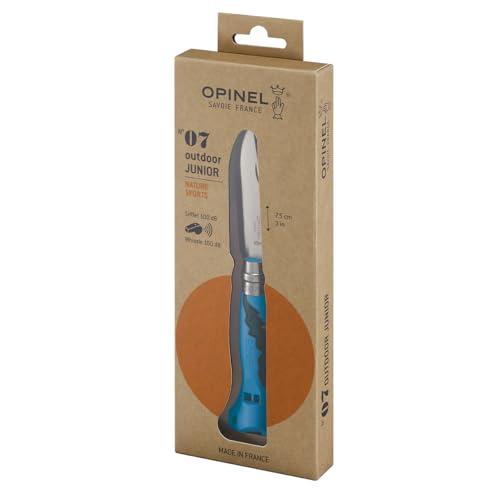
Opinel Outdoor Junior No. 07
- Blade steel
- Sandvik 12C27
- Steel type
- Stainless
- Folding knife
Opinel Colorama No. 06
- Steel type
- Stainless
- Folding knife
Opinel Colorama No. 08
- Blade length
- 3.35 in
- Folding knife
Opinel Colorama No. 07
- Steel type
- Stainless
- Folding knife
Opinel No. 07 Scoring
- Steel type
- Stainless
- Blade shape
- Drop point
- Folding knife
Opinel My First Knife Box Set No. 07
Check price - Folding knife
Opinel No. 10 Corkscrew
- Steel type
- Stainless
- Folding knife
Opinel Effile Fillet No. 10
- Steel type
- Stainless
- Folding knife
Opinel Effile Fillet No. 15
- Steel type
- Stainless
- Folding knife
Opinel NEO6 Opiflex
Check price




What Opinel makes for hunters and campers
On this site, every Opinel is a folding knife. The lineup sorts into four groups you'll see in the grid above:
- The numbered classics: No. 06 to No. 12, in Carbone (carbon steel) or Inox (stainless), plus the Giant No. 13
- Colorama and wood variants: the same knives with colored or different wood handles
- Kids' knives: My First Opinel and the Outdoor Junior, both No. 07
- Special-purpose knives: Effilé fillet knives, mushroom, garden, pruning, oyster, corkscrew, scoring and DIY models
Opinel's own catalog also includes kitchen and table knives. This site doesn't list those.
The grid filters by type and changes as listings come and go, so I'll write about the groups, not about how many of each are listed this week. Most values in the grid come from Amazon listings, and the grid marks those. A dash means the listing didn't say. I'd rather leave it blank than fill it in from memory.
How an Opinel knife works
Here's the thing: an Opinel has very few parts, and that's the point. The company story describes the traditional knife as a wooden handle with a groove where the blade sits when closed.
The Virobloc ring
The Virobloc is the steel ring around the neck of the handle. Opinel says Marcel Opinel invented it in 1955, and that it's fitted to all its folding knives from the No. 06 up. Turn the ring one way and it covers the groove behind the open blade, locking it open. On current knives, turning it the other way locks the blade closed for carrying, per the maker; the company story says that closed lock came in during the 1990s and reached every model by the early 2000s.
Rule of thumb: open the blade fully, then turn the ring. Close the ring, then the blade. In that order, every time, with your fingers clear of the edge.
The wood handle
Most Opinel handles are beech. The maker's N°08 pages describe varnished beech from managed forests in the Jura and Vercors regions of France. Wood moves with the weather. Opinel's own tip page says the wood responds to temperature and can swell, and that a blade left closed for a long time can stick. That's not a defect. It's wood doing what wood does, the same as a door that sticks every August.
Lineup notes: the classic Opinel knife
The numbered sizes
The number is the size. Per the listings in the grid, the No. 08 has a 3.35-inch blade and measures 7.5 inches open, and the No. 10 has a 3.92-inch blade. Opinel's own page gives the No. 08's blade as 8.5 cm and its handle as 10.9 cm. Smaller numbers run down to the No. 06; larger ones run up to the No. 12, with the Giant No. 13 past that.
How the sizes sort for camp use:
- No. 06 and No. 07: small pocket knives, light work
- No. 08: the one Opinel says started it all, in 1890
- No. 09 and No. 10: longer blades for food prep at camp
- No. 12: a big folder for a pack or a camp box
- Giant No. 13: the biggest in the grid, a camp-box knife rather than a pocket one
A No. 08 is the size I'd hand anyone who asked for "just a pocket knife." It's long enough to slice an apple and short enough to forget it's in your pocket. Light folders across brands are on the lightweight pocket knife page.
Carbone or Inox
Each numbered size comes in two steels. Per the listings:
- Carbone: XC90 carbon steel
- Inox: Sandvik 12C27 stainless steel
Opinel describes its XC90 as extremely hard with excellent cutting quality, and says carbon steel corrodes easily: dry the blade after each use and oil it regularly. For stainless, the maker's N°08 page says it needs no special maintenance in ordinary use, though long contact with acid, salt water or detergent can reach its limits.
Colorama, Padouk and other handles
The Colorama knives in the grid are numbered Opinels with colored handles; the listings describe wood. The No. 08 Padouk lists Sandvik 12C27 with a padouk wood handle. The blade is the same as the plain beech knife's. What changes is how the knife looks on the table. (My vote goes to whichever color I can find in a cluttered camp box at 5 a.m. Pick yours by the same rule.)
Lineup notes: special-purpose Opinels
Effilé fillet knives
The Effilé is Opinel's slim folder. The maker says its fine, flexible stainless blade is made for thin slices and filleting fish, and that the range runs from 8 to 15 cm with a Virobloc that locks open and closed. The grid lists the Effilé Fillet No. 10 and No. 15. If you camp near water and want a fillet knife that folds into a tackle box, this is the group.
Kids' knives
My First Opinel is a No. 07 with a rounded tip. The maker says its stainless blade with a round tip makes cutting easy and safe, and lists jobs like trimming sticks, cutting string and carving small wooden objects. Handles come in beech or colored, varnished hornbeam, and the Virobloc locks the blade open and closed. The grid also lists a box set and the Outdoor Junior No. 07.
A rounded tip is still sharp along the edge. A kid's first knife works best with an adult beside them for the first season. I watched a lot of 14-year-olds meet a sharp tool for the first time. The ones who went slow kept all their skin.
Garden, mushroom and other tools
The rest of the special knives are named for their jobs: the No. 08 Garden, No. 08 Mushroom Knife, No. 10 Pruning, No. 09 Oyster Knife, No. 10 Corkscrew, No. 07 Scoring and No. 09 DIY. The DIY lists a polymer handle and Sandvik 12C27. The NEO6 Opiflex lists a non-locking slip joint, the one exception to the Virobloc rule in the grid.
These aren't hunting knives. A corkscrew knife at deer camp is a conversation starter, and Danny would start it. Whittling-sized jobs across brands are on the whittling knife page.
How to choose within the Opinel lineup
Pick the size by where it rides
A No. 06 or No. 07 rides in a jeans pocket. A No. 08 or No. 09 rides in a coat pocket or a small pouch. A No. 10 or No. 12 lives in a pack or the camp box. Choose for where the knife will spend its days, then check the blade length in the grid. More on carry across brands is on the pocket knife page.
Then the steel by how you'll treat it
Carbone takes an edge easily and wants drying and oil. Inox asks less. If the knife will live in a damp hunting coat for a week at a time, Inox is the honest choice. If it lives on the kitchen windowsill at camp and gets wiped every night, Carbone is no trouble.
Then decide whether you need the lock
Every numbered Opinel from the No. 06 up has the Virobloc, per the maker. The NEO6 Opiflex doesn't lock, per its listing. For field work, I'd want a blade that locks open. Knife carry rules vary by state; check your state's rules before you carry one.
Care for an Opinel knife
My one opinion on this page: never close an Opinel wet. Opinel's own cleaning guide says to let the blade dry before closing and never to put the knife in water, because soaking can warp the wooden handle. Water trapped in the groove sits against the wood and the steel overnight, which is the worst of both.
What the maker recommends:
- Wash the open blade with warm water and dish soap on a sponge, keeping the handle dry
- No soaking, and no dishwasher for pocket knives
- Dry the blade fully before you close it
- Oil a carbon blade with a little cooking oil before closing, to slow rust
- Wipe a carbon blade instead of running it under the tap
AKTI's general guidance fits too: store knives in a cool, dry place and keep fingers out of a folder's closing path.
Keep it sharp
A thin blade like an Opinel's is easy to keep sharp, and it should be. AKTI's guidance is that a sharp knife is safer than a dull one, because it takes less force and is less likely to slip. Its sharpening advice for the whole category:
- Sharpen more often, a few light strokes, rather than a big session once a year
- Hold a low angle, 10 to 15 degrees
- Match the strokes on both sides of the blade
- Sharpen away from your body, the same as you cut
Both steels respond to a few strokes on a stone. Wipe the grit off before you close the knife, or it ends up in the groove. Do it at the kitchen table on Friday night, not on the tailgate with cold fingers on Saturday morning.
When the blade sticks
Opinel's tip page lists three steps for a blade that won't open:
- Dry the handle, since swollen wood grips the blade
- The Coup du Savoyard: turn the ring to free the groove, hold the knife with the groove down and away from your fingers, then strike the handle sharply on a sturdy table
- A drop of lubricant above the groove, then open and close the blade a few times and wipe off the extra
That second step is a Saturday-afternoon fix you can do in ten seconds. Keep your fingers away from the groove while you do it.
Opinel facts
From the maker's own pages:
- Founded: Joseph Opinel made the first No. 08 in 1890, at 18, per the company story
- The emblem: the Crowned Hand, adopted in 1909, is stamped on every blade; the hand comes from the coat of arms of Saint-Jean-de-Maurienne
- The lock: the Virobloc, invented by Marcel Opinel in 1955
- Head office: moved in 2003 to Chambéry, in Savoie
- Where made: the product pages say made in France
- Warranty: the N°08 pages list a lifetime warranty, described as having no time limit
Dry it open, close it dry, and it'll outlast the coat it rides in.
Where Opinel shows up
Questions about Opinel
Are Opinel knives good?
What can be checked is what the maker states. Opinel lists XC90 carbon steel or martensitic stainless steel blades, beech handles from managed forests in France, a Virobloc ring that locks the blade open and closed, made in France, and a warranty with no time limit. Whether one suits you depends on the size, the steel and how you'll care for a wood handle.
What do the numbers on Opinel knives mean?
The number is the size; a higher number means a bigger knife. Per the listings in the grid, the No. 08 has a 3.35-inch blade and is 7.5 inches open, and the No. 10 has a 3.92-inch blade. Opinel's own page gives the No. 08's blade as 8.5 cm and its handle as 10.9 cm.
What is the difference between Opinel Carbone and Inox?
Carbone is carbon steel (XC90 per the listings) and Inox is stainless steel (Sandvik 12C27 per the listings). Opinel says its carbon steel is very hard and cuts well but corrodes easily, so dry and oil it after use; its stainless blade needs no special care in ordinary use, though acid, salt water and detergent can still mark it.
Does an Opinel knife lock?
Most do. Opinel says the Virobloc safety ring, invented by Marcel Opinel in 1955, is fitted to all its folding knives from the No. 06 up. It locks the blade open in use and, on current knives, closed for carrying. The NEO6 Opiflex in the grid lists a non-locking slip joint instead.
Where are Opinel knives made?
Opinel's product pages list its knives as made in France. The company story says Joseph Opinel made the first No. 08 in Savoie in 1890, and that the head office has been in Chambéry since 2003.
Sources
- Opinel USA: The Opinel story — accessed 2026-10-28
- Opinel: N°08 Carbon — accessed 2026-10-28
- Opinel: N°08 Stainless Steel — accessed 2026-10-28
- Opinel: Effilés — accessed 2026-10-28
- Opinel: My First Opinel — accessed 2026-10-28
- Opinel: Improve the blade opening — accessed 2026-10-28
- Opinel: Cleaning your Opinel — accessed 2026-10-28
- American Knife & Tool Institute: Knife safety, sharpening and maintenance — accessed 2026-10-28