Brand · Knives & Tools
Lansky Knife Sharpener Lineup and the Lansky Multi Tool
Lansky is a knife sharpener company first, and the grid below is nearly all Lansky knife sharpener models. The center of it is the Lansky sharpening system, a controlled-angle kit that clamps the blade and runs the stone on a guide rod, so the angle stays put. Around it: Turnbox crock sticks, pocket sharpeners, a puck for axes, a strop, and one multi-tool. Here's the thing: the kit you pick depends on where you sharpen, the bench or the tailgate.
We earn a commission if you buy through our links, at no cost to you. Disclosure
Lansky on Amazon US
24 models- Knife sharpener
Lansky Puck Dual Grit
- Style
- Compact field sharpener
- Stages
- 2
- Knife sharpener
Lansky Deluxe 5-Stone System
- Style
- Guided system
- Abrasive
- Synthetic stone, Ceramic
- Stages
- 5
- Knife sharpener
Lansky Diamond Standard System
- Style
- Guided system
- Abrasive
- Diamond
- Stages
- 3
- Knife sharpener
Lansky Quick Fix Pocket
- Style
- Compact field sharpener
- Abrasive
- Carbide, Ceramic
- Knife sharpener
Lansky Standard Coarse System
- Style
- Guided system
- Coarsest grit
- 120 grit
- Finest grit
- 600 grit
- Knife sharpener
Lansky 4-Stone Deluxe Diamond System
- Style
- Guided system
- Abrasive
- Diamond
- Stages
- 4
- Knife sharpener
Lansky Universal Sharpening System
- Style
- Guided system
- Stages
- 4
- Knife sharpener
Lansky Professional Sharpening System
- Style
- Guided system
- Stages
- 4
- Knife sharpener
Lansky LCD02 The Tactical
- Style
- Pull-through
- Knife sharpener
Lansky Deluxe Turnbox Crock Stick
- Style
- Guided system
- Knife sharpener
Lansky Blademedic PS-MED01
- Style
- Compact field sharpener
- Abrasive
- Carbide, Ceramic, Diamond
- Stages
- 4
- Knife sharpener
Lansky HSTROP Leather Strop
- Style
- Strop
- Abrasive
- Leather
- Knife sharpener
Lansky BowSharp BSHARP
- Style
- Compact field sharpener
- Abrasive
- Carbide
- Knife sharpener
Lansky Ltrim Keychain Multi Sharpener
- Style
- Compact field sharpener
- Knife sharpener
Lansky QuadSharp
- Style
- Compact field sharpener
- Abrasive
- Carbide, Ceramic
- Knife sharpener
Lansky C-Sharp CSHARP
- Style
- Compact field sharpener
- Abrasive
- Ceramic
- Coarsest grit
- 600 grit
- Knife sharpener
Lansky Deluxe 5-Stone System LKCLX
- Style
- Guided system
- Stages
- 5
- Knife sharpener
Lansky D-Sharp DSHARP
- Style
- Compact field sharpener
- Abrasive
- Diamond, Ceramic
- Coarsest grit
- 600 grit
- Knife sharpener
Lansky Finishing Sharpening System
- Style
- Guided system
- Abrasive
- Leather
- Knife sharpener
Lansky CS Serrated Sharpener LTRCSF
- Style
- Compact field sharpener
- Abrasive
- Ceramic
- Coarsest grit
- 800 grit
- Knife sharpener
Lansky Deluxe 5-Stone Diamond System LKDMD5
- Style
- Guided system
- Abrasive
- Diamond
- Coarsest grit
- 100 grit
- Knife sharpener
Lansky TurnBox Ceramic Crock Stick
- Style
- Guided system
- Abrasive
- Ceramic, Leather
- Coarsest grit
- 600 grit
- Knife sharpener
Lansky Diamond/Ceramic TurnBox Crock Stick
- Style
- Guided system
- Abrasive
- Diamond, Ceramic, Leather
- Coarsest grit
- 400 grit
- Multi-tool
Lansky Lansky Multi Tool
Check price




What Lansky makes, and what this site lists
Lansky's name is on knife sharpeners: controlled-angle kits, crock sticks, handheld sharpeners and rods. That's what the brand is known for, and that's what fills the grid on this page.
On this site, Lansky covers two product types. Knife sharpeners are nearly all of it. The one exception is the Lansky Multi Tool, a plain listing near the bottom of this page.
The grid changes as listings come and go. So I'll sort the sharpeners by style and abrasive, not by how many sit in the grid this week. Specs come from the listings. Where a listing leaves a field out, the grid shows a dash. A dash means the listing doesn't say, not that the tool lacks the feature. Thirty-some years of teaching shop taught me that a guess on a work order turns into a wrong part by Thursday.
The Lansky sharpening system, in plain words
Freehand sharpening asks your wrist to hold one angle for a few hundred strokes. Most wrists can't. A controlled-angle system takes the wrist out of it. You clamp the blade in a holder with angle holes, push a guide rod through the hone, set the rod in a hole, and stroke. Every pass meets the edge at the same angle.
Grand View Outdoors' 2013 profile says Arthur LeVine developed the first control-angle sharpening system and grew the business out of his garage. BLADE Magazine names him as Lansky's founder. That's the whole family tree I could verify, and it explains the grid: most of the bench models below are versions of that one idea.
My one opinion on this page: for a hunting knife, hold the angle first and worry about the stone second. The checkable reason is the system itself. A clamp and a guide rod exist because a wobbling angle rounds the edge you're trying to make. A shop teacher learns that with a chisel in his first week.
Lineup notes: Lansky knife sharpeners
Controlled-angle systems for the bench
These are the guided systems, and they're the core of the Lansky grid. All list an angle guide. They differ by abrasive and by how many hones come in the box.
- Standard Coarse System: stone hones running from coarse to medium-fine, per the listing
- Deluxe 5-Stone System and the Deluxe 5-Stone LKCLX: more hones, synthetic stone and ceramic on the first
- Diamond Standard System: diamond hones
- 4-Stone Deluxe Diamond System: diamond hones, with angle holes from narrow to wide
- Deluxe 5-Stone Diamond LKDMD5: diamond hones with the widest grit spread in the grid, coarse to fine
- Universal and Professional systems: serrated-edge support listed on both
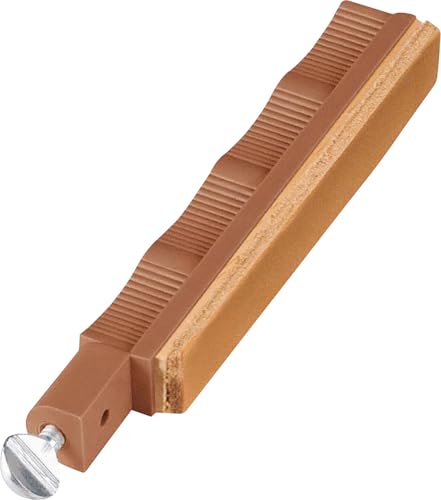
- Finishing Sharpening System: leather, for the last polish after the stones
Rule of thumb: diamond cuts faster, stone and ceramic are gentler. If your knives are hard steel, diamond hones save time. If they're older, softer blades, a stone kit does the job. The knife sharpening kit page and the best knife sharpening system list put these next to other brands.
Turnbox crock sticks
A crock stick is a pair of rods that a base holds at a set angle. You draw the blade down each rod in turn, and the base does the angle work. The grid has three:
- Deluxe Turnbox Crock Stick: angle guide, per the listing
- TurnBox Ceramic Crock Stick: ceramic rods plus leather, with a choice of two angles
- Diamond/Ceramic TurnBox Crock Stick: diamond, ceramic and leather, the same two-angle choice
(Danny asked why it's called a crock stick. Nobody at camp knew. Jess looked it up on her phone and Walt pretended not to listen.) The sharpening rod page covers rods across brands.
Pocket sharpeners for the pack
These are the ones that ride along. The listings call most of them compact field sharpeners.
- QuadSharp: carbide and ceramic, with angle choices from narrow to wide
- C-Sharp: ceramic, angle choices, serrated support
- D-Sharp: diamond and ceramic, angle choices, serrated support
- Blademedic: carbide, ceramic and diamond in one tool, serrated support
- Quick Fix Pocket: carbide and ceramic, the simplest listing of the group
- CS Serrated Sharpener: a ceramic rod for serrations
- BowSharp (carbide) and the Keychain Multi Sharpener, a keychain size by its name
The carbide slot sets a dull edge fast; ceramic refines it. Diamond does both jobs quicker and wears slower. The pocket knife sharpener page and the portable knife sharpener page compare this style across brands.
The Puck for axes and hatchets
The Puck Dual Grit is a hand-held sharpener with two grits, and its listing names axe work. It's the Lansky in the grid for the camp hatchet and the splitting axe. The hatchet page covers the tools, and the how to sharpen an axe guide covers the job.
A pull-through and a strop
LCD02 The Tactical is the one pull-through in the Lansky grid. Its listing gives the style and not much else, so read it before you buy. The HSTROP Leather Strop is just what the name says: leather, for the final polish. A strop doesn't remove metal. It straightens and cleans up an edge that's already sharp.
How to choose a Lansky sharpener from this grid
Start with where you'll sharpen
A clamp system wants a table and good light. A crock stick wants a table too, but less setup. A pocket sharpener works on a tailgate. Pick the place first.
Then the abrasive
Diamond, ceramic, carbide, synthetic stone and leather all show up. Coarse grits fix a dull or chipped edge. Fine grits and leather finish it. A kit that runs coarse to fine does the whole job in one box.
Then the angle
Most Lansky models hold the angle for you, either with holes in a clamp, slots in a base or a fixed V in a pocket tool. Several list a range of angles. If your knives came from different makers, a range lets you match each one.
Then serrations
If your hunting knife or multi-tool blade has serrations, look for serrated support in the listing. The Universal and Professional systems, the C-Sharp, the D-Sharp, the Blademedic and the CS Serrated Sharpener all list it.
What a deer camp sharpens, and where Lansky fits
Walk through the cabin on a Friday night in November and count the edges. That's the honest way to pick a sharpener.
- The hunting knife: a clamp system at the bench before the season, a pocket sharpener in the pack for touch-ups
- The folder in your pocket: a pocket sharpener with angle choices, so a thin blade gets a thin angle
- The multi-tool blade: often serrated, so a tool that lists serrated support
- The camp kitchen knives: a crock stick on the counter, where it's easy to reach between meals
- The hatchet: the Puck, kept with the axe and not with the knives
Here's the thing about a bench system: it's a winter job. You set it up on the kitchen table in January, do every knife in the cabin, and put it away. The pocket sharpener is the one that works in November. Most camps end up with one of each, and that's not overbuying, that's two different jobs.
Who can skip a controlled-angle system
If you own one knife, sharpen it twice a season and never let it get truly dull, a pocket sharpener or a crock stick may be all you need. A clamp kit earns its setup time when there's a drawer of knives waiting, or a blade that's been chipped on a bone. If that's not your drawer, keep it simple.
The Lansky Multi Tool
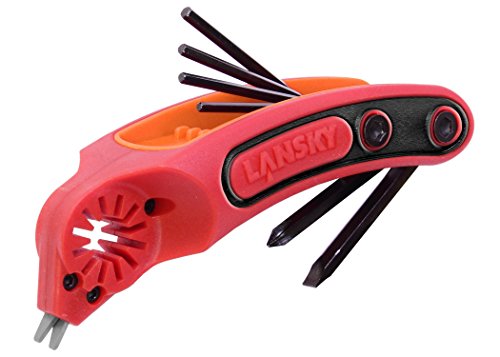
The one non-sharpener in the grid. Its listing title is plain: "Lansky Multi Tool." The variant label reads black and stainless steel. That's about all it states in the fields this site tracks, so most of its row shows dashes.
When a listing gives you a title and a color, you fill in the rest before you buy. Open it and look for:
- Form: full-size pliers, compact pliers, or a pocket-knife body with tools
- Pliers: needlenose, regular, and whether wire cutters sit in the jaws
- Knife: plain, serrated or combo, and whether it locks
- Saw and scissors: the two tools a deer camp uses most after the pliers
- Closed length and weight: from the maker, not from a shipping box
- Carry: a sheath, a pocket clip, or neither
Leatherman's beginner guide describes most multi-tools as built around pliers, and says almost all of its own knife blades lock open. Use that as your checklist for any brand. A Grand View Outdoors profile from 2013 also mentions a Lansky tool with a broadhead wrench and Allen wrenches built in, so the brand has made more than sharpeners for a while. The multi tool page compares multi-tools across brands.
Care for sharpeners and tools
Hones load up with metal dust. Wipe them after each session so the dust doesn't ride onto the next blade. Keep diamond, ceramic and stone hones in their case; a chipped hone leaves a chipped edge.
For the multi-tool, Leatherman's maintenance page recommends a soft brush or non-metallic pad, mild detergent and water for sticky joints, a low-viscosity oil to push moisture out, and a fresh-water rinse after salt water. It also warns that stainless steel isn't rust-proof. AKTI's maintenance guide adds the plain rules: a light oil on a cloth, and storage somewhere cool and dry, not a damp basement.
Safety with blades and sharpeners
Cut away from your body. AKTI's first rule says exactly that, and it applies to sharpening too: stroke away from yourself, and keep the hand that holds the hone or the base out of the edge's path. AKTI also notes that a sharp blade needs less force and is less likely to slip. A clamp system holds the knife, not your fingers; keep them clear when you swap hones.
Lansky facts
What I could verify from publications:
- Founder: Arthur LeVine founded Lansky Sharpeners, per BLADE Magazine
- The system: Grand View Outdoors' 2013 profile says he developed the first control-angle sharpening system and grew the business out of his garage
This page doesn't cover where the sharpeners are made or what warranty covers them. Read the listing and the maker's terms before you count on either.
Put the kit back in its case, the case back on the same shelf, and the knife back on the same hook. Next November all three will be there, and so will you, a little less annoyed.
Where Lansky shows up
Questions about Lansky
Is Lansky a good brand?
What can be checked: Lansky is a long-running sharpener company, started by Arthur LeVine, and Grand View Outdoors credits him with the first controlled-angle sharpening system. The Lansky sharpeners in the grid cover guided systems, crock sticks, pocket tools, a puck and a strop, with diamond, ceramic, carbide, stone and leather abrasives per their listings. Which suits you depends on where and what you sharpen.
What is the Lansky sharpening system?
It's a controlled-angle sharpener. Instead of holding a knife freehand on a stone, you clamp the blade and run hones on guide rods, so the angle stays the same on every stroke. Grand View Outdoors' profile of the company says founder Arthur LeVine developed the first system of that kind. The grid has several versions, from coarse-stone kits to diamond kits.
Which Lansky sharpener fits a hunting knife?
At the bench, one of the controlled-angle systems, since the clamp holds the angle for you. In the pack, a pocket sharpener: the C-Sharp and D-Sharp list angle choices and serrated support, and the Blademedic lists carbide, ceramic and diamond. If your knife has serrations, check that the listing says it handles them.
Can a Lansky sharpener do an axe or hatchet?
The Puck Dual Grit is the one in the grid listed for axe work. It's a hand-held sharpener with two grits, per its listing. The hatchet pages and the how-to-sharpen-an-axe guide on this site cover the job itself, and the safety rule is the same as for knives: keep your hand out of the edge's path.
Who makes Lansky sharpeners?
Lansky Sharpeners. BLADE Magazine names Arthur LeVine as the founder, and Grand View Outdoors' profile says he grew the business out of his garage after he started making sharpeners.
Sources
- BLADE Magazine: Arthur LeVine passes away — accessed 2026-10-28
- Grand View Outdoors: Product profile, Lansky Sharpeners — accessed 2026-10-28
- Leatherman: Multi-tools 101, a complete beginner's guide — accessed 2026-10-28
- Leatherman: Tool maintenance — accessed 2026-10-28
- American Knife & Tool Institute: Knife safety, sharpening and maintenance — accessed 2026-10-28