Camp Gear · Gear type
Large Cooler
A large cooler is a hard cooler of 70 quarts or more, and at deer camp it has one real job: holding a lot of ice around a lot of meat for a long time. The choice comes down to interior length, how much it weighs before you put anything in it, and whether two people can still lift it full. Pick for the deer, not for the party. (Walt says the big one isn't a cooler, it's furniture. He also sits on it.)
We earn a commission if you buy through our links, at no cost to you. Disclosure
| Model | Weight | Capacity | Construction | Ice retention (claimed) | Wheels | Drain plug | Amazon |
|---|---|---|---|---|---|---|---|
Coleman Classic Insulated Cooler 70 QtHard cooler More specs
| — | 70 qtlisting | — | 5 dayslisting | — | — | Check price |
| — | 70 qtlisting | — | — | Yeslisting | Yeslisting | Check price | |
Igloo Trailmate Journey 70 Qt RollerHard cooler More specs
| — | 70 qtlisting | — | — | Yeslisting | — | Check price |
Pelican Elite 70 QTHard cooler | — | 70 qtlisting | — | — | — | — | Check price |
Pelican Elite 70 QT AmericanaHard cooler | — | 70 qtlisting | — | — | — | — | Check price |
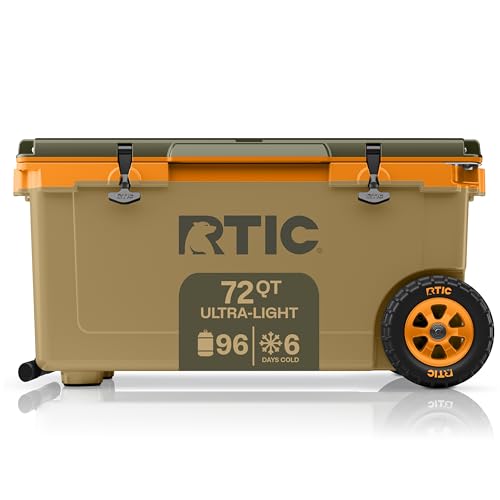
RTIC Ultra-Light 72 QT WheeledHard cooler | — | 72 qtlisting | — | — | Yeslisting | — | Check price |
Dometic Recon Hardside 69LHard cooler | — | 72.9 qtlisting | Injection moldedlisting | — | — | — | Check price |
Engel ENG80Hard cooler More specs
| 32 lbmaker | 74 qtlisting | Rotomoldedmaker | 10 daysmaker | — | Yesmaker | Check price |
Goplus 53/74 Qt Rolling Hard CoolerHard cooler | — | 74 qtlisting | — | 6 dayslisting | Yeslisting | — | Check price |
VEVOR 74 QT Wheeled CoolerHard cooler More specs
| — | 74 qtlisting | — | — | Yeslisting | — | Check price |
Costway 75 Qt Rolling Hard CoolerHard cooler | — | 75 qtlisting | — | 6 dayslisting | Yeslisting | — | Check price |
Grizzly Coolers Grizzly 75Hard cooler More specs
| 34 lbmaker | 75 qtlisting | Rotomoldedmaker | — | — | Yesmaker | Check price |
Goplus 80 Qt Rolling Ice ChestHard cooler | — | 80 qtlisting | — | — | Yeslisting | — | Check price |
Goplus 80 Qt Rolling Ice ChestHard cooler | — | 80 qtlisting | — | — | Yeslisting | — | Check price |
Goplus 80 Qt Rolling Ice ChestHard cooler | — | 80 qtlisting | — | — | Yeslisting | Yeslisting | Check price |
Pelican Elite 80 QTHard cooler | — | 80 qtlisting | — | 10 dayslisting | — | — | Check price |
Vingli 80 Quart Rolling Cooler CartHard cooler More specs
| — | 80 qtlisting | — | — | Yeslisting | Yeslisting | Check price |
Vingli 80 Quart Rolling Cooler CartHard cooler More specs
| — | 80 qtlisting | — | — | Yeslisting | Yeslisting | Check price |
Vingli 80 Quart Rattan Cooler CartHard cooler More specs
| — | 80 qtlisting | — | — | Yeslisting | Yeslisting | Check price |
Vingli 80 Quart Rolling Cooler CartHard cooler More specs
| — | 80 qtlisting | — | — | Yeslisting | Yeslisting | Check price |
Vingli 80 Quart Rolling Cooler CartHard cooler More specs
| — | 80 qtlisting | — | — | Yeslisting | Yeslisting | Check price |
Vingli 80 Quart Rolling Cooler CartHard cooler More specs
| — | 80 qtlisting | — | — | Yeslisting | Yeslisting | Check price |
Vingli 80 Quart Rolling Cooler CartHard cooler More specs
| — | 80 qtlisting | — | — | Yeslisting | Yeslisting | Check price |
Vingli 80 Quart Rolling Cooler CartHard cooler More specs
| — | 80 qtlisting | — | — | Yeslisting | Yeslisting | Check price |
Vingli 80 Quart Rolling Cooler CartHard cooler | — | 80 qtlisting | — | — | Yeslisting | Yeslisting | Check price |
Vingli 80 Quart Rolling Cooler CartHard cooler | — | 80 qtlisting | — | — | Yeslisting | Yeslisting | Check price |
Vingli 80 Quart Rolling Cooler CartHard cooler | — | 80 qtlisting | — | — | Yeslisting | Yeslisting | Check price |
Vingli 80 Quart Rolling Cooler CartHard cooler | — | 80 qtlisting | — | — | Yeslisting | — | Check price |
Vingli Patio Cooler with CabinetHard cooler | — | 80 qtlisting | — | — | Yeslisting | — | Check price |
Vingli Patio Cooler with BlackboardHard cooler | — | 80 qtlisting | — | — | Yeslisting | — | Check price |
Vingli 80 Quart Rolling Patio CoolerHard cooler More specs
| — | 80 qtlisting | — | — | Yeslisting | — | Check price |
Vingli 80 QT Rolling Patio CoolerHard cooler | — | 80 qtlisting | — | — | Yeslisting | — | Check price |
Vingli 80 Quart Patio CoolerHard cooler More specs
| — | 80 qtlisting | — | — | Yeslisting | — | Check price |
Vingli Patio Cooler with TableHard cooler | — | 80 qtlisting | — | — | Yeslisting | — | Check price |
Yitahome 80 Quart Rolling Cooler CartHard cooler More specs
| — | 80 qtlisting | — | — | Yeslisting | — | Check price |
Yitahome Rolling Cooler CartHard cooler | — | 80 qtlisting | — | — | Yeslisting | — | Check price |
Igloo MaxCold 90 Qt Latitude RollerHard cooler More specs
| — | 90 qtlisting | — | — | Yeslisting | — | Check price |
Igloo Marine Ultra 90 QtHard cooler More specs
| — | 90 qtlisting | — | 5 dayslisting | Yeslisting | — | Check price |
Coleman Classic Rolling Cooler 100 QtHard cooler | — | 100 qtlisting | — | 5 dayslisting | Yeslisting | Yeslisting | Check price |
Coleman Marine Cooler 100 QtHard cooler More specs
| — | 100 qtlisting | — | 5 dayslisting | Yeslisting | Yeslisting | Check price |








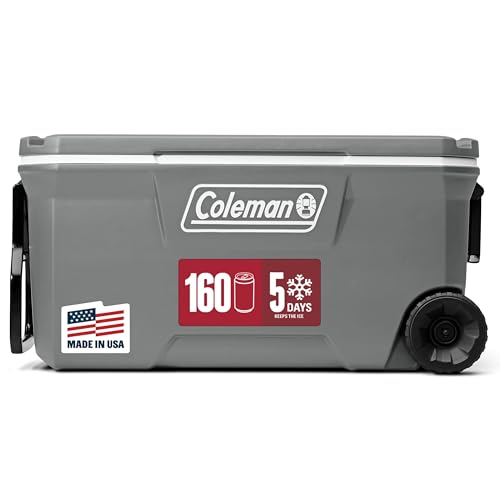

Grizzly Coolers Grizzly 100Hard cooler More specs
| 38 lbmaker | 100 qtlisting | Rotomoldedmaker | — | — | Yesmaker | Check price |
|---|---|---|---|---|---|---|---|
VEVOR 106QT Rolling Hard CoolerHard cooler More specs
| — | 106 qtlisting | — | — | Yeslisting | Yeslisting | Check price |
Blue Coolers Ark 110 with wheelsHard cooler | 46 lbmaker | 110 qtlisting | Rotomoldedmaker | 10 dayslisting | Yeslisting | — | Check price |
| — | 110 qtlisting | — | — | Yeslisting | Yeslisting | Check price | |
Igloo Glide 110 Qt RollerHard cooler More specs
| — | 110 qtlisting | — | — | Yeslisting | — | Check price |
Igloo Glide 110 Qt RollerHard cooler More specs
| — | 110 qtlisting | — | — | Yeslisting | — | Check price |
RTIC Ultra-Tough 110 QTHard cooler | — | 110 qtlisting | — | — | — | — | Check price |
Lifetime 115 Quart High PerformanceHard cooler | — | 115 qtlisting | — | 10 dayslisting | — | — | Check price |
Coleman Classic Insulated Cooler 120 QtHard cooler More specs
| — | 120 qtlisting | — | 5 dayslisting | — | — | Check price |
Coleman Marine Cooler 120 QtHard cooler More specs
| — | 120 qtlisting | — | 6 dayslisting | — | — | Check price |
Igloo Polar 120 QtHard cooler More specs
| — | 120 qtlisting | — | — | — | Yeslisting | Check price |
Mammoth Ranger 125Hard cooler More specs
| — | 125 qtlisting | — | — | — | — | Check price |
RTIC Ultra-Tough 145 QTHard cooler More specs
| — | 145 qtlisting | — | — | — | — | Check price |
Igloo Marine Ultra 150 Qt LatitudeHard cooler More specs
| — | 150 qtlisting | — | — | — | Yeslisting | Check price |
Pelican Elite 150 QTHard cooler | — | 150 qtlisting | — | 10 dayslisting | — | Yeslisting | Check price |
Grizzly Coolers Grizzly 165Hard cooler More specs
| 62 lbmaker | 165 qtlisting | Rotomoldedmaker | — | — | Yesmaker | Check price |
Grizzly Coolers Grizzly 165Hard cooler More specs
| 62 lbmaker | 165 qtlisting | Rotomoldedmaker | — | — | Yesmaker | Check price |
Grizzly Coolers Grizzly 165Hard cooler More specs
| 62 lbmaker | 165 qtlisting | Rotomoldedmaker | — | — | Yesmaker | Check price |
Pelican Elite 250 QTHard cooler | — | 250 qtlisting | — | 10 dayslisting | — | Yeslisting | Check price |
Grizzly Coolers Grizzly 350Hard cooler More specs
| 80 lbmaker | 350 qtlisting | Rotomoldedmaker | — | — | Yesmaker | Check price |
Grizzly Coolers Grizzly 450Hard cooler More specs
| 102 lbmaker | 450 qtlisting | Rotomoldedmaker | — | — | Yesmaker | Check price |


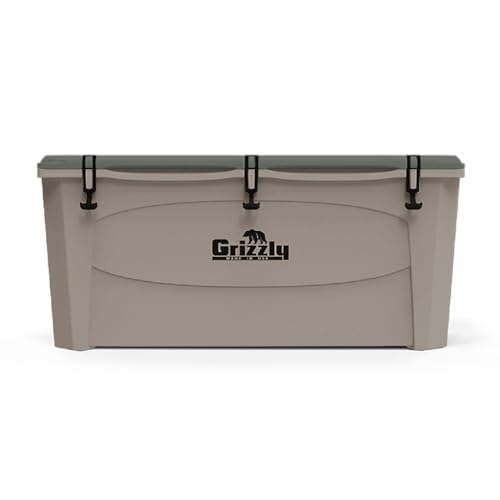


What’s in this listHard coolers of 70 quarts or more. “—” means neither the maker nor the Amazon listing states it.
What makes a large cooler different
Every hard cooler is the same idea: a shell, foam in the walls, a gasket and a lid. The coolers page covers those basics. A large cooler takes that idea and stretches it until the cooler stops being something you carry and becomes something you place.
That changes the questions. With a small cooler you ask what fits inside. With a large one you ask what it fits inside: the truck bed, the cabin porch, the gap between the gun cases and the duffel bags. You also ask who's lifting the other end.
Igloo's size guide puts large coolers at 51 to 100 quarts and calls anything over 100 quarts extra-large, for longer getaways and bigger gatherings. This page starts at 70 quarts and runs up through the biggest chests, so it covers the top of Igloo's large band and all of its extra-large one.
The table on this page lists hard coolers of 70 quarts or more. It shows capacity, construction, the maker's ice retention claim, latches, drain plug, interior and exterior size and weight, as each maker or the Amazon listing lists them; listing values are marked. A dash means neither says. Right now it may be short; it fills in as we add makers.
How to pick a large cooler, spec by spec
These are the numbers that decide whether a big cooler is a help or a very expensive porch bench.
Check the real quarts, not the number in the name
Here's something I learned the slow way. The number in a cooler's model name and its capacity aren't always the same number. One maker sells a rotomolded cooler with 123 in its name and lists it at 108 quarts. The same maker's "65" is listed at 58 quarts.
Nobody is hiding anything. The capacity is right there on the spec sheet. But if you're shopping for a 120 qt cooler and you stop at the name, you might be 12 quarts short of what you thought you bought. The table's capacity column uses the quarts the maker or the listing lists, not the name.
Interior length decides what lies flat
For a large cooler, interior length matters more than quarts. Quarts tell you volume. Length tells you whether a hind quarter, a long cut of backstrap or a cased fillet knife and cutting board lie flat on the bottom.
The makers who publish interior sizes show how fast length grows. One maker's lineup lists a 75-quart model at 27.5 inches inside, a 100-quart at about 31.4 inches and a 165-quart at about 42.1 inches. Another maker's 108-quart cooler is listed at 35.25 inches long inside, 13 wide and 13.5 deep.
Measure what you want to put in it before you shop. A tape measure in the kitchen beats a guess in the parking lot. (Ask me how I know.)
Empty weight is the number that surprises people
Large coolers are heavy before they hold a single ice cube. One maker's 100-quart rotomolded cooler is listed at 38 lb empty. Its 165-quart is 62 lb empty. Another maker's 108-quart is 42 lb.
For a sense of where that sits, NIOSH, the federal workplace safety research agency, uses 51 lb as its load constant: the most nearly all healthy workers should lift under ideal conditions. A big rotomolded chest can be over that line empty.
The table shows weight when the maker lists it. Read that column next to capacity, not after.
Loaded weight: plan a two-person lift
Now fill it. Water weighs about 8.33 lb a gallon, per the USGS. A quart is a quarter gallon, so 120 quarts is 30 gallons, and 30 gallons of water is about 250 lb. Ice is a little lighter than water (the USGS notes it's less dense, which is why it floats), and venison and food don't fill a cooler like water does. Still, a full large cooler is a load for two people at least.
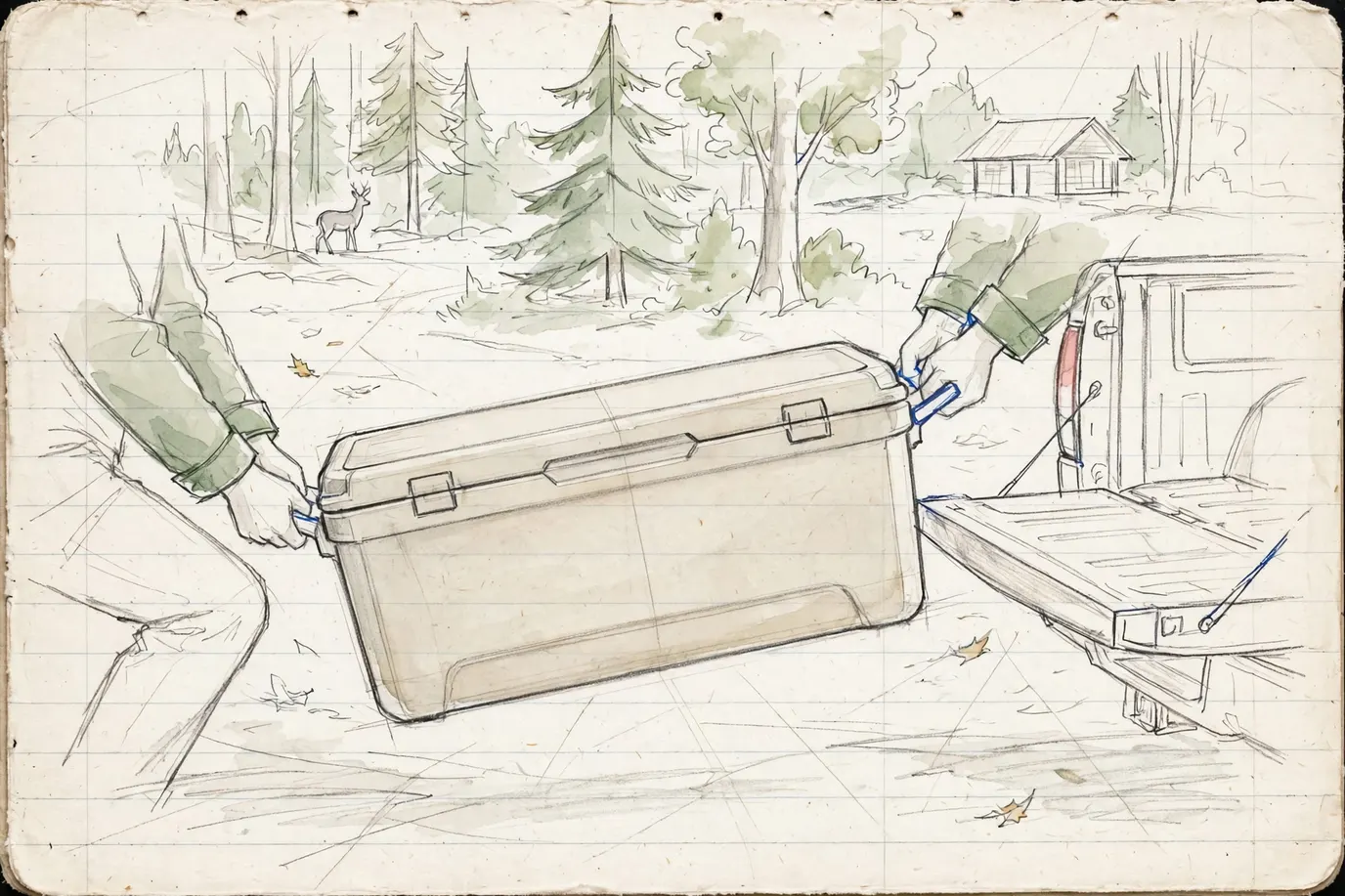
NIOSH's manual lists team lifting as one way to spread the load when a lift can't be redesigned. For a cooler, the redesign is easy: load it where it will ride. Put the empty cooler in the truck bed first, then carry the ice to it a bag at a time.
Handles: molded, rope, and how many hands they fit
The handles column isn't in the table, but the maker's photos and specs usually show them. On large coolers you'll see molded-in handles on the ends, rope handles with rubber grips, or both. One maker's 165-quart lists molded handles plus a rope handle with a sleeved rubber grip.
Look for handles you can hold with a glove on, at both ends, and ideally ones two people can share. A large cooler with one skinny handle per end is a cooler you will drag. Some large coolers come with wheels; they're on the cooler with wheels page.
Drain plugs get bigger for a reason
A large cooler holds a lot of meltwater. The table marks whether the maker or the listing lists a drain plug. On the big chests, look at the size and placement too. One maker's 165-quart lists dual 2-inch drains and full-length drain channels in the floor. Another lists a recessed one-twist plug with a lanyard hole.
A big drain near the bottom of one end means you can tip the cooler a little and empty it without unloading. That matters when it's full of meat and you're not lifting it anyway.
Construction and the ice retention claim
Most large hard coolers in this size range are rotomolded, a one-piece shell with thick foam walls. One maker lists 2 inches of closed-cell foam in the lid, sides and bottom of its 108-quart and an "up to 10 days" ice retention claim. The table's construction and ice retention columns show what each maker states.
Treat the claim as a ceiling. Engel's own numbers assume a pre-chilled cooler, about 2:1 ice to contents, kept in the shade and opened sparingly. That's a lab-friendly weekend, not a November tailgate.
Latches, lid and a lock
On big coolers the lid is a work surface. One maker describes its large cooler's lid as non-skid "whether standing or sitting." That's handy, but the latches are what keep the seal tight. Draw latches pull the lid down on the gasket; the latches column shows the style.
Padlock holes matter more on large coolers because they often sit outside overnight. That brings us to bears, below.
120 qt coolers and up: who needs one
The meat cooler
Here's my one opinion on this page: buy a large cooler for the meat, not for the drinks. Penn State Extension's venison advice is to cool the carcass to 35 to 40°F quickly and, for the trip home, to pack a large cooler full of ice or snow. The FDA suggests drinks go in a separate cooler so the perishable food isn't hit by warm air every time someone grabs a can. So the big one stays shut and holds the meat. The drinks get their own small box.
At Hemlock Run the large cooler lives in the truck from opening day to the last weekend. It gets opened twice a day, for breakfast and dinner, and Walt guards the lid like it has a combination.
How much the ice really leaves you
Engel's rule of thumb is two-thirds ice and one-third food. In a 120 qt cooler packed that way, about 40 quarts are left for food or meat. That's still a lot of room. It's also a reminder that a large cooler is mostly an ice chest in the literal sense.
One maker's 165-quart page calls it a deer-camp cooler for 4 to 5 whitetails, and it is careful to say that depends on the animal's size, how it's trimmed and how much ice you use. Use that kind of number as a hint, not a plan.
Group camps and long trips
The other reason to go large is time. More ice mass means slower melt, per Engel's tips, so a big cooler packed full lasts longer than a medium one packed full. A crew of four on a week-long trip with no ice run is where a 100-plus quart chest earns its weight.
If your trips are two nights and the store is 20 minutes away, two medium coolers will be easier to live with. The 50-quart cooler page covers that middle band.
Packing a large cooler for the trip home
Large coolers reward a plan, because you won't repack one twice.
- Pre-chill it. Engel says a warm cooler eats your good ice just cooling itself, so use a sacrificial bag of ice the night before.
- Put block ice on the bottom and cubes in the gaps. Engel notes block lasts longer and cubes fill space.
- Bag the meat. Penn State says ice going into a body cavity should be sealed in plastic bags; the same logic keeps quarters out of meltwater.
- Fill the air space. Engel lists air pockets among the things that quietly kill ice.
- Keep it out of the sun, and keep the meat out of direct sunlight while you load.
Dry ice for the long haul
Dry ice is frozen CO2, at about −109°F. Engel lists it at more than twice the cooling power of regular ice per pound and gives a rule of thumb: roughly one 10-lb block per 15 inches of cooler length keeps things frozen for 24 to 48 hours. Quick math: a cooler with a 35-inch interior takes about two blocks plus a bit.
Use dry ice only in a cooler whose maker says it's compatible. Wear gloves, keep it away from children, keep the vehicle ventilated, and crack the drain plug or leave the lid unlatched so CO2 pressure can't build up.
The dry ice guide has more.
Large coolers in bear country
A large cooler full of venison is the most interesting object in camp to a bear. The Interagency Grizzly Bear Committee certifies coolers by live bear testing or a technical review. It says a cooler that isn't locked is not considered bear resistant, and that certified coolers can be locked with a padlock, carabiner or nuts and bolts.
Match the cooler's number to the IGBC's certified list instead of trusting a sticker. Uncertified coolers, on most public lands, go in a locked hard-sided vehicle or get hung. Food storage and carcass transport rules vary by place and state, so check your state wildlife agency and the land agency before the trip.
Caring for a big cooler
Clean it the day you get home, while you still remember what was in it. Drain it fully, wash it with warm soapy water, let it dry with the lid open and store it out of direct sun. A large cooler stored wet is a science project by spring. (I once opened one in April. Renee made me take it to the end of the driveway first.)
Check the gasket and the latches at the start of each season. A big lid that doesn't seal evenly wastes more ice than a small one, because there's more of it.
Who should skip a large cooler
If you hunt alone and process at a nearby shop, a large cooler is mostly weight. If you don't have a truck or a spot where it can stay put, it'll be the thing everyone complains about moving. And if your camp has a working fridge and a freezer, a medium cooler for the drive is plenty.
For everyone else: measure the interior length, read the empty weight, and plan the lift before you plan the menu. The deer won't fit any better on the second try.
Brands in this list
Related
Questions people ask
How big is a 120 qt cooler?
Big. A quart is a quarter gallon, so 120 quarts is 30 gallons of space. For scale, one maker's 108-quart rotomolded cooler is listed at 42 inches long outside, with a 35.25-inch interior, and weighs 42 lb empty. Check the interior length and the exterior footprint against your truck bed before you buy.
Will a large cooler hold a whole deer?
Not whole, but in quarters or boned out, often yes. One maker describes its 165-quart cooler as a deer-camp cooler for 4 to 5 whitetails and notes that the real number depends on animal size, trim and ice. Penn State Extension says a large cooler full of ice or snow is the way to bring venison home cold.
How heavy is a large cooler when it's full?
Far heavier than one person should lift. Water is about 8.33 lb a gallon per the USGS, so 100 quarts of water alone is over 200 lb. NIOSH treats 51 lb as the most nearly all healthy workers can lift under ideal conditions. Plan a two-person lift, or load it where it will ride.
Can I use dry ice in a large cooler?
Only if the maker says the cooler is dry-ice compatible. Engel suggests roughly one 10-lb block per 15 inches of cooler length to keep things frozen 24 to 48 hours, wrapped in newspaper and packed on top. Handle it with gloves, keep the vehicle ventilated, and crack the drain so CO2 can escape.
Sources
- Igloo: Cooler sizes, comparison and chart — accessed 2026-10-22
- Engel: 123 High Performance Hard Cooler and Ice Box (product page) — accessed 2026-10-22
- Grizzly Coolers: Grizzly 165 (product page) — accessed 2026-10-22
- Grizzly Coolers: Cooler sizes, capacity and dimensions — accessed 2026-10-22
- Engel: Keep ice longer — accessed 2026-10-22
- U.S. Geological Survey: Facts about water — accessed 2026-10-22
- NIOSH: Applications Manual for the Revised NIOSH Lifting Equation — accessed 2026-10-22
- Penn State Extension: Proper care and handling of venison from field to table — accessed 2026-10-22
- U.S. Food and Drug Administration: Handling food safely while eating outdoors — accessed 2026-10-22
- Interagency Grizzly Bear Committee: Bear-resistant products — accessed 2026-10-22