What Coleman makes for hunters and campers
On this site, Coleman covers most of the camp section by itself. The grid above filters the types:
- Hard coolers: from personal chests to 120-quart marine coolers, some on wheels
- Soft coolers: lunchbox sizes up to a rolling bag and a backpack
- Tents: dome and family tents
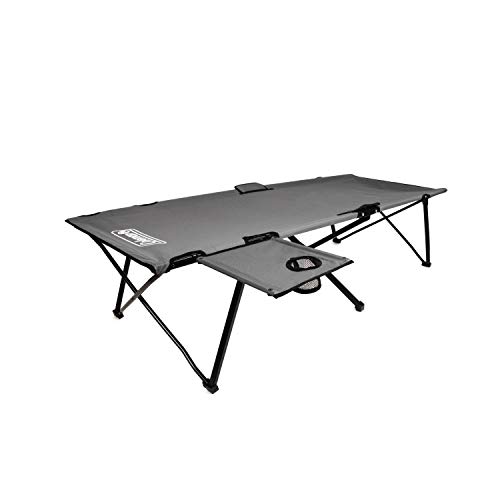
- Cots: single cots, a big-and-tall frame and a queen airbed cot
- Camp chairs and a beach chair: folding quad chairs, one rated well past the rest
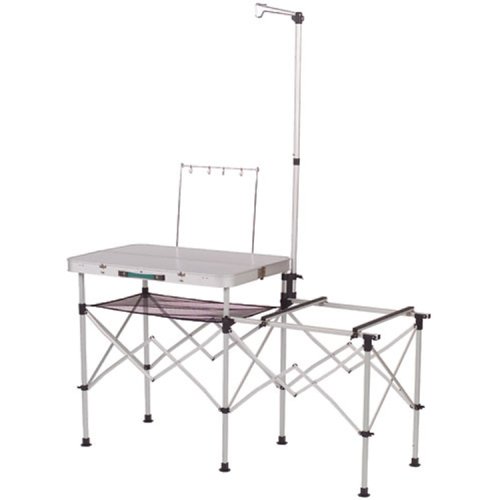
- Tables and a camp kitchen: roll-up, folding and a pack-away kitchen
- Canopies and sun shelters: a gazebo, a 10x10 pop-up and two beach shelters
That's a whole campsite from one name. The grid changes as listings come and go, so I'll write about the lines and what separates them, not about how many of each are up this week.
Most specs here come from Amazon listings, and the grid marks them. Where a listing doesn't say, the grid shows a dash. Leave the dash alone. A guess is not a spec.
Lineup notes: the Coleman cooler
Hard coolers: Chiller, Classic, Xtreme and Marine
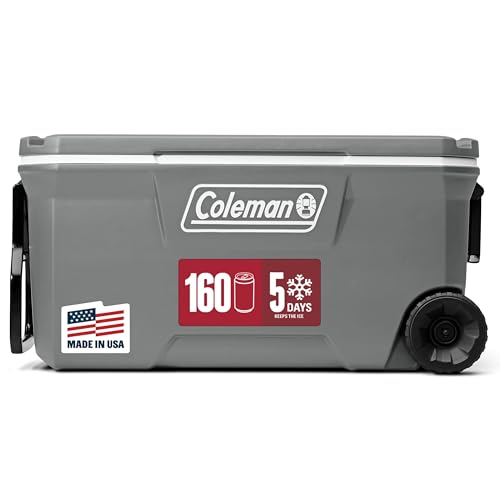
The hard coolers split into named lines, and the names roughly follow size and how long the listing says ice lasts:
- Chiller: the small end, 9 and 16 quarts, plus a 48-quart chest
- Classic Insulated: 52, 70 and 120 quarts, listed at three to five days of ice
- Classic Rolling: 62 and 100 quarts on wheels
- Xtreme Rolling: 50 quarts on wheels, listed at five days
- Marine: 100 and 120 quarts, the 120 listed at six days
- Vintage Steel Belted: a 54-quart steel-banded chest, listed at four days
The listings also give can counts, from a handful in the smallest Chiller to over 200 in the big Classic and Marine chests. Can counts are a better picture of space than quarts for most people. Nobody pictures a quart. Everybody pictures a case of soda.
Ice-retention days are the maker's number under the maker's conditions. Treat them as a way to compare one Coleman cooler with another, not as a promise for your trip. The hard cooler page and the large cooler page explain how those claims are usually stated.
Wheels, drains and the walk to camp
Wheels matter more than people think. A 100-quart cooler full of ice and food is a two-person lift, plain and simple. The Classic Rolling, Xtreme Rolling and the 100-quart Marine list wheels, and the 100-quart models list a drain plug too. If your camp is at the end of a gravel lane, look at the cooler with wheels page before you look at anything else.
Danny's take, offered at a volume the whole cabin heard: "A cooler you can't move full is a cooler you'll pack half empty."
Soft coolers
The soft line runs by can count: 9-can lunchboxes, 16- and 30-can bags, a 30-can backpack and a 42-can rolling bag. The backpack is the one for a walk-in stand or a day at the shore when your hands are already full. More on the type is on the soft cooler page and the backpack cooler page.
Powered coolers
Coleman's types on this site include powered coolers, and they turn up in searches as "Coleman thermoelectric cooler" and "Coleman PowerChill." Dometic's guide to electric coolers says a thermoelectric cooler keeps contents cool rather than cooling them itself, and cools only to a set number of degrees below the air around it, so pre-chill what goes in. A compressor model can freeze whatever the weather. The thermoelectric cooler page and the electric cooler page lay out how they differ from compressor fridges.
Coleman tents
Dome and family tents
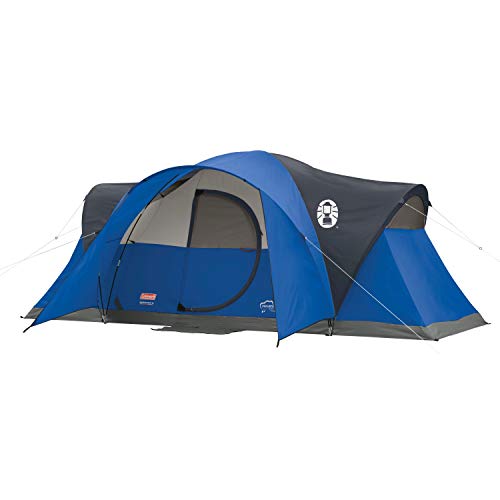
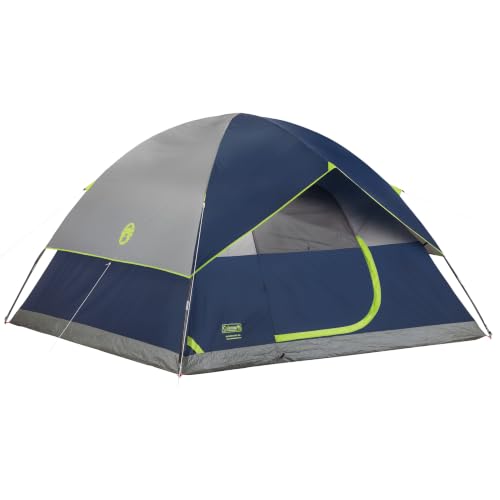
The Coleman tents in the grid include the Sundome, a dome tent, and the Montana 8-person, whose listing gives a 74-inch center height. That's standing room for most adults in the middle of the tent, and less toward the walls, as with any dome.
Here's how I'd read a tent listing: count the people, add the gear, then read the height. Eight sleeping bags fit an eight-person tent. Eight sleeping bags and eight duffels do not. (Shop-teacher rule: measure the closet before you buy the canoe.) The 8 person tent page, the family tent page and the dome tent page cover those trades across brands.
Instant and cabin tents
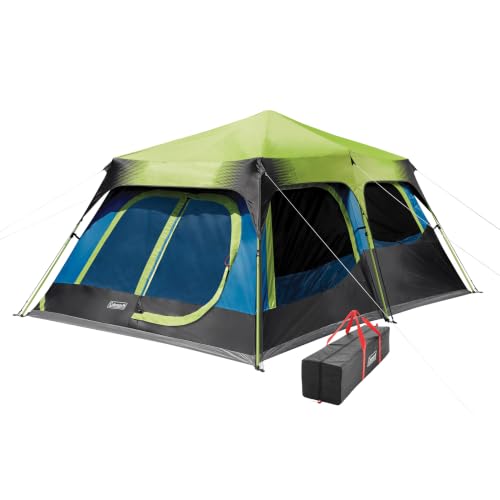
If you came here searching "Coleman instant tent" or "Coleman cabin tent," filter the grid by tents and read each listing for pre-attached poles or straight walls. The instant tent page explains how pre-attached-pole tents go up, and the cabin tent page covers straight-wall designs. Any tent, instant or not, still needs stakes and guy lines once the wind comes up.
Coleman cots
Every Coleman cot in the grid lists a steel frame, and most list a 300-pound weight rating. What separates them is the sleeping area and the style:
- Trailhead Easy-Step: 72 x 30 in, the compact single
- Trailhead II Large: 73 x 35 in, wider
- Pack-Away Big 'n Tall: 80 x 32 in, the longest
- ComfortSmart Big & Tall: a single, 300-pound rating
- Queen-Size Airbed Cot: a double, with an airbed on a frame
My one opinion on this page: pick a Coleman cot by its sleeping area first. The listed sizes run from 72 x 30 inches on the Trailhead Easy-Step to 80 x 32 on the Pack-Away Big 'n Tall, and at 2 a.m. an extra six inches of length matters more than anything else on the frame. If you're over six feet, read the long one first. The camping cot page lays out frame types across brands.
Coleman camping chairs and the beach chair
Folding quad chairs
The camp chairs in the grid are folding quad chairs with steel frames, per the listings. The differences are capacity and the extras:
- Broadband Mesh Quad and Forester: 250-pound ratings, one cup holder
- Outpost Breeze: 300 pounds
- Outpost Elite: 300 pounds, cup holder and a side table
- Big-N-Tall: 600 pounds, a 24-inch seat width and a 19-inch seat height
That last one is the outlier. A 19-inch seat height is close to a kitchen chair, which some knees appreciate. Mine are on the committee. More is on the camping chair page and the heavy duty camping chair page.
The Utopia Breeze beach chair
The Utopia Breeze lists a 10-inch seat height, a steel frame, cup holders and a 250-pound rating. A low seat is the beach-chair standard; it keeps you level with the sand and out of the wind. The beach chair page compares heights across brands.
Coleman camping tables and the camp kitchen
The tables run from small to "the whole kitchen":
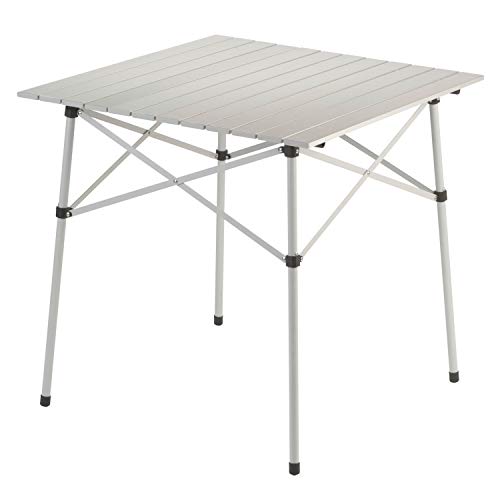
- Outdoor Folding Table with Carry Bag: a roll-up aluminum top, 27 x 27 in, 27 in high
- Mini Camp Table: small, with a storage shelf
- 4-in-1 Folding Table: a folding table; the listing gives no top size
- Pack-Away Portable Camp Kitchen: a camp-kitchen style with a storage shelf
A 27-inch table height is lower than a kitchen counter. It's right for a camp chair and wrong for standing over a stove, which is what a camp kitchen is for. Measure the chair you'll sit in before you pick the table. The camping table page and the camp kitchen page go into heights and tops.
Coleman canopies and sun shelters
Canopies
Two shelters cover the camp side, per the listings:
- Oasis Lite Pop-Up Canopy: 10 x 10 ft, steel frame, 100 sq ft of shade
- Gazebo Event Shelter: 140 sq ft of shade, an 89.8-inch peak height and a top vent
The top vent lets hot air and wind out the roof instead of lifting the frame. Coleman canopy shoppers should read the 10x10 canopy page and the canopy tent page for anchoring across brands.
Beach sun shelters
The two beach shelters list their anchoring, which is the spec that matters on sand:
- Skyshade Large Sun Shelter: 7.8 x 7.5 ft, 7 stakes and 3 sandbags, a rear vent
- Portable 7x7 Backpack Sun Shelter: 7 x 7 ft, 6 stakes, 2 guy lines and 4 sandbags
Stakes in sand hold about as well as a promise from Danny to pack light. That's why sandbags are in the box. The beach shade page and the beach tent page cover the type.
How to choose within the Coleman lineup
Coolers: size, then wheels, then stated days
Count the days and the people, then pick quarts. Then decide whether you'll carry it or roll it. Then compare the stated ice days within that size. Don't reverse the order. A six-day cooler you can't lift stays in the truck.
Tents: people, height, then weather
Pick a capacity above your head count if you'll keep gear inside. Then read the center height. Then read what the maker says about the floor and the fly. Weather claims count only when the maker states them for that model.
Cots and chairs: rating and size together
Read the weight rating and the sleeping area or seat width as a pair. A wide seat with a low rating, or a high rating on a short cot, solves half the problem.
Tables and shelters: measure the space
A table has to fit the chair. A canopy has to fit the site, with room for stakes and lines outside the footprint.
Care and setup that apply to the whole lineup
Coolers
Engel's guide on keeping ice longer applies to any hard cooler:
- Pre-chill: a sacrificial bag of ice the night before
- Block and cubed ice: blocks last, cubes fill gaps
- Fill the empty space: with ice or a towel
- Keep it in the shade: off hot pavement
- Leave the meltwater in: until you're done, with food kept out of it
- Open it less: plan what you need, then open
Tents and canopies
MSR's tent care guide says not to pack or store a tent wet, damp or dirty, and that mildew can start on a wet, crumpled tent within about 24 hours. Hand wash with mild, non-detergent soap only when it needs it, and never machine wash or dry it. Store it loosely in a breathable bag, out of direct sun.
For wind, MSR's setup guide says to point the narrow end into the wind, stake the windward side first and finish with the guy lines. The same order works for a canopy: stake before the wind finds the frame.
Safety
Never use a fuel-burning stove, heater or lantern inside a tent or other closed space. The CDC says never to use a portable gas camp stove indoors, and lists lanterns among sources of carbon monoxide.
Coleman vs Ozark Trail tents
Both names show up in the same tent searches, and both sell family tents, camp chairs and soft coolers. On this site, Coleman has a full page with tents, coolers, cots, chairs, tables and canopies. Ozark Trail has a catalog card, and the site's data doesn't hold an Ozark Trail tent listing to set against a Coleman one. So compare any two tents the same way: sleeping capacity, center height and the weather features the maker states. The camping tent page does that across brands.
Coleman facts
Here's what I could verify outside a store shelf:
- Founder: William Coffin Coleman, who began by selling gasoline lamps and lanterns, per the Kansas Historical Society
- Wichita: he moved there in 1901, later added stoves, and the business became the Coleman Lamp and Stove Company, per the same source
- Owner today: Coleman is listed among the outdoor and recreation brands of Newell Brands, on Newell's own site
Warranty terms and where each product is made aren't covered here. Check Coleman's own terms and the listing of the exact item.
Pre-chill the cooler, dry the tent, and bring one more stake than you think. The wind always brings a friend.