Camp Gear · Gear type
Thermoelectric Cooler
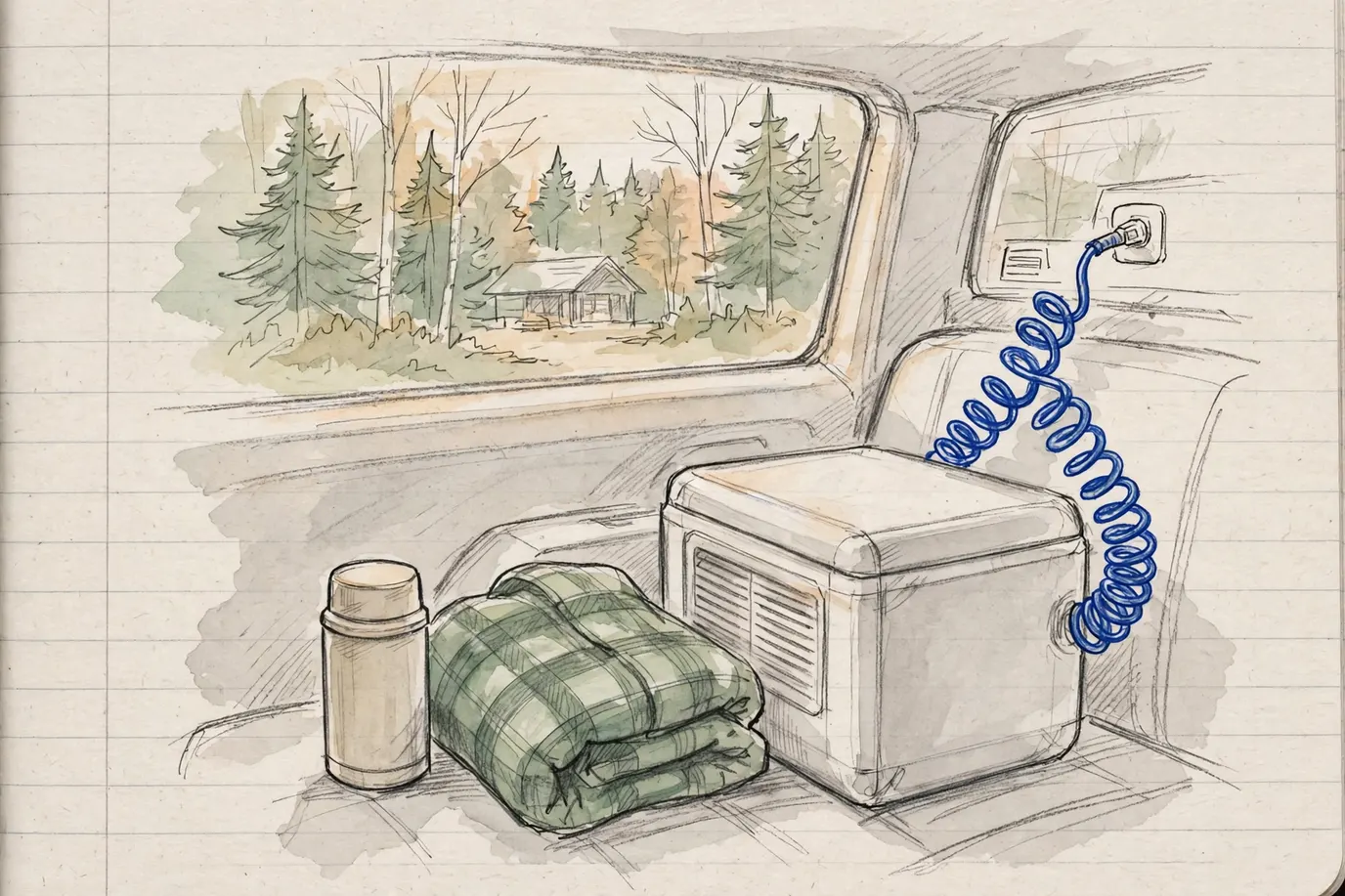
A thermoelectric cooler is a plug-in box that moves heat out with a solid-state chip and a fan instead of ice or a compressor. The catch is in the spec: it cools to a set number of degrees below the air around it, not to a fixed temperature. That makes it a good fit for day trips, the truck cab and mild weather, and a poor fit for a hot week or frozen venison. Renee calls mine "the humming lunchbox." She's not wrong about the hum.
We earn a commission if you buy through our links, at no cost to you. Disclosure
| Model | Capacity | Amazon |
|---|---|---|
Koolatron 12V Cooler/Warmer 9.8 qtElectric cooler More specs
| 9.8 qtlisting | Check price |
Koolatron 12V Iceless Cooler & Warmer 9.8 qtElectric cooler More specs
| 9.8 qtlisting | Check price |
Koolatron Soft-Sided Car Cooler Bag 14 qtElectric cooler More specs
| 14 qtlisting | Check price |
Insmeer 20L Electric Cooler/WarmerElectric cooler More specs
| 18 qtlisting | Check price |
Koolatron 12V Cooler/Warmer 18 qtElectric cooler More specs
| 18 qtlisting | Check price |
Koolatron 12V Iceless Cooler & Warmer 18 qtElectric cooler More specs
| 18 qtlisting | Check price |
Koolatron 12V Iceless Cooler & Warmer 26 qtElectric cooler More specs
| 26 qtlisting | Check price |
Koolatron 12V Iceless Cooler & Warmer 26 qtElectric cooler More specs
| 26 qtlisting | Check price |
Koolatron 12V Iceless Cooler & Warmer 29 qtElectric cooler More specs
| 29 qtlisting | Check price |
Koolatron 12V Iceless Cooler & Warmer 29 qtElectric cooler More specs
| 29 qtlisting | Check price |
Koolatron Thermoelectric Iceless Cooler/Warmer 29 qtElectric cooler More specs
| 29 qtlisting | Check price |
Koolatron 12V Iceless Cooler & Warmer 33 qtElectric cooler More specs
| 33 qtlisting | Check price |
Koolatron Rolling Cooler & Warmer 33 qtElectric cooler More specs
| 33 qtlisting | Check price |
Koolatron 12V Iceless Cooler & Warmer 33 qtElectric cooler More specs
| 33 qtlisting | Check price |
Koolatron 12V Iceless Cooler & Warmer 36 qtElectric cooler More specs
| 36 qtlisting | Check price |
Koolatron Rolling Cooler/Warmer 36 qtElectric cooler More specs
| 36 qtlisting | Check price |
Koolatron 12V Iceless Cooler & Warmer 40 qtElectric cooler More specs
| 40 qtlisting | Check price |
Koolatron 12V Cooler/Warmer 45 qtElectric cooler More specs
| 45 qtlisting | Check price |
Koolatron 12V Cooler/Warmer 45 qtElectric cooler More specs
| 45 qtlisting | Check price |
Koolatron 12V Cooler/Warmer 52 qtElectric cooler More specs
| 52 qtlisting | Check price |
Igloo IE42 Roller ThermoelectricElectric cooler More specs
| — | Check price |
Igloo IE24 ThermoelectricElectric cooler More specs
| — | Check price |
Igloo IE27 ThermoelectricElectric cooler More specs
| — | Check price |
Igloo Legacy 42 ThermoelectricElectric cooler More specs
| — | Check price |


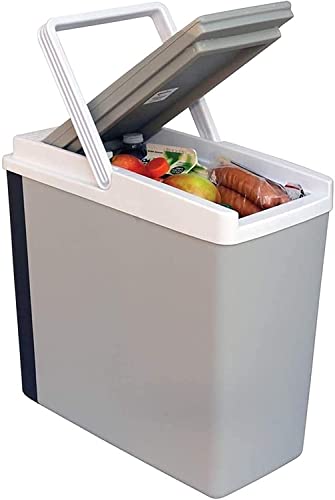


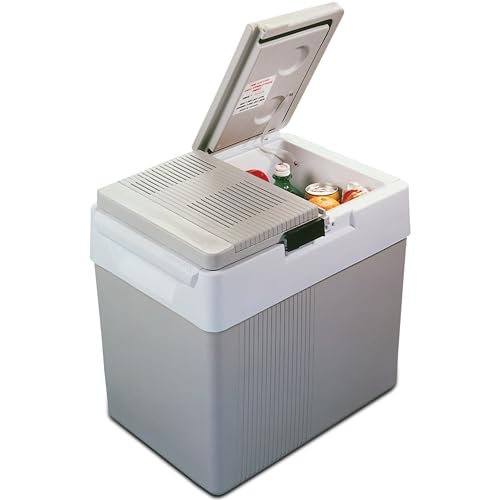


What’s in this listThermoelectric coolers, which cool to a set amount below the outside temperature. “—” means neither the maker nor the Amazon listing states it.
What makes a thermoelectric cooler different
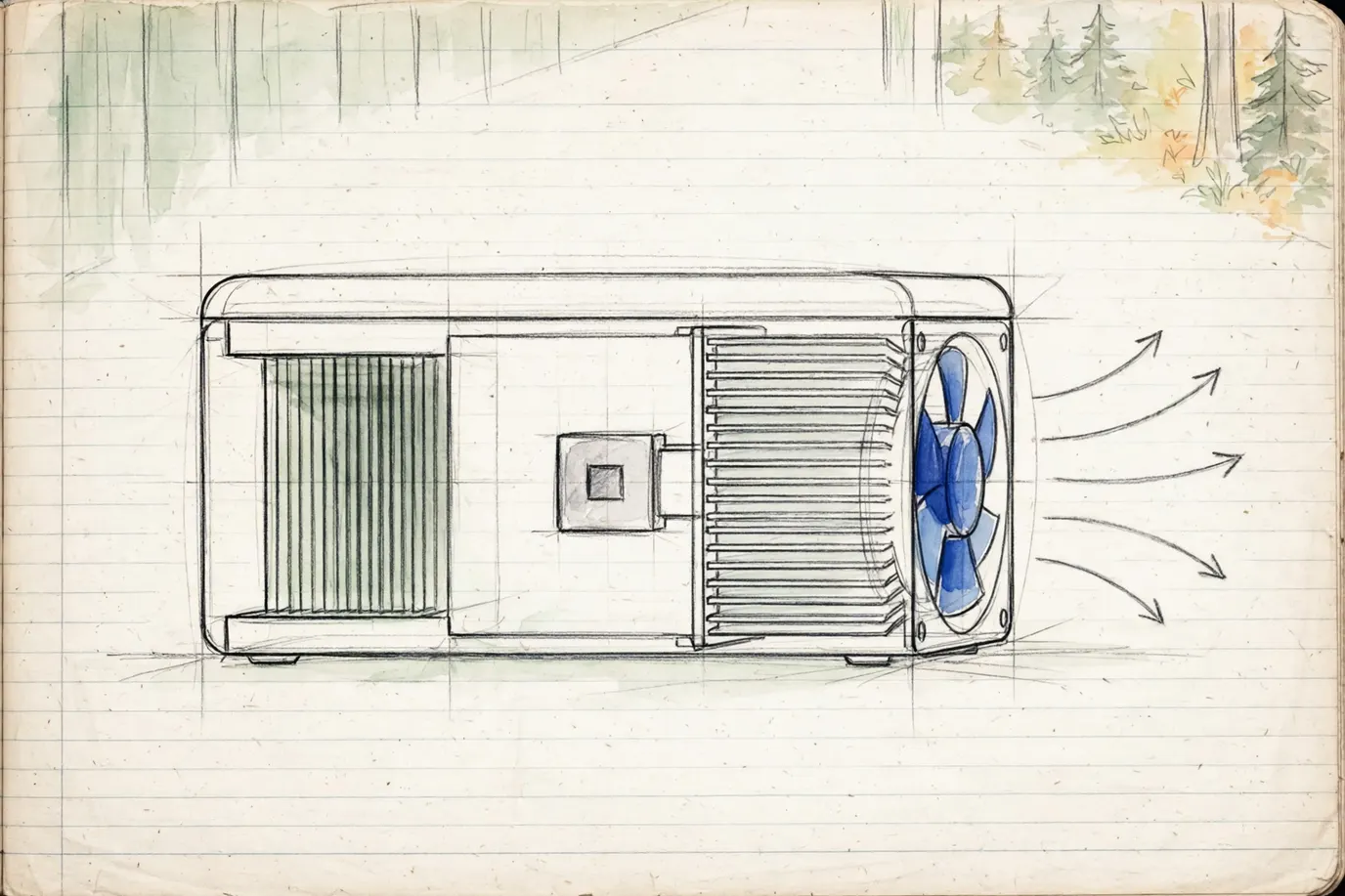
Every electric cooler plugs in and skips the ice. What sets this one apart is the engine. Instead of a compressor and refrigerant, a thermoelectric cooler uses a thermoelectric module, a flat solid-state chip that works on the Peltier effect. One US maker of these modules calls them "solid-state heat pumps." Run DC power through the module and heat moves from one face to the other. One side gets cold, the other gets hot.
Two fans finish the job. One stirs the cold air inside the box. The other blows the heat off a finned sink on the outside. Flip the direction of the current and the faces swap, which that module maker says is why the same module can heat or cool. That's why most of these coolers have a warming switch.
The shared basics of plug-in coolers (12V vs wall power, the three cooling types, how the group is sorted) live on the electric cooler page. This page is about the thermoelectric kind only.
The table on this page lists coolers whose maker or listing describes them as thermoelectric, the ones that cool to a set amount below the outside temperature. It shows the cooling type, capacity, exterior size, DC input, whether wall power is included and whether the cooler has battery protection. The lowest-temperature column is often a dash here, and that's not a mistake. More on that below.
How to pick a thermoelectric cooler, spec by spec
Real talk: the first spec decides most of it. The rest is fit and convenience.
Read "degrees below ambient" as a subtraction problem
Ambient means the air around the cooler. A thermoelectric cooler doesn't promise 38°F inside. It promises to stay a certain number of degrees under whatever the truck, the porch or the beach is doing.
The figures I found on maker pages: US product pages of one big cooler maker state 36°F and 38°F below ambient for different models. A European maker's manual states up to 27°C below, which works out to about 49°F under the outside air. Those are the best case, with the lid shut and the box already cold.
Quick math, the ice math for people without ice. Per the FDA, cold food stays at 40°F or below. One maker rates its coolers at 25°C, which is 77°F. Take 38 degrees off 77 and you get 39°F inside. Just under the line. Now take the FDA's own hot-day number, 90°F, the point where it says picnic food gets one hour out instead of two. Take 38 off that and you're at 52°F inside. That's a drink cooler, not a meat locker.
That's why the lowest-temperature column in our table is often empty for this type. Makers state a difference, not a number, so we don't invent one. When the maker or the Amazon listing does state a fixed low, it's in the table. A dash means neither does.
Thermoelectric coolers don't freeze, even when it's cold out
You'd think a 30°F November night would let the box drop to freezing. It won't. The manual for one thermoelectric line says the thermostat switches cooling off at about 2°C, roughly 36°F, inside. That's a sensible fridge setting and a hard stop for frozen goods.
So if the plan is to keep a frozen backstrap frozen for the drive home, this isn't the box. That's a compressor fridge job.
A thermoelectric cooler for car trips lives on the DC socket
The DC input column shows the voltage the cooler takes from a vehicle socket. Most say 12V; some list 12/24V for trucks and boats. One manual adds a note every road-tripper should hear once: on many vehicles you may have to turn on the ignition before the socket supplies power. If the cooler goes quiet when you shut the truck off, it's probably the socket, not the cooler.
The same manual is plain about the other half: switch the cooler off or unplug it when you turn off the engine, or you may discharge the battery. I'm an electrician. I trust the wiring. I do not trust a cold battery at 5 a.m. with a cooler plugged into it. (Ask me how I know. Actually, ask Walt. He drove over with the jumper cables.)
Watch the amp draw, because it never takes a break
Here's what nobody mentions on the box. A thermoelectric module draws power steadily the whole time it's working. One cooler maker's support page puts numbers on it. Its example thermoelectric cooler draws 47 W at 12V, which is 3.92 amp-hours every hour and about 94 amp-hours a day. Its example compressor cooler draws a similar 48 W while running but only runs about 22% of the time, so it stays under 24 amp-hours a day.
Same wattage on paper, four times the daily draw in practice. That's why makers point thermoelectric at day trips and compressors at trips longer than two days. On a drive, the alternator covers it. Parked, it's your battery's problem.
Battery protection is rare on this type, so look for it
The battery protection column is where thermoelectric coolers differ most from each other. Most don't have it. Some newer ones carry a battery monitor that shuts the cooler off when the vehicle battery drops to a set voltage. One maker's thermoelectric line offers two levels: LOW switches off at 10.1V and HIGH at 11.8V on a 12V system. The manual says use HIGH on the vehicle's own battery and LOW on a separate supply battery.
If the column says no, the protection is you. Unplug it when the engine stops.
Wall power: included, optional or not at all
The AC (wall) power column tells you whether you can plug in at the cabin or the motel. Some coolers ship with a wall adapter or a second cord. One US maker's page lists a 100-240V AC cable in the box; another model of theirs lists a 110V AC converter as optional and not included. If you plan to pre-chill the cooler in the kitchen the night before, and you should, you want that cord in the box, not on a wish list.
The warming mode is a real feature, not a gimmick
Because the module can run backward, most thermoelectric coolers can warm. The manuals I read list warming up to 65°C (149°F) on one maker's line, and a US product page lists heating up to 136°F. That's casserole-to-the-potluck territory, or keeping lunch from freezing in a truck bed in December.
Two rules. Pick cold or warm, not both, since it's one box. And when you switch modes, give the box time to settle before you load food that needs a specific temperature.
Capacity and shape: upright, sideways and plastic bottles
Capacity is in quarts in our table, converted from liters when the maker or the listing gives liters. The interior is less than you'd guess from the outside, because the module, sinks and fans take up a wall.
Shape matters more than with an ice chest. One US maker sells a model that stands either way, lying flat like a regular cooler or upright like a small fridge with a door. In a back seat, upright often fits better. The same maker notes its inside fan lets plastic bottles cool as well as cans, which matters because plastic is a lousy conductor and a still box chills it slowly.
Ventilation is part of the spec, even if it's not on the label
The outside fan has to get rid of the heat the module pulled out, plus the heat from the power it used. Block it and the cooling falls apart. One manual asks for at least 50 mm, about 2 inches, of open space on all sides, and to keep the cooler out of direct sunlight. A US maker builds the cooler body up on raised feet to keep it off hot surfaces.
In practice: don't bury it under sleeping bags in the back seat. Renee once did exactly that with the beach towels. The cooler made it to the shore. The cold did not.
Exterior dimensions decide whether it rides where you need it
The exterior column is the box with its vents and handle, as the maker measures it. Measure the spot in your vehicle and add the 2 inches of breathing room per side. A cooler that fits only when its vent is jammed against a seat back doesn't really fit.
Which kind of thermoelectric cooler fits which trip
Day trips and the truck cab
This is the sweet spot. Load cold drinks and sandwiches from the home fridge, plug into the dash and you get a cooler that holds the line all day without a bag of ice turning to soup. One maker's buying guide sorts it the same way: thermoelectric for day trips and keeping food hot or cold, compressor for longer trips with a power source.
Thermoelectric cooler for car road trips and the motel room
On multi-day drives, a thermoelectric cooler works if it gets two things every night: wall power and a cool room. Bring the AC cord, plug it in at the motel and let it run. The next morning it's starting cold again.
Small personal coolers
Tiny thermoelectric boxes that hold a lunch or a few cans are their own category. They're handy on a desk or a truck console. They're also the least forgiving of a sunny dashboard, since there's very little cold mass inside to buffer a warm afternoon.
When a compressor fridge is the better buy
If any of these are true, look at the compressor fridge page instead:
- Trips longer than two or three days off the wall
- Hot weather, anything near 90°F
- Raw meat, venison or anything you want frozen
- Running parked off a battery overnight
For an off-grid setup with its own battery, the battery-powered cooler page covers that option.
Setting up and caring for a thermoelectric cooler
- Pre-chill the cooler on wall power the night before, lid shut.
- Load it with cold food and drinks from the home fridge. Manuals say to let warm food cool down first.
- Keep raw meat in sealed containers on the bottom, ready-to-eat food above.
- Leave space around the vents and keep the box out of the sun.
- Open it as little as you can. The FDA says the same thing about coolers at a picnic.
- Unplug it when the engine stops, unless it has a battery monitor you've set.
For cleaning, the US maker pages I read say to wipe the inside and outside clean between uses, empty the cooler after each trip to prevent stains and odors, and make sure everything is dry before storage. Don't hose it out like an ice chest. There are electronics in that lid. A damp cloth does the job.
A thermometer in the box settles every argument. The FDA calls appliance thermometers the best way to know your real temperature. The FDA calls them generally inexpensive, and one tells you whether the box is keeping up today.
Who should skip a thermoelectric cooler
If your trips are long weekends at a cabin with no outlet, skip it. The battery math doesn't work, and a good ice chest on the coolers page will outlast it. Same if you hunt in warm early seasons and plan to cool venison. Penn State's advice on venison is to get it down to 35 to 40°F fast, and a box that depends on the weather can't promise that.
My one opinion on this page: buy a thermoelectric cooler for the drive, not for the destination. Why: the subtraction above. In the truck it has the alternator and the air conditioning helping it. At camp, with the engine off and the sun on it, it's a well-insulated box with a fan.
Renee still calls it the humming lunchbox. For the drive down the shore, I've stopped arguing.
Brands in this list
Related
Questions people ask
How cold does a thermoelectric cooler get?
It depends on the air outside it. Makers rate these coolers in degrees below ambient: US product pages I read state 36 to 38°F below the surrounding air, and one maker's manual states up to 27°C (about 49°F) below. On a 77°F day, 38 degrees below is 39°F inside. On a hotter day, the inside runs warmer by the same amount.
Can a thermoelectric cooler for car trips run with the engine off?
It can drain the battery if you let it. One maker's manual says to unplug or switch off the cooler when you turn off the engine, or the battery may be discharged. Some models add a battery monitor that shuts the cooler off at a set voltage. On many vehicles the socket goes dead with the ignition off anyway.
Can a thermoelectric cooler freeze food?
Not as a rule. It can only get a set number of degrees below the outside air, and one maker's thermostat switches the cooling off at about 2°C (36°F) inside. If you need frozen meat or ice cream to stay frozen, that's a job for a compressor fridge, which runs on refrigerant like a home refrigerator.
Do thermoelectric coolers need ice?
No. They make their own cold with a thermoelectric module and fans, so there's no meltwater sloshing around. Pre-chilling the food and drinks still helps a lot, because the cooler is built to hold cold, not to pull warm groceries down in a hurry. Makers' manuals say to let warm food cool first.
Is a thermoelectric cooler loud?
It's quieter than most people expect, but not silent. The module itself has no moving parts. The fans that carry heat off the outside and stir the air inside do make a steady hum, and they run whenever the cooler is working. Most folks stop hearing it after an hour. Light sleepers park it outside the tent.
Sources
- TE Technology: Thermoelectric FAQs and technical information — accessed 2026-10-22
- Dometic: TCX07, TCX14, TCX21, TCX35 thermoelectric cooler operating manual — accessed 2026-10-22
- Dometic: What is the most energy efficient cooler? — accessed 2026-10-22
- Dometic: Electric cooler buying guide — accessed 2026-10-22
- Igloo: Iceless 40 Qt thermoelectric cooler (product page) — accessed 2026-10-22
- Igloo: Legacy 42 thermoelectric cooler (product page) — accessed 2026-10-22
- FDA: Handling food safely while eating outdoors — accessed 2026-10-22
- FDA: Are you storing food safely? — accessed 2026-10-22
- Penn State Extension: Proper care and handling of venison from field to table — accessed 2026-10-22