Camp Gear · Gear type
Beach Tent
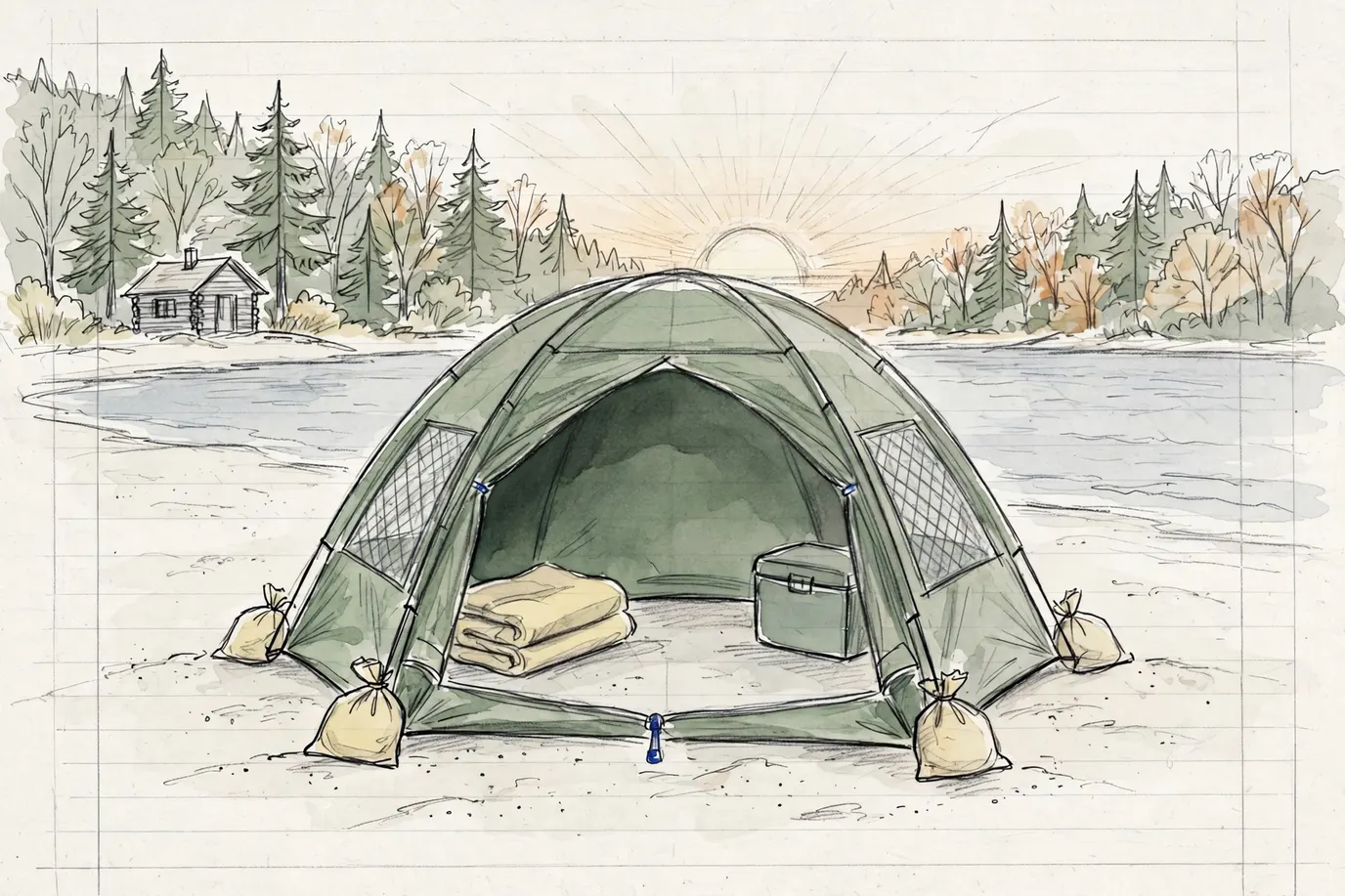
A beach tent is shade with walls: a back, two sides and usually a floor, so you get privacy, a wind break and a place for a nap that an open canopy can't give you. That's the whole reason to pick one over a canopy or an umbrella. The main choice is the frame, a pop-up that springs open or a pole frame you build, and then how you hold it to sand that doesn't want to hold anything. (Renee says the beach tent in our garage is for the baby nephew. Renee is right. I also nap in it.)
We earn a commission if you buy through our links, at no cost to you. Disclosure
| Model | Shade area | Type | Size | Fits | Amazon |
|---|---|---|---|---|---|
Alvantor Coolhut Plus Beach TentBeach shelter More specs
| — | Pop up tentlisting | — | 2-3listing | Check price |
Ammsun Beach Cabana 6.5x6.5Beach shelter More specs
| — | Cabanalisting | 6.5 x 6.5listing | — | Check price |
Ammsun Beach Cabana 8x8Beach shelter More specs
| — | Cabanalisting | 8 x 8listing | 3-5listing | Check price |
CoolCabanas Beach Shade TentBeach shelter More specs
| — | Cabanalisting | — | — | Check price |
CoolCabanas Sunday Shelter Beach Cabana 6' x 6'Beach shelter | — | Cabanalisting | 6 x 6listing | — | Check price |
G4Free Large Pop-Up Beach TentBeach shelter More specs
| — | Pop up tentlisting | — | 3-4listing | Check price |
Gazelle Tents T4 4-Person Pop-Up TentBeach shelter More specs
| — | Pop up tentlisting | — | 4listing | Check price |
Goplus Convertible Beach Tent 2-4 PersonBeach shelter More specs
| — | Pop up tentlisting | — | 2-4listing | Check price |
Gorich Beach Tent Sun Shelter 3-10 PersonBeach shelter More specs
| — | Pop up tentlisting | — | 3-4listing | Check price |
Gorich Beach Tent 6-PersonBeach shelter More specs
| — | Pop up tentlisting | — | 6-7listing | Check price |
Gorich Beach Tent 8-PersonBeach shelter More specs
| — | Pop up tentlisting | — | 8-10listing | Check price |
Gorich Beach Tent 3-PersonBeach shelter More specs
| — | Pop up tentlisting | — | 3listing | Check price |
Gorich Beach Tent 3-PersonBeach shelter More specs
| — | Pop up tentlisting | — | 3listing | Check price |
Gorich Beach Tent Sun Shelter UPF 50+Beach shelter | — | Pop up tentlisting | — | — | Check price |
Gorich Portable Beach Tent UPF 50+Beach shelter More specs
| — | Pop up tentlisting | — | — | Check price |
Gorich Beach Tent with CanopyBeach shelter | — | Pop up tentlisting | — | — | Check price |
Gorich Pop-Up Beach Tent 3-4 PersonBeach shelter More specs
| — | Pop up tentlisting | — | 3-4listing | Check price |
Gorich Beach Tent 3-Person with 2 DoorsBeach shelter | — | Pop up tentlisting | — | 3listing | Check price |
Gorich Beach Tent 3-Person with 2 DoorsBeach shelter | — | Pop up tentlisting | — | 3listing | Check price |
Gorich Beach Tent 4-Person with 2 DoorsBeach shelter | — | Pop up tentlisting | — | 4listing | Check price |
Gorich Beach Tent 4-Person with 2 DoorsBeach shelter | — | Pop up tentlisting | — | 4listing | Check price |
Gorich Beach Tent Sun Shelter UPF 50+Beach shelter | — | Pop up tentlisting | — | — | Check price |
Gorich Beach Tent Sun Shelter with CanopyBeach shelter | — | Pop up tentlisting | — | — | Check price |
Gorich Pop-Up Baby Beach TentBeach shelter More specs
| — | Pop up tentlisting | — | — | Check price |
Kelty Cabana Shade TentBeach shelter More specs
| — | Cabanalisting | — | — | Check price |
MoKo MoKo Beach CabanaBeach shelter More specs
| 120 sq ftlisting | Cabanalisting | — | 6-8listing | Check price |
Old Bahama Bay Pop Up Beach Tent 4 PersonBeach shelter More specs
| — | Pop up tentlisting | — | 3-4listing | Check price |
OutdoorMaster Pop Up Beach Tent Sun Shelter for 3-4 Person with SandbagsBeach shelter More specs
| — | Pop up tentlisting | — | 3-4listing | Check price |
OutdoorMaster Pop Up Beach Umbrella TentBeach shelter More specs
| — | Pop up tentlisting | — | — | Check price |
OutdoorMaster Pop Up Beach Umbrella TentBeach shelter More specs
| — | Pop up tentlisting | — | — | Check price |
| — | Pop up tentlisting | — | 4listing | Check price | |
Outsunny Quick Beach Cabana 6.5 ftBeach shelter More specs
| — | Cabanalisting | — | — | Check price |
Picnic Time Brolly Beach Umbrella TentBeach shelter More specs
| — | Pop up tentlisting | — | — | Check price |
Rio Beach Speedy Pop-Up Beach CabanaBeach shelter More specs
| — | Cabanalisting | 8 x 8listing | 2listing | Check price |
Tommy Bahama Beach Cabana Canopy 6x6Beach shelter | — | Cabanalisting | 6 x 6listing | 2-4listing | Check price |
VEVOR Beach Cabana 8x8Beach shelter More specs
| — | Cabanalisting | 8 x 8listing | 4-5listing | Check price |
VEVOR Pop Up Beach Tent 4 PersonBeach shelter More specs
| — | Pop up tentlisting | — | 4listing | Check price |
VEVOR Pop Up Beach Tent 2 PersonBeach shelter More specs
| — | Pop up tentlisting | — | 2listing | Check price |
Wolfwise Pop Up Beach Tent 3 PersonBeach shelter | — | Pop up tentlisting | 7.2 x 4.8listing | 3listing | Check price |
Wolfwise Instant Beach Tent 3-4 PersonBeach shelter | — | Pop up tentlisting | — | 3-4listing | Check price |

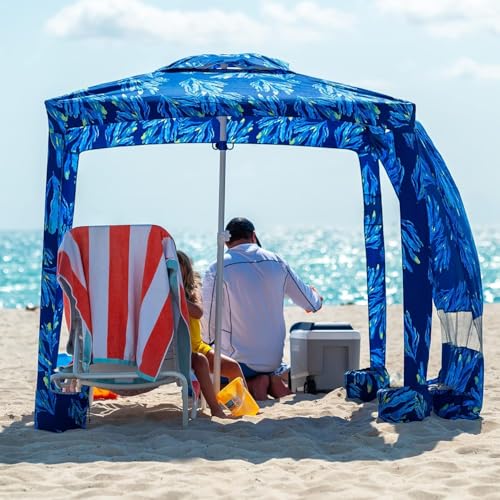


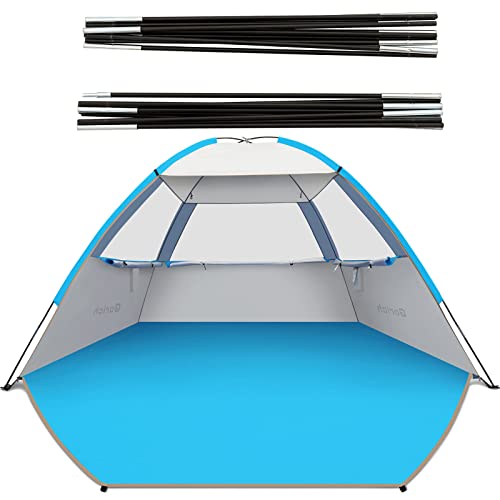


Clam Quick-Set Apex 8' x 8'Beach shelter More specs
| — | — | 8 x 8listing | up to 3listing | Check price |
|---|---|---|---|---|---|
Coleman Skyshade Large Sun ShelterBeach shelter More specs
| — | — | 7.8 x 7.5listing | — | Check price |
Coleman Portable 7x7 Backpack Sun ShelterBeach shelter More specs
| — | — | 7 x 7listing | — | Check price |
Easygo Products Shark FIN Shade Beach TentBeach shelter More specs
| — | — | — | — | Check price |
Kelty Sunshade Pop Up ShelterBeach shelter More specs
| — | — | — | — | Check price |
| — | — | — | 3listing | Check price | |
OutdoorMaster Beach Tent for 3/4 PersonBeach shelter More specs
| — | — | — | 4listing | Check price |
OutdoorMaster Beach Tent for 3/4 PersonBeach shelter More specs
| — | — | — | 4listing | Check price |
OutdoorMaster Beach Tent for 3/4/6/8 PersonBeach shelter More specs
| — | — | — | 8listing | Check price |
VEVOR Beach Tent Sun Shelter 3 PersonBeach shelter More specs
| — | — | — | 3listing | Check price |
Wolfwise Beach Tent Sun Shelter 3-4 PersonBeach shelter | — | — | 7.9 x 5.4listing | 3-4listing | Check price |
Wolfwise Beach Tent Sun Shelter 3-4 PersonBeach shelter | — | — | 7.9 x 5.4listing | 3-4listing | Check price |


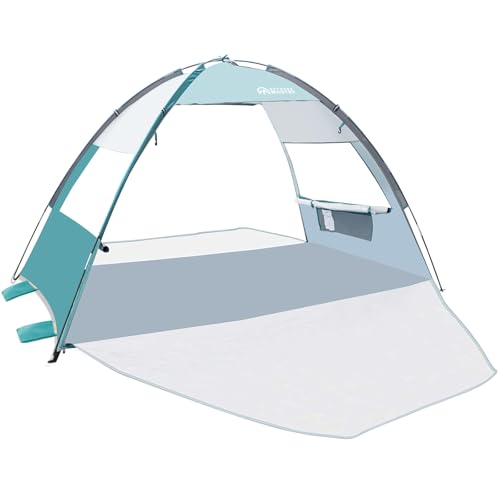


What’s in this listBeach tents and cabanas we track on Amazon US. Open canopies have their own page. “—” means neither the maker nor the Amazon listing states it.
What makes a beach tent different from the rest of the beach shade
Every beach shelter blocks the sun from above. A beach tent also closes in the back and sides, and most add a floor. That changes three things.
- Privacy: a place to change out of a wet suit or feed a baby without the whole beach watching
- Wind break: the back wall stops blowing sand when it's pointed into the wind
- Nap space: a floor keeps the towel on the ground and the sand off the kid
The trade is airflow and bulk. Walls hold air still, and a tent has more fabric to fold, carry and dry. An open canopy or an umbrella moves more air and packs simpler. If you're still deciding between walls and no walls, the beach shade page lays out every type side by side. This page is for when you already know you want a back wall.
The table under this page lists beach tents and cabanas we track, with the type, the stated size, how many people the maker or listing says it fits, the anchoring that comes in the box, any wind feature the maker or listing names, the pole material and the weight. The table marks values read from the Amazon listing when the maker is silent; a dash means neither lists it. Weight is always the maker's own figure. Open canopies live on the beach canopy page.
What to look at when you pick a beach tent
Here's the order I'd read the table in. Real talk: the photo on the box is always taken on a day with no wind.
Type tells you how it goes up and how it comes down
The Type column splits beach tents into a few designs.
- Pop-up tent: a spring-steel or flexible frame sewn into the fabric. You open the bag and it jumps open.
- Pole or hub tent: separate poles, or a center hub you push up until it locks. A few minutes of setup, a neater fold.
- Cabana: usually an open-front shade on poles with a back panel or flaps. Cabanas get their own beach cabana page.
The pop-up is the fastest to open and the one people fight with at 4 p.m. One maker's folding guide spells the move out: pick it up with the opening facing up, pull both sides together with a right-over-left twist so it nests into itself, twist again into a figure 8, then fold the figure 8 in half like a clamshell and slide the safety loop around it. The maker says there will be tension in the poles and the last fold has resistance. Keep a firm grip on all of the frame the whole time.
Ask me how I know what happens when you let go halfway. It unfolds faster than you folded it, and it does it at face height. Practice once in the yard in calm air.
Size is the floor; Fits is the maker's estimate
The Size column is the footprint in feet as the maker or listing states it. Read it two ways.
First, the floor. A tent fits people lying down by length, not by how many can sit knee to knee. Lay your beach towels out at home and measure them, then compare to the footprint. Second, the box. Some listings give the packed size instead of the open size, so if a number looks like a duffel bag, it probably is one.
The Fits column is the maker's people count. It's a sitting-up estimate, usually with nobody's cooler inside. (My cooler always gets a seat. The ice math says so.) Use the count to compare tents to each other, then size up by one person if you plan to nap or keep the bags out of the sun.
Shade area and UPF tell you how much sun the fabric stops
Shade area is the stated covered area in square feet, when the maker gives it. On a tent it's close to the floor area, since the roof and the walls sit over the same footprint.
UPF is the fabric's sun rating. The Skin Cancer Foundation explains it for clothing: UPF 50 lets through about 1/50th of the UV, roughly 2%. It calls 30 to 49 very good and 50+ excellent. The same foundation notes that wet fabric and stretched fabric let more UV through, so a soaked, sagging roof is not doing its best work.
Walls help with the sun that comes in low. Dana-Farber's dermatology team points out that UV bounces off sand and water at low angles and reaches people sitting under an umbrella. A back wall and two sides block some of that bounce from behind and beside you. The open front still lets it in. Sunscreen still goes on.
Anchoring is the spec that decides whether you keep the tent
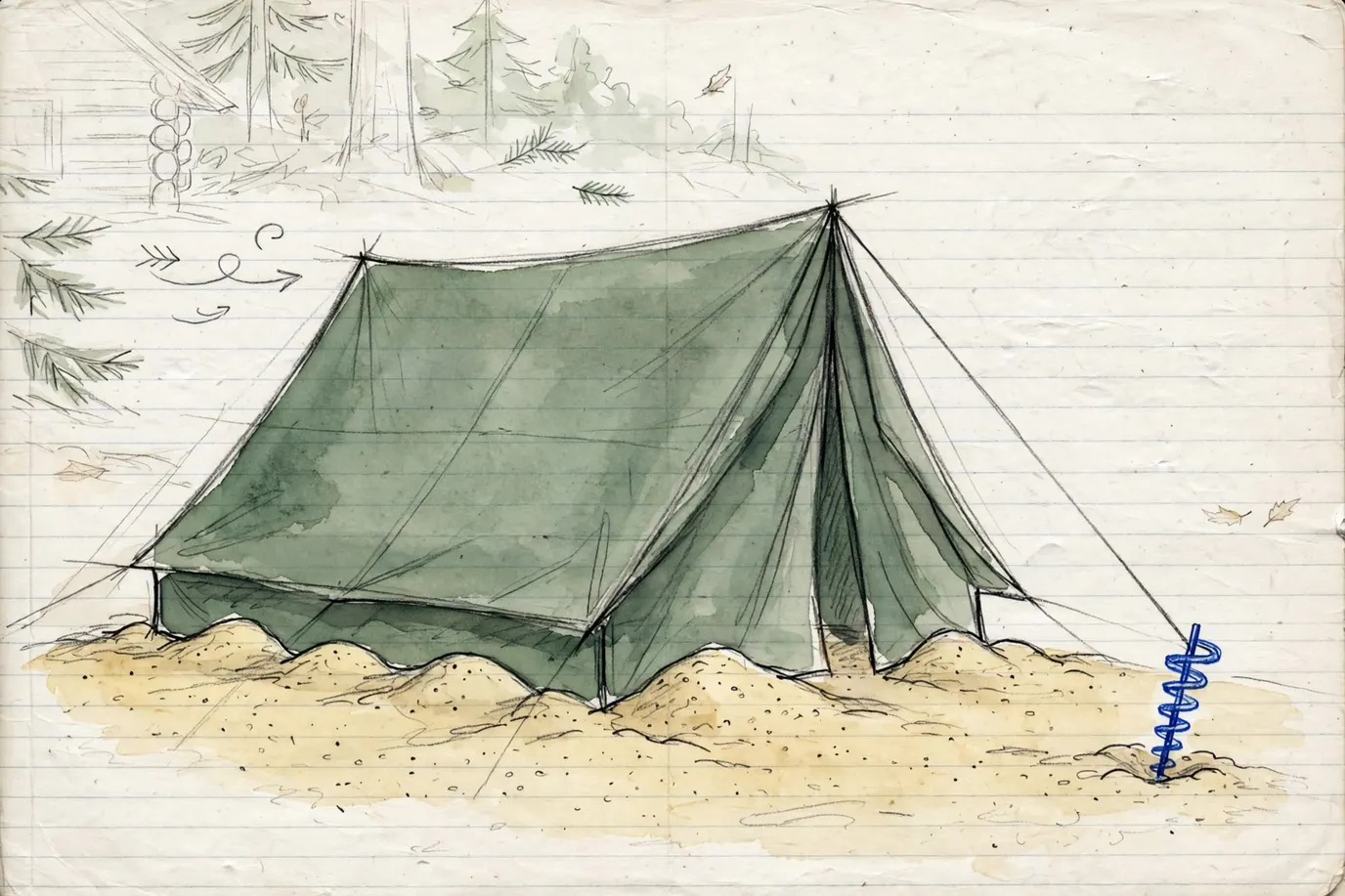
The Anchoring column lists what the maker includes: sand pockets, stakes, guy lines, sandbags. On a beach, those are not equal.
- Sand pockets: fabric pouches along the base that you fill with sand. They hold by weight, which is the one thing a beach has plenty of.
- Stakes: one canopy maker says a standard stake in loose dry sand pulls out with almost no resistance. They help in damp, packed sand near the water and not much higher up.
- Sand screws: spiral anchors you twist in. The same maker recommends lengths of at least 12 inches.
- Guy lines: cords from the corners to anchors, run outward at about 45 degrees, per that maker's beach article.
Fill the pockets right away, before you put anything inside, and fill them full. A half-full pocket is a decoration. More pockets spread the hold across more of the tent, so count them on the listing photo if the maker doesn't say.
Wind handling is about vents and which way the door faces
The Wind handling column records the wind feature the maker names, like a wind vent, a closable door or extra guy points. We write it down as stated, and we don't turn it into a wind rating the maker never gave.
What you control is orientation. The back wall goes toward the wind, so the wind rolls over the tent instead of filling it. A tent with the open door into the wind is a parachute with a picnic in it. One canopy maker's beach article says to face the smallest side to the wind and to take shade down in winds above 25 mph. That article is about open canopies, but the physics of a big flat panel in the wind doesn't care what the panel is called.
Vents and mesh windows let air through. Open them. They let some wind through the wall instead of pushing on all of it, and they keep the inside from turning into a still, warm box.
Poles: fiberglass flexes, aluminum and steel hold their shape
The Poles column shows frame material when the maker or the listing states it. The values you'll see are aluminum, fiberglass, steel or none. A pop-up's frame has to bend into a coil to fold at all, which is why the folding guide warns about tension in the poles.
What that means for you: flexible frames forgive a gust by bending, and they're the ones that spring open at face height. Rigid poles hold a squarer shape and more headroom, and they need assembling. If neither the maker nor the listing states pole material, you get a dash in the table, not a guess.
Weight: the trip home is wet and sandy
Weight is the stated weight in pounds, and you carry it twice. The tent goes out dry and folded. It comes back with sand in the pockets I didn't quite empty, a damp floor and a kid's shovel I didn't know was rolled up inside.
So read weight against your walk. A short boardwalk and a cart can carry anything. A long soft-sand walk wants the lightest tent that still fits your people. Then add the beach chair and cooler you already haul.
Pop up beach tent or pole tent: who should pick which
Pick a pop up beach tent if you set up and leave in the same few hours, you value fast shade for a baby or a napper, and you'll practice the fold. It's the one most families mean when they say beach tent.
Pick a pole or hub tent if you want more headroom, a squarer floor or a tidy pack that rides flat in the trunk. You trade a few minutes of setup for a fold that doesn't fight back.
Pick a cabana if you want more open front and less wall. That's a different animal; the cabana page covers it.
Skip the tent if your town doesn't allow one, if you're a group that wants to sit together facing the water, or if you mostly want air moving. An open beach canopy or a beach umbrella suits that better.
My one opinion on this page: a beach tent is a nap-and-baby shelter first and a family shade second. The reason is checkable. The FDA's infant sun guidance names a pop-up tent as a way to keep babies under 6 months out of direct sun, and says those babies overheat easily, so a vented tent with a floor is the right tool there. For a crowd sitting up, walls cut airflow and some towns now limit or ban tents with sides, so open shade covers more people with less fuss.
Check the town's beach rules before you buy
Beach tents are where local rules have moved fastest.
- Ocean City, Maryland: in 2025 the town banned full-size beach tents, kept small baby tents up to 3 by 3 feet, limited canopies to 10 by 10 feet spaced at least 3 feet apart, kept anchor lines inside the canopy's footprint and said no unattended canopy before 10 a.m., per FOX 5 DC's report.
- Laguna Beach, California: from May 26, 2026, pop-up tents and canopies are banned on all city beaches except two, where shade is limited to 8 feet wide, 8 feet deep and 6 feet high in set zones, per FOX 11.
- Umbrella-only towns: one shade maker lists Myrtle Beach and North Myrtle Beach (Memorial Day to Labor Day), Horry County in South Carolina, Rehoboth and Bethany Beach in Delaware, and Long Beach Township, Beach Haven and Manasquan in New Jersey as allowing only traditional umbrellas.
That last list hits close to home. Renee picks our July week on the Jersey Shore, and I now read the town's beach page before I read the rental listing. Rules change, so check the town's current beach rules the week you go.
Setting up and taking down a beach tent
- Pick a flat spot well above the wet line, and note which way the wind blows.
- Open the tent with the back wall toward the wind.
- Fill every sand pocket full before anything goes inside.
- Add stakes or sand screws on the windward side, guy lines out at about 45 degrees.
- Open the vents and windows.
- Re-check the pockets after an hour; wind moves sand out of half-filled ones.
To take it down, empty the pockets first, then shake the tent out with the door facing downwind. Fold it the maker's way, not your way. One shade maker's care page says to shake out the sand and make sure the fabric and parts are dry before packing, and not to leave its shade up longer than 24 hours, to preserve the fabric. If the tent comes home damp, open it in the yard. A wet tent zipped into its bag for a week develops a personality.
Take everything off the beach at night. Mote Marine Laboratory says furniture left on the beach overnight is an obstacle for nesting sea turtles and their hatchlings, and asks beachgoers to fill in holes. In Southwest Florida, Mote monitors nesting season from May 1 to October 31.
Safety
A tent offers no protection from lightning, per the National Weather Service. At the first thunder, leave the tent and go to a car or a building, and wait 30 minutes after the last rumble before going back.
Keep babies under 6 months in shade and watch them for overheating, per the FDA. A closed tent is not a babysitter.
That's the beach tent in one breath: back to the wind, pockets full, vents open, and practice the fold where nobody's filming.
Brands in this list
Related
Questions people ask
Is a pop up beach tent hard to fold back up?
It takes practice, not strength. One maker's folding guide has you twist the frame so it nests into itself, make a figure 8, then fold that in half like a clamshell and hold it with the safety loop. The maker warns there is tension in the poles during the twist. Practice once in the yard, in calm air, before the beach.
Can I put a baby in a beach tent?
The FDA's infant sun guidance names a pop-up tent as one way to make shade for babies under 6 months, who should stay out of direct sun. It also says babies that age overheat easily, so watch for fussiness, redness and crying. Keep the vents open so air moves, and take the hours from 10 a.m. to 2 p.m. seriously.
Are beach tents allowed on every beach?
No. Ocean City, Maryland, banned full-size beach tents in 2025 and kept small baby tents up to 3 by 3 feet. Laguna Beach, California, bans pop-up tents and canopies on most of its beaches. One shade maker lists towns in South Carolina, Delaware and New Jersey that allow only umbrellas. Check the town's beach rules before you pack.
Do beach tent stakes hold in sand?
Not in loose, dry sand. One canopy maker says a standard stake pulls out with almost no resistance there and recommends spiral sand screws at least 12 inches long. On a beach tent, filled sand pockets do most of the holding; stakes and guy lines help on the windward side.
Is a beach tent safe in a thunderstorm?
No. The National Weather Service says a tent offers no protection from lightning. Get to a car or a building, and wait 30 minutes after the last thunder before you go back to the sand.
Sources
- BAGGU: Popup tent folding instructions — accessed 2026-10-22
- E-Z UP: How to secure a pop-up canopy at the beach (stakes, weights and wind) — accessed 2026-10-22
- Neso: Care and washing instructions — accessed 2026-10-22
- U.S. FDA: Should you put sunscreen on infants? Not usually — accessed 2026-10-22
- FOX 5 DC: Ocean City bans oversized beach tents — accessed 2026-10-22
- FOX 11 Los Angeles: Laguna Beach bans pop-up tents and canopies — accessed 2026-10-22
- Shibumi Shade: Frequently asked questions (beaches that allow only umbrellas) — accessed 2026-10-22
- Skin Cancer Foundation: Sun-protective clothing (UPF explained) — accessed 2026-10-22
- Dana-Farber Cancer Institute: Does staying in the shade prevent sunburn? — accessed 2026-10-22
- National Weather Service: Lightning safety outdoors — accessed 2026-10-22
- Mote Marine Laboratory: Beach furniture affects nesting turtles in Southwest Florida — accessed 2026-10-22