Camp Gear · Gear type
Beach Umbrella
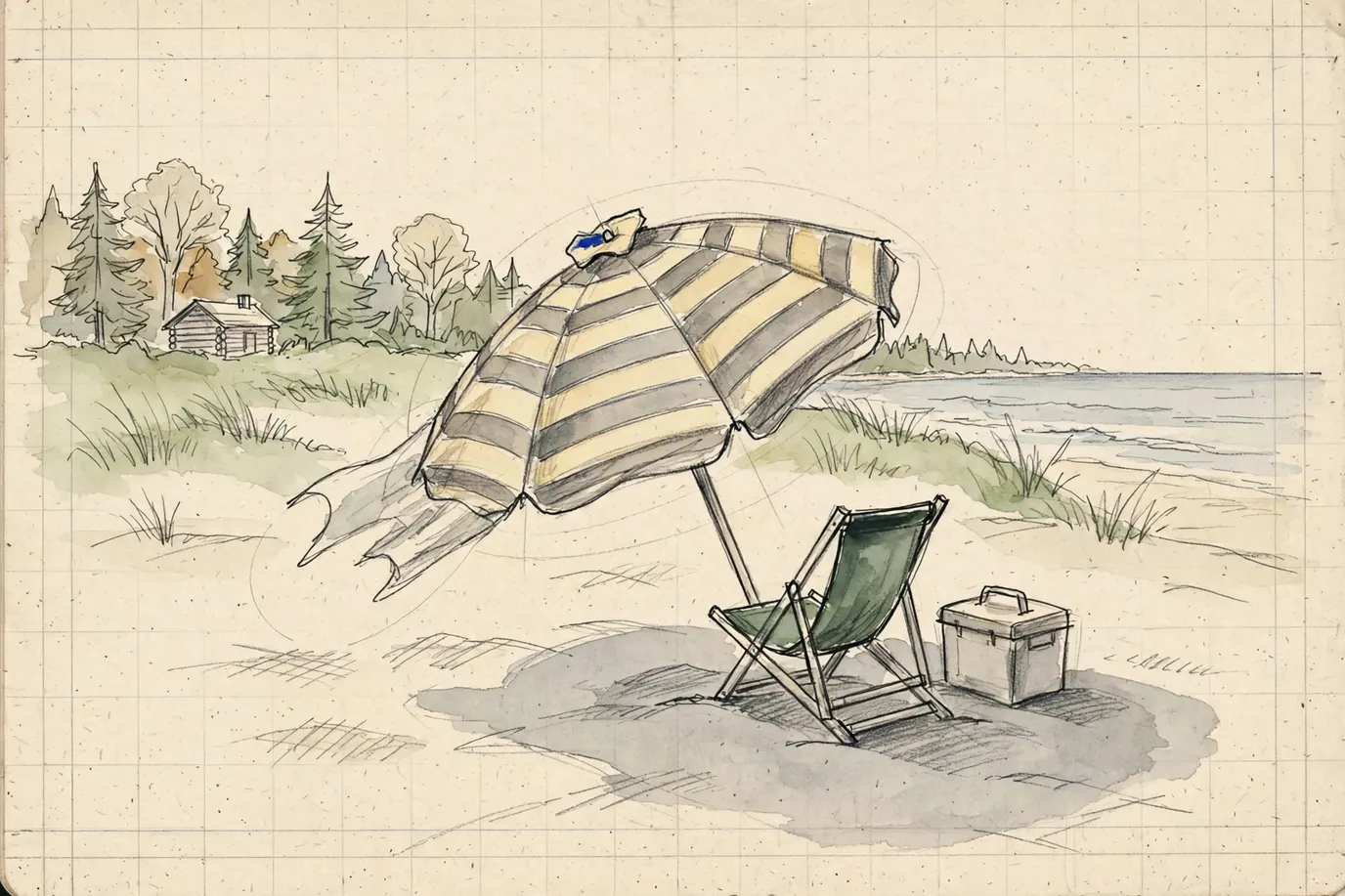
A beach umbrella is one pole, one canopy and something that keeps the pole in the sand. Pick it backward from the way it's sold: first how it holds the sand, then a canopy size your crew needs at noon, then the extras like tilt and a wind vent. A portable beach umbrella is only shade while it stays where you planted it. (Renee says I shop for umbrellas the way I shop for coolers. Too big, then I complain about the walk.)
We earn a commission if you buy through our links, at no cost to you. Disclosure
| Model | Canopy size | Anchor | Wind claim | Tilt | Amazon |
|---|---|---|---|---|---|
Caribbean Joe Beach Chair Umbrella 4 Ft ArcBeach umbrella | 4 ftlisting | Clamplisting | — | Yeslisting | Check price |
Caribbean Joe Clamp On Beach Chair Umbrella 48" ArcBeach umbrella | 4 ftlisting | Clamplisting | — | — | Check price |
Business Pleasure Co. Holiday Beach UmbrellaBeach umbrella More specs
| 5 ftlisting | — | — | Yeslisting | Check price |
Picnic Time ONIVA 5 Ft Beach UmbrellaBeach umbrella More specs
| 5 ftlisting | — | — | Yeslisting | Check price |
Picnic Time 5.5 Ft Portable Beach UmbrellaBeach umbrella More specs
| 5.5 ftlisting | — | — | Yeslisting | Check price |
Picnic Time NCAA 5.5 Ft Beach Umbrella Arkansas RazorbacksBeach umbrella More specs
| 5.5 ftlisting | — | — | Yeslisting | Check price |
Picnic Time NCAA 5.5 Ft Beach Umbrella Georgia BulldogsBeach umbrella More specs
| 5.5 ftlisting | — | — | Yeslisting | Check price |
Picnic Time NCAA 5.5 Ft Beach Umbrella USC TrojansBeach umbrella More specs
| 5.5 ftlisting | — | — | Yeslisting | Check price |
Picnic Time NCAA 5.5 Ft Beach Umbrella Nebraska CornhuskersBeach umbrella More specs
| 5.5 ftlisting | — | — | Yeslisting | Check price |
Picnic Time NCAA 5.5 Ft Beach Umbrella Auburn TigersBeach umbrella More specs
| 5.5 ftlisting | — | — | Yeslisting | Check price |
Picnic Time NCAA 5.5 Ft Beach Umbrella Baylor BearsBeach umbrella More specs
| 5.5 ftlisting | — | — | Yeslisting | Check price |
Picnic Time NCAA 5.5 Ft Beach Umbrella Florida GatorsBeach umbrella More specs
| 5.5 ftlisting | — | — | Yeslisting | Check price |
Picnic Time NCAA 5.5 Ft Beach Umbrella Kentucky WildcatsBeach umbrella More specs
| 5.5 ftlisting | — | — | Yeslisting | Check price |
Picnic Time NCAA 5.5 Ft Beach Umbrella Michigan WolverinesBeach umbrella More specs
| 5.5 ftlisting | — | — | Yeslisting | Check price |
Picnic Time NCAA 5.5 Ft Beach Umbrella West Virginia MountaineersBeach umbrella More specs
| 5.5 ftlisting | — | — | Yeslisting | Check price |
Picnic Time NCAA 5.5 Ft Beach Umbrella Florida State SeminolesBeach umbrella More specs
| 5.5 ftlisting | — | — | Yeslisting | Check price |
Picnic Time NCAA 5.5 Ft Beach Umbrella Texas Tech Red RaidersBeach umbrella More specs
| 5.5 ftlisting | — | — | Yeslisting | Check price |
Picnic Time NCAA Ohio State 5.5 Ft UmbrellaBeach umbrella | 5.5 ftlisting | — | — | — | Check price |
Picnic Time NCAA Ohio State 5.5 Ft UmbrellaBeach umbrella | 5.5 ftlisting | — | — | — | Check price |
Picnic Time Star Wars 5.5 Ft Beach UmbrellaBeach umbrella More specs
| 5.5 ftlisting | — | — | Yeslisting | Check price |
Outsunny Beach Umbrella with Tilt 5.7 ftBeach umbrella | 5.7 ftlisting | — | Vented canopy for wind stabilitylisting | Yeslisting | Check price |
Outsunny Double-Top Striped Cabana Umbrella 5.8 ftBeach umbrella | 5.8 ftlisting | Sand bag baselisting | — | — | Check price |
Outsunny Portable Beach Umbrella Sandbags 5.9 ftBeach umbrella | 5.9 ftlisting | Sand bag baselisting | — | — | Check price |
Ammsun 6ft Portable Patio Umbrella with TiltBeach umbrella | 6 ftlisting | — | — | Yeslisting | Check price |
Business Pleasure Co. Premium Beach UmbrellaBeach umbrella More specs
| 6 ftlisting | — | — | — | Check price |
Caribbean Joe 6 Ft Beach UmbrellaBeach umbrella | 6 ftlisting | — | — | Yeslisting | Check price |
Sport-Brella Fieldedge 6 Ft Bi-Fold UmbrellaBeach umbrella | 6 ftlisting | Screw augerlisting | — | — | Check price |
Tommy Bahama Tilt Beach Umbrella 6 FtBeach umbrella More specs
| 6 ftlisting | — | Wind vent on top for stabilitylisting | Yeslisting | Check price |
Tommy Bahama ANCHORX 6 Ft Beach UmbrellaBeach umbrella | 6 ftlisting | — | Built-in wind vents and ANCHORX wind stability systemlisting | Yeslisting | Check price |
Outsunny Ruffled Beach Umbrella 6.2 ftBeach umbrella | 6.2 ftlisting | — | Vented canopy helps stay stable against windlisting | — | Check price |
Ammsun 6.5ft Portable Beach UmbrellaBeach umbrella More specs
| 6.5 ftlisting | — | — | Yeslisting | Check price |
Ammsun 6.5ft Twice Folded Beach UmbrellaBeach umbrella More specs
| 6.5 ftlisting | Screw augerlisting | — | Yeslisting | Check price |
Ammsun 6.5ft Tropical Fringe Beach UmbrellaBeach umbrella More specs
| 6.5 ftlisting | Screw augerlisting | — | Yeslisting | Check price |
Ammsun 6.5ft Beach Umbrella with Sand AnchorBeach umbrella | 6.5 ftlisting | Screw augerlisting | — | Yeslisting | Check price |
Ammsun 6.5ft Folding Beach UmbrellaBeach umbrella More specs
| 6.5 ftlisting | Screw augerlisting | — | Yeslisting | Check price |
Aoxun 6.5ft Beach Umbrella with Tilt PoleBeach umbrella | 6.5 ftlisting | Screw augerlisting | — | Yeslisting | Check price |
Business Pleasure Co. Amalfi Rivie UmbrellaBeach umbrella More specs
| 6.5 ftlisting | — | — | — | Check price |
Business Pleasure Co. Margaritaville Manana UmbrellaBeach umbrella More specs
| 6.5 ftlisting | Screw augerlisting | — | — | Check price |
Business Pleasure Co. Rio Scalloped Brim UmbrellaBeach umbrella More specs
| 6.5 ftlisting | — | — | — | Check price |
Business Pleasure Co. Rio Fringe UmbrellaBeach umbrella More specs
| 6.5 ftlisting | — | — | — | Check price |






Caribbean Joe Tilt Beach UmbrellaBeach umbrella | 6.5 ftlisting | — | — | Yeslisting | Check price |
|---|---|---|---|---|---|
Picnic Time Summerland 6.5 Ft Fringe UmbrellaBeach umbrella More specs
| 6.5 ftlisting | Screw augerlisting | — | Yeslisting | Check price |
Tommy Bahama 6.5 Ft Fiberglass Beach UmbrellaBeach umbrella | 6.5 ftlisting | — | — | Yeslisting | Check price |
Ammsun 7ft Heavy Duty Beach UmbrellaBeach umbrella More specs
| 7 ftlisting | Screw augerlisting | — | Yeslisting | Check price |
Ammsun 7ft Beach Umbrella with Table TrayBeach umbrella More specs
| 7 ftlisting | Screw augerlisting | — | Yeslisting | Check price |
Caribbean Joe Chaby 7 Ft Tilt Beach UmbrellaBeach umbrella | 7 ftlisting | — | — | Yeslisting | Check price |
Caribbean Joe Tilt Beach Sun UmbrellaBeach umbrella | 7 ftlisting | — | — | Yeslisting | Check price |
Sport-Brella Sport-Brella Beach Umbrella 7 ftBeach umbrella More specs
| 7 ftlisting | — | — | Yeslisting | Check price |
Tommy Bahama 7 Ft Tilt Telescoping UmbrellaBeach umbrella | 7 ftlisting | — | — | Yeslisting | Check price |
Tommy Bahama 7 Ft Tilt Telescoping UmbrellaBeach umbrella More specs
| 7 ftlisting | — | Vent on top of canopy increases wind tolerancelisting | Yeslisting | Check price |
Tommy Bahama 7 Ft Beach Umbrella 2018Beach umbrella | 7 ftlisting | — | — | — | Check price |
Blissun 7.2 ft Portable Beach UmbrellaBeach umbrella | 7.2 ftlisting | Screw augerlisting | — | Yeslisting | Check price |
Ammsun 7.5ft Large Heavy Duty Beach UmbrellaBeach umbrella More specs
| 7.5 ftlisting | Screw augerlisting | — | Yeslisting | Check price |
Ammsun 7.5ft Commercial Grade Beach UmbrellaBeach umbrella More specs
| 7.5 ftlisting | — | — | — | Check price |
Ammsun 7.5ft Hula Thatched Tiki UmbrellaBeach umbrella More specs
| 7.5 ftlisting | — | — | Yeslisting | Check price |
Tommy Bahama 7.5 Ft Beach Umbrella Harbor StripeBeach umbrella More specs
| 7.5 ftlisting | — | Wind vent systemlisting | Yeslisting | Check price |
Ammsun 8ft Large Beach UmbrellaBeach umbrella More specs
| 8 ftlisting | Screw augerlisting | — | Nolisting | Check price |
Ammsun 8ft Large Beach UmbrellaBeach umbrella More specs
| 8 ftlisting | Screw augerlisting | — | Yeslisting | Check price |
Impact Rainbow Beach Umbrella 8 FootBeach umbrella More specs
| 8 ftlisting | — | — | Yeslisting | Check price |
Impact Rainbow Beach Umbrella 8 Foot with Sand AnchorBeach umbrella More specs
| 8 ftlisting | Screw augerlisting | — | Yeslisting | Check price |
Impact 8ft Rainbow Beach Umbrella with Towel HookBeach umbrella More specs
| 8 ftlisting | Screw augerlisting | — | Yeslisting | Check price |
Old Bahama Bay 8 Ft Large Beach UmbrellaBeach umbrella | 8 ftlisting | — | — | Yeslisting | Check price |
Sport-Brella Super-Brella 8 FtBeach umbrella | 8 ftlisting | — | — | — | Check price |
Sport-Brella Ultra Angled Shade Canopy Umbrella 8 ftBeach umbrella | 8 ftlisting | — | — | — | Check price |
Sport-Brella Super-Brella 8 FtBeach umbrella | 8 ftlisting | — | Top wind vents and zippered windowslisting | — | Check price |
Sport-Brella Premiere 8 Ft Umbrella ShelterBeach umbrella More specs
| 8 ftlisting | Screw augerlisting | — | Yeslisting | Check price |
Sport-Brella Premiere XL 9 Ft Umbrella ShelterBeach umbrella | 9 ftlisting | Screw augerlisting | — | — | Check price |
Sport-Brella Premiere XL 9 Ft Umbrella ShelterBeach umbrella | 9 ftlisting | Screw augerlisting | — | — | Check price |
Beachbub All-in-One Beach Umbrella SystemBeach umbrella | — | Weighted baselisting | base compliant with ASTM F3681-24 beach umbrella safety standardlisting | — | Check price |
Beachbub All-in-One Beach Umbrella SystemBeach umbrella | — | Weighted baselisting | base compliant with ASTM F3681-24 beach umbrella safety standardlisting | — | Check price |
Blissun Chair Umbrella with ClampBeach umbrella | — | Clamplisting | — | Yeslisting | Check price |
G4Free 68-Inch UV Golf Beach UmbrellaBeach umbrella | — | — | Vented double canopy, listed as windprooflisting | — | Check price |
G4Free UPF 50+ Clamp-On Chair UmbrellaBeach umbrella | — | Clamplisting | — | — | Check price |
G4Free Chair Umbrella with Clamp 2-PackBeach umbrella | — | Clamplisting | — | — | Check price |
G4Free 56-Inch Clamp-On Chair UmbrellaBeach umbrella | — | Clamplisting | — | — | Check price |
G4Free UPF 50+ Chair Umbrella XLBeach umbrella | — | Clamplisting | — | — | Check price |
G4Free Double Chair Umbrella UPF 50+Beach umbrella | — | Clamplisting | — | — | Check price |
Tommy Bahama Beach Umbrella 2019Beach umbrella | — | — | — | — | Check price |
Tommy Bahama Beach Umbrella 2020 StripesBeach umbrella | — | — | — | — | Check price |
Tommy Bahama Beach Umbrella 2020 BlueBeach umbrella | — | — | — | — | Check price |




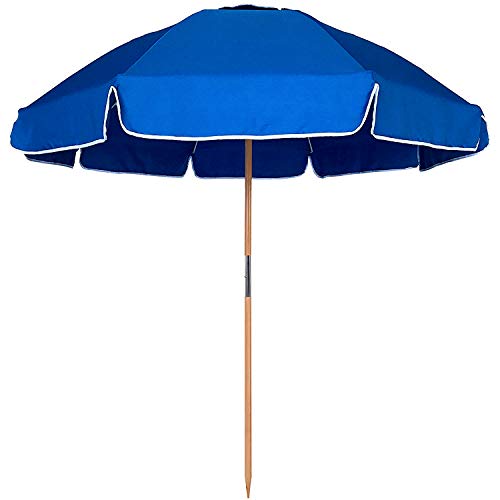


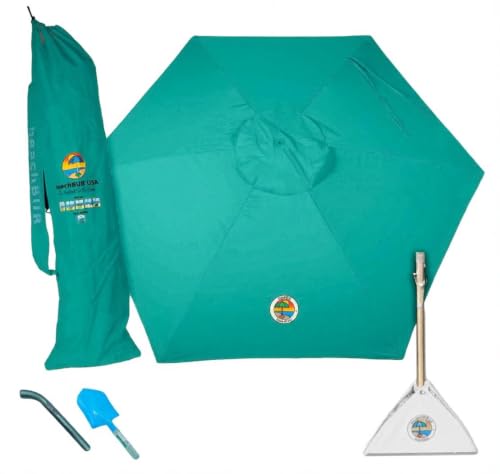


What’s in this listEvery beach umbrella we track on Amazon US, by canopy size. “—” means neither the maker nor the Amazon listing states it.
What a beach umbrella is and who it's for
A beach umbrella is the simplest shade on the sand. One pole, one round canopy, one spot. It shades a couple of chairs and a cooler, packs into a long bag, and goes up in a few minutes when it's done right.
That's also its limit. A single pole is a lever, and the canopy on top of it catches wind like a kite that's tied to the ground. Everything on this page comes back to that.
If you need shade for a whole family plus the kids' gear, look at a beach shade or a beach tent instead. If you want shade that moves with one person, a beach chair with umbrella is the smaller tool.
The table on this page lists every beach umbrella we track, sorted by canopy size. It shows the canopy size, the anchor, any wind claim, tilt, pole material, UPF and weight, each as the maker lists it, with the Amazon listing filling in where the maker is silent (marked as listing values). When neither states a value, you get a dash, not a guess. Weight is always the maker's own figure. Data for more brands is still coming in, so the list may look short or lopsided some weeks.
What to look at when you pick a beach umbrella
Here's what changes from one umbrella to the next, roughly in the order it matters on a windy Saturday.
Pick canopy size for noon, not for the box
My one opinion on this page: buy the canopy size that covers your people at midday, and don't pay for extra fabric to cover the photo on the box.
The reason is where the sun is. The CDC says UV is strongest from 10 a.m. to 4 p.m. daylight saving time. The EPA's rule of thumb is that if your shadow is shorter than you are, you're getting the high doses. That's exactly when an umbrella's shadow sits closest to straight underneath it, so the canopy size is close to the shaded size. Later in the day the shadow stretches and slides, and you start moving chairs. (Renee moves hers. I move mine, hers and the cooler.)
Bigger isn't free. More canopy is more sail. The ASTM F3681 safety standard for beach umbrellas sorts umbrellas by canopy area: per Bureau Veritas's summary, up to 45 square feet can be tested either by a mechanical pull or in a wind tunnel, and anything bigger has to go through the wind tunnel.
Watch how size is measured, too. Some makers measure along the curved fabric and some straight across, and the listing doesn't always say which. The 2025 revision of the standard now requires the canopy's actual square footage to be shown prominently on the packaging. When you can find that number, compare that.
Know what holds it in the sand
The table's anchor column says what the maker or the listing includes: a screw-in auger, a sand-bag base, a weighted base, a clamp, or nothing stated. That one field decides more than any other. The Consumer Product Safety Commission's current advice is to look for an anchor labeled "MEETS ASTM F3681 FOR WIND SPEEDS UP TO 30 MPH". Under that standard, a compliant umbrella and anchor have to hold at least 75 pounds of pull, or stay put in winds up to 30 mph.
The label also states the largest canopy that anchor is meant for. Anchors get their own page, with each type and how to set it: beach umbrella with sand anchor.
Read the wind claim as the maker's claim
Some listings state a wind figure, a vent or a standard number. The table's wind claim column carries what the maker says and nothing more.
Read it the way one U.S. umbrella maker explains its own ratings. Its wind-rating page says the ratings are a guide to relative strength only, tested in optimal positions, and that they don't apply to tilted umbrellas. It also says to close its umbrellas when sustained winds go over 25 mph. Gusts and surroundings change everything.
For a feel of what 25 mph looks like, the National Weather Service's Beaufort scale describes 25 to 31 mph as large branches moving, with "umbrellas used with difficulty". If the dune grass is lying flat and the flags are snapping, you already know the answer.
A vent lets the gusts out
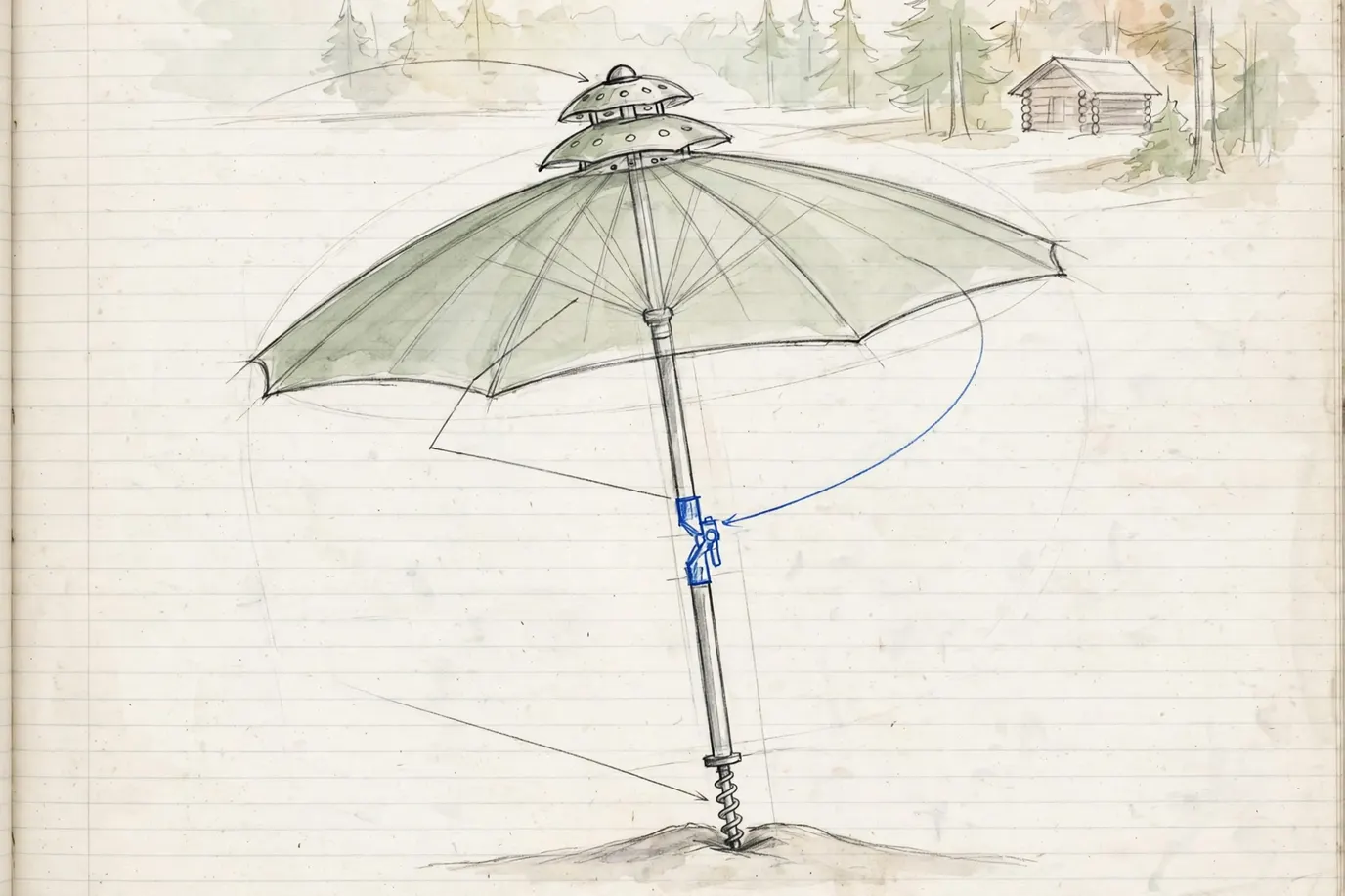
A vented canopy has openings near the top, usually covered by a smaller second canopy. The background of one U.S. patent on umbrella canopies explains why: without vents, a canopy is apt to be blown away, collapsed or inverted by gusts. The openings let wind pass through. The catch is that they let rain through too, which is why beach umbrellas typically put a smaller upper canopy over the vent holes.
A vent is a help, not an anchor. It takes some of the push out of a gust. It does nothing to keep the pole in the sand.
Tilt moves the shade and changes the load
Tilt is a joint in the pole that lets you angle the canopy toward the sun as it drops in the afternoon. It's the difference between moving the shade and moving everybody's chairs.
It also changes the physics. The Myrtle Beach Fire Department's advice is to open the umbrella once it's secure and tilt it into the wind, so gusts can't get underneath and lift it. That maker's note that wind ratings don't apply to tilted umbrellas is the other half of that. Tilt toward the wind, not away from it, and if the sun and the wind are on opposite sides, the wind wins.
Pole material and the two-piece pole
The table lists the pole as aluminum, steel, fiberglass, wood or other, as the maker or the listing states it. Most beach umbrellas split into two sections, a top that carries the canopy and a bottom that goes into the sand or the anchor. That's why the 2025 version of the standard requires poles with separate top and bottom sections to be tested assembled. The joint between them is part of what holds.
Whatever the material, sand and salt get into joints and hinges. One maker's care page says to wipe the sand off the frame and canopy and make sure every part is completely dry before it goes back in the carry bag. A tilt joint full of grit is a tilt joint you'll fight in July. (Real talk: I've fought it. The joint won.)
UPF is about the fabric, not the whole shade
UPF is the fabric's rating for how much UV gets through. The Skin Cancer Foundation explains that UPF 50 lets through 1/50th of the sun's rays and blocks 98%. It also says dark or bright colors and dense weaves protect better, and that wet or stretched fabric loses protection. Its example: a white T-shirt rated about UPF 7 dry drops to about 3 wet.
The rating only covers what passes through the canopy. It doesn't cover the sun coming in under the edge late in the day. The CDC's advice is to use sunscreen and protective clothing even in the shade.
Weight is the walk
The weight column is the umbrella as the maker lists it. A portable beach umbrella is something you carry from the truck, over the dune walkover and across soft sand, usually in the same trip as the chair, the cooler and a bag of towels.
So check whether the listed weight includes the anchor, and what the anchor needs at the beach. A sand-bag base is light in the bag and heavy once you fill it, which is the right way around. Renee does not count the umbrella as "basically weightless". She has a point. It's the long thing that hits every doorframe.
Types of beach umbrella and when to choose which
- Standard single canopy: the plainest shade, fine on calm beaches with a good anchor
- Vented, double-tier top: for beaches where the afternoon breeze always shows up
- Tilting: for long days, when you want to chase the afternoon sun without moving chairs
- Umbrella sold with an anchor: the system the maker designed to work together; see the anchor page
- Clamp-on chair umbrella: personal shade for one, covered on the beach chair with umbrella page
One that doesn't belong on the sand: a patio umbrella. In the Boston Globe's how-to piece, Falmouth, Massachusetts's acting beach superintendent warns that patio umbrellas are much wider, catch the wind easily and are "very, very dangerous" at the beach. Patio umbrellas want a heavy base on a hard deck. Sand is not a deck.
How to put up a beach umbrella
This is the order that works, put together from the Myrtle Beach Fire Department's advice and the Boston Globe's piece with lifeguards and engineers:
- Pick the spot. Soft sand lets you set the pole deeper; hard-packed sand is harder to secure. A dune or building between you and the wind helps.
- Find the wind. Tie a ribbon to the chair, or drop a handful of dry sand and watch where it goes.
- Set the anchor first. Install it exactly as the maker's instructions say. If it's a sand-bag base, fill it all the way.
- Seat the pole and lock it. Then open the canopy, not before.
- Tilt the top into the wind. Gusts push it down instead of lifting it.
- Check it again. The wind shifts during the day. Turn the umbrella when it does.
Without a proper anchor, both sources describe rocking the pole back and forth to work it deep into the sand, with depths from at least 16 inches to 2 or 2½ feet. The CPSC's 2024 safety alert replaced its older guidance and now points to labeled, compliant anchors instead. Use an anchor.
How to keep a beach umbrella from blowing away
The CPSC says beach umbrellas sent flying by wind gusts on crowded beaches have killed people and caused serious injuries, including impalements.
- Follow the maker's setup instructions, every time.
- Check that the anchor isn't damaged and works as the instructions describe.
- Close the canopy immediately if the umbrella becomes unstable in the wind.
- Don't leave an open umbrella unattended.
- Take it down before you leave the beach.
Lightning: an umbrella is not shelter
The National Weather Service says the only completely safe action in a thunderstorm is to get inside a safe building or vehicle. At the beach, go to your car, not the picnic shelters. Close the umbrella, leave it, and wait 30 minutes after the last rumble of thunder before going back.
Care that keeps it working next summer
Shake the canopy out before you close it. Wipe the sand off the pole, the ribs and the tilt joint. Let everything dry completely before it goes in the bag, per the maker's care page above, because a damp canopy rolled up in a hot trunk is how you open a bag in June that smells like low tide in September.
Store it standing up or lying flat where nothing heavy lands on the ribs. A bent rib doesn't close right, and a canopy that doesn't close right is hard to close fast in a gust.
Who should skip a beach umbrella
- Big groups. One canopy won't cover four chairs, two kids and a cooler. A beach shade or tent covers more ground.
- Beaches where you can't anchor. If the sand is shallow over rock or packed too hard for the anchor you own, a single pole is the wrong design.
- One person who moves around. A chair with its own canopy is less to carry and plant.
- Anyone who won't take it down in wind. That's not a gear problem, but it's the one that matters most.
Walt's view, offered from his porch in Pennsylvania, is that shade comes from trees and the beach is "a place with no trees on purpose". He has been to the shore twice. He sat under my umbrella both times.
Pick the size for noon, set the anchor like you mean it, and keep an eye on the flags. The umbrella can't do that part.
Brands in this list
Related
Questions people ask
How do you put up a beach umbrella?
Pick soft sand, and if you can, a spot with a dune or building between you and the wind. Set the anchor or base first, following the maker's instructions, then seat the pole and open the canopy. Tilt the top into the wind so gusts press it down instead of lifting it. Check the wind direction again during the day, because it shifts.
How do you anchor a beach umbrella?
Use the anchor the maker designed for it, installed the way the instructions say. The Consumer Product Safety Commission now tells buyers to look for an anchor labeled as meeting ASTM F3681 for wind speeds up to 30 mph, and notes the label states the largest canopy that anchor is meant to hold. The anchor has to be in the sand with the umbrella for that rating to count.
How do you keep a beach umbrella from blowing away?
Anchor it properly, tilt it into the wind, keep checking it, and close the canopy the moment it starts to rock or lift. The CPSC says airborne beach umbrellas have killed people and caused serious injuries. Never leave one open on an empty spot while you swim. When the wind is strong enough that umbrellas are hard to handle, take it down.
What size beach umbrella do I need?
Start from how many people and how much gear need shade at midday. Size is listed as a canopy measurement in feet, but makers don't always say whether it's measured along the curved fabric or straight across, so compare like with like. Bigger shades more, catches more wind and weighs more on the walk.
Is a UPF 50 beach umbrella enough sun protection?
It's a good fabric rating, not a full plan. The Skin Cancer Foundation says UPF 50 fabric lets through 1/50th of the sun's UV, blocking 98%. That covers what comes through the canopy, not what comes in around it. The CDC says to keep using sunscreen and protective clothing even in the shade.
Sources
- U.S. Consumer Product Safety Commission: Safety Alert, Airborne beach umbrellas can kill — accessed 2026-10-22
- Bureau Veritas CPS: ASTM has published a new safety standard for beach umbrellas and anchor devices (ASTM F3681-24) — accessed 2026-10-22
- Bureau Veritas CPS: ASTM publishes new standard for beach umbrellas and anchor devices (ASTM F3681-25) — accessed 2026-10-22
- WMBF News: Myrtle Beach Fire Department reminding beachgoers of beach umbrella safety — accessed 2026-10-22
- The Boston Globe: Here's how to plant a beach umbrella so it doesn't blow away — accessed 2026-10-22
- Frankford Umbrellas: Wind ratings — accessed 2026-10-22
- National Weather Service Miami: Beaufort wind force scale — accessed 2026-10-22
- U.S. Patent 9,986,799 B1: Wind-proof dual canopy system (background on vented umbrella canopies) — accessed 2026-10-22
- Skin Cancer Foundation: Sun-protective clothing (UPF explained) — accessed 2026-10-22
- CDC: Sun safety — accessed 2026-10-22
- U.S. EPA: UV Index scale — accessed 2026-10-22
- National Weather Service: Lightning safety outdoors — accessed 2026-10-22
- beachBUB: Frequently asked questions (umbrella care and storage) — accessed 2026-10-22