Camp Gear · Gear type
Dome Tent
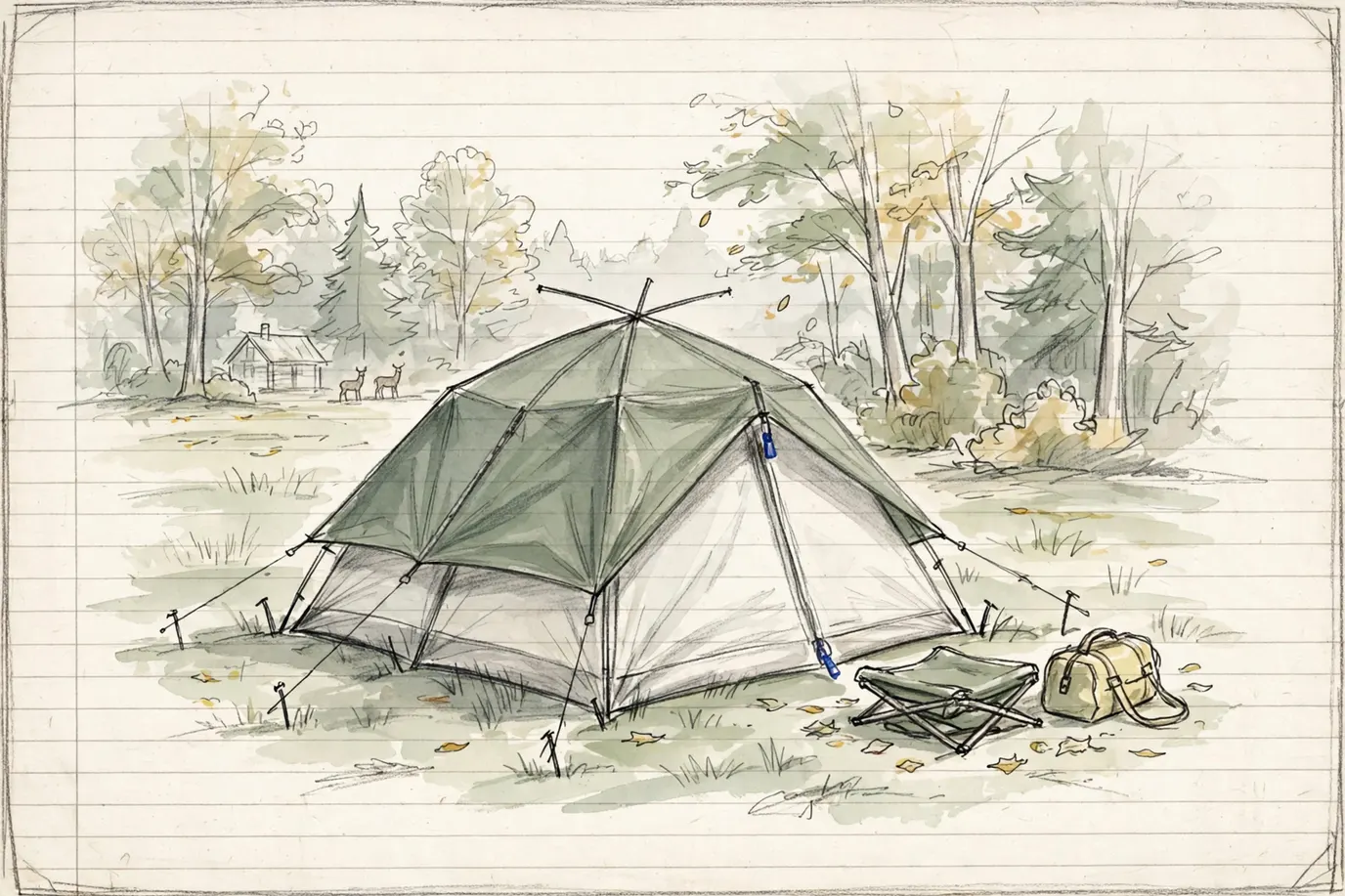
A dome tent is a tent held up by flexible poles that cross over the top and bend down to the corners, so the frame stands on its own before you drive a stake. That makes it light, quick to pitch and steady in wind for its weight. The trade is room: the walls lean in from the ground up, so you get full headroom only near the middle. Pick one by floor size, center height, doors and the season rating, in that order. (I've stood up straight in a dome tent exactly once. It was the middle, and I didn't move.)
We earn a commission if you buy through our links, at no cost to you. Disclosure
| Model | Center height | Sleeps | Amazon |
|---|---|---|---|
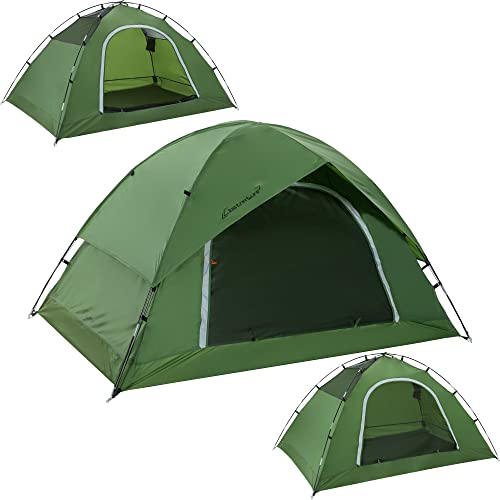
Clostnature 2 Person Waterproof Camping TentTent More specs
| 46 inlisting | 2 personslisting | Check price |
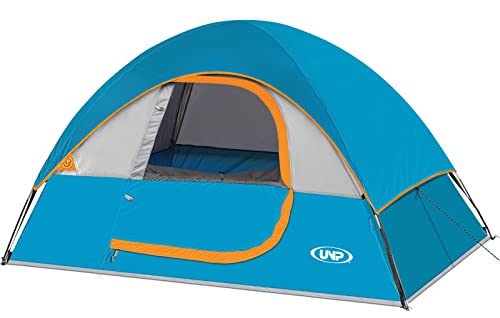
unp 2 Person Camping Tent Waterproof Family Dome Tent OutdoorTent More specs
| — | 2 personslisting | Check price |
unp Dome TentTent More specs
| — | 2 personslisting | Check price |
Ayamaya 2-4 Person Dome TentTent More specs
| 53.1 inlisting | 3 personslisting | Check price |
Campros CP CP 3 Person Dome TentTent More specs
| 47 inlisting | 3 personslisting | Check price |
Core 3 Person Dome TentTent More specs
| 42 inlisting | 3 personslisting | Check price |
Ayamaya 4-Person Dome TentTent More specs
| 53.1 inlisting | 4 personslisting | Check price |
Campros CP CP Dome Tent 2/4/6 PersonTent More specs
| 50 inlisting | 4 personslisting | Check price |
Clostnature 4 Person Waterproof Camping TentTent More specs
| 55 inlisting | 4 personslisting | Check price |
Coleman Stranger Things 4-Person Dome TentTent More specs
| — | 4 personslisting | Check price |
Core 4 Person Dome TentTent More specs
| 54 inlisting | 4 personslisting | Check price |
Onetigris JOVIAN 4 Person Camping Tent 3 Season Family Shelter Easy SeTent More specs
| — | 4 personslisting | Check price |
Onetigris Tower M 4 Season Tent with Stove JackTent More specs
| 57.1 inlisting | 4 personslisting | Check price |
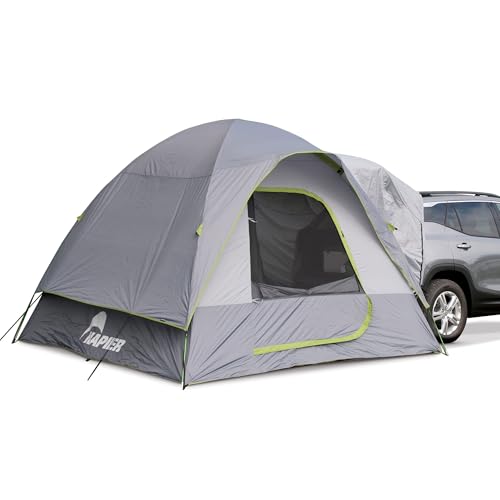
Napier Sportz SUV TentTent More specs
| — | 5 personslisting | Check price |
Napier Backroadz SUV TentTent More specs
| — | 5 personslisting | Check price |
Campros CP CP Dome Tent 2/4/6 PersonTent More specs
| 72 inlisting | 6 personslisting | Check price |
Core Blackout 6 Person Dome TentTent More specs
| 72 inlisting | 6 personslisting | Check price |
Core 6 Person Lighted Dome TentTent More specs
| — | 6 personslisting | Check price |
Napier Sportz SUV Tent with Screen RoomTent More specs
| — | 6 personslisting | Check price |
unp SUV Dome Tent for Camping Outdoor 6 Person Car Camping TentTent More specs
| — | 6 personslisting | Check price |
Core 9 Person Dome TentTent More specs
| 72 inlisting | 9 personslisting | Check price |
Core 9 Person Dark Room TentTent More specs
| 72 inlisting | 9 personslisting | Check price |
Coleman SundomeTent More specs
| — | — | Check price |
Coleman Sundome 2/3/4/6 PersonTent More specs
| — | — | Check price |
Coleman Sundome 2/3/4/6 PersonTent More specs
| — | — | Check price |
Pomoly Dome Tent Camping Hot TentTent More specs
| — | — | Check price |
Pomoly Dome Tent Freestanding Camping Hot TentTent More specs
| — | — | Check price |
Pomoly Dome X6 TC Dome Tent Tetron Cotton Freestanding Camping Hot Tent More specs
| — | — | Check price |
Pomoly Barracuda 2 Camping Dome Tent Hot Tent and Dagger Ti CampingTent More specs
| — | — | Check price |




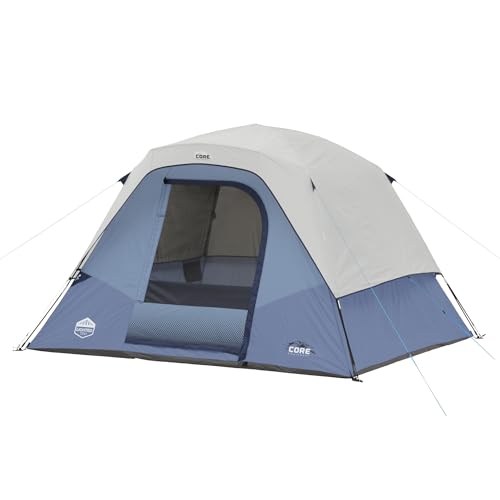


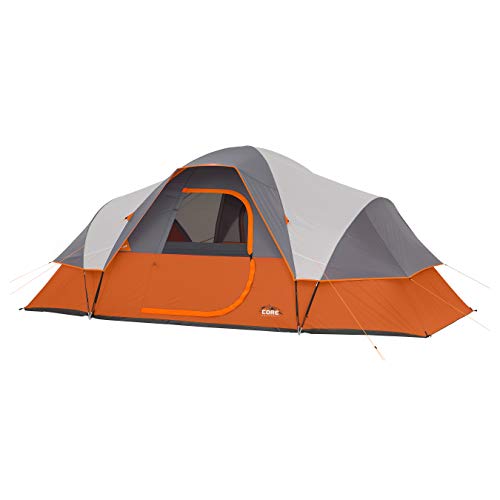


What’s in this listDome tents, as described by the maker or the Amazon listing. “—” means neither the maker nor the Amazon listing states it.
What a dome tent is and why it stands on its own
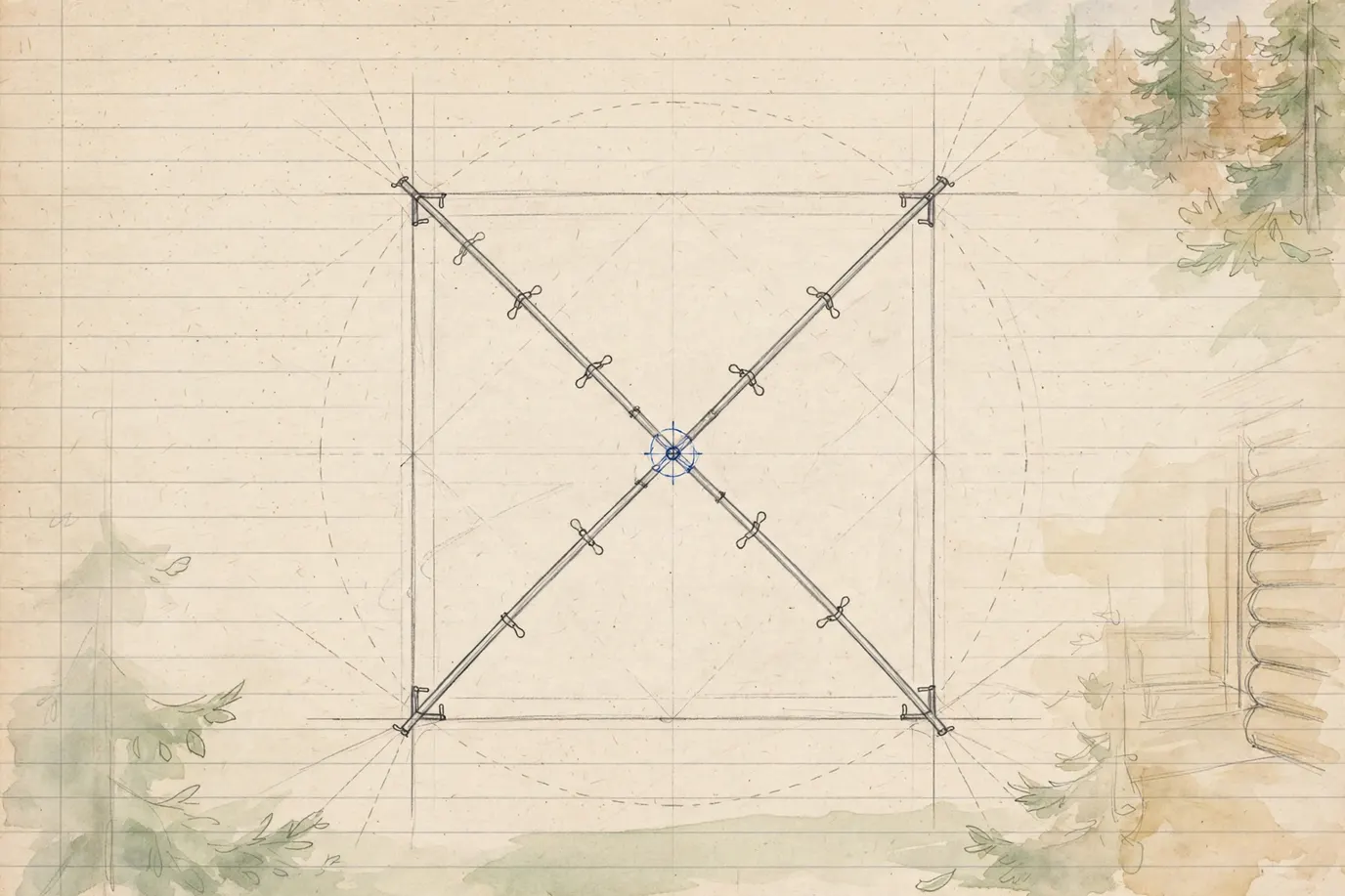
Here's the thing. A dome tent is a frame first and a tent second. Two flexible poles (sometimes three or more) run corner to corner, cross over the roof and bend back down to the floor. Bent poles want to straighten. That spring pushes the corners out and the roof up, and the fabric hangs off the result.
That's why most domes are freestanding. MSR's backpacking tent guide defines freestanding as a tent the poles alone hold up. You can set one on a rock slab, a gravel pad or a wooden tent platform where stakes won't go. You can also pick it up by the frame and carry it three feet to the left, which is how most of my arguments about tent placement end.
What the poles give you, the walls take back. A dome's sides lean in from the floor up. Kodiak Canvas, which makes wall tents, puts it plainly: a 10-foot dome has far less usable interior than a 10-foot wall tent. The flip side, in the same article, is that a dome is lighter, faster to pitch and easier to carry.
The rest of the basics (how tents are rated, what to pack, how big to go) sit on the camping tent page. This page is about the shape.
What the table shows for each dome tent
The table under this page lists tents their makers describe as dome tents. For each one it shows what the maker or the Amazon listing states: how many it sleeps, floor length, width and area, center height, the setup type, the season rating, the rainfly's waterproof rating, rainfly coverage, rooms, doors, fabric and pole material. Some makers also give a claimed setup time. The season rating and the waterproof rating appear only when the maker states them. A dash means neither states it, not a guess; listing values are marked.
The list changes as makers add and drop models. Read it with the specs below in mind and you'll know which numbers matter for you.
What to look at when you pick a dome tent
Rule of thumb: buy the floor first, the height second and everything else after.
Read floor length and width, not just the people count
"Sleeps" is the number the maker rates the tent for. MSR's guide lists the measurements that actually decide living space: volume, floor area, vestibule area and peak height. Floor area is the one I trust most, because it's the one your sleeping pads have to fit on.
On a dome, look at length and width separately. The walls lean in, so the outside edge of the floor is the part with the least air above it. A tall sleeper along the long side ends up with his feet in the fabric. A floor that's a little longer than you are is worth more than one more rated person. Bring a tape measure to the kitchen and lay out your actual pads. Measure twice, buy once.
Center height is the peak, and only the peak
Center height is measured at the highest point, where the poles cross. On a dome that's a small circle. Step a foot or two toward a wall and the roof comes down to meet you, the way a garage ceiling does at the eaves.
MSR's guide says steep sidewalls give more usable space than sloped ones. Some domes add a short crossing pole over the top or steepen the pole curve to push the walls out. If you want to stand up to dress, that's the spec to read, and a dome may simply be the wrong shape. A cabin tent has the near-vertical walls for that.
Count the poles and the crossings
Every place two poles cross is a brace. Hilleberg says its dome construction with multiple pole crossing points gives it outstanding snow-load handling. MSR says its winter tents use stronger poles, and some add an extra support pole to stand up to snow and wind.
A basic two-pole dome has one crossing at the peak. That's plenty for a summer campground. For late-season nights up high, more crossings is a reasonable thing to pay for in weight.
Fiberglass or aluminum poles
The table's Poles column shows the material. Kodiak Canvas describes dome frames as flexible fiberglass or aluminum poles, and that's what you'll mostly see. Replacement poles are usually made for one model, so a broken section isn't something you pick up at the hardware store. Kelty's repair guide has the field fix: a repair sleeve or a tent stake splinted over the break with tape, enough to finish the trip.
Whatever the material, MSR's care guide names the most common cause of breakage: bending a pole before every section is fully seated. A pole joint half in is a pole joint half broken.
Doors and vestibules decide how the tent lives
Doors is a column in the table. MSR's guide suggests counting doors, storage and zipper clearance once the tent is pitched. Two doors on a dome usually means one on each long side, so two people don't climb over each other at 3 a.m. A vestibule is the covered porch the rainfly makes outside a door. It's where wet boots go, and NEMO's condensation guide says wet gear should stay out of the sleeping area anyway.
Rainfly coverage and the waterproof rating
Most domes are double-wall: a mesh inner body with a waterproof fly over the frame. MSR calls that the most common three-season design. The table shows whether the fly is full (down to the ground) or partial (a cap over the roof), and the fly's waterproof rating in millimeters when the maker states one.
A partial fly leaves the lower walls to fend for themselves. For more on what the millimeter number means, see the waterproof tent page.
Season rating: 3-season or 4-season
The Seasons column shows the maker's rating. MSR describes three-season tents as built with mesh panels for ventilation. Its four-season tents use tougher fabric, stronger poles, less mesh and reinforced stress points, and they usually weigh more.
The table only marks a tent 4-season when the maker says so for that model. Plenty of domes sit in the middle. Read the maker's description of where the tent is meant to go, not just the label.
Fabric and weight
Fabric shows as polyester or nylon on most domes. MSR's guide explains denier as fiber thickness: higher usually means tougher and heavier. When you compare weights, MSR separates minimum weight (fly, body and poles) from packaged weight (plus stakes, stuff sack and paperwork). Compare the same kind of number across tents. A packaged weight next to a minimum weight is two different scales, and the lighter-looking one usually isn't.
Which kind of dome tent fits which camp
Backpacking domes
Small, light, often with clips instead of sleeves and a pole hub that sets the shape. Floor room is tight on purpose. Good for one or two people and a short walk in. Not good for a week of rain and a deck of cards.
Family and car camping domes
Bigger floors, more poles, often a sewn-on front porch or screen room. Here's where the sloped walls cost you most, because a big dome still only has one tall spot. Jess's take, from the time she tried to change into dry socks in one: "A dome is tall in the middle and polite everywhere else." If standing room matters, compare center height across the 4-person and bigger sizes before you compare anything else.
Four-season and mountain domes
More crossings, less mesh, stronger poles, a fly that comes to the ground. Heavier and warmer, and harder to ventilate, per MSR. Worth it when snow load is a real question. For a heated base camp, a domed shell isn't the shape for a stove; the hot tent page covers that.
How to pitch a dome tent, especially in wind
Pitch a new dome once in the yard before the trip. The first time should be in daylight with a cup of coffee, not in the dark with the rain starting.
- Clear a flat spot. Lay a footprint first if you use one; Kelty says it should be smaller than the floor, at least 2 inches short on each side, so it doesn't catch rain.
- Assemble every pole fully before you bend it.
- Spread the floor with the door where you want it.
- Seat the pole ends at the corners so the poles cross over the top, then clip or sleeve the body to them.
- Throw the fly over, match its door to the tent's door and buckle it at the corners.
- Stake the corners, then the guy lines, angled away from the tent.
In wind, MSR's guide changes the order. Point the narrow end into the wind so the tent doesn't act like a sail. Put the poles together before you unpack the tent. Stake the windward side first, let the wind lift the body away from you, then add the poles from the staked side and toss your pack inside as an anchor. Hold the fly from the windward side and let the wind carry it over. Then guy out and cinch down. NEMO's guide adds that in calm weather you turn the big vents into whatever breeze there is.
Freestanding doesn't mean stake-free. A dome with nobody in it is a beach ball with a zipper.
Thunderstorms: the National Weather Service says a tent offers no protection from lightning. If you hear thunder, get to your vehicle and wait 30 minutes after the last rumble before going back to the campsite.
Taking it down and keeping it straight
MSR's care guide has the habits that keep a dome frame alive:
- Breaking down the frame: start at the center of each pole and work outward, so the shock cord tension stays even
- Pole ends: don't let sections snap together on their own; the ends dent and crack
- Dusty or salty trips: rinse the poles, joints especially, and dry them before storage
- Storage: dry, loose, out of the sun; UV breaks down nylon, and polyester resists it only slightly better
- After every trip: hang the tent for about a day, even if it never rained
Shock cord wears out too. MSR says replacing it is a fairly easy job. I'd call it a rainy-evening job with a pair of pliers and some patience.
Who should skip a dome tent
If you want to stand up and walk around, skip it. Same if you're running a cot along each wall, a wood stove, or a camp for four hunters and their coats. Those people want straight walls. If you need a shelter up in under a minute and don't care about weight, an instant tent fits better. Everybody else, including most people who sleep in a tent a few weekends a year, is the dome's customer. That's why it's the shape you see most.
Square the floor, seat the poles, stake the windward side. The rest is just deciding who gets the middle.
Brands in this list
Related
Questions people ask
What is a dome tent?
A dome tent is a shelter whose shape comes from two or more flexible poles that cross over the roof and seat at the corners of the floor. The bent poles hold the body up without stakes, which is what makes most domes freestanding. A separate rainfly usually goes over the frame. Walls slope inward from the floor, so headroom is highest at the center.
Is a dome tent freestanding?
Most are. MSR's backpacking tent guide defines a freestanding tent as one the poles alone hold up, and still recommends staking it and using the guy lines. Hilleberg describes one of its multi-pole domes as fully free standing. Freestanding means you can pick it up and move it before staking. It does not mean the wind can't.
Are dome tents good in wind?
For their weight, yes, if they're staked and guyed out. MSR's wind setup guide says to point the narrow end of the tent into the wind, stake the windward side first and cinch the guy lines down. More pole crossings add strength; Hilleberg credits them for snow-load handling. A canvas wall tent maker argues a staked steel-frame wall tent takes harder weather.
Dome tent or cabin tent: which has more room?
On the same floor, the cabin tent. MSR's guide notes steep sidewalls give more usable space than sloped ones, and Kodiak Canvas says a 10-foot dome has far less usable interior than a 10-foot wall tent. The dome gives that room back as less weight, a faster pitch and an easier carry.
How do you set up a dome tent?
Clear a flat spot, lay out the floor with the door where you want it, and assemble the poles fully before you bend them. Seat the pole ends at the corners so the poles cross over the top, clip or sleeve the body to them, then add the rainfly, stakes and guy lines. In wind, stake the windward side first.
Sources
- MSR (Cascade Designs): How to choose the best backpacking tent — accessed 2026-10-22
- MSR (Cascade Designs): Setting up your tent in the wind — accessed 2026-10-22
- MSR (Cascade Designs): Tent care tips, how to make your tent last longer — accessed 2026-10-22
- MSR (Cascade Designs): Best 4-season and mountaineering tents — accessed 2026-10-22
- MSR (Cascade Designs): Why and how, using a tent footprint — accessed 2026-10-22
- Hilleberg: Staika 4-season freestanding dome tent — accessed 2026-10-22
- Kodiak Canvas: Canvas wall tents, what they are and why campers love them — accessed 2026-10-22
- NEMO Equipment: Minimizing and preventing condensation in your tent — accessed 2026-10-22
- Kelty: How do I repair a broken tent pole at home? — accessed 2026-10-22
- Kelty: Do you have a footprint that will fit my tent? — accessed 2026-10-22
- National Weather Service: Lightning safety outdoors — accessed 2026-10-22