Camp Gear · Gear type
Waterproof Tent
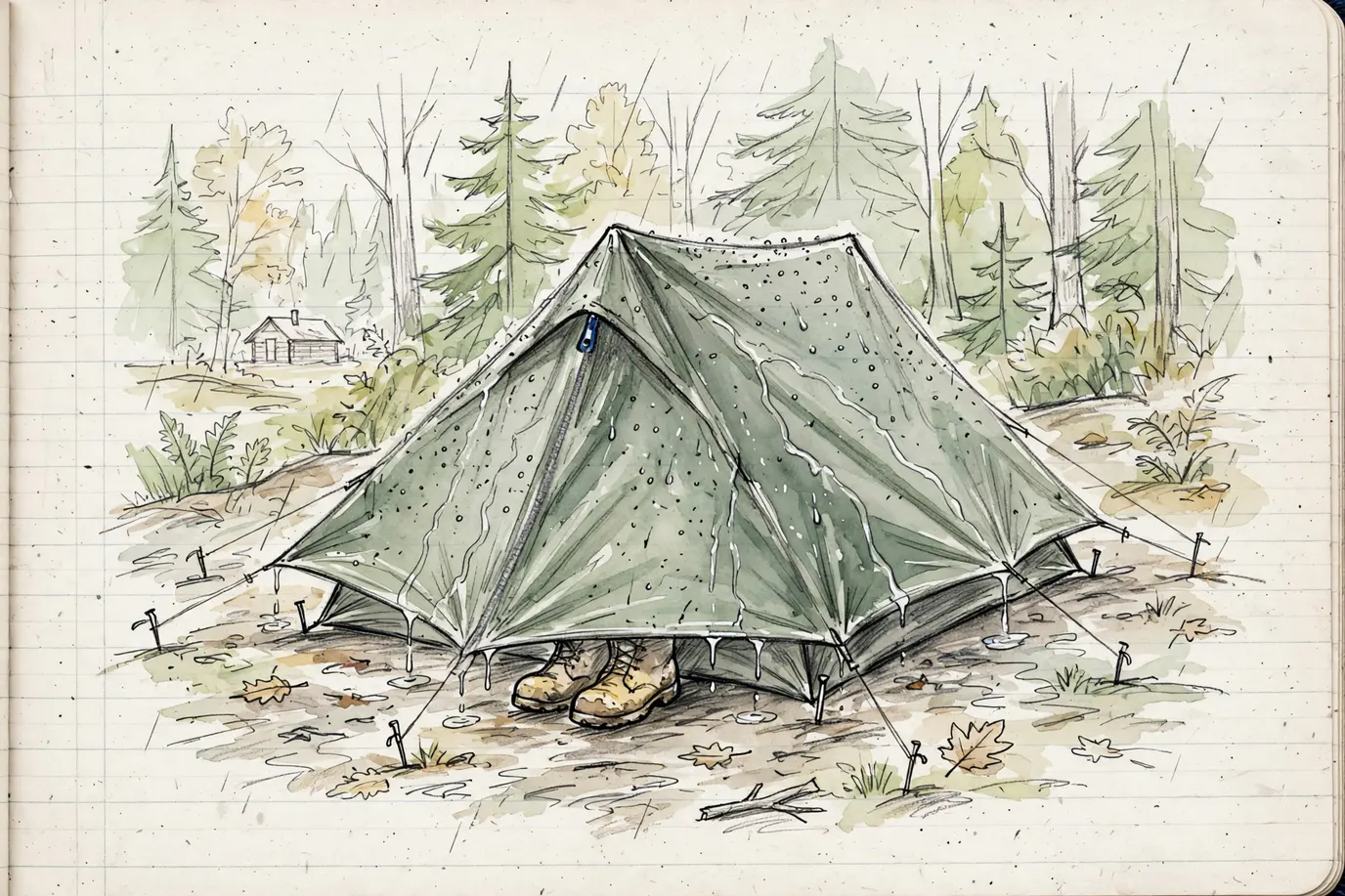
A waterproof tent is one whose maker states how much water its fabric holds back, in millimeters. On this page that means a rainfly rated at 1,500 mm or more, sorted highest first. The number is a fair start, but it measures fabric, not a finished tent. Seams, the floor, how far the fly comes down and how you pitch it decide whether you wake up dry. (The cabin roof at Hemlock Run has leaked over the same bunk since I can remember. Nobody fixes it. We just assign that bunk to whoever's late.)
We earn a commission if you buy through our links, at no cost to you. Disclosure
| Model | Weight | Center height | Sleeps | Floor area | Amazon |
|---|---|---|---|---|---|
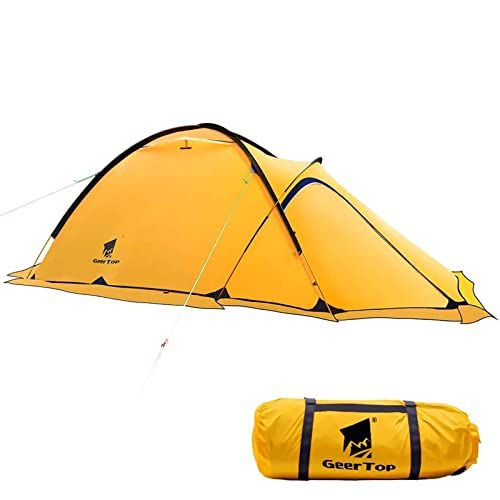
Geertop NavigatorTent More specs
| — | 39.4 inmaker | 2 personslisting | — | Check price |
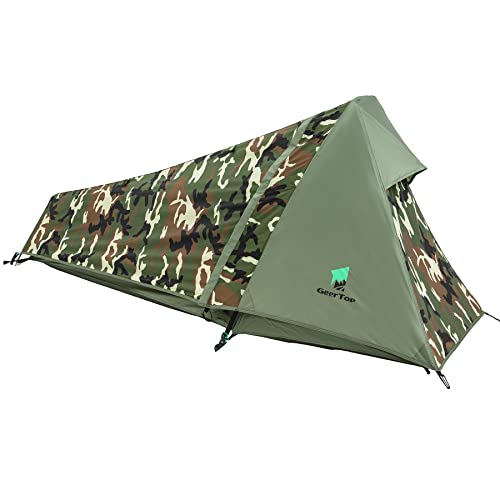
Geertop BivyIITent More specs
| 2.9 lbmaker | 24 inmaker | 1 personslisting | — | Check price |
Geertop BivyIITent More specs
| 2.9 lbmaker | 24 inmaker | 1 personslisting | — | Check price |
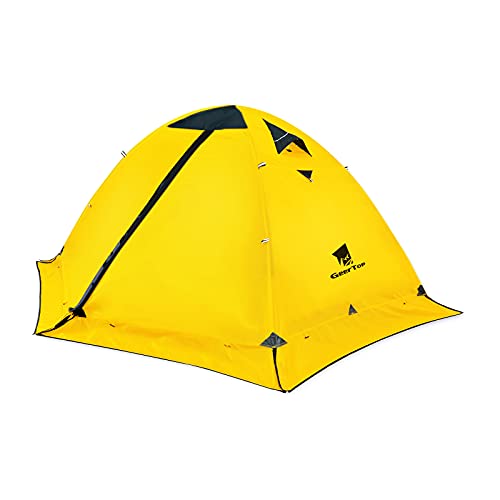
Geertop Toproad2Tent More specs
| 6.9 lbmaker | — | 2 personslisting | — | Check price |
Geertop Toproad4Tent More specs
| 9.1 lbmaker | — | 4 personslisting | — | Check price |
Geertop Toproad2Tent More specs
| 6.9 lbmaker | — | 2 personslisting | — | Check price |
Geertop Toproad2Tent More specs
| 6.9 lbmaker | — | 2 personslisting | — | Check price |
Geertop BlazerTent More specs
| 2.7 lbmaker | 36 inlisting | 1 personslisting | — | Check price |
Geertop BlazerTent More specs
| 2.7 lbmaker | 36 inmaker | 1 personslisting | — | Check price |
Geertop BlazerTent More specs
| 2.7 lbmaker | 36 inlisting | 1 personslisting | — | Check price |
Ayamaya San Gabriel 4STent More specs
| 5.7 lbmaker | 49 inmaker | 2 personslisting | — | Check price |
Ayamaya San Gabriel 4STent More specs
| 5.7 lbmaker | 49 inmaker | 2 personslisting | — | Check price |
Gazelle Tents T4 Hub TentTent More specs
| 30 lbmaker | 78 inlisting | 4 personslisting | 61 sq ftmaker | Check price |
Gazelle Tents T3X Hub TentTent More specs
| 28 lbmaker | 82 inlisting | 3 personslisting | 43 sq ftmaker | Check price |
Gazelle Tents T3X Hub Tent Overland EditionTent More specs
| 30 lbmaker | 82 inlisting | 3 personslisting | — | Check price |
Gazelle Tents T4 Tandem Hub TentTent More specs
| 56 lbmaker | 78 inlisting | 8 personslisting | 110 sq ftmaker | Check price |
Big Agnes Copper Spur UL1Tent More specs
| — | — | 1 personslisting | — | Check price |
Big Agnes Copper Spur UL4Tent More specs
| — | — | 4 personslisting | — | Check price |
Big Agnes Copper Spur UL5Tent More specs
| — | — | 5 personslisting | — | Check price |
Big Agnes Copper Spur UL2Tent More specs
| — | — | 2 personslisting | — | Check price |
Big Agnes Copper Spur UL3Tent More specs
| — | — | 3 personslisting | — | Check price |
Big Agnes Fly Creek UL2Tent More specs
| — | — | 2 personslisting | — | Check price |
Big Agnes Bunk House 4Tent More specs
| — | — | 4 personslisting | — | Check price |
Big Agnes Blacktail 2Tent More specs
| — | — | 2 personslisting | — | Check price |
Big Agnes Big House 4Tent More specs
| — | 70 inlisting | 4 personslisting | — | Check price |
Big Agnes Tiger Wall UL2Tent More specs
| — | — | 2 personslisting | — | Check price |
Big Agnes Bunk House 6Tent More specs
| — | 78 inlisting | 6 personslisting | — | Check price |




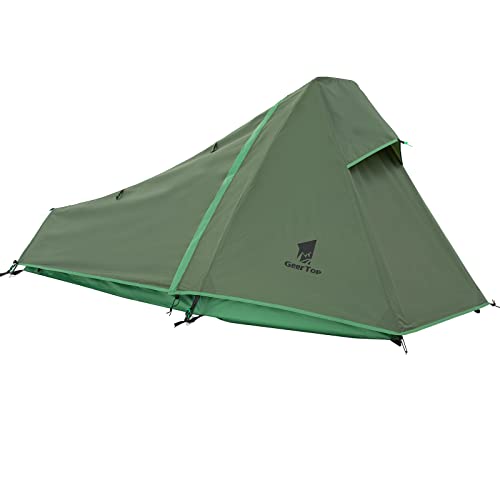


What’s in this listTents whose rainfly carries a stated waterproof rating of 1,500 mm or more, highest rating first. “—” means neither the maker nor the Amazon listing states it.
What makes a waterproof tent waterproof
Here's the thing. Plenty of tents get called waterproof in a catalog. What earns the word waterproof is a stated number, and on this page that number has to come from the maker for that model. If a maker calls a tent waterproof but doesn't say how much, it doesn't make this table. A sticker isn't a spec.
The number lives in the fabric. A tent is fabric plus rows of needle holes, a zipper or two and a floor you lie on, so the rating is where you start reading, not where you stop. The general tent basics (sizes, shapes, what to pack) are on the camping tent page. This page sticks to keeping the water out.
What the table shows for each tent
The table lists tents whose maker states a rainfly waterproof rating of 1,500 mm or more, highest first. Next to the rating it shows rainfly coverage (full or partial), the fabric, the season rating, how many the tent sleeps, its floor and center height, doors, setup type and pole material. The rating always comes from the maker; the other columns come from the maker or, where it's silent, the Amazon listing (marked as listing values). A dash means neither states it.
Floor ratings aren't in the table, because few makers state them the same way. When it matters to you, look it up on the maker's page.
What to look at when you pick a waterproof tent
The rating in mm is a column of water
Hydrostatic head is the formal name. Kelty explains it simply: a 1,200 mm fabric holds back a 1,200 mm column of water before it starts to leak. MSR describes the lab test as raising the water pressure behind a fabric sample until three drops come through. By MSR's conversion, 1,500 mm works out to about 2.18 psi.
Two things the number isn't. It isn't fabric thickness and it isn't coating thickness, per MSR. And it isn't a rain test of the whole tent, so a great fly over a bad seam is still a bad night.
Why 1,500 mm is the line here
White Duck Outdoors recommends 1,500 mm or higher for medium to heavy rainfall, and that's the floor this page uses. For a sense of where that sits, MSR says tents generally range from about 1,000 to 10,000 mm. Kelty says its gear usually falls between 800 and 5,000 mm, and that most rainstorms should be withstood by its tents as sold.
So 1,500 isn't magic. It's the point where a maker has put a number on paper that matches a real rainstorm, which is more than the word "waterproof" does on its own.
A bigger number isn't automatically a better tent
MSR is blunt about the trade. More coating makes fabric heavier and stiffer, and past a point more likely to tear. A fly has to flex in gusts and under guy-line tension, so a light fly shouldn't be stiff as a tarp. MSR also points out that an umbrella it tested came in at 420 mm and still keeps people dry, because nothing presses on it.
Rule of thumb: compare ratings within the same kind of tent. A heavy family tent and a light backpacking tent are built to different jobs.
The floor takes more pressure than the fly
Rain lands on a fly. A floor gets knelt on, slept on and dragged across wet ground. MSR says tent floors usually carry thicker coatings than flies, and gives one four-season design as an example: 1,200 mm on the fly and 3,000 mm on the floor, because the floor takes abrasion from being slept on in snow.
A floor that turns up at the edges, like a shallow tub, keeps the seams off the ground where water collects. Look for that in the maker's photos. Seams at ground level are like a basement window: fine until the yard floods.
Seams are where water actually gets in
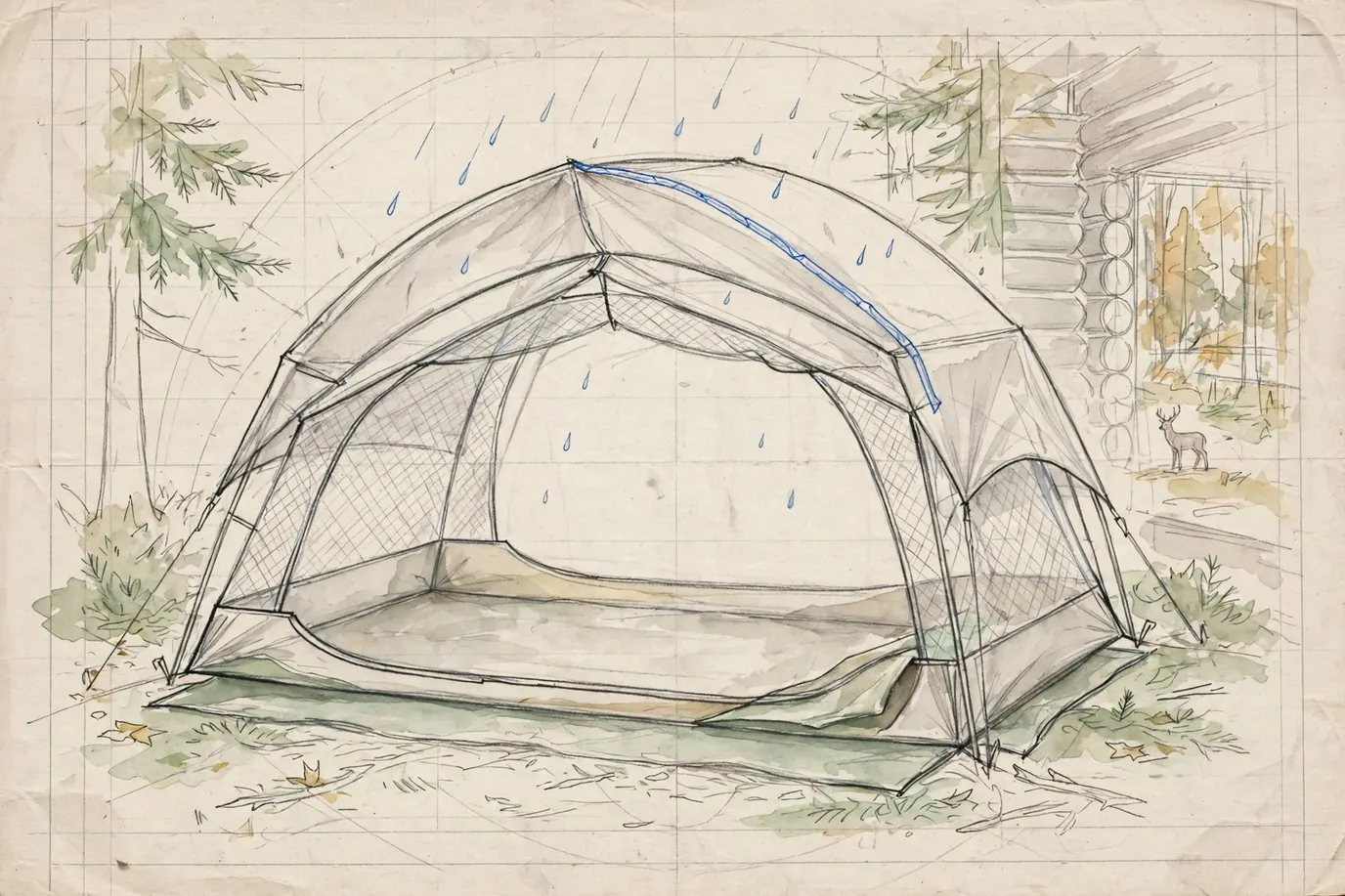
Every stitch is a hole. MSR's seam guide covers the two ways makers close them:
- Seam taping: a polyurethane film laid under the seam at the factory; MSR says it holds up well on fabric of about 68 denier and above
- Seam sealing: a liquid painted over the stitching, on the inside or shiny side of the fabric, which you can do at home
- Lighter fabrics: tape ages faster and can flake off, per MSR
- Worst habit: storing the tent damp, which MSR calls the worst culprit for tape failure
Check the maker's description for taped or sealed seams on both the fly and the floor. If it doesn't say, ask before you need to know.
Full rainfly or partial rainfly
The table's Rainfly column tells you how far down the fly reaches. A full fly comes to the ground and covers the doors and walls. A partial fly is a cap over the roof that leaves the lower walls, often mesh, to the wind. White Duck's advice is that a fly should fit the tent's shape and extend over the edges.
For a dry tent in sideways rain, a full fly is the spec I'd read first, before the millimeter number. A tall rating on a short fly is a good umbrella over bare ankles.
Fabric: polyester, nylon or canvas
The Fabric column shows the base cloth. MSR's guide says waterproof coatings are polyurethane or silicone, and that higher-denier fabric tends to hold a coating longer. Sunlight is the other enemy: MSR's care guide says UV makes nylon brittle and weak, with polyester holding up a little better. Neither should live pitched in the yard all summer.
Canvas is its own animal. White Duck describes it as naturally water-resistant and breathable, usually treated with an extra waterproof coating. A canvas tent may not list a millimeter rating at all, which is why most of them sit on the canvas tent page instead of this one.
Season rating and how much sky the tent shows
A 3-season tent leans on mesh for airflow, and a 4-season tent trades mesh for fabric. Both can be waterproof. The difference is how they handle wind-driven rain and snow, not whether the fly leaks. If you camp in November in the mountains, the winter camping tent page is the next stop.
Dry inside is not the same as waterproof
This is the part that sends perfectly good tents back to the store. Water on the inside of the fly in the morning is usually your own breath.
NEMO says a sleeper gives off about 1 to 2 pints of moisture a night through breath and skin. Cool, humid, still nights are the worst, because nothing moves the damp air out. That vapor hits the cold fly and turns back to water. A tent with three people in it makes its own weather.
Danny's take: "A waterproof tent is a cooler you sleep in. What you bring in stays in." He meant it as a joke. It's also the physics.
What helps, per NEMO and MSR:
- Vents open: at least two, MSR says, so a breeze can cross the tent
- High and low airflow: cool air in low, warm damp air out the roof vents
- Wet gear out: boots and rain shells in the vestibule, not by your sleeping bag
- Taut fly: staked and guyed so it doesn't sag onto the inner tent
- Site: away from lakes and streams, which add humidity
One myth NEMO puts to bed: touching the tent wall in the rain won't pull water through the fabric. Your elbow is innocent. The dampness was already there.
Best tent for rain is the one pitched for rain
Pick ground that drains
The National Park Service at Joshua Tree puts it plainly: if there's potential for rain, don't camp in a wash or low terrain, in the backcountry or in campgrounds. A dip that looks sheltered at 4 p.m. is a creek bed by midnight. No millimeter rating floats.
MSR adds to pitch on dry ground, out of the way of storm drainage. A slight rise beats a flat hollow every time.
Keep the ground sheet under the tent
A footprint protects the floor. But MSR warns that one sticking out past the edges becomes a funnel, catching rain off the fly and running it right under you. Tuck the edges in so the tent floor overhangs the sheet all the way around.
Pitch it tight and pitch it once
A loose fly flaps, sags and touches the inner tent, and where it touches, it wicks. Stake the corners, tension the fly evenly and guy out every loop the maker gave you. Kelty recommends testing a tent before you take it into the field. Set it up in the yard, run the hose over it if you like, and find the drip while the coffee's still hot.
When you hear thunder, leave the tent. The National Weather Service says a tent offers no protection from lightning. Go to your vehicle and wait 30 minutes after the last thunder before returning.
Buy waterproof numbers with room to spare
My one opinion here: don't buy the tent whose rating just clears the bar. Buy one with numbers to spare.
The reason is in the sources above. The rating measures fabric under steady pressure in a lab. A real storm adds seams, a floor pressed into wet ground, wind pushing the fly and a coating that ages every season you store it. A tent with numbers to spare at the start has room to lose some of them. The one that barely made the cut doesn't.
Waterproofing wears out, so store it like you mean it
Coatings break down. MSR calls the process hydrolysis: moisture, heat and humidity slowly attack the waterproof coating and seam tape, in use and in storage, and it happens faster on lightweight tents. The signs are a fly that feels sticky or gummy when you unroll it and seam tape that flakes.
Kelty says that breakdown, which it calls delamination, generally starts around 8 to 10 years in, depending on care and storage, and that it's normal aging, not a warranty claim. Its fix is to strip the old coating, recoat the fly, reseal the seams, and plan on doing it again every 8 to 12 years. The step-by-step is in our guide on how to waterproof a tent.
To push that day back, MSR's care advice is simple:
- Dry it: a full day on the clothesline after each trip, even a dry one, since dew and breath leave the fabric damp
- Store it loose: a breathable mesh sack, not the tight stuff sack
- Keep it cool: a climate-controlled space, out of direct sun
- Never damp: not even "just until the weekend"
I keep a pencil note on every tent bag with the year it came home. It's the cheapest maintenance tool in the cabin.
Who should skip a waterproof tent
If you camp a few dry summer weekends at a campground with a bathhouse and a car twenty feet away, any decent tent with a full fly will do. You don't need to shop by millimeters. If you run a stove and a canvas wall tent for deer season, you're shopping a different spec sheet altogether. And if the trip is mostly snow, the fly rating matters less than the poles and the guy points.
Everybody else, read the number, then read the seams, then look at how far the fly comes down. Then pitch it on the high spot. The late guy still gets the bunk under the leak.
Brands in this list
Related
Questions people ask
What does a tent's waterproof rating in mm mean?
It's a hydrostatic head rating: the height of a water column the fabric holds back before it leaks. MSR describes the test as raising water pressure behind a sample until three drops come through. Kelty's example: a 1,200 mm fabric takes a 1,200 mm column of water before leaking. It measures pressure, not how thick the fabric or coating is.
What waterproof rating does a tent need for heavy rain?
White Duck Outdoors recommends 1,500 mm or higher for medium to heavy rainfall, which is the line this page uses. MSR says tents generally run from about 1,000 to 10,000 mm and that higher isn't automatically better, since more coating adds weight and stiffness. Fully covered seams, a full fly and a good pitch matter as much as the number.
Why is my waterproof tent wet inside?
Usually condensation, not a leak. NEMO says a sleeper breathes out about 1 to 2 pints of moisture a night, and cool, humid, still nights are the worst. That vapor settles on the cold fly and drips. Open the high and low vents, keep wet gear out of the sleeping area and pitch the fly taut, away from the inner tent.
Do I need to seam seal a waterproof tent?
Not if the seams came taped or sealed from the factory and the tent stays dry. MSR says seam taping can only be done at the factory, and that a liquid sealant painted on the inside of the seams is the fix once a tent starts to leak. Damp storage is what breaks seam tape down fastest.
Can you make an old tent waterproof again?
Often, yes. Kelty says a sticky, flaking fly means the urethane coating is breaking down, which usually starts around 8 to 10 years depending on care, and isn't a warranty issue. Its fix is to strip the old coating, recoat the fly, reseal the seams, and repeat every 8 to 12 years. See our guide on waterproofing a tent.
Sources
- MSR (Cascade Designs): Tent fabrics part 2, waterproof ratings — accessed 2026-10-22
- MSR (Cascade Designs): How to choose the best backpacking tent — accessed 2026-10-22
- MSR (Cascade Designs): Tents 101, seam taping vs. seam sealing — accessed 2026-10-22
- MSR (Cascade Designs): How Xtreme Shield coating increases the life of your tent — accessed 2026-10-22
- MSR (Cascade Designs): Tent care tips, how to make your tent last longer — accessed 2026-10-22
- MSR (Cascade Designs): Why and how, using a tent footprint — accessed 2026-10-22
- Kelty: What does waterproofing 1200mm mean? — accessed 2026-10-22
- Kelty: Do I need to add waterproofing to my tent? — accessed 2026-10-22
- Kelty: My tent is sticky, flaky, and leaking water. What do I do? — accessed 2026-10-22
- White Duck Outdoors: Weather-resistant family camping tents, what to consider — accessed 2026-10-22
- NEMO Equipment: Minimizing and preventing condensation in your tent — accessed 2026-10-22
- National Park Service, Joshua Tree: Rain events and flash floods — accessed 2026-10-22
- National Weather Service: Lightning safety outdoors — accessed 2026-10-22