Camp Gear · Gear type
Pop Up Tents
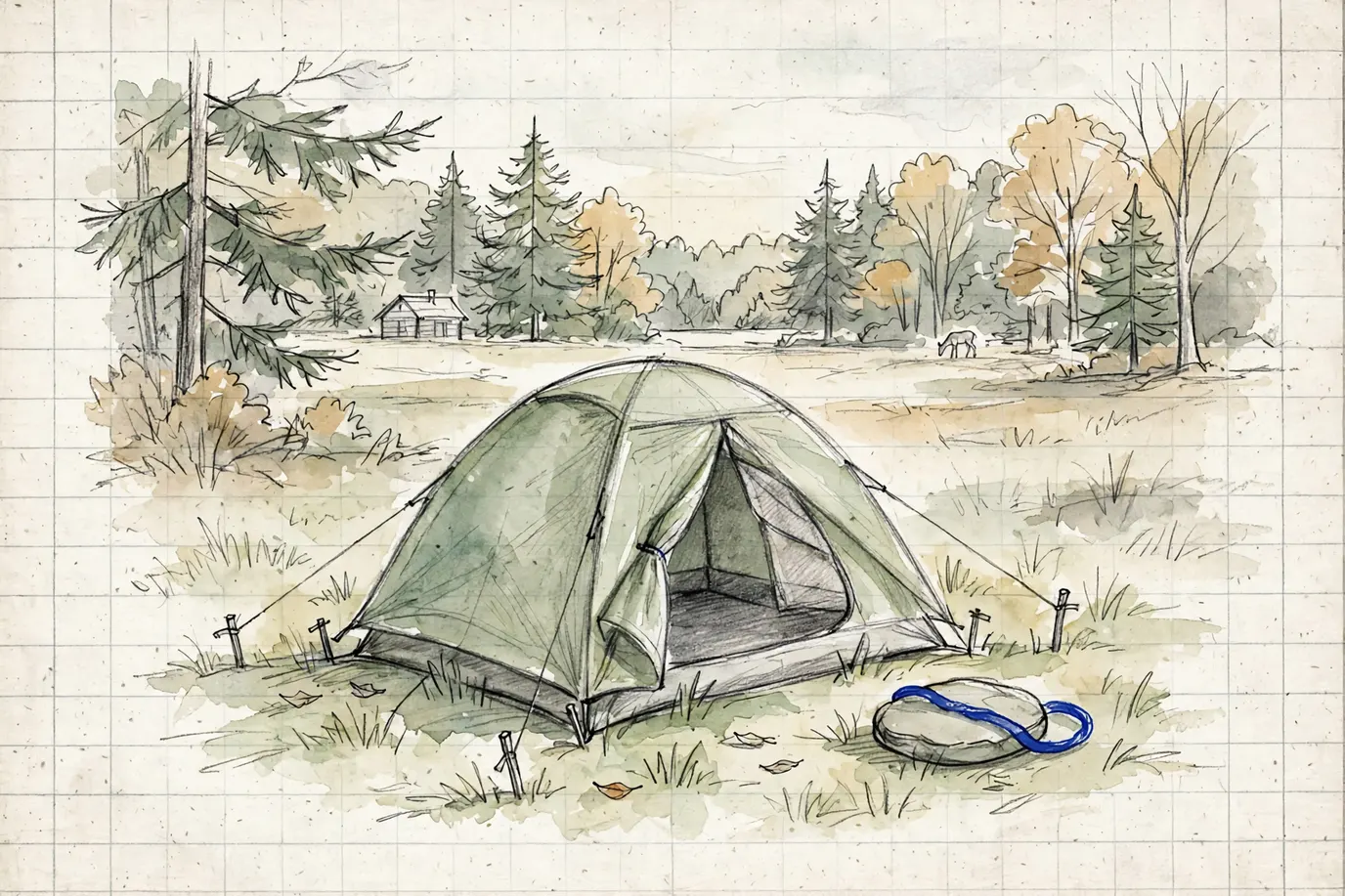
A pop up tent is a tent whose frame is already built into it and springs open on its own, so setup is mostly unpacking and staking. That's the whole appeal, and it comes with a bill: the frame decides the packed shape, the weight and how the tent behaves in wind. The main choice is between a flat spring-frame tent that opens out of a disc and a hub tent that you pop out wall by wall. Then there's the folding. We'll get to the folding.
We earn a commission if you buy through our links, at no cost to you. Disclosure
| Model | Center height | Sleeps | Amazon |
|---|---|---|---|
unp Pop-up TentTent More specs
| — | 2 personslisting | Check price |
Wakeman Outdoors 2 Person Camping Tent with Rain Fly and Carrying BaTent More specs
| — | 2 personslisting | Check price |
Wakeman 2 Person Camping Tent with Rain Fly and Carrying BagTent More specs
| — | 2 personslisting | Check price |
Wakeman 2 Person Camping Tent with Rain Fly and Carrying BagTent More specs
| — | 2 personslisting | Check price |
East Oak Pop Up Bubble Tent 2-3 PersonTent More specs
| 82.7 inlisting | 3 personslisting | Check price |
Goplus Pop-Up Camping Tent 2-3 PersonTent More specs
| — | 3 personslisting | Check price |
Outsunny Camping Tents 3 Person Pop Up Tent Quick Setup Automatic BluTent More specs
| — | 3 personslisting | Check price |
Ayamaya 4-Person Pop Up Tent with SkylightTent More specs
| 49.2 inlisting | 4 personslisting | Check price |
EchoSmile Instant Pop Up Tent 4 PersonTent More specs
| 47.24 inlisting | 4 personslisting | Check price |
FanttikOutdoor Alpha C4 Ultra 4 PersonTent More specs
| — | 4 personslisting | Check price |
Gazelle Tents T4 Overland Edition GT401GRTent More specs
| 78 inlisting | 4 personslisting | Check price |
Goplus 4-Person Automatic Cabin TentTent More specs
| — | 4 personslisting | Check price |
Timber Ridge 4 Person Instant Pop Up Hub Tent for CampingTent More specs
| — | 4 personslisting | Check price |
Timber Ridge 4 Person Instant Pop Up Hub TentTent More specs
| — | 4 personslisting | Check price |
Timber Ridge Camping TentTent More specs
| — | 4 personslisting | Check price |
Ayamaya 6-Person Pop Up TentTent More specs
| 53.5 inlisting | 6 personslisting | Check price |
Ayamaya 6-Person Pop Up TentTent More specs
| — | 6 personslisting | Check price |
FanttikOutdoor Alpha C6 Pro 6 PersonTent More specs
| 90.5 inlisting | 6 personslisting | Check price |
Timber Ridge 8 Person Instant Pop Up Cabin TentTent More specs
| — | 8 personslisting | Check price |
Naturehike Cape 4/6/8 Person Camping TentTent More specs
| — | — | Check price |
OutdoorMaster Camping TentsTent More specs
| — | — | Check price |
OutdoorMaster Camping TentsTent More specs
| — | — | Check price |
OutdoorMaster Updated Pop Up Camping TentTent More specs
| — | — | Check price |
Reactive Outdoor TentTent More specs
| — | — | Check price |
Reactive Outdoor TentTent More specs
| — | — | Check price |
Reactive Outdoor TentTent More specs
| — | — | Check price |
Rengue Pop Up Camping Tent Automatic Setup Rainproof Sun ProtectionTent More specs
| — | — | Check price |
Rengue Pop Up Camping Tent Automatic Setup Rainproof Sun ProtectionTent More specs
| — | — | Check price |
Timber Ridge 4-5 Person Instant Pop Up Cabin Hub TentTent More specs
| — | — | Check price |
Timber Ridge 4-6 Person Instant Pop Up Hub TentTent More specs
| — | — | Check price |
Timber Ridge 4-6 Person Pop Up Hub TentTent More specs
| — | — | Check price |


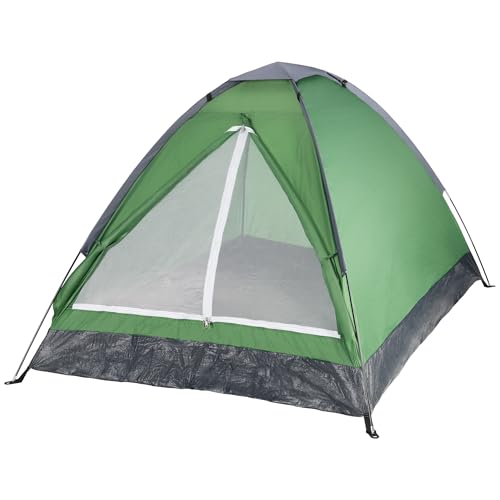


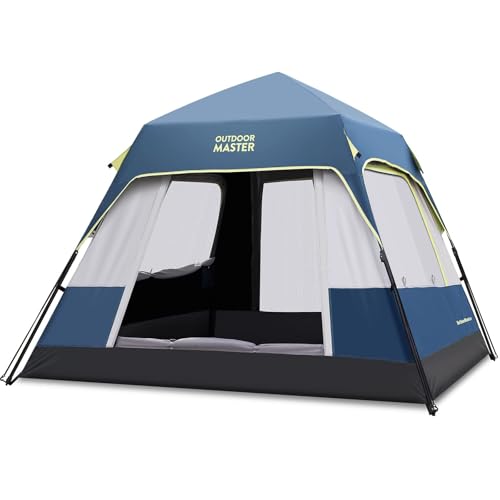


What’s in this listPop-up tents that spring open on their own, as described by the maker or the Amazon listing. “—” means neither the maker nor the Amazon listing states it.
What makes a pop up tent different
Every tent has a frame. On a pop up tent, the frame lives inside the tent all the time, and it wants to be open. You don't build it. You let it go, then you stake it before it changes its mind.
That one fact explains the rest of this page. A frame that's always attached can't fold down to a bundle of short poles. So pop up tents pack into odd shapes, weigh what their frame weighs, and stand up only as well as their stakes hold.
The table on this page lists tents the maker describes as springing open on their own. It shows the specs the maker or the Amazon listing states: capacity, setup type, center height, rainfly, waterproof rating and weight (listing values are marked; the waterproof rating appears only when the maker states it). Blank specs stay blank: a value neither states shows as a dash. For the shared basics of tents (what "sleeps four" really means, floor area, seasons), the camping tent page covers it once so I don't have to cover it four times.
Two ways a pop up tent opens
Spring-frame tents open out of a flat disc
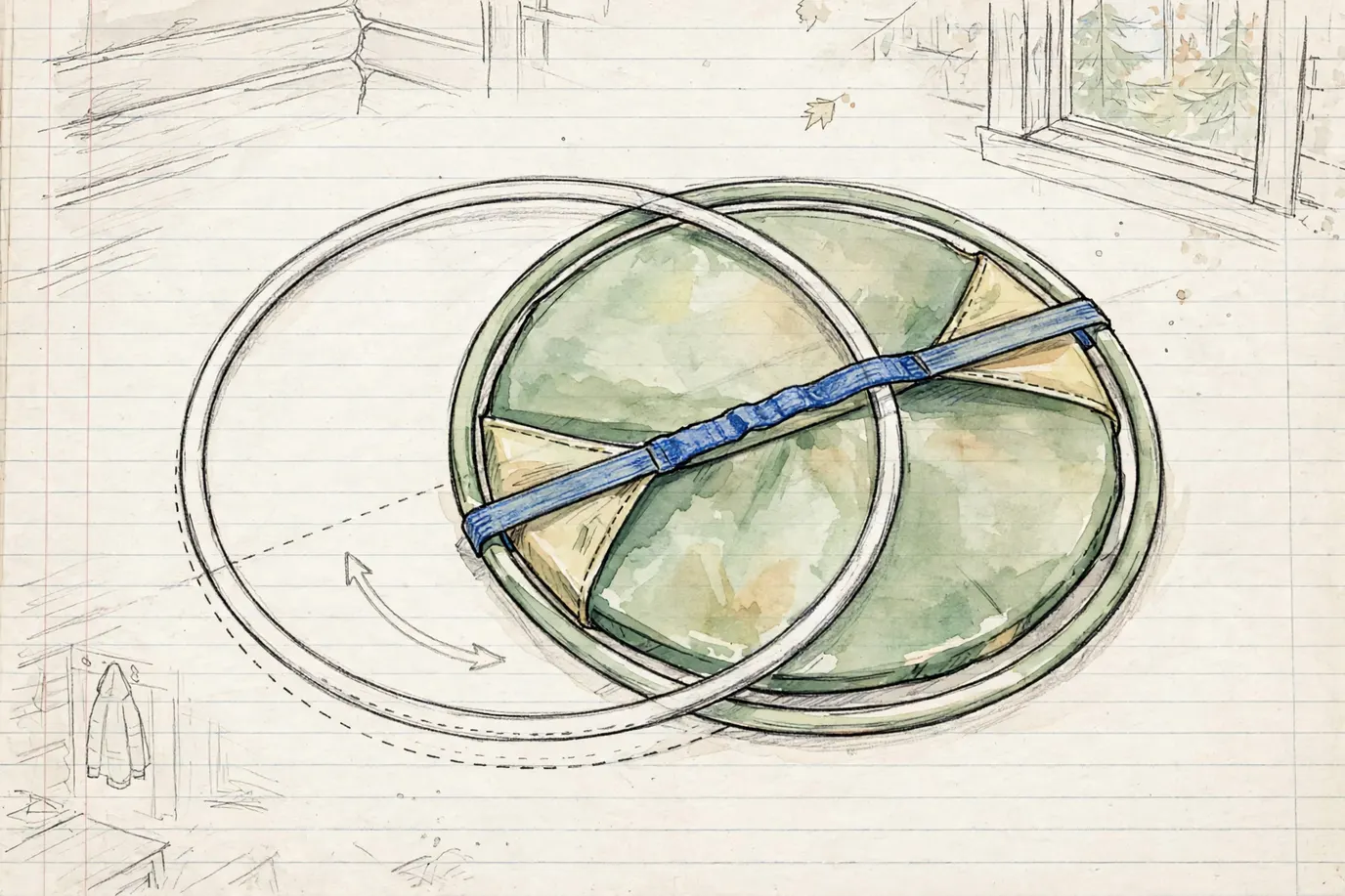
This is the tent most people picture. The frame is flexible poles built into the fabric. Folded, they lie in overlapping rings, and the whole tent becomes a flat round disc in a round bag. Freed, it springs into a dome. A 2006 New Atlas write-up of an early one put it plainly: unclip it, throw it in the air, and it assembles itself before it lands, leaving six pegs to push in. The same article credits the fibreglass spring hoops, which can shrink in diameter so the frame folds without coming apart.
That write-up also claimed the tent folds back up in 15 seconds. My personal record is longer, and the folding section below explains why.
Hub tents pop out one wall at a time
A hub tent has a pre-assembled frame of poles joined at metal hubs. You lay it out, pull a loop in the middle of each wall, and the wall pops outward. Then the roof hub. One hub-tent maker describes its frame as fiberglass poles with all-metal hubs and claims a setup under 90 seconds. That's the maker's number for a practiced setup. Your first try will be longer, and that's fine.
Hub tents are bigger and squarer than spring-frame tents, with more headroom. They also pack long. One maker's 4-person hub tent lists a pack length of 66.5 inches. That's a duffel you carry with both arms and a little planning.
And what isn't a pop up tent
An instant tent also has its poles attached, but you raise and lock the frame by hand. It doesn't spring open by itself. Shade-only pop ups for the beach live on the beach tent page, and the open-sided pop up shelters for tailgates and yard sales are on the canopy tent page.
What to look at when you pick a pop up tent
Setup type is the reason you're here
The setup column is the selection rule for this page. A tent lands here only when its maker says the frame springs open on its own. If you see "instant" or "freestanding" on a tent you thought was a pop up, it's on a different page for a reason.
Packed shape decides where it rides
A spring-frame tent folds flat and round, so it rides on top of everything or slides behind a seat. It doesn't fit in a duffel or a pack. A hub tent packs long and narrow, and it wants the truck bed or a long trunk.
Measure the spot it will ride in before you buy. Here's the thing: the tent you leave home because it didn't fit is the lightest tent you'll ever own.
Weight follows the frame
Because the frame never comes out, the tent weighs what the fabric and frame weigh together, every time you carry it. Small spring-frame tents are easy to carry a short way from the car. Larger hub tents are heavy enough that you'll want the car close. One maker lists its 4-person hub tent at 30 lb. Trust the maker's figure over a store listing; we've caught too many listing weights that were plainly off.
Sleeps and center height: the dome shape costs headroom
A spring-frame dome slopes from the peak to the floor, so headroom falls off fast toward the walls. Hub tents have straighter walls, and one maker lists a 78-inch center height on its 4-person model. If you want to stand to change clothes, read center height before capacity.
For two adults and a little gear, a small pop up is fine. For a family with cots, look at hub tents or the family tent page.
Rainfly and roof: single layer or double
Some pop up tents are a single waterproof layer. Others have a double roof (the early spring-frame tent New Atlas described had a coated double roof with taped seams) or a separate rainfly. A separate fly gives you more weather protection, but it adds a step: one hub-tent manual has you remove the fly before you collapse the frame. The table shows the rainfly as the maker or the listing describes it.
Waterproof rating, when the maker states one
Some makers list fabric ratings in millimeters; one hub-tent maker lists a 2,000 mm shell and a 5,000 mm floor. That's a maker claim for that model, not a promise for pop up tents in general. A dash in the table means the maker didn't say.
Wind: stake it like it wants to leave
A pop up tent is a light dome with a lot of surface, held down only by its stakes and guy lines. Unless the maker publishes a wind rating for your model, treat a breezy afternoon as fine and a storm as not.
My one opinion on this page: a pop up tent is a fair-weather tent, and you should stake it before you unzip the door. A frame that springs open on its own will also move on its own if a gust gets under it. One hub-tent manual says to point a corner into the wind and stake that corner first. Use every stake and every guy line the maker supplies.
How to fold a pop up tent
Folding is where pop up tents earn their reputation. The frame wants to be open; you're asking it to agree to be a disc. Every frame folds a little differently, so your manual wins over anything here. This is the common method for a spring-frame tent, from one maker's folding guide:
- Open the door so trapped air can escape. The tent compresses more easily.
- Fold back to front: lift the center of the rear base pole up to the roof pole and hold both. Then bring the front base pole up to join them, so all the poles are in one hand.
- Stand it on its side, holding it upright with that one hand.
- Pull the top down toward your feet with the other hand.
- Slide one ring under the other, so two frame circles overlap, then press down to push out the last air.
- Strap it and bag it with the elastic straps across the disc.
Step 4 is the one that fights back. Go slow, keep your face out of the way of the frame, and let the poles bend the way they were built to bend. If a pole resists, back up a step instead of forcing it. A splintered pole doesn't fold any better.
Hub tents are simpler: take off the fly (and any gear loft), push each hub back in, and the walls fold toward the center. Then lay it out and roll it into the duffel.
Practice once at home. The National Park Service says that about every tent, and with a pop up it's the difference between a 5-minute job and a parking-lot argument. (Danny's first try at a pop up ended with the tent in the bag, the bag in the truck, and the truck still not leaving because he was sitting on the bag to keep it shut.)
Pitching: the spot still matters
Fast setup doesn't change the ground. Clear sticks and rocks, stay out of low spots that collect rain, keep the tent away from the fire ring, and avoid dead trees overhead, per the NPS. Sleep with your head uphill.
The one pop up habit to add: stake it right after it opens, before you put anything in it. An empty pop up tent on a breezy day is a kite with a door.
Care: dry before you fold
Folding a spring-frame tent into a tight disc squeezes any moisture right into the fabric. A one-day delay is enough for trouble: a backpacking-tent maker says mildew can begin on a balled-up wet tent within a day, and its coatings suffer from long damp storage too.
- Wipe it down while the door is open, before folding
- Dry it fully at home if you packed it wet, standing open in the yard
- Store it loose if you can, somewhere cool and dry, not in a hot trunk
- Clean gently: water and mild soap, no washing machine, no bleach
Spring-frame tents have a quirk here: the folded disc is under tension the whole time it's stored. Store it in its bag, flat, and don't stack the heavy stuff on it.
Safety in any tent
No gas heater, fuel lantern or camp stove runs inside a tent you're sleeping in. The CPSC warns that carbon monoxide from them builds up in tents, and its early signs (headache, dizziness, nausea) look like the flu. A battery light and warmer bedding do the job safely.
Who should buy a pop up tent, and who should skip it
A pop up tent suits:
- Short car-camping trips in fair weather, when you'd rather spend the evening by the fire than with the poles
- Kids' backyard nights and first campouts
- Festival and tailgate weekends with a short walk from the car
- Anyone who sets up alone and dreads pole sleeves
Skip it if:
- You hunt late season. A November camp with wind on the ridge wants a tent built for weather, not for speed. Look at hunting tents or winter camping tents.
- You carry the tent far. A flat disc or a long duffel is awkward on foot.
- Your vehicle has no room for the packed shape. Measure first.
- You hate folding puzzles. Then a hub tent or an instant tent will make you happier than a spring-frame dome.
Pop up tents are honest about what they are: quick to open, slower to close, best on calm nights close to the truck. Stake it first, dry it before you fold it, and keep the manual in the bag. You'll want it on Sunday.
Brands in this list
Related
Questions people ask
How do you fold a pop up tent?
On a typical spring-frame tent: open the door to let air out, fold the rear base pole up to the roof pole, bring the front base pole over so all poles are in one hand, stand the tent on its side, pull the top down toward your feet, slide one frame ring under the other, then strap it and bag it. Your tent's manual has the exact order for its frame.
Are pop up tents waterproof?
Some makers rate the fabric, but the claim belongs to the model, not the type. One hub-tent maker lists a 2,000 mm shell and a 5,000 mm floor; the table shows a dash where the maker doesn't state one. Check the specific maker's page and pitch the rainfly if the tent has one.
Can a pop up tent handle wind?
Only as well as it's staked. A pop up tent is a light dome with a lot of surface, and a frame that springs open by itself will move by itself if a gust gets under it. A hub-tent manual says to point one corner into the wind and stake that corner first. Use every stake and guy line, and take the tent down before a storm rather than during one.
What's the difference between a pop up tent and an instant tent?
A pop up tent's frame springs open by itself, from a coiled disc or from hubs you push out. An instant tent has its poles pre-attached to the fabric, but you raise and lock the frame by hand; it doesn't open by itself. Both skip threading poles through sleeves.
Sources
- New Atlas: The tent that pitches itself (2006) — accessed 2026-10-22
- Regatta: How to fold a pop up tent — accessed 2026-10-22
- Gazelle Tents: Hub tents (how hub frames work) — accessed 2026-10-22
- Gazelle Tents: T4 Hub Tent (product specs) — accessed 2026-10-22
- MSR (Cascade Designs): Tent care 101, keeping your tent clean and dry — accessed 2026-10-22
- National Park Service: Finding and setting up a campsite — accessed 2026-10-22
- U.S. Consumer Product Safety Commission: Portable heaters and camping equipment (carbon monoxide) — accessed 2026-10-22