What YETI makes for hunters and campers
On this site, YETI covers four product types:
- Hard coolers: the Tundra line and the Roadie line, some on wheels
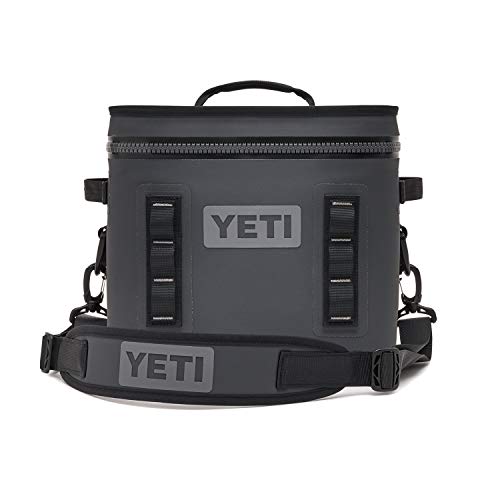
- Soft coolers: Hopper Flip totes, the Hopper M30 tote and Daytrip totes
- Backpack coolers: Hopper M12 and M20, and the Daytrip 20L backpack
- Chairs: the Trailhead camp chair and the Hondo reclining beach chair
YETI's own annual report lists more than that under the brand: drinkware, bags, cargo boxes and other outdoor living gear. This site doesn't list those. The grid above sticks to coolers and chairs, filters by type and changes as listings come and go. So I'll write about the lines and what separates them, not about how many are listed this week.
Most specs here come from Amazon listings, and the grid marks those values. Where a listing doesn't say, the grid shows a dash.
Lineup notes: the YETI hard cooler
The Tundra line
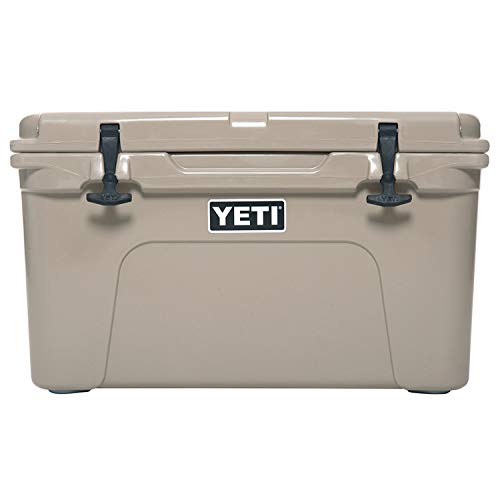
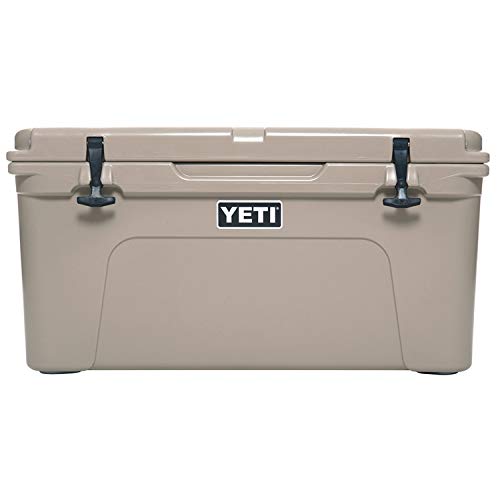
The Tundra is the shape most people picture when they hear "YETI cooler": a chest with a flat lid, rope handles and rubber latches. YETI's annual report says its first product was a hard cooler, and it names the Tundra among its hard cooler lines today.
The Tundra listings in the grid run from the Tundra 35 through the 45 to the 65. Per the listings:
- Rubber T-latches on the models that name a latch type
- A drain on the models that list one
- The Tundra 45 listing names a one-piece build with no seams, 3-inch insulation, a drain system and a dry goods basket
The dry goods basket is the part I'd point out to a new camp cook. It's a wire tray that hangs at the top of the cooler and keeps bread and cheese out of the meltwater. The rotomolded cooler page covers that construction across brands.
The Tundra Haul
The Haul is the Tundra built onto wheels, per its listing. Same idea, different trip: you roll it instead of carrying it. A cooler with wheels earns its place on a long, flat walk from truck to camp. On a rocky, rooty path, wheels mostly decide which way you trip. The cooler with wheels page lays out the type.
The Roadie line
The Roadie is YETI's compact, upright hard cooler. In the grid it runs from the small Roadie 8 through the Roadie 15 and Roadie 24 2.0, up to the wheeled Roadie 32 and Roadie 48. Per the listings:
- Roadie 8: carry handle and a one-hand latch
- Roadie 15: a shoulder strap YETI calls DoubleDuty
- Roadie 24 2.0: shoulder strap and a drain plug
- Roadie 32 and 48 Wheeled: wheels, and the 48 lists a retractable periscope-style handle
A Roadie fits the spaces a Tundra won't: behind the truck seat, on the floor of a blind, next to a tree stand's ladder for lunch. The small cooler page covers that size range across brands.
Read the can count as "cans only"
My one opinion on this page. A can count tells you about a cooler with no ice in it. The Roadie 15 listing says so in plain words: it fits 22 cans only, or 16 lb of ice only. Not both. The Roadie 8 listing says the same thing about its 12 cans and 9 lb of ice.
So when you size a YETI for a trip, cut the can count down to leave room for the ice. Real food doesn't stack like soda cans either. A venison roast is a shape nobody designs a cooler around.
Lineup notes: the YETI soft cooler
Hopper Flip totes
The Hopper Flip models are small, boxy soft coolers with a flip-open top and a carry strap. In the grid they come as the Flip 8, Flip 12 and Flip 18, and the listings give their can counts in the same "cans" language as the Roadie. The Flip 8 is a lunch-and-drinks size. The Flip 18 holds a day's food for two people who don't eat like Danny.
The Hopper M30 tote
The M30 is the larger Hopper tote. Its listing names a magnetic closure YETI calls MagShield, ColdCell insulation, a DryHide shell, a zipperless design and a leak-resistant build. The listing gives its capacity as 30 quarts.
A zipperless top matters more in November than in July. Cold fingers and a stiff zipper make a bad pair. The soft cooler page compares closures across brands.
Daytrip totes
The Daytrip line is the lighter end of YETI's soft coolers. The listings show 14-liter and 20-liter totes. The 20L tote listing names ColdCell Flex insulation, a MagSnap closure, outside pockets and a food-safe lining. These are lunch-to-day-trip bags. Think a sandwich, a thermos and a couple of apples for a long sit, not the weekend's meat.
Lineup notes: the YETI backpack cooler
The grid has three backpack coolers, per the listings:
- Hopper M12 Backpack: MagShield closure
- Hopper M20 Backpack: MagShield closure, a size up from the M12
- Daytrip 20L Backpack: padded shoulder straps, a wide zip opening and a front stash pocket
A backpack cooler frees both hands. That counts on the walk in to a ground blind, when one hand has a seat and the other has a bow case. Load it with the heavy items low and close to your back. The backpack cooler page covers fit and carry across brands.
Lineup notes: YETI chairs
The Trailhead camp chair
The Trailhead is a folding camp chair, listed in the grid as a four-leg folding style. YETI's annual report names it among the brand's outdoor living products. A camp chair at a deer camp does two jobs: the fire ring at night and the boot-lacing seat at 4:30 a.m. My knees vote on seat height by the second morning. The camping chair page compares heights and frames across brands.
The Hondo reclining beach chair
The Hondo beach chair is the low, reclining one. Its listing calls it breathable and UV-resistant, and lists cup holders. It's built for sand, not for the cabin porch. Danny would argue the porch counts. Danny argues that about a lot of things. The reclining beach chair page covers the type.
For chair weight ratings, read the number the maker publishes for that exact model. The grid shows what each listing states.
How to choose within the YETI lineup
Hard or soft first
A hard cooler is a rigid box with a latched lid, and the Tundra listings add a drain. A soft cooler is a bag: lighter to carry empty, and it squashes down behind a seat for the ride home. If food has to stay cold for a full weekend, start with the Tundra or Roadie lines. If it's a day trip or a long sit, start with the Hopper or Daytrip lines. The coolers page lays out the trade across brands.
Then size, ice included
Size is where the can-count habit causes trouble. Work it out in this order:
- Food first: what has to stay at 40°F or below
- Ice second: room around and on top of the food
- Drinks last: or in a second cooler
FDA guidance is to keep cold food at 40°F or below and to consider packing drinks in one cooler and perishable food in another, so the food cooler gets opened less. For larger sizes, the large cooler page and the 50-quart cooler page cover that range.
Then how you'll move it
The grid splits three ways here:
- Handle or strap: Roadie 8, 15 and 24, the Tundra chests
- Wheels: Tundra Haul, Roadie 32 and 48 Wheeled
- Shoulder straps: the three backpack coolers
Rule of thumb: a loaded chest cooler is a two-person lift. If you camp alone, wheels or a smaller cooler beats a hernia.
Then the latch and the drain
The Tundra listings that name a latch list rubber T-latches, and the Roadie 8 lists a one-hand latch. Try any latch with the gloves you hunt in before the first cold morning. On the soft side, magnetic closures replace zippers on the Hopper M-series and some Daytrip models.
The drain matters for any cooler you'll keep for more than a day. Meltwater has to go somewhere. Without a drain, you tip the whole cooler, and the venison takes a bath. That's a Saturday-afternoon lesson nobody needs twice.
Care that applies to the whole lineup
A cooler is a box. Boxes want three things: clean, dry and aired out between trips. Igloo's care FAQ is the plainest cooler-cleaning guide I found from a cooler maker, and it applies to any hard or soft cooler:
- Water and mild detergent for everyday dirt
- Baking soda and water, diluted, for tougher stains
- Rinse everything out and dry the cooler completely before storing it
- Store hard coolers with the drain plug open so trapped moisture can escape
- Spot-clean soft cooler bags, no washing machine or dryer, which can damage heat-sealed seams
- No dishwasher for any cooler
Check YETI's own care notes for your model before you use anything stronger.
During the trip, FDA advice is plain: limit how often the cooler is opened, and pack meat, poultry and seafood frozen if you can, since frozen food stays colder longer. At our camp the cooler lid is the most-opened door in the county. The cabin door comes second.
Raw meat goes in sealed containers or bags at the bottom, where the cold sits and drips can't land on anything else.
YETI vs ORCA
Both brands make hard coolers and drinkware, and both turn up in the same searches. On this site the difference is simple: the grid above lists YETI hard coolers, soft coolers and chairs, and this site doesn't list ORCA products from Amazon US.
ORCA's own site describes the brand as making high-performance coolers and drink- and bar-ware. YETI's annual report says it designs its products and uses contract manufacturers, and that its hard coolers are rotomolded or injection-molded.
If you're comparing the two, compare model against model on the makers' own pages:
- Construction: rotomolded or injection-molded
- Insulation thickness, lid and walls
- Latch type and whether it works with gloves
- Drain size and placement
- Warranty terms for that model
YETI facts
Here's what I could verify from sources outside a store shelf:
- Founded: 2006, by Roy and Ryan Seiders, per YETI's annual report to the SEC
- First product: a hard cooler, per the same report
- Headquarters: principal offices in Austin, Texas, per the same report
- Manufacturing: YETI says it doesn't own or operate manufacturing facilities; many core products are made by contract manufacturers in countries including China, the Philippines and Vietnam
- Company: YETI Holdings, Inc., which its investor page describes as a designer, retailer and distributor of outdoor products
Warranty terms are on YETI's own site, model by model. Read them before you count on coverage.
Drain it, dry it, prop the lid. Next November it won't smell like last November.