Camp Gear · Gear type
10 Person Tent
A 10 person tent is a tent whose floor fits ten standard sleeping pads side by side. That's how makers rate it. In real life it's a comfortable home for about five people and their gear, split into rooms, with space to stand up. Buy one for a big family or a crew that wants one roof, and check the floor area and height before the person count. Ten grown men in a ten-person tent is a can of sardines with a zipper.
We earn a commission if you buy through our links, at no cost to you. Disclosure
| Model | Center height | Amazon |
|---|---|---|
Ayamaya 10-Person Multi Room TentTent More specs
| 78 inlisting | Check price |
Campros CP CP 10/12 Person Cabin TentTent More specs
| 72 inlisting | Check price |
Campros CP CP 10 Person Cabin TentTent More specs
| 82 inlisting | Check price |
Coleman WeatherMaster 10-PersonTent More specs
| — | Check price |
Core 10 Person Cabin TentTent More specs
| 86 inlisting | Check price |
Core 10 Person Cabin TentTent More specs
| 86 inlisting | Check price |
Core 10 Person Instant Cabin Tent with LED LightsTent More specs
| — | Check price |
Core 10 Person Instant Cabin TentTent More specs
| 78 inlisting | Check price |
Ever Advanced 10 Person Blackout TentTent More specs
| 84 inlisting | Check price |
FanttikOutdoor Zeta C10 Pro 10 PersonTent More specs
| — | Check price |
FanttikOutdoor Zeta C10 Pro Max 10 PersonTent More specs
| 80 inlisting | Check price |
Kodiak Canvas 12x16 Cabin Lodge Tent SRTent More specs
| — | Check price |
KTT Extra Large Tent 10 PersonTent More specs
| 74.4 inlisting | Check price |
Outsunny 10-Person Yurt Tent with Spacious Interior 16' x 16' x 10'Tent More specs
| — | Check price |
Ozark Trail 10 Person Tent 3 Rooms 20 X 10Tent More specs
| — | Check price |
Timber Ridge 10 Person Instant Cabin TentTent More specs
| — | Check price |
unp 10 Person Tents for Camping Family Outdoor Camping TentTent More specs
| — | Check price |
Whiteduck Alpha Pro Canvas Wall Tent Waterproof 4 Season Outdoor CampiTent More specs
| — | Check price |
Whiteduck Alpha Pro Canvas Wall Tent Waterproof 4 Season Outdoor CampiTent More specs
| — | Check price |


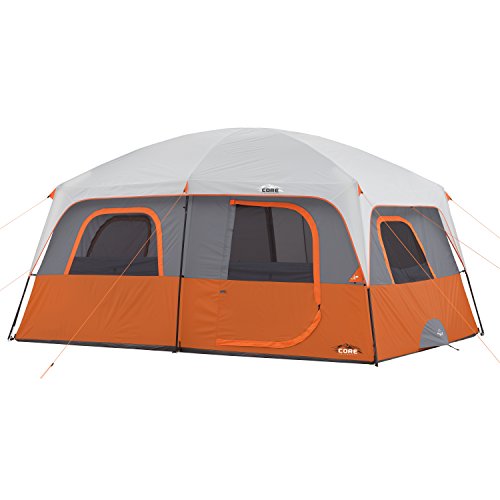


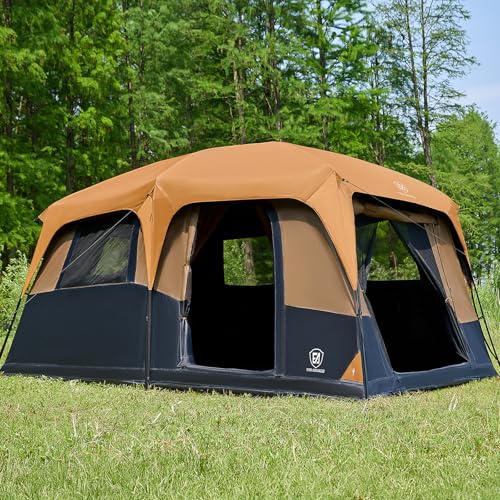

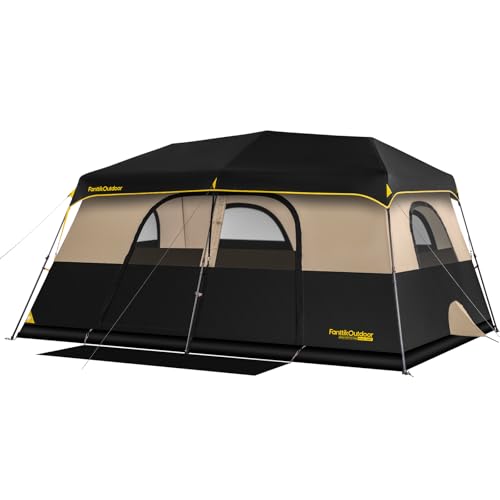

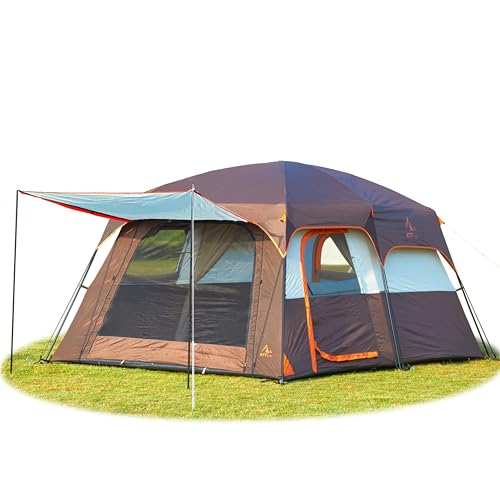
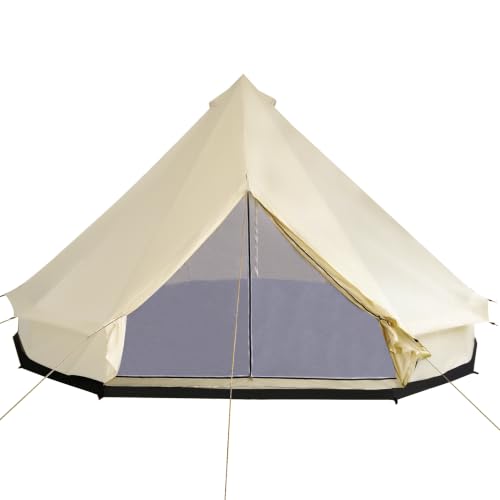
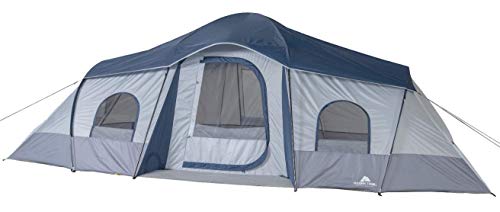
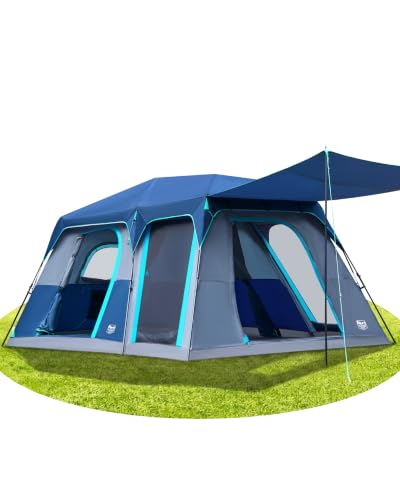


What’s in this listTents rated for ten people by their maker or listing, largest floor first. “—” means neither the maker nor the Amazon listing states it.
How much a 10 person tent holds once you move in
The rating is a floor count. Comfort is a separate question. CORE Equipment says the rating comes from how many standard-width pads the floor holds edge to edge. Ten pads, ten people. No duffels, no boots, no cooler, nobody rolling over.
CORE's rule of thumb is to multiply your group by two. Run that backward and a 10 person tent is a good fit for about five campers. CORE also notes that a queen air mattress takes up the floor space industry sizing gives to two campers. So one couple on a queen bed has already spent a fifth of the rating.
My one opinion on this page: once your crew passes five or six adults, buy two tents instead of one bigger one. The reason is on CORE's sizing page too. For groups of 10 or more, it suggests several smaller tents rather than one large one. Two tents also mean two campsites' worth of choices, and nobody's snoring is a group decision.
The basics every tent shares (floor, seams, rainfly, stakes) are on the camping tent page. Here I'll stick to what changes at ten: more floor to plan, taller walls to catch wind, more fabric to dry.
The table on this page lists tents their maker or listing rates for ten people, largest floor first. You'll see the person rating, the floor's dimensions and square footage, peak height, shape, frame type and the maker's setup-time claim, then fly, rooms, doors and materials wherever the maker or the Amazon listing gives them (the table marks listing values), and weight when the maker gives it. Seasons appear only when the maker states them. A dash means nobody says.
What to look at in a 10 person tent
Floor area tells you more than the person count
Two tents can both say ten and still differ by a lot of floor. Compare the floor area column first, then the length and width. A long rectangle gives you two rooms with a door at each end. A squarer floor gives one big room that's easier to heat with bodies and harder to divide. For cots, check the width. A cot across the tent has to fit with room to sit on its edge.
Center height and wall shape decide who stands up
CORE describes cabin tents as having straight walls and roomy interiors where most adults can stand upright. It also says a tall, straight-walled tent feels roomier than a sloped-wall tent with the same floor size. That matters more at this size than any other, because a tent this big is where people dress, play cards on a rainy afternoon and wait out a storm.
The table's center height is the tallest point inside. On a dome, that height lives in the middle and falls off fast toward the walls. On a cabin shape, it holds closer to the edges. Pick for the tallest person in your group. Stooping for a weekend is a backache. Stooping for a week is a personality change.
Rooms and doors keep people from climbing over each other
A big floor is only useful if people can reach their spot. CORE describes its 9-person tent's room divider as creating two separate spaces. The table counts rooms the way makers and listings state them, including rooms made by a removable divider. Then look at doors. Two rooms with one door means somebody walks through the other room at 2 a.m. Two rooms with two doors means they don't.
More on dividers and two- and three-room layouts is on the multi-room tent page.
Setup type and claimed setup time are two different specs
The setup column says how the frame works: separate poles, pre-attached instant poles, or air beams. The setup time column is the maker's claim, so read it as best-case. CORE puts its instant frames at under 2 minutes and a traditional pole tent at 15 to 30 minutes. At ten-person size, the frame is big and the wind finds it fast, so the difference shows. Instant designs are covered on the instant tent page.
Waterproof rating is the fabric, not the whole tent
The table lists a waterproof rating in millimeters when the maker gives one. That number is hydrostatic head. Snugpak defines it as the water pressure needed to push through a fabric, pictured as a column of water standing on it: the taller the column the fabric can hold, the higher the rating. Snugpak also notes the trade-off. The more waterproof the coating, the less breathable the fabric, which feeds condensation inside.
Floors carry more pressure than walls, because people kneel and sleep on them, so Snugpak says the floor needs a higher rating than the outer fabric. CORE builds its full-rainfly models around a 1200 mm rating with taped seams and tub-style floors. Use those as reference points, not as a pass line. The rainfly column in the table tells you whether the fly covers the whole tent or only the roof.
Wind is the price of tall walls
Big straight walls are sails. CORE rates its instant cabin tents for 35 mph winds, and the condition is printed right next to it: fully staked and guyed out. That's the whole lesson. Every stake loop and every guy line on a tent this size is there for a reason, and the ones you skip are the ones the wind finds.
Weight and packed size decide whether it fits the truck
CORE says traditional pole tents pack down a bit smaller and lighter than instant ones. At this size, a few pounds here or there is less of a question than the bag's length and whether it fits in the trunk next to the cooler. The table shows weight when the maker lists it. Lift it in the store parking lot in your head before you lift it at the campsite for real.
A season rating is the maker's claim
A four-season label shows up here only on the maker's word. If the maker doesn't state four seasons, plan for three.
Cabin or dome at ten-person size
The style column sorts the table by shape, and at this size the shape decides most of the living.
Cabin style for standing room and rooms
CORE says cabin tents have large footprints, which makes room dividers easier to add, and that their large mesh panels increase airflow and light. Straight walls mean the corners are usable floor, not dead space under a slope. This is the shape for a family that spends rainy hours inside, or a crew that wants a bedroom and a gear room.
Dome style for a smaller pack and a smaller site
CORE describes domes as rounder and lighter, using less material and fewer poles, so they fold down smaller. Their smaller footprint fits compact campground spaces. The trade is headroom near the walls. A big dome is a good tent for sleeping in and a so-so tent for living in.
If you can't decide, look at what you'll do between sleeping. Cards and coffee point to the cabin. Arriving late and leaving early points to the dome.
Will a 10 person tent fit your campsite
This is the step people skip. Campsites have tent pads, and pads have sizes. One site in Payette National Forest lists a 12 by 12 foot pad and says it holds one large tent or four small ones. CORE also warns that campgrounds may limit tent pads. Before you buy, pull up the listing for the campground you use most and compare its pad size with the floor length and width in the table.
Off the pad, the National Park Service's rules for any tent apply twice as much to a big one:
- A large, flat spot, cleared of sticks, rocks and pinecones
- No low or sunken ground that turns into a pond in rain
- No dead branches overhead
- Head on the uphill side when you sleep
- Stakes and lines kept out of the path to the picnic table
A 10 person tent has a lot of lines. Plan the path to the picnic table and the outhouse before the stakes go in, not after.
Laying out the floor so ten feels like ten
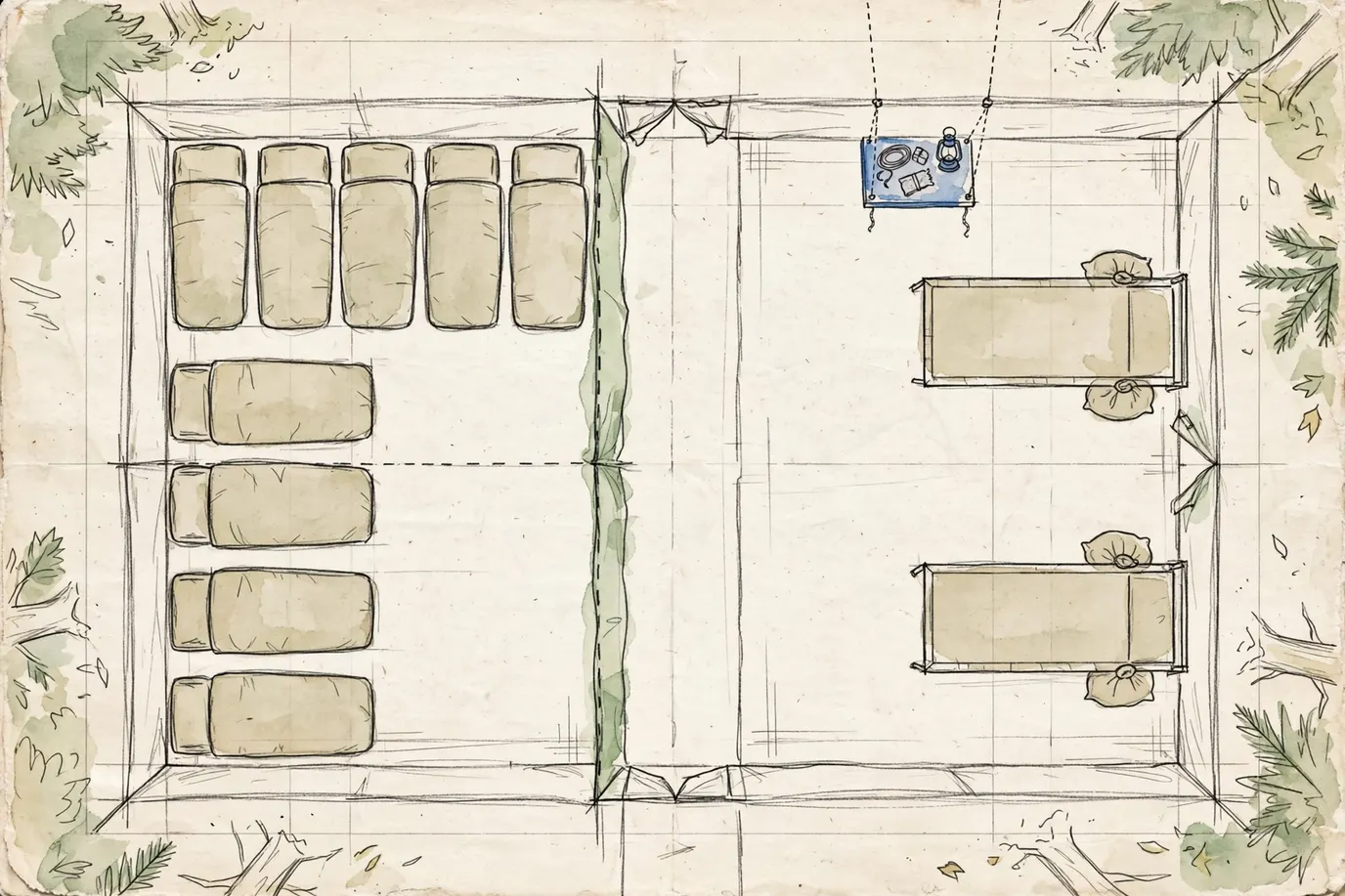
CORE's layout advice works well in a tent this big. Put pads flush against the walls. Use cots and store gear underneath them. Hang what you can from gear lofts and pockets. Leave narrow walking paths to each door.
Here's why the lofts matter. Ten people means ten headlamps, ten phones and ten pairs of gloves, and without pockets every one of them ends up on the floor. (Danny would bring eleven headlamps. He likes a spare.) Give every person one pocket for the light and one hook for the jacket, and the floor stays a floor.
Setting up and taking down a big tent
The National Park Service's advice is short: practice at home. With a tent this size, that's where you learn which pole goes where and how long it really takes with your crew.
Lay the groundcloth first if you use one, and fold any extra under the tent's edge. A tarp that sticks out catches rain and funnels it underneath. For instant frames, CORE's care advice is to work leg by leg instead of yanking the whole frame open in one go. For separate poles, it says to push poles through sleeves instead of pulling them, which saves the shock cord inside.
Taking it down, check the floor for stones and twigs before you fold. A tent this big holds a surprising amount of campsite.
Drying and storing that much fabric
CORE is plain about it: never store a tent wet, and dry it completely before putting it away. Packed up in the rain? Pitch it again in the yard, or drape it in the garage until it's dry. Skip the clothes dryer; CORE says heat breaks down waterproof coatings.
For long storage, CORE suggests a breathable bag rather than the tight stuff sack, kept somewhere cool and dry, not an attic, car trunk or basement. It also says to inspect factory-sealed seams before each season, since tape can lift over time. A 10 person tent takes up most of a two-car garage while it dries. Warn the car.
Heaters and lanterns in a big tent
A big tent holds more air, but that doesn't change the rule. Per the CPSC, a portable heater or lantern has no place in a tent where people are asleep, whatever the tent's size. Use battery lights inside, and bring warmer sleeping bags instead of a heater.
Who should skip a 10 person tent
A 10 person tent is the wrong buy if:
- Your group is four or fewer: an 8 person tent is easier to pitch, dry and fit on a pad
- You walk in to your campsite: the bag alone is a load
- Your campground's tent pads are small or fixed in size
- You camp in open, windy country without time to guy out every line
- Your group is past six adults: two tents beat one, per the sizing advice above
If your crew keeps growing, the 12 person tent page is next door. For picking among family tents by rule, see the family camping tent picks.
Big tents are mostly about the floor plan. Draw it on the back of an envelope before you buy, cots, cooler and all, and you'll know which number you need.
Brands in this list
Related
Questions people ask
How many people does a 10 person tent sleep with gear?
Ten, if they lie shoulder to shoulder on standard pads with no gear. CORE's rating is a count of standard pads laid edge to edge, and its sizing advice is to double your group, which puts a 10 person tent at about five campers with bags, cots or air mattresses.
Is a 10 person tent too big for a campground pad?
Not always. Pad sizes vary by campground. One site in Payette National Forest lists a 12 by 12 foot pad that holds one large tent or four small ones. Check the campsite listing for pad length and width, then compare it with the floor length and width in the table.
Can one person set up a 10 person tent?
It depends on the frame. A pre-attached instant frame is the one design a single adult can raise without help, per CORE, just more slowly than a pair. Tents with separate poles are easier with two people. Practice at home first, as the National Park Service suggests, so the first pitch isn't in the dark.
Do I need a footprint under a 10 person tent?
It helps. The National Park Service says some tents come with a groundcloth or footprint, and a waterproof tarp works too. Fold any extra tarp under the tent edge; a tarp sticking out collects rain and runs it under the floor instead of away from it.
Sources
- CORE Equipment: How to choose the right tent size for camping — accessed 2026-10-22
- CORE Equipment: Tent styles for camping, a side-by-side comparison — accessed 2026-10-22
- CORE Equipment: Instant setup technology, how CORE tents go up — accessed 2026-10-22
- CORE Equipment: How to care for your tent, storage, cleaning and repairs — accessed 2026-10-22
- Snugpak: Understanding hydrostatic head, how waterproof is my tent? — accessed 2026-10-22
- Recreation.gov: Evergreen Campground site 004, Payette National Forest — accessed 2026-10-22
- National Park Service: Finding and setting up a campsite — accessed 2026-10-22
- U.S. Consumer Product Safety Commission: Portable heaters and camping equipment — accessed 2026-10-22