Camp Gear · Gear type
Tent Cot
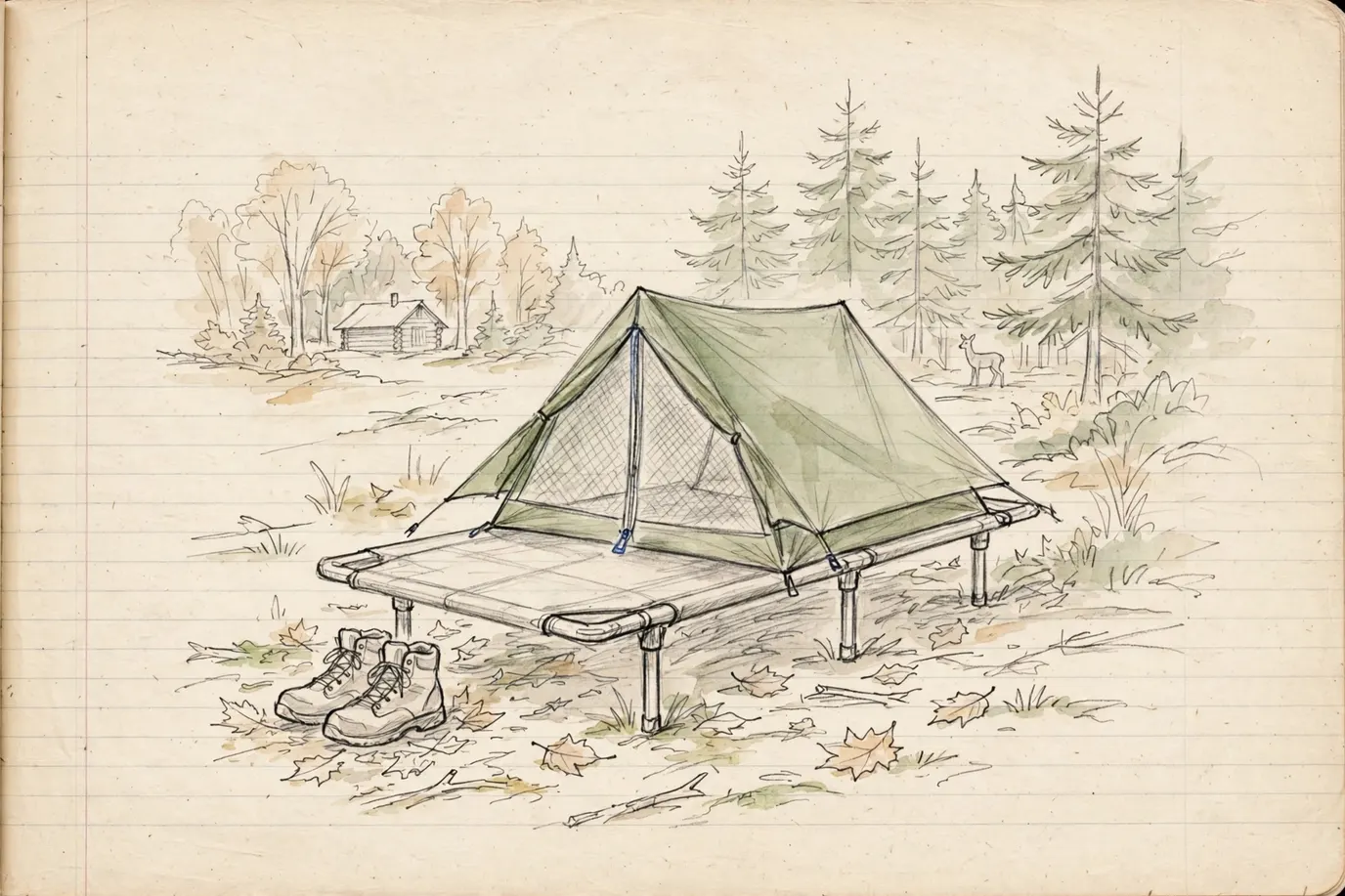
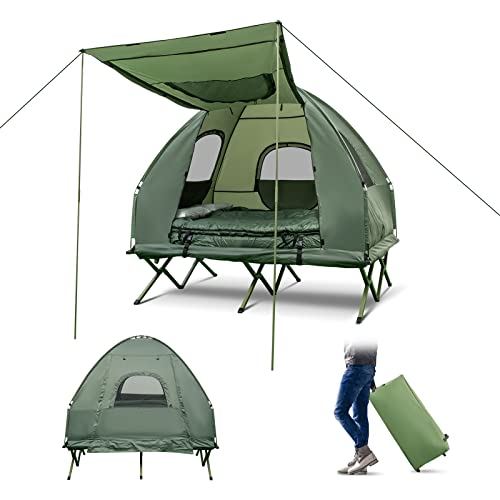
A tent cot is a camping cot with a small one-person tent built onto it, so the bed and the shelter go up together and you sleep off the ground with walls, a roof and bug mesh around you. Pick one by weight capacity, sleeping surface, how high the deck and the tent sit, whether a rain fly comes in the box, and the folded size. Plain and simple: it's a bedroom that folds.
We earn a commission if you buy through our links, at no cost to you. Disclosure



What’s in this listCots with a tent built on top, as described by the maker or the Amazon listing. “—” means neither the maker nor the Amazon listing states it.
What makes a tent cot different from a cot
A regular cot is a bed. A tent cot is a bed with a room on it. The frame holds a fabric deck off the ground like any cot, and a small tent attaches over that deck, with doors, mesh windows and usually a rain fly on top. You set it up once and you're done: no separate tent, no hunting for flat ground big enough for both.
The shared basics of cots (weight ratings, deck size, frame material, why air under a cot gets cold) are on the camping cot page. This page is about what changes when a tent rides on top.
Who it's for: one person who sleeps next to the vehicle and wants three things at once. Off the ground, out of the bugs, and a private space that takes about the footprint of a cot. Wet campsites, rocky ones, state park pads with a slope. A hunter sharing a big tent who wants a walled-off bunk. Anybody whose knees no longer agree to getting up off the floor of a tent. (That last one is me. My knees filed the paperwork years ago.)
The table under this text lists cots their makers or listings describe as having a tent built on top. It shows weight capacity, frame, sleeping surface, height off the ground, weight, packed size and type, as the maker lists them, or the Amazon listing where the maker is silent (marked as listing values; weight is the maker's alone). A dash means neither states it.
What to look at when you pick a tent cot
Weight capacity: the frame carries you and the tent
The table lists the maker's weight capacity. One maker's own pages list 300 lb for its standard and original tent cots and 350 lb for its oversize model.
A tent cot is a cot first. Cot ratings assume you're lying down with your weight spread out; one cot maker's guide warns its frame can be damaged by an unbalanced load or a shock. Inside a tent cot that has a practical meaning. Don't kneel on one spot of the deck to reach the roof vent. Don't sit hard on the edge at the door. Roll in, lie down, sit up slow.
Sleeping surface: the tent is exactly as big as the bed
On a tent cot, the tent's floor is the cot's deck. So the sleeping surface in the table is the whole room. There's no extra space by the door for boots or a pack.
From one maker's tent cot line: 79 by 29 inches on its compact model, 84 by 28 on its original, and 90 by 32 on its oversize model. That's a lot of difference for the same idea. If you're tall, start at the long end. If you bring a pack inside, add width or plan to leave it outside under the fly.
Lie on the living room floor with your pillow and have someone mark both ends. That's your number.
Height off the ground, and tent height over the deck
The table shows how high the deck sits. One maker lists 11 inches for its original and oversize tent cots and says that height gives protection from rocks, insects and dampness.
Then there's a number the table doesn't carry: how tall the tent is above the deck. The same maker's pages show the spread. Its original tent cot lists a 24-inch tent over an 84-inch bed. Its compact model lists 38 inches of tent, and its oversize model 36.
Twenty-four inches is lying-down room. You'll read a paperback on your back and change clothes like a turtle. Thirty-six to 38 inches is closer to sitting room for a lot of people. If you want to sit up in bed and pull on socks, read the tent height on the maker's page before you buy.
Jess's take, from a physical therapist: "Getting dressed lying down is a core workout you didn't sign up for."
Frame material and folding style
The frame column shows aluminum or steel. One maker lists a powder-coated aluminum frame on its original tent cot and a powder-coated steel frame on its compact one.
Folding style matters as much as metal. That maker sells two families. Its tri-fold tent cots fold wide and flat; the original lists a folded size of 35 by 31 by 6 inches. Its collapsible series folds long and narrow; the compact standard lists 43 by 10 by 9 inches. A flat square slides into a truck bed or under a trailer bed. A long narrow bundle fits a trunk or a back seat. Measure your vehicle, not the box.
Weight and packed size: a drive-in shelter
The table lists weight and packed size. Tent cots are heavy for one-person shelters. From one maker's own pages: 24 or 30 lb for its original (its page lists both), 25 or 28 for its compact, 32 or 36 for its oversize.
That's carry-from-the-truck weight, not carry-down-a-trail weight. When a maker's page lists two different weights, plan for the higher one.
Rain fly included, or sold separately
This isn't a table column, and it should be the first thing you read on the product page. One maker includes a fitted waterproof rain fly with its compact and oversize tent cots, and sells a version of its original tent cot without one.
The tent body by itself is built for bugs and air. That maker's original tent cot lists no-see-um mesh on all windows and doors and zippered mesh openings at each end for airflow. Good for a warm night. On a wet one, mesh lets the rain in about as well as it lets the breeze in.
My one opinion on this page: buy the tent cot with the rain fly, even if you camp in July. The reason is on the maker's own spec sheet: the tent body is mesh and fabric made for airflow, and the fly is the part they call waterproof. The night you need the fly is never the night you planned for.
Doors, mesh and the deck under you
Read the door count. One maker's original tent cot lists two zippered doors of polyester and mesh, one on each side, so you can get in from whichever side faces camp. It also lists corrosion-resistant zippers and a tent body of 190T nylon.
Then look at what's under the deck. That same maker says its tent cot base does away with the cross bars that standard cots often have under your back. On a bunk you can't easily climb out of at 2 a.m., a bar across the kidneys is a long night. If the maker shows the frame from below, look at the picture before you look at the color.
Tent cot types, and when to choose which
Tri-fold tent cots for the truck bed
The tent stays attached, and the whole thing folds flat in thirds. Setup is quick and done by one person; one maker says its original sets up quickly, easily and alone. Pick this style if you camp out of a pickup or a trailer and want the fastest pitch.
Collapsible tent cots that come apart
The tent top detaches. One maker says the top of its compact tent cot works as a small one-person ground tent, and the cot base works alone as a regular sleeping cot. That's two pieces of gear for the price of one trunk spot. Pick this style if you'd also use a plain cot at the cabin or a small tent on the ground.
Oversize tent cots for tall or big sleepers
Longer, wider, with a higher weight rating. One maker's oversize model lists a 90 by 32-inch bed, a 350 lb rating and two extra support legs at each end. Pick it if a standard deck is too short or too narrow, and if you don't mind the extra weight.
Double tent cots for two
Some makers build tent cots for two sleepers. The deciding specs are the same, doubled; the plain two-person cot is on the double camping cot page.
Setting up a tent cot at camp
- Pick flat, solid ground. One cot maker's guide says to use its cot only on a flat, solid surface.
- Point a door away from the wind, and the other toward the fire ring or the truck.
- Open the frame fully and seat every leg and bar before you put weight on it.
- If your model has spreader bars at the ends of the tent top, set them; one maker says they keep the top fully expanded for interior space.
- Put the rain fly on before dark, not after the first drop.
- Keep fingers out of the hinges while the frame locks.
Do a dry run on the lawn first. A tent cot isn't hard. It's just a lot of fabric that wants to be a sail until the frame is locked.
Keep the cold and the fumes out
A tent cot has the same cold-air problem as any cot. CORE's pad guide says cold air circulating under a cot pulls heat from your body, and its fix is a sleeping pad on the deck. CORE lists R-value 1 to 2 for summer, 3 to 4 for spring and fall, and 5 and up for cold weather.
Never run a fuel-burning heater or lantern inside a tent cot while you sleep. The CPSC says not to use portable heaters or lanterns while sleeping in enclosed areas such as tents, campers and vehicles. A tent cot is a small tent; use a battery light inside.
Who should skip a tent cot
Skip it if you hike in. A tent cot is a vehicle shelter by weight and size.
Skip it if you camp with family in one big tent. A plain camping cot inside a camping tent gives everybody their own bed and shares one roof, and the cot folds smaller.
Skip it if you like to sit up and move around in your shelter. Even the taller tent cots give you a bunk, not a room. A screen tent is where camp happens; the tent cot is where you sleep.
Care between trips
Dry the tent and the fly fully before folding, because a tent cot folds the fabric tight against the frame and holds whatever moisture you pack it with. Brush out leaves and sand from the deck corners. Check zippers, buckles and leg joints each season. Keep it away from excessive heat; one cot maker warns heat can deform frame parts.
Pitch it, fly it, pad it. Then let your knees enjoy getting out of bed at 11 inches instead of zero.
Brands in this list
Related
Questions people ask
Are tent cots good for camping?
They're good for one person who camps by the vehicle and wants to sleep off wet or rocky ground with bug protection. One maker says its tent cot stands 11 inches off the ground for protection from rocks, insects and dampness. They're heavy and bulky for what they shelter, so they're a drive-in tool, not a backpacking one.
Do tent cots come with a rain fly?
Some do and some don't, so read the product page. One maker includes a fitted waterproof rain fly with some of its tent cots and sells another version without one. The tent body alone is fabric with mesh doors and windows, built for bugs and airflow. If rain is in the forecast, you want the fly.
Can you use a tent cot as a regular cot?
On some models, yes. One maker says the tent top on its collapsible tent cot comes off and works as a small one-person ground tent, and the base works on its own as a typical sleeping cot. Other designs build the tent onto the frame. Check the maker's page if you want both uses.
How much weight can a tent cot hold?
Whatever the maker states. One maker's own pages list 300 lb for its standard and original tent cots and 350 lb for its oversize model. Leave a margin above your own weight with clothes on. Don't stand on the deck to reach the roof; cot ratings assume a lying, evenly spread load.
Sources
- Kamp-Rite: Original tent cot (product page) — accessed 2026-10-22
- Kamp-Rite: Compact tent cot, standard (product page) — accessed 2026-10-22
- Kamp-Rite: Oversize tent cot (product page) — accessed 2026-10-22
- Kamp-Rite: Tent cots (product category) — accessed 2026-10-22
- Helinox Product Guide: High Cot One (assembly, warnings, care) — accessed 2026-10-22
- CORE Equipment: R-value explained, how to choose the right sleeping pad for camping — accessed 2026-10-22
- U.S. Consumer Product Safety Commission: Portable heaters and camping equipment (carbon monoxide) — accessed 2026-10-22