Fire & Lighting · Gear type
Windproof Lighter
A windproof lighter is any lighter whose maker says the flame holds up in moving air, and makers get there three ways: a perforated chimney around a wick, a pressurized torch jet, or a hot catalytic coil. Pick the method first, then the fuel you're willing to babysit. If you also want it to survive a dunk, look for sealed caps. (Renee asked why a man who owns this many lighters needs one that works in wind. Because the other ones don't, dear.)
We earn a commission if you buy through our links, at no cost to you. Disclosure
| Model | Length | Fuel / ignition | Flame | Amazon |
|---|---|---|---|---|
Black Beard Fire Starter Black Beard Arc LighterLighter More specs
| — | Electric (arc/plasma)listing | Arclisting | Check price |
Black Beard Fire Starter Black Beard Arc LighterLighter More specs
| — | Electric (arc/plasma)listing | Arclisting | Check price |
Zippo Classic Black CrackleLighter More specs
| — | Lighter fluid (wick)listing | Wicklisting | Check price |
Zippo Classic Street ChromeLighter More specs
| — | Lighter fluid (wick)listing | Wicklisting | Check price |
Zippo Gray DuskLighter More specs
| — | Lighter fluid (wick)listing | Wicklisting | Check price |
Zippo Rechargeable Candle LighterLighter More specs
| 10.2 inmaker | Electric (arc/plasma)listing | — | Check price |


What’s in this listLighters their maker states are windproof. “—” means neither the maker nor the Amazon listing states it.
What makes a windproof lighter different
An ordinary lighter makes a soft flame that sits on top of the lighter and leans wherever the air pushes it. A windproof lighter is built so the push doesn't win. That's the whole sub-type. The fuel can be lighter fluid, butane or a battery; what puts a lighter on this page is the maker saying, in plain words, that it's windproof.
That rule matters, because "windproof" is the maker's own claim, so the table under this page shows yes only where the maker says so. Treat it like the word "waterproof" on a jacket: a promise you read, then check against the weather you actually get.
If you're after the whole butane torch family, the torch lighters page covers it. This page is about how each windproof design beats the wind, and which one fits the way you hunt.
How do windproof lighters work
There are three common designs, and each one solves the wind problem in its own way.
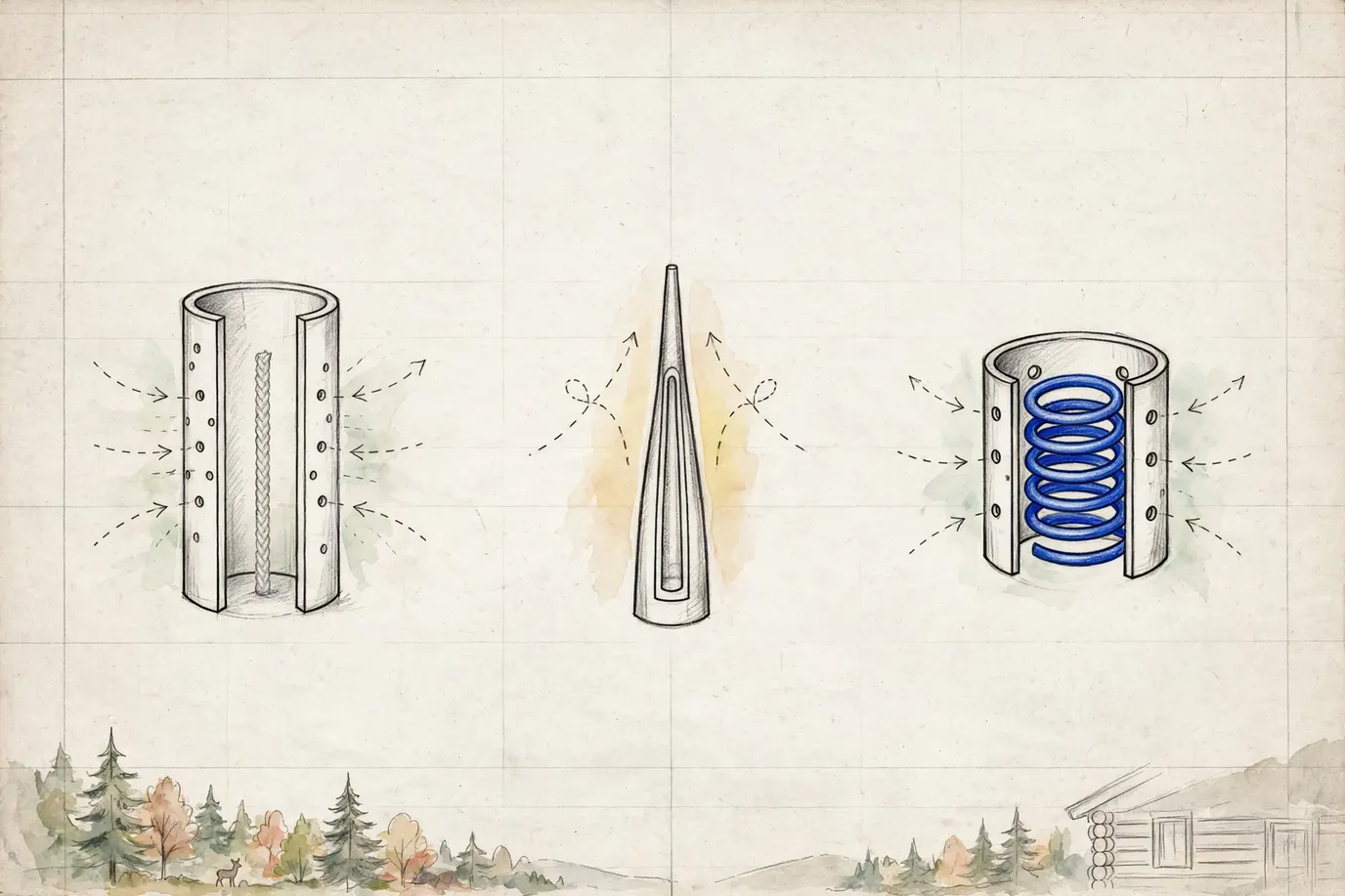
The chimney around a wick
The classic flip-top fluid lighter soaks lighter fluid into packing in its body and draws it up a wick. A flint wheel throws the spark. Around the wick sits a metal chimney with holes in it. Wikipedia's history of the lighter says soldiers in World War I fitted chimney caps with holes to make their lighters more windproof, and the idea stuck.
The holes let enough air in to feed the flame, while the metal walls take the gusts. The flame is still a soft yellow flame. It's just a soft flame with a fence around it. (Jess's take: "It's not windproof. It's wind-managed." She's a physical therapist. She says that about my back, too.)
The torch jet
A torch lighter holds butane as a pressurized liquid. One maker's explainer says the gas passes through a small hole called an orifice, which works like an air pump, and the fast gas-air stream keeps the flame straight no matter how you hold the lighter. TSA describes the result as a thin, needle-like flame, hotter than a common lighter's, reaching 2,500 F.
That speed is why a jet shrugs off a breeze a soft flame can't. It's also why a jet lighter is the one most people mean when they say windproof today.
The catalytic coil
The third design is less common and a little clever. According to Wikipedia's lighter entry, some windproof butane lighters mix fuel with air and pass the mixture through a catalytic coil. An electric spark starts the first flame, and soon the coil is hot enough to make the fuel-air mix burn on contact. As long as the coil stays hot, the mix keeps lighting itself.
Arc lighters, briefly
Arc lighters don't burn fuel at all; they make an electric arc between two points. If an arc lighter's maker calls it windproof, it shows up in this table. The electric lighter page covers charging, battery life and the rest.
What to look at when you pick a windproof lighter
The table shows each lighter's fuel and ignition, flame type, jets, whether the maker says it's windproof and waterproof, whether it's refillable or USB-rechargeable, body material, and length and weight. Windproof, waterproof, length and weight are the maker's alone; the other columns use the maker's numbers first and the Amazon listing's where the maker is silent, marked as listing values. A dash means neither states it. Here's how I read those columns.
Flame tells you which design you're buying
The Flame column is the first thing I check. Torch/jet means a pressurized butane jet. Wick means the chimney design and lighter fluid. Arc or plasma means a battery. If it says soft flame next to a windproof yes, read the maker's description to see what's protecting it.
Pick by the job. A jet aims well, which helps when you're poking a flame into a tinder bundle under a lean-to of sticks. A wick flame is gentler and doesn't need pressure. Real talk: my fire kit has both. Renee calls that redundancy. I call it Tuesday.
Fuel / ignition decides your upkeep
The Fuel / ignition column says butane, lighter fluid (wick), electric, or butane + electric. Each fuel has a chore attached.
- Lighter fluid: you refill the packing; the fluid evaporates between uses on an unsealed lighter
- Butane: you refill from a can; it gets sluggish in the cold
- Electric: you charge it; no fuel, but no charge means no fire
- Butane + electric: butane flame with a battery spark instead of a piezo click
Choose the chore you'll actually do. If you never remember to charge things, don't buy the thing that needs charging. My headlamp drawer is the evidence file.
Windproof is the maker's word, so read the whole claim
The Windproof column is the selection rule for this page, so every lighter here says yes. What the column can't tell you is how much wind. A yes doesn't come with a wind speed attached. Read the maker's description: if it explains the design (chimney, jet, coil), you know what's actually holding the flame.
Waterproof is a separate column and a separate promise
The Waterproof column is where a windproof lighter becomes a windproof and waterproof lighter. Wind and water fail a lighter in different places. Wind hits the flame. Water gets into the fuel, the wick or the spark.
Sealed survival lighters handle it with gaskets. One maker of a sealed fluid lighter says each cap has its own O-ring that seals water out and stops the liquid fuel from evaporating between uses, and rates it submersible to more than 1 meter. If you hunt in rain, cross creeks or kayak to a spot, this column matters more than the windproof one.
Refillable and Rechargeable (USB)
Refillable shows yes for fluid and butane lighters you can fill. A no on a butane lighter means it's a throwaway. Rechargeable (USB) shows up on arc and butane + electric models. If the lighter lives in a pack for weeks between trips, think about which one you'll remember to top up.
Jets, body, length and weight
Jets only applies to torches. One jet goes further per fill; more jets make a wider flame. The Body column lists the material, usually metal or plastic. Metal takes pocket abuse better; plastic weighs less. Length and Weight tell you whether it rides in a shirt pocket or the bottom of a pack. Pack of tells you how many come in the box, which is handy if, like me, you keep one in the truck, one in the pack and one in the cabin junk drawer.
Waterproof and survival lighters
"Survival lighter" isn't a standard. It's a label makers use for lighters built to work when things go wrong: windproof, waterproof, often with a flint wheel instead of a piezo click. One maker of a sealed lighter says its flint wheel is more effective and reliable than piezo ignition, and that sealed caps keep a filled lighter ready for months rather than days.
That evaporation point is the quiet reason sealed lighters exist. Wikipedia's lighter entry notes the wick on a fluid lighter sits under an enclosed top to slow evaporation of the volatile fuel. A flip-top lid slows it. An O-ring stops it. If your lighter rides in a pack from September to January, that difference is the difference between a flame and a smell.
My one opinion for this page: a survival lighter is still your first way to light a fire, not your only one. Carry a ferro rod or another fire starter as the backup. The checkable reason is in this page's own care section: every lighter here depends on fuel, a flint or a charge, and a ferro rod depends on none of them.
If you want a ranked list built for that use, the survival lighter selection is where it'll live.
Care for a windproof lighter
Fluid lighters with a chimney
One maker's fill steps are simple. Pull the insert out of the case, lift the felt pad, and soak the packing slowly. Stop when the fuel reaches the top of the packing material; never overfill. Wipe the lighter and your hands dry before lighting, close the fuel can first, and don't carry a wet lighter in a pocket against your skin.
The same maker's troubleshooting goes in order: fuel, then flint, then wick.
- Flint: flints wear down with use; if the wheel spins freely with no spark, replace it
- Wick: when it turns black, pull up a little clean wick with tweezers and trim it even with the chimney, once or twice a year
- New wick: needed after it's been trimmed more than two or three times
- Fuel: use the fluid the maker names
Butane jets and coils
Butane has to turn to gas before it burns. One lighter maker's FAQ says butane vaporizes less in cold, thin air, and lists low fuel, a very cold lighter and wind disrupting ignition as reasons a lighter sparks but won't light. So carry a butane windproof in an inside pocket in November. The same FAQ says to store lighters at room temperature, away from sun and heat, and never in a hot vehicle. For the refill routine, the refillable butane lighter page walks through it.
Flying with a windproof lighter
TSA treats each design differently, so check the type before you pack.
- Disposable and classic flip-top fluid lighters: allowed in carry-on; in checked bags only empty, or up to two fueled ones in a DOT-approved case
- Torch lighters: not allowed in carry-on or checked bags
- Arc and electronic lighters: carry-on only, with the battery out or the button locked or covered
- Lighter fluid: not allowed in either
TSA also says the officer at the checkpoint makes the final call.
Windproof lighter safety
A lighter that works in wind does not make wind a good time for a fire. The Forest Service's Smokey Bear guidance says don't build a campfire in hazardous, dry or windy conditions, keep a fire at least 15 feet from tents and branches, and check local fire restrictions before you go.
Keep lighters away from kids. CPSC's child-resistance rule for cigarette lighters covers disposable and novelty lighters, so a refillable metal lighter may have no child lock at all. Store it up high.
Who should skip the windproof lighter
If you only light the cabin stove, candles or a gas grill, you don't need one. A long lighter reaches the burner better and keeps your hand back. If your fire kit already has a jet torch, you own a windproof lighter, whether the box said so or not.
And if you hate upkeep, pick carefully. A fluid lighter wants refills, a butane one wants warmth, and an arc one wants a cable. Pick the chore you'll do, and keep a ferro rod in the bag for the day you didn't. The wind at Hemlock Run doesn't check what the box said.
Brands in this list
Related
Questions people ask
How do windproof lighters work?
Three ways. A wick lighter puts a metal chimney with holes around the flame, so air gets in but gusts don't hit it straight on. A torch lighter forces butane through a small orifice so fast that the flame stays straight. A catalytic lighter passes a butane and air mix through a coil that gets hot enough to keep it burning on contact.
Is a windproof lighter also waterproof?
Not by default. Windproof is about moving air; waterproof is about keeping water out of the fuel and the spark. Look for both words in the maker's description. Sealed survival lighters use an O-ring on each cap, and one maker says its lighter is submersible to more than 1 meter. The table shows each claim in its own column.
What is a survival lighter?
It's a name, not a standard. Most lighters sold that way pair a windproof flame with a sealed, waterproof body, often with a flint wheel instead of a piezo click. One maker says its sealed caps keep liquid fuel from evaporating, so a filled lighter stays ready for months instead of days. Carry a ferro rod or other fire starter as the backup anyway.
Can I fly with a windproof lighter?
It depends on the type. TSA allows disposable lighters and classic flip-top fluid lighters in carry-on bags, and lets fueled ones in checked bags only inside a DOT-approved case. Torch lighters are banned in both. Arc lighters can go in carry-on with the button locked or the battery out. Lighter fluid can't fly at all.
Why does my windproof lighter spark but not light?
For a butane lighter, one maker lists low fuel, a very cold lighter and wind disrupting ignition as the usual causes. For a wick lighter, the maker's checklist goes fuel first, then a stuck or worn flint, then a wick that no longer pulls fuel up to the spark. Pulling up a bit of fresh wick and trimming it often fixes that last one.
Sources
- Wikipedia: Lighter (operation, chimney, catalytic windproof lighters) — accessed 2026-10-22
- Cricket Lighters: What is a torch flame lighter and how to refill it — accessed 2026-10-22
- TSA: What Can I Bring? Torch lighters — accessed 2026-10-22
- TSA: What Can I Bring? Lighters (disposable and flip-top) — accessed 2026-10-22
- TSA: What Can I Bring? Arc and electronic lighters — accessed 2026-10-22
- TSA: What Can I Bring? Lighter fluid — accessed 2026-10-22
- Zippo: Windproof lighter, fill with fuel — accessed 2026-10-22
- Zippo: Windproof lighter, trim or replace wick — accessed 2026-10-22
- Zippo: Windproof lighter, replace flint — accessed 2026-10-22
- Zippo: Windproof lighter, not lighting — accessed 2026-10-22
- Exotac: titanLIGHT sealed lighter (O-ring caps, submersible rating) — accessed 2026-10-22
- BIC: Lighter frequently asked questions — accessed 2026-10-22
- U.S. Consumer Product Safety Commission: Lighters business guidance — accessed 2026-10-22
- Smokey Bear (USDA Forest Service): How to build your campfire — accessed 2026-10-22