Brand · Trail Cameras & Optics
Tactacam Reveal Trail Cameras
Tactacam Reveal is a family of cellular trail cameras: each one sends photos over LTE to the Reveal app, and Tactacam picks the carrier for you. The lineup splits three ways. Reveal X uses a low-glow flash, Reveal Pro adds no-glow, and Reveal Ultra adds live view and GPS theft alerts. Then there's the generation number, 3.0 or 4.0. The short version: pick the line by flash, then the generation by power. (Uncle Walt says the names sound like a phone company. He still has a flip phone.)
We earn a commission if you buy through our links, at no cost to you. Disclosure
Tactacam on Amazon US
26 models- Trail camera
Tactacam Reveal X Gen 2.0 LTE 2 Pack
- Units in pack
- 2
- Connectivity
- Cellular
- Trail camera
Tactacam Reveal X Gen 3.0
- Connectivity
- Cellular
- Video
- 1080p
- Trail camera
Tactacam Reveal Pro 3.0
- Connectivity
- Cellular
- Trail camera
Tactacam Reveal X Gen 3.0 Tree Mount
- Connectivity
- Cellular
- Trail camera
Tactacam Reveal X 3.0 R5 Solar Bundle
- Connectivity
- Cellular
- Video
- 1080p
- Trail camera
Tactacam Reveal X Gen 3.0 2PK
- Units in pack
- 2
- Connectivity
- Cellular
- Trail camera
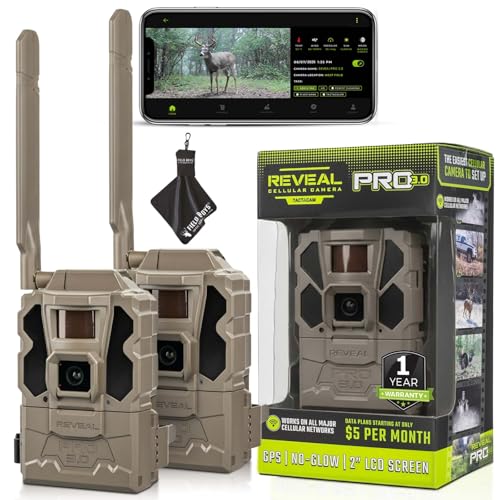
Tactacam Reveal Pro 3.0 2PK
- Units in pack
- 2
- Connectivity
- Cellular
- Video
- 1080p
- Trail camera
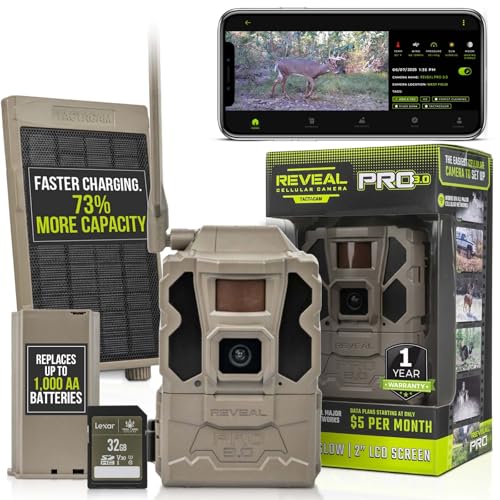
Tactacam Reveal Pro 3.0 Solar Bundle
- Connectivity
- Cellular
- Video
- 1080p
- Trail camera
Tactacam Reveal X 3.0 LiPo Solar 2PK
- Units in pack
- 2
- Connectivity
- Cellular
- Video
- 1080p
- Trail camera
Tactacam Reveal X Gen 3.0 SD Card
- Units in pack
- 1
- Connectivity
- Cellular
- Trail camera
Tactacam Reveal X Gen 3.0 Solar Panel
- Connectivity
- Cellular
- Trail camera
Tactacam Reveal Ultra
- Connectivity
- Cellular
- Trail camera
Tactacam Reveal Ultra Folding Solar 2PK
- Units in pack
- 2
- Connectivity
- Cellular
- Video
- 1080p
- Trail camera
Tactacam Reveal Ultra Cleaning Cloth Bundle
- Connectivity
- Cellular
- Video
- 1080p
- Trail camera
Tactacam Reveal Ultra Solar R5 Bundle
- Connectivity
- Cellular
- Video
- 1080p
- Trail camera
Tactacam Defend 360 Cellular
- Connectivity
- Cellular
- Video
- 1080p
- Trail camera
Tactacam Reveal X 2.0
- Connectivity
- Cellular
- Trigger speed
- 0.4 s
- Night/flash range
- 96 ft
- Trail camera
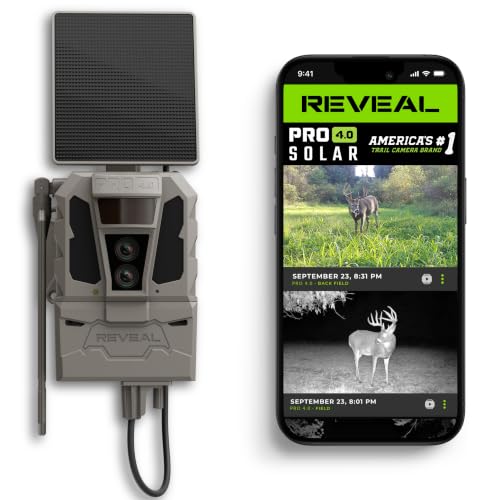
Tactacam Reveal Pro 4.0 Solar
- Connectivity
- Cellular
- Video
- 1080p
- Night/flash range
- 96 ft
- Trail camera
Tactacam Reveal X 4.0 2-Pack
- Units in pack
- 2
- Connectivity
- Cellular
- Video
- 1080p
- Trail camera
Tactacam Reveal X 4.0 Cleaning Cloth
- Connectivity
- Cellular
- Video
- 1080p
- Night/flash range
- 96 ft
- Trail camera
Tactacam Reveal X 4.0 2-Pack
- Units in pack
- 2
- Connectivity
- Cellular
- Video
- 1080p
- Trail camera
Tactacam Reveal Pro 4.0 2PK
- Units in pack
- 2
- Connectivity
- Cellular
- Video
- 1080p
- Trail camera
Tactacam Reveal Pro 4.0
- Connectivity
- Cellular
- Video
- 1080p
- Night/flash range
- 96 ft
- Trail camera
Tactacam Reveal Pro 4.0 Power Bundle 2PK
- Units in pack
- 2
- Connectivity
- Cellular
- Video
- 1080p
- Trail camera
Tactacam Reveal Pro 4.0 Solar 2 Pack
- Units in pack
- 2
- Connectivity
- Cellular
- Video
- 1080p
- Trail camera
Tactacam Reveal Pro 4.0 Solar
- Connectivity
- Cellular
- Video
- 1080p







What Tactacam makes for hunters
Tactacam makes cellular trail cameras under the Reveal name, plus the parts that keep them running: solar panels, rechargeable battery packs, a battery belt, tree mounts and chargers. It also sells the Defend line of cellular cameras, and the maker's own site lists a web-based land-mapping tool called Habitat IQ.
On this site, Tactacam covers one product type: trail cameras. Every Tactacam camera in the grid above is cellular. That matters more than it sounds. A cellular camera sends photos to your phone over LTE, so you check it from the kitchen table instead of walking in to pull an SD card. It also means each camera needs a data plan, which I'll get to.
The grid changes as listings come and go, and a lot of the listings are bundles of the same camera. So I'll write about the lines and what separates them, not about how many are listed this week.
Most of the grid's specs come from Amazon listings, and the grid marks those. Where the maker's own page says more, I've used the maker's page and said so.
How the Reveal lineup is organized
Here's what actually changes from one Reveal listing to the next. There are three layers:
- The line: Reveal X, Reveal Pro or Reveal Ultra
- The generation: 2.0, 3.0 or 4.0, the version number after the name
- The bundle: single camera, 2-pack, or a camera with a solar panel, a battery pack, an SD card, a tree mount or a cleaning cloth
The line decides the flash and the extras. The generation decides the image sensor, storage and power options. The bundle decides what's in the box. Read a listing title in that order and the long names start to make sense.
Lineup notes: the Tactacam Reveal X
The Reveal X is the line most people mean when they search "Tactacam Reveal X." Across the 2.0, 3.0 and 4.0 listings in the grid, the flash type is the same: low glow.
Low glow means infrared LEDs that show a faint red glow when they fire. No glow uses LEDs you can't see. In kitchen terms, low glow is a stove burner a minute after you turn it off. No glow is the burner an hour later. Tactacam lists the Reveal X 3.0 and 4.0 flash range at 96 feet.
Reveal X 3.0
The maker's Reveal X 3.0 page lists:
- Photos: 4K or 2.5K
- Video: 1080p clips of 10, 15 or 30 seconds
- Trigger speed: under half a second
- Storage: 8 GB built in, plus an optional SD card slot
- Extras: built-in GPS, and live aiming through the app
The "Tactacam Reveal X 3.0" listings in the grid come as a single camera, a 2-pack, and bundles with a solar panel, an SD card or a tree mount. The camera inside is the same; the box is what changes.
Reveal X 4.0
The Reveal X 4.0 keeps the 4K and 2.5K photo options, 1080p video and the 96-foot low-glow flash, per the maker. Its page adds simultaneous photo and video capture. It lists 8 GB of internal storage with an optional SD slot, and power from 12 AA batteries or a 12-volt external input.
Reveal X 2.0
The older Reveal X 2.0 is still in the grid. Its Amazon listing gives a 0.4-second trigger speed, a 96-foot low-glow flash, 12 AA batteries and AT&T as the carrier. The 3.0 and 4.0 listings name multi-carrier or auto-connect service instead. If you hunt where only one carrier has signal, that line in the listing is worth reading twice.
Lineup notes: the Reveal Pro
The Reveal Pro is the line for people who don't want any visible glow. The Pro 3.0 listings in the grid name a no-glow flash, and the maker's page agrees: no-glow IR with an 80-foot range.
That's the trade in one sentence. No glow is invisible but reaches a bit less far than low glow on the maker's own numbers.
The Pro 3.0 page also lists a 2-inch screen with live aiming, on-demand video and HD photo requests from the app, built-in GPS and the same 8 GB plus SD slot as the X 3.0.
Reveal Pro 4.0
The Pro 4.0 is where the flash becomes a choice. Tactacam lists a selectable flash: low glow at 96 feet or no glow at 80 feet. Its page also lists live view and on-demand requests, both as added subscriptions, plus built-in GPS. Power is 12 AA batteries or external power, the same as the X 4.0.
In the grid you'll see the Pro 4.0 alone, in 2-packs, with a solar panel, and in a power bundle. The Pro 4.0 Solar listing names a FlexPack R5 5,000 mAh rechargeable battery as its power source.
Lineup notes: the Tactacam Reveal Ultra
The Reveal Ultra is the line with the most features per the maker's page. That's the "Tactacam Reveal Ultra trail camera" people search for, and here's what its page lists:
- Flash: selectable low glow (about 96 feet) or no glow (about 80 feet)
- Trigger speed: under half a second
- Live video streaming, plus on-demand videos
- Active GPS: keeps sending location after the camera loses power or is turned off, and alerts you if it moves more than half a mile
- Storage: 16 GB built in, plus an optional SD slot
- Screen: 2 inches
- Power: 12 AA batteries or a 12-volt external input
Live view means you can watch the camera's view from your phone in real time. Most of what you'll watch is an empty food plot. (That's not a complaint. That's deer hunting.)
The theft alert is the feature that changes how you place it. Half a mile is a long way for a camera to wander on its own. In the grid, the Ultra comes alone, in a folding-solar 2-pack, with a solar panel, and with a cleaning cloth. Danny asked if the cleaning-cloth bundle meant the camera came with chores. It does. The lens is yours to wipe.
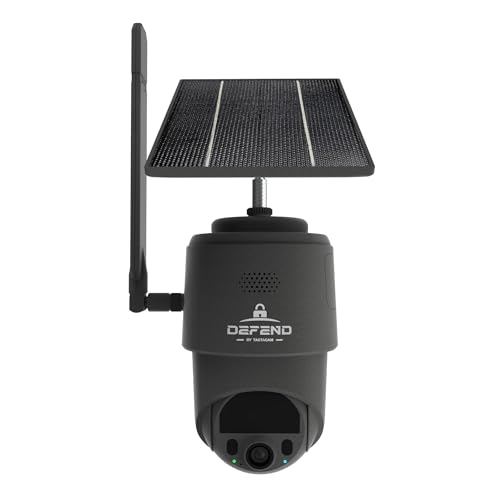
The Defend 360
The Defend 360 Cellular is the odd one in the grid. Tactacam sells it under its Defend security line, and its page calls it an interactive scouting tool, with food plots and open areas as examples. The maker lists:
- Pan, tilt and zoom you control from the app, in live view only; it doesn't move on its own
- A rechargeable battery and a solar panel, both included
- A low-glow flash with a 75-foot range
- IP65 weather resistance and 8 GB of internal storage
If you want one camera that can look over a whole field, that's what this one is for. If you want a camera on a trail, the Reveal lines are built for that job.
How to choose within the Tactacam lineup
Pick the flash first
This decides the line. Low glow (Reveal X) reaches 96 feet on the maker's numbers. No glow (Pro 3.0) reaches 80. The Pro 4.0 and the Ultra let you switch between them. If you're not sure which you want, the switchable models keep the choice open. Background on flash types across brands is on the trail camera page.
Then pick how you'll power it
My one opinion on this page: decide your power setup before you pick the generation. The reason is on Tactacam's own 4.0 pages. They say the older Reveal lithium cartridge is not compatible with the 4.0 cameras, which use 12 AA batteries, the FlexPack R5 or R10, or a solar panel through the 12-volt input. If you already own 3.0-era power accessories, that changes the math.
Quick math on AAs: 12 per camera, so two 2-packs plus spares is a lot of batteries in the truck. A solar bundle trades that for a panel strapped to the tree. Both work. The difference is how often you walk in.
Then check the carrier line
Tactacam lists automatic carrier selection on the 3.0, 4.0 and Ultra cameras: the camera connects to the strongest available network. The 2.0 listing names AT&T only. Before you buy any cellular camera, check signal at the exact tree, not at the truck. The cellular trail camera page covers how cellular cameras work across brands.
Then decide how many cameras
The 2-packs exist because most people don't stop at one. Keep in mind that Tactacam bills app plans per camera, so a 2-pack means two plans. More on plans below.
The Reveal app and plans
Every Reveal camera sends photos to the Reveal app, and each camera needs a plan. Here's how Tactacam lays them out:
- Three tiers: two with monthly photo allowances and one with unlimited photos
- Monthly or yearly billing, with yearly billing costing less
- No carrier contract and no activation fee
- Pause in the off-season, per camera
- Add-ons: live view per camera, and an account-wide add-on for unlimited HD and on-demand requests
The practical bit: pausing a plan in February is a line on your to-do list, not a phone call. Put it next to "bring the cameras in" and "find where I parked the cameras." Picks across brands are on the best cellular trail camera page.
Setup and placement notes
The maker includes a tree strap with the Reveal X 4.0, Pro 4.0 and Ultra, and lists its tree mount as compatible. Where you strap it is your call, and a Texas A&M wildlife publication has some plain guidance for deer cameras:
- Height: 3 to 4 feet above the ground is ideal for deer
- Where: trails, water, and spots with sign like scrapes, rubs and tracks
- Before you leave: run a quick test to check it's working and the image is good
- After that: check it now and then for battery life
The same publication suggests aerial photos and topographic maps to find spots worth a camera. Cellular cameras skip the SD-card walk, but the battery still runs down.
Camera rules on public land and during the season vary by state. Check your state wildlife agency before you hang one.
Tactacam warranty basics
Tactacam's warranty page says Reveal cameras are covered for one year from the camera's original activation date. Accessories are covered from purchase. The coverage is for manufacturing defects, and Tactacam repairs or replaces at its discretion. It doesn't cover damage from use, accidents or normal wear.
Two details to know before you need them. Coverage applies only to items bought through authorized dealers and channels. And a claim starts in the Reveal warranty portal; support then issues a return authorization number, and returns without one aren't accepted. Don't send the batteries, antenna or SD card unless support asks for them.
Tactacam facts
Here's what I could verify on the maker's own site:
- Location: Decorah, Iowa, per Tactacam's contact details and its warranty return address
- Reveal launch: Tactacam's story page dates the first Reveal cellular trail camera to 2020
- Warranty: one year from activation for Reveal cameras, covered above
This page doesn't cover a founding year or where the cameras are made.
The warranty clock starts at activation, not at the store. Put that date in your phone the day you set the camera up, and you'll know exactly where you stand next September.
Where Tactacam shows up
Often compared
Questions about Tactacam
Is the Tactacam Reveal a good trail camera?
What the maker states is checkable: Reveal cameras send photos over LTE with automatic carrier selection, take 4K or 2.5K photos and 1080p video, and carry a one-year warranty from activation. The Reveal X lists a 96-foot low-glow flash, and the Pro and Ultra add a no-glow mode. Whether one suits you depends on signal where you hunt, the flash you want and how you'll power it.
What is the difference between the Reveal X and the Reveal Pro?
On the maker's pages the main difference is the flash. The Reveal X 3.0 and 4.0 list a low-glow flash with a 96-foot range. The Pro 3.0 lists a no-glow flash at 80 feet, and the Pro 4.0 lets you choose low glow or no glow. The Pro 3.0 page also lists a 2-inch screen for aiming. Both use 12 AA batteries or external power.
What is the Tactacam Reveal Ultra?
The Reveal Ultra is the line Tactacam lists with live video streaming, Active GPS that keeps reporting location after the camera loses power and alerts you if it moves more than half a mile, selectable low-glow or no-glow flash, 16 GB of internal storage and a 2-inch screen. Live view needs an added subscription.
Do Tactacam Reveal cameras need a subscription?
Yes. Photos travel over LTE, so each camera needs a Reveal app plan. Tactacam lists three tiers with different monthly photo allowances, billed monthly or yearly, with no carrier contract or activation fee. You can pause a camera's plan in the off-season. Live view and extra HD or video requests are separate add-ons.
What batteries does the Tactacam Reveal X 4.0 use?
Tactacam lists 12 AA batteries for the Reveal X 4.0 and the Pro 4.0, plus a 12-volt external input. It also lists the FlexPack R5 and R10 rechargeable packs and two solar panels as compatible. The maker's 4.0 pages say the older Reveal lithium cartridge is not compatible, so check before you reuse old accessories.
What warranty do Tactacam Reveal cameras have?
Tactacam's warranty page says Reveal cameras are covered for one year from the camera's original activation date, and accessories from purchase. Coverage applies to items bought through authorized dealers. A claim starts in the Reveal warranty portal, and support issues a return authorization number before you ship anything.
Sources
- Tactacam: Reveal trail cameras, Defend cameras and accessories — accessed 2026-10-28
- Tactacam: Reveal X 4.0 cellular trail camera — accessed 2026-10-28
- Tactacam: Reveal Pro 4.0 cellular trail camera — accessed 2026-10-28
- Tactacam: Reveal X 3.0 cellular trail camera — accessed 2026-10-28
- Tactacam: Reveal Pro 3.0 cellular trail camera — accessed 2026-10-28
- Tactacam: Reveal Ultra cellular trail camera — accessed 2026-10-28
- Tactacam: Defend 360 cellular camera — accessed 2026-10-28
- Tactacam: Reveal app plans — accessed 2026-10-28
- Tactacam: Warranty and returns — accessed 2026-10-28
- Tactacam: Our story — accessed 2026-10-28
- Texas A&M Institute of Renewable Natural Resources and AgriLife Extension: Potential uses for trail cameras in wildlife management — accessed 2026-10-28