What SPYPOINT makes for hunters
SPYPOINT makes one product type on this site: trail cameras. The grid above splits them into two families and a few sub-groups:
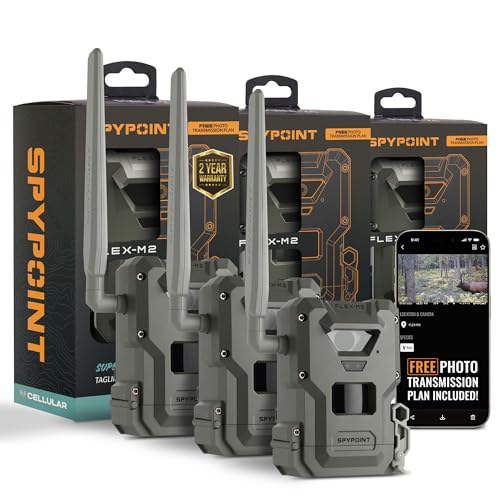
- FLEX cellular cameras: FLEX-M, FLEX-M2, FLEX-DARK, FLEX-S-DARK and the 36 MP FLEX models
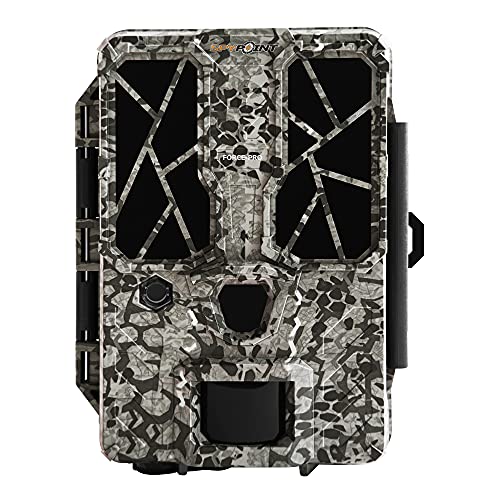
- FORCE SD card cameras: FORCE-24, FORCE-4K, FORCE-PRO and FORCE-PRO-S 2.0
- Multi-packs and bundles: twin packs, 3-packs, 4-packs, and bundles with a solar panel or SD card
The grid filters by type and changes as listings come and go, so I'll write about the families and what separates them on paper. Most spec values in the grid came from Amazon listings and are marked that way. Where the maker's series pages state a value, I've used the maker's number in the text. Where nobody states one, the grid shows a dash.
The maker also sells accessories, solar panels and replacement parts. This site lists the cameras.
The SPYPOINT cellular trail camera: the FLEX family
What every FLEX camera shares
The maker's FLEX series page lists the same core for every model: cellular with dual SIM, which it says "connects to the strongest signal," plus settings, scheduling and alerts in the SPYPOINT app. Photos and video can be customized, including video with sound and time-lapse.
Here's why that matters at a camp like ours: Hemlock Run is a long drive from my apartment in Harrisburg, and nobody wants to walk to a camera to find out a raccoon has been modeling for it all week. A cellular camera tells you from the kitchen. More on the type across brands is on the cellular trail camera page.
SPYPOINT FLEX-M and FLEX-M2
The FLEX-M is the entry point of the family on this site. Its listings name 28 MP photos, 720p video, an IP65 rating, and a free plan of up to 100 photos monthly. It comes as a single camera and in twin, 4-pack and SD card bundles.
The FLEX-M2 is the newer camera. The maker's series page lists 32 MP photos, 1080p video, a 0.4-second trigger, a 90-foot range and a no-glow flash. It also lists two power options: a rechargeable LIT-22 battery the maker rates at up to 12 months, or AA batteries at up to 6 months. The grid has single cameras, twin packs, a 3-pack and a solar bundle.
SPYPOINT FLEX-DARK and FLEX-S-DARK
These are the 40 MP models. Per the maker, both list 1080p video, a 0.3-second trigger and a 100-foot range, and both offer low-glow and no-glow flash. The difference is power. The FLEX-S-DARK has a built-in solar panel and battery, per the maker. The FLEX-DARK doesn't list built-in solar.
The FLEX G-36 Twin and Flex-Plus 36MP in the grid are 36 MP cellular models, per their listings, with dual-SIM connection and a 100-foot flash range.
The FORCE family: SD card trail cameras
What every FORCE camera shares
FORCE cameras are non-cellular. The maker's series page says they store HD photos and video on an SD card, and every FORCE model it lists has a low-glow flash. No plan, no signal needed. You walk in and pull the card. (On paper this is the simplest way to see what moved. In practice it's also the best excuse Walt has for a walk.)
FORCE-24, FORCE-4K and FORCE-PRO-S 2.0
The three current FORCE models on the maker's page step up like this:
- FORCE-24: 24 MP, 2K video with sound, 0.5-second trigger, 70-foot range, configuration screen
- FORCE-4K: 4K video, 0.4-second trigger, 110-foot range, color LCD, 66° field of view
- FORCE-PRO-S 2.0: 4K video, 0.2-second trigger, 110-foot range, color LCD, built-in solar panel
On the 4K models the maker's page gives 48 MP in the product sections and 40 MP in its comparison table. I'm not going to pick one for them. The grid also lists a FORCE-PRO with 30 MP and 4K video and a Force 48, per their listings. The trail camera page covers SD card cameras across brands.
SPYPOINT multi-packs and bundles
A good share of the grid is the same camera sold in a different box. The FLEX-M comes as a twin pack, a 4-pack and an SD card pack. The FLEX-M2 comes as a twin pack, a 3-pack and a solar bundle. The FORCE-24 and the FLEX-S-DARK come as 2-packs.
Read the pack listing for what's actually in it. The specs per camera are the same as the single camera's, but a bundle may add an SD card or a solar panel, and the listings say which. For cellular packs, remember the plan page: one plan per camera. A 4-pack is four cameras and four plans, even if three of them stay on the free one.
(A 4-pack also means four cameras to find again. Uncle Walt bought a twin pack of something once and still talks about "the other one" like it moved out of state.)
How to choose within the SPYPOINT lineup
Cellular or SD card first
This is the big fork. A FLEX camera needs cell signal where you hang it and a plan for each camera. A FORCE camera needs neither, but you have to visit it. If your camera is a long drive from home, or the spot is one you don't want to walk into midweek, cellular earns its keep. If you're checking a camera on the walk to your stand anyway, an SD card camera does the job.
Check your carrier's coverage map for the exact spot before you buy a cellular camera. A ridge can have three bars and the creek bottom below it none.
Then the plan math
My one opinion on this page: for a cellular camera, do the plan math before you compare megapixels. The maker's plan page lists a free plan of 100 photos a month and larger paid plans up to unlimited, and it says one plan per camera. Full-HD photos and videos are separate add-on packages. Here's the quick math: one busy trail can fill 100 photos in a week of rain-blown leaves. Three cameras means three plans.
Then the flash type
FLEX and FORCE cameras list low-glow or no-glow infrared flash, and some FLEX models offer both. Browning's guide to night images explains the trade. A low-glow flash can show a faint red glow if someone is looking at it. A no-glow flash stays invisible but lights the subject less, so night photos come out grainier and blur more easily.
- Low-glow: clearer night photos, a faint glow at the camera
- No-glow: no visible glow, darker and noisier night photos
Think about who walks past the camera. Deer, or deer and people.
Then power
Three options show up across the lineup: batteries, a built-in solar panel, or an external solar panel bundle. The maker rates the FLEX-M2's LIT-22 rechargeable battery at up to 12 months and AA batteries at up to 6. The FLEX-S-DARK and FORCE-PRO-S 2.0 have solar built in, and the maker says extra batteries on the FORCE-PRO-S 2.0 are optional backup.
Solar needs sun. A camera under hemlocks in a north-facing hollow gets less of it than a field edge. Check the spot, not the box. Charge any lithium battery on a hard surface, away from anything that burns, and follow the maker's charging instructions.
Then trigger speed and range
Trigger speed is how fast the camera fires after it senses movement. On the maker's pages the lineup runs from 0.5 seconds on the FORCE-24 down to 0.2 seconds on the FORCE-PRO-S 2.0. A fast trigger matters on a trail where deer walk through. It matters less over a scrape where they stop. Detection and flash range runs from 70 feet to 110 feet across the FORCE family.
Setup notes for any SPYPOINT camera
A few things that apply across the lineup:
- Clear the foreground: a waving branch fills a plan with photos of a branch
- Note the setup: camera, card, battery date, plan
- Bring a spare card: swap, don't sort files in the woods
Write down which camera is where, and when you last swapped the card. (I have a column for this. Walt names his cameras after the deer he hopes to see on them. Two of them are named Buster.)
Trail camera rules vary by state, especially for cellular cameras. Check your state wildlife agency before you hang one.
SPYPOINT vs Tactacam
Both brands sell cellular trail cameras with their own apps and photo plans, and both turn up in the same searches. On this site the difference is in the mix. SPYPOINT's grid has both cellular FLEX cameras and SD card FORCE cameras. Tactacam's grid is its cellular REVEAL cameras plus the DEFEND 360, a security camera.
Tactacam's site lists its address in Decorah, Iowa, and offers REVEAL and DEFEND app plans. If you want an SD card camera from the same brand as your cellular ones, that's SPYPOINT's side of the grid. Compare plans, flash type and power camera for camera. The Tactacam brand page has its lineup.
SPYPOINT warranty basics
The maker's warranty page lists:
- Cameras: two years from the purchase date
- Accessories: one year
- Certified refurbished products: 90 days
- Who's covered: purchases from SPYPOINT or an authorized dealer, the original buyer or a gift recipient, in the country of purchase
- What's needed: proof of purchase with the date, and a return authorization number
It excludes batteries and other consumables, damage from accidents, liquids or misuse, modified products, cosmetic damage, and products from unauthorized online sellers. The customer pays shipping to send a product in.
This page doesn't cover a founding year, where the cameras are made or who owns the company. Ranked lists across brands are on the best trail camera page and the best cellular trail camera page.
Pick the family, do the plan math, and write the card date on a strip of tape inside the door. Your future self will read it in January.