What Summit makes for deer hunters
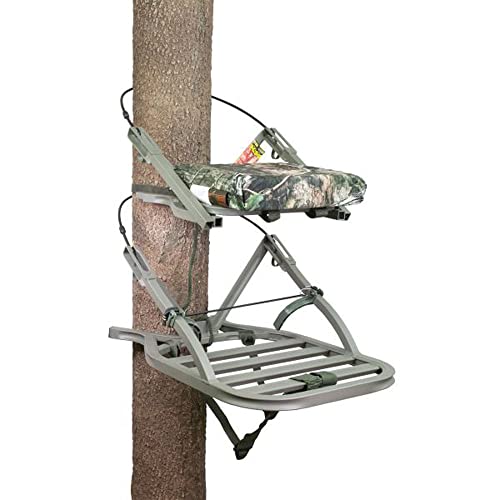
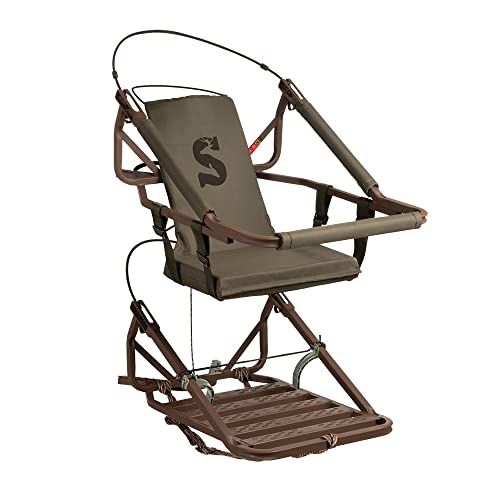
On this site, Summit covers five product types: tree stands, a ladder stand, climbing sticks, safety gear and a hunting chair. The tree stands are the heart of it, and most of those are climbers. A climber is a two-piece stand you walk up the trunk yourself: a seat section for your arms and a platform section for your feet, moved up a few inches at a time.
Here's what's in each group:
- Climbing stands: the Viper family, plus the Goliath, Titan, 180 Max, OpenShot and Dual Threat PRO
- Hang-on stands: the Ledge XT and the Dual Axis
- A ladder stand: a steel two-person model
- Climbing sticks: aluminum folding sticks
- Safety gear: full-body harnesses and 30-foot safety lines
- Extras: a swivel shooting chair and a stand umbrella
The grid above filters by type and changes as listings come and go. So I'll write about the lines and what separates them, not about how many are listed this week.
Most of the specs come from Amazon listings, and the grid marks them that way. Where a listing doesn't say, you get a dash. A dash doesn't mean the stand weighs nothing, though I've hauled a few that felt like it at 5 a.m.
Lineup notes: Summit climbing tree stands
Summit names its climbers, and most names end in SD. The suffix is shared across the line, so don't pick on it. Pick on the seat, the material and the weight rating.
The Viper family
The Viper is the name people search most, and the grid carries several versions:
- Viper SD: aluminum, padded foam seat, per its listing
- Mini Viper SD: aluminum, padded foam seat
- Viper Pro SD: a climber; its listing gives little else
- Viper Steel: the same idea in steel instead of aluminum
- Viper SD bundles: with a footrest kit, with a Pro harness, or with a backpack system
The bundle with the Pro harness lists a 300-pound weight capacity. Here's the thing about bundles. You're buying the same stand with something strapped to it. Decide whether you need the extra piece, then compare. If you already own a harness that fits and hasn't expired, the harness bundle buys you a second one.
Steel versus aluminum is the main split inside the family. The listings don't give stand weights, and I won't guess at them. If carry weight matters to you (it should, if the walk in is long), check the maker's spec for the exact model before you buy.
The big-seat climbers: Goliath, Titan and 180 Max
Three climbers in the grid list a 350-pound weight capacity: the Goliath SD, the Titan SD and the 180 Max SD. That's the number to watch if you're a bigger hunter, or if you climb with a heavy coat, a pack and a bow on the haul line below you.
Weight capacity means you plus everything on you. Add your boots, your coat and your pack before you compare. Never exceed the weight limit the maker gives. That's a safety rule from the Treestand Manufacturers Association, not an opinion.
The climbing tree stand page compares climbers across brands.
OpenShot SD and Dual Threat PRO SD
The OpenShot SD is a climber with a padded foam seat, per its listing. The Dual Threat PRO SD is a climber with a 350-pound weight capacity. The listings stop about there. If the front bar, seat height or carry system decides it for you, read the maker's manual for the exact model.
Summit hang-on stands
A hang-on is a fixed stand. You carry it up, strap it to the tree and sit. You get up there with climbing sticks or steps, which climbers don't need. Summit has two in the grid:
- Ledge XT: a hang-on with a mesh sling seat, per its listing
- Dual Axis Hang-On: a hang-on; the listing gives little more
Here's why a hunter picks a hang-on over a climber. A climber needs a fairly straight trunk you can walk the stand up. A hang-on goes on trees where a climber won't, as long as the tree is live, healthy and straight enough for the maker's limits. The TMA's guideline is plain: never use a leaning tree.
A mesh sling seat folds out of the way and lets you stand on the full platform. A padded seat is softer for a long sit. Neither is wrong. My knees vote for padding by 9 a.m.
Hang-ons across brands are on the hang-on tree stand page.
The Summit ladder stand
Summit's ladder stand here is a steel two-person model. Its listing gives a 17-foot height and a shooting rail. A two-person ladder is the stand I'd pick for sitting with a new hunter, because you're both in one spot and you can talk them through it in a whisper.
Ladder stands go up with help. They're tall, heavy and awkward alone. If the second seat is for a youngster, the second harness is the most important thing in the box. Both people wear one. Both people stay connected.
More on ladders, including straps and support bars, is on the ladder stand page.
Climbing sticks
Summit's Aluminum Folding Climbing Sticks come as a 3-pack, per the listing. Sticks are for hang-ons. You strap them to the trunk one above the other and climb them like a ladder.
Three sticks reach a certain height. More sticks reach higher. Whatever height you set, the TMA says to keep three points of contact on each step: two hands and one foot, or one hand and two feet. Climbing sticks from other makers are on the climbing sticks page.
Summit harnesses and safety lines
My one opinion on this page: buy the harness before you buy the stand. The reason is in the TMA's guidelines. You wear a full-body fall arrest harness every time you leave the ground, including on the way up and down. A harness also has an expiration date, and it must be thrown out and replaced after a fall. So the harness is the piece you'll replace more often than the stand.
The harnesses
The Summit harnesses in the grid, per their listings:
- Men's Sport Harness: Medium and Large; the Medium lists a 300-pound weight rating
- Men's Pro Harness: Medium for waists of 28 to 35 inches, Large for 35 to 46 inches
- Element Harness: Large, for waists of 35 to 46 inches
Fit it with your hunting layers on. A harness that fits over a T-shirt in the garage may not buckle over a November coat.
This site doesn't have a separate harness page. Harnesses and lifelines from a safety-gear maker are on the Hunter Safety System brand page.
The safety lines
Summit sells 30-foot safety lines, one alone and one in a 3-pack. The 3-pack listing gives a 300-pound weight rating. A safety line (also called a lifeline) runs from your stand height down to the base of the tree. You clip your harness to it before you leave the ground and stay attached all the way up and all the way down.
Wisconsin DNR says to use a lifeline when climbing up and down, so you're connected from the time you leave the ground. The 3-pack covers three stands.
The shooting chair and the stand umbrella
Two Summit products don't go up a tree at all.
The Shooting Chair SU88023 is a ground-blind chair. Its listing gives a 360-degree swivel, adjustable height and a backrest. A swivel lets you turn toward a sound without scraping chair legs on the blind floor, which is the noise that gives you away. Swivel chairs across brands are on the swivel hunting chair page.
The Portable Treestand Umbrella is what it sounds like. It's the only thing in the lineup that keeps you dry. Opening morning brings rain more often than I'd like.
How to choose within the Summit lineup
Start with your trees
Walk your woods first. If your trees are straight trunks with no low limbs, a climber works and you don't carry sticks. If the good trees are crooked, limby or too thick, look at a hang-on and sticks, or a ladder. The TMA says to pick a live, healthy, straight tree within the size limits the maker gives, and never a leaning one. The maker's tree size limits are in each stand's manual.
Then the seat and the weight rating
Inside the climbers, the weight rating splits the lineup. The Goliath, Titan, 180 Max and Dual Threat PRO list 350 pounds. The Viper with the Pro harness lists 300. Add your gear before you compare. Then pick padded foam or mesh by how long you sit.
Then aluminum or steel
Aluminum or steel is the next split, mainly in the Viper family. If the walk in is long, check the maker's stand weights before you decide. If you hunt fifty yards from the truck, it matters less.
Then the harness size
Measure your waist with your hunting layers on. Pick the harness size from the listing's waist range, not from your pants size. Fit it in the garage first.
The tree stand page covers all the stand types side by side. If you'd rather hang from a saddle than sit on a seat, the saddle hunting guide covers that approach.
Setup and safety for Summit stands
These come from the Treestand Manufacturers Association's guidelines and Wisconsin DNR. Read them before every season:
- Wear a full-body harness every time you leave the ground, going up and coming down
- Keep the tether short, with no slack when you sit
- Use a haul line for your bow, pack and gear; climb with empty hands
- Practice at ground level first, including hanging in the harness
- Move a climber slowly, ten to twelve inches at a time
- Never leave a stand up more than two weeks
- Carry a phone or signal device you can reach while hanging in the harness
Wisconsin DNR warns that suspension trauma can happen in less than 20 minutes and can be fatal. Have a plan to get down. If you can't recover from a fall on your own, hunt from the ground.
Read the maker's warnings and instructions every season, and keep them with the stand. Inspect every strap, cable, pin and weld before each use. Don't modify a stand. Never exceed the maker's weight limit.
Summit vs Lone Wolf
Both brands make tree stands and climbing sticks. On this site, Summit's listings are mostly climbing stands, plus two hang-ons, a ladder, sticks, harnesses and safety lines.
Lone Wolf's own site lists mostly hang-on stands and climbing sticks, one climber, saddle platforms, packs and replacement parts. It says its gear is sourced, machined and assembled in the Midwest, and it lists a lifetime warranty. The grid here carries no Lone Wolf listings, so there are no Lone Wolf specs to line up against Summit's.
Pick by stand type first. If you want a climber, the choice narrows fast. If you want a hang-on and sticks, compare the exact models side by side.
Who's behind Summit
Deer & Deer Hunting reported in 2019 that John A. Woller Sr. and his sons founded Summit Treestands in 1981. The same report says Woller built portable stands that were safer and easier on trees than what hunters had then, and that he later served as president of the Treestand Manufacturers Association.
Grand View Outdoors, writing for Summit's 30th year in 2011, said Woller started building stands after seeing an early Loc-On stand in a magazine. It also said he began designing his own climber after watching a climbing stand demonstration at an archery shoot in Stone Mountain, Georgia. That's the kind of origin story a shop teacher likes: he saw a thing, went home and built a better one.
Write the stand model, the harness size and the harness date in a notebook. You'll need all three before next season.