Blinds & Tree Stands · Gear type
Climbing Tree Stands
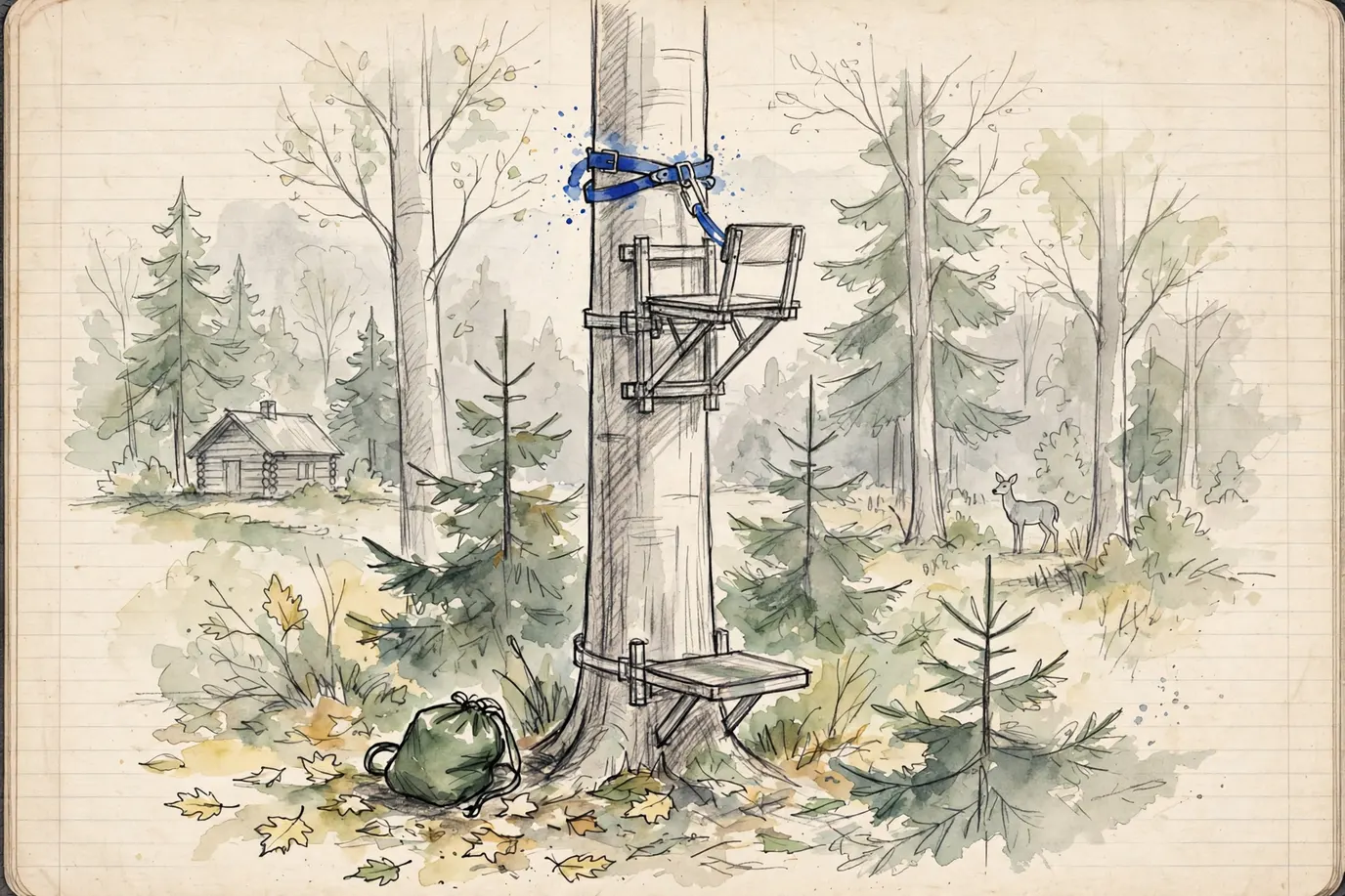
A climbing tree stand is a two-piece stand that carries itself up the tree: a seat section and a foot platform that you raise in turns, inching up a straight trunk with your arms and legs. No sticks, no steps, no ladder. That makes it the most mobile stand you can sit in, and the pickiest about trees. It needs a straight, healthy trunk with no limbs below hunting height, inside the maker's diameter range. Here's the thing. Shop your trees first and the stand second.
We earn a commission if you buy through our links, at no cost to you. Disclosure
| Model | Material | Weight capacity | Platform | Amazon |
|---|---|---|---|---|
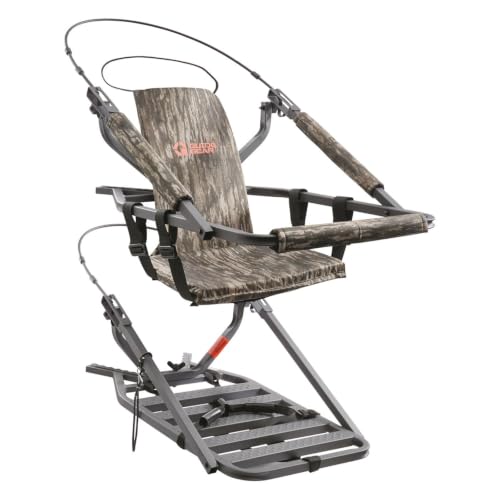
Guide Gear Extreme Deluxe Climbing Tree StandTree stand More specs
| Steellisting | 300 lblisting | — | Check price |
Guide Gear Extreme Deluxe Climbing Tree StandTree stand More specs
| Steellisting | 300 lblisting | — | Check price |
Guide Gear Deluxe XL Climber Tree Stand ChairTree stand More specs
| Steellisting | 300 lblisting | 20 x 34.5listing | Check price |
Hawk Ultra-Lite ClimberTree stand More specs
| Aluminumlisting | 300 lblisting | 20 x 27listing | Check price |
Hawk Warbird ClimberTree stand More specs
| Aluminumlisting | 300 lblisting | 21 x 34listing | Check price |
Kalkal Foldable Climbing Tree StandTree stand More specs
| — | 300 lblisting | — | Check price |
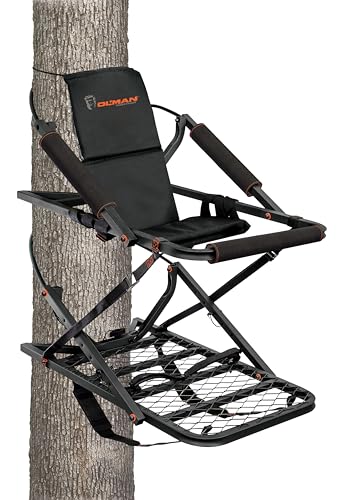
OL'MAN Alumalite CTSTree stand More specs
| Aluminumlisting | 300 lblisting | 18 x 32listing | Check price |
OL'MAN Stealth Mode Steel ClimberTree stand More specs
| Steellisting | — | 19.5 x 27listing | Check price |
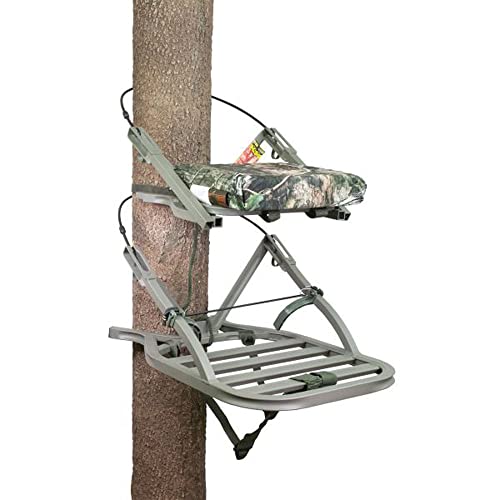
Summit Treestands Viper SDTree stand More specs
| Aluminumlisting | — | — | Check price |
Summit Treestands Mini Viper SDTree stand More specs
| Aluminumlisting | — | — | Check price |
Summit Treestands Goliath SDTree stand More specs
| — | 350 lblisting | — | Check price |
Summit Treestands OpenShot SDTree stand More specs
| — | — | — | Check price |
Summit Treestands Titan SDTree stand More specs
| — | 350 lblisting | — | Check price |
Summit Treestands 180 Max SDTree stand More specs
| — | 350 lblisting | — | Check price |
Summit Treestands Viper SteelTree stand More specs
| Steellisting | — | — | Check price |
Summit Treestands Viper Pro SDTree stand More specs
| — | — | — | Check price |
Summit Treestands Viper SD + Footrest Kit ComboTree stand More specs
| Aluminumlisting | — | — | Check price |
Summit Treestands Dual Threat PRO SDTree stand More specs
| — | 350 lblisting | — | Check price |
Summit Treestands Viper SD + Pro Harness BundleTree stand More specs
| Aluminumlisting | 300 lblisting | — | Check price |
Summit Treestands Viper SD + Backpack System BundleTree stand More specs
| Aluminumlisting | — | — | Check price |
XOP-Xtreme Outdoor Products RevoltTree stand More specs
| Aluminumlisting | — | — | Check price |







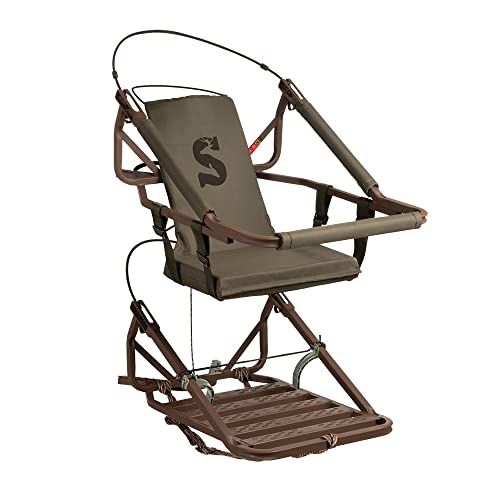


What’s in this listClimbing tree stands, lightest first. “—” means neither the maker nor the Amazon listing states it.
Why a climbing tree stand is its own kind of stand
Every other tree stand needs something else to get you up the tree. A climber doesn't. It's two frames that clamp around the trunk, and you walk them up together.
Bowhunting.com's climbing how-to describes the two pieces: a top section, the seat, and a bottom section, the platform your feet ride on. A cable, band or set of teeth bites into the trunk on each one. You take weight off one section, slide it up, set it, and shift onto it. Then you do the same with the other. Inch by inch, you and your stand arrive at hunting height together.
Two things follow from that. You can hunt any suitable tree you find that morning, with no stand left in the woods. And the stand only works on trunks it can grip all the way up, which rules out most of the forest. onX's tree stand primer says self-climbers do best on smooth trees with no branches between you and the ground.
For height and hiding, which every stand shares, go to the tree stand page. This page sticks to the climber's own decisions.
The table on this page shows climbing stands, sorted light to heavy. The columns are the maker's numbers, with the Amazon listing's value where the maker is silent (marked as listing values; weight stays the maker's): weight, frame material, load rating, platform, seat, quiet features, and the tree diameter range, which matters more on a climber than on any other stand. Blank cells mean neither the maker nor the listing states it.
Pick the trees before you pick the climbing tree stand
Here's the whole climbing tree stand decision in one sentence: the stand has to fit trees you actually have. Walk your woods with that in mind before you look at weights.
- Straight trunk: the TMA says straight, live and healthy, never leaning
- No limbs below your height: Union Sportsmen's writer says climbers need a straight trunk without limbs
- Inside the maker's diameter range: listed in the table's Tree diameter column
- Taper you can work with: Bowhunting.com warns a tree that's wide at the base and narrows quickly will often stop you short of good hunting height
- Bark that grips: Outdoor Empire's guide likes rough, thick bark
Outdoor Empire gets specific about species. Oak is very rough and grips well. Pine has soft bark the stand's teeth can bite into, and fairly even width. Beech is slippery; avoid it. Whatever you pick, check it for dead limbs and damage overhead. The TMA's tree rule doesn't have a climber exception.
My one opinion on this page: buy the climber that fits your trees before the one that fits your scale. The reason is in the table. A light stand with a narrow diameter range does you no good if your best trunks sit outside it, and a stand you can't use is the heaviest one you own.
Reading a climbing stand's specs
Tree diameter range is the first column to read
The tree diameter range is the smallest and largest trunk the maker or the listing says the stand fits. On a climber it's the column that decides everything else, because the cable or band has to wrap the trunk and grip it at every height you pass.
Read it twice: once for the trunk at your belt, once for the trunk at hunting height. Trees taper. Jess's take: "A tree is a cone. The catalog draws it as a cylinder." She's right, and the geometry shows up halfway up the tree.
Weight is everything you carry in and out
Unlike a hang-on's, a climber's listed weight is close to the whole kit: no sticks, no steps. Outdoor Life's side-by-side put one climber at 24.2 lb.
You carry it in every time and out every time. Bowhunting.com's author draws the line at terrain: a heavy climber is acceptable on easy ground and a burden on a steep walk-in. Outdoor Empire adds that piling on features can make a climber nearly as heavy as a ladder stand. If the walk is long, see the lightweight climbing tree stand page.
Aluminum or steel shows in the weight
If you're after an aluminum climbing tree stand, read Material and Weight together; the frame is a big part of what you carry, and the weight column says how big. Material isn't the safety number. That's the weight capacity, and the TMA says only to use stands that meet the industry standards it recognizes.
Weight capacity includes your heaviest day
Over the rated load is off-limits, full stop, per the TMA. Outdoor Empire notes larger hunters need a sturdier stand. On a climber you also lift part of that weight with your legs and arms on every move, so dress at the base of the tree, not at home in the warm kitchen.
The seat section is also a climbing tool
On a climber the seat isn't only for sitting. On most sit-and-climb stands it's the frame you sit on or push against while you lift the platform with your feet. The Seat column lists foam, mesh or sling, the maker's own flexible style, or flip-up.
Bowhunting.com's stand-styles piece calls climbers the most mobile and comfortable option, with sling-style seats and adjustable leg height. Outdoor Life found a climber comfortable enough for an all-day sit. A sling seat also packs flat against the frame for the walk in, which is one fewer thing snagging brush in the dark.
Platform size is where your feet ride up the tree
Your boots stay strapped to the platform the whole climb, and its column gives the maker's width and depth. Bowhunting.com says to secure both feet to the bottom section, with the bar or stirrups your manual describes, so the platform can't fall away from your feet. Outdoor Empire adds that your boots should fit those straps snugly.
A bigger platform gives you room to turn at height. A smaller one is lighter and easier to carry. Pick for the boots you'll wear in late November, not the ones you wore to the store.
Quiet features are claims, and the climb is the noise
The table quotes the maker's quiet claims: coated parts, covered cables and so on, as the maker or the listing states them. We don't rank by them, because nobody publishes a noise measurement for a quietest climbing tree stand.
What we know: Outdoor Life found a climber makes a scraping noise on the way up, a drawback near bedded deer. Bowhunting.com says to pick a stand that allows quick and quiet movement. Outdoor Empire points out that fumbling during setup or correcting a slip makes noise of its own. So the quiet part is mostly you. Climb early, climb slowly, and leave nothing loose to rattle. (Every stand is quiet in the box. Then you take it to the woods.)
Camo or color is the last column
Camo / color tells you the finish. A climber sits on a bare, limbless trunk by design, so there's less cover around you than on a hang-on in a limby oak. Your stillness does more than any pattern.
How a self-climbing tree stand goes up
A self-climbing tree stand goes up one short move at a time. The TMA says to make slow, even movements of no more than 10 to 12 inches at a time, with proper contact with the tree or the stand on every move. Follow your stand's manual over anything here; this is the general idea.
Sit-and-climb stands
Bowhunting.com lays out the cycle:
- Raise the top section high enough to sit in while your feet still reach the bottom section.
- Sit, and pull the bottom section up with your feet and legs.
- Stand on the bottom section and raise the top section again.
- Repeat until you reach your height.
Outdoor Empire adds a push-down on each section to set the teeth before you trust it.
Hand climbers
A hand climber moves the same way, but you press your hands or chest against the upper section and pull your legs up, instead of sitting in it. It asks more of your arms. Pick by which motion you can repeat calmly.
Set the angle on the ground
Because trunks taper, a platform that's level at your belt tips forward as the tree narrows. Bowhunting.com says to angle the platform up a little on the ground on a tapering tree, so it ends up level at hunting height. Neither source gives a number for the angle. Both say it comes with experience, and if you misjudge it, climb down and reset. That's not failure. That's carpentry.
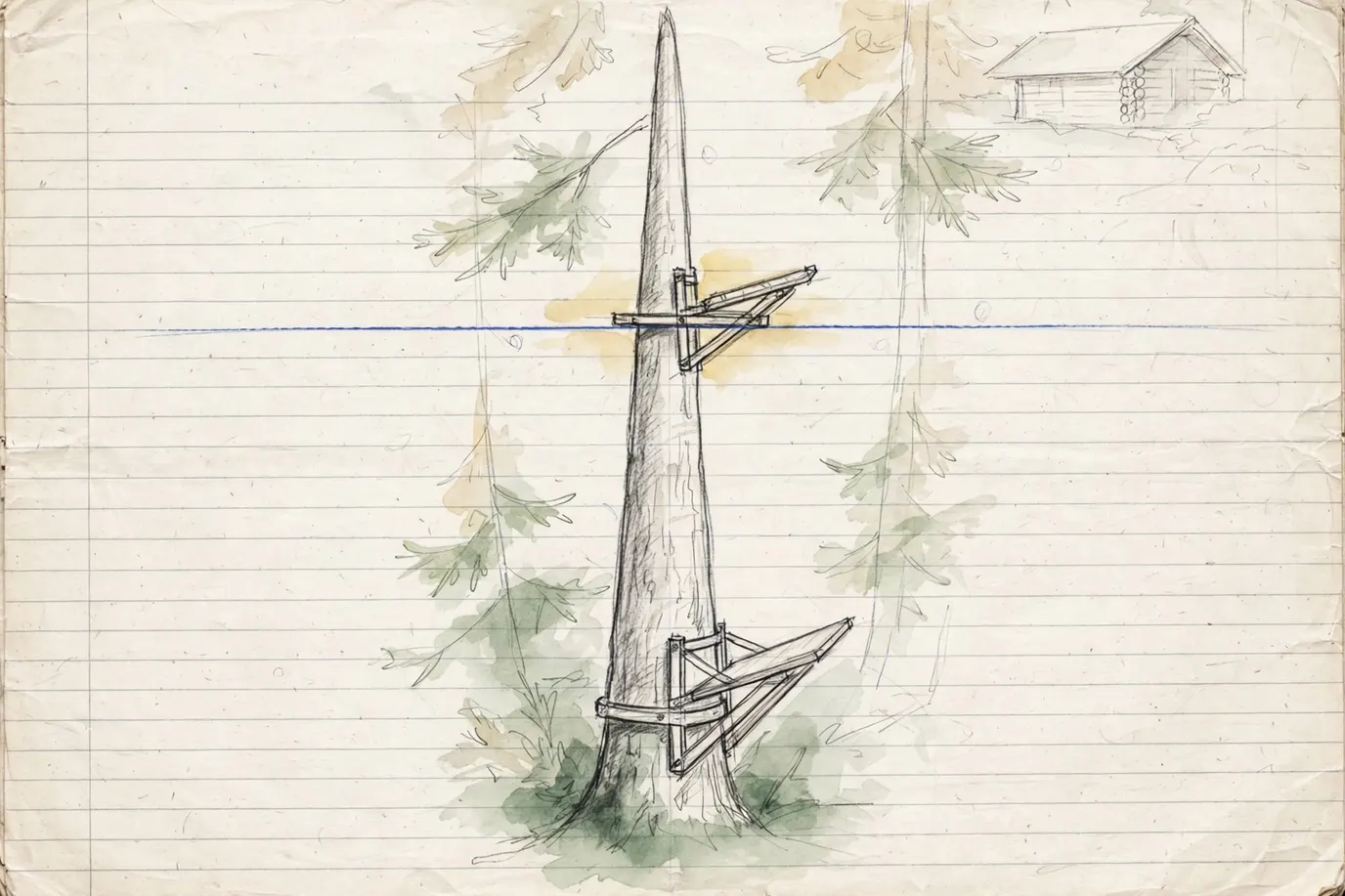
Tie the two sections together
Both Bowhunting.com and Outdoor Empire say to connect the top and bottom sections with a short rope or strap, so the platform can't drop to the ground if it slips off your feet. Keep it just long enough for the climbing motion. Bowhunting.com suggests buying stabilizer straps if your stand didn't come with them.
Climb with empty hands
Use a haul line. The TMA says never climb with anything in your hands or on your back, and to raise your pack and unloaded bow or firearm once you reach height. Outdoor Empire says to trim only the branches you need for a shooting position, carrying a pocket saw, since bows need more clearance than guns.
Practice before the first real sit
Practice on the ground first, with another adult there; that's straight from the TMA. With a climber that practice is the whole game. Outdoor Empire also recommends practicing at home.
Do a few short climbs in daylight on a tree you know. Learn how the cables or bands adjust on that trunk. Find the angle. Then do it again in the dark, because opening morning is in the dark.
Inspect the stand before each use, per the TMA, and look for wear on cables, straps and welds. Bowhunting.com's stand-styles piece mentions reports of top brackets breaking and bottom sections slipping down the tree. That's a reason to inspect, not a reason to panic.
Climbing tree stand safety
Clip a TMA-standard full-body harness to the tree while you're still standing on the leaves. Bowhunting.com says to fasten the tether above your head and move it up as you climb, staying connected until you're back on the ground.
The TMA rules out single-strap belts and chest harnesses; the CPSC warns a waist-type belt can strangle you in a fall. On a climber the risky moments come at the base and the top, getting into and out of the sections, so stay clipped through both. Sitting, the tether should be snug, no slack. If you ever do end up hanging, minutes count: Wisconsin DNR puts suspension trauma at under 20 minutes.
Keep a whistle or charged phone on your body, not in the pack on the haul line, and leave your plan with someone at camp. Harness choices: tree stand harness page. Rules on stands and cutting branches on public land vary, so check your state wildlife agency.
Who should skip a climber
Skip it if your woods are full of limby, crooked or forked trees. A hang-on tree stand on sticks goes where a climber can't. Skip it if you want to leave a stand up and walk in quietly; that's a hang-on or ladder stand job, within the TMA's two-week limit. And if you can't recover or escape from a fall in a harness, the TMA's advice is to hunt from the ground; a ground blind does that well.
For everyone else, a climber is the stand for the hunter who reads fresh sign at dawn and wants to be over it by noon. There's a step-by-step guide on how to use a climbing tree stand.
Find the tree. Set the angle on the ground. Climb a foot at a time. The tree's been there longer than you have; it can wait.
Brands in this list
Related
Questions people ask
What is a self-climbing tree stand?
It's another name for a climbing tree stand. The two sections grip the trunk with a cable, band or teeth. You stand on the bottom section and raise the top, then sit or lean on the top and lift the bottom with your feet, and repeat. The TMA says to move no more than 10 to 12 inches at a time.
Is an aluminum climbing tree stand better than steel?
Not automatically. Put the table's Material and Weight columns side by side and you'll see what the frame costs you in pounds for each stand. What decides whether a climber is right for you is still the tree it fits, the weight capacity and how far you carry it. Bowhunting.com notes heavy climbers become a liability in steep or hard-to-reach country.
What is the quietest climbing tree stand?
Nobody publishes a noise measurement, so there's no number to rank by. The table quotes what each maker or listing says about quiet features as stated. Outdoor Life found a climber makes a scraping noise on the way up; slow movements, smooth bark, a tight rope between the sections and an early start do more than any claim.
What trees can you use a climbing tree stand on?
Live, healthy, straight trees inside the maker's diameter range, never leaning, per the TMA. The trunk needs no limbs between the ground and your hunting height. Outdoor Empire likes rough-barked oaks and pines with fairly even width and warns that beech bark is slippery. A trunk that narrows fast may stop you short.
Sources
- Treestand Manufacturers Association: Treestand Safety Guidelines — accessed 2026-10-22
- U.S. Consumer Product Safety Commission: Hunting Treestands and Harnesses (Pub. 5200) — accessed 2026-10-22
- Wisconsin DNR: Tree stand safety — accessed 2026-10-22
- Bowhunting.com: How to use a climbing treestand — accessed 2026-10-22
- Bowhunting.com: Treestand basics, 4 stand styles every hunter should know — accessed 2026-10-22
- Outdoor Empire: How to use a climbing tree stand — accessed 2026-10-22
- Outdoor Life: Tree saddle vs climber vs hang-on — accessed 2026-10-22
- onX Hunt: Tree stands, everything you need to know — accessed 2026-10-22
- Union Sportsmen's Alliance: Hang your treestand for comfort and success — accessed 2026-10-22