Blinds & Tree Stands · Gear type
Climbing Sticks
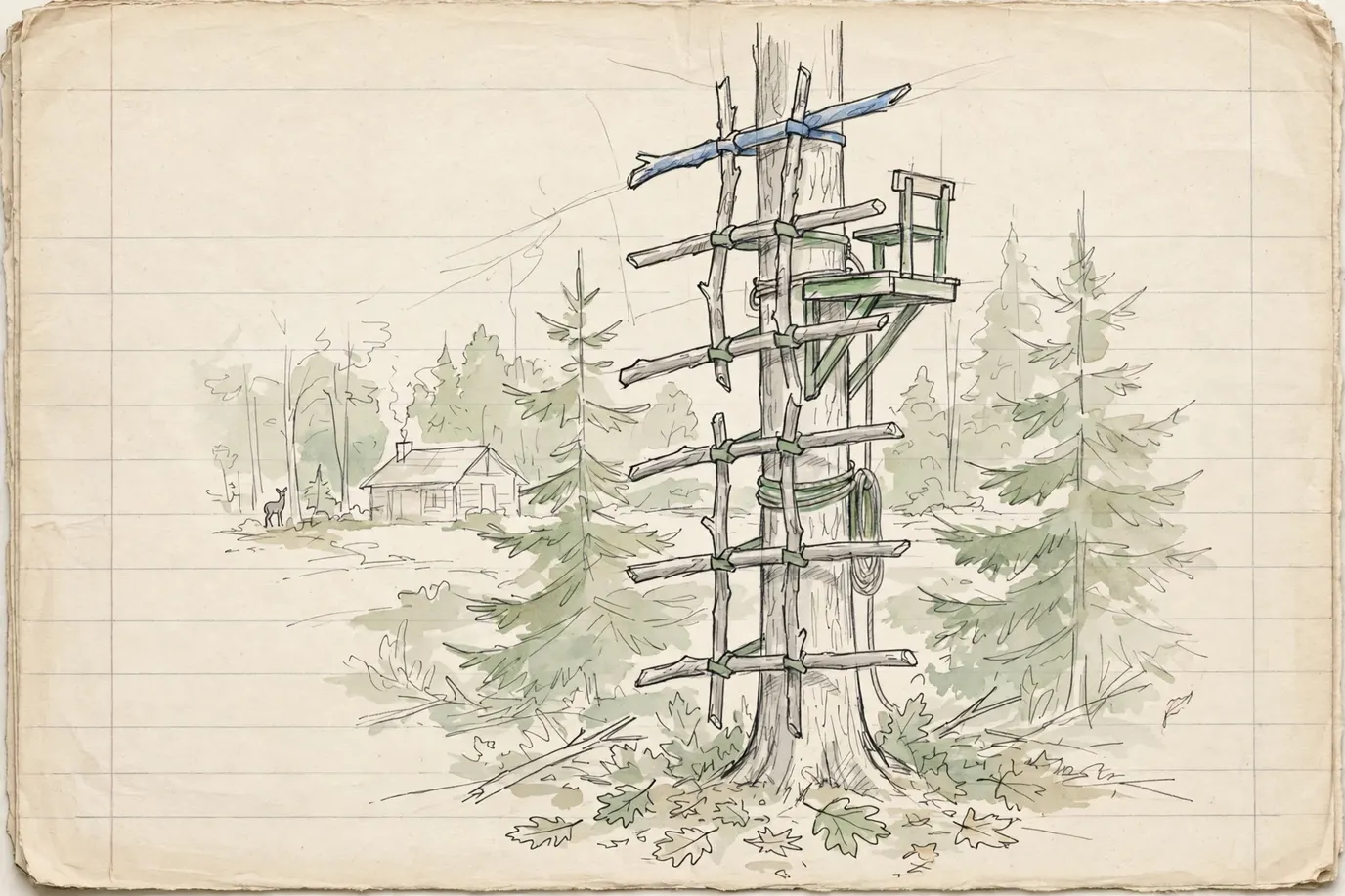
Climbing sticks are short ladder sections you strap to a tree one above the other, so you can climb to a hang-on stand or a saddle platform. Pick them by how high the set really gets you, the step style your boots like, the weight per stick you'll carry, and whether they attach with a cam strap or a rope. Then practice hanging them low. (Every stick looks easy to hang in the catalog. The catalog is never 5:30 a.m. in a wet November woods.)
We earn a commission if you buy through our links, at no cost to you. Disclosure
| Model | Material | Stick length | Sticks per pack | Weight rating | Amazon |
|---|---|---|---|---|---|
Big Game Quick-Stick Climbing SticksClimbing sticks More specs
| Steellisting | — | — | — | Check price |
Guide Gear 20-Foot Climbing LadderClimbing sticks More specs
| Steellisting | — | — | 300 lblisting | Check price |
Guide Gear Quick Climbing Sticks 3-PackClimbing sticks More specs
| Steellisting | — | 3listing | 300 lblisting | Check price |
Guide Gear 25-Foot Climbing Stick LadderClimbing sticks More specs
| Steellisting | — | — | 300 lblisting | Check price |
Guide Gear 20-Foot Wide Maxi Ladder StandClimbing sticks More specs
| Steellisting | — | — | 300 lblisting | Check price |
Guide Gear Full Step Climbing Stick LadderClimbing sticks More specs
| Steellisting | — | — | 300 lblisting | Check price |
Guide Gear 20-Foot Rapid Climbing Sticks 4-PackClimbing sticks More specs
| Steellisting | 60 inlisting | 4listing | 300 lblisting | Check price |
Hawk Helium 30-Inch Climbing Sticks 3-PackClimbing sticks | Aluminumlisting | 30 inlisting | 3listing | 300 lblisting | Check price |
Hawk Helium Climbing Sticks 4-PackClimbing sticks | Aluminumlisting | 20 inlisting | 4listing | 300 lblisting | Check price |
Hawk Helium Climbing Stick System 6 PackClimbing sticks | Aluminumlisting | — | 6listing | — | Check price |
Hawk Helium 30-Inch Gen 2 Climbing Sticks 3-PackClimbing sticks | Aluminumlisting | 30 inlisting | 3listing | — | Check price |
Hawk Helium Gen 2 Climbing Stick 20-Inch 4-PackClimbing sticks | Aluminumlisting | 20 inlisting | 4listing | 300 lblisting | Check price |
Kalkal Aluminum Folding Climbing Sticks 4 PackClimbing sticks | Aluminumlisting | — | 4listing | — | Check price |
Kalkal 20 in Aluminum Climbing SticksClimbing sticks | Aluminumlisting | 20 inlisting | — | — | Check price |
Kalkal Upgraded Folding Climbing Sticks 4 PackClimbing sticks | Aluminumlisting | — | 4listing | 300 lblisting | Check price |
Millennium Treestands M210 Stick Climber 20 ftClimbing sticks More specs
| Steellisting | — | — | 300 lblisting | Check price |
Millennium Treestands Steel Hang-On Climbing SticksClimbing sticks More specs
| Steellisting | — | — | — | Check price |
Millennium Treestands M250 Climbing Stick 4 PackClimbing sticks | Aluminumlisting | — | 4listing | — | Check price |
Millennium Treestands Vulcan Climbing SticksClimbing sticks More specs
| Aluminumlisting | 19 inlisting | 4listing | 300 lblisting | Check price |
Muddy Pro Climbing Sticks 4 PackClimbing sticks More specs
| — | — | 4listing | 300 lblisting | Check price |
Muddy Climbing Sticks 3-PackClimbing sticks More specs
| Steellisting | 31 inlisting | 3listing | 300 lblisting | Check price |
Muddy Quick Step XLClimbing sticks More specs
| Steellisting | — | — | 300 lblisting | Check price |
Muddy Pro Climbing Sticks 8 PackClimbing sticks More specs
| — | — | 8listing | 300 lblisting | Check price |
OL'MAN Assassin Speed Rail 16 ftClimbing sticks | Steellisting | — | 3listing | — | Check price |
Rivers Edge Ardisam RE727 Grip Rail 32-InchClimbing sticks More specs
| Steellisting | 32 inlisting | 4listing | — | Check price |
Summit Treestands Aluminum Folding Climbing SticksClimbing sticks | Aluminumlisting | — | 3listing | — | Check price |
Tethrd Skeletor Climbing Sticks 4 PKClimbing sticks More specs
| — | — | 4listing | — | Check price |
Tethrd One Sticks Titanium 4PKClimbing sticks More specs
| Otherlisting | — | 4listing | — | Check price |
Tethrd Workhorse Climbing SticksClimbing sticks More specs
| Aluminumlisting | — | — | — | Check price |
XOP-Xtreme Outdoor Products Ultra Series Single Rotating StepsClimbing sticks More specs
| — | — | 4listing | — | Check price |
XOP-Xtreme Outdoor Products X2 Double StepClimbing sticks More specs
| Aluminumlisting | — | 4listing | — | Check price |
XOP-Xtreme Outdoor Products X3 Climbing Steps 32 inClimbing sticks | Aluminumlisting | 32 inlisting | 4listing | — | Check price |
XOP-Xtreme Outdoor Products Aluminum Climbing Sticks 34 inClimbing sticks | Aluminumlisting | 34 inlisting | 3listing | 350 lblisting | Check price |
XOP-Xtreme Outdoor Products Ride Climbing Sticks 4 PackClimbing sticks More specs
| Aluminumlisting | — | 4listing | 300 lblisting | Check price |


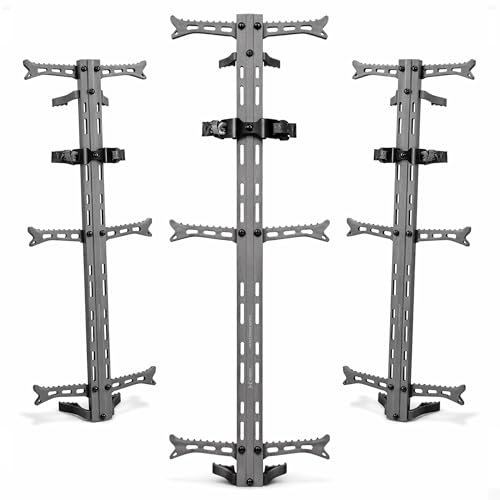


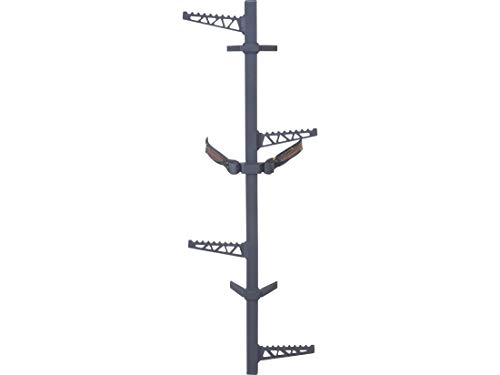


What’s in this listEvery climbing stick set we track on Amazon US, lightest per stick first. “—” means neither the maker nor the Amazon listing states it.
What climbing sticks are and what they're for
Climbing sticks are a ladder you take apart. Each stick is a short post with one or more steps, and brackets at the ends that grip the bark. You strap the first stick to the tree, stand on it, strap the next one above it, and keep going to hunting height. At the top is a hang-on stand or a saddle platform.
They're for anyone who hunts from a tree but doesn't want the tree to be permanent. A climber doesn't need them, and a ladder stand has its own ladder. Everything else in the tree usually needs sticks or steps.
This page covers the whole family. If weight is your main question, the lightweight climbing sticks page goes deeper. If you hunt from a saddle, the climbing sticks for saddle hunting page covers short packable sticks and rope attachments. The single-stick method has its own page.
The table lists climbing stick sets, lightest per stick first. It shows how many sticks come in the pack, Material, Weight capacity, Stick length, Weight per stick, Step style and Attachment, as the maker states them or, where the maker is silent, as the Amazon listing does (marked as a listing value; weight stays the maker's). A blank means neither lists it.
What to look at in climbing sticks
These are the numbers that decide it, and the order I'd read them in.
Height comes from the system, not the stick count
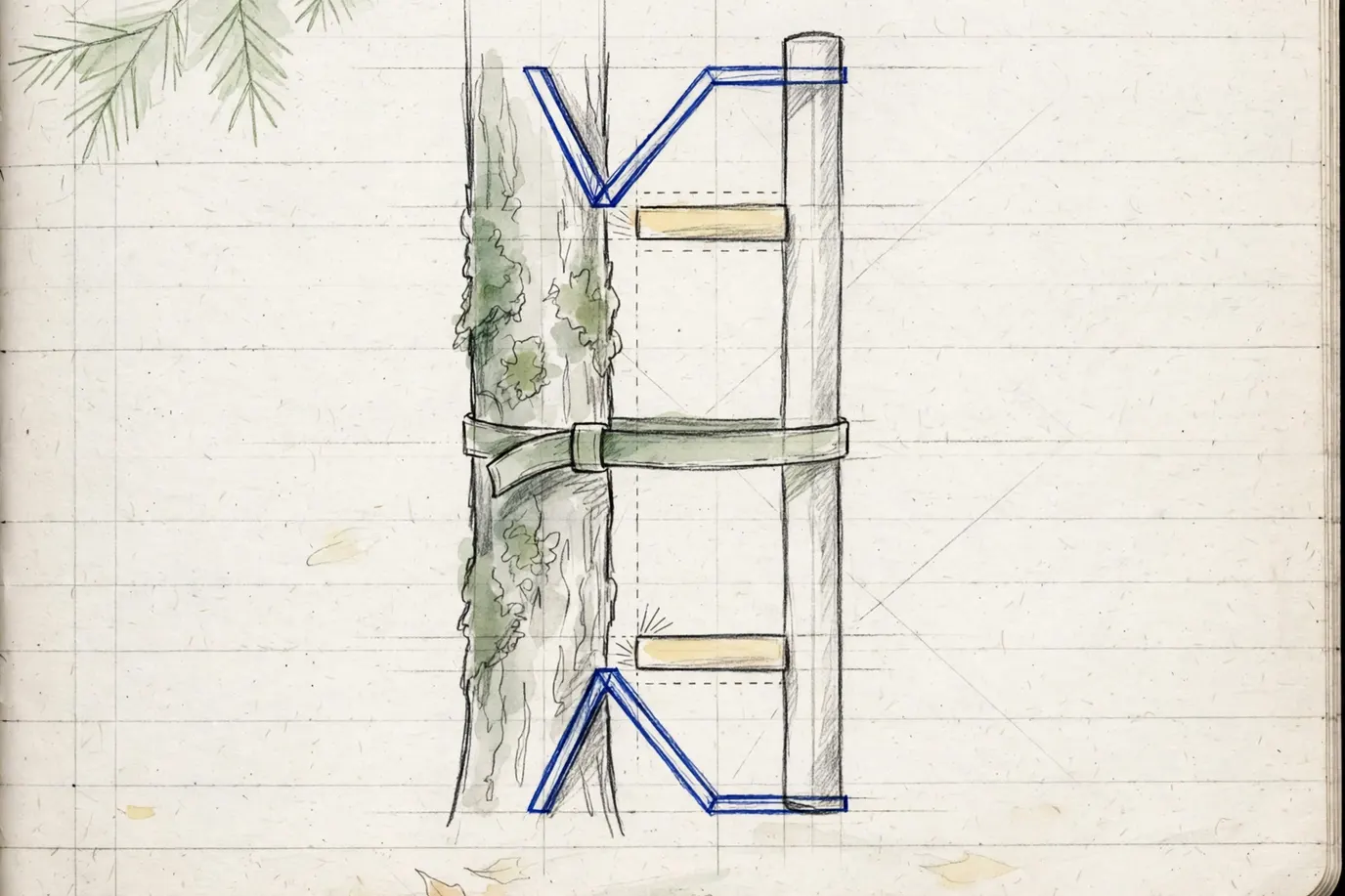
Shop by the height you need, then work backward to the sticks. Stick length, step spacing, any aider and your own reach all go into the math, and the sticks in the table don't all add the same height per section.
For a rough idea: Bowhunter's look at saddle climbing gear found commercial sets of three to four sticks, with total height running roughly 10 to 15 feet, and step spacing that varied from model to model. In Bowhunter's saddle-versus-hang-on debate, one writer said three light sticks get him 18 feet up a hardwood, but curved cottonwoods sometimes take four. His advice is not to be "under-sticked."
Here's the thing. Your reach and the stand above the last stick are part of the math too. Hang a set on a tree in the yard and measure where your platform would land. The maker's listed climbing height for the set, when there is one, is the number to trust.
Stick length and step spacing: fewer sticks or easier climbing
Stick length is the length of each section as the maker lists it. Step spacing is the distance between steps, and it's what you feel in your legs. Bowhunter's roundup found step spacing from about 13.5 to 22 inches, and notes that wide spacing gets the most height out of a set when you add an aider.
A stick maker's guide sums up the trade: wider spacing means fewer sticks to carry, but more demanding climbing. The same maker's buying guide says long walks favor lighter sticks with tighter spacing, while shorter walks let you choose wider steps and more stand-off for comfort. Short sticks pack and nest well. Long sticks get you up faster per stick but are awkward in a pack and need a bigger step in cold boots.
Rule of thumb: try the step spacing on your own staircase first. If it feels like a stretch in sneakers, it'll feel like a lunge in insulated boots.
Step style: single, double or ladder section
The Step style column sorts the sets three ways.
- Single step: one step per rung, which on some designs can be moved left or right
- Double step: two steps per rung, fixed or folding
- Ladder section: stacked sections that form a narrow ladder
Bowhunter's author notes single steps can make setting up the platform more of a challenge. A double step gives both feet a place to stand while you hang the next stick or the stand. A single step is lighter and packs flatter. Ladder sections climb like a ladder and carry like lumber.
Weight per stick is what your back counts
Weight per stick is the column the table sorts by, because most hunters carry these in. A stick maker's buying guide puts walking distance first among the deciding factors and says hunters who move often should favor systems that pack small and deploy fast. Hunters who hang a set for weeks can buy for comfort instead.
If you only climb 100 yards from the truck, a few extra ounces won't matter. If you walk a mile in, they will. (Ounces become pounds at about the second hill. I can't prove it, but every man at Hemlock Run agrees.) The same maker adds a good reminder: weigh the whole system with your platform or stand, not just the sticks.
Material: aluminum, carbon or a mix
The Material column shows what the maker or the listing says it uses, and aluminum and carbon are the two you'll see most. One carbon stick maker says its carbon is warm to the touch and eliminates metal noise. That's a maker's claim about its own sticks, so take it as a reason to read the specs, not a law of physics.
Noise is the real story with metal. Bowhunter suggests sound-dampening tape or camouflage tape on sticks, buckles and other metal parts. A stack of sticks that rings like a wind chime on the walk in has told every deer in the county you're coming.
Attachment: cam strap or rope
The Attachment column says how each stick holds the tree. Both are made for the job, and the trade is weight and noise against simplicity.
- Cam strap: a buckle and a flat strap, the traditional setup
- Rope: cord or rope that wraps the tree and ties or locks off
Bowhunter gives a straight comparison: a typical buckle and strap weighs 6.5 oz, while 7 feet of buckle-less Amsteel rope weighs 2.4 oz. Amsteel is a braided Dyneema rope that's strong, low-stretch and doesn't absorb water. Rope takes more practice to tie off quickly with cold hands. Check the rope or strap length against the biggest trees you hunt.
Weight capacity means you plus everything
Weight capacity is the most the maker says a stick will hold. Count everything against it: you, the stand or saddle you're carrying up, the pack, the harness, the lifeline, clothing, water and the bow. Step on a scale in your hunting clothes with the pack on, then compare. Don't round up.
Stand-off and brackets keep your boot on the step
Stand-off is the gap between the step and the trunk, and it isn't in every listing. A stick maker says good stand-off keeps your feet planted and reduces bark noise, and its buying guide pairs more stand-off with standing comfort. It matters most in big insulated boots.
The brackets matter too. A stick should sit square on the bark without rocking. A stick that rocks is telling you to reset it, and you should listen the first time.
How to hang climbing sticks
This is the part to practice in daylight, a foot or two off the ground, until it's boring. Boring is the goal.
- Put on your full-body harness before you touch the tree.
- Wrap a lineman's rope or connect to a lifeline, and stay connected from the moment your feet leave the ground.
- Hang the first stick and seat it firmly against the bark.
- Climb only high enough to hang the next stick, then hang it the same way.
- With a hang-on stand, set the sticks so the top steps are above the platform, and step down onto it.
- Use a haul line for your bow and pack.
- Come down the same way, connected the whole time.
Step 5 comes straight from Florida's wildlife agency, which says climbing aids or steps should be installed above the stand so you're stepping down onto the platform. Pulling yourself up over the edge of a stand is how good mornings go wrong.
Practice also tells you how many sticks you really need on your trees. Walk a set around your property and hang it on three different trees before the season. Then write down how many sticks each tree took.
Climbing sticks vs a ladder stand
A ladder stand is a stand that comes with its own ladder. Climbing sticks are a ladder that comes without a stand. Here's what actually changes.
- Mobility: sticks pack down and go wherever you walk. Missouri's agency describes ladder and hang-on stands as stands you set up early in the season in a few chosen spots.
- Seat: a ladder stand has its own seat and platform. Sticks need a hang-on stand or a saddle at the top.
- Climbing: a ladder stand's ladder comes fixed to the stand. Sticks are steps you hung yourself, one at a time, on that morning's tree.
Florida's wildlife agency notes that ladder stands are perceived as safer than other stands, but says every rule still applies: three points of contact while climbing and a rope safety line with a prusik knot. If you want the ladder version, see the ladder stand page. If you want the stand that pairs with sticks, see the hang-on tree stand page.
Care, inspection and the end of the season
Florida's wildlife agency says the leading cause of falls is losing your grip and slipping while climbing up or down, and the second is straps breaking. So the straps and the steps get the most attention.
- Inspect steps and stand-offs for bent parts or stress cracks before each hunt, and check strap and buckle function, as one stick maker advises
- Rinse mud off after wet hunts
- Replace straps and hardware only with the maker's approved parts
- Silence anything that rattles before season, not in the tree
- Take them all down at the end of the season
The Tree Stand Safety Awareness Foundation's checklist says climbing aids aren't designed to be left in the woods from season to season. Missouri's conservation department explains why for stands, and it applies to straps on sticks: leaving them on a tree can damage them as the tree grows. A strap the tree has been eating all summer isn't a strap you want to trust in November.
Climbing stick safety
My one opinion on this page, and it's not up for debate at Hemlock Run: wear a full-body harness and stay connected to the tree every time your boots leave the ground, with no exceptions for "just a minute." The reason is in Florida's numbers: it reports that 86% of falls involve someone not wearing a full-body harness, and 99% of people injured in a fall were not connected to the tree. Keep three points of contact while climbing. Rules on stands, climbing aids and leaving gear on public land vary by state and by property, so check your state wildlife agency.
Who should skip climbing sticks
- You hunt from the ground or a box blind
- You use a climber, which climbs the trunk on its own
- You sit a ladder stand that stays up all season
- You won't practice hanging them before opening day
That last one is the only reason I'd ever talk someone out of a set. Sticks are simple tools, but simple isn't the same as automatic. Hang them in the backyard until your hands know the strap better than your head does.
Brands in this list
Related
Questions people ask
How many climbing sticks do I need?
It depends on stick length, step spacing, whether you add an aider and how high you want to hunt. Bowhunter found commercial sets of three to four sticks reaching roughly 10 to 15 feet, and one writer says three light sticks get him 18 feet up a hardwood but curved trees can take four. Use the maker's listed climbing height for your set.
How do you hang climbing sticks?
Put on your full-body harness and connect a lineman's rope or lifeline before your feet leave the ground. Hang the lowest stick, seat it firmly against the bark, climb only to hang the next one, and repeat. With a hang-on stand, Florida's wildlife agency says the steps should go above the stand so you step down onto the platform.
Climbing sticks vs ladder stand: which is safer?
Neither is safe without a harness and a connection to the tree. Florida's wildlife agency says ladder stands are perceived as safer but still need every rule followed, including three points of contact and a rope safety line with a prusik knot. Sticks are lighter and move with you; a ladder stand stays put and has its own seat and rail.
Can I leave climbing sticks on the tree all season?
Follow the maker's instructions, and plan to take them down at season's end. The Tree Stand Safety Awareness Foundation's checklist says climbing aids aren't designed to be left in the woods from season to season. Missouri's conservation department adds that straps left on a growing tree can be damaged.
Sources
- XOP: Which climbing sticks are right for you (maker's blog) — accessed 2026-10-22
- Florida Fish and Wildlife Conservation Commission: Test your knowledge about treestand safety — accessed 2026-10-22
- Bear Archery: ABC's of tree stand safety (Tree Stand Safety Awareness Foundation checklist) — accessed 2026-10-22
- Missouri Department of Conservation: Stand locations — accessed 2026-10-22
- Bowhunter: Tree saddle climbing sticks and accessories — accessed 2026-10-22
- Bowhunter: The great debate, tree saddles vs hang-on treestands — accessed 2026-10-22
- XOP: Climbing stick buying guide (maker's blog) — accessed 2026-10-22
- Latitude Outdoors: Carbon climbing sticks (maker's product page) — accessed 2026-10-22