What Leupold makes for bowhunters
On this site, Leupold covers three product types: binoculars, laser rangefinders and binocular harnesses. One of the binoculars has a rangefinder built in. The grid above filters by type and changes as listings come and go, so I'll write about the series and what separates them, not about how many are listed this week.
Leupold also makes riflescopes, red dots and other firearm optics. This site doesn't cover firearm gear, so none of that is in the grid or on this page.
Most specs in the grid come from Amazon listings, marked that way. A dash means the listing didn't say.
How to read a Leupold binocular name
Here's what actually changes from one name to the next. A Leupold binocular name has three parts:
- The series: BX-1 through BX-5, the maker's own tiers
- The model name: Rogue, McKenzie, Timberline, Alpine, Pro Guide, Santiam
- The numbers: magnification, then front lens size in millimeters
Quick math on the numbers: a 10x42 makes things look ten times closer, through front lenses 42 mm across. Leupold's guide on binocular numbers says the bigger front lens gathers more light and gives a brighter image, but costs more and weighs more. It also says field of view shrinks as magnification goes up. More power, narrower window. It's the zoom on a phone camera: you see the deer's ear tag, and lose the rest of the field.
HD in a name is part of the model name in Leupold's lineup. Don't compare two binoculars on those two letters. Compare series and size.
Lineup notes: Leupold binoculars by series
BX-1: for hunters who move more than they glass
Leupold says the BX-1 series is for the active hunter who spends more time walking than behind the glass. The BX-1 models in the grid, per their listings:
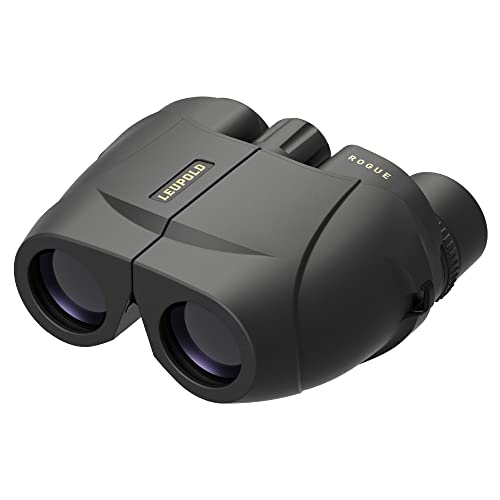
- BX-1 Rogue 10x25: a compact porro prism binocular
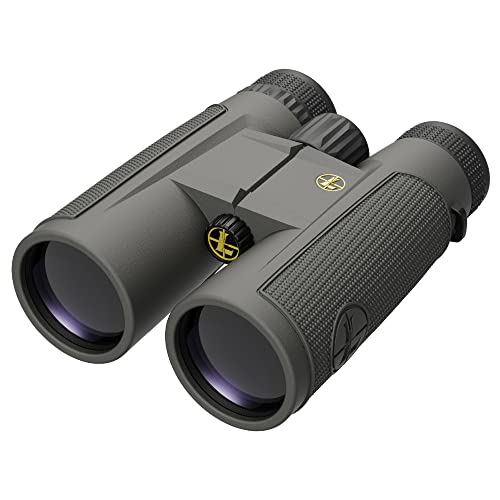
- BX-1 McKenzie HD 12x50: roof prism, bigger front lenses
- BX-1 Timberline: its listing gives no size
Porro and roof are the two prism layouts. A porro binocular has the offset, zig-zag body. A roof binocular has straight barrels. The listings say which is which; neither label decides how sharp the view is on its own.
BX-2 and BX-3: longer sits
Leupold says the BX-2 series uses improved optical prescriptions for a clearer, crisper image than the BX-1, aimed at people who glass for long stretches. It places the BX-3 between the BX-2 and the BX-4, built for hunters who rely on clarity to spot movement.
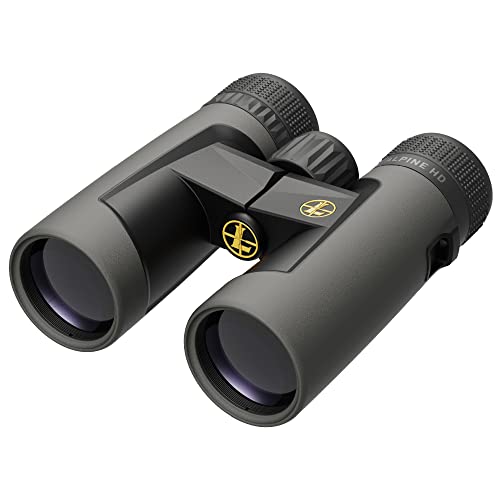
- BX-2 Alpine HD 8x42: roof prism
- BX-2 Timberline HD 12x50: roof prism
- BX-3 Alpine HD 10x42: size from the listing
The 8x42 is the one in this group I'd look at first for a tree stand. More on why below.
BX-4 Pro Guide HD: dawn to dusk
The maker says the BX-4 series is designed for all-day glassing from dawn to dusk. The grid has two sizes: a 10x42 and a 12x50 Gen 2. Gen 2 marks the newer version of the same model; compare the listing of the exact generation you're buying.
BX-5 Santiam HD: days of glassing
Leupold says the BX-5 series is designed for endless hours and days of glassing, aimed at guides and people who spend a lot of time in the field. The grid carries the BX-5 Santiam HD 15x56. That's big glass. Leupold's own advice is that once you get to 12x and 15x, you'll want a tripod to hold the view steady.
(Physical therapist aside: your arms can hold big glass steady for about as long as it takes a deer to step behind a tree. Shoulders are not tripods.)
BX-4 Range HD: the rangefinding binocular
The BX-4 Range HD TBR/W 10x42 is a binocular with a laser rangefinder built in. Its listing states angle compensation. Leupold's rangefinder guide lists Archer's Advantage, its archery ranging mode, on the BX-4 Range HD. One device instead of two means one less strap around your neck, at the cost of a bigger binocular. Rangefinding binoculars from other makers are on the rangefinder binoculars page.
Lineup notes: the Leupold rangefinder for bow hunting
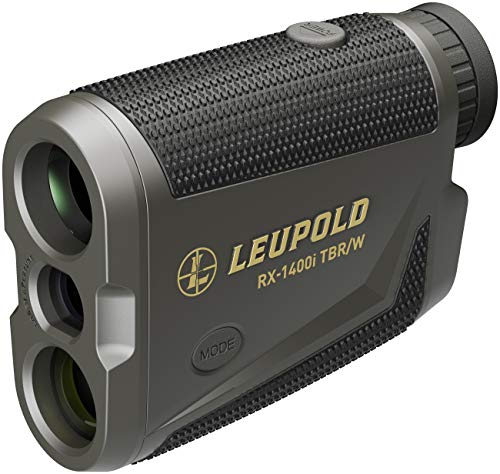
Three Leupold rangefinders are in the grid. All three listings state angle compensation and a bow mode.
Why bow mode matters from a stand
A bow mode gives you the distance the arrow actually flies on an angled shot, not the straight line from your eye to the deer. From a tree stand, the deer is below you, and the straight-line distance reads longer than the shot. Leupold's rangefinder guide says its BOW mode gives angle-compensated ranges out to 175 yards, and shows the plain line-of-sight distance past that. For a bowhunter, the 175 is never the limit that matters. Your effective range is.
RX-1400i TBR/W and Gen 2
The RX-1400i TBR/W comes in two versions in the grid. The Gen 2 listing gives a 1,400-yard maximum range and a red OLED display. Leupold's rangefinder guide describes the Gen 2 display as bright red. The first version's listing states angle compensation and a bow mode without a display type.
TBR/W in the name refers to Leupold's ballistic ranging modes. For a bowhunter, the line that matters in the listing is "bow mode", and both versions have it.
RX-FullDraw 5
The RX-FullDraw 5 is the one Leupold aims straight at archers. The maker says it's built for the bowhunter and the competitive archer, with a bright red OLED display and 6x magnification. Its Archer's Advantage mode, per Leupold, takes your arrow speed (170 to 550 fps), arrow weight, peep height and the shot angle into its calculation.
Leupold also lists features specific to the FullDraw 5:
- Flightpath: shows where the arrow will be at 20 yards, or at the halfway point, to find a clear shooting lane through branches
- Last Target mode: for ranging through rain, fog and snow
- Battery: over 3,000 readings, per the maker
Quick note on that velocity range: FPS is arrow speed in feet per second. Your bow's speed goes in as a number, so chronograph it or use the maker's figure before you set the mode up.
Other bow rangefinders are on the hunting rangefinder page.
Leupold binocular harnesses
A chest harness holds the binocular against your chest instead of swinging on a neck strap. The Leupold harnesses in the grid:
- GO Afield Binocular Harness XF: Leupold says its non-elastic, adjustable webbing keeps the pouch against your body
- Pro Guide Binocular Harness 2: magnetic closure, per the listing
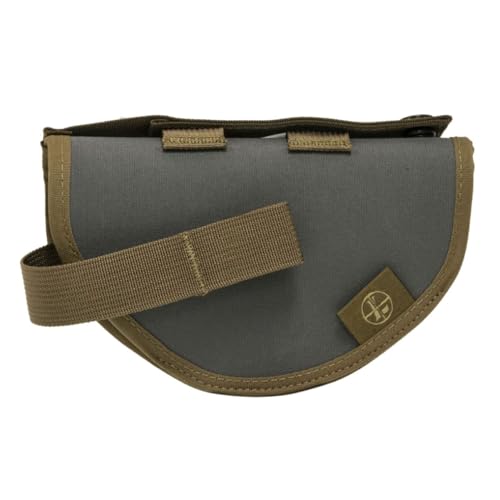
- Pro Guide Bino Harness Holster: its listing gives no closure type
- Enclosed Binocular Harness, Magnetic: an enclosed chest pack with a magnetic lid
- Enclosed Binocular Harness, Non-Magnetic: the same style, with a bungee closure
The maker says the enclosed harness has a magnetic fold-down lid for quiet one-handed opening, a front zippered pocket, a rear phone pocket and a fleece lining. Magnetic or bungee is the choice that matters here. Fit is the other: the GO Afield page gives its pouch as 6.25 by 6.25 by 2.5 inches, so check your binocular's size against it. More harnesses are on the binocular harness page.
How to choose within the Leupold lineup
Pick magnification by where you sit
My one opinion on this page: for a bowhunter in the eastern woods, an 8x or 10x beats anything bigger. Here's the checkable reason. Leupold's own guide says 6x to 8x gives an extra-wide field of view that suits tree stands and thick cover, that 10x balances reach and field of view, and that 12x to 15x needs a tripod. You don't carry a tripod up a tree. So the BX-2 Alpine 8x42, the 10x42s and their cousins are where I'd start. The 12x50s and the 15x56 make more sense for glassing open country from the ground.
Then pick the series
The BX number is the maker's own ladder, from glass-and-go to all-day glassing. Decide how long you'll actually look through it. A morning sit with a few quick checks is not a day on a western ridge.
Then decide: binocular plus rangefinder, or one device
Two devices give you a smaller binocular and a pocket rangefinder. The BX-4 Range HD puts both in one. Either way, check that the ranging side states angle compensation and a bow mode if you shoot from a stand.
Then the harness
Pick the harness after the binocular, because the binocular decides the pouch size. Magnetic closures open quietly with one hand; the maker says so of its enclosed harness.
More on binoculars across brands is on the hunting binoculars page.
Leupold guarantees in plain words
Leupold runs two guarantees. Its lifetime guarantee covers binoculars, along with other optics: if one doesn't perform, Leupold says it will repair or replace it free, whether you're the original owner or not, with no warranty card and no time limit.
The electronics guarantee is separate. It covers defects in the electronic parts of RX rangefinders and BX rangefinding binoculars for five years from the date of purchase. Proof of purchase may be required, so keep the receipt.
Rangefinders run on batteries. Swap the battery before the season, not on the stand at first light.
Leupold vs Vortex binoculars
Both brands make hunting binoculars in roof and porro prism designs, plus rangefinding binoculars and chest harnesses. On this site, Leupold's binoculars run from the 10x25 BX-1 Rogue to the 15x56 BX-5 Santiam. Vortex's run from a 6.5x youth binocular to 18x56 models.
The guarantees differ in one place. Leupold's lifetime guarantee covers its binoculars, and electronics get five years. Vortex calls its VIP warranty unlimited, unconditional and lifetime, and it doesn't carve out electronics. Its listed exclusions are loss, theft, deliberate damage and cosmetic damage that doesn't affect performance.
Compare the exact size and series you want. The Vortex brand page has its lineup.
Who's behind Leupold
Leupold's history page says Fred Leupold and Adam Volpel went into business in 1907 as Leupold & Volpel, making surveying equipment by hand. In 1968 the company moved into a new plant and headquarters in Beaverton, Oregon. The same page notes that in 1992, Leupold binoculars were made in the United States for the first time in more than 20 years. The company's legal name today is Leupold & Stevens, Inc., and it calls itself a family business.
Before you buy, write down three things: the series, the size, and whether the rangefinder says "bow mode". That's my whole spreadsheet for this one.