Brand · Archery & Bowhunting
Delta McKenzie Targets
Delta McKenzie makes archery targets and nothing else on this site: bag targets, foam blocks and 3D foam animals, from a backyard woodchuck to a tournament-grade elk. The short version for picking a Delta McKenzie target: decide what point you'll shoot into it first (field points only, or broadheads too), then check the FPS rating against your bow, then pick the shape. (Uncle Walt picks targets by asking which one is easiest to carry to the back of the field. That's a real spec. It's just not the first one.)
We earn a commission if you buy through our links, at no cost to you. Disclosure
Delta McKenzie on Amazon US
20 models- Archery target
Delta McKenzie Back Yard 3D Woodchuck Target
- Type
- 3d animal
- Stops
- Broadheads and field points
- Archery target
Delta McKenzie Javelina 3D Target
- Type
- 3d animal
- Stops
- Broadheads and field points
- Archery target
Delta McKenzie XL Alert Deer 3D Pro Target
- Type
- 3d animal
- Stops
- Broadheads and field points
- Archery target
Delta McKenzie Pro 3D Killzone Target 21640
- Type
- 3d animal
- Stops
- Broadheads and field points
- Archery target
Delta McKenzie Strutting 3D Turkey Target
- Type
- 3d animal
- Archery target
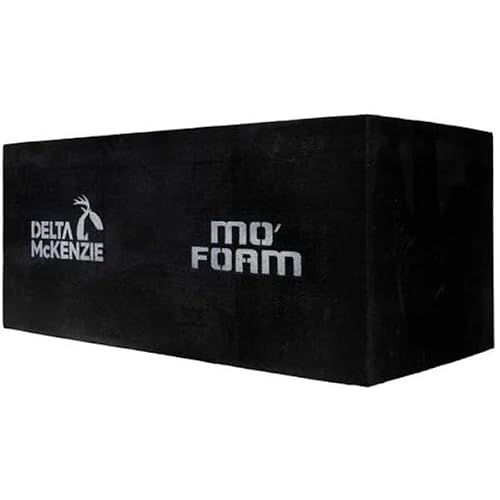
Delta McKenzie Mo' Foam Wall Section Target
Check price - Archery target
Delta McKenzie Speedbag 24 Target
- Type
- Bag
- Stops
- Field points only
- Shooting sides
- 2
- Archery target
Delta McKenzie Big 8 16" Foam Target
- Type
- Foam block
- Stops
- Broadheads and field points
- Shooting sides
- 8
- Archery target
Delta McKenzie TuffBlock 24x24x12 Foam Target
- Type
- Foam block
- Stops
- Field points only
- Speed rating
- 250 fps
- Archery target
Delta McKenzie Crossbow MAX Speedbag 79026
- Type
- Bag
- Stops
- Field points only
- Speed rating
- 525 fps
- Archery target
Delta McKenzie Speedbag Revolver 6-Sided Target
- Type
- Bag
- Stops
- Field points only
- Speed rating
- 450 fps
- Archery target
Delta McKenzie Speedbag Sniper 20" Target
- Type
- Bag
- Stops
- Field points only
- Speed rating
- 450 fps
- Archery target
Delta McKenzie Aim Rite Bear 3D Target
- Type
- 3d animal
- Stops
- Broadheads and field points
- Speed rating
- 350 fps
- Archery target
Delta McKenzie Javelina 3D Target
- Type
- 3d animal
- Stops
- Broadheads and field points
- Archery target
Delta McKenzie Pinnacle Elk 3D Target 22540
- Type
- 3d animal
- Stops
- Broadheads and field points
- Speed rating
- 350 fps
- Archery target
Delta McKenzie 20" Speedbag Target with Stand
- Type
- Bag
- Stops
- Field points only
- Shooting sides
- 2
- Archery target
Delta McKenzie Intruder 3D Deer Target
- Type
- 3d animal
- Stops
- Broadheads and field points
- Speed rating
- 350 fps
- Archery target
Delta McKenzie 1/3rd Size Mule Deer 3D Target
- Type
- 3d animal
- Stops
- Broadheads and field points
- Archery target
Delta McKenzie Strutter Turkey 3D Target
- Type
- 3d animal
- Stops
- Broadheads and field points
- Size
- 20 x 22 x 28
- Archery target
Delta McKenzie Predator HP 13 Crossbow Target
- Type
- Foam block
- Stops
- Field points only
- Speed rating
- 450 fps




What Delta McKenzie makes for bowhunters
On this site, Delta McKenzie covers one product type: archery targets. Inside that one type, the grid above splits into three families:
- Bag targets: the Speedbag family, filled bags you shoot from two or more sides
- Foam blocks: layered and solid foam cubes, including the Predator series
- 3D animals: foam deer, turkeys, bears, a javelina, an elk and a woodchuck
The maker's own site sorts the same lineup a little differently. It lists a Predator series, specialty targets, a Backyard 3D line, a Pro 3D line of tournament-grade animals, AI-enabled targets, bag targets, and parts like replacement cores, replacement bags and antlers. This site doesn't list the parts, so for a new core or a new bag cover, the maker's site is where you'll find them.
The grid changes as listings come and go. So I'll write about the families and what separates them, not about how many of each are listed this week. Most of the specs in the grid come from Amazon listings, and the grid marks those values. Where a listing doesn't say, you'll see a dash.
Read two numbers before the shape
Every Delta McKenzie target in the grid comes down to two specs before anything else:
- Point rating: field points only, or broadheads and field points
- FPS rating: the fastest arrow or bolt the target is rated to stop (FPS = feet per second)
Here's what actually changes. A field point is a plain bullet-shaped tip. A broadhead has blades. The maker's FAQ recommends field points for both tournament and hunting practice, matched in weight to the broadhead you'll hunt with. It also says broadheads reduce the useful life of a target's vital section. So even on a target rated for broadheads, practice with field points and save the broadheads for a final check.
The FPS rating is about stopping power. Not every Delta McKenzie listing gives one. The ones that do run from a few hundred FPS on a basic foam block up past 500 on the crossbow bag. Find your bow's or crossbow's listed speed, then pick a target rated at or above it.
Delta McKenzie bag targets: the Speedbag family
What a bag target is for
A bag target is a tough outer cover around a filling that grabs the arrow by friction. On this site's listings, every Speedbag lists field points only, and the maker's FAQ says most traditional bag targets are meant for field points only. That's the trade: bags are built for lots of practice arrows, not for blades.
The Speedbag names in the grid, per their listings:
- Speedbag 24: two shooting sides
- Speedbag 20" with stand: two sides, sold with a stand to raise it off the ground
- Speedbag Sniper 20": two sides, a slimmer bag at 8 inches deep, rated 450 FPS
- Speedbag Revolver: a 12-inch cube with six shooting sides, rated 450 FPS
- Crossbow MAX Speedbag: two sides, the highest FPS rating in the grid at 525
Quick math on the sides: a six-sided cube gives you three times the faces of a two-sided bag. More faces means you can rotate it as one face wears. (Walt rotates his targets by walking around them. Same idea, more steps.)
Replacement bags
The maker sells replacement bags for several Speedbag and Wedgie models on its own site. That means the filling can outlast the cover. Check the maker's parts list before you retire a whole target over one torn face.
More on bag targets across brands is on the archery target page.
Delta McKenzie foam blocks and the Predator series
TuffBlock and Big 8
The two plainer blocks in the grid are built for different jobs, per their listings:
- TuffBlock 24x24x12: a large block, field points only, rated 250 FPS
- Big 8 16": a 16-inch block with eight shooting sides, rated for broadheads and field points
The Big 8 is the foam block in the grid that lists broadheads. If you want one target for field-point practice and a pre-season broadhead check, that point rating is the line to read. The TuffBlock's 250 FPS rating puts it on the slow side for a modern compound, so check your bow's speed first.
The Predator series
The maker describes the Predator series as foam targets for compound bow and crossbow practice, made from premium foam with an in-mold painted, weather-resistant finish. Its series page says some models are rated up to 500 FPS, select models take both field points and broadheads, and some have a replaceable center section. It also says sizes run from 13-inch models up to 36-inch technical targets.
The two Predator blocks in the grid are the HP 13 and HP 16. Their listings give:
- Predator HP 13: a 13-inch cube, field points only, 450 FPS
- Predator HP 16: a 16-inch cube, field points only, 450 FPS
Both are sold as crossbow targets. The maker's series page tells you to compare each target's FPS rating with your equipment before shooting, since ratings vary across the series. More on stopping a fast bolt is on the crossbow target page.
Mo' Foam Wall Section
The grid also includes a Mo' Foam Wall Section. Its listing gives no point or FPS rating, so the grid shows dashes. Read the listing itself before you order, and don't assume it matches the blocks above.
Delta McKenzie 3D targets
What 3D targets are for
A 3D target is a foam animal at life size or close to it. Archery 360 describes 3D archery as a course game shot at lifelike foam animals, usually one arrow per target, and compares it to golf. It also explains the scoring: a central 10-ring is the heart, the larger 8-ring covers the lung-liver area, and other body hits score 5. Some targets add small inner rings worth 11 or 12.
For a bowhunter, the point is practice at the angle and the shape you'll see in the woods. A paper bullseye doesn't quarter away from you. A foam deer does.
Every 3D listing in the grid that gives a point rating lists broadheads and field points.
The Backyard 3D line
The maker calls the Backyard 3D line realistic practice at home, for both newer and experienced archers. In the grid, the backyard-sized animals include:
- Back Yard 3D Woodchuck: a small-game shape
- Javelina 3D: listed twice, under two listings
- Aim Rite Bear 3D: rated 350 FPS per its listing
- Intruder 3D Deer: a deer shape, no specs in its listing yet
- 1/3rd Size Mule Deer 3D: a reduced-size deer
- Strutter Turkey 3D: 20 x 22 x 28 inches per its listing
- Pro 3D Killzone 21640: a vital-zone section rather than a whole animal
The maker sells replacement cores for several Backyard bucks on its own site. A core is the middle section around the vitals, where most arrows land. Replacing it gives the target a second life without buying the whole animal again.
A 1/3-size mule deer is a smart idea for a small yard, and a deceptive one. It looks farther away than it is. (I write the yardage on every logbook entry. I'd write it twice on this one.)
The Pro 3D line
The maker describes its Pro 3D targets as tournament grade, for clubs, ranges and serious bowhunting practice. Its collection page says they're made of 100% foam with no plastic parts, with a replaceable core that holds the scoring and vital zones. It also says the cores carry universal scoring rings and mentions ASA scoring: 12, 10, 8, 5 or 0, with a 14-ring at designated events.
In the grid, the Pro and larger animals include the XL Alert Deer 3D Pro, the Pinnacle Elk 3D (rated 350 FPS per its listing) and the Strutting 3D Turkey. These are the big ones, and big means heavy. The maker's site sells larger 3D targets in sections, which helps with storage and with getting them out of the truck.
Antlers are a replaceable part on the maker's site too. That's not a joke. Arrows hit antlers more often than anybody admits.
The 3D archery target page compares 3D targets across brands.
How to choose within the Delta McKenzie lineup
Start with the point you'll shoot
My one opinion on this page: buy the target for your practice arrows, not for your hunting arrows. The reason is the maker's own FAQ. It recommends field points for practice, matched in weight to your broadhead, and says broadheads shorten the life of the vital section. If you shoot 50 practice arrows a week and 3 broadheads in September, the target's job is the 50.
If you do want a broadhead check, pick a target whose listing says broadheads and field points: the Big 8 block or one of the 3D animals. The broadheads page covers fixed and mechanical heads across brands.
Then match the FPS rating to your bow
Find your bow's or crossbow's listed speed. Then read the target's FPS rating, if it has one. Crossbows usually need the highest-rated targets in the lineup, which is why the Crossbow MAX and Predator HP listings name crossbows outright. For crossbow speeds across makers, see the crossbow page; for bows, the compound bow page.
Then pick the shape for the practice you need
- Volume practice in the yard: a Speedbag, rotated as faces wear
- Many angles from one target: the Revolver cube or the eight-sided Big 8
- Shot placement on an animal: a Backyard 3D deer, turkey or bear
- Club or tournament prep: the Pro 3D line with replaceable cores
Then think about where it lives
A bag sits on the ground or on a stand. A foam block can go on a pallet, a sawhorse or a stand. A 3D deer stands on its own legs and needs a backstop or a safe field behind it. Wherever it goes, know what's behind the target and well past it before you shoot.
Care that applies to the whole lineup
The maker's FAQ is short and practical on care:
- Bring it in or cover it when you're not shooting. The maker says weather breaks targets down and fades paint.
- Pull arrows straight and use an arrow puller on small carbon and aluminum shafts.
- Lubricate the point and the first 4 to 5 inches of the shaft. The maker says this cuts heat buildup and makes removal easier.
- In cold weather, use the puller and the lubricant together for carbon arrows.
The FAQ also lists what wears a target faster: shooting from close range, arrow material and diameter, point type, bow speed and tight groups. Tight groups are the only problem on that list you should be happy to have.
Handle broadheads with care when you pull them. Grip the shaft behind the head, keep your other hand clear of the blades, and pull straight back.
Delta McKenzie target facts
Here's what I could verify from the maker's site and from publications:
- Where it's made: a 2015 Associated Press story, reprinted by Grand View Outdoors, said the targets were manufactured at a plant in Dike, Iowa, after a 2008 fire destroyed the company's earlier plant in Reinbeck
- Ownership: SGB Media reported in December 2023 that Bigshot Archery LLC acquired Delta McKenzie Targets from Easton, and that both brand names would stay on the market
- What the maker sells: bag targets, layered blocks and 3D animals, plus replacement cores, bags and antlers, per its own site
The maker's site doesn't spell out warranty terms. It has a warranty claim form and a toll-free number, so ask before you count on coverage. I also couldn't verify a founding year, so that's left out.
Field points in the bag, broadheads in the foam, and the yardage written down every time. That's the whole system.
Where Delta McKenzie shows up
Questions about Delta McKenzie
Are Delta McKenzie targets good?
What's checkable is what the maker and the listings state. The maker says its Pro 3D targets are 100% foam with no plastic parts and replaceable cores, and its Predator series uses an in-mold painted, weather-resistant finish. The listings give point ratings and, for some models, FPS ratings. Whether a target suits you depends on your bow's speed and whether you shoot broadheads.
Who makes Delta McKenzie targets?
SGB Media reported in December 2023 that Bigshot Archery LLC acquired Delta McKenzie Targets, then a division of Easton, and that targets would keep selling under both the Bigshot and Delta McKenzie names. An Associated Press story from 2015 placed the company's manufacturing in Dike, Iowa.
Can you shoot broadheads into a Delta McKenzie target?
Only into the ones rated for them. In the grid, the 3D animals and the Big 8 foam block list broadheads and field points, while the Speedbag bags, the TuffBlock and the Predator HP blocks list field points only. The maker's FAQ adds that broadheads shorten the life of a target's vital section, even on targets that accept them.
Which Delta McKenzie target works for a crossbow?
Look for an FPS rating at or above your crossbow's listed speed. In the grid, the Crossbow MAX Speedbag lists 525 FPS, and the Speedbag Revolver, Speedbag Sniper and the Predator HP 13 and 16 list 450. All of those list field points only. The crossbow target page compares models across brands.
Where can I buy Delta McKenzie targets?
The product grid on this page links to Delta McKenzie listings on Amazon US. The maker also sells targets, replacement cores and replacement bags on its own site, dmtargets.com. Check the listing's point rating and FPS rating before you order, since similar names can carry different ratings.
Sources
- Delta McKenzie Targets: Home page and product categories — accessed 2026-10-23
- Delta McKenzie Targets: About us — accessed 2026-10-23
- Delta McKenzie Targets: FAQs — accessed 2026-10-23
- Delta McKenzie Targets: Predator Series — accessed 2026-10-23
- Delta McKenzie Targets: Bag targets — accessed 2026-10-23
- Delta McKenzie Targets: Pro 3D targets — accessed 2026-10-23
- Delta McKenzie Targets: Backyard 3D — accessed 2026-10-23
- SGB Media: Bigshot Archery acquires Delta McKenzie Targets (2023) — accessed 2026-10-23
- Grand View Outdoors (Associated Press): Delta McKenzie fills bowhunter market niche (2015) — accessed 2026-10-23
- Archery 360 (Archery Trade Association): 3D archery primer — accessed 2026-10-23