Archery & Bowhunting · Gear type
Crossbow Target
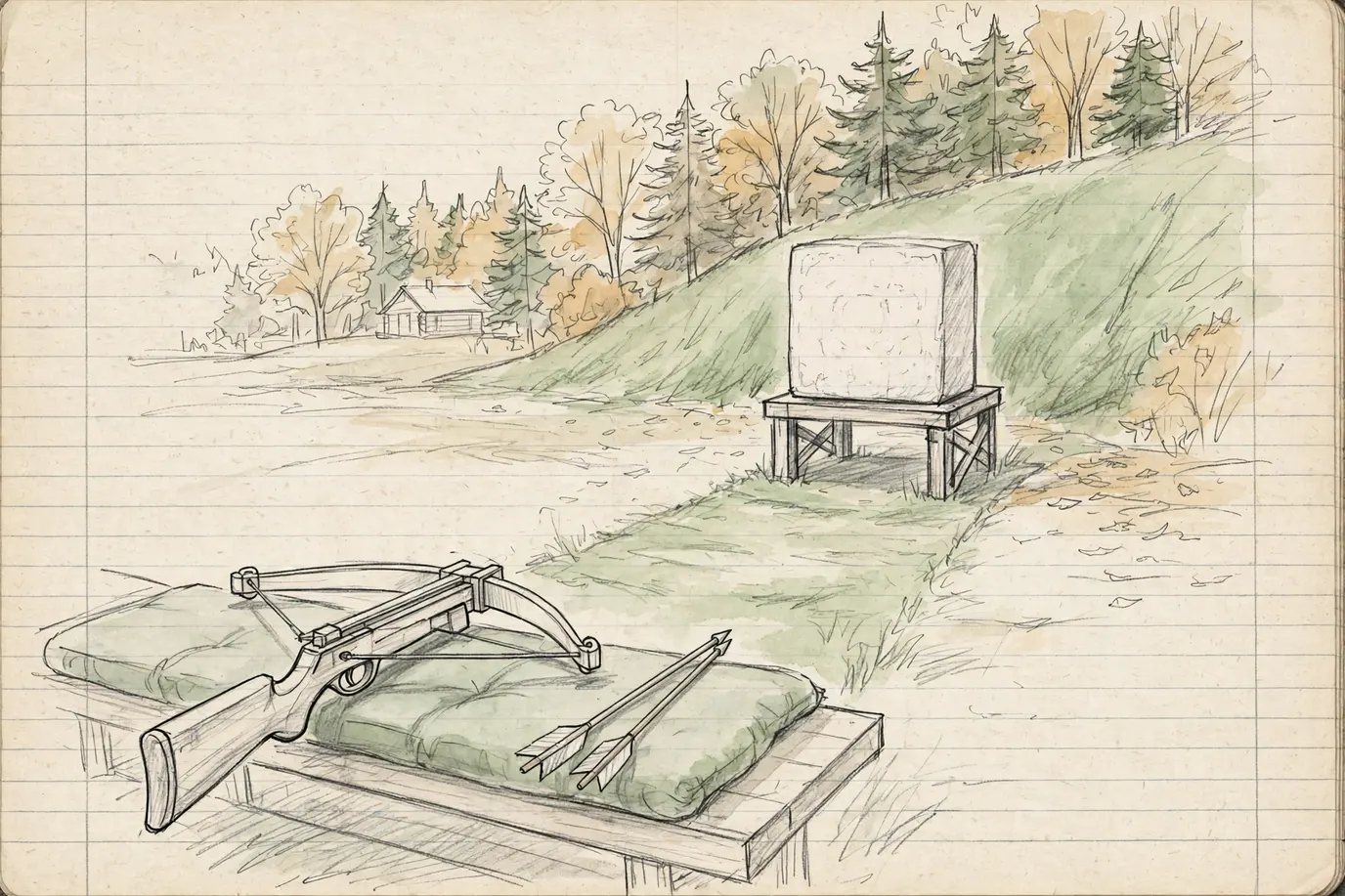
A crossbow target is an archery target its maker rates for crossbow speeds, and the speed rating is the number that decides everything else. Find your crossbow's FPS (feet per second), pick a target rated above it, then decide field points only or broadheads too. Bag or foam comes third. Uncle Walt calls the rating the speed limit. Unlike on the Turnpike, he obeys it.
We earn a commission if you buy through our links, at no cost to you. Disclosure
| Model | Type | Stops | Speed rating | Shooting sides | Size | Amazon |
|---|---|---|---|---|---|---|
Bigshot Iron Man 20 Kinetic 650Archery target | — | — | 650 fpslisting | — | 20 x 20 x 14listing | Check price |
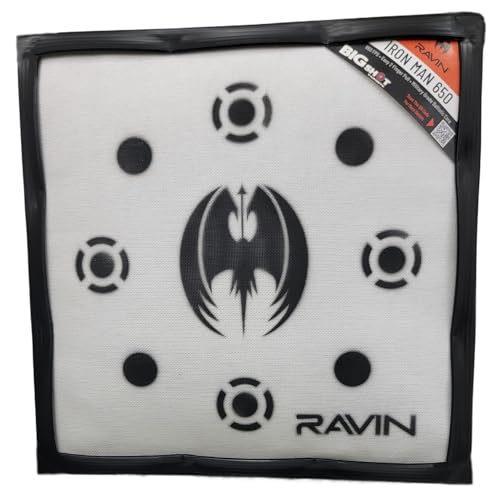
Bigshot Iron Man Kinetic 650 Ten PointArchery target | — | Field points onlylisting | 650 fpslisting | — | — | Check price |
Bigshot Iron Man Kinetic 650 Ravin EditionArchery target | — | Field points onlylisting | 650 fpslisting | — | 20 x 20 x 13listing | Check price |
Delta McKenzie Crossbow MAX Speedbag 79026Archery target | Baglisting | Field points onlylisting | 525 fpslisting | 2listing | 24 x 10 x 24listing | Check price |
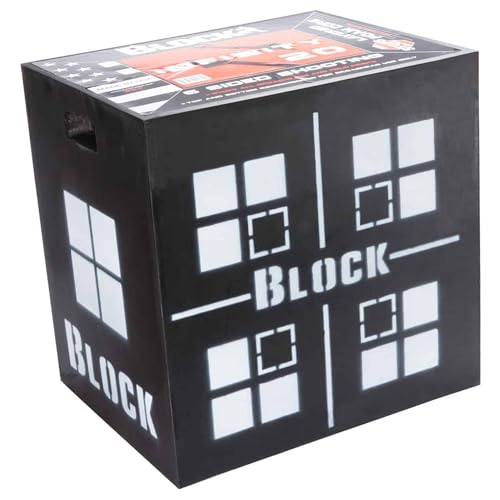
Block Infinity Crossbow 6-Sided TargetArchery target | Layered foamlisting | Broadheads and field pointslisting | 520 fpslisting | 6listing | 16 x 16 x 16listing | Check price |
Bigshot Titan 10X HD 505 FPSArchery target | Foam blocklisting | Broadheads and field pointslisting | 505 fpslisting | 10listing | — | Check price |
Bigshot Crossbow Ballistic Discharge Bag TargetArchery target | Baglisting | — | 505 fpslisting | — | 18 x 10 x 8listing | Check price |
Bigshot Iron Man Xtreme 500 FPSArchery target | — | — | 500 fpslisting | — | 24listing | Check price |
Block Infinity 6-Sided TargetArchery target | Layered foamlisting | Broadheads and field pointslisting | 500 fpslisting | 6listing | — | Check price |
Morrell Big High Roller CubeArchery target | Foam blocklisting | — | 500 fpslisting | 6listing | — | Check price |
Morrell Kinetic X Bag TargetArchery target | Baglisting | Field points onlylisting | 500 fpslisting | 4listing | 16 x 16 x 16listing | Check price |
Rinehart Targets 18-1 TargetArchery target | Foam blocklisting | Broadheads and field pointslisting | 500 fpslisting | 18listing | 15 x 15 x 15listing | Check price |
Bigshot 10-Inch Ball TargetArchery target | — | Broadheads and field pointslisting | 475 fpslisting | — | 10 diameterlisting | Check price |
Morrell BOA Compression 18"Archery target | Foam blocklisting | Field points onlylisting | 465 fpslisting | — | — | Check price |
Bigshot Real Wild Black Boar 3DArchery target More specs
| 3d animallisting | — | 450 fpslisting | — | — | Check price |
Bigshot Titan 10XS Broadhead TargetArchery target | Foam blocklisting | — | 450 fpslisting | 10listing | — | Check price |
Delta McKenzie Speedbag Revolver 6-Sided TargetArchery target | Baglisting | Field points onlylisting | 450 fpslisting | 6listing | 12 x 12 x 12listing | Check price |
Delta McKenzie Speedbag Sniper 20" TargetArchery target | Baglisting | Field points onlylisting | 450 fpslisting | 2listing | 20 x 20 x 8listing | Check price |
Delta McKenzie Predator HP 13 Crossbow TargetArchery target | Foam blocklisting | Field points onlylisting | 450 fpslisting | — | 13 x 13 x 13listing | Check price |
Morrell RT-450 Bag TargetArchery target | Baglisting | — | 450 fpslisting | — | 24 x 14 x 24listing | Check price |
Morrell RT-450 Bag Target 3-PackArchery target | Baglisting | — | 450 fpslisting | — | — | Check price |
Morrell FITA 1 Outdoor TargetArchery target | — | Broadheads and field pointslisting | 450 fpslisting | — | — | Check price |
Rinehart Targets 18" X-Bow Bag TargetArchery target | Baglisting | — | 450 fpslisting | — | 18 x 18 x 10listing | Check price |
Rinehart Targets 22" X-Bow Bag TargetArchery target | Baglisting | — | 450 fpslisting | — | 22 x 22 x 10listing | Check price |
Bigshot Real Wild Grey Coyote 3DArchery target More specs
| 3d animallisting | Broadheads and field pointslisting | 425 fpslisting | — | — | Check price |
Block Hurricane H25Archery target | Baglisting | — | 425 fpslisting | 2listing | 25 x 25 x 12listing | Check price |
Bigshot Real Wild Competition Bobcat 3DArchery target More specs
| 3d animallisting | Broadheads and field pointslisting | 375 fpslisting | — | 16 x 33 x 7listing | Check price |
Bigshot Pro Hunter 16 MultipurposeArchery target | Foam blocklisting | Broadheads and field pointslisting | 375 fpslisting | — | — | Check price |
Bigshot Real Wild Boss Rat 3DArchery target More specs
| 3d animallisting | Broadheads and field pointslisting | 375 fpslisting | — | — | Check price |
Bigshot Real Wild Mountain Goat 3DArchery target More specs
| 3d animallisting | Broadheads and field pointslisting | 375 fpslisting | — | — | Check price |
Bigshot Real Wild Dall Sheep 3DArchery target More specs
| 3d animallisting | — | 375 fpslisting | — | — | Check price |
Bigshot Pro Hunter Coyote TargetArchery target More specs
| 3d animallisting | — | 375 fpslisting | — | — | Check price |
Shooter Shooter Bear 3DArchery target More specs
| 3d animallisting | — | 375 fpslisting | — | — | Check price |
Delta McKenzie Aim Rite Bear 3D TargetArchery target More specs
| 3d animallisting | Broadheads and field pointslisting | 350 fpslisting | — | — | Check price |
Delta McKenzie Pinnacle Elk 3D Target 22540Archery target More specs
| 3d animallisting | Broadheads and field pointslisting | 350 fpslisting | — | — | Check price |
Delta McKenzie Intruder 3D Deer TargetArchery target More specs
| 3d animallisting | Broadheads and field pointslisting | 350 fpslisting | — | — | Check price |
Power-Stop 19" High-Density BlockArchery target | Layered foamlisting | Broadheads and field pointslisting | 350 fpslisting | — | — | Check price |






What’s in this listTargets rated by their maker or listing for arrow speeds of 300 fps or more, highest rating first. “—” means neither the maker nor the Amazon listing states it.
Why a crossbow needs its own target
A crossbow puts a short, heavy bolt into the target faster than most vertical bows ever will. That's the difference. A bag or block that stops a 50-lb compound arrow all season can be shot through, or shot out, by a crossbow in a weekend.
The basics every target shares (how bags and foam stop arrows, buffer zones, backstops) are on the main archery target page. This page is only about what changes when the arrow comes off a rail.
The table under this page lists targets whose maker rates them for arrow speeds of 300 FPS or more, highest rating first. Fewer makers list a speed rating than you'd hope, so the table will stay shorter than the general target list. Blank cells are fields neither the maker nor the listing states; we don't fill them with estimates.
Who a crossbow target is for
- Crossbow hunters sighting in before the season and checking the scope after a bump.
- New crossbow owners whose old bag target was bought for a vertical bow.
- Mixed households where a crossbow and a compound share one lane. Buy for the fastest thing that shoots at it.
- Anyone who hunts with a crossbow at all, because the end of every sit needs a safe place to send one bolt (more on that below).
If that last line sounds like a stretch, read the uncocking section first. It's the reason I think every crossbow owner needs one, range or no range.
What to look at when you pick a crossbow target
These are the table's fields, in the order that matters for a crossbow.
Speed rating is the first and last check
On a crossbow target the speed rating is the headline: the top bolt speed, in FPS, that the target's maker stands behind. Your crossbow maker lists the crossbow's speed. Put the two numbers side by side. The target's number should be higher.
A crossbow maker's FAQ gives the general picture: most crossbow targets work well with crossbows shooting about 350 to 430 FPS, and some are rated higher. For crossbows over about 505 FPS, it points to a different class of target entirely, built for field points only.
Leave room. Your next crossbow will probably be faster than this one, and a target bought for today's speed ages out with the bow. (Upgrading the crossbow and keeping the old target is like putting a new engine in a truck with the original brakes. It goes great right up until it needs to stop.)
Quick math: why crossbow bolts are harder to stop
Speed rating isn't the only force on the foam. The energy of the bolt rises with the square of its speed. Bowhunting.com gives the usual formula:
Kinetic energy (ft-lb) = arrow weight in grains × speed in FPS × speed in FPS ÷ 450,800
Its example: a 400-grain arrow at 297 FPS carries about 78 ft-lb. Quick math with the same formula: a 400-grain bolt at 400 FPS carries about 142 ft-lb. Same weight, a third more speed, almost twice the energy. That's what the target has to soak up.
That's also why a heavier bolt at the same speed asks more of the foam, even though the speed rating on the box hasn't changed.
Stops: field points only, or broadheads too
The Stops column is the maker's point rating. With a crossbow it matters even more, because the speeds make the trade-offs sharper.
A crossbow maker's FAQ puts it plainly. Stopping fixed-blade broadheads from crossbows over 505 FPS while still letting you pull them out easily is a challenge. Some foam targets stop fast fixed broadheads well, but the same maker found field-point arrows nearly impossible to pull out of them.
So most crossbow shooters end up with two targets: one for field points, one rated for broadheads. The broadhead one gets a few shots a year to check that broadheads hit with field points. The field-point one gets everything else. More on those on the broadhead target page.
Type: bag, foam block or layered
The Type column tells you how the target is built.
- Bag: woven shell, packed fill. Crossbow-rated bags exist; the maker's rating tells you which.
- Solid foam block: dense foam, often several shooting faces; foam is what the crossbow maker found best at stopping fast fixed broadheads.
- Layered foam: compressed sheets that grip the point between layers; per a layered-target patent, the sheets have to stay compressed or arrows slip through the gaps.
- 3D animal: realistic practice, but check the speed rating. See the 3D archery target page.
Size and depth: the fast bolt needs somewhere to stop
Size is height × width × depth in inches. With a crossbow, depth is the number to look at. One crossbow maker says the field-point targets it likes for the fastest crossbows typically stop arrows within 8 inches. A target needs more depth than that to give you margin.
The same maker warns those targets are heavy, so check the weight before you plan to carry one to the back field every night. Archery 360's general note holds too: bigger targets are harder to miss and wear out slower than small ones.
Shooting sides: turn it before it wears through
Shooting sides is the maker's count of usable faces. A multi-sided block lets you rotate as one face wears, so more sides means more shooting before you replace the target.
Bag crossbow target vs foam: when to choose which
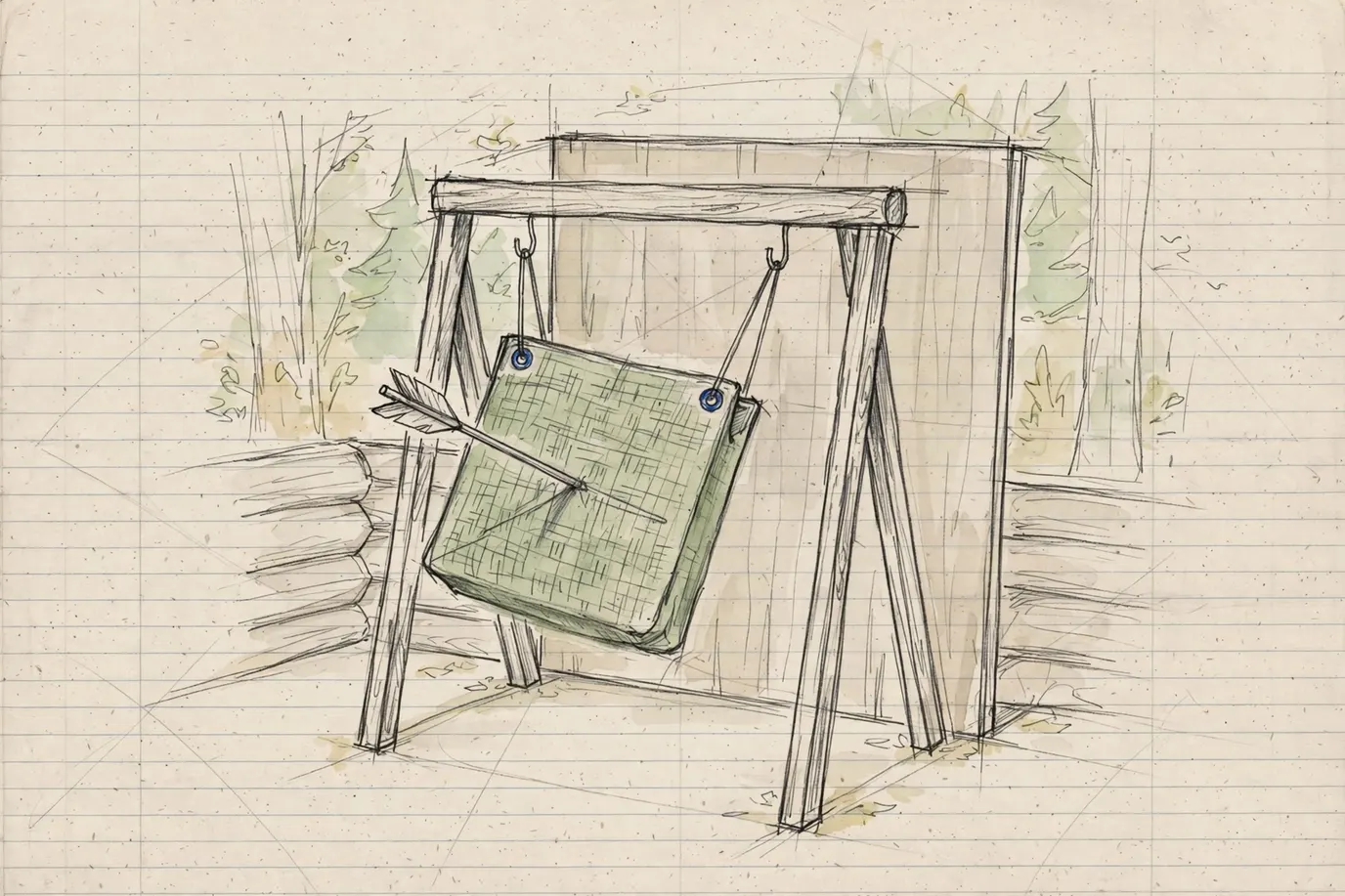
Choose a crossbow-rated bag for field points, easy pulls and lots of shots. Hang it. A crossbow maker's FAQ says bag targets should hang from their grommets so they can swing and absorb the hit. On the ground, a bag can't move, and arrows shoot through it much faster.
Choose foam if you need broadheads, several faces, or a target that sits on the ground. Expect harder pulls and plan on arrow lube.
Choose the heavy field-point class if your crossbow is over about 505 FPS. Space your shots out; the crossbow maker says that's how those targets last.
Choose a 3D animal only when its maker lists a speed rating that covers your crossbow. It's the best practice for the shot you'll actually get from a stand or blind, and the worst target to discover a rating problem on, because the vital insert is where every bolt goes.
Pulling bolts out without breaking anything
The crossbow maker's practice-target advice has a simple two-step fix for stuck bolts. Lightly coat the shaft and field point with arrow lube before the shot, and give the shaft a small twist as you pull.
Lube is cheap; a bent bolt isn't, and a bolt that took a hard pull deserves a close look before the next shot. Bolt lengths, weights and nocks are covered on the crossbow bolts page.
Set up the crossbow target safely
A crossbow sends a missed bolt a long way. Set up with that in mind.
- Clear direction. Oregon's wildlife department says never shoot toward a person, building, structure or vehicle within range, and never into thick brush, where arrows can ricochet.
- A backstop wider and taller than the target face, with nothing living or built behind it, per Oregon's wildlife department.
- Buffer zone. Use the ATA's buffer table; at typical crossbow practice ranges under 30 yards, that's a 15-yard strip on both sides and 25 yards of empty ground behind the target.
- No netting. The ATA limits backstop netting to bows under 30 lb of draw weight, because faster arrows can pass through it.
- Hang bags, stake blocks. A bag swings on a frame; a block shouldn't tip back when hit.
Sighting in is its own job, with its own page: how to sight in a crossbow scope. Big targets help there. One crossbow maker says it test-fires every crossbow of one line at 5 yards into large range targets before it leaves the factory. If the factory wants a big target at 5 yards, nobody needs to be brave at 40 with a small one.
Practicing on public land
Oregon's wildlife department has a short list for shooting away from home, and it fits crossbows well:
- Shoot well off the road and into a safe backdrop.
- Never shoot straight up, and never over a ridge you can't see past.
- Shoot only the targets in your own lane.
- Haul out every target you brought, plus any someone else left behind.
Uncock into the target, with a field point
The crossbow target is also where a loaded crossbow gets safely unloaded at the end of a hunt.
One crossbow maker's owner's manual calls firing a spare arrow with a practice point into soft ground or a suitable target the safest way to uncock, and says to carry a practice arrow for it. Wisconsin DNR gives the same advice. Use a field point, never a broadhead. Never dry-fire: always have a bolt on the rail when the string is released.
Keep your fingers, hand and arm out of the string path while the crossbow is cocked, and check the safety right after cocking, per Wisconsin DNR. Use only the bolts the crossbow maker recommends.
My one opinion on this page: the crossbow target belongs wherever you come home with a cocked crossbow, not only on the practice lane. The reason is the manual's line above. If the safe way to uncock is a bolt into a suitable target, the target has to be there at the end of the sit. Detailed steps are on the how to decock a crossbow guide.
Crossbow seasons and rules on where you can shoot vary by state. Check your state wildlife agency.
Make a crossbow target last
- Spread your shots. The crossbow maker says spacing shots out is how its high-speed field-point targets last.
- Rotate faces on multi-sided blocks before one wears through.
- Keep broadheads on their own target. Blades cut foam that field points only push aside.
- Lube the shafts, so pulls don't tear the face.
- Retire a face once bolts sink noticeably deeper than they used to.
Who should skip a crossbow target
- Vertical-bow shooters whose speed fits a standard target's rating. See the archery target page instead.
- Range-only crossbow shooters whose range supplies rated targets.
- Anyone with no safe lane and buffer behind the target. A rated target doesn't fix a bad backstop.
Rating above your speed, broadheads on their own block, and a field point ready for the end of every sit. That's the whole system.
Brands in this list
Related
Questions people ask
What FPS target do I need for my crossbow?
One rated at or above your crossbow's arrow speed, from the target maker's own rating. Most crossbow-rated targets are built for the middle of the crossbow speed range, and a few go well beyond it. For the fastest crossbows, over about 505 FPS, the same maker points to heavy field-point-only targets.
Can I use a regular archery target for a crossbow?
Only if its maker rates it for your crossbow's speed. Many vertical-bow targets don't list a speed rating at all, and that's a reason to pass, not a reason to guess. An archery target for crossbow use is any target whose stated FPS rating covers your bolt, whatever it's called on the box.
Why are crossbow bolts so hard to pull out of foam?
Fast bolts go deep into dense foam. One crossbow maker reports that field-point arrows over 400 FPS are nearly impossible to remove from most foam targets. Its fixes: lightly coat the shaft and field point with arrow lube before the shot, and give the shaft a small twist as you pull.
Can I shoot broadheads into a crossbow target?
Only into one rated for broadheads; check the Stops column. A crossbow maker's FAQ notes that stopping fixed-blade broadheads from crossbows over 505 FPS while keeping removal easy is a challenge. Keeping one target for field points and a separate broadhead-rated one for checking broadhead flight avoids that trade-off.
Is it safe to uncock a crossbow by shooting into a target?
Yes. One crossbow maker's owner's manual calls firing a spare arrow with a practice point into soft ground or a suitable target the safest way to uncock, and Wisconsin DNR gives the same advice. Use a field point, never a broadhead, and never dry-fire the crossbow without a bolt.
Should a bag crossbow target hang or sit on the ground?
Hang it. A crossbow maker's FAQ says bag targets should hang from their grommets so they can swing, which helps them absorb the bolt's impact. A bag sitting on the ground can't move, and arrows shoot through it much faster. Put a backstop larger than the bag behind the frame either way.
Sources
- TenPoint Crossbows: What target will work best with my crossbow — accessed 2026-10-21
- TenPoint Crossbows: What target is best for crossbow practice — accessed 2026-10-21
- TenPoint Crossbows: Owner's manual (2001) — accessed 2026-10-21
- Bowhunting.com: How much kinetic energy for bowhunting — accessed 2026-10-21
- Wisconsin DNR: Archery and crossbow safety tips — accessed 2026-10-21
- Oregon Department of Fish and Wildlife: Bow shooting safety — accessed 2026-10-21
- Archery 360 (Archery Trade Association): How to Build a DIY Target and Backstop for Your Home Range — accessed 2026-10-21
- Archery 360 (Archery Trade Association): Archery Targets: Know the Options — accessed 2026-10-21
- Google Patents: US7464938B1, Layered foam target and method of manufacturing the same — accessed 2026-10-21