Brand · Trail Cameras & Optics
Bushnell Rangefinders, Binoculars and Trail Cameras
Bushnell makes three kinds of hunting gear on this site: laser rangefinders, binoculars and trail cameras, plus binocular harnesses to carry the glass. The short version: a Bushnell rangefinder is sorted by maximum range, magnification and whether it has a bow mode with angle compensation; the binoculars by their two numbers and prism type; the cameras by trigger speed, flash type and video. Pick the type, then read those fields. (Uncle Walt still ranges by pacing it off. He's accurate to within one Walt.)
We earn a commission if you buy through our links, at no cost to you. Disclosure
Bushnell on Amazon US
54 models- Binoculars
Bushnell Powerview 10x25
- Objective
- 25 mm
- Magnification
- 10 x
- Binoculars
Bushnell PowerView 10x50 Wide-Angle PermaFocus
- Objective
- 50 mm
- Magnification
- 10 x
- Binoculars
Bushnell PowerView 12x50 Wide-Angle Porro Prism
- Objective
- 50 mm
- Magnification
- 12 x
- Binoculars
Bushnell Falcon 10x50 Wide-Angle
- Objective
- 50 mm
- Binoculars
Bushnell PowerView Porro Prism 20x50mm
- Objective
- 50 mm
- Magnification
- 20 x
- Field of view
- 170 ft@1000yd
- Binoculars
Bushnell Marine 7x50 Compass
- Objective
- 50 mm
- Magnification
- 7 x
- Field of view
- 350 ft@1000yd
- Binoculars
Bushnell Marine 7x50
- Objective
- 50 mm
- Magnification
- 7 x
- Binoculars
Bushnell Legacy WP 10x50
- Objective
- 50 mm
- Magnification
- 10 x
- Binoculars
Bushnell PowerView 10x42 Roof Prism
- Objective
- 42 mm
- Magnification
- 10 x
- Binoculars
Bushnell PowerView 10x50 Instafocus Realtree AP
- Objective
- 50 mm
- Magnification
- 10 x
- Binoculars
Bushnell H2O Xtreme 10x42
- Objective
- 42 mm
- Magnification
- 10 x
- Binoculars
Bushnell Pacifica 10x50 211050
- Objective
- 50 mm
- Magnification
- 10 x
- Binoculars
Bushnell Legend L-Series 10x42
- Objective
- 42 mm
- Magnification
- 10 x
- Field of view
- 340 ft@1000yd
- Binoculars
Bushnell Trophy XLT 10x42 Bone Collector
- Objective
- 42 mm
- Magnification
- 10 x
- Eye relief
- 15.2 mm
- Binoculars
Bushnell Trophy Bone Collector 10x42
- Objective
- 42 mm
- Magnification
- 10 x
- Binoculars
Bushnell Trophy Xtreme 10x50
- Objective
- 50 mm
- Magnification
- 10 x
- Field of view
- 315 ft@1000yd
- Binoculars
Bushnell Power View 10x50 131056
- Objective
- 50 mm
- Magnification
- 10 x
- Field of view
- 341 ft@1000yd
- Binoculars
Bushnell Spectator Sport 10x40
- Objective
- 40 mm
- Magnification
- 10 x
- Binoculars
Bushnell Engage X 10x42mm
- Objective
- 42 mm
- Magnification
- 10 x
- Binoculars
Bushnell PowerView 2 10x25
- Objective
- 25 mm
- Magnification
- 10 x
- Binoculars
Bushnell PowerView 2 20x50
- Objective
- 50 mm
- Magnification
- 20 x
- Binoculars
Bushnell PowerView 10x42 Bone Collector
- Objective
- 42 mm
- Magnification
- 10 x
- Binoculars
Bushnell Fusion X 10x42 Ranging
- Objective
- 42 mm
- Magnification
- 10 x
- Binoculars
Bushnell H2O 10x42
- Objective
- 42 mm
- Magnification
- 10 x
- Binoculars
Bushnell PowerView 2 8x21
- Objective
- 21 mm
- Magnification
- 8 x
- Binoculars
Bushnell Blackout Camo 10x42
- Objective
- 42 mm
- Magnification
- 10 x
- Binoculars
Bushnell Prime 10x42
- Objective
- 42 mm
- Magnification
- 10 x
- Binoculars
Bushnell Match Pro ED 15x56
- Objective
- 56 mm
- Magnification
- 15 x
- Binoculars
Bushnell Prime 12x50 with Vault Bino Caddy
- Objective
- 50 mm
- Magnification
- 12 x
- Binoculars
Bushnell R5 8x42
- Objective
- 42 mm
- Magnification
- 8 x
- Binoculars
Bushnell R3 10x42
- Objective
- 42 mm
- Magnification
- 10 x
- Binoculars
Bushnell A3 8x32
- Objective
- 32 mm
- Magnification
- 8 x
- Binoculars
Bushnell A5 10x42
- Objective
- 42 mm
- Magnification
- 10 x
- Binoculars
Bushnell A1 10x25
- Objective
- 25 mm
- Magnification
- 10 x
- Rangefinder
Bushnell G-Force 1300 ARC 201965
- Max range (reflective)
- 1,300 yd
- Magnification
- 6 x
- Angle compensation
- Yes
- Rangefinder
Bushnell 4x20 Bone Collector 202208
- Magnification
- 4 x
- Rangefinder
Bushnell Custom Rangefinder 202450
- Max range (reflective)
- 600 yd
- Magnification
- 4 x
- Rangefinder
Bushnell Prime 1700 6x24
- Magnification
- 6 x
- Angle compensation
- Yes
- Rangefinder
Bushnell Bone Collector 850
- Max range (reflective)
- 850 yd
- Magnification
- 6 x
- Angle compensation
- Yes
- Rangefinder
Bushnell Legend 6x24 1200yd
- Max range (reflective)
- 1,200 yd
- Magnification
- 6 x
- Angle compensation
- Yes
- Rangefinder
Bushnell Bone Collector 1800 6x25
- Max range (reflective)
- 1,800 yd
- Magnification
- 6 x
- Angle compensation
- Yes
- Rangefinder
Bushnell R5 2000 6x25
- Max range (reflective)
- 2,000 yd
- Magnification
- 6 x
- Angle compensation
- Yes
- Rangefinder
Bushnell R5 Broadhead 2 6x25
- Max range (reflective)
- 2,000 yd
- Magnification
- 6 x
- Trail camera
Bushnell CORE 30MP Dual Sensor
- Photo resolution
- 30 MP
- Video
- 1080p
- Trigger speed
- 0.2 s
- Trail camera
Bushnell Core DS No Glow
- Photo resolution
- 30 MP
- Video
- 1080p
- Trigger speed
- 0.2 s
- Trail camera
Bushnell Prime Low Glow
- Photo resolution
- 24 MP
- Video
- 1080p
- Trigger speed
- 0.3 s
- Trail camera
Bushnell CORE S-4K No Glow
- Photo resolution
- 30 MP
- Video
- 4k
- Trigger speed
- 0.2 s
- Trail camera
Bushnell Core DS-4K No Glow
- Photo resolution
- 32 MP
- Video
- 4k
- Trigger speed
- 0.15 s
- Trail camera
Bushnell Prime L20 Low Glow
- Photo resolution
- 20 MP
- Video
- 1080p
- Trigger speed
- 0.4 s
- Trail camera
Bushnell Spot-On Low Glow 18MP
- Units in pack
- 2
- Photo resolution
- 18 MP
- Night/flash range
- 50 ft
- Trail camera
Bushnell CelluCORE 20
- Connectivity
- Cellular
- Photo resolution
- 20 MP
- Video
- 1080p
- Trail camera
Bushnell CelluCORE Live
- Connectivity
- Cellular
- Photo resolution
- 32 MP
- Video
- 1080p
- Bino harness
Bushnell Ultra-Light Binocular Harness 19126C
- Material
- Shock cord
- Style
- Strap only
- Bino harness
Bushnell Binocular Harness Quick-Detach
- Style
- Strap only









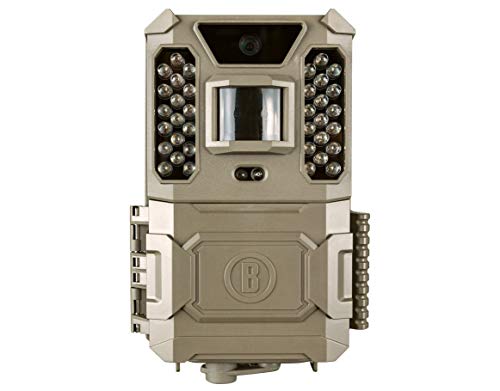


What Bushnell makes for hunters
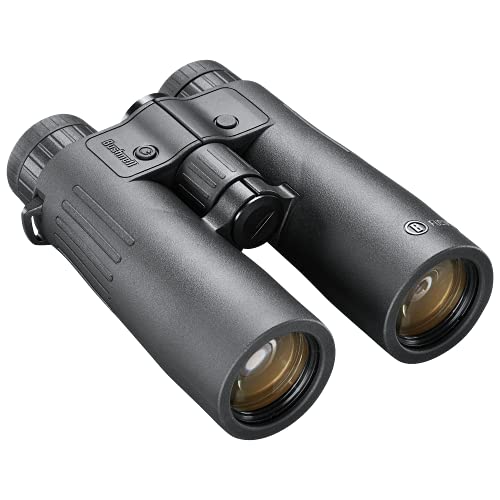
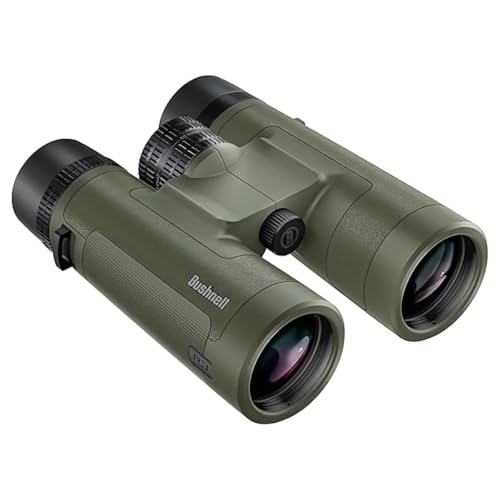
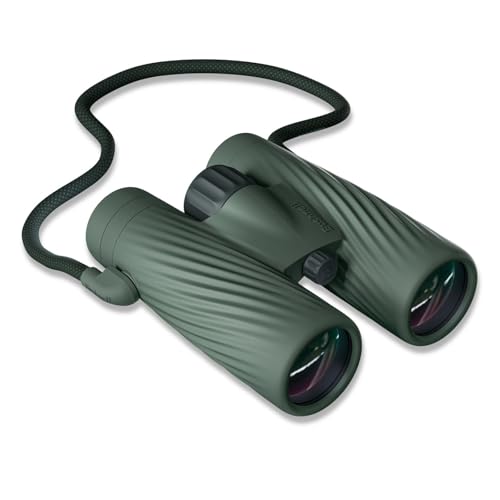
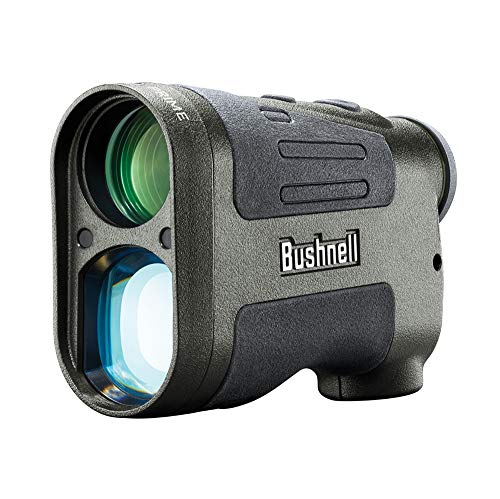
Bushnell's own hunting page lists binoculars, scopes, trail cameras, rangefinders, dot sights, night vision and accessories. On this site, the Bushnell product grid covers four types: laser rangefinders, binoculars, trail cameras and binocular harnesses. The scopes, dot sights and night vision aren't part of this site.
The grid above shows what's on Amazon right now, filtered by type. It changes week to week, so I'll write about the product lines and what separates them, not about how many of each are listed today.
A note on the data: most Bushnell values in the grid come from Amazon listings, and the grid marks them. Where a listing leaves a field out, I don't fill it in.
Bushnell rangefinders: lineup notes
Bushnell says on its site that it invented the laser rangefinder 25 years ago. Whatever you make of that, rangefinders are the type people search for first with this brand, so they come first here.
The models in the grid
The Bushnell rangefinders on Amazon right now fall into three groups by their listed specs:
- G-Force 1300 ARC and Prime 1700: 6x magnification, angle compensation and a bow mode per their listings
- Bone Collector 850: 6x with angle compensation, and an 850-yard maximum range listed
- Bone Collector 4x20 and Custom Rangefinder: 4x magnification, the simpler end of the lineup
Maximum ranges in the listings run from a few hundred yards to 1,300. Quick math for a bowhunter: if your longest ethical shot is 40 yards, a 1,300-yard rangefinder is using about 3 percent of its range on your best day. The top number is about far-off targets. It doesn't make a 30-yard reading any better.
What ARC and bow mode actually do
ARC is Bushnell's name for angle range compensation on some models. Here's what actually changes. On a slope, the straight-line distance to a deer is longer than the horizontal distance, and gravity only acts over the horizontal part. Bowhunter's article on angle-compensating rangefinders explains that shooting for the line-of-sight number makes the arrow hit high, so for shots under about 40 yards you want the horizontal distance. An angle-compensating rangefinder does that trigonometry for you.
The same article adds two practical notes. The formula drifts from real arrow flight at long range and steep angles. And tilt accuracy varies more between rangefinder models than straight-line accuracy does. So check yours with your own bow on a real slope, uphill and downhill, before the season.
From a tree stand, every shot is a downhill shot. That's where a bow mode earns its keep. Wear your harness the whole time you're off the ground.
Magnification and the 4x models
The 6x units magnify more, which helps you pick one tree trunk out of a dozen at the edge of a field. The 4x units show a wider picture. For the close woods of a Pennsylvania ridge, either works; for picking a target across a cut cornfield, the 6x is easier to hold on a small spot. (On paper this is a small difference. In practice it's the difference between ranging the buck and ranging the bush behind him.)
The cross-brand comparison is on the hunting rangefinder page.
Bushnell binoculars: lineup notes
How to read the two numbers
Every Bushnell binocular name ends in two numbers, like 10x42. The first is magnification: things look ten times closer. The second is the objective lens diameter in millimeters. Bushnell's own turkey-hunting article spells out the trade: a bigger objective gathers more light for dawn and dusk, and lower magnification gives a wider view and less image shake. Its quick guide puts 8x42 in tight timber, 10x42 as the all-around choice for open terrain, and 12x50 for long-range scouting.
The families in the grid
The Bushnell binoculars on this site cover a wide spread of configurations:
- PowerView and PowerView 2: the broadest family, from compact 8x21 and 10x25 to 10x42 roof prism and 10x50, 12x50 and 20x50 porro prism models
- Falcon, Legacy WP and Pacifica: 10x50 porro prism models
- Marine 7x50: low magnification and a big objective, one version with a built-in compass
- H2O and H2O Xtreme: 10x42 models
- Trophy, Trophy XLT and Trophy Xtreme: 10x42 roof prism and 10x50 models, some in Bone Collector editions
- Legend L-Series, Engage X and Blackout Camo: 10x42 models
- Spectator Sport: 10x40, more stadium than tree stand
- Fusion X 10x42 Ranging: binoculars with a built-in rangefinder and angle compensation, per the listing
Most of the hunting-size models land on 10x42 or 10x50. The 20x50 is a different tool: at 20x, the listing's 170-foot field of view is half the width of the 340-foot field the Legend L-Series lists at 10x. That's the "less field of view" trade in one comparison. It also shakes a lot in your hands. Walt's verdict on 20x binoculars: "Great if you hunt from a tripod. I hunt from a chair."
Porro or roof prism
The grid marks prism type where the listing gives one. American Hunter's article explains the difference. Porro prism binoculars have the dog-leg shape, with offset barrels; they're simpler to build and slightly bulkier. Roof prism binoculars have two straight barrels and are more compact, but the design needs extra coatings and phase correction to produce a crisp image. The article's general point is that at the lower end of the market, a porro is often the better optical value.
Most of Bushnell's 10x50 models in the grid are porros. The 10x42 Trophy, PowerView and compact models are roofs. If the binocular rides on your chest all day, the roof's shape is easier to carry; if it sits on the blind shelf, the porro's bulk matters less.
Harnesses
The grid also holds Bushnell binocular harnesses, including an Ultra-Light Binocular Harness and a quick-detach model. A harness holds the binocular on your chest instead of swinging from your neck. As a physical therapist, I'd like more people to wear one, but I've said that before. The binocular harness page compares styles across brands.
The cross-brand binocular comparison is on the hunting binoculars page, and glass with a built-in rangefinder is on the rangefinder binoculars page.
Bushnell trail cameras: lineup notes
Core, Prime and Spot-On
The Bushnell trail cameras on Amazon right now sort into three groups by their listings:
- Core DS No Glow, Core S-4K and Core DS-4K: no-glow flash, 30 to 32 MP photos, triggers from 0.15 to 0.2 seconds, the S-4K and DS-4K with 4K video
- Prime Low Glow and Prime L20: low-glow flash, 20 to 24 MP, 1080p video, slower triggers in the 0.3 to 0.4-second range
- Spot-On Low Glow: sold as a two-pack, 18 MP, the shortest flash range in the group
The Core DS-4K and Core S-4K are the two people ask about. Per their listings, the DS-4K is the faster and longer-reaching of the pair on paper. The Core DS No Glow keeps the same idea with 1080p video.
Low glow vs no glow
This field decides more than the megapixels. Browning's trail camera article explains the trade. Low-glow infrared runs around 850 nanometers; someone looking at the camera may see a faint red glow, and night images are reasonably crisp. No-glow runs around 950 nanometers; the LEDs aren't visible when the picture is taken, but the subject gets less light, so night images come out grainier and more likely to blur.
So the Core cameras trade a bit of night image quality for an invisible flash, and the Prime cameras the other way around. If people walk past your camera, the invisible flash matters more. If you want clean night photos of a scrape, low glow gives you more light to work with.
CelluCORE 20: the cellular one
The CelluCORE 20 is the cellular camera in the grid. Its listing names dual-SIM cellular, 20 MP photos, 1080p video and no-glow flash, and the maker's data gives an 80-foot flash range and AA batteries. A cellular camera sends pictures to your phone, which means a data plan and a carrier signal at the tree. Check coverage where you'll hang it, not at the truck. More on plans and signal is on the cellular trail camera page.
Trail camera rules, especially for cellular cameras, vary by state. Check your state wildlife agency before you hang one.
How to choose within the Bushnell lineup
Rangefinder: angle compensation before range
My one opinion on this page: if you hunt from a stand, angle compensation matters more than maximum range. The reason is the slope math above: from height, the line-of-sight number is longer than the distance the arrow actually has to drop over. So if you bowhunt from a stand, start with the models that list angle compensation and a bow mode, then pick the magnification. Maximum range is the last field to read.
Binoculars: magnification for the cover you hunt
Tight woods and a moving deer favor lower magnification and a wider view. Open fields and long glassing sessions favor 10x, and dim light favors the bigger 50 mm objective. Weight matters too, but go by Bushnell's own figure for the exact model, not the Amazon weight field.
Trail camera: flash type, then trigger
Pick low glow or no glow first, by who walks past the tree. Then compare trigger speed: on a trail where deer walk through, a faster trigger catches more of the deer and less of the leaves. Video resolution and megapixels come last. The trail camera page explains each field across brands, and best trail camera has a ranked list.
Warranty basics
Bushnell's warranty page splits coverage by type:
- Lifetime: binoculars, laser rangefinders, spotting scopes and non-electrical accessories, among other optics
- Two years: trail cameras and electrical accessories, including solar panels
- Five years: night vision
Coverage applies to issues from materials or workmanship, and Bushnell chooses repair or replacement. Start with the warranty form on its support site, and don't ship anything until customer service asks you to.
Bushnell facts
Here's what I could verify on the maker's own site:
- Since 1948: Bushnell's dealer page says "Tried & True Since 1948"
- Address: the current site lists Bozeman, Montana
- Rangefinders: Bushnell says it invented the laser rangefinder 25 years ago
I couldn't verify the founder, the current parent company or where the products are made from the maker's pages, so I've left those out.
Range it, glass it, camera it, then write the yardage in the logbook. Walt still paces it off afterward to check. He's within one Walt.
Where Bushnell shows up
Questions about Bushnell
Is a Bushnell rangefinder good for bowhunting?
What the listings show is checkable: several Bushnell rangefinders in the grid list a bow mode and angle compensation, which Bushnell calls ARC on some models, and maximum ranges from a few hundred yards to 1,300. Bowhunting shots are short, so the deciding fields are angle compensation, bow mode and magnification, not the top range number.
What's the difference between Bushnell's Core DS 4K and Core S-4K?
Both are no-glow trail cameras that list 4K video. Per their Amazon listings, the Core DS-4K lists 32 MP photos, a 0.15-second trigger and a 120-foot flash range; the Core S-4K lists 30 MP, 0.2 seconds and 110 feet. The Core DS No Glow is the 1080p sibling. Compare trigger speed and flash range first.
Is the Bushnell Prime 1300 still available?
It isn't among the Bushnell rangefinder listings on Amazon right now. The Prime 1700 is, with 6x magnification, angle compensation and a bow mode per its listing, along with the G-Force 1300 ARC and the Bone Collector 850. The product grid on this page shows what's listed.
What warranty do Bushnell binoculars and rangefinders have?
Bushnell's warranty page lists lifetime coverage for binoculars, laser rangefinders and spotting scopes, among other optics, and two years for trail cameras and electrical accessories. Bushnell decides whether to repair or replace. Start with its warranty form and wait for customer service instructions before shipping anything.
How long has Bushnell been around?
Bushnell's own dealer page says the brand has been around since 1948, and its current site lists a Bozeman, Montana, address. Bushnell also says on its site that it invented the laser rangefinder 25 years ago. I couldn't verify a founder or the current parent company from the maker's pages, so I've left those out.
Where can I buy Bushnell rangefinders and binoculars?
The product grid on this page links to Bushnell listings on Amazon US, filtered by rangefinders, binoculars, trail cameras and harnesses. Bushnell also sells on its own site. Check that the listing names the exact model and version, since several Bushnell names come in more than one configuration.
Sources
- Bushnell: Hunt optics — accessed 2026-10-23
- Bushnell: 25 years of accuracy — accessed 2026-10-23
- Bushnell: Dealer information — accessed 2026-10-23
- Bushnell: Warranty information — accessed 2026-10-23
- Bushnell: Match the right binocular to your turkey hunting style — accessed 2026-10-23
- Bowhunter: Angle-compensating rangefinders — accessed 2026-10-23
- American Hunter: Are roof prism binoculars superior to Porros? — accessed 2026-10-23
- Browning Trail Cameras: Nighttime trail camera images — accessed 2026-10-23