Archery & Bowhunting · Gear type
Mechanical Broadheads
Mechanical broadheads keep their blades folded against the body in flight and swing them open when they hit. That buys you two things: flight close to a field point and a wider cut than most fixed heads. You pay for it in energy, because opening the blades uses some of what your arrow carries. So the first question isn't which head. It's whether your setup has the energy to spare. (I have a column in my spreadsheet for exactly this. Walt has a column in the logbook titled "nonsense".)
We earn a commission if you buy through our links, at no cost to you. Disclosure
| Model | Weight | Cutting diameter | Blades | Blade thickness | Heads per pack | Amazon |
|---|---|---|---|---|---|---|
TenPoint NemesisBroadhead More specs
| 100 grlisting | 3.75 inlisting | 4listing | — | 3listing | Check price |
TenPoint Nemesis TitaniumBroadhead More specs
| 100 grlisting | 3.75 inlisting | 4listing | 0.036 inlisting | 3listing | Check price |
Dead Ringer Super Freak Extreme X Bow SeriesBroadhead More specs
| 100 grlisting | 2.75 inlisting | 2listing | 0.032 inlisting | — | Check price |
Swhacker #269 Levi MorganBroadhead More specs
| 125 grlisting | 2.5 inlisting | 2listing | — | 3listing | Check price |
New Archery Products Killzone MaxxBroadhead More specs
| 100 grlisting | 2.375 inlisting | 2listing | — | 3listing | Check price |
Bowmar Archery Titanium Cut-on-Contact BroadheadsBroadhead More specs
| 100 grlisting | 2.3 inlisting | — | — | 3listing | Check price |
Bowmar Archery Titanium Cut-on-Contact BroadheadsBroadhead More specs
| 125 grlisting | 2.3 inlisting | — | — | 3listing | Check price |
Dead Ringer 100 Grain BroadheadsBroadhead More specs
| 100 grlisting | 2.25 inlisting | 2listing | — | 3listing | Check price |
Swhacker #202 Two-SliceBroadhead More specs
| 125 grlisting | 2.25 inlisting | 2listing | — | 3listing | Check price |
Swhacker #282 Hank ParkerBroadhead More specs
| 125 grlisting | 2.25 inlisting | 2listing | — | 3listing | Check price |
Lwano 2-Blade Rear-DeployingBroadhead More specs
| 100 grlisting | 2.0625 inlisting | 2listing | — | — | Check price |
AC Allen Stryke Therm-X 2 BladeBroadhead More specs
| 100 grlisting | 2 inlisting | 2listing | 0.032 inlisting | 3listing | Check price |
Bowmar Archery Beast BroadheadsBroadhead More specs
| 100 grlisting | 2 inlisting | — | — | — | Check price |
Bowmar Archery Titanium Cut-on-Contact 125GBroadhead More specs
| 125 grlisting | 2 inlisting | — | — | 3listing | Check price |
CenterPoint Deadpoint Broadheads 3-PackBroadhead More specs
| 100 grlisting | 2 inlisting | 2listing | 0.035 inlisting | 3listing | Check price |
Excalibur Trailblazer 150 GrainBroadhead More specs
| 150 grlisting | 2 inlisting | 3listing | — | 3listing | Check price |
G5 Outdoors Megameat Crossbow 100 GrainBroadhead More specs
| 100 grlisting | 2 inlisting | 3listing | — | 3listing | Check price |
G5 Outdoors Megameat 125 Grain MM101Broadhead More specs
| 125 grlisting | 2 inlisting | 3listing | — | 3listing | Check price |
Grim Reaper Broadheads PRO Series X Bow 2-Inch 125 GrainBroadhead More specs
| 125 grlisting | 2 inlisting | 2listing | — | — | Check price |
Innerloc Devastation 100 Grain 3 BladeBroadhead More specs
| 100 grlisting | 2 inlisting | 3listing | — | 3listing | Check price |
Lwano 6PK 2 Blade MechanicalBroadhead More specs
| 100 grlisting | 2 inlisting | 2listing | 0.035 inlisting | 6listing | Check price |
New Archery Products KillzoneBroadhead More specs
| 100 grlisting | 2 inlisting | — | — | — | Check price |
New Archery Products Killzone CrossbowBroadhead More specs
| 100 grlisting | 2 inlisting | 2listing | — | 3listing | Check price |
New Archery Products Spitfire XXXBroadhead More specs
| 100 grlisting | 2 inlisting | 3listing | — | 3listing | Check price |
New Archery Products Spitfire XXX CrossbowBroadhead More specs
| 100 grlisting | 2 inlisting | 3listing | — | 3listing | Check price |
New Archery Products Spitfire Double CrossBroadhead More specs
| 100 grlisting | 2 inlisting | — | — | — | Check price |
Rage Crossbow X 2-BladeBroadhead More specs
| 100 grlisting | 2 inlisting | 2listing | 0.035 inlisting | 3listing | Check price |
Rage Hypodermic 2-BladeBroadhead More specs
| 100 grlisting | 2 inlisting | 2listing | 0.035 inlisting | 3listing | Check price |
Rage 2 Blade Chisel Tip NCBroadhead More specs
| — | 2 inlisting | 2listing | 0.035 inlisting | — | Check price |
Ravin R100 TitaniumBroadhead More specs
| 100 grlisting | 2 inlisting | — | — | 3listing | Check price |
Ravin 100 Grain SteelBroadhead More specs
| 100 grlisting | 2 inlisting | — | — | 3listing | Check price |
Ravin Steel Broadheads BundleBroadhead More specs
| 100 grlisting | 2 inlisting | — | — | 6listing | Check price |
Swhacker #207 Two-SliceBroadhead More specs
| 100 grlisting | 2 inlisting | 2listing | — | 3listing | Check price |
Swhacker Crossbow Steel 2 inBroadhead More specs
| 125 grlisting | 2 inlisting | — | — | 3listing | Check price |
Swhacker #261 Levi MorganBroadhead More specs
| 100 grlisting | 2 inlisting | 2listing | — | — | Check price |
Swhacker #307 Blade-LockBroadhead More specs
| 100 grlisting | 2 inlisting | 2listing | 0.031 inlisting | 3listing | Check price |
TenPoint Wicked Ridge DemiseBroadhead More specs
| 100 grlisting | 2 inlisting | 2listing | 0.032 inlisting | 3listing | Check price |
Wasp Archery Products Jak-KnifeBroadhead More specs
| 100 grlisting | 2 inlisting | — | 0.036 inlisting | 3listing | Check price |
New Archery Products Slingblade CrossbowBroadhead More specs
| 100 grlisting | 1.875 inlisting | 2listing | — | 3listing | Check price |
TenPoint Evo-X CenterpunchBroadhead More specs
| 100 grlisting | 1.875 inlisting | 2listing | — | 3listing | Check price |


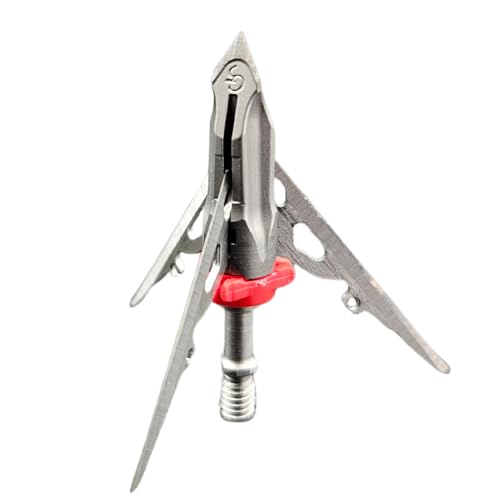
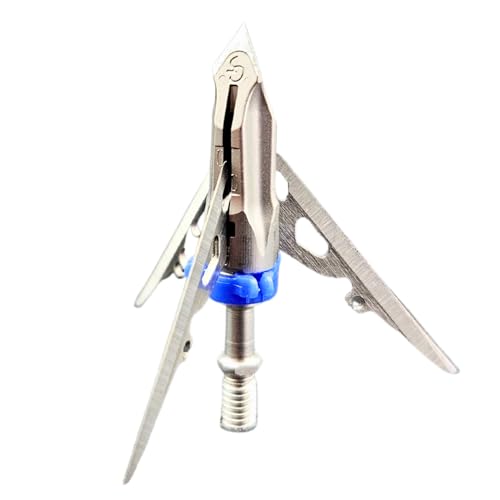


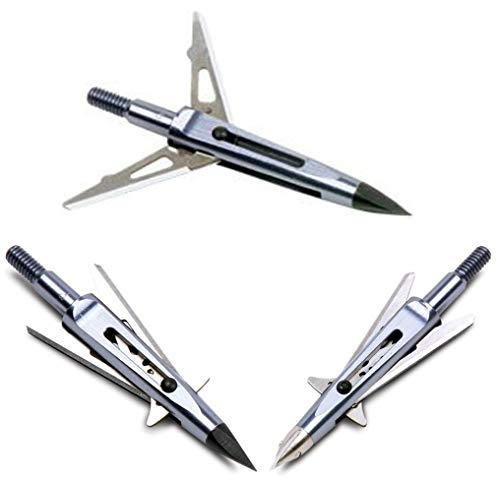


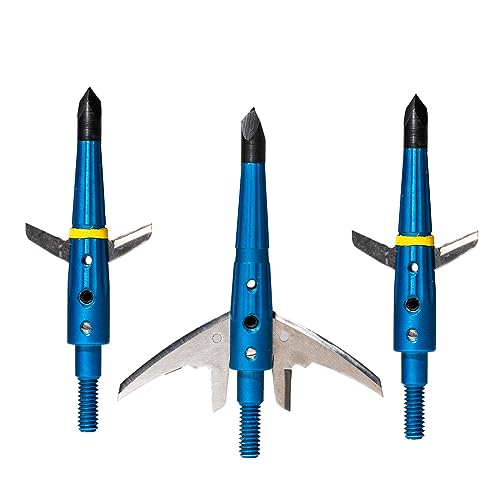


New Archery Products Spitfire MaxxBroadhead More specs
| 100 grlisting | 1.75 inlisting | 3listing | — | 3listing | Check price |
|---|---|---|---|---|---|---|
Swhacker #219 CrossbowBroadhead More specs
| 100 grlisting | 1.75 inlisting | 2listing | — | 3listing | Check price |
Swhacker 100 Grain 1.75 CutBroadhead More specs
| 100 grlisting | 1.75 inlisting | 2listing | 0.032 inlisting | 3listing | Check price |
Swhacker #263 Levi MorganBroadhead More specs
| 125 grlisting | 1.75 inlisting | 2listing | — | 3listing | Check price |
Swhacker #264 Levi MorganBroadhead More specs
| 125 grlisting | 1.75 inlisting | 2listing | — | 3listing | Check price |
Wasp Archery Products Jak-Hammer 125 SSTBroadhead More specs
| 125 grlisting | 1.75 inlisting | — | 0.036 inlisting | 3listing | Check price |
Wasp Archery Products Jak-Hammer SSTBroadhead More specs
| 100 grlisting | 1.75 inlisting | — | — | — | Check price |
Wasp Archery Products Jak-Hammer 100 SSTBroadhead More specs
| 100 grlisting | 1.75 inlisting | — | 0.036 inlisting | 3listing | Check price |
Wasp Archery Products Jak X CrossbowBroadhead More specs
| 100 grlisting | 1.75 inlisting | — | 0.027 inlisting | 3listing | Check price |
Rage 3 Blade Chisel Tip SCBroadhead More specs
| 100 grlisting | 1.6 inlisting | 3listing | — | 3listing | Check price |
Rage Chisel 3 Blade SCBroadhead More specs
| 100 grlisting | 1.6 inlisting | 3listing | 0.035 inlisting | 3listing | Check price |
G5 Outdoors Deadmeat Expandable StandardBroadhead More specs
| — | 1.5 inlisting | 3listing | — | 3listing | Check price |
G5 Outdoors Deadmeat Expandable Crossbow 100 GrainBroadhead More specs
| 100 grlisting | 1.5 inlisting | 3listing | — | — | Check price |
Innerloc Carnage 100 GrainBroadhead More specs
| 100 grlisting | 1.5 inlisting | — | 0.04 inlisting | — | Check price |
New Archery Products SpitfireBroadhead More specs
| 100 grlisting | 1.5 inlisting | 3listing | — | 3listing | Check price |
New Archery Products Spitfire CrossbowBroadhead More specs
| 100 grlisting | 1.5 inlisting | — | — | — | Check price |
Excalibur X-Act 100 GrainBroadhead More specs
| 100 grlisting | 1.4375 inlisting | 3listing | — | 3listing | Check price |
Carbon Express F-15Broadhead More specs
| 100 grlisting | 1.375 inlisting | 2listing | 0.03 inlisting | 3listing | Check price |
Grim Reaper Broadheads Pro Series Mini Mag 125 GrainBroadhead More specs
| 125 grlisting | 1.25 inlisting | — | — | 3listing | Check price |
Grim Reaper Broadheads Razorcut SS Expandable 125 GrainBroadhead More specs
| 125 grlisting | 1.25 inlisting | — | — | 3listing | Check price |
New Archery Products ShockwaveBroadhead More specs
| 100 grlisting | 1.25 inlisting | — | 0.03 inlisting | 3listing | Check price |
Wasp Archery Products Jak-Hammer 75 SSTBroadhead More specs
| 75 grlisting | 1.25 inlisting | — | 0.036 inlisting | 3listing | Check price |
Ballista 100 Grain Mechanical BroadheadsBroadhead More specs
| 100 grlisting | — | 2listing | — | 3listing | Check price |
Barnett Grave Digger Extreme 100 GrainBroadhead More specs
| 100 grlisting | — | — | — | — | Check price |
Bowmar Archery Titanium Cut-on-Contact BroadheadsBroadhead More specs
| — | — | — | — | 3listing | Check price |
New Archery Products Slingblade 4 Ti CrossbowBroadhead More specs
| 100 grlisting | — | 4listing | 0.031 inlisting | 3listing | Check price |
Slick Trick Torch Rear DeployBroadhead More specs
| — | — | 2listing | — | — | Check price |
Swhacker #261 Levi Morgan BundleBroadhead More specs
| — | — | — | — | 4listing | Check price |


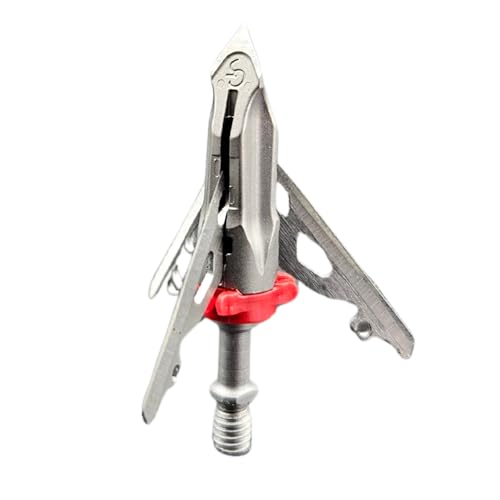


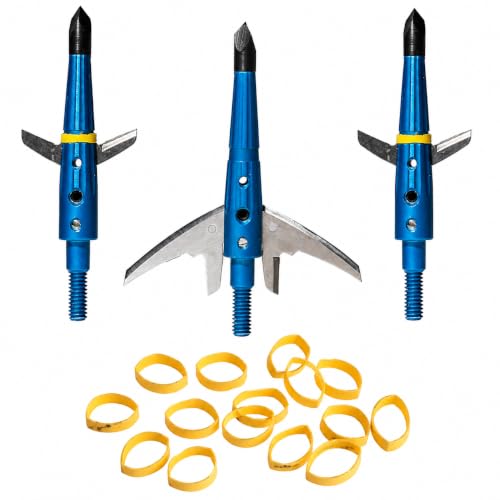
What’s in this listExpandable (mechanical) broadheads, as stated by the maker or the Amazon listing, widest cut first. “—” means neither the maker nor the Amazon listing states it.
What makes mechanical broadheads different
The blades move. That's the whole difference, and it drives every spec below. In flight, a mechanical's blades sit folded close to the ferrule (the center body), held in place by a band, a collar or a clip. On impact they swing out to the full cut. For the basics every broadhead shares (inserts, threads, grain weights, tuning against field points), see the main broadheads page.
The table on this page lists expandable (mechanical) broadheads, as the maker states the type, with the widest cut first. Values come from the maker, or from the Amazon listing where the maker is silent (the table marks listing values); a dash means neither states it.
What to look at when you pick mechanical broadheads
Here's what actually changes from one mechanical to the next, in the order I'd check it. Energy first, because it decides whether the rest matters.
Check your kinetic energy against the maker's floor
Kinetic energy (KE) is what your arrow carries downrange, in foot-pounds. Mechanical makers set floors for it. G5's FAQ recommends at least 40 ft-lb for its expandable heads on whitetail-size game. New Archery Products recommends about 50 ft-lb for deer-size game and about 55 for bigger animals. Two makers, two numbers, which is why you read the one on the package you're buying.
Why a floor at all? GOHUNT's breakdown explains that deploying the blades uses some of the arrow's energy and can reduce penetration. Grand View Outdoors puts the cost of opening at up to 15 ft-lb for some expandables. That's energy a fixed head would keep for the cut.
Quick math, using New Archery Products' formula: arrow weight in grains × speed × speed ÷ 450,240.
- A 350-grain arrow at 250 FPS (feet per second): 350 × 250 × 250 ÷ 450,240 = about 49 ft-lb
- The same arrow at 290 FPS: about 65 ft-lb
So a light arrow from a slower bow can land just under one maker's deer number and well over the other's. On paper the difference is a few foot-pounds. In practice it's the difference between "fine" and "read the fine print again." (Use your arrow's measured speed, not a guess. Walt's guesses run like the gas gauge on his truck: optimistic below a quarter tank.)
Draw weight is the other half. Petersen's Hunting suggests bowhunters pulling under 50 lb test that the blades actually open on impact, and GOHUNT links mechanicals to bows above roughly 55 lb, where the energy cost is usually manageable on most big game. Interestingly, New Archery Products says its heads don't need a minimum speed to open; it reports them opening into foam from a 5-lb bow. Opening isn't the hard part. Driving through after opening is.
Opened cutting diameter is the number on the box
For a mechanical, cutting diameter means the width with the blades fully open. Petersen's Hunting calls 1-1/2 to 2 inches standard, with some heads going past 2. GOHUNT gives a common range of about 1.5 to 2.25 inches.
Wider takes more energy to push through, so the cut and the KE check go together. If your quick math sits near the maker's floor, a smaller opened cut is the conservative choice. If you have energy to spare, the wider heads make sense.
States measure this number too. Illinois, for one, allows expandable heads but requires a minimum of 7/8 inch when fully opened. The rule is written about the open width, so that's the number to know.
Blade count: two is common, three and four exist
The "Blades" column counts the blades that open. GOHUNT says mechanicals are most often 2 or 3 blades, though 4-blade versions exist. Each extra blade is one more edge that has to swing out and cut, which is one more place energy goes. Read the blade count next to the opened cut; the table puts both columns side by side.
Front-deploy or rear-deploy changes how the blades open
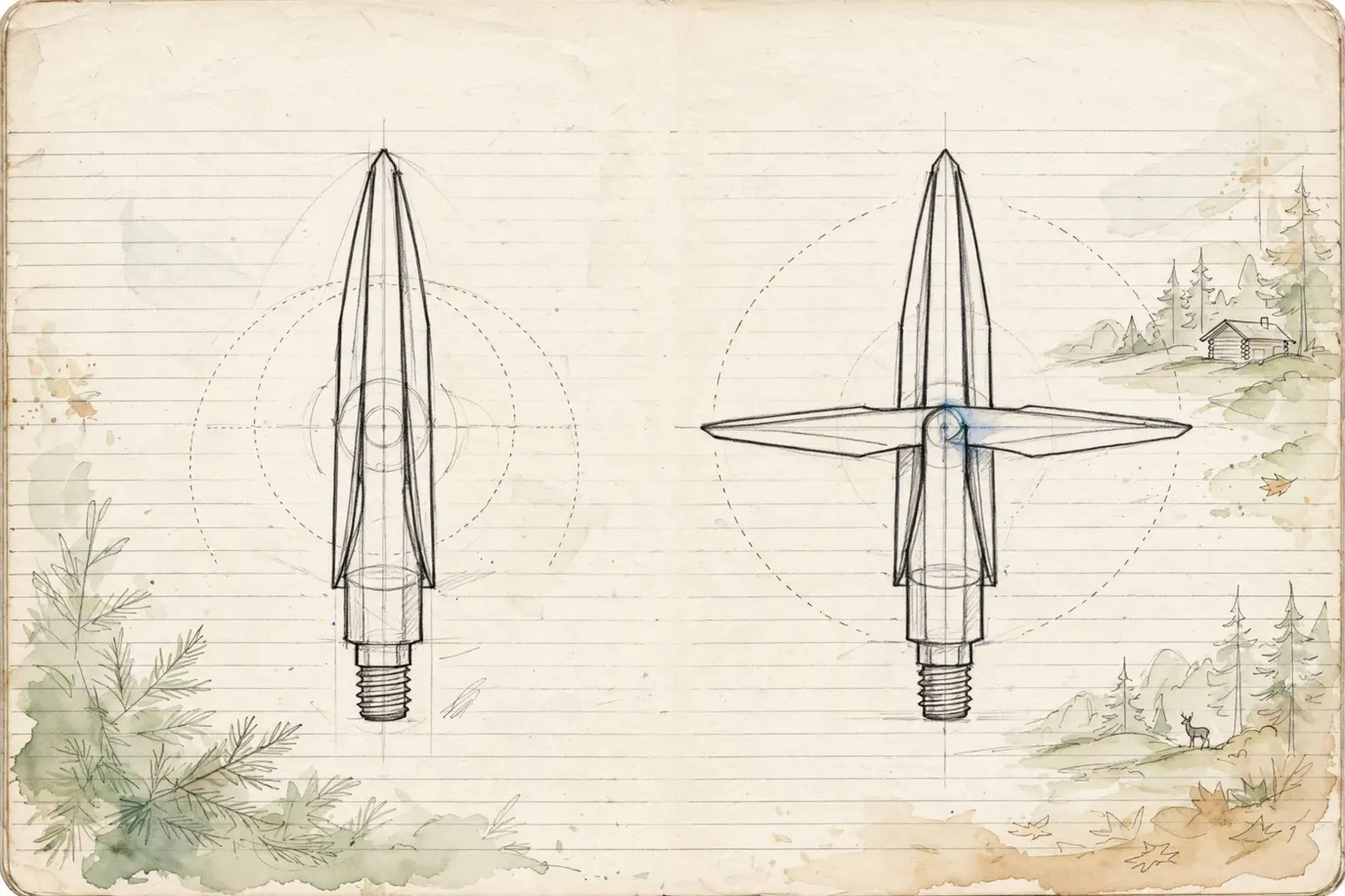
Petersen's Hunting sorts mechanicals two ways. Front-deploying heads open from the front of the ferrule, with the blades swinging back as the head goes in. Rear-deploying heads open from the back. GOHUNT describes the same split: some blades open rearward, others swing from forward to rear. Makers don't always name the style in the specs, so look at the product photos of the open head.
Blade retention is the part to inspect every time
Something has to hold the blades shut in your quiver and in flight. Petersen's Hunting lists an O-ring, a collar or a tension device, and notes that retention failures can happen. New Archery Products uses internal clips that press on the blades. Other designs skip bands entirely.
Whatever holds them, check it before every hunt. A band that's cracked, a collar that's missing or a blade that flops when you tip the arrow means that head stays in the box. Keep a few spare bands or collars in the pack if your heads use them (they weigh less than the extra headlamps Danny packs).
100 grain mechanical broadheads match most tuned arrows
Weight is in grains. Archery 360 calls 100 grains par and says most spine charts assume a 100-grain point, which is why 100 grain mechanical broadheads are the most common search in this category. If your arrows were built and tuned with 100-grain field points, a 100-grain mechanical drops in without changing the spine math. Go heavier and Archery 360 notes the front weight makes the shaft act weaker, so check the chart again. The 100 grain broadheads page lists all types at that weight.
Blade thickness and pack count are the quiet columns
Blade thickness is the stock of each blade in thousandths of an inch, when the maker or the listing states it; many don't. Pack count matters more than it looks for this type. Bowhunter's prep guide suggests one mechanical head per animal and replacing any head that shows wear or a blade problem during practice. A three-pack goes faster than you'd think.
Who mechanical broadheads suit
Mechanicals make the most sense for a compound shooter with energy to spare who wants broadhead flight that stays close to field points. That's most of what GOHUNT and Petersen's Hunting describe: forgiving flight, a quieter arrow and a wide cut.
They also suit the hunter who shoots without blind mesh in the way and practices with the exact heads they'll hunt with. Petersen's Hunting makes that point in its conclusion: the type matters less than confidence in the head and practice with it. If that sounds like you, the deciding questions are energy, cut and retention, in that order.
How expandable broadheads fly and sound
Folded blades are the reason mechanicals fly the way they do. Petersen's Hunting says they fly like field points and are quieter in flight than vented fixed heads. GOHUNT calls them more forgiving, often matching field-point accuracy out of the box and handling wind and form problems better.
That changes the arrow you need. Archery 360's compound arrow guide notes that mechanical heads need less steering than fixed ones, so smaller fletching works. GOHUNT's author also leans on mechanicals for longer shots and higher wind, where a fixed head's blades act more like wings.
"Flies like a field point" is a claim you still check. TenPoint's FAQ points out that a broadhead's shape differs from a field point's even at the same weight, so you may need a small sight adjustment. Bowhunter's author found heads labeled field-point accurate hitting low at 35 yards.
Setting up mechanical broadheads before the season
- Weigh and spin. Weigh each head in grains and spin it on its arrow; Bowhunter's guide says wobble means a bad head or a shaft end that isn't square.
- Check retention. Band, collar or clip in place on every head, blades closed snug.
- Shoot them, not just field points. Bowhunter suggests the last two weeks before the season with broadheads only, out to your longest shot.
- Prove they open. New Archery Products' trick: tape paper to the back of the target, shoot through, and read the hole.
- Paper tune if penetration looks poor. New Archery Products says weak penetration usually traces to an arrow that whips or porpoises in flight.
- Use fresh heads for the hunt. Practice heads are practice heads.
Mechanical broadheads and ground blind mesh
New Archery Products is direct about this one. It doesn't recommend shooting its expandable heads through mesh, because anything touching the blades can open them in flight, and shooting any broadhead through mesh may move your point of impact. If you hunt from a pop-up blind, open the window you'll shoot from before you sit.
Yes, that means sitting next to an open window in November. Bring the good hat, and tie the flap back so it can't swing into the shot lane. A mesh panel looks like nothing at all, and to a folded blade it's a reason to open early.
Mechanicals from a crossbow
Crossbows are a different speed class. G5 recommends only the crossbow version of its expandable heads on a crossbow, regardless of the speed rating on the bow version. Ratings, bolt weights and what crossbow makers recommend are on the crossbow broadheads page.
Handle folded blades like open ones
Folded blades are still sharp. Keep mechanical heads in a covered quiver or case, thread them on with a broadhead wrench, and never test a blade's swing with a finger. Oregon's wildlife department says plainly to make sure broadheads are safely covered.
Some states limit expandable heads or set their own width rules for them, so check your state wildlife agency before the season.
Who should skip mechanical broadheads
Skip this type if your quick math lands under the maker's energy floor and you can't raise it. A heavier arrow or a different head type will serve you better than hoping. Skip it if you shoot through blind mesh and don't want to change that habit. And skip it if moving parts bother you; the Union Sportsmen's Alliance notes plainly that expandables can fail because they have moving parts. The fixed blade broadheads page is the other road.
Everyone else: run the numbers, check the bands, and write the KE in the logbook next to the yardage.
Brands in this list
Related
Questions people ask
Are expandable broadheads the same as mechanical broadheads?
Yes. Expandable and mechanical are two names for the same idea: blades that stay folded close to the ferrule in flight and open on impact. Some states write rules with a third word, retractable. Minnesota's statute, for example, says its commissioner may allow retractable broadheads that meet the other arrowhead requirements. Read your state's wording for whichever term it uses.
How much kinetic energy do mechanical broadheads need?
It depends on the maker, so read the one you're buying. G5's FAQ recommends at least 40 ft-lb for its expandable heads on whitetail-size game. New Archery Products recommends about 50 ft-lb for deer-size game and about 55 for larger animals. Work out your own number with arrow grains × speed × speed ÷ 450,240.
Are 100 grain mechanical broadheads good for deer?
100 grains is the weight most setups are built around. Archery 360 calls 100 grains par and notes that most spine charts assume a 100-grain point, so a 100-grain mechanical usually drops onto an arrow tuned with 100-grain field points. Whether it suits deer depends on your energy and the maker's stated minimum, not on the weight alone.
Why does my mechanical broadhead look unopened after the shot?
It may have opened and closed again. New Archery Products explains that its expandable blades open on impact and stay open while the arrow moves, then swing forward and close when the arrow stops. To check deployment, it suggests taping paper to the back of a target and shooting through it; the hole in the paper shows the opened cut.
Can I shoot mechanical broadheads from a crossbow?
Use a head its maker sells or rates for crossbows. G5 says that on a crossbow it recommends only the crossbow version of its expandable heads, whatever the speed rating on the bow version. The crossbow broadheads page covers how crossbow ratings and bolt weights work.
Sources
- New Archery Products: FAQ — accessed 2026-10-21
- G5 Outdoors: Frequently asked questions — accessed 2026-10-21
- Petersen's Hunting: Fixed vs. mechanical broadheads — accessed 2026-10-21
- GOHUNT: Broadhead breakdown, the pros and cons of fixed blade and mechanical broadheads — accessed 2026-10-21
- Grand View Outdoors: Choosing a crossbow broadhead — accessed 2026-10-21
- Archery 360 (Archery Trade Association): Compound bow arrows — accessed 2026-10-21
- Bowhunter: Get broadheads ready for opening day — accessed 2026-10-21
- Union Sportsmen's Alliance: Choosing the perfect broadhead — accessed 2026-10-21
- TenPoint: Do I have to shoot my arrows with broadheads to test for accuracy after sighting-in with field points? — accessed 2026-10-21
- Illinois Administrative Code tit. 17, § 670.30: Statewide legal bow and arrow — accessed 2026-10-21
- Minnesota Statutes 97B.211: Possession and use of archery equipment — accessed 2026-10-21
- Oregon Department of Fish and Wildlife: Bow shooting safety — accessed 2026-10-21