Brand · Trail Cameras & Optics
Wildgame Innovations Trail Cameras
A Wildgame Innovations trail camera comes in one of two kinds: an SD-card camera you walk in to check, or a cellular camera that sends photos to your phone through the maker's HuntSmart app. The short version: decide SD card or cellular first, then the flash type, then how you'll power it. The megapixel number on the box comes last. (Uncle Walt asked whether the Orbit 360 turns around to watch him walk in. It does, if he walks into one of its zones.)
We earn a commission if you buy through our links, at no cost to you. Disclosure
Wildgame Innovations on Amazon US
19 models- Trail camera
Wildgame Innovations Wraith 18
- Photo resolution
- 18 MP
- Video
- 720p
- Trail camera
Wildgame Innovations Mirage 2.0
- Photo resolution
- 30 MP
- Video
- 720p
- Trigger speed
- 0.5 s
- Trail camera
Wildgame Innovations Terra Cell Verizon
- Connectivity
- Cellular
- Trigger speed
- 0.7 s
- Night/flash range
- 80 ft
- Trail camera
Wildgame Innovations Spark 2.0 Combo
- Connectivity
- None sd card
- Photo resolution
- 18 MP
- Video
- 720p
- Trail camera
Wildgame Innovations Wraith 2.0
- Photo resolution
- 26 MP
- Video
- 720p
- Trigger speed
- 0.7 s
- Trail camera
Wildgame Innovations Terra Extreme 14MP
- Connectivity
- None sd card
- Photo resolution
- 14 MP
- Video
- 720p
- Trail camera
Wildgame Innovations Terra Extreme Bundle 4-Pack
- Units in pack
- 4
- Connectivity
- None sd card
- Video
- 720p
- Trail camera
Wildgame Innovations Terra Extreme 14MP 2-Pack Bundle
- Units in pack
- 2
- Connectivity
- None sd card
- Photo resolution
- 14 MP
- Trail camera
Wildgame Innovations Terra XT Cellular 24MP
- Connectivity
- Cellular
- Photo resolution
- 24 MP
- Trail camera
Wildgame Innovations Orbit 360
- Connectivity
- Cellular
- Photo resolution
- 36 MP
- Video
- 1080p
- Trail camera
Wildgame Innovations Kicker 2.0 Lightsout Bundle
- Units in pack
- 2
- Connectivity
- None sd card
- Photo resolution
- 18 MP
- Trail camera
Wildgame Innovations Terra XT 2.0 3-Pack
- Units in pack
- 3
- Connectivity
- Cellular
- Photo resolution
- 24 MP
- Trail camera
Wildgame Innovations Terra XT 2.0 24MP
- Connectivity
- Cellular
- Photo resolution
- 24 MP
- Video
- 720p
- Trail camera
Wildgame Innovations Terra XT 2.0 24MP 3-Pack
- Units in pack
- 3
- Connectivity
- Cellular
- Photo resolution
- 24 MP
- Trail camera
Wildgame Innovations Insite-V 2-Pack
- Units in pack
- 2
- Connectivity
- Cellular
- Photo resolution
- 32 MP
- Trail camera
Wildgame Innovations Terra XT 3.0 32MP
- Connectivity
- Cellular
- Photo resolution
- 32 MP
- Video
- 720p
- Trail camera
Wildgame Innovations Terra Extreme 2-Pack 26MP
- Units in pack
- 2
- Photo resolution
- 26 MP
- Video
- 720p
- Trail camera
Wildgame Innovations Mayhem Cellular
- Connectivity
- Cellular
- Photo resolution
- 28 MP
- Video
- 720p
- Trail camera
Wildgame Innovations Zone 24MP
- Photo resolution
- 24 MP
- Video
- 720p
- Night/flash range
- 80 ft


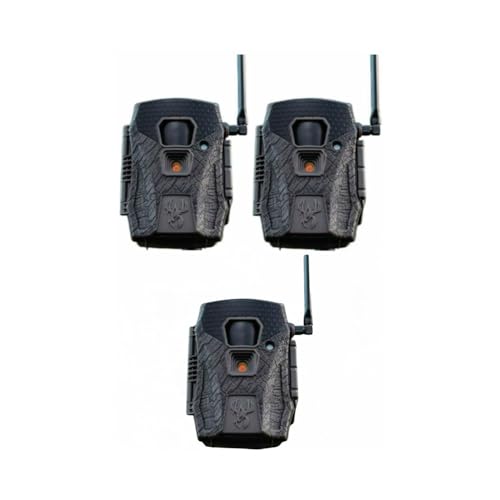


What Wildgame Innovations makes
Wildgame Innovations sells four kinds of hunting products on its own site: trail cameras, attractants, deer feeders, and scent control under the ZeroTrace name. This site covers the cameras. It doesn't list feeders, attractants or scent products, so you won't find them in the grid.
On this site the brand covers one product type, trail cameras, and the grid splits into two groups:
- SD-card cameras: Terra Extreme, Wraith, Mirage, Spark, Kicker and Zone
- Cellular cameras: Terra XT, Terra Cell, Insite-V, Mayhem and Orbit 360
Several of those come as 2-, 3- or 4-packs, and a few are bundles with a memory card or card reader. The grid changes as listings come and go, so I'll write about the families and the specs that separate them, not about how many are listed this week.
The Wildgame Innovations trail camera, explained by its numbers
Here's what the listings give, in words instead of a table (the grid is the table):
- Photo resolution: from the mid-teens of megapixels on the oldest Terra Extreme up to the mid-30s on the Orbit 360
- Video: 720p on most models, 1080p on the Orbit 360
- Trigger speed: from under half a second to just under a second
- Flash range: from 60 feet on the Terra Extreme and Kicker up to 90 feet on the Mirage 2.0
- Flash type: low glow on the Terra Cell, no glow on the Wraith 2.0, Kicker 2.0 Lightsout and Insite-V, unlisted on the rest
Trigger speed is how long the camera takes to fire after it senses motion. It matters most on a trail, where a deer walks through the frame, and less on a scrape or food plot, where it stops.
Lineup notes: SD-card cameras
An SD-card camera saves photos to a memory card. You walk in, swap or read the card, and walk out. No plan, no signal, no app. The trail camera page covers the type across brands.
Terra Extreme
The Terra Extreme comes in several listings: single cameras, a 2-pack, a 4-pack bundle with memory cards, and a newer 2-pack at a higher resolution. The older listings give 14 megapixels, 720p video, a 60-foot flash range and 8 AA batteries. The newer 2-pack lists 26 megapixels, an 80-foot flash range and a trigger under a second.
Multi-packs make sense if you're covering more than one spot. They don't make one spot better. (I've watched someone hang two cameras on the same oak to "get both angles". The deer used the other trail.)
Wraith
Two Wraith models are in the grid. The Wraith 18 lists 18 megapixels and 720p video. The Wraith 2.0 lists 26 megapixels, a 0.7-second trigger, a 70-foot no-glow flash, and power from 8 AA batteries or a 12V DC jack for an external source. If you want to run a camera off an external battery or solar panel, that jack is the line to look for.
Mirage, Spark, Kicker and Zone
- Mirage 2.0: 30 megapixels, a 0.5-second trigger and the longest flash range in the grid at 90 feet, per its listing
- Spark 2.0 Combo: 18 megapixels, 720p, a 70-foot flash, SD card
- Kicker 2.0 Lightsout Bundle: a 2-pack with 18 megapixels and a 60-foot no-glow flash, plus a card reader and memory card
- Zone: 24 megapixels, 720p, an 80-foot flash
"Lightsout" in a Wildgame name lines up with no glow on the listings that state a flash type. On the Mirage 2.0, the listing doesn't say, so I won't either.
Lineup notes: cellular cameras
A cellular camera sends photos over a phone network to an app. You see what walked by without walking in. You pay for it with a plan, a signal and a battery that works harder. The cellular trail camera page covers the type across brands.
Terra XT family
The Terra XT is Wildgame's main cellular line in the grid, in three generations:
- Terra XT: 24 megapixels, dual network, a 12V jack for external power, per its listing
- Terra XT 2.0: 24 megapixels, 720p, a 0.5-second trigger, an 80-foot flash; also in 3-packs
- Terra XT 3.0: 32 megapixels, 720p, a 0.5-second trigger, AT&T or Verizon, per its listing
The maker's own Terra XT 2.0 page says it connects automatically to the stronger of Verizon or AT&T, runs on 8 AA batteries with a 12V DC auxiliary jack, takes 1 to 3 photos per trigger, and lets you request photos or video on demand from your phone.
Terra Cell Verizon
The Terra Cell is the single-carrier option: Verizon only, a 0.7-second trigger and an 80-foot low-glow flash, per its listing. A single-carrier camera is only as good as that carrier's signal at your tree. Check coverage at the spot, not at the truck. A ridge and the hollow below it are two different phone calls.
Insite-V, Mayhem and Orbit 360
- Insite-V 2-Pack: 32 megapixels, a 0.7-second trigger, an 80-foot no-glow flash and an IP54 rating, per its listing (IP54 is a dust and splash rating)
- Mayhem Cellular: 28 megapixels, 720p, a 0.4-second trigger, an 80-foot flash
- Orbit 360: the odd one, covered below
The Orbit 360
The Orbit 360 has a rotating lens. The maker's page says it covers six zones around the tree and offers three modes: the single zone that was triggered, 180 degrees, or a full 360-degree pass. It lists 36-megapixel photos, 1080p video with audio, a trigger under 0.4 seconds and an 80-foot detection range. It runs on 16 AA batteries per camera and comes with an optional T-post bracket.
Think of it as a lighthouse that only turns when something walks up. It's the one camera in the grid that can watch a field edge and the trail behind you at the same time. It's also the one that eats twice the batteries of an 8-AA camera, which is quick math worth doing before the season, not at the tree.
How to choose within the Wildgame lineup
SD card or cellular
This is the big fork. SD-card cameras cost you walks. Cellular cameras cost you a plan for each camera, per the maker's FAQ. If the camera is close to camp and you check it on the way to the stand, an SD-card model does the job. If it's an hour's drive or across land you don't want to disturb, cellular is the reason to pay.
Then the plan
The maker's HuntSmart plans come in three tiers, set by the number of photos per month and how long they're kept in the cloud, with monthly and annual billing. The app sorts photos by date, weather, location, species and moon phase, and maps your cameras on a satellite view. The plan is per camera, so three cameras means three plans.
Then the flash
Low glow and no glow are both infrared. Browning's trail camera blog explains the trade: low-glow flashes run around 850 nanometers and can show a faint red glow, while no-glow flashes run around 950 nanometers and stay invisible but light the scene less, so night photos come out grainier and blur more easily. On public land or near a trail people use, no glow hides the camera better. On private ground, low glow gives brighter night photos.
Then power
Count the batteries. Most models in the grid list 8 AA, the Orbit 360 lists 16, and several have a 12V jack for an external battery or panel. The maker says that for the longest battery life, use only lithium batteries.
Then what's in the box
Packs and bundles differ more than the camera inside them. Before you order, read the listing for three things:
- Memory card: the Terra Extreme bundles and the Kicker 2.0 bundle name a card in the box; many single cameras don't
- Batteries: the maker's own Orbit 360 and Terra XT 2.0 pages say batteries aren't included
- Mounting: a strap comes standard, per the maker; a bracket for the 1/4-20 thread is extra, except the T-post bracket that comes with the Orbit 360
A camera that arrives without a card or batteries isn't broken. It's just a Saturday errand you didn't plan. (Uncle Walt has run that errand twice. Same gas station both times.)
Then the megapixels
Megapixels last, on purpose. A higher number makes a bigger file. It doesn't fix a camera aimed at a bush.
Setup notes from the maker's FAQ
My one opinion on this page: hang the camera back from the spot, not on top of it. The reason is in the maker's own FAQ. It recommends at least 20 to 30 feet from the subject, says a camera set too close to a food source or trail is a common cause of blank photos, and says something too close to the flash can wash a photo out white.
The rest of the FAQ, condensed:
- Clear the grass in front of the lens; moving grass with high sensitivity causes false triggers
- Use exposure control if your model has it, to fix washed-out night photos
- Mount: each camera comes with a strap; the 1/4-20 thread on the back takes an optional bracket you buy separately
- SD cards: the maker says it tests with SanDisk cards
- Batteries: lithium for the longest life
Trail camera rules vary by state, especially for cellular cameras on public land. Check your state wildlife agency before you hang one.
Wildgame Innovations facts
Here's what I could verify:
- Owner: GSM Outdoors, which added Wildgame Innovations in 2021 when Pure Fishing sold the former Plano Synergy hunting and archery brands, per SGB Media
- Address: the maker's site lists a GSM Outdoors address in Irving, Texas
- Warranty: two-year limited on cellular cameras, one year on non-cellular cameras and other products, per the maker's warranty page
This page doesn't cover a founding year or where the cameras are made.
Before you strap it to the tree, take one test photo of your own boot. If the boot is sharp at 25 feet, the deer will be too.
Where Wildgame Innovations shows up
Questions about Wildgame Innovations
Are Wildgame Innovations trail cameras good?
What can be checked is the spec sheet. The listings in the grid give photo resolution, video resolution, trigger speed, flash range and, for cellular models, the network. The maker publishes its warranty terms and setup advice. Whether a model suits you depends on whether you need cellular, which flash type you want and how far the camera sits from your truck.
Do Wildgame Innovations cellular cameras need a plan?
Yes. The maker's FAQ says a cell plan is required for each individual camera. Its HuntSmart plans are tiered by how many photos you get and how long they're stored in the cloud, with monthly and annual options. Count your cameras before you count plan tiers.
What batteries do Wildgame Innovations trail cameras use?
It depends on the model. Several listings in the grid name 8 AA batteries, some add a 12V DC jack for an external power source, and the maker lists 16 AA batteries for the Orbit 360. For the longest battery life, the maker recommends using only lithium batteries.
Who owns Wildgame Innovations?
GSM Outdoors. SGB Media reported in April 2021 that GSM Outdoors added Wildgame Innovations, along with other hunting brands, when Pure Fishing sold the former Plano Synergy hunting and archery brands. The maker's site lists a GSM Outdoors address in Irving, Texas, and its warranty registration runs through GSM Outdoors.
What warranty do Wildgame Innovations trail cameras have?
Per the maker's warranty page, cellular cameras carry a two-year limited warranty from the date the original buyer receives the product, and non-cellular cameras carry one year. It excludes misuse, normal wear, unauthorized repairs, extreme weather, animal damage and problems with cellular service.
How far from a trail should a Wildgame Innovations camera be?
The maker's FAQ recommends setting the camera at least 20 to 30 feet from the subject. Closer than that, and blank or washed-out photos get more likely. It also suggests clearing tall grass or brush in front of the lens, since moving grass can set off a sensitive motion sensor.
Sources
- Wildgame Innovations: Home — accessed 2026-10-28
- Wildgame Innovations: Cellular deer and game trail cameras — accessed 2026-10-28
- Wildgame Innovations: Orbit 360 2-pack — accessed 2026-10-28
- Wildgame Innovations: Terra XT 2.0 — accessed 2026-10-28
- Wildgame Innovations: HuntSmart app and plans — accessed 2026-10-28
- Wildgame Innovations FAQ: Do I need a cell plan for each camera I own? — accessed 2026-10-28
- Wildgame Innovations FAQ: What battery type is recommended for longest battery life? — accessed 2026-10-28
- Wildgame Innovations FAQ: Why am I getting blank photos? — accessed 2026-10-28
- Wildgame Innovations FAQ: Why are my photos white or overexposed? — accessed 2026-10-28
- Wildgame Innovations FAQ: What is the thread mount on the back of the camera for? — accessed 2026-10-28
- Wildgame Innovations FAQ: Is there a certain brand of SD card you recommend? — accessed 2026-10-28
- Wildgame Innovations: Warranty policy and returns — accessed 2026-10-28
- SGB Media: Pure Fishing closes purchase of Plano Synergy, sells Plano's accessories brands to GSM Outdoors (2021) — accessed 2026-10-28
- Browning Trail Cameras: Nighttime trail camera images, putting light on the subject — accessed 2026-10-28