Brand · Trail Cameras & Optics
Halo Rangefinders and Rangefinder Binoculars
Halo Optics makes laser rangefinders for hunters, plus one pair of rangefinder binoculars. On this site, the Halo rangefinder lineup is the XL450, the CL400 and the XLR 3000, with the K2000 10x42 binoculars alongside. Here's what actually changes from one to the next: maximum range, magnification and whether the unit reports an angle-compensated distance. For a bowhunter, that last one matters most. (Halo says its design process started with a lump of clay. Mine starts with a spreadsheet, which is harder to squeeze.)
We earn a commission if you buy through our links, at no cost to you. Disclosure
Halo Optics on Amazon US
4 models- Rangefinder
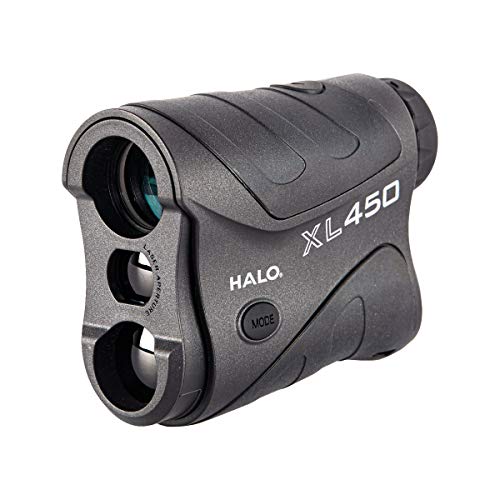
Halo Optics XL 450 Rangefinder
- Max range (reflective)
- 450 yd
- Magnification
- 6 x
- Angle compensation
- Yes
- Rangefinder
Halo Optics CL400 Rangefinder
- Max range (reflective)
- 500 yd
- Magnification
- 5 x
- Rangefinder
Halo Optics XLR 3000 Rangefinder
- Max range (reflective)
- 3,000 yd
- Angle compensation
- Yes
- Binoculars
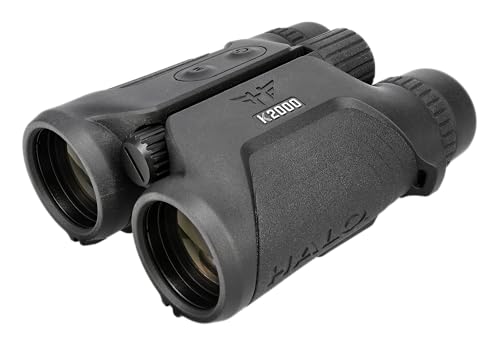
Halo Optics K2000 Rangefinder Binoculars 10x42
- Objective
- 42 mm
- Magnification
- 10 x


Alternatives to Halo Optics
- Binoculars · Vanguard
Vanguard Endeavor ED 8x32
- Objective
- 32 mm
- Magnification
- 8 x
- Field of view
- 377 ft@1000yd
- Binoculars · Vanguard
Vanguard Vesta 8x21
- Objective
- 21 mm
- Magnification
- 8 x
- Field of view
- 371 ft@1000yd
- Binoculars · Vanguard
Vanguard Vesta 8x21
- Objective
- 21 mm
- Magnification
- 8 x
- Field of view
- 371 ft@1000yd
- Binoculars · Vanguard
Vanguard Vesta 8x21
- Objective
- 21 mm
- Magnification
- 8 x
- Field of view
- 371 ft@1000yd
- Binoculars · Vanguard
Vanguard VEO ED 8x42
- Objective
- 42 mm
- Magnification
- 8 x
- Field of view
- 330 ft@1000yd
- Binoculars · Vanguard
Vanguard VEO ED 1042 Bundle
- Objective
- 42 mm
- Magnification
- 10 x
- Field of view
- 314 ft@1000yd
- Binoculars · Vanguard
Vanguard VEO ED 8420 Bundle
- Objective
- 42 mm
- Magnification
- 8 x
- Field of view
- 330 ft@1000yd
- Binoculars · Bushnell
Bushnell PowerView Porro Prism 20x50mm
- Objective
- 50 mm
- Magnification
- 20 x
- Field of view
- 170 ft@1000yd
- Rangefinder · Aofar
Aofar HX-1200T
- Size
- 4.8 x 2.8 x 1.7
- Max range (reflective)
- 1,200 yd
- Magnification
- 6 x
- Rangefinder · Tidewe
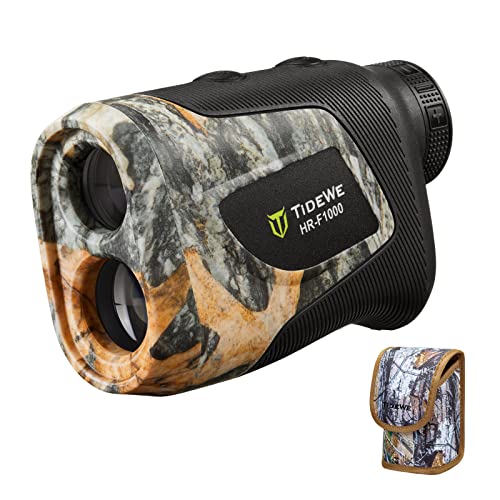
Tidewe Hunting Rangefinder 6X
- Size
- 4.13 x 2.61 x 1.49
- Max range (reflective)
- 700 yd
- Magnification
- 6 x
- Rangefinder · TenPoint
TenPoint Align 1000
- Max range (reflective)
- 1,000 yd
- Magnification
- 6 x
- Angle compensation
- Yes



How alternatives are pickedSame type of gear from other brands, closest first: same price tier as Halo Optics’s own listings at our last check, then the most maker-published specs. No popularity, no paid placement.
What Halo Optics makes for hunters
Halo Optics is a rangefinder maker first. Its own site groups the rangefinders into five series (XL, CL, XR, Z and XLR) and lists one pair of binoculars with a built-in rangefinder. The maker describes its features as aimed at hunters and target shooters.
On this site, Halo's grid holds four products:
- XL450: a compact 6x rangefinder
- CL400: a 5x rangefinder, specs from its listing
- XLR 3000: Halo's long-range unit
- K2000 10x42: binoculars with a built-in rangefinder
Because that's a short list, the grid also shows alternatives from other brands: rangefinders and binoculars that match on type. They're there for comparison, under their own heading.
Most values in the grid come from Amazon listings, and the grid marks those. Where Halo's own pages say more, I've used the maker's wording below. Where neither says, the grid shows a dash, and so do I.
The Halo rangefinder lineup
XL450: the plain-spoken one
The XL450 has been around a while. Deer & Deer Hunting covered it as new in September 2016. Here's what that note and Halo's current page state:
- Range: up to 450 yards to a reflective target
- Magnification: 6x
- Accuracy: plus or minus 1 yard, per Deer & Deer Hunting
- Modes: Standard (one reading per press) and Scan
- Angle Intelligence: listed on the maker's page
- Battery: one CR2, per the 2016 note
Halo's page adds Auto Acquisition, a "water-resistant design" and a no-slip grip. The 2016 note says the internal display shows the reticle, battery status, mode and unit of measure, yards or meters.
Quick math: a 30-yard shot is 1/15 of the XL450's 450-yard ceiling. For bowhunting, the ceiling is rarely the deciding number. The modes are.
CL400: the 5x model
The CL400's values in the grid come from its Amazon listing: 500 yards and 5x. Halo's own site currently shows the CL series as one model, the CL300, and describes the series as "precise +/- 1 yard readings up to 500 yards" with water-resistant protection and Scan mode.
The grid doesn't list angle compensation for the CL400. That's a dash, not a no. Read the listing before you plan on using it from a stand.
XLR 3000: the long-range model
The XLR 3000 is the far end of the lineup. Halo's page lists:
- Range: 3,000 yards
- Magnification: 6x
- Accuracy: plus or minus 1 yard
- Angle Intelligence: "AI Technology that accounts for slope to the target"
- Modes: Scan and Auto Acquisition
- Housing: water resistant, per the maker
Halo's rangefinder page also lists an XLR1600 and a separate XLR3000 entry. Only the XLR 3000 is in the grid right now.
(Danny asked if a 3,000-yard rangefinder could find his truck keys. It measures how far away things are, Danny. It doesn't tell you where they are. He's still looking.)
Other Halo series
Halo's rangefinder page also lists the XR series (the XR700, XR800, XR1000 and XR2000) and the Z1000. None of them are in the grid right now.
Halo K2000 rangefinder binoculars
The K2000 is binoculars and a rangefinder in one body. Halo's page states:
- Optics: 10x42, fully multi-coated lenses
- Range: 6 yards minimum, 2,000 yards maximum
- Angle Intelligence: listed
- Scan mode: listed
- Build: magnesium chassis
- Water: rated IPX7, which the maker gives as its waterproof and fogproof rating
The 6-yard minimum is the number I'd check first for archery. At 6 yards, a deer is close enough to hear you breathing, so the minimum won't be the problem. What matters is that one device does both jobs: you glass, you range, you don't swap gear with a deer in front of you.
The trade is size. A 10x42 binocular is bigger and heavier than a pocket rangefinder, and 10x is a lot of shake if you hold it one-handed. Halo's page doesn't list the K2000's weight, so the grid doesn't either. More on the type is on the rangefinder binoculars page, and plain glass is on the hunting binoculars page.
What Halo's feature names mean
Halo uses its own names for features most rangefinders have. Here's the short version from its technology page:
- Angle Intelligence (AI): accounts for slope to the target and gives an angle-compensated distance. Halo says shots from higher positions, like tree stands, tend to overshoot without it.
- Scan mode: locks several targets in a row. Halo says it delivers up to four readings per second.
- Auto Acquisition: a reading right after the button press. Halo says its newest models acquire targets two times faster than its earlier ones.
- Glass lenses: on its premium models. Halo says they're 20 percent more efficient than standard lenses.
- Water-resistant body: built to keep weather out of the internals.
Water resistant isn't the same claim as waterproof. The K2000 lists IPX7. The rangefinders list "water resistant" without a rating. Put the rangefinder in a pocket when it rains, not on the rail.
How to choose a Halo rangefinder for bowhunting
Pick angle compensation first
My one opinion on this page: if you hunt from a stand or on hills, buy a rangefinder that reports the angle-compensated distance, and shoot that number. Bowhunter's piece on angle compensation explains why. On a slope, the straight-line distance is the wrong number to aim with, and using it sends the arrow high. For most reasonable archery shots, about 40 yards and under, the horizontal distance is the one to use.
Kitchen version: lean a cutting board against the counter. The board is longer than the stretch of counter it covers. Your line of sight from a stand is the board. Gravity only cares about the counter.
Bowhunter also notes that tilt accuracy varies more between rangefinders than straight-line accuracy, and that long, steep shots drift from the formula. Its advice is to practice on real slopes with your own bow and arrows and note what you find. The hunting rangefinder page has more on the math.
Know which number the screen shows
Not every angle-compensated reading is the same kind of number. Bowhunter explains that some rangefinders show the plain horizontal distance as the shoot-for distance, while others add a correction based on arrow weight, speed and bow geometry. Halo describes Angle Intelligence as a "true horizontal distance" calculation, so treat its number as the horizontal one.
The same article notes that uphill arrows slow more and land lower than the formula predicts at long range, while downhill shots stay closer to it. At 20 yards from a ladder stand, that gap is small. At 60 yards up a hillside, it isn't. (Which is one more reason I don't take 60-yard shots up hillsides. My spreadsheet has a column called "no".)
Rangefinder or rangefinder binoculars
Here's the short version. A pocket rangefinder is one small thing on a lanyard. Rangefinder binoculars are one bigger thing on a harness that replaces two. If you already carry binoculars on every sit, the K2000-style combo saves a swap at the worst moment. If you hunt thick woods where glassing isn't part of the plan, the pocket unit is the lighter kit. A binocular harness keeps either one off your chest strap.
Then magnification
The Halo rangefinders in the grid list 5x (the CL400) or 6x (the XL450 and XLR 3000). The K2000 binoculars are 10x. More magnification makes a small target easier to pick out of the brush, and it also magnifies the shake in your hands. For 20 to 40 yards in the woods, 5x and 6x are both workable. Hold it with both hands and brace on the tree.
Then the mode you'll actually use
Standard mode gives one reading per press. Scan mode keeps reading as you sweep. For bowhunting, Scan is how you range three landmarks in a row before daylight: the oak, the stump, the trail bend. Write them on a card. Then you range the deer only if you have time, and you usually won't.
Then range, last
The maximum ranges in the lineup go from a few hundred yards to 3,000. A longer maximum doesn't make a 25-yard reading more accurate. Halo lists plus or minus 1 yard on the XL450 (per Deer & Deer Hunting), the CL series and the XLR 3000 alike. Pick the long-range unit if you also glass across fields or open country. For the woods, the shorter ones cover the shots.
Using a rangefinder from a stand
Here's the routine that works for me with any brand. Range your landmarks before the light comes up, in Scan mode, with the angle-compensated reading on. Check the mode and the unit (yards, not meters) in the truck. Then put the rangefinder on a lanyard, because a rangefinder dropped from 20 feet is a long walk and a short conversation.
Safety first, plainly: the Treestand Manufacturers Association says to wear a full-body fall arrest harness every time you leave the ground, including while climbing up and down, and to use a haul line to raise your bow and gear. Climb with your hands free. Raise the rangefinder with the pack.
Halo warranty and who's behind it
Halo's warranty page lists a one-year limited warranty. What it says:
- Who: the original owner, buying from an authorized retailer
- What: defects from manufacturing
- Voids it: tampering, altering the unit or unauthorized service
- How: have the original sales receipt, call customer service for a Return Authorization number, then ship with tracking
Halo's site lists GSM Outdoors, at 5250 Frye Road in Irving, Texas, in its footer, and the warranty page sends returns to GSM Outdoors at that address. GSM Outdoors describes itself as a company that designs, manufactures and delivers outdoor gear. I didn't find a founding year for Halo on either site, so I've left that out.
Range the landmarks, shoot the horizontal number, keep a spare battery. Three lines on a card, and the card is cheaper than the rangefinder.
Where Halo Optics shows up
Questions about Halo Optics
Is a Halo rangefinder good?
What the maker states is checkable. Halo lists the XL450 at 450 yards and 6x, the XLR 3000 at 3,000 yards, 6x and plus or minus 1 yard, and both with Scan mode and Angle Intelligence. Its CL series page describes readings to plus or minus 1 yard up to 500 yards. Whether one suits you depends on your shots, your stand height and the weather you hunt in.
Do Halo rangefinders have angle compensation?
Halo calls its version Angle Intelligence. The maker says it accounts for slope to the target and reports the true horizontal distance. Halo's product pages list it on the XL450, the XLR 3000 and the K2000 binoculars. In the grid, the CL400 doesn't list it, so check that model's listing before you count on it from a tree stand.
Who makes Halo rangefinders?
Halo's own site lists GSM Outdoors at 5250 Frye Road in Irving, Texas, in its footer, and its warranty page sends returns to GSM Outdoors at that address. GSM Outdoors describes itself as a company that designs, manufactures and delivers outdoor gear. Neither site gives a founding year for Halo.
What battery does the Halo XL450 use?
Deer & Deer Hunting's 2016 product note on the XL450 says it runs on one CR2 lithium battery, included in the box. Halo's current XL450 page doesn't list the battery. Check the manual or the listing of the unit you buy, and keep a spare in your pack, since CR2 cells aren't sold everywhere.
What warranty do Halo rangefinders have?
Halo's warranty page lists a one-year limited warranty for the original owner, on products bought from an authorized retailer, covering manufacturing defects. Tampering or unauthorized service voids it. You need the original receipt and a Return Authorization number from customer service before you ship anything.
Where can I buy a Halo rangefinder?
The product grid on this page links to Halo Optics listings on Amazon US, plus rangefinders and binoculars from other brands as alternatives. Halo also sells on its own site. Since the warranty covers products from authorized retailers, check the seller on the listing before you order.
Sources
- Halo Optics: Home — accessed 2026-10-23
- Halo Optics: Rangefinders — accessed 2026-10-23
- Halo Optics: XL450 rangefinder — accessed 2026-10-23
- Halo Optics: CL series rangefinders — accessed 2026-10-23
- Halo Optics: XLR 3000 rangefinder — accessed 2026-10-23
- Halo Optics: K2000 10x42 LRF binoculars — accessed 2026-10-23
- Halo Optics: Technology — accessed 2026-10-23
- Halo Optics: About us — accessed 2026-10-23
- Halo Optics: Returns and warranty — accessed 2026-10-23
- GSM Outdoors: Home — accessed 2026-10-23
- Deer & Deer Hunting: Hot gear, hit the mark with the Halo XL450 (2016) — accessed 2026-10-23
- Bowhunter: Angle-compensating rangefinders — accessed 2026-10-23
- Treestand Manufacturers Association: Treestand safety guidelines — accessed 2026-10-23