Brand · Knives & Tools
Tramontina Machetes
A Tramontina machete is a plain carbon-steel brush blade from a Brazilian company better known for its kitchens. On this site, Tramontina means machetes: wood-handled ones, a long blade with a polypropylene handle, a bolo and two listings sold as a machete sword. Here's the thing: they're work tools first, so the choice is length, handle and shape, then a sheath, because the listings don't promise one.
We earn a commission if you buy through our links, at no cost to you. Disclosure
Tramontina on Amazon US
7 models- Machete
Tramontina 12" Machete with Wooden Handle
- Blade length
- 12 in
- Handle
- wood
- Machete
Tramontina Machete Wood
Check price - Machete
Tramontina TT518 Machete Sword
Check price - Machete
Tramontina TT522 Machete Sword
Check price - Machete
Tramontina Machete Wood
Check price - Machete
Tramontina Bolo Machete
Check price - Machete
Tramontina Tramontina - Machete 24", Carbon Steel Sheet, Black Polyprop
- Blade steel
- carbon
- Steel type
- Carbon
- Handle
- polypropylene


Alternatives to Tramontina
- Machete · KA-BAR
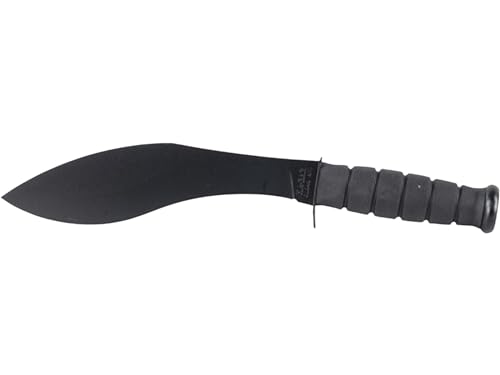
KA-BAR BAR Kukri Machete 11.5" 1085 Black Blade Kraton Handle Black
- Blade length
- 11.5 in
- Blade steel
- 1085
- Steel type
- Carbon
- Machete · Cold Steel
Cold Steel 97KMS Kukri Machete
- Blade length
- 13 in
- Blade steel
- 1055
- Steel type
- Carbon
- Machete · Cold Steel
Cold Steel 97MKM Magnum Kukri
- Blade length
- 17 in
- Blade steel
- 1055
- Steel type
- Carbon
- Machete · United Cutlery
United Cutlery COLOMBIAN MACHETES Sawback Survival Machete and Sheath
- Blade length
- 18 in
- Blade steel
- 420 stainless
- Steel type
- Stainless
- Machete · KA-BAR
KA-BAR BAR Combat Fixed Blade Knife 8.5" Kukri 1095 Cro-Van Black
- Blade length
- 8.5 in
- Blade steel
- 1095 Cro-Van
- Steel type
- Carbon
- Machete · United Cutlery
United Cutlery Black Legion Jungle Hunter Machete with Sheath
- Blade length
- 25 in
- Blade steel
- stainless
- Steel type
- Stainless
- Machete · Gerber
Gerber Compact Clearpath Machete 31-003154
- Blade length
- 11 in
- Blade steel
- stainless
- Steel type
- Stainless
- Machete · United Cutlery
United Cutlery BLACK LEGION Swamp Master Machete Knife
- Blade length
- 18 in
- Blade steel
- stainless
- Steel type
- Stainless




How alternatives are pickedSame type of gear from other brands, closest first: same price tier as Tramontina’s own listings at our last check, then the most maker-published specs. No popularity, no paid placement.
What Tramontina makes for hunters and campers
Tramontina's own catalog is huge. Its global site lists kitchen utensils, cookware, cutlery, barbecue gear, furniture, tools, and an agriculture and gardening department. That last one is where the machetes live.
On this site, Tramontina covers one type: machetes. The grid above shows the brand's machetes first, and then an "Alternatives to Tramontina" block with machetes from other makers, because the brand has only a handful of listings here.
The Tramontina machetes in the grid fall into four groups:
- Wood-handled machetes in a few lengths
- A 24-inch machete with a black polypropylene handle
- A bolo machete, the shape that widens toward the tip
- Two "machete sword" listings, the TT518 and the TT522
The grid changes as listings come and go. So I'll write about what separates the groups, not about how many of each are up this week.
Most specs in the grid come from Amazon listings, and the grid marks those. Several Tramontina listings are thin on specs. Where a field is empty, it stays empty.
Lineup notes: the Tramontina machete by handle and shape
Wood-handled machetes: the maker's main line
This is the classic Tramontina machete. The maker's global site lists wood-handled machetes from 10 to 22 inches, and its product pages describe the same build across them:
- Blade: heat-treated carbon steel
- Coating: a layer of varnish on the blade
- Handle: wood, fixed with rivets
- Wood source: the 14-inch page says the handle wood comes from well-managed forests, with an FSC certificate number
- Thickness: the 14-inch page lists a 2 mm blade
The maker's pages pitch these for clearing brush and tall grass. That's the job near a deer stand in August: briars, goldenrod, ferns and the odd sapling across a shooting lane.
In the grid, the wood-handled group includes a 12-inch machete, per its listing, and two listings named simply "Machete Wood" that don't give a length. For those, read the listing photos and title before you order. A 12-inch blade and a 22-inch blade are different tools, not different sizes of the same tool.
The 24-inch polypropylene-handled machete
The long one. Its listing names a carbon steel blade and a black polypropylene handle, and the title says the handle is riveted.
Polypropylene is a molded plastic. It doesn't swell when it gets wet, and it doesn't need oil. Wood feels warmer in a cold hand and can be sanded smooth if it splinters. Neither one is wrong. It comes down to whether your machete lives on a nail in a dry shed or in the bed of a truck.
A 24-inch blade is long. It covers ground in open brush along a field edge or a two-track. In a tight stand of rhododendron it finds the trunks before it finds the briars.
The bolo machete
The bolo is a shape, not a size. A bolo blade widens toward the tip, which puts more of its weight forward. More weight forward means more chop per swing, and more weight at the end of your arm on every swing too.
The Tramontina bolo's listing names the bolo blade style and doesn't give a length. If most of your cutting is soft growth, a straight blade does the job with less arm. If you meet a lot of finger-thick stems, the bolo's forward weight earns its keep. The machete page compares blade styles across brands.
The TT518 and TT522 machete swords
Two listings carry the name "Machete Sword" with model numbers TT518 and TT522. The data for both is empty: no length, no handle, no steel. I won't guess what the numbers mean, and you shouldn't either. Check the listing photos and the product description on the listing itself before you buy one, and compare it with the wood-handled line.
Here's the thing about a tool with no spec sheet. You can still buy it. You just do the reading yourself.
How to choose within the Tramontina lineup
Pick the length for where you cut
Length decides reach and weight more than anything else on a machete. Rule of thumb: the tighter the cover, the shorter the blade.
- 10 to 14 inches: tight cover, cutting between trunks, a blade that fits a pack
- 16 to 18 inches: general brush along trails and stand approaches
- 20 inches and up: open ground, long grass, field edges
Those bands are my rule of thumb, set inside the maker's own range of 10 to 22 inches on the wood-handled line, plus the 24-inch polypropylene model in the grid. Where a listing doesn't give a length, it isn't in the table, and it shouldn't be in your head either.
Then the handle: wood or polypropylene
The maker describes the wood handles as riveted and shaped for the hand. The 24-inch listing names polypropylene. Wood wants to stay dry and gets a wipe of oil now and then. Polypropylene wants nothing at all. If the machete rides in a truck bed from August to November, I'd lean toward the molded handle. If it hangs in the barn between jobs, wood is fine.
Then the shape: straight or bolo
Straight blades suit soft growth and long sweeping cuts. The bolo puts weight forward for chopping. American Trails, a trail-building group, notes that machetes leave crude cuts on trailside branches, which is a good reason to save branch work for a saw no matter which shape you buy. CIRSA's machete safety sheet says to use a hand saw or chainsaw for branches over 1 inch.
Then the sheath
My one opinion on this page: buy the sheath the same day you buy the machete. None of the Tramontina listings in the grid say a sheath is included. CIRSA's machete safety sheet says every machete should have one, recommends a hard sheath over the usual soft ones, and says to store machetes in their sheaths after each use. That's easy to check against any listing: if it doesn't say "sheath," plan to buy one.
A bare machete in a tool bag is how a pair of work gloves ends up with a slot in it. My old canvas bag has a third pocket nobody sewed on purpose.
First-day setup: the varnish and the edge
Tramontina says a varnish layer is applied to its machete blades to protect them during transport, storage and first use. So the coating has a job before you ever swing it. Once the machete is in use, the oil and the dry shelf take over that job.
Check the edge before the first trip to the woods. A machete edge doesn't need to shave. It needs to bite green stems without bouncing off them. If it doesn't, K-State Research and Extension's tool-sharpening guide gives a simple method that works on a machete:
- Clamp the blade so it can't move, edge up.
- Use a mill file, coarse first, then finer.
- Hold the file at the same angle as the existing bevel.
- Push in one smooth stroke in one direction, then lift the file and repeat.
- Hold the edge to a light. K-State says light reflecting off the edge means it isn't sharp yet.
CIRSA's sheet adds the safety side: keep the blade sharp with files, stones or pucks, and don't use a grinding wheel. Wear leather gloves when you file.
Care that fits the whole Tramontina lineup
The maker's care notes on its machete pages are short and plain:
- Wash and dry the machete well after use
- No solvents or abrasive materials for cleaning
- Store it in a dry place
- Keep it out of reach of children
Every Tramontina machete in the grid with a steel listed is carbon steel. Morakniv's steel guide says carbon steel needs careful drying and oiling after use to prevent rust, and that it's easier to resharpen than stainless. So dry it the same day, then wipe a thin film of oil on the blade. A carbon blade put away wet in September will show you exactly where your thumb was in October.
CIRSA's sheet also says to check before and after each use that rivets and bolts are secure and the blade has no cracks, gouges or burrs. On a riveted handle, that check takes ten seconds. A loose handle gets fixed or the machete gets retired.
Using a machete safely around camp
These points come from CIRSA's machete safety sheet. Read them before the first swing.
- Wear safety glasses, leather gloves, long pants and boots
- Keep at least 10 feet between you and anyone else
- Chop away from your body, never across it
- Keep your free hand and your feet out of the swing path
- Don't walk while cutting
- Sheathe the blade when you stop
Rules on cutting vegetation on public land, and knife carry rules, vary by state. Check your state's rules and your state wildlife agency before you clear anything that isn't yours.
What this site doesn't list from Tramontina
Tramontina sells far more than machetes. Kitchen knives, cookware and the rest of its kitchen and home catalog aren't covered on this site, and neither are its garden tools beyond the machetes. If you came here for a steak knife, you've wandered onto the wrong trail. The rest of this site's blades are on the knives section, from camping knives to survival knives.
Tramontina facts
Here's what I could verify on the maker's own site:
- Founded: 1911, when Valentin Tramontina opened a small blacksmith shop in Carlos Barbosa, Brazil, per the company's history page
- Early product: the Santa Bárbara pocketknife, launched in 1930, which the history page calls the item made most at the time
- Agricultural tools: the Multi unit in Carlos Barbosa opened in 1982 for agricultural tools; the factory page says it makes tools for gardening, agriculture and civil construction
- United States: Tramontina USA opened in Houston in 1986 as the company's first distribution center abroad
- Reach: the global site says the brand is present in over 120 countries
- Warranty: the maker's 14-inch machete page lists a 90-day warranty against manufacturing defects; read the terms for the exact model and country before you count on it
Hang it on the nail dry, sheath on, edge filed. Next August the briars will be right where you left them.
Where Tramontina shows up
Questions about Tramontina
Is a Tramontina machete good?
What the maker states is checkable. Its own product pages describe heat-treated carbon steel blades with a protective varnish layer and riveted handles, and its 14-inch wood-handled model lists a 2 mm blade. Whether one suits you depends on the job: tight cover near a stand or open brush along a field edge. Pick the length and the handle, then plan a sheath.
Where are Tramontina machetes made?
Tramontina's history page says the company started in Carlos Barbosa, Brazil, in 1911 and opened its Multi unit there in 1982 to make agricultural tools. The maker's factory page says that unit makes tools for gardening, agriculture and construction. The machete listings in the grid don't all name a country, so read the listing of the exact model.
Does a Tramontina machete come with a sheath?
None of the Tramontina listings in the grid on this page say a sheath is included, so plan to buy one. The alternatives shown under the brand's own products list sheaths in the box. A machete without a sheath shouldn't ride loose in a truck bed or a tool bag.
Do I need to sharpen a new Tramontina machete?
Tramontina says a varnish layer is applied to its machete blades to protect them during transport, storage and first use. Check the edge before the first job. If it doesn't bite green growth, a mill file brings it up. Clamp the blade, wear gloves and file in one direction, lifting the file between strokes.
Who makes Tramontina machetes?
Tramontina, a Brazilian company. Its history page says Valentin Tramontina opened a small blacksmith shop in Carlos Barbosa in 1911, and that the company opened its first distribution center abroad, Tramontina USA in Houston, in 1986. Its global site says the brand is present in over 120 countries.
Sources
- Tramontina: Our history, tradition and innovation since 1911 — accessed 2026-10-28
- Tramontina: Our factories — accessed 2026-10-28
- Tramontina: 14-inch machete with carbon steel blade and wood handle — accessed 2026-10-28
- Tramontina: 12-inch machete with carbon steel blade and wood handle — accessed 2026-10-28
- Tramontina: 18-inch machete with carbon steel blade and wood handle — accessed 2026-10-28
- CIRSA (Colorado Intergovernmental Risk Sharing Agency): Job safety analysis, machete usage — accessed 2026-10-28
- American Trails: Trail tools, brushing tools — accessed 2026-10-28
- K-State Research and Extension: How to clean and sharpen garden tools (MF3288) — accessed 2026-10-28
- Morakniv: Steel types and coatings — accessed 2026-10-28