Archery & Bowhunting · Gear type
Recurve Crossbow
A recurve crossbow is a crossbow with no cams, no cables and no wheels: just two curved limbs and a string. That makes it simple to maintain, and you can usually change its string without a bow press. The trade is size and cocking effort. It runs wider and longer than a compound, and it gets steadily harder to cock all the way back. The short version: pick a recurve crossbow when you'd rather own fewer parts than a narrower crossbow.
We earn a commission if you buy through our links, at no cost to you. Disclosure
| Model | Speed | Kinetic energy | Draw weight | Length | Amazon |
|---|---|---|---|---|---|
Excalibur Suppressor ExtremeCrossbow More specs
| 400 fpslisting | — | — | 31.4 inmaker | Check price |
Excalibur RevXCrossbow More specs
| 400 fpsmaker | — | — | 33 inmaker | Check price |
Excalibur RevX TDCrossbow More specs
| 400 fpslisting | — | — | 33 inmaker | Check price |
Excalibur Suppressor CRTCrossbow More specs
| 370 fpsmaker | — | — | 31.7 inmaker | Check price |
Excalibur Mag AIRCrossbow More specs
| 305 fpsmaker | — | — | 31 inmaker | Check price |
Barnett Wildcat CRXCrossbow More specs
| 280 fpslisting | 66 ft-lbmaker | 195 lbmaker | 33 inmaker | Check price |
Barnett Wildcat Camo Recurve Crossbow PackageCrossbow More specs
| 260 fpslisting | — | — | — | Check price |
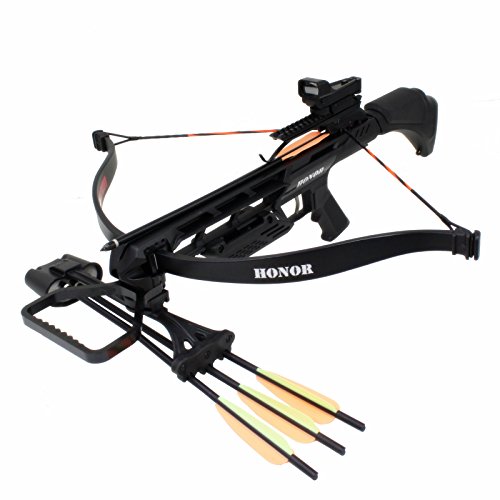
SAS Honor 175 lb Recurve CrossbowCrossbow More specs
| 260 fpslisting | — | 175 lblisting | — | Check price |
SAS Honor 175 lb PackageCrossbow More specs
| 260 fpslisting | — | 175 lblisting | — | Check price |
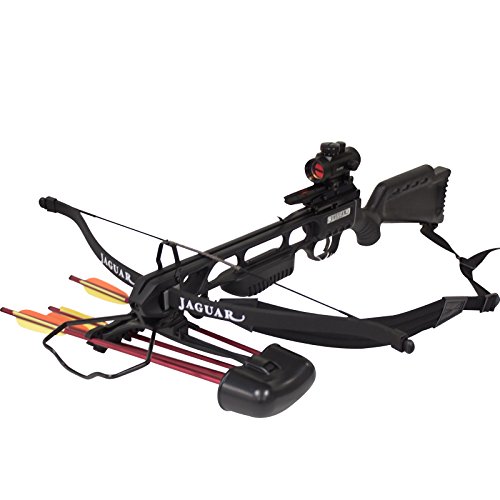
SAS Jaguar 175 lb Recurve CrossbowCrossbow More specs
| 245 fpslisting | — | 175 lblisting | — | Check price |
SAS Manticore 150 lb Recurve CrossbowCrossbow More specs
| 210 fpslisting | — | 150 lblisting | — | Check price |



What’s in this listCrossbows with recurve limbs and no cams, as stated by the maker or the Amazon listing. “—” means neither the maker nor the Amazon listing states it.
What makes a recurve crossbow different
Strip the cams, axles and cables off a compound crossbow and you're close to a recurve crossbow. Bowhunter's limb technology article describes recurve limbs as curving away from the shooter at the ends, storing energy without cams or cables. goHUNT's comparison puts it plainly: no wheels or cams to break, no cables or cable savers to change.
Everything else on a crossbow works the same way: stock, rail, trigger box, safety, optic, bolt. For how those parts work, start on the crossbow page. This page is about what changes when the limbs carry the whole job by themselves.
Here's the trade in one list, from that Bowhunter article:
- Recurve: lighter, moderately quiet, easier to maintain, no press for a string change, but wider and longer
- Compound: shorter and more compact, easier to cock, more stored energy for faster bolts, but string or cable changes typically need a bow press
The table on this page lists crossbows their maker describes as recurve, with no cams. Its columns use each maker's figures, with the Amazon listing's value where the maker is silent (marked as a listing value; length and weight stay the maker's only): speed, draw weight, cocked width, length, weight, how it cocks and de-cocks, the optic and the box contents. A dash means neither the maker nor the listing states it; we don't fill in gaps.
Recurve crossbow specs worth reading
Seven specs separate one recurve crossbow from another. I'd read them top to bottom.
Read draw weight first, because the limbs do all the work
With no cams to help, a recurve crossbow's speed comes from its limbs and its power stroke alone. Draw weight tells you how stiff those limbs are. For scale, a maker's cocking guide says today's crossbows usually sit between 200 and 350 lb.
Draw weight is the force needed to pull the string back to the trigger. On a recurve crossbow you feel all of it, all the way. There's no let-off at the end of the stroke the way a compound gives you. That leads straight to the next spec.
Cocking device decides whether you can actually use it
One maker's cocking guide spells out the difference. A compound eases off near the end of the stroke, where its cams roll over. A recurve just keeps getting heavier until the string clicks into the trigger.
Your options:
- Rope cocker: halves the pull through its pulleys
- Crank: winds the string back for you, either clipped on for cocking or built into the stock, and can need as little as 5 to 10 lb of effort
Quick math: if your crossbow is 200 lb and you use a rope cocker, you're lifting about 100 lb with your arms and back, foot in the stirrup. That's a deadlift, not a doorknob. Cock it through one full practice session at the range and you'll know whether you want the crank. (I'm a physical therapist. Half my Mondays in November are people who deadlifted something at 5 a.m. without warming up.)
The table's "Cocking device" column shows what the maker includes or builds in. Cranks and rope cockers are compared on the crossbow cocking device page.
Safe de-cocking is where a recurve has an edge
On most crossbows, unloading means shooting. A maker's cocking guide describes the usual way out: a blunt bolt fired into the dirt, or a field-point bolt into a target. One recurve crossbow maker's manual lists de-cocking without shooting as an advantage of its recurve design. The procedure uses the rope cocking aid to take the full string tension before the trigger is pulled, then lowers the string slowly.
That procedure is unforgiving. The manual says to remove the bolt first, hold the full limb tension on the cocking aid before you touch the trigger, and keep a firm grip so the handle can't slip. Follow your own manual step by step, or shoot a de-cocking bolt into a target instead.
The table marks "Safe de-cocking" yes only when the maker or the listing states the crossbow de-cocks without firing.
Cocked width and length: expect a bigger crossbow
Bowhunter's article says recurve crossbows are wider and longer than compounds. The limbs have no cams to help them store energy, so they make up for it in size.
Width matters most in a ground blind or tight tree stand. A maker's sizing guide sets the narrow class at roughly a 6- to 12-inch cocked width. It also notes that fired limbs swing outward by several inches, and anything they hit costs you the shot and can hurt the crossbow. So check the table's cocked width against the space you hunt from. If a narrow crossbow is the priority, the compact crossbow page is sorted by width.
Length is also fit. That guide's typical crossbow is around 32 inches long, and its advice is to match length to your build rather than chase short.
Weight: often lighter, but check the whole package
Bowhunter and goHUNT both describe recurve crossbows as lighter than compounds. Fewer parts weigh less. Still, a maker's weight guide points out that the optic and cocking device are part of what you carry, and it puts crossbows overall between roughly 6 and 10 lb. A built-in crank or a heavier optic adds some of that weight back.
The table's weight is the maker's figure, so read the maker's note on what was on the crossbow when it was weighed.
Speed: compare it with the bolt weight beside it
The table's speed is the maker's FPS (feet per second) figure. Bowhunter credits cams with storing extra energy for flatter-flying bolts, so a recurve has to lean on draw weight to keep up.
Read the FPS figure next to the bolt weight the maker tested with; a lighter bolt always posts a bigger number. One recurve maker's manual sets a minimum total bolt weight of 350 grains for all its models; never go under the minimum your manual names. Bolt choices live on the crossbow bolts page.
Look for a stringing aid in the box
The optic column reads scope, red dot or none, and the box column repeats the maker's list of bolts, quiver, cocking aid and optic. One thing worth looking for on a recurve: whether a stringing aid is included. One maker's manual notes that its stringing aid is sold separately, so budget a spot in the truck for it.
The string is the part you'll service
A recurve crossbow has one string and nothing else that wears like it. That's the appeal.
Changing the string without a bow press
One recurve maker's manual says the owner can change the string without a bow press, using its stringing aid. The aid's limb-holders go over the limb tips, you draw it back with the rope cocking aid until it latches in the trigger, and the limbs bend just far enough for the old string's loops to come off and the new ones to go on. Unstringing is the same steps in reverse.
Compare that with a compound crossbow, where Bowhunter says string or cable replacement typically needs a bow press. On a compound, a broken string in November usually means a trip to a shop. On a recurve, it can mean a spare string and a stringing aid in the truck. More on strings is on the crossbow string page.
Wax the serving, lube the rail
The same manual gives a short care routine:
- Serving: a little wax on the center serving roughly every 30 to 40 shots
- Rail: a rail lube, not wax, to cut string friction; wax on the rail can get into the trigger
- Trigger and fasteners: a light oil, especially after wet hunts
- Scope mount screws: thread locker, and check them for vibrating loose
It also says it's common for serving wax to build up on top of the rail, and a rag with light oil cleans it off.
Replace the string at the first sign of wear
The manual is direct: replace the string as soon as it shows any sign of wear, because a worn string can fail and damage the crossbow or hurt you or others. Field & Stream's maintenance guide adds the checks: look for heavy fraying or broken strands, and a serving that has unraveled or separated.
Walt's take: "A crossbow with no cams is a crossbow with fewer things to lose in the leaves." I'd point out that cams are bolted on and don't fall off. He'd say anything falls off if you wait long enough.
Recurve, compound or reverse-draw: which to choose
Choose a recurve crossbow when
- You want to service the string yourself, away from a shop
- You'd like fewer parts to inspect and fewer things to wear out
- You hunt from a stand or open blind with room for wider limbs
- You're fine with a crank or rope cocker for the heavier pull
Choose a compound or reverse-draw when
- Width is your limit: a tight blind or a cramped stand
- You want the easiest cocking stroke, with let-off at the end
- You want the most speed for a given draw weight
A reverse-draw is a compound with its limbs mounted back near the middle of the riser; Bowhunter ties that layout to a longer power stroke, top speeds and a better-balanced crossbow. See the reverse-draw crossbow page and, for forward-limb compounds, the compound crossbow page.
Here's my one opinion: if you hunt far from an archery shop, a recurve crossbow's field string change is worth the extra width. The reason is checkable in the manuals. A recurve maker documents a string change with a stringing aid and no press; compound string and cable changes typically need a press, per Bowhunter.
Recurve crossbow safety
A cocked crossbow is a loaded crossbow. The recurve maker's manual tells you to keep fingers and thumb below the deck before every shot and never to dry-fire it, which damages the crossbow; Archery 360 adds that a dry-fire can hurt the shooter too.
Wisconsin's DNR recommends that a crossbow be carried, raised and lowered uncocked. Where and when you can hunt with a crossbow is set by your state, so check your state wildlife agency.
Who should skip a recurve crossbow
Skip it if you hunt from a small pop-up blind and every inch of width counts. Skip it too if cocking a heavy draw is a problem for your shoulders and you don't want a crank. A compound's let-off exists for exactly that reason.
If neither of those is you, a recurve crossbow is a simple tool with one string to look after. Keep a spare in the truck and write the date you put it on in the logbook.
Brands in this list
Related
Questions people ask
Is a recurve crossbow better than a compound crossbow?
Neither is better across the board. Bowhunter's limb technology article says recurves are lighter, moderately quiet and easier to maintain, with string changes that need no press. Compounds are shorter and more compact, cock easier thanks to their cams, and store more energy for faster bolts. Pick by where you hunt and who services the crossbow.
Can you restring a recurve crossbow at home?
Usually, yes, with the right tool. One recurve crossbow maker's manual says owners can change the string without a bow press by using a stringing aid sold separately. The aid pulls the limb tips back just far enough to slip the string loops on or off. Use the aid and the string your manual names for your model.
Why is a recurve crossbow harder to cock?
It has no cams, so there's no let-off. One crossbow maker's cocking guide explains that compound crossbows get easier in the last third of the cocking stroke, while recurve crossbows get steadily harder. A rope cocker cuts the effort by half, and a crank can bring it far lower.
Should I unstring my recurve crossbow between seasons?
Not usually. One recurve crossbow maker's manual says you can leave it strung if it's stored at normal temperatures, and unstring it only if it will be exposed to extreme heat, to avoid limb damage. Store it uncocked; another maker warns that leaving a crossbow cocked more than a day can stretch strings and damage limbs.
Sources
- Bowhunter: Understanding crossbow limb technology — accessed 2026-10-22
- Excalibur: Micro and Matrix recurve crossbow owner's manual — accessed 2026-10-22
- TenPoint Crossbows: Crossbow cocking and de-cocking, what to consider before you buy — accessed 2026-10-22
- TenPoint Crossbows: Crossbow size, what to consider before you buy — accessed 2026-10-22
- TenPoint Crossbows: Crossbow weight, what to consider before you buy — accessed 2026-10-22
- goHUNT: Compound crossbow versus recurve crossbow — accessed 2026-10-22
- Field & Stream: Compound bow maintenance (string, serving and limb checks) — accessed 2026-10-22
- Wisconsin DNR: Archery and crossbow safety tips — accessed 2026-10-22
- Archery 360 (Archery Trade Association): Archery Lingo: Dry-Fire — accessed 2026-10-22