Archery & Bowhunting · Gear type
Crossbow Scope
A crossbow scope is a low-power optic with a reticle built for a bolt's arc, not a bullet's. Instead of one crosshair, it gives you a stack of dots or lines for 20, 30, 40 yards and beyond. The main choice is whether those marks are fixed at one speed or adjustable to yours. Get that right and the rest is magnification, light and fit. (I write my speed setting in Uncle Walt's logbook. He's never once asked what it means.)
We earn a commission if you buy through our links, at no cost to you. Disclosure
| Model | Type | Magnification | Objective | Speed calibration | Aiming points to | Amazon |
|---|---|---|---|---|---|---|
Barnett 1.5-32mm Illuminated Crossbow ScopeCrossbow scope More specs
| Scopelisting | 1.5-5listing | 32 mmlisting | — | 100 ydlisting | Check price |
Bear Archery X Speed Crossbow ScopeCrossbow scope More specs
| Scopelisting | 1-5listing | 24 mmlisting | 205–430 fpslisting | 100 ydlisting | Check price |
Burris Oracle X 2-7xCrossbow scope | Rangefinding scopelisting | 2-7listing | — | — | — | Check price |
Excalibur Dead Zone 1" ScopeCrossbow scope More specs
| Scopelisting | — | 32 mmlisting | 300–410 fpslisting | — | Check price |
Garmin Xero X1iCrossbow scope More specs
| Rangefinding scopelisting | 3.5listing | — | — | 250 ydlisting | Check price |
Hawke XB 3x32 Crossbow ScopeCrossbow scope More specs
| Scopelisting | 3listing | 32 mmlisting | 340–340 fpslisting | — | Check price |
Hawke XB1 1.5-5x32 Crossbow ScopeCrossbow scope More specs
| Scopelisting | 1.5-5listing | 32 mmlisting | 250–425 fpslisting | 100 ydlisting | Check price |
Hawke XB30 Pro 1-5x24 Crossbow ScopeCrossbow scope More specs
| Scopelisting | 1-5listing | 24 mmlisting | 215–450 fpslisting | — | Check price |
Hawke XB30 Pro SR 12230Crossbow scope | Scopelisting | — | — | — | — | Check price |
Hawke XB1 1.5-5x32 IR 12221 BundleCrossbow scope More specs
| Scopelisting | 1.5-5listing | 32 mmlisting | — | 100 ydlisting | Check price |
Hawke XB30 Compact 1.5-6x36 Crossbow ScopeCrossbow scope More specs
| Scopelisting | 1.5-6listing | 36 mmlisting | 250–450 fpslisting | — | Check price |
Hawke XB30 2-7x32 Crossbow ScopeCrossbow scope More specs
| Scopelisting | 2-7listing | 32 mmlisting | 280–440 fpslisting | — | Check price |
Hawke XB30 Zoom FFP 2-8x36 Crossbow ScopeCrossbow scope More specs
| Scopelisting | 2-8listing | 36 mmlisting | — | — | Check price |
Killer Instinct Lumix Speedring 1.5-5x32Crossbow scope More specs
| Scopelisting | 1.5-5listing | 32 mmlisting | 270–450 fpslisting | — | Check price |
Killer Instinct Max View 2-7x36 MV-36Crossbow scope More specs
| Scopelisting | 2-7listing | 36 mmlisting | 340–460 fpslisting | 150 ydlisting | Check price |
Killer Instinct Certis Laser Rangefinding ScopeCrossbow scope More specs
| Rangefinding scopelisting | — | — | — | 999 ydlisting | Check price |
PSE Archery HDV-425 1.5-5x32Crossbow scope More specs
| Scopelisting | 1.5-5listing | 32 mmlisting | — | — | Check price |
Ravin R170 100-YardCrossbow scope More specs
| Scopelisting | — | — | 300–425 fpslisting | 100 ydlisting | Check price |
Ravin 100 yd Illuminated Speed LockCrossbow scope More specs
| Scopelisting | — | — | — | 100 ydlisting | Check price |
Ravin 100 yd Illuminated Speed Lock RingCrossbow scope More specs
| Scopelisting | — | — | — | 100 ydlisting | Check price |
SAS 4x32 Multi-ReticleCrossbow scope | Scopelisting | 4listing | 32 mmlisting | — | — | Check price |
SAS 1x22x33 Reflex Red DotCrossbow scope More specs
| Red dotlisting | 1listing | 22 mmlisting | — | — | Check price |
SAS 1x30 Red/Green SightCrossbow scope More specs
| Red dotlisting | 1listing | 30 mmlisting | — | — | Check price |
TenPoint Rangemaster 100Crossbow scope More specs
| Scopelisting | 2-7listing | 36 mmlisting | 380–505 fpslisting | 100 ydlisting | Check price |
TenPoint EVO-X Marksman Elite 3.0Crossbow scope More specs
| Scopelisting | 2-8listing | — | 300–550 fpslisting | 100 ydlisting | Check price |
TenPoint Vision HD 3-12XCrossbow scope | Rangefinding scopelisting | 3-12listing | — | — | 1,100 ydlisting | Check price |
TRUGLO 4x32 Compact BDCCrossbow scope | Scopelisting | 4listing | 32 mmlisting | — | — | Check price |
TRUGLO Tri Dot Red-Dot SightCrossbow scope | Red dotlisting | — | — | — | — | Check price |
TRUGLO Gobble Stopper Red Dot TG8030GBCrossbow scope More specs
| Red dotlisting | 1listing | — | — | — | Check price |
TRUGLO Opti-Speed 1-4x24Crossbow scope | Scopelisting | 1-4listing | 24 mmlisting | 215–450 fpslisting | — | Check price |


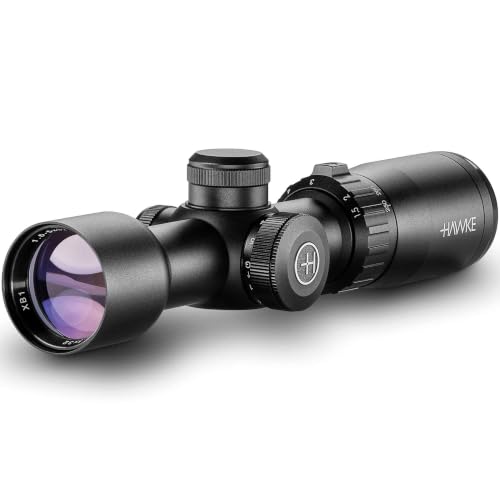


What’s in this listEvery crossbow scope and red dot we track on Amazon US. “—” means neither the maker nor the Amazon listing states it.
How a crossbow scope differs from a rifle scope
A bolt leaves a crossbow far slower than a bullet leaves a rifle. One crossbow maker's range article puts most crossbows in the 300 to 400 fps class (FPS is speed in feet per second), against 1,000-plus for most bullets. Slower means more drop at each distance, and the drop changes a lot between 20 and 50 yards.
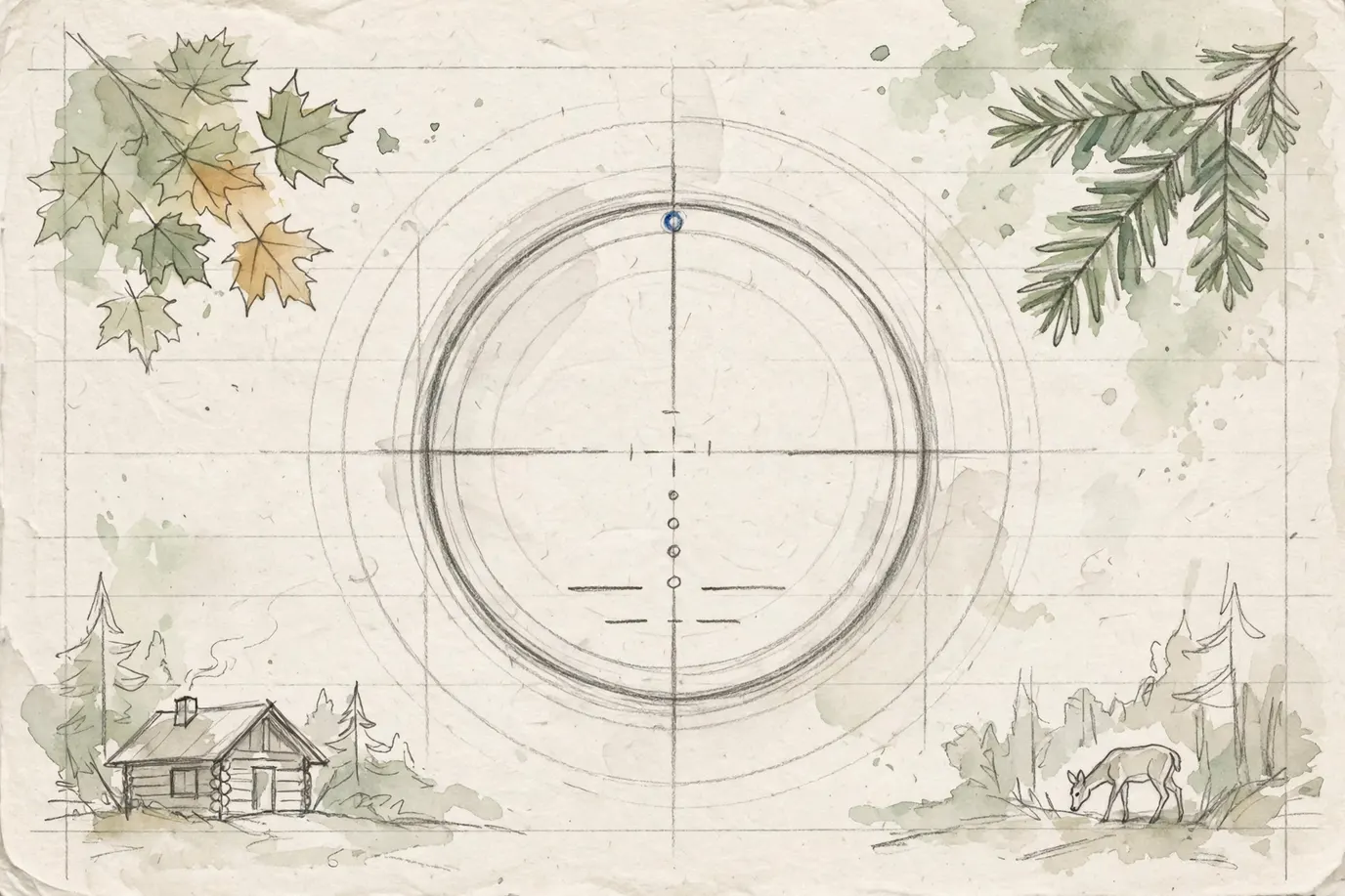
So a crossbow scope's reticle is built around that drop. Instead of one crosshair you get a stack of aiming points, each meant for a set distance at a set speed. Everything else on the spec sheet supports that one idea.
The table on this page lists every crossbow scope and red dot we track. It shows each sight's type, magnification, objective size, speed calibration, how far its aiming points go, whether the reticle lights up, tube size and weight. Weight is the maker's; the rest come from the maker or the Amazon listing (the table marks values that come from the listing). A dash means neither states it.
What to look at when you pick a crossbow scope
Here's what actually changes from one scope to the next, in the order I'd check it.
Fixed multi-line or speed-dial: decide how your marks get matched
This is the "Type" column and the "Speed calibration" column read together.
Fixed multi-line or multi-dot scopes have no speed dial. One maker's sight-in guide says this style is pre-calibrated for a fixed speed, and the closer your crossbow shoots to that speed, the more accurately each line lands at its stated distance. On that guide's layout, the top dot is 20 yards, then 30, then 40, and a fourth mark covers 50 when you zero the third at 40.
Speed-dial (variable) scopes have a numbered ring on the rear of the scope. The same maker's guide says the numbers stand for a range of arrow speeds, and you set the ring to your speed before touching windage and elevation. When the speed column shows a range, that's how far the dial goes.
Which suits you? If you shoot the bolts your crossbow came with and it shoots close to a fixed reticle's speed, the fixed style is simpler. If you change bolts or broadheads, or your crossbow doesn't match a fixed reticle, the dial earns its place. A scope maker's product notes point out why: factory reticles are calibrated at the crossbow's speed with the factory arrow weight. Change the arrow weight and the 20- to 60-yard marks may stop matching where the bolts land.
Match the speed calibration to your real speed, not the box
Searches for a "400 fps crossbow scope" are really asking this. A speed-dial scope works only if your crossbow's speed falls inside its range. One velocity-calibrated scope, for example, is listed for crossbow and arrow combinations from 215 to 450 fps.
Your real speed depends on your bolt. One maker's guide says a lighter arrow shoots faster than a heavier one, and its crossbows list an average speed under each model's specs. The scope maker's notes say most archery pro shops have a chronograph or radar unit to measure it. (That's the most fun 10 minutes in a pro shop. You shoot through a box and it tells you a number. It's like a bathroom scale that you actually want to step on.)
Here's how that plays out: a fixed reticle built for 350 fps on a crossbow that shoots 400 fps puts the bolt above the mark at the longer lines, because the bolt drops less than the reticle expects. The sight-in guide's fix for speed-dial scopes runs the same direction: hitting high at 40 yards means raise the speed setting, hitting low means lower it, in 5 fps steps.
Magnification: low power is the hunting norm
The "Magnification" column shows either one number, like 3x or 4x, or a range for variable-power scopes. A red dot is 1x. On the optics glossary I checked, 1x means the view is about the same size as the naked eye, and 10x makes the target about ten times bigger.
For crossbow distances, more power isn't the goal. An optics maker's low-light article says an optic always performs better in low light at lower magnification. Low power also gives you a wider view when a deer steps out closer than you planned. The variable scope's advantage is turning it up for a long practice shot and back down for the hunt.
One catch with variable scopes. The glossary explains that a second-focal-plane reticle stays the same size as you zoom, so holdover marks are accurate at only one setting. A first-focal-plane reticle grows and shrinks with the image, so it stays accurate at any power. If your scope is second focal plane, find the setting your manual says the marks are built for and shoot there.
Objective size and exit pupil decide dawn and dusk
The "Objective" column is the front lens diameter in millimeters. Bigger lets in more light, but it's not the whole story.
The low-light article gives the rule: divide the objective diameter by the magnification and you get the exit pupil, the beam of light that reaches your eye. Its example is a 50 mm objective at 10x, which gives a 5 mm exit pupil. The same article says adult pupils may only open 4 to 6 mm in the dark, so a giant exit pupil past that is light your eye can't use.
It also says optical design and lens and coating quality matter more than objective size. A modest objective at low power with good glass is a sensible crossbow setup. (A huge objective on a crossbow also makes the whole thing harder to fit into a case. Ask anyone who's tried to shut a lid on one.)
"Aiming points to" tells you the reticle's reach, not your range
This column is how far the reticle's marks go, as the maker or the listing states it. Some reach 100 yards. One velocity-calibrated reticle covers 20 to 100 yards, and one turret scope manual says its dial runs from 20 yards to about 100 or more, depending on the bow.
That's a practice-range number. One crossbow maker's range article says effective hunting range is about 40 yards, with 50 about the maximum for a steady shooter with a heavier bolt and broadhead. It also says most archery shots at whitetails in the woods come at 20 yards or less.
My one opinion on this page: buy the reticle for the 20 to 40 yards you'll actually shoot, and treat the 100-yard marks as practice. The reason is in the turret manual, which compares a crossbow at 100 yards to a rifle at 1,000 yards and warns that a misjudged wind or a range off by a couple of yards can mean several feet of error.
Illuminated reticle: lowest setting, spare battery
The "Illuminated reticle" column says whether the aiming points light up. One maker's scope instructions describe dots that can show black, red or green. Black works best in bright light; lit dots are for low light. It says to use the lowest brightness that works, which gives the best sight picture.
That same scope runs on a 2032-size lithium coin battery, and the instructions say plainly to carry a spare in the field. Unlit black marks still work with a dead battery, so an illuminated scope isn't helpless. It's just dimmer at the exact time you wanted the light.
Tube size has to match your rings
The "Tube" column shows 1 inch or 30 mm. The glossary says rings must match the scope's tube, and 1 inch and 30 mm are the common sizes. One turret scope manual says its scope mounts in 30 mm rings, provided the rail is long enough for proper eye relief. If you're buying a scope for a crossbow that came with rings, check the ring size first.
Weight sits on top of the rail
The "Weight" column is the scope as the maker lists it, in ounces. It all sits high on the crossbow. On a crossbow you carry up a hill and hold for a long time, ounces add up, so compare weights among scopes that otherwise fit your needs.
Crossbow scope types and when to choose which
- Fixed multi-line or multi-dot scope: simple, no dial. Best when your crossbow shoots close to the reticle's built-in speed.
- Speed-dial variable scope: matches the reticle to your speed. Best if you change bolts or don't match a fixed reticle.
- Red dot: 1x, fast to pick up, no magnification. It has its own page: red dot crossbow scopes.
- Rangefinding scope: measures distance and shows an aiming point. Covered on the crossbow scope rangefinder page.
- Night vision and thermal: covered on the night vision crossbow scope page.
Rules on illuminated reticles, rangefinding sights and night optics vary by state. Check your state wildlife agency before the season.
How to mount a crossbow scope
Makers recommend a pro shop for mounting, and one turret scope manual says so outright. If you do it yourself, the manuals I read agree on the order.
- Set the bases loosely. Attach the ring bases to the rail snug enough to stay put but loose enough to slide.
- Lay the scope in. Fit the top rings and snug the screws so the scope still moves.
- Set eye relief. In your shooting position, move the scope until you see a full picture. One maker's instructions say about 3 to 4 inches from eye to eyepiece; another's says 2.75 to 3.75 inches.
- Level it. Level the crossbow, then turn the scope until the horizontal marks are parallel with the limbs.
- Tighten evenly. Alternate front to back. One manual torques the base nuts to 40 in-lb and the top rings to 30 in-lb, and warns that overtightening damages the scope.
- Focus the reticle. One maker's instructions say to focus before any windage or elevation change.
Then sight it in. The sight-in guides I read start at 20 yards on the top mark, adjust windage and elevation until bolts hit the aiming point, then check farther out. On one maker's scope, it takes about four to five clicks to move impact a quarter inch at 50 yards. The full process will be on the sight in a crossbow scope guide.
Last step: write the speed setting and the bolt weight down somewhere that travels with the crossbow. Mine go in the camp logbook, in a column Uncle Walt pretends not to see. The turret manual adds a good habit for that note: after long storage or travel, check your point of impact again.
Scope safety
Never look at the sun through a scope; one manual warns it can cause permanent eye damage. Keep your fingers below the crossbow's finger guard and out of the string's path every time you shoot.
Who should skip a crossbow scope
Skip the upgrade if your crossbow came with a scope that already matches your bolts and hits where it should at 20 to 40 yards. A new reticle won't make those shots more accurate.
A magnified scope also isn't the only answer for short shots from a ground blind. If everything you shoot is close, a red dot may be simpler. Bolts and their weights, which drive all the speed math above, are on the crossbow bolts page, and the crossbows themselves are on the crossbow page.
Speed setting, bolt weight, logbook. If it's not written down, it's a rumor.
Brands in this list
Related
Questions people ask
How do you mount a crossbow scope?
Set the ring bases loosely on the rail, lay the scope in and snug the top rings so it still slides. Move it until you see a full picture at your shooting position; one manual gives 3 to 4 inches of eye relief. Level the reticle with the limbs, then tighten the ring screws evenly, front to back, to the torque in your manual.
Do I need a 400 fps crossbow scope?
Only if your crossbow shoots near 400 fps with the bolts you use. A speed-dial scope needs a calibration range that includes your real speed. A fixed multi-line scope is built for one speed, and its marks are most accurate when your crossbow shoots close to it. Check your crossbow's listed speed for your bolt weight, or chronograph it.
Can a crossbow scope shoot 100 yards?
Some reticles have aiming points out to 100 yards. That doesn't make 100 yards a hunting distance. One crossbow maker puts effective hunting range at about 40 yards, and about 50 at most for a steady shooter with a heavier bolt. Another maker's manual says extended range takes extensive practice and precise wind and distance reads.
What magnification is best for a crossbow scope?
Low power suits most crossbow hunting, since shots are usually close. One crossbow maker says most archery shots at whitetails in the woods come at 20 yards or less. An optics maker's low-light article adds that any optic performs better in dim light at lower magnification, because the beam of light reaching your eye gets wider. A variable scope lets you turn it down.
Why does my crossbow scope hit high at 40 yards?
Usually your bolt is faster than the speed the reticle is set for. One maker's sight-in guide for speed-dial scopes says to raise the speed setting if 40-yard shots hit high and lower it if they hit low, in 5 fps steps. A fixed multi-line scope can't be dialed, so the fix is a reticle closer to your real speed.
Sources
- TenPoint: How to properly sight in a multi-line drop-compensating scope — accessed 2026-10-22
- TenPoint: How to properly sight in a variable-power drop-compensating scope — accessed 2026-10-22
- TenPoint: Pro-View 400 scope instructions — accessed 2026-10-22
- TenPoint: Effective crossbow shooting range — accessed 2026-10-22
- Ravin: Adjustable turret scope user manual — accessed 2026-10-22
- Shoot-On: TRUGLO introduces velocity-calibrated crossbow scope — accessed 2026-10-22
- Vortex Optics: What makes great low-light performance — accessed 2026-10-22
- Leupold: Optics glossary — accessed 2026-10-22